TL;DR:
- Regular roof maintenance extends lifespan and prevents costly repairs in Texas’s harsh climate.
- Inspections, gutter cleaning, debris removal, and minor repairs should be scheduled biannually and after storms.
- Neglecting maintenance can lead to interior damage, mold, higher costs, and early roof replacement.
Most homeowners in El Campo and Houston treat their roof like a smoke detector: they assume it’s working until something goes wrong. But by the time a leak shows up on your ceiling or shingles start blowing into your yard, you’re already looking at hundreds or thousands of dollars in damage. Texas weather doesn’t give you a grace period. Between Gulf Coast humidity, brutal summer heat, and hail storms that can appear without much warning, your roof takes a beating year-round. This article walks you through why consistent maintenance matters, what it actually involves, how often to do it, and how to know when maintenance alone isn’t enough.
Table of Contents
- Why your roof needs regular maintenance
- What effective roof maintenance involves
- How often and when: The ideal maintenance schedule
- The true cost of skipping regular maintenance
- Maintenance, repair, or replace? When to pivot your strategy
- A Texas roofing pro’s perspective: What most homeowners miss
- Protect your Texas home with expert support
- Frequently asked questions
Key Takeaways
| Point | Details |
|---|---|
| Regular checks save money | Twice-yearly inspections and simple upkeep prevent costly repairs and enhance roof life. |
| Texas weather demands vigilance | Local storms, hail, and heat make ongoing roof care extra important for El Campo and Houston homeowners. |
| Neglect leads to bigger expenses | Delaying roof maintenance often results in expensive emergencies and reduced property value. |
| Know when it’s time to upgrade | If your roof is over 20 years old or has recurring issues, replacement may offer better value than ongoing fixes. |
Why your roof needs regular maintenance
Regular roof maintenance isn’t just about keeping things looking good. It’s about protecting one of your biggest financial assets. Think of it the way you think about oil changes for your truck: skip them long enough, and you’re not just risking a breakdown, you’re risking a total engine replacement.
In El Campo and Houston, the climate pushes roofs harder than almost anywhere else in the country. You’re dealing with intense UV exposure in summer, heavy rainfall during storm season, and periodic hail that can crack or dislodge shingles without leaving obvious visible damage from the ground. The combination of heat expansion and moisture infiltration accelerates wear on every roofing material, from asphalt shingles to flat TPO membranes.
So what does “regular maintenance” actually mean? It covers a few core activities:
- Visual inspections of shingles, flashing, gutters, and vents
- Cleaning debris off the roof surface and out of gutters
- Sealing or repairing minor issues before they grow
- Documenting the condition for warranty and insurance purposes
- Scheduling professional checkups at least twice a year
These aren’t complicated tasks, but they matter enormously. Regular maintenance can dramatically extend roof lifespan and minimize emergency repairs. That’s not a minor benefit. A full roof replacement in Texas can run anywhere from $8,000 to over $20,000 depending on size and material. Consistent upkeep is the most cost-effective way to delay or avoid that expense.
There’s also the warranty and insurance angle. Most roofing material warranties require documented maintenance to remain valid. If you file a claim after a storm and your insurer asks for maintenance records you don’t have, you could be denied coverage. The Texas roof maintenance benefits go well beyond aesthetics. They protect your legal and financial standing when it counts most.
“A well-maintained roof doesn’t just protect your home from rain. It protects your investment, your warranty, and your ability to make a successful insurance claim.”
For Houston homeowners especially, the roof maintenance tips specific to your climate can make a real difference in how long your roof performs.
What effective roof maintenance involves
Understanding the reasons is one thing, but what does regular roof maintenance really look like on your calendar and checklist?
A solid maintenance routine follows a clear sequence. Here’s what it should include:
- Visual inspection of shingles, flashing, and vents. Look for cracked, curling, or missing shingles. Check that flashing around chimneys, skylights, and vents is tight and sealed. Even small gaps invite water.
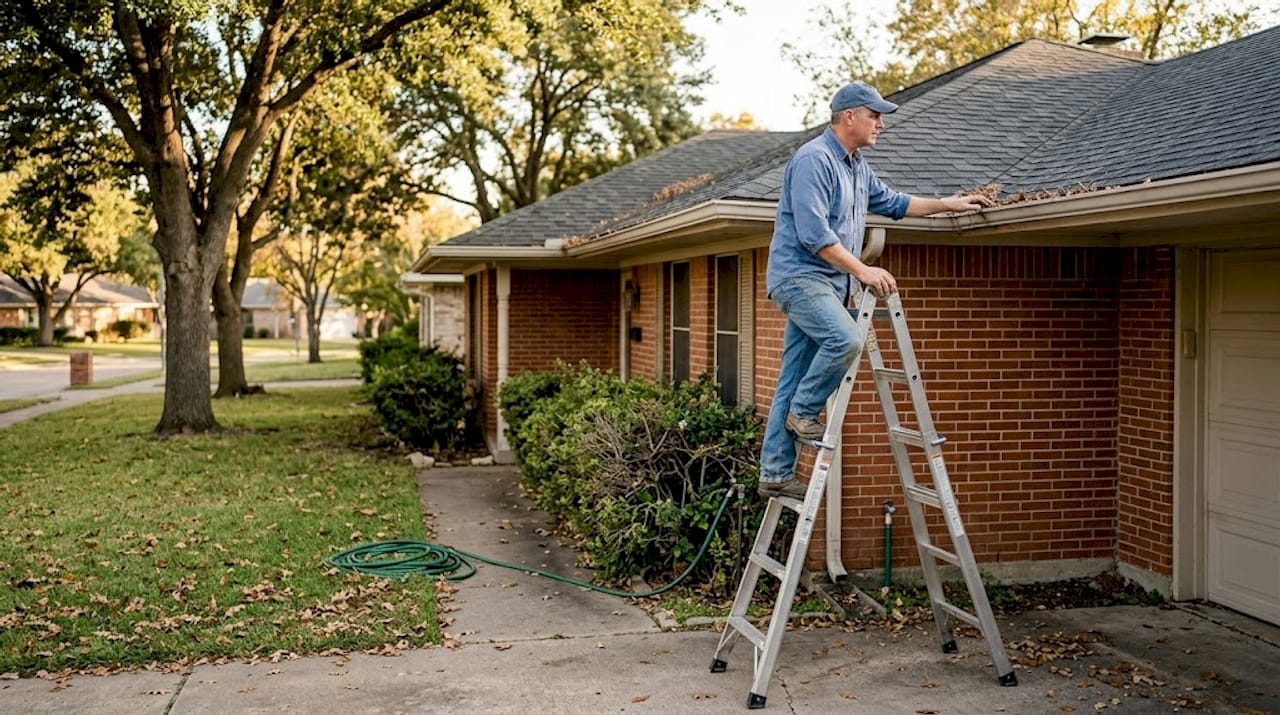
- Gutter cleaning and downspout check. Clogged gutters cause water to back up under your roofline. In Houston’s heavy rain seasons, this is a leading cause of fascia rot and interior leaks.
- Debris removal from the roof surface. Leaves and branches trap moisture and accelerate shingle deterioration. Keep your roof surface as clear as possible.
- Minor repairs and sealing. Cracked caulk around flashings, loose vent covers, or small punctures in flat roofs should be addressed immediately, not added to a “someday” list.
- Documentation. Photograph your roof’s condition before and after each maintenance cycle. This creates a paper trail for warranty claims and insurance disputes.
- Professional biannual inspection. A trained roofer sees things you can’t from the ground or even from a ladder. Maintenance methodologies including visual inspections, debris removal, minor repairs, and documentation form the backbone of any effective program.
Some of these tasks are DIY-friendly. Cleaning gutters, removing visible debris, and doing a basic ground-level visual check are all reasonable for a careful homeowner. But walking your own roof carries real fall risk, and untrained eyes often miss subtle damage like hairline cracks in flashing or granule loss patterns that signal shingle aging.
Houston and El Campo’s humidity adds another layer of complexity. Moisture gets into places you’d never expect, and mold can establish itself in your attic before you notice any ceiling stains. Your Texas roof maintenance checklist should account for these local conditions, and a flat roof inspection guide is especially useful if you have a commercial-style or low-slope roof.
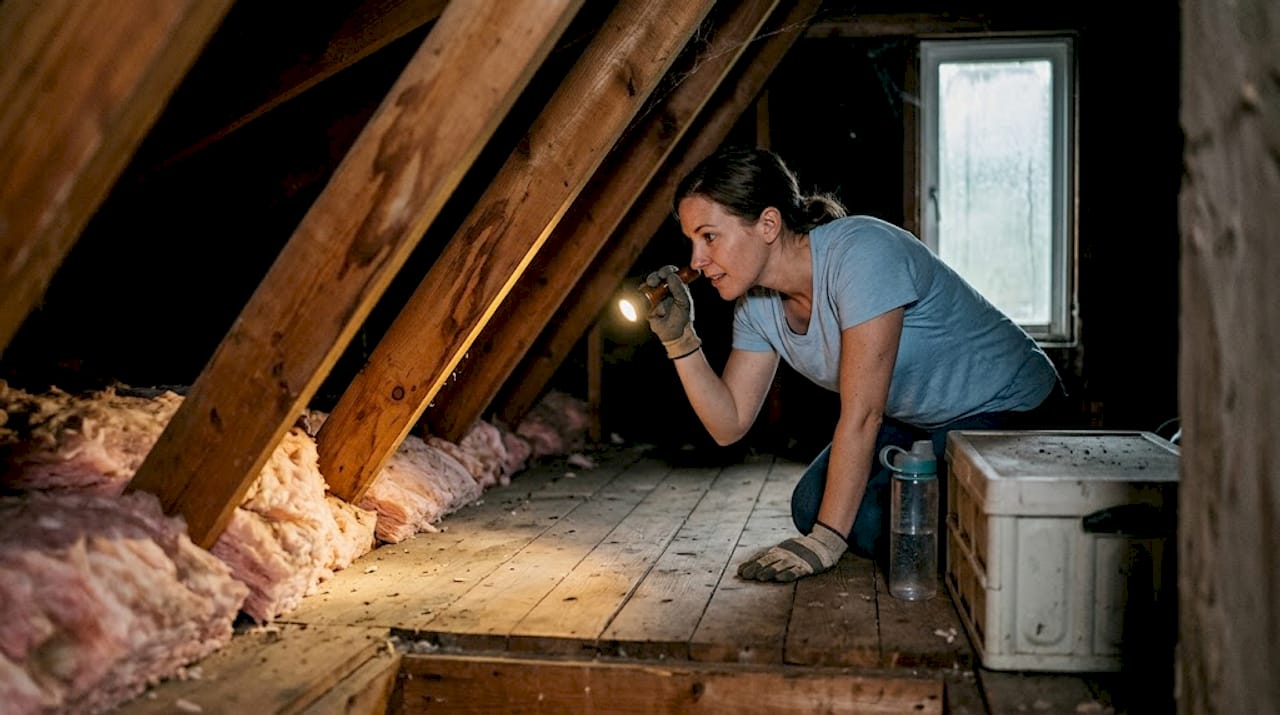
Pro Tip: Always check your attic after heavy rain. Water stains on rafters or insulation are an early warning sign that something is failing above, often weeks before a visible ceiling leak appears.
How often and when: The ideal maintenance schedule
Once you know what tasks to do, the next logical question is: how often and when to actually do them in our Texas climate?
The NRCA recommends a minimum of two professional inspections per year for preventive maintenance. In Texas, the ideal timing is spring and fall. Spring checks catch any damage from winter cold snaps and prepare your roof for storm season. Fall checks address summer heat damage and get you ready for cooler, wetter months.
But the schedule doesn’t stop there. After any significant hail or wind event, you should do a quick visual check within 48 hours. Hail damage is notoriously subtle. Dented or bruised shingles may look minor but lose their protective granule layer, leaving the underlying mat exposed to UV and moisture. Catching this early can mean the difference between a simple repair and a full section replacement.
| Maintenance type | Ideal frequency | Minimum acceptable |
|---|---|---|
| Professional inspection | Twice per year (spring and fall) | Once per year |
| Gutter cleaning | 3 to 4 times per year | Twice per year |
| Post-storm visual check | After every major storm | After severe storms only |
| Debris removal | Monthly during storm season | Quarterly |
| Documentation update | Every maintenance cycle | Annually |
The roof inspection benefits extend beyond just spotting damage. Inspections also give you a baseline record that insurers and warranty providers expect. If you’re unsure how to inspect roof damage in Texas safely, a professional walkthrough is always the smarter call.
After a major storm, don’t wait for visible interior damage before acting. Review the storm roof repair guide for a step-by-step approach to assessing and responding quickly.
The true cost of skipping regular maintenance
When routines slip, what’s the actual downside and how do the numbers stack up?
Neglecting your roof doesn’t just risk a leak. It creates a cascade of problems that compound over time. Here’s what you’re actually risking:
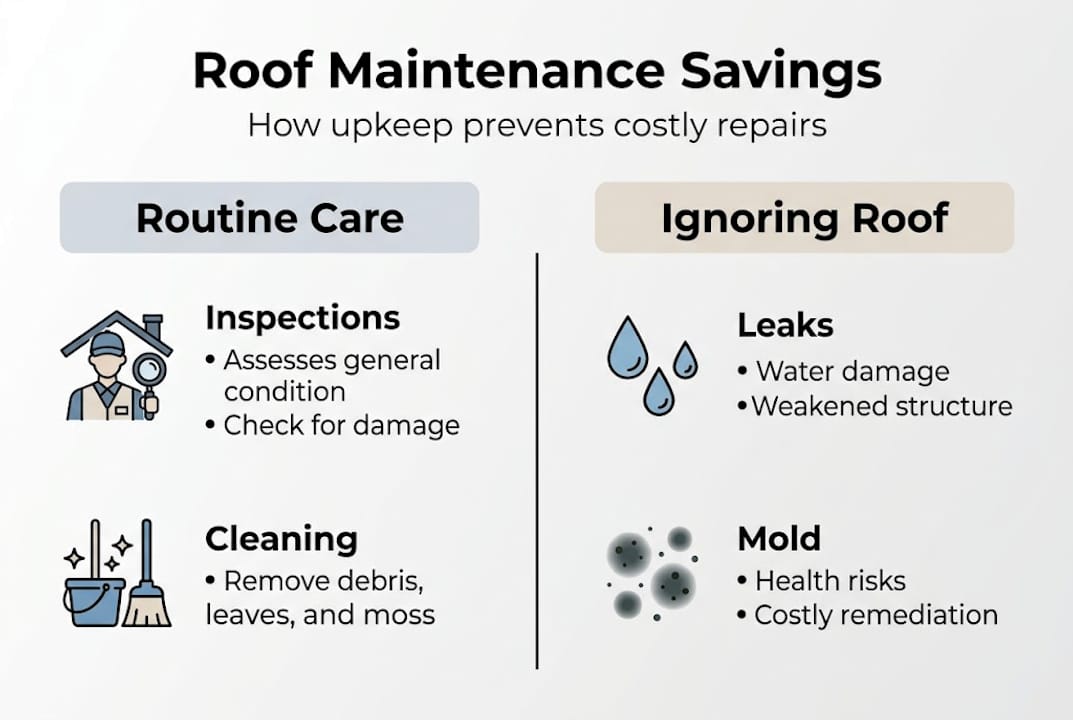
- Interior water damage. A slow leak can destroy insulation, drywall, and flooring before you ever see it from inside.
- Mold growth. Houston’s humidity means mold can establish in a damp attic within days. Remediation is expensive and disruptive.
- Higher insurance premiums. Insurers flag homes with repeated claims or documented neglect.
- Denied claims. Without maintenance records, storm damage claims can be rejected as “pre-existing conditions.”
- Reduced resale value. A buyer’s inspector will flag a poorly maintained roof, and it can tank your sale price or kill the deal entirely.
Proactive maintenance avoids costly emergency repairs and extends roof lifespan. The numbers below show why this matters financially.
| Scenario | Estimated annual cost |
|---|---|
| Regular maintenance (inspections, cleaning, minor repairs) | $300 to $600 per year |
| Emergency repair after neglect (leak, flashing failure) | $1,500 to $4,000 per incident |
| Partial roof replacement after prolonged neglect | $5,000 to $12,000 |
| Full roof replacement accelerated by neglect | $10,000 to $22,000+ |
Texas storm cycles make these numbers worse. A roof that might last 25 years with proper care can fail in 15 years in El Campo or Houston without it. The math is straightforward. If you’re weighing your options, the roof replacement checklist and roof replacement tips can help you plan if you’ve already reached that point.
Maintenance, repair, or replace? When to pivot your strategy
Regular maintenance works until your roof reaches a tipping point. So, when should you update your strategy?
Maintenance is a smart investment when your roof has useful life remaining. But as roofs age, the return on that investment shrinks. For standard asphalt shingles, the tipping point is usually around 20 to 25 years. Flat roofs vary by material but follow a similar pattern. At that stage, ROI drops for regular maintenance near end-of-life, and replacement planning becomes the smarter financial move.
Watch for these warning signs that maintenance alone is no longer enough:
- Multiple or recurring leaks in different areas of the roof
- Widespread shingle granule loss, visible as dark patches or granules in gutters
- Sagging or soft spots in the roof deck, indicating structural damage
- Persistent mold or moss growth that returns after treatment
- Flashing failures across multiple penetration points
- Age over 20 years combined with any of the above
If you spot more than one of these issues at the same time, maintenance visits are no longer your primary tool. You’re in replacement territory.
Pro Tip: Schedule a professional evaluation if you notice two or more of these warning signs. A qualified roofer can give you an honest assessment of remaining lifespan and help you plan financially rather than react in a crisis.
For homeowners with flat or low-slope roofs, Houston flat roof maintenance has its own set of considerations, and knowing when to transition from upkeep to replacement is equally important.
Early replacement planning also gives you real advantages: you can budget on your timeline, choose materials thoughtfully, and avoid the premium pricing that comes with emergency installations.
A Texas roofing pro’s perspective: What most homeowners miss
Having covered the technical and financial reasons, here’s the view from decades on Texas roofs.
The most expensive roof failures we see at Mister ReRoof didn’t start as big problems. They started as a $25 tube of caulk that nobody bought, or a gutter that was “almost” cleaned but not quite. Small neglect compounds fast in a climate like ours.
We also see a pattern we call “maintenance fatigue.” Homeowners do great for a year or two, then life gets busy. A missed inspection becomes two, then three. Meanwhile, a Texas summer and a couple of hail storms have quietly done their work. By the time the ceiling stain appears, the damage is deep.
The homeowners who protect their investment best aren’t the ones who spend the most. They’re the ones who stay consistent, keep records, and act quickly after storms. Check out the roof maintenance perspective for more on building that habit. Know your storm risks, document every inspection, and never wait for a visible leak to take action. The roof that fails quietly is always more expensive than the one you maintained out loud.
Protect your Texas home with expert support
If you’re ready to act or need a pro’s help, here’s your next step.
At Mister ReRoof, we work with homeowners across El Campo and Houston to assess roof condition, identify risks early, and plan the right path forward. Whether your roof needs a tune-up or you’re approaching replacement territory, we offer free estimates and honest evaluations with no pressure.

If you’re in El Campo and considering a shingle upgrade, explore our El Campo roof replacement services. For flat or commercial-style roofs, our TPO replacement in El Campo team is ready to help. Don’t wait for a storm to force your hand. Reach out today and get ahead of the problem before it gets expensive.
Frequently asked questions
How often should I have my roof inspected in Houston or El Campo?
Most experts recommend a professional inspection twice per year, typically in spring and fall, and after any major storm event.
Does regular cleaning and gutter maintenance really prevent roof leaks?
Yes. Cleaning and debris removal prevent water backup and surface rot, which are two of the most common causes of residential roof leaks.
What signs show it’s time for roof replacement instead of more maintenance?
Multiple recurring leaks, widespread shingle damage, persistent mold, or a roof past 20 years old are all strong indicators that replacement is the smarter investment.
Can I do all roof maintenance myself?
Homeowners can safely handle basic visual checks and gutter cleaning, but professional inspections are recommended twice a year because trained roofers spot damage that’s easy to miss from ground level.