Keeping your Houston home safe from roof and water damage can feel overwhelming, especially with the region’s unpredictable storms and humidity. Small problems with your roof or gutters can quickly turn into major repair bills if you miss the early warning signs. Thankfully, there are practical steps you can take right now to protect your home and your investment.
You’re about to discover specific methods backed by expert recommendations that target the most common sources of roofing issues. These are the proactive habits and inspection tips that can catch hidden problems before they escalate. Get ready to learn actionable strategies that will help you safeguard your roof, foundation, and peace of mind.
Table of Contents
- Inspect Your Roof Regularly For Damage
- Clear Gutters And Downspouts Of Debris
- Check For Missing Or Damaged Shingles
- Look For Signs Of Roof Leaks And Water Stains
- Trim Trees And Branches Near Your Roof
- Maintain Proper Attic Ventilation And Insulation
- Schedule Professional Roof Inspections Annually
Quick Summary
| Takeaway | Explanation |
|---|---|
| 1. Conduct Annual Roof Inspections | Regular inspections help identify issues early, preventing costly repairs and maintaining structural integrity. Schedule them before hurricane season. |
| 2. Maintain Clear Gutters and Downspouts | Cleaning gutters twice a year prevents water damage to your home’s foundation and roof structure by ensuring proper water flow. |
| 3. Inspect for Shingle Damage | Look for curled edges, missing granules, and cracks to address shingle issues promptly and avoid long-term repair costs. |
| 4. Detect Roof Leaks Early | Check for water stains, mold, or damp spots to find leaks early, saving thousands in potential water damage repairs. |
| 5. Trim Nearby Trees Regularly | Keeping tree branches trimmed prevents storm damage and reduces moisture retention that can compromise your roof’s integrity. |
1. Inspect Your Roof Regularly for Damage
Protecting your Houston home starts with understanding the critical role of regular roof inspections. Proactively checking your roof can mean the difference between minor maintenance and expensive structural repairs.
The National Roof Certification and Inspection Association emphasizes that annual roof inspections are crucial for maintaining your home’s structural integrity. These examinations help homeowners identify potential issues before they escalate into costly problems.
A comprehensive roof inspection typically involves several key steps:
- Examining the interior ceiling and attic for water stains or leak signs
- Checking the roof’s exterior for damaged or missing shingles
- Inspecting roof flashing and seals around chimneys and vents
- Evaluating gutter systems for blockages or drainage issues
- Looking for signs of sagging or structural weakening
Homeowners should plan to conduct detailed roof inspections before Houston’s intense hurricane and storm seasons. Weather in our region can cause rapid deterioration, making preventative checks essential.
Regular roof inspections can save you thousands in potential repair costs.
While some basic checks can be done from ground level, professional inspections provide the most comprehensive assessment. Trained inspectors use specialized techniques to identify subtle damage that untrained eyes might miss.
Pro-tip: Consider scheduling a professional roof inspection every 12 months, preferably before the wet season begins to catch and address potential vulnerabilities early.
2. Clear Gutters and Downspouts of Debris
Houston homeowners know that proper gutter maintenance is more than a simple chore its a critical defense against potential water damage. Keeping your gutters and downspouts clear is essential for protecting your home’s foundation and roof structure.
Gutter maintenance involves more than just removing leaves and debris. Proper water management techniques are crucial for preventing potential structural issues.
Key gutter maintenance steps include:
- Removing leaves leaves and organic debris twice annually
- Checking for rust holes or structural damage
- Ensuring downspouts slope correctly
- Verifying downspouts extend 4 to 6 feet from foundation
- Inspecting gutter attachments and seals
Clogged gutters can cause significant water damage to your home’s foundation and roof structure.
In Houston’s humid climate with frequent storms professional home inspectors recommend thorough gutter cleaning at least twice per year. This preventative approach helps homeowners avoid costly water damage repairs.
Warning signs of gutter problems include water overflowing during rainstorms water stains on exterior walls and pooling water near your foundation.
Pro tip: Consider installing gutter guards to reduce debris accumulation and minimize maintenance frequency.
3. Check for Missing or Damaged Shingles
Houston’s intense weather conditions can wreak havoc on your roof shingles, making regular inspection a critical maintenance task. Identifying and addressing shingle damage early can prevent costly long-term repairs.
When examining your roof for shingle issues, look for signs of wind and weather damage that could compromise your roof’s integrity.
Key indicators of shingle damage include:
- Curled or lifted shingle edges
- Missing granules on shingle surfaces
- Cracked or broken shingle tabs
- Visible gaps between shingles
- Discoloration or dark streaks
Wind damage often appears as lifted or displaced shingles that compromise your roof’s protective barrier.
Roof Vulnerability Factors to consider include the age of your shingles poor installation techniques and exposure to extreme Houston weather conditions. Asphalt composition shingles are particularly susceptible to deterioration from intense sunlight and frequent storm systems.
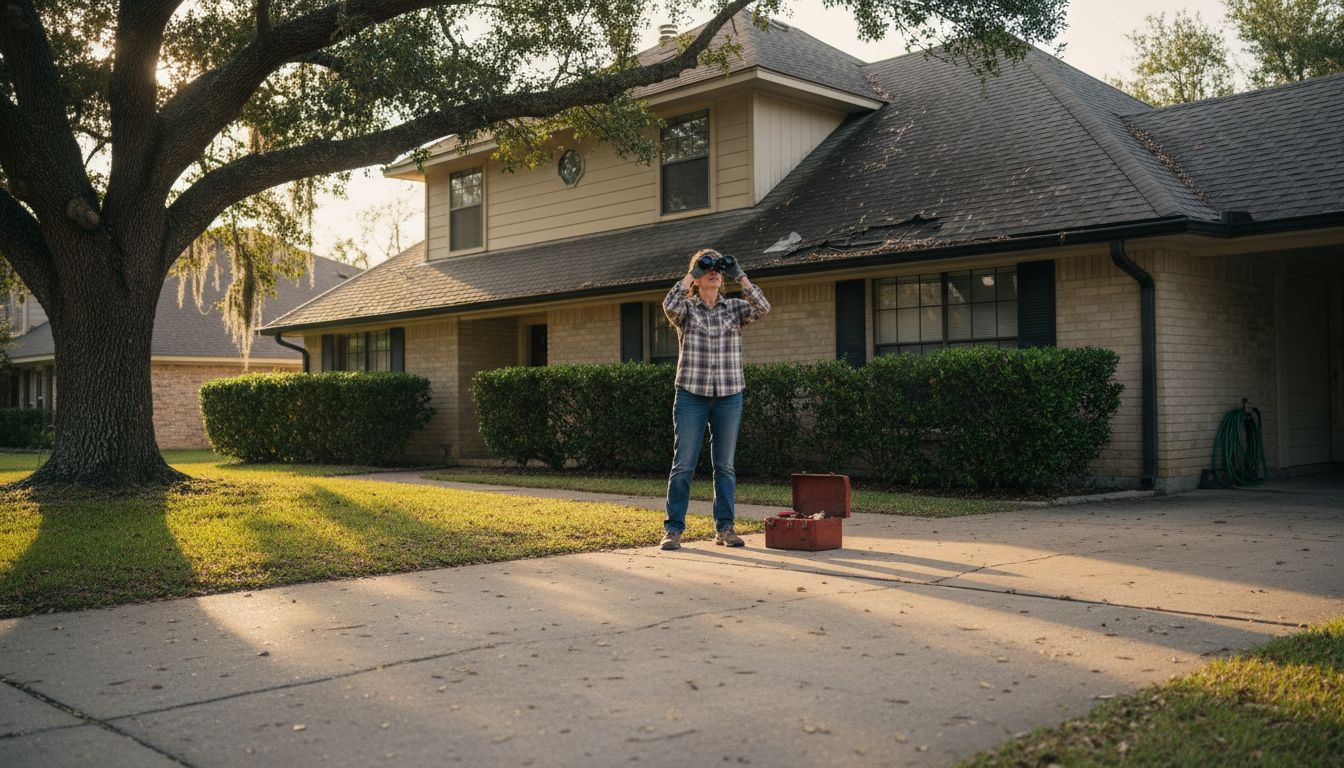
Professional roof inspectors recommend a ground-level visual assessment first checking for obvious signs of damage. For closer examination consider using binoculars or consulting a professional roofing contractor.
Pro tip: Schedule professional roof inspections during spring and fall to catch potential shingle damage before Houston’s most severe weather seasons.
4. Look for Signs of Roof Leaks and Water Stains
Water damage can silently destroy your home’s structural integrity long before you notice significant problems. Identifying and addressing roof leaks early is crucial for Houston homeowners battling frequent storms and unpredictable weather.
Certified inspectors recommend systematic leak detection methods that protect your home’s value and prevent extensive damage.
Critical signs of potential roof leaks include:
- Yellowish or brownish water stains on interior ceilings
- Mold growth in attic or ceiling spaces
- Sagging or bubbling paint near roof edges
- Visible cracks in interior walls or ceilings
- Musty odors in upper floors or attic areas
- Damp spots or puddles in the attic
Early leak detection can save thousands in potential home repair costs.
Warning Signs that demand immediate attention are soft or spongy areas on your roof surface discolored shingles or visible gaps in roofing materials. These indicators suggest water has already begun compromising your roof’s protective barrier.
Houston’s humid climate makes homes particularly vulnerable to moisture-related damage. Regular visual inspections can help you catch potential issues before they escalate into major structural problems.
Pro tip: Use a flashlight during attic inspections to reveal subtle water stains and potential leak sources that might be invisible during casual observations.
5. Trim Trees and Branches Near Your Roof
Houston’s lush landscape means homeowners must be vigilant about tree maintenance to protect their roofing investment. Overhanging branches can cause significant damage during storms and pose serious risks to your home’s structural integrity.
Understanding the legal aspects of tree trimming is crucial for responsible property maintenance. Professional arborists recommend strategic pruning to minimize potential roof damage.
Key considerations for tree maintenance near your roof include:
- Remove dead or diseased branches
- Cut limbs extending over roofing surfaces
- Maintain at least 10 feet of clearance between tree branches and roof
- Check for branches rubbing against shingles
- Trim trees before hurricane season
Preventative tree trimming can save thousands in potential roof repair costs.
Potential Roof Damage Risks from untrimmed trees include punctured shingles fallen limbs during storms and increased moisture retention that can lead to rot and structural weakening. Houston’s frequent thunderstorms amplify these risks significantly.
Consider scheduling professional tree trimming during late winter before the growing season begins. This timing minimizes tree stress and prepares your property for upcoming storm seasons.
Pro tip: When trimming trees near your roof always use clean sharp tools and make cuts at the right angle to promote healthy tree growth and prevent unnecessary damage.
6. Maintain Proper Attic Ventilation and Insulation
Attic ventilation is a critical yet often overlooked aspect of home maintenance that can significantly impact your roof’s longevity and energy efficiency. Houston’s extreme temperatures make proper attic ventilation even more crucial for protecting your home.
Understanding effective attic ventilation strategies helps prevent costly roof damage and reduce energy expenses.
Key components of proper attic ventilation include:
- Balanced intake and exhaust airflow
- Sufficient ventilation openings at soffit and ridge areas
- Prevention of moisture buildup
- Reduction of attic temperature extremes
- Protection against mold and wood rot
Proper attic ventilation can extend your roof’s lifespan and reduce cooling costs by up to 20%.
Critical Ventilation Considerations involve creating a consistent airflow system that removes hot humid air while drawing in cooler fresh air. Static and powered vents work together to achieve this balance ensuring your attic remains dry and temperature-regulated.
Houston homeowners should pay special attention to insulation quality which directly impacts ventilation effectiveness. Compressed or improperly installed insulation can block airflow and reduce overall system performance.
Pro tip: Schedule a professional energy audit to assess your attic’s current ventilation and insulation performance and identify potential improvements.
7. Schedule Professional Roof Inspections Annually
Annual professional roof inspections are the first line of defense against potentially catastrophic and expensive home repairs. Houston’s unpredictable weather demands proactive maintenance to protect your most significant investment.
The National Roof Certification and Inspection Association recommends systematic roof evaluation techniques to identify potential issues before they become major problems.
Key aspects of a comprehensive roof inspection include:
- Examining interior ceilings for water stains
- Checking attic spaces for moisture damage
- Evaluating shingle condition and integrity
- Inspecting flashing and seals around roof penetrations
- Assessing overall roof structural health
Early detection can save homeowners thousands in potential repair costs.
Warning Signs that demand immediate professional attention include visible sagging water stains or unexplained moisture in your attic or ceiling areas. Most roofs require some level of repair or maintenance during annual inspections to maintain optimal performance.
Professional inspectors use advanced techniques to document potential issues providing homeowners with a comprehensive understanding of their roof’s condition. Their detailed reports often include photographic evidence and specific recommendations for maintenance or repair.
Pro tip: Schedule your roof inspection during early spring or late fall to catch potential issues before Houston’s most extreme weather seasons.
Below is a comprehensive table summarizing key roof maintenance strategies and insights for Houston homeowners as discussed in the article.
| Insight Topic | Key Points | Benefits |
|---|---|---|
| Regular Roof Inspections | Check for water stains, shingle damages, and structural issues annually, preferably before storm seasons. | Early problem detection saves significant repair costs and ensures roof integrity. |
| Gutter Maintenance | Clean twice per year, inspect for damages, and ensure proper downspout extension. | Prevents water damage and foundation erosion. |
| Shingle Condition | Inspect for lifted, cracked, or missing shingles. Address damage promptly. | Extends roof lifespan and improves weather protection. |
| Tree Trimming | Maintain a 10-foot clearance between branches and roof surfaces, trimming before storm seasons. | Reduces risks of storm damage and roofing wear from branch contact. |
| Attic Ventilation | Balance air intake and exhaust, and prevent moisture buildup. Ensure insulation isn’t obstructed. | Improves energy efficiency and prolongs material durability. |
| Professional Inspections | Hire certified inspectors annually for a detailed evaluation and maintenance planning. | Comprehensive roof assessments identify subtle issues unnoticeable to untrained observers. |
Protect Your Houston Home with Expert Roof Care from Mister ReRoof
Maintaining your roof against Houston’s harsh weather requires proactive steps like regular inspections and gutter cleaning to prevent leaks and costly damage. If you spot damaged shingles or signs of water stains it is vital to act quickly to preserve your home’s safety and value. Mister ReRoof specializes in high-quality, storm-resistant roofing solutions tailored to Houston’s unique climate challenges ensuring peace of mind with every repair or replacement.

Don’t wait until minor roof issues become major expenses. Visit Mister ReRoof today for a free professional roof inspection and discover how our durable shingle, metal, flat, and TPO roofing systems can protect your investment. Take the first step to a strong, secure roof that stands up to Houston storms—schedule your consultation now.
Frequently Asked Questions
How often should I inspect my roof in Houston?
You should inspect your roof at least once a year, ideally before the hurricane season. Schedule a thorough inspection to identify potential issues early and avoid costly repairs.
What should I look for during a roof inspection?
During your inspection, look for signs of water stains on ceilings, damaged or missing shingles, and any gaps or cracks in flashing and seals. Conduct a visual examination from both ground level and closer up if possible.
How can I maintain my gutters to prevent water damage?
To maintain your gutters, clear them of leaves and debris at least twice a year. Ensure downspouts extend at least 4 to 6 feet from your foundation to provide proper drainage and protect your home’s structural integrity.
What are the signs of a roof leak I should watch for?
Signs of a roof leak include yellow or brown water stains on interior ceilings, mold growth in attic spaces, and sagging or bubbling paint. Pay attention to these signs and address any issues promptly to prevent further damage.
How can tree branches affect my roof’s condition?
Tree branches can cause significant roof damage if they are too close, especially during storms. Trim back any branches that overhang your roof to maintain a clearance of at least 10 feet, reducing the risk of punctured shingles and water retention.
Why is attic ventilation important for my roof?
Proper attic ventilation helps regulate temperature and moisture levels, preventing mold growth and roof damage. Ensure you have balanced intake and exhaust airflow, and consider scheduling a professional energy audit to optimize your ventilation system.
