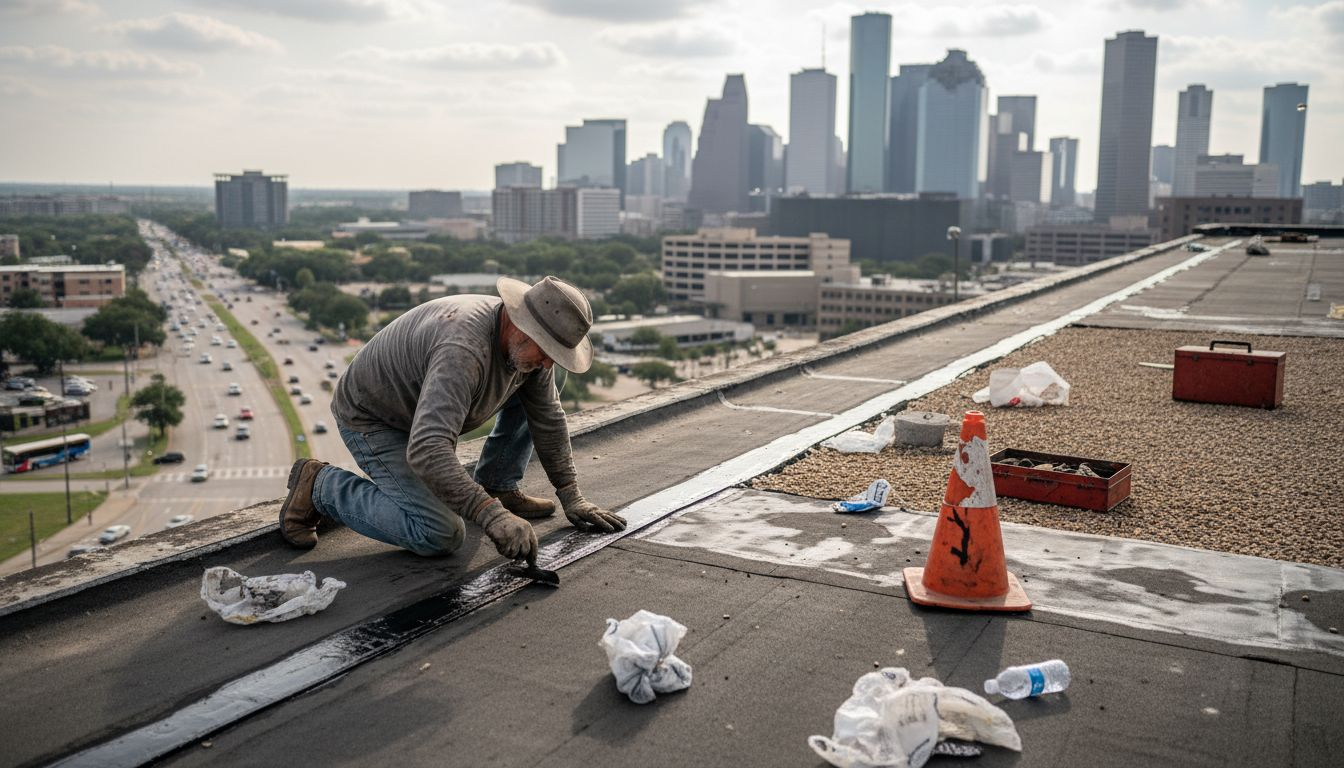
Flat roofs across Houston face relentless heat, pounding rain, and year-round humidity that can quietly shorten their lifespan. For commercial property managers, the challenge is clear: protect your investment by catching minor issues before they demand expensive fixes. Prioritizing routine inspections, cleaning, and timely repairs helps prevent damage from turning into major emergencies and supports budget stability for the long run.
Table of Contents
- Defining Flat Roof Maintenance Practices
- Types of Flat Roofing Systems in Houston
- Key Benefits of Routine Roof Care
- Risks From Neglecting Flat Roofs
- Effective Maintenance Solutions and Schedules
Key Takeaways
| Point | Details |
|---|---|
| Regular Maintenance is Essential | Implement a planned maintenance strategy for flat roofs to identify issues early and prevent costly repairs. |
| Inspection Frequency is Crucial | Conduct inspections at least twice a year, with quarterly checks recommended for Houston’s climate. |
| Membrane Selection Matters | Choose the right roofing membrane based on climate performance, budget, and structural requirements for longevity. |
| Documentation Supports Proactive Management | Maintain detailed records of inspections and maintenance activities to demonstrate due diligence and inform future care. |
Defining Flat Roof Maintenance Practices
Flat roof maintenance is your proactive defense against Houston’s aggressive weather and the costly damage it creates. It’s not reactive repairs after problems appear—it’s a planned strategy that catches issues early before they drain your budget.
At its core, flat roof maintenance means three things: regular inspections, routine cleaning, and timely repairs. These practices work together to protect your investment by detecting membrane damage, clearing clogged drainage systems, and addressing weathering effects before they become expensive problems.
Why Maintenance Matters for Your Bottom Line
A proper flat roof maintenance program protects owner’s investments by catching minor issues before they escalate into major failures. Consider this: a small membrane leak found during inspection might cost $300 to repair. That same leak, ignored for six months, could require $8,000 in structural damage repair.
Your roof degrades continuously from UV exposure, temperature swings, and Houston’s humidity. Planned maintenance extends roof lifespan and prevents premature failure. This is how you get 15-20 extra years of performance from your system instead of facing catastrophic replacement at year 10.
The Core Components of Effective Maintenance
Your maintenance program needs these elements:
- Regular inspections to identify developing problems early
- Routine cleaning to prevent debris buildup that traps moisture
- Timely repairs to address membrane damage and drainage issues
- Safe access points for staff to conduct inspections without risk
- Documentation of all maintenance activities and findings
Different membrane types require specific maintenance approaches. Built-up roofs need different attention than single-ply TPO systems. Your maintenance strategy should account for your roof’s specific material composition.
Inspection Frequency Matters
Minimum maintenance requires inspections twice yearly—spring and fall. Houston properties often benefit from quarterly inspections given the heat and occasional severe weather. After storms, add an immediate inspection to your schedule.
Comprehensive flat roof inspections should document membrane condition, drainage system function, flashing integrity, and any visible damage. This documentation becomes your maintenance roadmap.
Planned Versus Reactive Maintenance
Maintenance falls into two categories: planned and reactive. Planned maintenance includes scheduled inspections, routine cleaning, and minor repairs. Reactive maintenance handles immediate concerns—a sudden leak during heavy rain requires immediate attention.
Your goal is maximizing planned maintenance and minimizing reactive responses. Each reactive emergency costs more money and creates more disruption to your operations.
Structures degrade over time, but regular maintenance keeps roofs functioning safely and efficiently while protecting your property value.
Getting Safe Access Right
Your roof must have safe access for inspection and maintenance work. This means proper walkways, handrails where required, and clear pathways that don’t damage the membrane. Safety compliance prevents accidents and protects your liability exposure.
Pro tip: Schedule your maintenance inspections for late spring and early fall when Houston weather is most stable, giving you clear visibility of conditions and easier access for contractors.
Types of Flat Roofing Systems in Houston
Houston’s intense heat, humidity, and occasional severe weather demand specific roofing materials. Not all flat roof systems perform equally under our climate conditions. Your choice of membrane directly impacts how well your roof handles water, temperature swings, and UV exposure.
Proper material selection is critical for effective flat roof performance in Houston’s climate. The wrong choice means premature deterioration, higher maintenance costs, and potential structural damage from water intrusion.
Understanding Your Three Main Options
Common flat roofing membranes in Houston include EPDM rubber, TPO (thermoplastic polyolefin), and built-up roofing (BUR). Each has distinct advantages and limitations for our specific environment.
Your membrane choice depends on three factors:
- Climate performance in Houston’s heat and humidity
- Budget constraints for initial installation and long-term maintenance
- Building requirements and structural considerations
EPDM Rubber Membranes
EPDM (ethylene propylene diene monomer) is flexible, durable, and offers good UV resistance. This single-ply membrane stretches and contracts with temperature swings, reducing stress on seams and flashings.
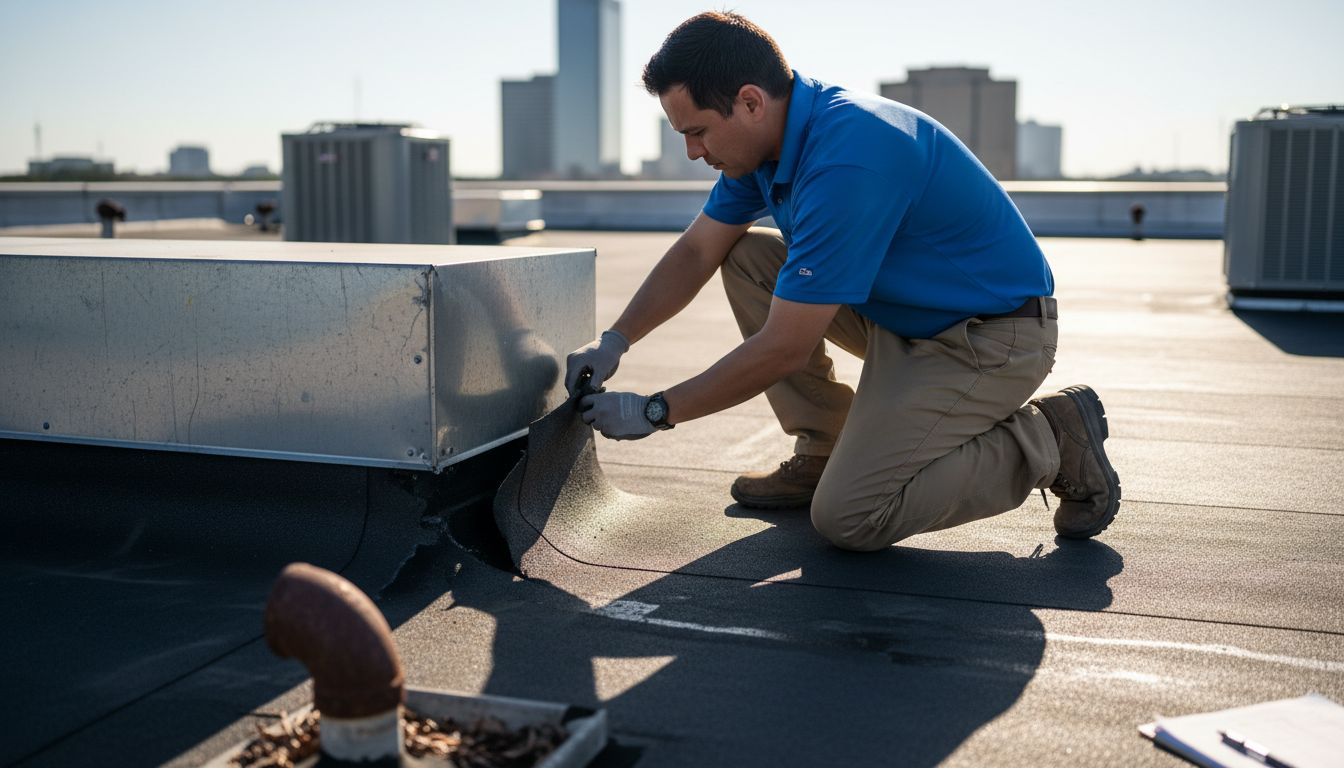
EPDM handles Houston’s temperature variations well. However, it requires regular inspections because small punctures can develop into larger problems. Maintenance costs tend to accumulate over time with this system.
TPO Roofing Systems
TPO membranes offer high reflectivity that bounces heat away from your building. This energy efficiency reduces cooling costs, a major benefit in Houston’s climate. Single-ply installation means fewer seams and faster installation compared to built-up systems.
TPO has become increasingly popular for commercial properties seeking lower energy bills. The membrane resists weathering and maintains flexibility in temperature swings. Quality varies significantly between manufacturers, so contractor experience matters.
Built-Up Roofing (BUR)
Built-up roofing involves multiple layers of bitumen and felts creating strong waterproofing. This system has decades of proven performance, and many Houston buildings use BUR successfully.
BUR systems require more frequent maintenance than modern single-ply options. The hot tar installation process is labor-intensive and creates temporary disruption. However, BUR remains cost-effective for certain applications and performs reliably when maintained properly.
Here’s a quick comparison of flat roof membrane options commonly used in Houston:
| Membrane Type | Lifespan Estimate | Maintenance Complexity | Key Advantage |
|---|---|---|---|
| EPDM Rubber | 15-25 years | Moderate upkeep | Excellent UV resistance |
| TPO | 15-20 years | Lower upkeep | Superior energy savings |
| Built-Up (BUR) | 15-30 years | Higher upkeep | Proven reliability for water management |
This summary helps clarify the main differences between each membrane type related to durability and maintenance needs.
Drainage: The Critical Factor
Flat roofs require slight slopes up to about 10 degrees for water drainage. Houston’s humidity means standing water becomes a major problem quickly. Poor drainage leads to ponding water, membrane deterioration, and structural damage.
Your maintenance program must include regular drainage system inspection and cleaning. Debris-clogged gutters and drain pipes create the conditions where roofs fail prematurely.
Flat roofs in warm climates like Houston require materials that manage heat and water effectively, with proper drainage systems to prevent water pooling and deterioration.
Making Your Selection
Consult with experienced contractors about which system fits your building’s specific needs. Consider the building’s age, current roof condition, and your maintenance capabilities. Long-term cost includes not just installation but ongoing maintenance and eventual replacement.
Pro tip: Request documentation of how each roofing system performed on similar Houston commercial properties, and prioritize references from building managers who can share real maintenance costs and lifespan data.
Key Benefits of Routine Roof Care
Routine roof maintenance isn’t a luxury—it’s a financial necessity that protects your building investment. Without it, your roof becomes a liability waiting to happen.
The math is simple: catch problems early, pay less. Ignore them, pay significantly more. Routine care prevents small issues from becoming catastrophic failures that shut down operations and destroy your budget.
Stopping Problems Before They Start
Routine roof maintenance prevents minor defects from escalating into costly repairs by ensuring early detection and correction of issues. A small membrane crack discovered during inspection costs $200 to fix. That same crack left untreated for months? Now it’s a $5,000 structural repair.
Planned inspections catch degradation, structural movement, and environmental damage before they spread. This early detection approach protects your building’s integrity while keeping repair budgets manageable.
Extending Your Roof’s Lifespan
Regular roof care extends the lifespan of flat roofs significantly. Prevention of leaks, ponding water, and UV damage means your system performs at design capacity for years longer.
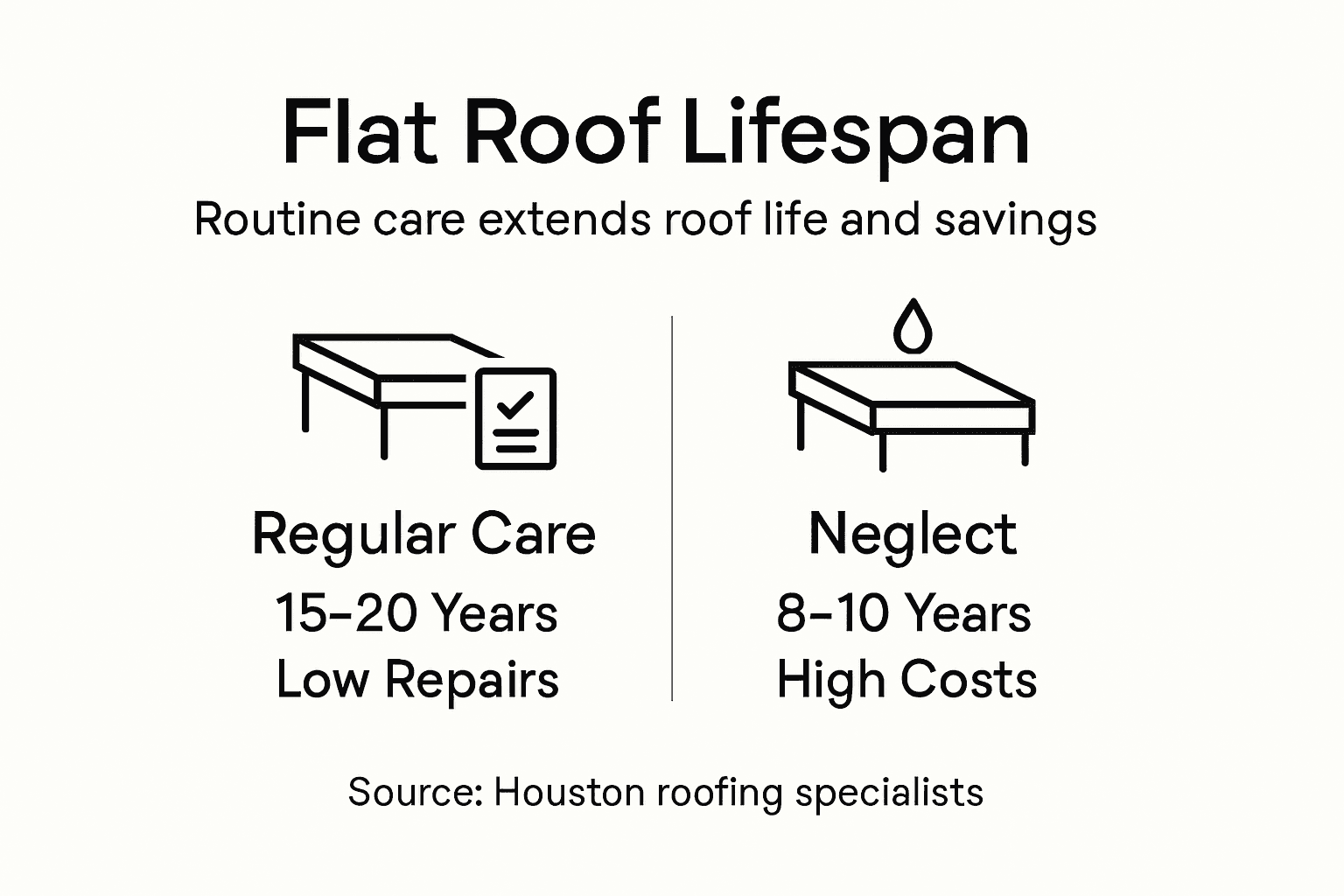
A well-maintained flat roof lasts 15-20 years. Neglected roofs fail by year 8-10. That difference translates to hundreds of thousands in avoided replacement costs.
Protecting Energy Efficiency
Your roof directly impacts your building’s insulation and temperature control. A deteriorating roof loses its thermal properties, forcing your HVAC system to work harder and driving cooling costs higher.
Routine maintenance preserves insulation integrity and energy efficiency. In Houston’s heat, this means lower monthly utility bills and better occupant comfort.
Key maintenance benefits include:
- Preventing leaks that compromise insulation and structural integrity
- Managing drainage to avoid ponding water and membrane stress
- Preserving seals around flashings and penetrations
- Detecting cracks before they allow water infiltration
- Addressing UV damage to extend membrane lifespan
Avoiding Emergency Repairs
Unplanned roof failures create operational chaos. You’re juggling contractor emergencies, emergency repair markups (often 40-50% higher than planned work), and potential building closures.
Routine care shifts you from reactive emergencies to planned, scheduled maintenance. You control the timing, manage contractor selection, and negotiate fair pricing.
Supporting Building Integrity and Safety
Maintenance planning minimizes risks and supports sustainable asset management, preserving building integrity and occupant safety. A failing roof isn’t just an expense—it’s a liability.
Proper inspections identify hazards before they become dangerous. Structural issues, safety violations, and code compliance problems get corrected before they create liability exposure.
Planned inspections, cleaning, and timely repairs maintain roof efficiency, safety, and lifespan while supporting long-term asset preservation.
The Long-Term Financial Picture
Your investment in routine maintenance returns dollars through avoided emergency repairs, extended roof lifespan, and reduced energy costs. Property managers who prioritize maintenance consistently report lower total cost of ownership.
Pro tip: Document all inspections and maintenance activities in a digital system—this creates a maintenance history that demonstrates due diligence to insurers, lenders, and future property buyers while helping contractors identify recurring issues.
Risks From Neglecting Flat Roofs
Neglecting flat roof maintenance isn’t just poor management—it’s a financial disaster in slow motion. Every day without proper care, your roof deteriorates further and your repair bills climb higher.
The consequences compound quickly. Small problems become structural failures. Minor leaks become mold infestations. Your building’s value and safety decline while repair costs skyrocket.
Water Damage and Structural Compromise
Failure to maintain flat roofs results in sediment buildup, ponding water, and material degradation accelerating roof failure. Debris clogs drainage systems, trapping water on your membrane. This standing water creates enormous pressure on the roof structure.
Over time, ponding water penetrates even small cracks, reaching the structure beneath. Water saturation causes wood rot, weakens concrete, and creates conditions for mold growth. Houston’s humid climate accelerates this process dramatically.
Membrane Deterioration and Leaks
Neglected membranes fail progressively. UV exposure degrades the material. Temperature swings cause expansion and contraction stress. Without regular inspection and maintenance, these processes go unchecked.
Small cracks expand into significant breaches. Seams separate. Flashing fails. Once leaks begin, water intrusion spreads rapidly through insulation and framing.
Moisture, Mold, and Health Risks
Neglecting flat roof maintenance risks moisture buildup leading to condensation, saturation, timber decay, and mold growth. Mold becomes visible, but the real damage occurs hidden within walls and insulation.
Building occupants experience respiratory issues and allergic reactions. Your property becomes a liability. Insurance claims escalate. Remediation costs explode beyond what basic roof maintenance would have cost.
Loss of Thermal Efficiency
A deteriorating roof loses its insulation properties. Your HVAC system works harder to maintain temperature, driving energy costs higher every month. In Houston’s climate, this means thousands in unnecessary cooling expenses annually.
Damaged insulation never fully recovers. Even after roof repair, energy efficiency remains compromised, creating ongoing financial drain.
Common risks from neglect include:
- Leaks compromising interior spaces and equipment
- Reduced waterproofing allowing weather penetration
- Thermal expansion damage from temperature stress
- Structural weakening from water saturation
- Safety hazards for building occupants
- Code violations creating legal liability
Escalating Repair Costs
A $500 membrane repair ignored becomes a $5,000 structural repair. That becomes a $50,000 roof replacement. Neglect accelerates failure exponentially rather than linearly.
Emergency repairs cost 40-50% more than planned work. Contractor availability limits your options. You pay premium prices because the situation is urgent.
Use this reference table to understand financial impacts of maintenance versus neglect:
| Care Approach | Typical Repair Cost | Long-Term Expense | Operational Impact |
|---|---|---|---|
| Routine Maintenance | $200-$800 yearly | Lower overall cost | Minimal disruptions |
| Reactive Repairs | $3,000-$50,000+ | Higher total cost | Emergency shutdowns |
| Neglect | $50,000+ roof replacement | Extremely high | Mold, safety issues |
This comparison highlights how proactive upkeep saves money and prevents costly emergencies.
Building Performance Decline
Neglected roofs compromise everything beneath them. HVAC efficiency drops. Indoor air quality deteriorates. Occupant productivity and satisfaction decline. Your building loses market competitiveness and tenant appeal.
Failure to maintain flat roofs leads to excessively expensive repairs or premature roof replacement, compromising building performance and occupant safety.
The Domino Effect
One neglected roof issue triggers cascading problems. Water damage requires remediation. Mold requires professional abatement. Structural repairs require engineering assessment. Insurance claims increase premiums. Property value declines. Tenant complaints escalate.
Pro tip: Schedule a professional roof inspection immediately if you haven’t had one in over a year—many serious issues develop silently and only become visible during thorough inspections before they cause structural damage.
Effective Maintenance Solutions and Schedules
A solid maintenance schedule transforms roof care from chaotic crisis management into predictable, budgetable operations. You control the timing, manage contractors, and protect your investment systematically.
Your maintenance plan needs structure. Without it, inspections get skipped, cleaning gets postponed, and small repairs become emergencies.
The Biannual Inspection Foundation
Effective flat roof maintenance includes scheduled biannual inspections typically in spring and fall, with additional checks after severe weather events. Spring inspections catch winter damage. Fall inspections prepare your roof for seasonal weather changes.
Minimum maintenance requires these two inspections annually. Houston property managers often schedule quarterly inspections given our heat and occasional severe storms. After any significant weather event, add an immediate inspection.
What Your Inspection Checklist Should Include
Effective inspections follow a standardized checklist to ensure nothing gets missed. Document what you find and create a repair priority list.
Inspection checklist items:
- Membrane condition for cracks, blisters, and separation
- Drainage systems for debris, clogs, and proper flow
- Flashing integrity around penetrations and edges
- Standing water or ponding areas
- UV damage and weathering effects
- Seam separation or lifting
- Equipment mounts for corrosion or deterioration
Regular Cleaning and Debris Removal
Regular cleaning prevents 80% of flat roof problems. Debris traps moisture, clogs drainage, and accelerates membrane deterioration. Leaves, dirt, and sediment accumulate year-round.
Schedule quarterly cleaning in Houston’s climate. Remove all debris from the roof surface and clear gutters, drains, and downspouts completely. This single action prevents ponding water and extends roof lifespan significantly.
Repair Protocols and Prioritization
Maintenance programs should be proactive, combining planned maintenance and reactive repairs. Don’t wait for problems to become emergencies.
Prioritize repairs this way:
- Critical repairs addressing active leaks or safety hazards
- High-priority repairs preventing imminent failures
- Routine repairs addressing minor issues before they spread
- Preventive measures applying coatings or sealants
Preventive Measures and UV Protection
Preventive coatings protect membranes from UV damage and weather exposure. Reflective coatings reduce building temperatures and lower energy costs. Sealant applications prevent water infiltration at seams and flashings.
Incorporate preventive measures into your annual maintenance plan. These investments prevent far more expensive repairs down the line.
Documentation and Maintenance Records
Maintenance plans must be documented. Create inspection checklists, repair protocols, and maintenance schedules in writing. Digital systems track all activities and help identify patterns.
Good documentation demonstrates due diligence to insurers and lenders. It helps contractors understand your roof’s history and identify recurring issues. When selling the property, documented maintenance history increases property value.
Safe Access and Contractor Requirements
Safe access must be provided for all maintenance activities. Establish walkways, handrails, and safe access points. Ensure contractors follow safety protocols.
Maintenance schedules should be tailored to material type and usage, with regular inspections identifying early deterioration signs and enabling proactive risk management.
Creating Your Annual Maintenance Calendar
Build your maintenance schedule around these key dates. Spring inspection (March-April), summer cleaning (June), fall inspection (September-October), and winter assessment (December). After storms, add unscheduled inspections.
Assign responsibility for each task. Track completion and document findings. Share results with your team so everyone understands roof conditions.
Pro tip: Use a digital maintenance management system to schedule reminders, track completed work, and store inspection photos and reports—this creates an invaluable historical record that contractors reference and helps justify budget requests to leadership.
Protect Your Houston Investment with Expert Flat Roof Maintenance
Protecting your flat roof from Houston’s intense weather requires more than just occasional fixes. The real challenge is establishing a planned maintenance program that includes regular inspections, timely repairs, and proper drainage management to avoid costly damage and premature roof failure. If you are concerned about membrane deterioration, ponding water, or rising energy costs due to a neglected roof, it is time to act with confidence.
Mister ReRoof understands these challenges and offers professional roofing solutions tailored to Houston’s climate. Whether your flat roof is EPDM, TPO, or built-up roofing, our experienced contractors deliver high-quality, durable services designed to extend your roof’s lifespan and maximize energy efficiency. Don’t wait for emergency repairs that disrupt your business and drain your budget.
Discover how our proactive roof replacement services and maintenance expertise can safeguard your property. Visit our homepage at Mister ReRoof to schedule a free estimate today. Protect your investment now and avoid costly surprises later.
Frequently Asked Questions
What are the core components of flat roof maintenance?
The core components of flat roof maintenance include regular inspections, routine cleaning, timely repairs, safe access points for maintenance staff, and thorough documentation of all maintenance activities.
How often should flat roofs be inspected?
It is recommended to inspect flat roofs at least twice a year, ideally in the spring and fall. Given the climate conditions, quarterly inspections may be beneficial, especially after severe weather events.
What are the main types of flat roofing membranes?
The main types of flat roofing membranes include EPDM rubber, TPO (thermoplastic polyolefin), and built-up roofing (BUR). Each type has its advantages and maintenance needs based on the specific environmental conditions.
How can routine maintenance save money in the long run?
Routine maintenance helps catch minor issues before they escalate into major repairs. By addressing small problems early, you can avoid costly repairs and extend the lifespan of your roof, ultimately saving significant amounts of money.
