
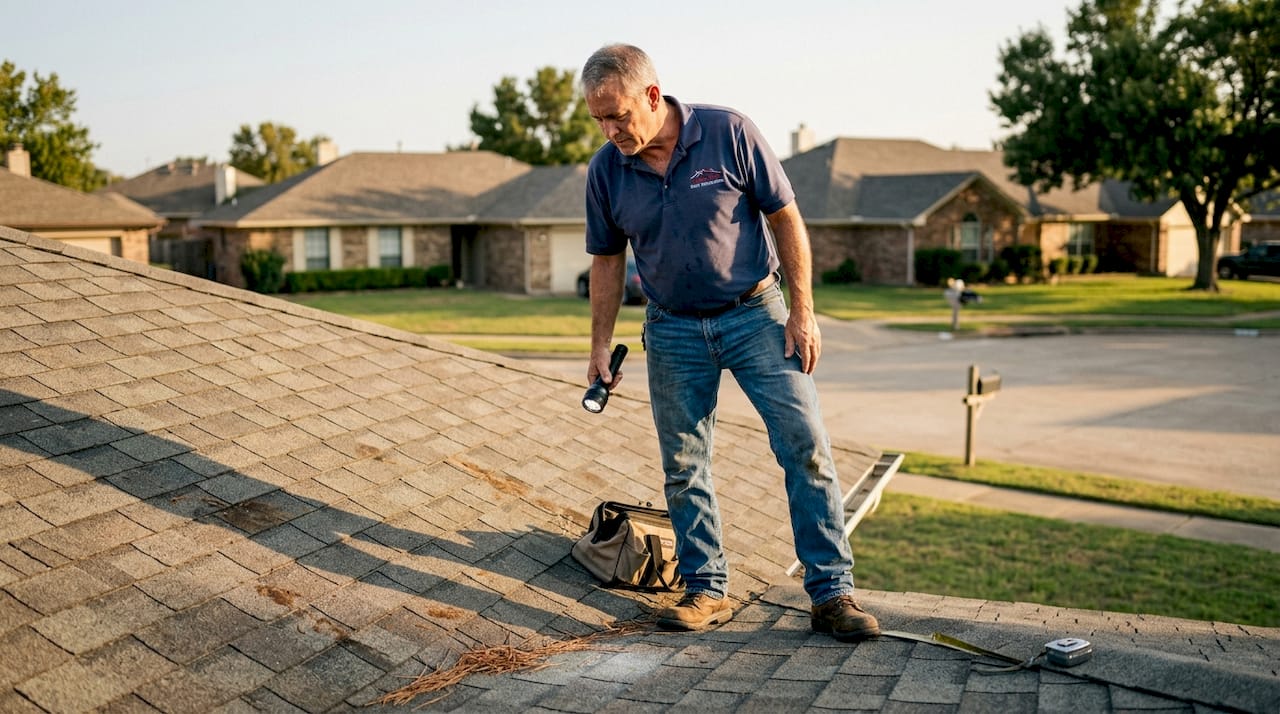
A Texas homeowner in Houston recently discovered their roof warranty was voided because of undetected hail damage. The roof looked perfectly fine from the street. No leaks, no missing shingles, no obvious signs of trouble. Yet underneath, granule loss and bruised shingles had been quietly worsening for two years. This scenario plays out more often than most homeowners realize, and 1 in 3 Houston roofs carries hidden damage that never shows up until it becomes a very expensive problem.
Table of Contents
- How Texas weather puts roofs to the test
- The real risk of hidden roof problems
- What does a roof inspection include?
- How inspections extend roof life and save you money
- When and how often should Texas homeowners get roof inspections?
- Roof inspections, insurance, and peace of mind
- Protect your Texas home with expert roof inspections
- Frequently asked questions
Key Takeaways
| Point | Details |
|---|---|
| Texas roofs face high risk | Hail, sun, and humidity wear out roofs faster in El Campo and Houston. |
| Inspections save money | Early detection costs far less than delayed roof repair or replacement. |
| Hidden damage is common | 1 in 3 Houston-area roofs have issues you can’t see from the ground. |
| Routine checks boost lifespan | Annual inspections extend a roof’s service life and protect your insurance coverage. |
How Texas weather puts roofs to the test
Let’s start by looking at what makes Texas roofs so vulnerable. El Campo and Houston sit in one of the most punishing climate zones in the country for roofing materials. You’re dealing with intense UV radiation, high humidity, and a hail season that hits hard every single year.
Texas recorded over 1,000 hail events in 2023 alone. That’s not a rare weather anomaly. That’s a pattern. Houston’s combination of UV exposure and humidity causes asphalt shingles to break down faster than in drier climates, shortening the lifespan of materials that might last 25 years elsewhere.
The weather effects on Texas roofs go beyond surface damage. Pipe boots, the rubber seals around plumbing vents, typically fail within 8 to 12 years in Texas conditions. That’s well before most homeowners think to check them. Houston roofing storm protection requires a proactive mindset, not a reactive one.
| Weather threat | Impact on roofing | Inspection priority |
|---|---|---|
| Hail (frequent) | Granule loss, bruising, cracks | High, after every major storm |
| UV radiation | Shingle brittleness, fading | Medium, annual check |
| High humidity | Mold, rot, flashing corrosion | High, biannual check |
| Wind storms | Lifted shingles, flashing gaps | High, post-storm |
“Texas homeowners face a unique combination of hail frequency, UV intensity, and humidity that accelerates roof aging faster than almost any other state. Inspections aren’t optional here. They’re essential.”
The real risk of hidden roof problems
With weather risks in mind, what does a roof inspection actually reveal that you might miss on your own? The honest answer is: quite a lot. Standing in your yard and looking up gives you maybe 40% of the picture.
Visual inspections detect only 62% of hail impacts, meaning more than a third of storm damage goes unnoticed without professional tools. That gap matters enormously when you factor in repair costs. A small flashing gap caught early might cost $200 to fix. Left alone for two seasons, the same issue can turn into a $3,000 to $10,000 repair involving decking, insulation, and interior water damage.
Pro Tip: After any storm that drops hail larger than a quarter, schedule a professional inspection within 30 days. Insurance claim windows in Texas are time-sensitive, and documented damage is far easier to claim than damage discovered months later.
Here’s what professional inspectors find that homeowners routinely miss:
- Hail bruising on shingles that looks like a soft dent, invisible from the ground
- Flashing separations at chimneys, skylights, and valleys where water enters silently
- Failed pipe boot seals that allow slow leaks into the attic over months
- Granule accumulation in gutters that signals accelerated shingle wear
- Soft spots in the decking that indicate moisture has already reached the structure
Understanding why roofs fail in Texas starts with recognizing that most failures are gradual. The Texas roof maintenance importance isn’t just about fixing problems. It’s about catching them before they multiply.
What does a roof inspection include?
To understand exactly what value you’re getting, here’s what a thorough roof inspection covers in Texas. A professional inspection is not a quick visual walkover. It’s a systematic evaluation with documentation.
A complete inspection typically covers these areas in order:
- Shingles checked for cracking, curling, bruising, and granule loss
- Flashing at all penetrations, valleys, and edges inspected for gaps or corrosion
- Pipe boots and seals tested for flexibility and integrity
- Gutters and drainage checked for blockages, sagging, and granule buildup
- Attic ventilation evaluated for moisture, mold, and insulation condition
- Structural decking assessed for soft spots or signs of water intrusion
- Sealants and caulking around all roof penetrations reviewed for cracking
| Inspection type | What’s covered | Tools used | Documentation |
|---|---|---|---|
| Visual walkover | Surface shingles only | Eyes, binoculars | None typically |
| Professional inspection | Full system, attic, structure | Moisture meters, cameras, drones | Written report, photos |
Class 4 impact-resistant shingles can withstand 2-inch hail, but only if they’re installed correctly and maintained. A professional inspection confirms that your roofing system is actually performing as designed. Reviewing common Texas roof problems shows just how many issues develop silently. Using a roof maintenance checklist between professional visits keeps you informed year-round.
How inspections extend roof life and save you money
So what does this proactive approach translate to for your wallet and your roof’s long-term performance? The numbers tell a clear story. Catching a problem early costs a fraction of what it costs to fix after it spreads.
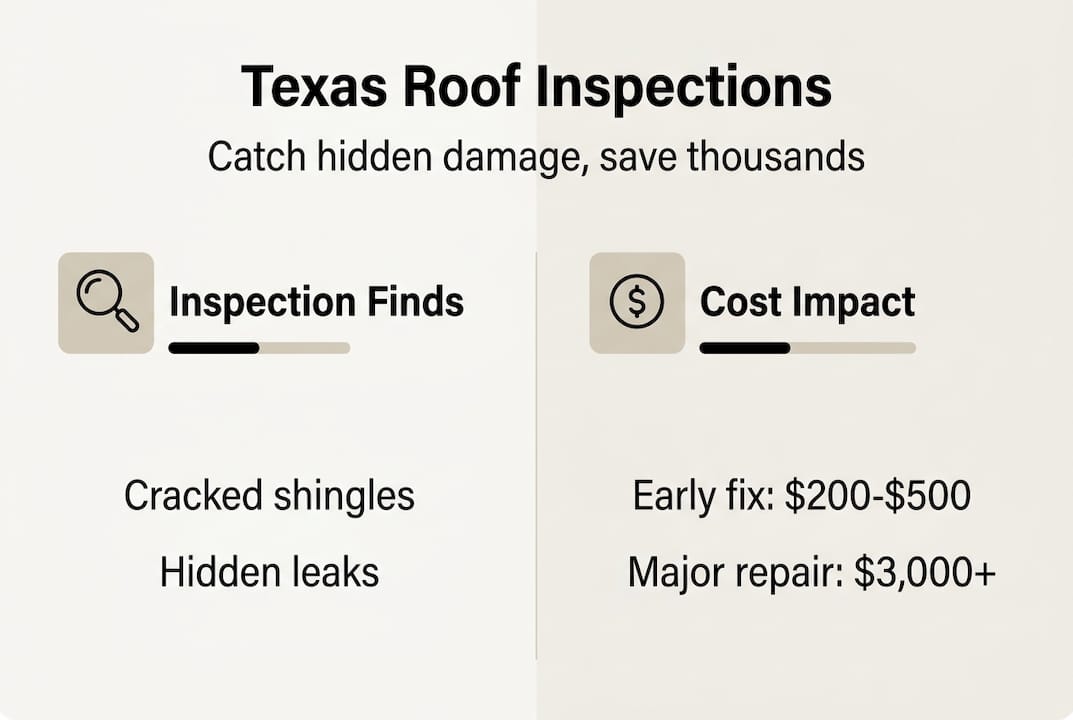
The cost comparison is stark: early detection repairs run $200 to $500. Waiting until damage becomes structural pushes costs to $3,000 to $10,000 or more. Routine inspections don’t just save money on individual repairs. They extend the overall lifespan of your roof by ensuring small issues never become big ones.

Pro Tip: Keep a folder with your inspection reports, photos, and any repair receipts. When you sell your home, this documentation signals to buyers that the roof has been professionally maintained. It’s a genuine selling point in the Houston and El Campo markets.
Here’s what consistent inspection habits deliver over time:
- Warranty protection: Many manufacturer warranties require documented maintenance to remain valid
- Insurance readiness: Insurers respond faster to claims backed by recent inspection reports
- Budget predictability: Knowing your roof’s condition lets you plan repairs before they become emergencies
- Extended lifespan: A roof that gets annual attention regularly outlasts one that’s ignored by 5 to 10 years
Investing in roof quality and savings starts with knowing what you have. Exploring roof upgrades for Texas homes becomes a smarter decision when you have a clear picture of your current system’s condition.
When and how often should Texas homeowners get roof inspections?
Now let’s get practical. How often should you actually schedule a professional roof inspection in Texas? The answer depends on your roof’s age, material, and recent weather history.
Here’s a straightforward schedule for El Campo and Houston homeowners:
- Annual inspection: Every home should have at least one professional inspection per year, ideally in spring before peak hail season or in fall before winter moisture.
- Post-storm inspection: After any storm with hail larger than a dime or winds above 60 mph, schedule an inspection within 30 days.
- Semi-annual inspection: Homes with roofs older than 15 years or with known previous damage should be inspected twice a year.
- Pre-sale inspection: Before listing your home, a professional inspection protects you from surprises during the buyer’s due diligence.
What happens if you skip these checkpoints? Pipe boots fail within 8 to 12 years under Texas conditions, often without any visible sign from inside the home. Skipping inspections means that failure goes undetected until water damage appears in your ceiling or attic.
Additional timing triggers to watch for:
- Your roof is approaching the 10-year mark
- You notice granules in your gutters after rain
- Neighbors with similar homes are filing storm damage claims
- You’re buying or refinancing a home
Using a roof inspection checklist for Texas between professional visits helps you spot early warning signs before they grow.
Roof inspections, insurance, and peace of mind
A final key benefit: documentation can protect your finances after a storm. Texas insurance claims for hail and wind damage are among the most contested in the country. Having a professional inspection report in hand changes the conversation with your adjuster significantly.
“Early inspections catch damage that insurance adjusters frequently miss on initial visits. Homeowners with documented inspection histories consistently see faster approvals and more complete settlements on hail insurance claims.”
Insurers increasingly require proof of recent maintenance when processing hail and wind damage claims. A roof with no inspection history is harder to advocate for. One with documented annual checkups tells a clear story of responsible ownership.
Key insurance-related benefits of regular inspections:
- Faster claim processing: Adjusters can compare pre-storm and post-storm documentation
- Stronger claim outcomes: Successful claims are more common when damage is caught and reported early
- Coverage protection: Some policies reduce payouts or deny claims on roofs with no maintenance history
- Dispute prevention: Written reports from licensed inspectors carry weight in contested claims
Understanding the roofers’ role in insurance claims helps you navigate the process confidently. Learning about insurance for Houston roof repairs before you need it puts you in a much stronger position when a storm hits.
Protect your Texas home with expert roof inspections
Ready to safeguard your biggest investment? You now know what’s at stake, what inspections cover, and how often to schedule them. The next step is connecting with a roofing team that knows El Campo, Houston, and the specific challenges Texas weather creates.

At Mister ReRoof, we work with homeowners across El Campo, Houston, and surrounding Texas communities to assess roof condition and recommend the right solutions. Whether you need a shingle roof replacement in El Campo, a flat roof replacement in El Campo, or a TPO roof replacement for a commercial property, we bring the expertise to get it done right. Contact Mister ReRoof today for a free estimate and take the guesswork out of your roof’s condition.
Frequently asked questions
How much does a roof inspection cost in Texas?
Most professional roof inspections in Texas cost between $150 and $400 depending on roof size and inspection depth. That upfront cost is a fraction of the early repair savings compared to catching damage late.
What is checked during a Texas roof inspection?
A thorough inspection covers shingles, flashing, pipe boot seals, gutters, attic ventilation, and structural decking for signs of hail, wind, or moisture damage. Inspectors use moisture meters and cameras to find problems that aren’t visible to the naked eye.
How often should I get my Houston or El Campo roof inspected?
Schedule a professional inspection at least once a year and always after major hail or wind storms. Roofs older than 15 years benefit from semi-annual checks given how quickly Texas conditions accelerate wear.
Can regular inspections lower my home insurance premium?
Many Texas insurers offer faster claim approvals and some offer premium discounts when homeowners provide proof of regular roof inspections. Documented maintenance history signals lower risk to underwriters and strengthens your position during any insurance claim process.