TL;DR:
- Eco-friendly roofing materials in Texas should prioritize reflectivity, durability, and recyclability.
- Metal and TPO roofs are ideal for Texas due to high performance and environmental benefits.
- Proper system design and installation are crucial for maximizing energy savings and sustainability.
Texas summers are brutal, and your roof takes the full force of that heat every single day. Cooling costs in Houston and South Texas can spike well beyond what most homeowners budget for, and the roofing material above your head plays a bigger role than most people realize. The good news is that choosing an eco-friendly roof is no longer a trade-off between values and savings. The right material can cut your energy bills, reduce your carbon footprint, and hold up against Texas weather for decades. This guide breaks down the real criteria, the best options, and how to make a smart choice for your home.
Table of Contents
- How to evaluate roofing materials for environmental impact
- Leading environmentally friendly roofing materials for Texas homes
- Comparison: performance, costs, and eco-impact of each roofing material
- How to choose the right eco-friendly roof for your home
- Our perspective: Why ‘eco-friendly’ roofing in Texas takes more than just a green label
- Next steps: Upgrading to an environmentally friendly roof in Texas
- Frequently asked questions
Key Takeaways
| Point | Details |
|---|---|
| Solar reflectance matters most | Choose materials with high solar reflectance for the greatest energy and environmental benefits. |
| LCA gives true eco-impact | Use life cycle assessment to compare materials considering manufacturing, use, and end-of-life stages. |
| Metal and TPO fit Texas heat | Metal and TPO roofs offer top energy savings, durability, and recyclability for Texas conditions. |
| Quality installation is essential | Proper installation and system design are as important as material choice for real environmental impact. |
How to evaluate roofing materials for environmental impact
Not every “green” roof is created equal. Before you trust a product label, you need to understand what actually makes a roofing material environmentally friendly. There are four core metrics worth knowing.
- Solar reflectance (albedo): How much sunlight the roof bounces back instead of absorbing as heat
- Recycled content: The percentage of the material made from pre-existing or post-consumer resources
- Embodied energy: The total energy used to extract, manufacture, and transport the material before it ever reaches your home
- Recyclability: Whether the material can be repurposed at the end of its life instead of going straight to a landfill
One of the most reliable ways to evaluate a roofing product is through a cradle-to-gate LCA, which stands for life cycle assessment. This method measures a material’s environmental impact from raw material extraction all the way through manufacturing. It gives you a real picture of a product’s footprint before it even gets installed.
Color alone is not a reliable guide. Cool roofs reduce heat transfer to buildings primarily through high solar reflectance, not just by being white or light-colored. A dark metal roof with a tested high-reflectivity coating can outperform a light-colored asphalt shingle with poor reflectance ratings. This is why checking for independent ratings from organizations like the Cool Roof Rating Council matters.
Insulation and ventilation also factor into total environmental performance. Even the most reflective roof loses its edge if your attic is poorly ventilated. Our cool roofing guide covers how the full roofing system works together, and pairing that with energy-efficient roofing choices amplifies your results.
Pro Tip: Always check for independent reflectivity ratings, specifically CRRC or Energy Star certifications, before purchasing any roofing product. Manufacturer claims alone are not enough.
Leading environmentally friendly roofing materials for Texas homes
With clear criteria in mind, let’s examine the greenest roofing choices available to Texas homeowners.
Cool metal roofing is one of the strongest performers in Texas. Steel and aluminum roofs with reflective coatings can last 40 to 70 years, contain significant recycled content, and are fully recyclable at the end of their life. The benefits of metal roofing for Texas homes go beyond durability. Metal and cool roofs can cut AC needs by 10 to 15% in hot regions, which adds up fast in a Texas summer.
TPO roofing (thermoplastic polyolefin) is a single-ply membrane common on flat roofs. It reflects heat effectively, is energy-efficient, and is a strong choice for commercial or low-slope residential roofs. It is also recyclable, though the process is more specialized than metal.
Recycled-content shingles are made from materials like rubber, plastic, or reclaimed wood fiber. They divert waste from landfills and can mimic the look of traditional shingles. Longevity varies by brand, so checking independent ratings is important.
Clay and concrete tile has excellent thermal mass, meaning it absorbs heat slowly and releases it after the sun goes down, which helps moderate indoor temperatures. It is long-lasting (50 or more years), but heavy and expensive upfront.
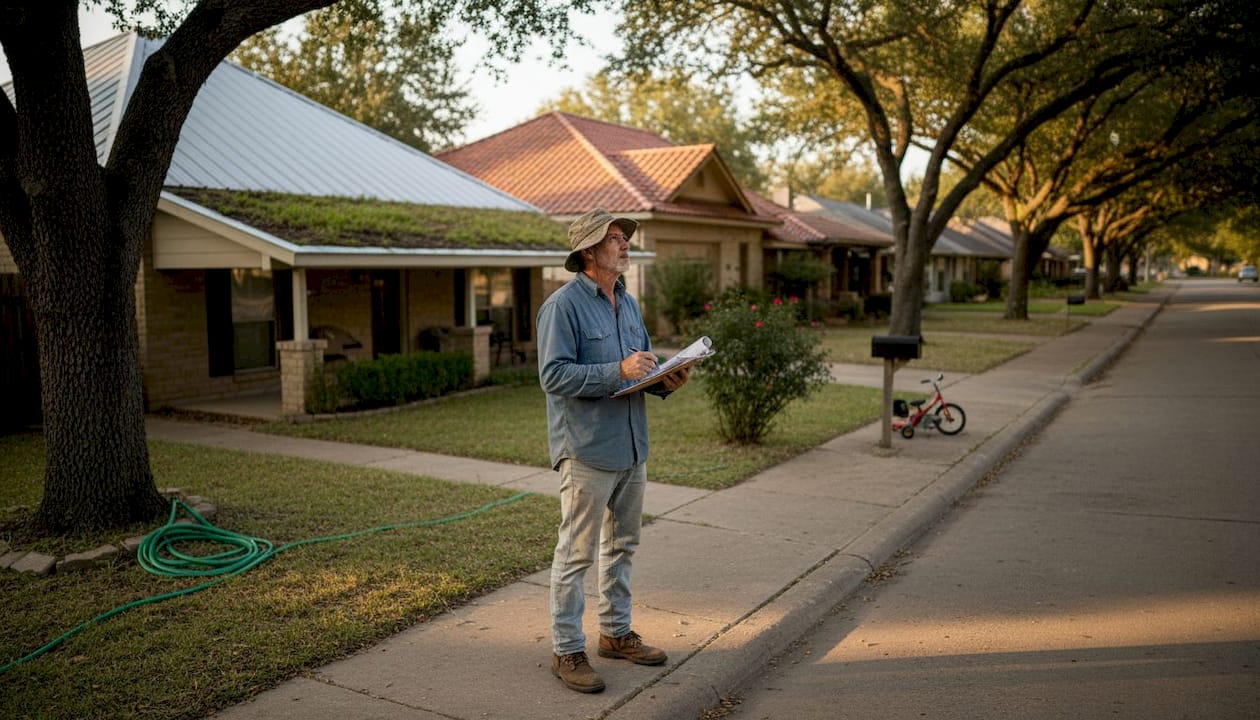
Green or living roofs are rare in Texas residential settings but worth mentioning. They provide insulation, manage stormwater, and reduce urban heat. The maintenance demands and structural requirements make them a niche option.
Selecting a product based on tested radiative properties like solar reflectance and thermal emittance is more reliable than relying on color alone. For broader context on sustainability, our roofing sustainability insights page is worth reviewing.
Pro Tip: Consider longevity as an environmental metric. A roof that lasts 50 years instead of 20 means two fewer full replacements going to the landfill.
Comparison: performance, costs, and eco-impact of each roofing material
After exploring each option, it’s helpful to see them compared head-to-head.
| Material | Upfront cost | Lifespan | Energy savings | Recycled content | Recyclable | Texas climate fit |
|---|---|---|---|---|---|---|
| Cool metal | High | 40-70 yrs | 10-15% cooling reduction | High (25-95%) | Yes | Excellent |
| Cool shingles | Moderate | 20-30 yrs | 7-15% cooling reduction | Low-moderate | Limited | Good |
| TPO | Moderate | 15-30 yrs | 10-20% cooling reduction | Moderate | Specialized | Excellent (flat roofs) |
| Recycled shingles | Moderate | 30-50 yrs | Moderate | Very high | Varies | Good |
| Clay/concrete tile | High | 50+ yrs | Moderate (thermal mass) | Low | Partial | Good |
| Green/living roof | Very high | 30-50 yrs | High (insulation) | N/A | N/A | Niche/limited |
A cradle-to-gate LCA shows that a material’s true eco-footprint must include both the production phase and the in-use phase. A cheap shingle that needs replacement in 15 years may carry a higher lifetime environmental cost than a premium metal roof installed once.
The table makes one thing clear: no single material wins on every metric. Metal leads on recyclability and lifespan. TPO wins for flat-roof energy performance. Recycled shingles score high on content but lower on end-of-life recyclability. Clay tile is a long-term investment with moderate energy benefits.
For Texas homeowners, the climate fit column matters most. Extreme summer heat means reflectivity and durability are non-negotiable. Explore durable roofing choices that hold up across seasons.
How to choose the right eco-friendly roof for your home
Now that you’ve seen how the major options stack up, let’s focus on making the best decision for your situation.
Every home is different. Roof slope, HOA rules, local building codes, and your personal budget all shape what makes sense. Roofs contribute to energy and environmental outcomes through both materials and system design, so you need to think about the whole picture, not just the shingle or panel.
Here is a step-by-step approach to narrowing down your choice:
- Define your primary goal. Is it lower energy bills, reduced environmental impact, or both? This shapes which metrics matter most to you.
- Check your roof slope. Metal and shingles work on pitched roofs. TPO is designed for flat or low-slope applications.
- Review HOA and local code requirements. Some Texas neighborhoods restrict certain materials or colors.
- Set a realistic budget. Factor in lifespan, not just upfront cost. A more expensive roof that lasts twice as long often costs less over time.
- Ask your contractor the right questions. Request examples of rated products they have installed locally, ask about CRRC or Energy Star certifications, and confirm they follow local code requirements.
Those contractor conversations matter more than most homeowners expect. Our guide on energy-saving roof upgrades and roofing longevity advice can help you prepare for that conversation.
Pro Tip: Ask your contractor for recent examples of energy or cost savings from similar installs in your area. Real local data beats national averages every time.
Our perspective: Why ‘eco-friendly’ roofing in Texas takes more than just a green label
With everything covered so far, it’s time to address what we see homeowners get wrong most often. The word “eco-friendly” on a product brochure means almost nothing without independent verification. In Houston and South Texas, where summer temperatures push well above 95 degrees for months at a time, reflectivity and full-system design are not optional extras. They are the baseline.
We have seen homeowners choose light-colored shingles thinking they were making a smart environmental choice, only to find their energy bills barely moved because the product had poor tested reflectance. Certification from CRRC or Energy Star is not marketing. It is the proof that the product actually performs.
The other mistake we see regularly is treating installation as an afterthought. A high-rated cool roof installed without proper attic ventilation or with gaps in the underlayment will underperform every time. The true environmental impact of your roof comes from the material, the system design, and the quality of the install working together. Skimping on any one of those three cancels out the gains from the other two. Smart eco choices balance upfront cost, in-use energy performance, and a clear plan for what happens to the material when it eventually comes off your home.
Next steps: Upgrading to an environmentally friendly roof in Texas
Ready to take action? Here is how you can get started with a sustainable roof for your Texas home.
At Mister ReRoof, we work with Texas homeowners to find roofing solutions that meet current energy and environmental standards without compromising on durability or budget. Whether you’re considering a metal roof replacement for maximum longevity or an eco-friendly shingle replacement that fits your neighborhood’s style, we bring the expertise to match the right system to your home.
Our team provides free consultations to walk you through your options, explain the certifications that matter, and give you honest guidance based on local Texas conditions. We know the weather here, we know the codes, and we know what actually performs. Contact Mister ReRoof today to schedule your free estimate and take the first step toward a roof that works as hard as you do.
Frequently asked questions
Which roofing material is the most environmentally friendly for Texas?
Cool metal and TPO roofing typically offer the best blend of durability, reflectivity, and recyclability for Texas homes. Using a cradle-to-gate LCA confirms that both materials perform well across production and in-use phases.
Does roof color really matter for energy efficiency?
Color is a secondary factor. The key is solar reflectance and thermal emittance, so always choose roofs with independently tested high reflectivity ratings rather than relying on color alone.
How does eco-friendly roofing lower my energy bills in Texas?
By reflecting more sunlight and reducing heat transfer into your home, eco-friendly roofs ease the load on your AC system. Cool roofs reduce heat transfer through high solar reflectance, which directly translates to lower cooling costs during Texas summers.
Is a recycled-content shingle roof as good as a cool metal roof for the environment?
Both have real benefits, but metal roofs typically last longer and are more easily recycled at end of life. For the most accurate comparison, life cycle assessment methods give you a data-backed answer specific to each product’s full environmental footprint.