
TL;DR:
- Proper roof drainage is essential to prevent water damage, mold, and foundation issues in Texas homes.
- Texas storms demand oversized, well-maintained drainage systems including gutters, scuppers, and interior drains.
- Regular inspections and proactive upgrades ensure drainage systems perform effectively during severe weather events.
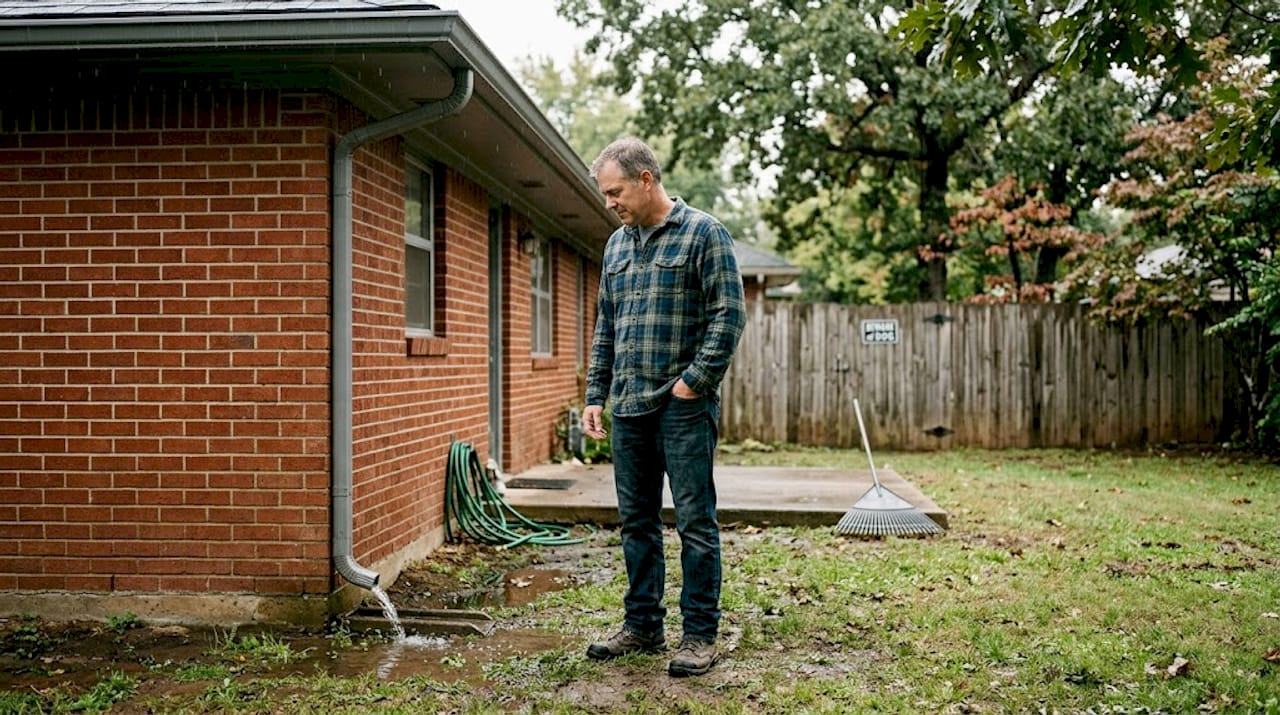
Most Texas homeowners don’t think about roof drainage until water is pouring through the ceiling or pooling around the foundation. By then, the damage is already done. Poor drainage is one of the leading causes of premature roof failure, mold growth, and structural decay in Texas homes. With Gulf Coast storms delivering rainfall that can overwhelm an unprepared system in minutes, understanding how water moves off your roof isn’t optional. This guide breaks down how drainage systems work, what Texas weather demands from them, and what you can do right now to protect your property before the next storm rolls in.
Table of Contents
- Understanding roof drainage: What, why, and how it works
- Texas weather challenges: Why roof drainage is crucial
- Common roof drainage solutions for Texas homes
- Inspection and maintenance: Keeping your roof drainage effective
- A perspective you won’t hear from most contractors
- Ready to make your Texas roof weatherproof?
- Frequently asked questions
Key Takeaways
| Point | Details |
|---|---|
| Proper drainage matters | Effective roof drainage protects your Texas home from costly storm and water damage. |
| Adapt to Texas weather | Your drainage system should handle heavy rain, intense storms, and changing climate patterns. |
| Regular inspections are essential | Check and clean your drains, gutters, and scuppers at least twice a year and after every big storm. |
| Choose the right solution | Match your roof type with the best drainage system and maintain code compliance for peace of mind. |
| Plan for the future | Upgrading for more extreme weather can save you money and stress in the long run. |
Understanding roof drainage: What, why, and how it works
Every roof, whether it’s a steep-pitched shingle roof or a flat commercial-style surface, needs a drainage system designed to move water away from the structure quickly and completely. Without it, water finds its own path, and that path usually runs straight into your walls, insulation, or foundation.
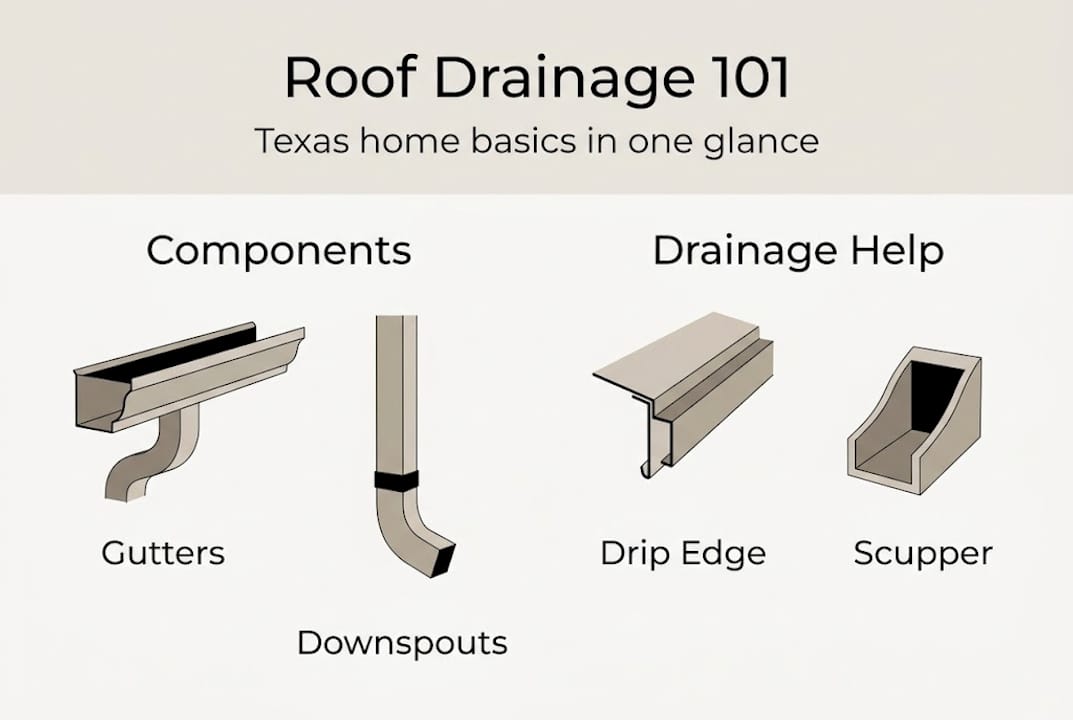
The primary components of any roof drainage system include gutters, downspouts, drip edges, scuppers, and interior drains. On sloped roofs, gravity does most of the heavy lifting. Water flows down the pitch, hits the drip edge at the roof’s perimeter, and drops into the gutters before traveling through downspouts away from the home. Simple in theory, but only effective when every piece is properly sized, installed, and maintained.
Flat and low-slope roofs are a different story. They can’t rely on gravity alone because there’s not enough pitch to move water naturally. These roofs require tapered insulation with a minimum slope of 1/4 inch per foot and at least one interior drain per 1,000 square feet. Without this, water pools on the surface, adding weight and accelerating membrane deterioration.
Here’s a quick reference for the main components and what they do:
| Component | Function | Typical placement |
|---|---|---|
| Gutters | Collect runoff from the roof edge | Along the eaves |
| Downspouts | Channel water from gutters to ground | Corners and midpoints |
| Drip edges | Direct water away from fascia | Roof perimeter |
| Scuppers | Drain water from flat roof edges | Parapet walls |
| Interior drains | Remove water from flat roof surfaces | Center or low points |
Key components to inspect regularly:
- Gutters: Check for sagging, separation, or blockages from leaves and debris
- Downspouts: Confirm they discharge at least 6 feet from the foundation
- Drip edges: Look for rust, gaps, or improper overlap with shingles
- Scuppers: Verify openings are clear and properly sized for your roof area
- Interior drains: Test flow rate and check strainers for clogs
Routine roof inspection importance cannot be overstated. A drainage system that worked fine last year may be partially blocked, corroded, or undersized for current weather demands. Catching problems early costs a fraction of what water damage repairs run.
Texas weather challenges: Why roof drainage is crucial
Texas doesn’t do anything halfway, and that includes rainfall. The Gulf Coast region regularly experiences intense, fast-moving storms that dump enormous volumes of water in short windows of time. Your drainage system isn’t just a convenience. It’s your home’s first line of defense.
Here’s a number that puts it in perspective: Houston’s building codes are designed around 100-year rainfall rates of ~4.6 in/hr. That means your drainage system needs to handle nearly 5 inches of rain in a single hour without failing. The Texas roof drainage code requires both primary and secondary (overflow) drainage features on most commercial and residential flat roofs to meet this standard.
Weather events that regularly push drainage systems to their limits in Texas:
- Tropical storms and hurricanes: Multi-hour rainfall events with sustained heavy rates
- Severe thunderstorms: Short, intense bursts that overwhelm undersized gutters
- Hail: Damages gutters, dents downspouts, and dislodges drip edges in minutes
- Wind-driven debris: Leaves, branches, and shingle granules clog drains fast
- Flash flooding: Backs water up against foundations if downspouts discharge too close
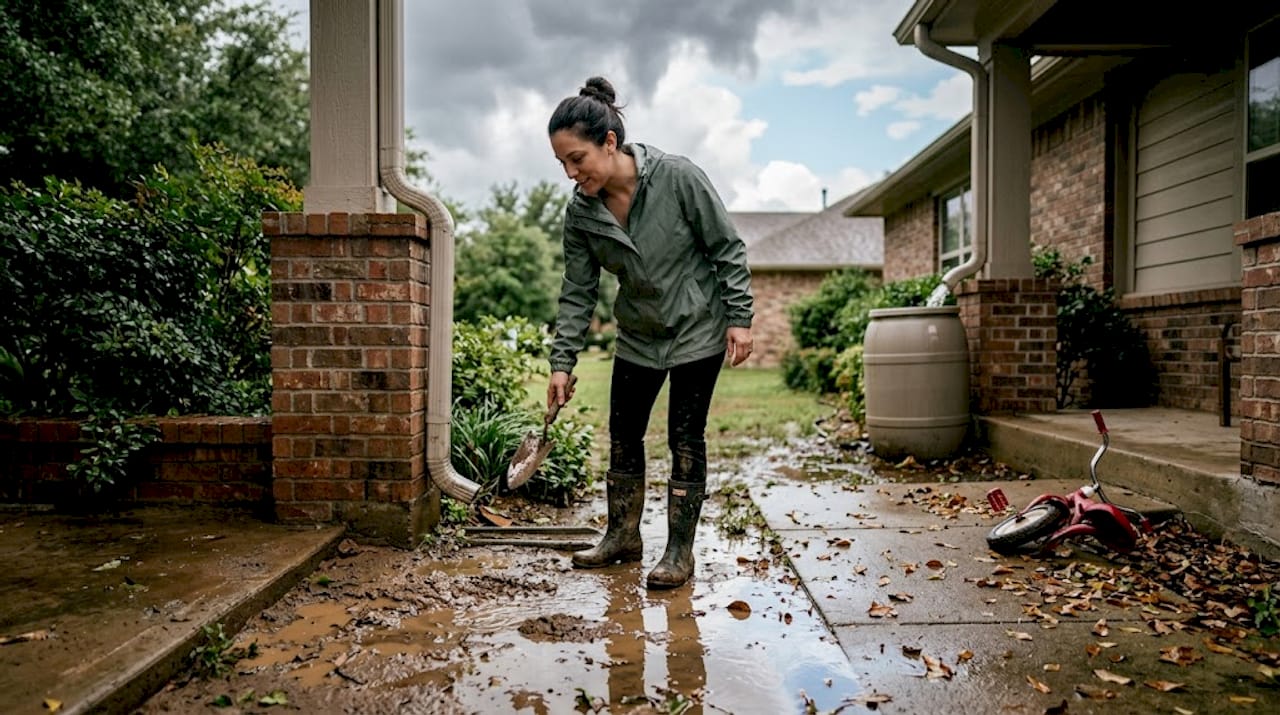
Texas clay soils add another layer of complexity. Clay absorbs water slowly, which means runoff from your roof has nowhere to go quickly. If your downspouts discharge near the foundation on clay-heavy soil, that water sits and exerts pressure against your slab or footings. Over time, this causes cracking, settling, and expensive foundation repairs.
Pro Tip: After any major storm, walk your property and look for standing water near the foundation, overflowing gutters, or debris-clogged downspouts. A quick visual check can catch drainage failures before they turn into interior leaks. For a full post-storm review, use a protecting from hail damage checklist to cover every component.
The bottom line is that Texas weather doesn’t give you a grace period. A drainage system that’s even partially compromised can fail completely during a single severe storm.
Common roof drainage solutions for Texas homes
Not every drainage solution fits every roof. The right choice depends on your roof type, slope, local rainfall intensity, and soil conditions. Here’s how to think through your options.
For most sloped (pitched) roofs, gutters and downspouts are the standard solution. They’re cost-effective, widely available, and easy to maintain. The key is proper sizing. Many older Texas homes have 4-inch gutters that simply can’t handle the volume of a Gulf Coast storm. Upgrading to 5- or 6-inch K-style gutters with larger downspouts makes a measurable difference.
For flat and low-slope roofs, scuppers and interior drains are essential. Scuppers are openings cut through the parapet wall at the roof’s edge. Interior drains sit in the field of the roof and connect to internal piping. Both need to be sized and spaced according to code, and both need redundancy built in.
Steps for evaluating your home’s drainage needs:
- Identify your roof type: pitched, low-slope, or flat
- Measure your roof’s total square footage
- Check current gutter size and downspout placement
- Confirm whether you have secondary drainage (overflow scuppers or secondary drains)
- Review local code requirements for your municipality
- Schedule a professional inspection if anything is unclear or outdated
Here’s a comparison of the main drainage solutions:
| Solution | Best for | Avg. cost | Maintenance | Code compliant |
|---|---|---|---|---|
| Gutters and downspouts | Pitched roofs | Low to moderate | Biannual cleaning | Yes, when sized correctly |
| Interior drains | Flat roofs | Moderate to high | Annual strainer check | Yes, with secondary |
| Scuppers | Flat/parapet roofs | Moderate | Clear debris regularly | Yes, with primary system |
| Tapered insulation | Low-slope roofs | Moderate to high | Inspect for compression | Required for code |
For flat roof inspection needs, pay special attention to whether your current system includes both primary and secondary drainage. Code-compliant redundancy is not optional in Texas.
Pro Tip: If your home sits on clay-heavy soil, install crickets (small peaked structures) behind chimneys and HVAC units on flat roofs. They redirect water toward drains instead of letting it pond around obstructions. Use an inspection checklist to verify these details during your next walkthrough.
Inspection and maintenance: Keeping your roof drainage effective
Choosing the right drainage system is only the beginning. The system you install today will underperform in two years if you don’t maintain it. In Texas, that timeline can be even shorter given the volume of debris, UV exposure, and storm frequency.
Biannual inspections, especially after major storms, are the minimum standard for keeping drainage systems functional. Spring and fall are ideal timing. Spring catches winter debris before summer storms arrive. Fall clears leaves and prepares the system for winter rain.
Inspection steps for gutters, drains, and scuppers:
- Clear all debris from gutters and flush with water to test flow
- Check gutter slope (should pitch toward downspouts, not sag or pool)
- Inspect downspout connections and confirm discharge point location
- Remove strainer covers on interior drains and clear any buildup
- Check scupper openings for blockages or corrosion
- Look for rust, separation, or loose fasteners on all metal components
- Photograph any problem areas for documentation
Warning signs that your drainage system is failing:
- Ponding water on flat or low-slope roofs after rain
- Overflow stains on fascia or siding below gutters
- Foundation cracks or soil erosion near downspout discharge points
- Interior water stains on ceilings or upper walls
- Mold or mildew smell in attic spaces
“Catching a drainage problem after a storm is always better than discovering it through a ceiling leak. Document what you see, note the date, and call a professional if anything looks damaged or undersized.”
Knowing when to call a professional matters. If you see ponding that doesn’t drain within 48 hours, visible sagging or separation in gutters, or water intrusion inside the home, those are not DIY fixes. Review after-storm repair steps to understand the process before reaching out. For ongoing upkeep, a Texas roof maintenance checklist gives you a structured approach season by season.
A perspective you won’t hear from most contractors
Here’s the uncomfortable truth: most roofing advice is built around what passed code when your house was built, not what your roof will need to handle over the next 20 years. Texas weather is intensifying. NOAA data shows rising extremes in rainfall intensity, and NOAA Atlas 14 local rate data confirms that design storms are getting worse, not better.
Code minimum is a floor, not a ceiling. A drainage system designed for yesterday’s storms will be undersized for tomorrow’s. We’ve seen this play out firsthand: homes that passed inspection with standard gutters and a single drain per 1,500 square feet that flooded during a storm that would have been manageable with slightly larger capacity.
The smart move is to think ahead. Upgrade to larger gutters before you need them. Add secondary drainage before code requires it. Install tapered insulation with more aggressive slopes on flat roofs, especially in clay soil zones. These upgrades cost less upfront than a single water damage remediation job.
Proactive investment in drainage capacity is one of the highest-return decisions a Texas homeowner can make. The inspection savings for Texas homes you gain from catching problems early compound over time. Don’t wait for a storm to prove your system’s shortcomings.
Ready to make your Texas roof weatherproof?
If this guide made one thing clear, it’s that roof drainage isn’t a set-it-and-forget-it system. It requires the right design, proper installation, and consistent maintenance to perform when Texas weather pushes it to the limit.

At Mister ReRoof, we specialize in drainage-smart roofing solutions built for Texas conditions. Whether you need metal roof replacement in Victoria for superior durability or a code-compliant flat roof replacement in El Campo with proper tapered drainage, our team delivers systems designed to handle what Texas throws at them. Contact us today for a free estimate and let’s build a roof that protects your home for decades.
Frequently asked questions
What are the main parts of a Texas roof drainage system?
The main components are gutters, downspouts, drip edges, scuppers, and interior drains, each serving a specific role in moving water away from your home.
How often should I inspect my roof drainage in Texas?
Inspect at least twice a year and after every major storm. Biannual inspections are the standard minimum for maintaining drainage effectiveness in Texas conditions.
Why is secondary drainage required by Texas codes?
Secondary drains or scuppers act as a backup if the primary system gets blocked. Texas codes require secondary systems to handle 100-year hourly rainfall rates, which can reach 4.6 inches per hour in Houston.
How do flat roof drainage needs differ in Texas?
Flat roofs need tapered insulation and multiple drains spaced at one per 1,000 square feet because they can’t rely on gravity slope alone, especially on Texas clay soils where ground absorption is slow.