
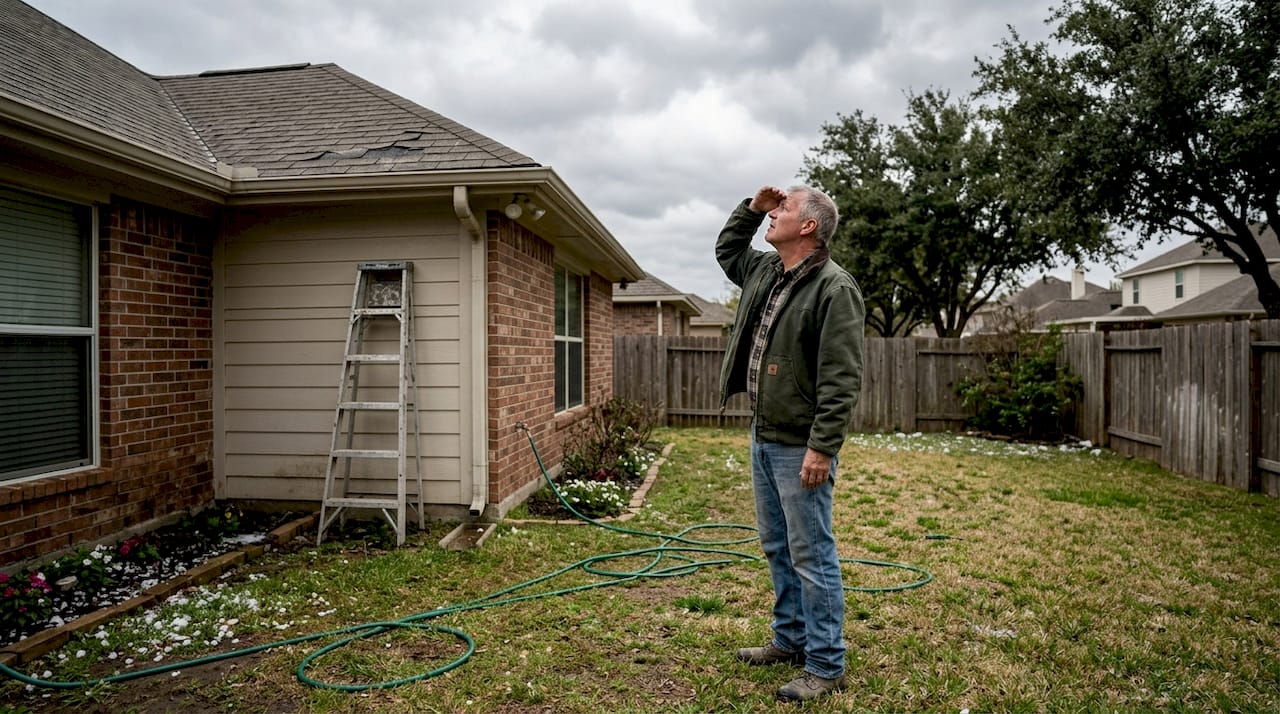
After a hailstorm rolls through El Campo or Houston, the clock starts ticking. Every hour you wait increases the risk of hidden water intrusion, weakened shingles, and a denied insurance claim. Texas sees some of the most frequent hail activity in the country, and inspecting within 24-48 hours is the standard recommendation for protecting both your roof and your claim. This checklist walks you through exactly what to look for, how to document it, and what to do next so you are not left guessing after the storm clears.
Table of Contents
- Understand hail risks in El Campo and Houston
- Hail damage roof checklist: Step-by-step guide
- Comparing roof damage: Shingle vs. metal roofs
- What to do after inspection: Insurance and next steps
- Get professional help for hail roof repairs in Texas
- Frequently asked questions
Key Takeaways
| Point | Details |
|---|---|
| Inspect quickly after storms | Prompt roof checks within 24-48 hours aid insurance claims and prevent costly damage. |
| Look beyond visible dents | Cumulative minor hail events weaken shingles even if no obvious damage appears. |
| Document for insurance | Accurate repair records and photos ensure fair claims and help roofers recommend solutions. |
| Compare roof types | Shingle and metal roofs react differently to hail, requiring tailored inspection methods. |
| Expert help is invaluable | Professional roofers streamline insurance claims, repairs, and replacements for Texas homes. |
Understand hail risks in El Campo and Houston
Texas is no stranger to severe weather, and both El Campo and Houston sit squarely in what storm researchers call “Hail Alley.” Houston alone can experience multiple significant hail events in a single year, and smaller communities like El Campo face the same exposure without always having the same access to rapid roofing response. Understanding your local risk is the first step toward protecting your home.
One of the most misunderstood aspects of hail damage is that it does not always look dramatic. A storm that drops golf-ball-sized hail is obvious. But cumulative sub-severe hail events, those that drop smaller stones repeatedly over months or years, quietly weaken asphalt shingles and shorten your roof’s lifespan without leaving a single obvious dent. By the time you notice a leak, the damage has been building for seasons.
Here is what makes hail damage particularly tricky in this region:
- Damage can be invisible from the ground
- Granule loss on shingles accelerates UV degradation
- Flashing and sealant joints are often the first to fail
- Repeated minor storms compound into major structural vulnerability
- Insurance windows for filing claims can close quickly
Learning the signs of roof damage early gives you the upper hand. And understanding how Houston weather and roofing interact helps you set realistic expectations for your roof’s lifespan after repeated storm exposure.
“The effects of repeated sub-severe hail events accumulate over time, weakening shingle integrity and reducing overall roof performance in high-frequency regions like Texas.” — IBHS 2025 Research Agenda
Hail damage roof checklist: Step-by-step guide
Now that you know the risks, here is your practical checklist for evaluating hail damage after any storm. Work through these steps in order, and do not skip the documentation phase.
- Start from the ground. Walk the perimeter of your home and look up at the roofline. Use binoculars if you have them. Look for missing shingles, visible dents on ridge caps, and any debris that has collected in gutters or downspouts.
- Check soft metal surfaces first. Your gutters, downspouts, AC condenser fins, and window sills are made of softer metal than your roof. Dents on soft metal act as a reliable benchmark for how hard the hail hit your roof. If your gutters are heavily dented, your shingles almost certainly took a beating too.
- Inspect the roof surface carefully. If it is safe to do so, get on the roof or hire a professional. Look for bruised or cracked shingles, circular impact marks, and areas where granules have been knocked loose. Run your hand across the shingle surface. It should feel rough, not smooth.
- Check flashing, vents, and skylights. These transition points are where water finds its way in first. Look for bent flashing, cracked caulk, and any separation between the roofing material and the fixture.
- Inspect your attic from the inside. Grab a flashlight and look for water stains, wet insulation, or daylight coming through the decking. This is often where hidden damage reveals itself before it becomes a full leak.
Pro Tip: Take photos and short videos at every step. Timestamp them. Your insurance adjuster will want visual evidence, and the more organized your documentation, the smoother your claim will go.
For flat roofs, the inspection process has some unique differences. A flat roof inspection guide can help you identify pooling, membrane punctures, and seam failures that are specific to that roof type. If you are already thinking about whether repair or replacement makes more sense, a roof replacement checklist can help you frame that decision. And if you find active leaking, follow emergency repair steps immediately to limit interior damage.
“Soft metal surfaces like gutters and AC units serve as reliable field indicators of hail impact severity on adjacent roofing materials.” — IBHS hail impact benchmarks
Comparing roof damage: Shingle vs. metal roofs
Different roofing materials react very differently to hail strikes. Knowing what to look for on your specific roof type makes your inspection far more effective.
| Feature | Asphalt shingles | Metal roofing |
|---|---|---|
| Visible damage | Bruising, granule loss, cracks | Dents, cosmetic marks |
| Leak risk after hail | High if granules are lost | Lower, but possible at seams |
| Damage visibility | Often hidden or subtle | Usually visible on surface |
| Long-term impact | Accelerated aging, shorter lifespan | Structural integrity often intact |
| Inspection priority | Granule loss, bruising, cracks | Seams, fasteners, panel edges |
Asphalt shingles are the most common roofing material in Texas, and they are also the most vulnerable to cumulative hail exposure. High hail concentration weakens the granule layer that protects shingles from UV rays. Once that layer is compromised, the shingle degrades much faster, even if it looks fine from the street.
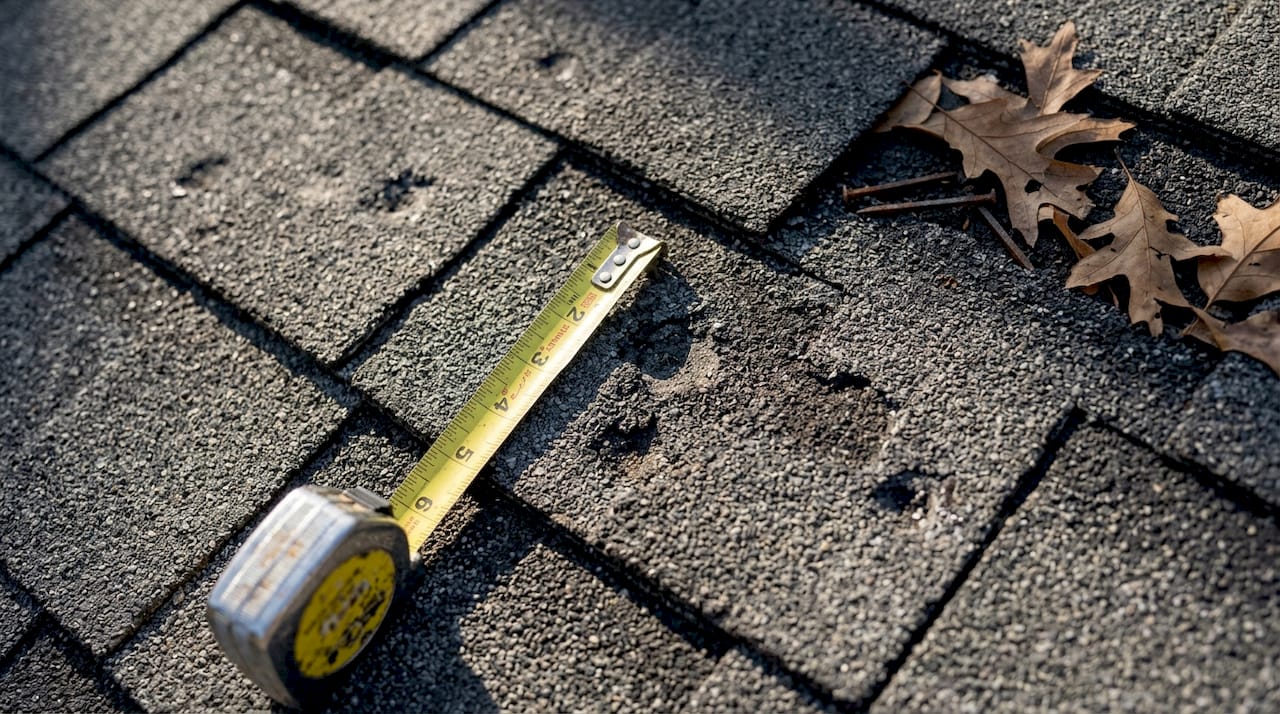
Metal roofs, on the other hand, tend to hold up structurally even after significant hail. The dents you see are mostly cosmetic. However, you still need to check seams, fasteners, and any areas where panels overlap, because those are the spots where water can sneak in.
Here is what to look for based on your roof type:
Asphalt shingles:
- Circular bruise marks (press gently, soft spots indicate damage)
- Granules collecting in gutters or at downspout exits
- Cracked or missing shingle tabs
- Exposed black substrate beneath the granule layer
Metal roofing:
- Dents along panel faces and ridges
- Lifted or separated seams
- Damaged or missing fastener caps
- Rust spots forming at impact points
Pro Tip: Do not judge a metal roof as “fine” just because it is not leaking. Cosmetic dents can affect your insurance claim value and may indicate hidden seam stress. Always have a professional assess it before closing out your inspection.
Staying ahead of damage with regular roof maintenance tips can also reduce how much hail affects your roof over time, especially if you are in a high-frequency storm area.
What to do after inspection: Insurance and next steps
Once your checklist is complete and damage is identified, here is how to move forward with insurance and repairs.
Documentation is everything. Before you call your insurer, make sure you have:
- Timestamped photos of all damage from multiple angles
- Notes on which areas were affected and how severely
- Photos of soft metal benchmarks like gutters and AC units
- Any previous inspection reports or maintenance records
The 24-48 hour window after a storm is critical. Filing quickly gives your insurer a clear picture of storm-related damage before weather or time obscures the evidence. Waiting too long can make it harder to prove the damage was storm-related rather than pre-existing wear.
Here is a simple timeline to follow after a hailstorm:
- Hours 1-6: Complete your ground-level inspection and document everything.
- Hours 6-24: Get a professional roofer on-site to assess and document damage from the roof surface.
- Hours 24-48: Contact your insurance company and file your claim with all documentation ready.
- Week 1-2: Meet with your adjuster, review the estimate, and decide between repair and replacement.
| Action | Timing | Why it matters |
|---|---|---|
| Ground inspection | Within 6 hours | Catch obvious damage fast |
| Professional assessment | Within 24 hours | Accurate documentation for insurer |
| Insurance claim filing | Within 48 hours | Meets most policy windows |
| Repair or replacement decision | Within 2 weeks | Prevents further water damage |
Understanding your policy before a storm hits is smart planning. Review your roof insurance guidance so you know what your deductible covers and what documentation your insurer requires. Knowing how roofers and insurance claims work together can also help you avoid underpayment. And when it comes time to decide on a path forward, these roof replacement tips will help you make a confident, informed choice.
Pro Tip: Never let a storm chaser or door-to-door contractor pressure you into signing anything before your insurance adjuster has visited. Get at least two estimates from local, licensed roofers before committing.
Get professional help for hail roof repairs in Texas
If your inspection turned up damage, or if you are simply not sure what you found, getting a professional set of eyes on your roof is the smartest next step. A qualified roofer does more than fix shingles. They document damage in a way that holds up with insurance adjusters, identify hidden issues that homeowners miss, and help you decide whether a repair or a full replacement makes more financial sense.

At Mister ReRoof, we work with homeowners across El Campo and Houston to assess storm damage, navigate insurance claims, and install roofing systems built to handle Texas weather. Whether you need a shingle roof replacement in El Campo or a TPO roof replacement for a commercial property, our team brings the expertise and local knowledge to get the job done right. Visit Mister ReRoof today to schedule your free estimate and get your roof back in fighting shape before the next storm rolls in.
Frequently asked questions
How soon should I inspect my roof after a hailstorm?
You should inspect your roof within 24-48 hours post-storm to ensure accurate insurance documentation and to catch early signs of damage before they worsen.
What signs of hail damage should I look for on my roof?
Look for dents on soft metals like gutters and AC units as severity benchmarks, along with missing or bruised shingles, granule loss in gutters, and any water stains inside your attic.
Can cumulative minor hail events really damage my roof?
Yes. Repeated sub-severe hail events weaken shingles and shorten your roof’s lifespan over time, especially in high-frequency storm areas like Houston and El Campo.
Should I call a roofer before filing an insurance claim for hail damage?
It is often helpful to have a roofer document the damage first, since their professional assessment improves the accuracy of your claim and ensures nothing gets missed before the adjuster arrives.
Are metal roofs more durable than shingles against hail?
Metal roofs resist leaks better and tend to maintain structural integrity after hail, while asphalt shingles risk cumulative weakening and accelerated aging from repeated hail exposure.