TL;DR:
- Thermal expansion causes daily movement in roofing materials, which, if unmanaged, leads to premature failure. Texas’s extreme temperature swings amplify these stresses, making proper design and installation vital. Choosing roofs with engineered expansion systems and adequate ventilation can extend roof lifespan significantly and prevent costly damage.
Your roof moves. Every single day, as temperatures climb and fall across Texas, your roofing materials expand and contract in ways most homeowners never think about. That invisible movement is one of the most common causes of premature roof failure in the state, yet it rarely gets mentioned at the point of sale. Understanding thermal expansion, how it works, and how your roof handles it, is one of the best ways to protect your investment and avoid costly surprises down the road.
Table of Contents
- What is thermal expansion in roofing?
- Why does Texas heat make thermal expansion a priority?
- How do roofing systems accommodate thermal expansion?
- Comparing materials: Metal, shingles, and flat roofs
- Best practices for homeowners: What to ask and watch for
- Our take: Why most Texas homes need a smarter roofing approach
- Ready to upgrade? Durable Texas roofing starts here
- Frequently asked questions
Key Takeaways
| Point | Details |
|---|---|
| Texas heat drives roof movement | Thermal expansion is a major factor in roof damage for Texas homeowners. |
| Metal outlasts shingles with care | Metal roofs last decades longer than shingles if properly installed to manage expansion. |
| Installation details matter | Using the right clips, fasteners, and expansion joints prevents leaks and noise. |
| Choose heat-smart roofing pros | Hiring contractors experienced with Texas codes and climate protects your investment. |
What is thermal expansion in roofing?
Thermal expansion is the process where roofing materials grow slightly larger when they heat up and shrink back when they cool down. It sounds simple, but the cumulative effect of thousands of these daily cycles puts real physical stress on every component of your roof.
Thermal expansion in roofing refers to the natural expansion and contraction of roofing materials, particularly metal sheets and panels, due to temperature fluctuations from daily sun exposure and seasonal changes. In Texas, where summer roof surface temperatures can hit 160°F or higher, that movement is not trivial.
Different materials respond to heat in very different ways:
- Metal panels expand significantly and need mechanical room to move
- Asphalt shingles soften and shift under intense heat, then stiffen and crack in cooler conditions
- Flat and low-slope membranes stretch and compress, stressing seams and flashings with each cycle
- Fasteners and connectors bear the force when panels try to move but cannot
When expansion and contraction are not properly managed, the results show up as leaks around flashings, popped nails, gaps between panels, and warped or buckled surfaces. These are not random failures. They are predictable consequences of ignoring how your materials actually behave. A well-designed roofing system lifespan depends heavily on how well that design accounts for thermal movement from day one.
Key takeaway: Thermal expansion is not a flaw in the material. It is a physical property every roof must be designed around. Ignoring it is one of the most expensive mistakes a homeowner can make.
Why does Texas heat make thermal expansion a priority?
Understanding the basics sets up why Texas homeowners face even higher risks from expansion and contraction cycles than homeowners in most other states.
Texas does not just get hot. It swings dramatically. A winter morning in Houston can sit in the upper 30s, while an afternoon in July can push past 100°F. That temperature range, sometimes 60 to 80 degrees of swing within a single day, compresses years of wear into every season. Roof surfaces absorb far more heat than the ambient air temperature suggests, meaning your materials are working harder than you might realize.
Here are four specific ways the Texas climate amplifies thermal expansion damage:
- Long UV exposure seasons. Texas gets intense sun for eight or more months of the year. UV radiation breaks down binders in shingles and degrades membrane surfaces, making them more brittle and less able to flex through expansion cycles.
- Rapid overnight cooling. After baking all day, roof surfaces can drop 40 to 50 degrees within a few hours after sunset. That fast contraction pulls at fasteners, seams, and flashings repeatedly.
- Sudden storm events. A cold front dropping temperatures 30 degrees in under an hour forces an abrupt contraction that stressed materials simply cannot absorb without cracking or pulling loose.
- High humidity interactions. In the Houston area, humidity adds another layer of stress, as moisture trapped under improperly installed materials creates pressure cycles that compound thermal movement.
The payoff for taking thermal expansion seriously is significant. Proper thermal management can extend metal roof life to 70-plus years compared to shingles lasting only 15 to 20 years in Texas heat. That is not a small margin. It is a generational difference in how long your roof protects your home.
Common warning signs that thermal expansion is already damaging your roof include popped fasteners along ridges and valleys, warped or visibly buckled panels, small leaks that appear specifically after very hot spells, and a creaking or popping sound coming from the roof deck during temperature changes.
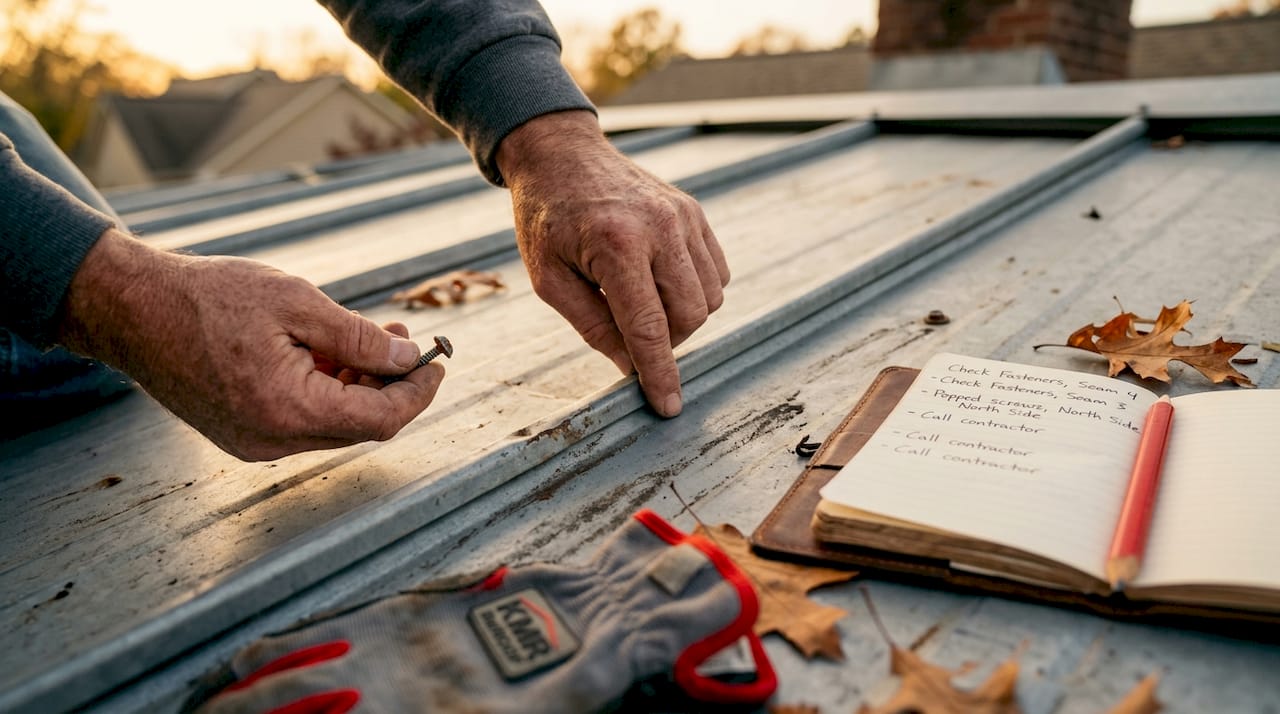
Pro Tip: If your roof makes loud cracking or popping noises after sunset on hot days, that is your materials contracting rapidly. It is worth having a licensed contractor evaluate whether your fasteners and panel gaps are engineered to handle that movement before a small problem becomes a large one.
The risks are well-documented, and metal roofs in Texas consistently outperform shingles when properly installed with thermal management in mind. Still, even metal roofs fail when contractors skip the engineering details that make expansion safe. Understanding common roofing mistakes in Texas can help you ask the right questions before any installation begins.
How do roofing systems accommodate thermal expansion?
With the need for durability clear, let’s explore how different roof types and systems actually manage all this movement.
Modern roofing systems do not fight thermal expansion. They work with it. The key is giving materials room to move in controlled ways so that movement never creates gaps, cracks, or stress points.
For metal roofs, the most effective solution is the standing seam panel system with floating or sliding clips. Sliding and floating clips in standing seam systems allow panels to move over fixed clips, with fixed attachment points at the ridge and free movement toward the eave. This means the entire panel can shift slightly without pulling fasteners loose or cracking seams.
Other widely used techniques include:
- Oversized fastener holes that allow the panel to move laterally without the fastener acting as a clamp
- Expansion gaps at overlaps that give adjacent panels room to grow without buckling against each other
- Controlled fixed points at specific structural locations so movement is directed away from vulnerable seams
- Thermal breaks between the metal panel and the deck to reduce the heat transferred into the structure
For flat and low-slope roofs, the metal roofing installation guide approach differs. These systems rely on engineered expansion joints built into the membrane at regular intervals. These joints flex with the roof, keeping the waterproof layer intact even as the structure beneath shifts. Proper roof ventilation also plays a major role, since a well-ventilated roof space runs cooler overall, reducing the total range of thermal movement every panel or membrane must manage.
| Roof system | Primary expansion method | Key component |
|---|---|---|
| Standing seam metal | Floating clip system | Sliding clip at each rib |
| Exposed fastener metal | Oversized holes and gaps | Slotted fastener holes |
| Asphalt shingles | Nail placement and overlap | Proper nail position |
| TPO and flat membrane | Expansion joints | Engineered joint strips |
| Modified bitumen | Thermal bonding | Flexible base layer |
Pro Tip: When reviewing bids from contractors, ask specifically whether they plan to use floating clips or fixed clips on a metal roof. Fixed-only clip systems are cheaper but deny the panel room to move, setting up long-term noise and fastener pull-out problems.
Comparing materials: Metal, shingles, and flat roofs
A closer look at different materials and engineering strategies can help you choose the best option for your own roof.
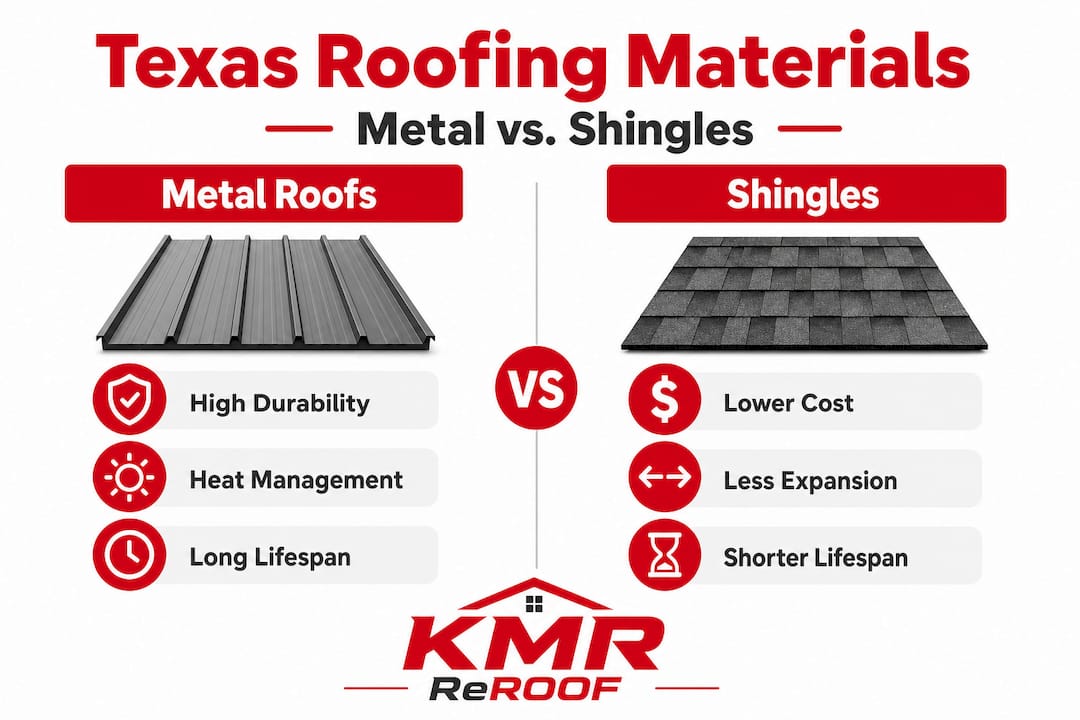
Not all roofing materials handle Texas heat the same way. The differences between aluminum, steel, shingles, and membrane systems are significant enough to affect your decision when it is time to replace.
Aluminum vs. steel: Aluminum expands almost twice as much as steel under the same temperature change. On a 20-foot panel exposed to a 100°F temperature swing, aluminum expands nearly twice what steel does. That extra movement requires more carefully engineered clips and larger expansion gaps. Steel panels are more forgiving in this regard, which is one reason steel standing seam systems dominate commercial and residential applications in hot climates.
Asphalt shingles: Shingles are the most common residential roofing material in Texas, but they handle thermal expansion poorly over time. The asphalt binder softens in summer heat, allowing shingles to shift and warp. In winter, that same material becomes brittle and cracks under contraction stress. This cycle repeats hundreds of times over the roof’s life, which is why shingle roofs in Texas rarely approach their rated lifespans.
Flat and low-slope roofs: These systems face unique challenges because large, uninterrupted surface areas accumulate more total movement than pitched roofs with shorter panel runs. Dedicated roof expansion joints for low-slope and flat roofs seal gaps between sections, integrating with membranes through dual flanges to maintain watertightness across plazas, green roofs, and large commercial decks. Without these joints, membrane splits are almost inevitable within a few years on a large Texas flat roof.
Key installation errors that make thermal expansion worse include:
- Panels longer than 40 to 60 feet without additional expansion provisions, which concentrate movement at the eaves
- Installing in extreme temperatures, either during a heat wave or a cold snap, means panels start their life at the outer edge of their expansion range
- Poor attic ventilation that allows the roof deck to heat far beyond ambient temperatures, increasing total movement
- Overtight fasteners that clamp panels in place and force the expansion stress into the panel material itself, causing buckling, noise, or fastener pull-out
For homes with proper roof ventilation, the peak roof surface temperature drops measurably, reducing both the magnitude of thermal movement and the UV degradation that makes materials brittle over time. And understanding metal roof installation steps in detail helps you verify that your contractor is following best practices on both clip selection and panel spacing.
Best practices for homeowners: What to ask and watch for
Armed with this knowledge, here’s how you can make sure your roof is ready for long Texas summers and sudden storms.
Thermal expansion management is not something you can see after the fact. It is built into the design and installation. That means the time to ask questions is before a single panel goes up, not after the first leak appears.
Here is a checklist of questions to bring to any roofing contractor:
- How does your installation account for thermal expansion? A qualified contractor should mention floating clips, expansion gaps, or engineered joints without hesitation.
- What clip system do you use for metal panels? Ask specifically whether they use fixed or floating clips and why.
- At what temperature do you typically install panels? Installing in moderate temperatures, not during a July heat wave, produces a better starting position for the panel’s expansion range.
- How do you handle ventilation? Poor ventilation increases thermal swings dramatically, as overtight fasteners and poor ventilation are two of the most common causes of roof noise and premature wear.
- Are you familiar with Texas building codes for wind and thermal performance? Local code compliance is the minimum, and experience in Texas-specific conditions goes well beyond code.
After installation, watch for these warning signs during your regular roof checks:
- Creaking or popping sounds during temperature changes, especially at night
- Visible gaps or raised edges along panel seams or ridge caps
- Leaks that appear specifically after prolonged hot weather
- Rust streaking around fastener locations, which signals fasteners working against the metal
A well-maintained storm-resistant roofing system also handles thermal expansion better because storm-resistant designs are engineered for dynamic loads. Understanding your roof lifecycle and care requirements helps you schedule inspections at the right intervals to catch thermal stress damage early.
Pro Tip: Schedule a roof inspection every spring, right after winter’s temperature extremes. Winter contraction stresses fasteners and seams more than summer heat, and catching minor movement damage in March costs far less than addressing a full leak in August.
Our take: Why most Texas homes need a smarter roofing approach
Here is the uncomfortable truth most roofing conversations skip: the majority of roof damage in Texas is not caused by storms. It comes from repeated, ignored thermal movement that slowly dismantles every weak point in the system. Hailstorms and hurricanes get the headlines, but heat cycles do the quiet, relentless damage that shortens roofs years ahead of schedule.
The industry still defaults to selling shingles because they are cheap up front and familiar. But a shingle roof installed in Texas without careful consideration of thermal performance will almost certainly need replacement within 15 years, sometimes sooner. Meanwhile, a properly installed metal roof with floating clips, engineered expansion gaps, and good attic ventilation can serve a Texas home for 50 years or more. The math is not even close when you factor in replacement costs and the disruption of re-roofing.
What frustrates us most is that the engineering solutions exist. Floating clip systems, thermal joints, proper ventilation design, and moderate-temperature installation are not exotic or experimental. They are standard practice in quality installations. The gap is not in the technology. It is in whether your contractor actually uses it.
The smartest investment a Texas homeowner can make is pairing heat-reflective metal roofs with a contractor who understands the local climate well enough to engineer for it. That combination is not luxury. It is the baseline for a roof that actually fulfills its purpose over the long run.
Ready to upgrade? Durable Texas roofing starts here
If you have read this far, you understand something most homeowners in Texas do not: thermal expansion is not a minor detail. It is central to how long your roof lasts.
At Mister ReRoof, we install roofing systems built specifically for the Texas climate, from metal roof replacement in Victoria to shingle roof replacement in Hallettsville and flat roof replacement in El Campo. Every installation accounts for thermal expansion with the right clips, gaps, ventilation design, and material choices for your specific situation. Contact Mister ReRoof today to schedule your roof replacement and get a free estimate.
Frequently asked questions
What happens if my roof doesn’t account for thermal expansion?
Ignoring thermal expansion in roofing leads to leaks, warping, popped fasteners, and a much shorter roof lifespan, especially under Texas heat cycles.
Are metal roofs better for thermal expansion than shingles?
Yes, when installed with proper clips and gaps, metal roofs handle temperature swings far better, and proper thermal management can extend their life to 70-plus years compared to 15 to 20 years for shingles in Texas.
How do roofing contractors manage expansion in flat roofs?
They install dedicated expansion joints that move with the roof structure, keeping the waterproof membrane sealed and flexible across large surface areas.
Can poor installation make thermal expansion problems worse?
Absolutely. Overtight fasteners and no expansion gaps force all the movement stress into the material itself, causing premature cracking, buckling, and noise.