TL;DR:
- Modern solar roofing integrates photovoltaic technology directly into roofing materials, providing both protection and energy generation. In Texas, these systems offer durability against severe weather, reduce leaks, and comply with HOA regulations, making them a practical upgrade. Successful adoption depends on proper planning, local contractor expertise, and understanding permits, not just technology features.
Most Texas homeowners picture solar as a row of bulky panels bolted onto an existing roof. That mental image sells the technology short. Today’s solar roofing integrates electricity generation directly into the roofing material itself, meaning your roof protects your home and powers it at the same time. For Texas homeowners dealing with brutal summers, hailstorms, and rising utility bills, that dual function is more than a novelty. It’s a genuine upgrade worth understanding before your next roof replacement.
Table of Contents
- How solar roofing works: The basics every homeowner should know
- Main types of solar roofing products in Texas
- Texas-specific rules and considerations for solar roofing
- Barriers to adoption: What slows Texas solar roofing — and how to overcome it
- Our take: What Texas homeowners miss when considering solar roofing
- Get started with solar or high-performance roofing in Texas
- Frequently asked questions
Key Takeaways
| Point | Details |
|---|---|
| Dual-purpose roofing | Solar roofs both shield your home and generate clean energy, streamlining upgrades. |
| Local rules apply | Texas homeowners must navigate unique HOA and code requirements before installing solar roofing. |
| Product choices matter | Solar shingles, tiles, and BIPV systems offer different looks and strengths fit for Texas conditions. |
| Adoption barriers exist | Awareness, risk concerns, and project workflow—not technology—most commonly slow solar roofing adoption. |
| Get expert help | Contractors with Texas solar roofing experience help speed up approvals and maximize long-term value. |
How solar roofing works: The basics every homeowner should know
Solar roofing is not just a panel sitting on top of your old shingles. The technology is formally called BIPV, or building-integrated photovoltaics. The concept is straightforward: instead of attaching a separate energy system to your roof, you replace the roof itself with a product that does both jobs at once. As research confirms, solar roofing combines photovoltaic generation with roof weatherproofing so the covering and electrical functions are part of the same product system.
That distinction matters for Texas homeowners in a very practical way. Traditional rack-mounted panels add weight, create potential leak points at every mounting bracket, and often conflict with HOA rules. Solar shingles and integrated tiles look like a conventional roof from the street but quietly generate electricity all day. In a state where energy efficiency roofing upgrades can meaningfully reduce cooling costs, that combination of function and form is especially valuable.
Here is what sets modern solar roofing apart from older panel-only systems:
- Solar shingles replace traditional asphalt shingles completely, covering the full roof deck
- Integrated solar tiles blend with standard tile roofing so non-solar areas match visually
- Full BIPV systems use every square foot of the roof surface for power generation
- Most products rated for the U.S. market meet UL 7103 safety and durability standards, covering wind uplift, impact resistance, and electrical performance
- Installation typically involves fewer roof penetrations than rack-mounted systems, reducing leak risk
Pro Tip: Solar roofs preserve curb appeal far better than traditional solar arrays. If your neighborhood has strict HOA rules about visible panels, an integrated solar roof may be your only path to going solar without a battle at the next HOA meeting.
The durability angle is not marketing spin. Texas subjects roofs to UV radiation levels that degrade standard asphalt shingles in 15 to 20 years. Products built to BIPV standards are engineered to handle that environment while still producing electricity. You are not trading roof performance for energy output. You are getting both.
Main types of solar roofing products in Texas
With the basics covered, it’s time to weigh your main options so you can match your solar roof to both your property and energy goals.
BIPV roof products provide architectural and building-envelope functions alongside electricity generation, but not every product fits every Texas home. Your roof pitch, neighborhood aesthetic standards, hail zone risk, and budget all influence which type makes the most sense.
| Feature | Solar shingles | Integrated solar tiles | Full BIPV system |
|---|---|---|---|
| Appearance | Closely mimics asphalt shingles | Blends with clay or concrete tile | Uniform panel surface |
| Durability | Class 3 or 4 hail rating available | High impact resistance | Engineered for full exposure |
| Weather resistance | Good wind and UV resistance | Excellent for flat-pitch roofs | Highest overall rating |
| Energy output | Moderate per shingle | Moderate per tile | Highest total output |
| Estimated cost | $20,000 to $50,000 installed | $25,000 to $60,000 installed | $35,000 to $80,000+ installed |
| Best for | HOA communities, standard pitch roofs | Mediterranean or Spanish tile homes | Maximum energy production goals |
These cost ranges vary considerably based on roof size, local labor rates, and the specific brand you choose. They are starting points for budgeting conversations, not firm quotes.
The typical installation process for each type follows a consistent sequence:
- Roof inspection and structural assessment: A licensed contractor evaluates load capacity, existing decking condition, and roof pitch to confirm the structure can support the new system.
- Design and permit approval: Engineered drawings are submitted to your local municipality. In Texas, this step can take anywhere from a few days to several weeks depending on the jurisdiction.
- Removal of existing roofing: The old roofing material comes off, the deck is inspected and repaired as needed, and any underlayment is installed.
- Solar roofing installation: Shingles, tiles, or panels are laid in the manufacturer’s specified pattern, with electrical wiring routed through the attic to the main inverter.
- Final electrical inspection and utility interconnection: The local utility must approve the grid connection before the system can export power. This is often the longest wait in the process.
For hail-prone areas in Central or North Texas, Class 4 impact-rated solar shingles are worth the premium. A Class 4 rating means the shingle survived a 2-inch steel ball dropped from 20 feet without cracking, which translates directly to reduced risk of storm damage claims.
Texas-specific rules and considerations for solar roofing
Next, before you commit, you’ll need to understand the unique Texas landscape of homeowner requirements and local rules.
Texas actually has strong legal protections for solar. State law prevents HOAs from outright banning solar installations. However, the full picture is more nuanced. As detailed guidance on solar panels and HOAs makes clear, even if your HOA cannot outright ban solar, aesthetic and placement restrictions can still affect how a solar roof system is configured, especially when products must be installed in a way that does not materially increase cost or decrease efficiency.
That last clause is important. An HOA can require you to face panels toward the side yard instead of the street. If that placement reduces your energy output by 30%, you have a legal argument. But if the HOA asks for a color-matched tile border around your solar shingles and the cost is minimal, you will likely need to comply. Knowing this before you start saves expensive redesigns later.
Texas building codes add another layer. Here are the questions most homeowners ask before starting a project:
- Do I need a permit for solar roofing? Yes, virtually every jurisdiction in Texas requires both a building permit and an electrical permit.
- Who pulls the permits? Your licensed roofing or solar contractor typically handles this, but confirm it in writing before signing a contract.
- Does my roof need to meet specific wind ratings? Yes. Texas coastal areas follow stricter wind load requirements, and your solar roof product must meet those specs.
- Will my homeowner’s insurance cover solar roofing? Most policies cover it, but notify your insurer before installation to update your coverage.
- Is there a state tax incentive? Texas does not have a state income tax, so state solar tax credits do not apply. However, the federal Investment Tax Credit (ITC) at 30% applies to most residential solar roofing systems.
“Texas homeowners often discover the permit and HOA approval process takes longer than the physical installation. Getting those conversations started early — before you select a product — is the single most time-saving move you can make.” Working with a contractor who knows local roofing safety for Texans and understands Texas roofing codes from the start dramatically reduces the risk of project delays.
UV exposure is a factor that gets underestimated. Texas summer sun degrades low-quality roofing products faster than most homeowners realize. Choosing solar roofing that meets UL 7103 standards and carries a manufacturer warranty of at least 25 years gives you assurance that the product was tested for real-world Texas conditions. Pairing that with cool roofing tips and reflective underlayment can further reduce your attic heat load.
Pro Tip: Engage with your HOA and contractor at the same time, ideally during your initial planning phase. HOA boards often need 30 to 60 days to review and approve solar installations. Starting that clock early keeps your project on schedule.
Barriers to adoption: What slows Texas solar roofing — and how to overcome it
Even equipped with the right product and approval knowledge, it’s barriers off the roof — not on it — that most often slow down your solar roofing project.
Research confirms that BIPV adoption barriers extend well beyond engineering. Awareness gaps, perceived risk, and workflow complexity hold back more projects than any technical limitation. Texas homeowners who understand this reality can plan around it.
| Barrier | Why it stalls projects | Real strategy to overcome it |
|---|---|---|
| Low awareness | Homeowners don’t know solar roofing is different from panels | Ask contractors specifically about BIPV products, not just “solar” |
| High upfront cost | Sticker shock compared to standard shingle replacement | Calculate net cost after 30% federal ITC and long-term utility savings |
| Perceived risk | Uncertainty about durability, warranties, and performance | Request case studies from Texas installs, not out-of-state references |
| Permit and workflow complexity | Dual building and electrical permit process intimidates homeowners | Choose contractors with in-house project coordinators who manage permits |
| Digitalization gaps | Design and approval tools vary by contractor quality | Ask whether your contractor uses digital proposal and permit submission tools |
Considerations around roofing reno workflows often highlight that homeowners who ask detailed questions upfront get faster and more accurate project timelines. That same principle applies to solar roofing.
Ways you can accelerate your own adoption timeline:
- Choose a contractor who has completed solar roofing installations specifically in Texas, with references you can call
- Use the federal Energy Star and manufacturer databases to compare product specs before your first contractor meeting
- Ask for a written permit timeline at the start of the project, not after signing
- Join local Texas homeowner groups online where neighbors share real project timelines and contractor reviews
- Request digital copies of all permit approvals and inspection records for your home file
The cost barrier deserves a direct response. A full solar roof replacement costs more upfront than a standard shingle replacement. But you are paying for two things at once: a new roof with a 25-plus year lifespan and an energy system that generates power for the same period. When you divide the net cost (after the federal tax credit) by the number of years of useful life, the economics look considerably different than the sticker price suggests.
Our take: What Texas homeowners miss when considering solar roofing
Most guides on solar roofing stop at technology specs and payback period calculations. That framing misses what actually determines whether a project succeeds or fails for a Texas homeowner.
The hard truth is that the biggest risks are not technical. They are managerial and regulatory. We have seen homeowners select an excellent product, then watch their project stall for months because the contractor did not have a clear handle on the local permitting process or the HOA approval timeline. The technology worked perfectly. The project management did not.
As research on BIPV sustainability frames it, broader adoption depends on addressing barriers like awareness, risk perception, and implementation workflows, not just improving the modules themselves. That finding aligns exactly with what we observe on the ground in Texas. The homes where solar roofing projects go smoothly share one trait: the contractor treated the regulatory and logistical work as seriously as the physical installation.
“Most homeowners focus on the product. The smarter focus is on the process. A great solar shingle installed by a contractor who doesn’t know your city’s permit office is a project waiting to get stuck.”
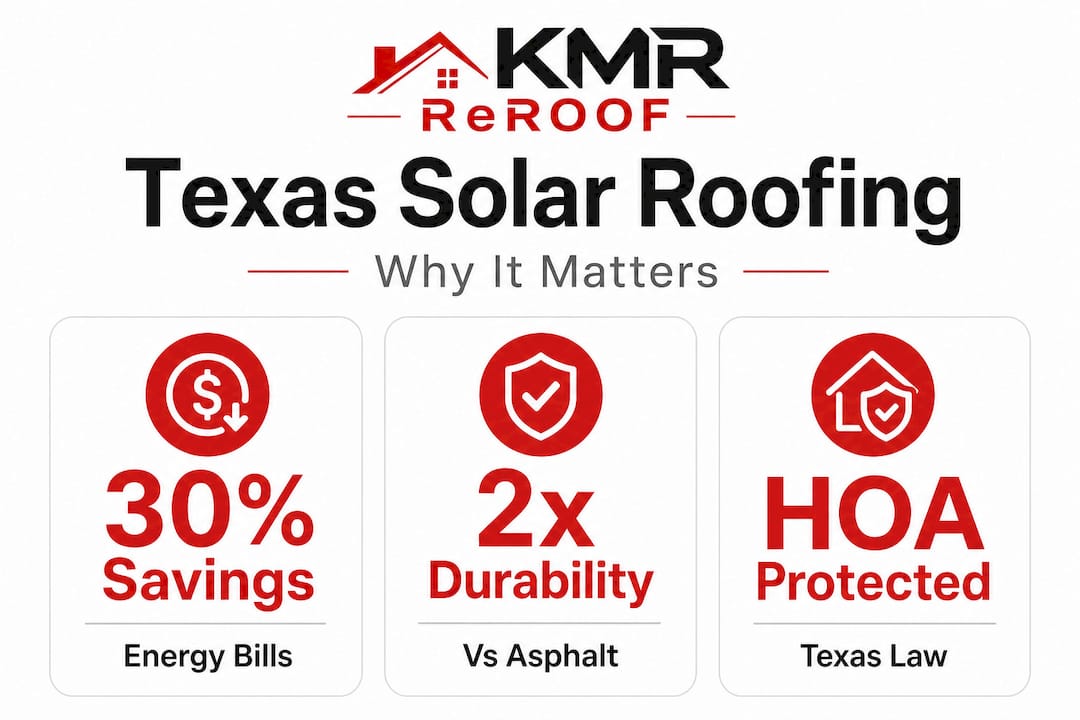
BIPV’s real value in Texas extends beyond the monthly utility bill reduction, as meaningful as that is. Resilience matters. A roof built to Class 4 impact standards that also generates power keeps your home running better through storm season. Curb appeal matters. A solar roof that looks like a well-executed premium shingle job protects your home’s resale value in ways a rack of panels on an aging asphalt roof does not. Long-term energy security matters. Locking in your own roof energy savings over 25 years insulates you from utility rate increases in ways no standard roof replacement can.
Pro Tip: Prioritize a contractor with real Texas solar roofing installs, not out-of-state references. Texas weather, Texas utilities, and Texas HOA law are specific enough that local experience makes a measurable difference in project outcomes.
Get started with solar or high-performance roofing in Texas
Ready to take the next step toward efficiency and durability? Here’s how you can move forward with trusted expertise.
If you’re a Texas homeowner weighing a roof replacement, this is the moment to ask whether a solar-integrated or high-performance weatherproof roof deserves a place in that decision. Mister ReRoof serves El Campo and Houston homeowners with professional roof replacement options built for Texas conditions, including metal roof replacement, shingle replacement, flat roof systems, and TPO roofing.

Our team understands what it takes to install roofs that hold up against Texas heat, wind, and hail while keeping your home energy-efficient for decades. Whether you are ready to explore solar-ready roofing or simply want a durable upgrade that performs in our climate, we will give you honest guidance and a free estimate. Contact Mister ReRoof today to schedule your roof replacement consultation and find out which system fits your home, your neighborhood, and your budget.
Frequently asked questions
What is the difference between solar shingles and regular solar panels?
Solar shingles replace roofing material entirely and generate electricity as part of the same product, while regular solar panels are mounted on top of an existing roof without replacing it. As the research defines it, solar shingles combine photovoltaic generation with roof weatherproofing in a single integrated system.
Are solar roofs durable enough for Texas weather?
Yes, modern solar roofs designed for the U.S. market are tested for wind, hail, and UV resistance. BIPV product compliance is tied to safety and durability testing standards including UL 7103, which covers impact and weather performance directly relevant to Texas conditions.
Can my HOA stop me from installing solar roofing in Texas?
By law, HOAs cannot fully ban solar in Texas, but they can require aesthetic or placement rules that affect your system’s configuration and cost. Even with legal protections, HOA approvals and restrictions can still influence where and how a solar roof system is installed.
What’s the main reason BIPV isn’t more popular yet?
Low awareness, perceived installation risk, and workflow complexity slow adoption more than any flaw in the technology itself. Research shows that BIPV adoption barriers are driven by factors like expertise gaps and project management complexity rather than module efficiency limitations.