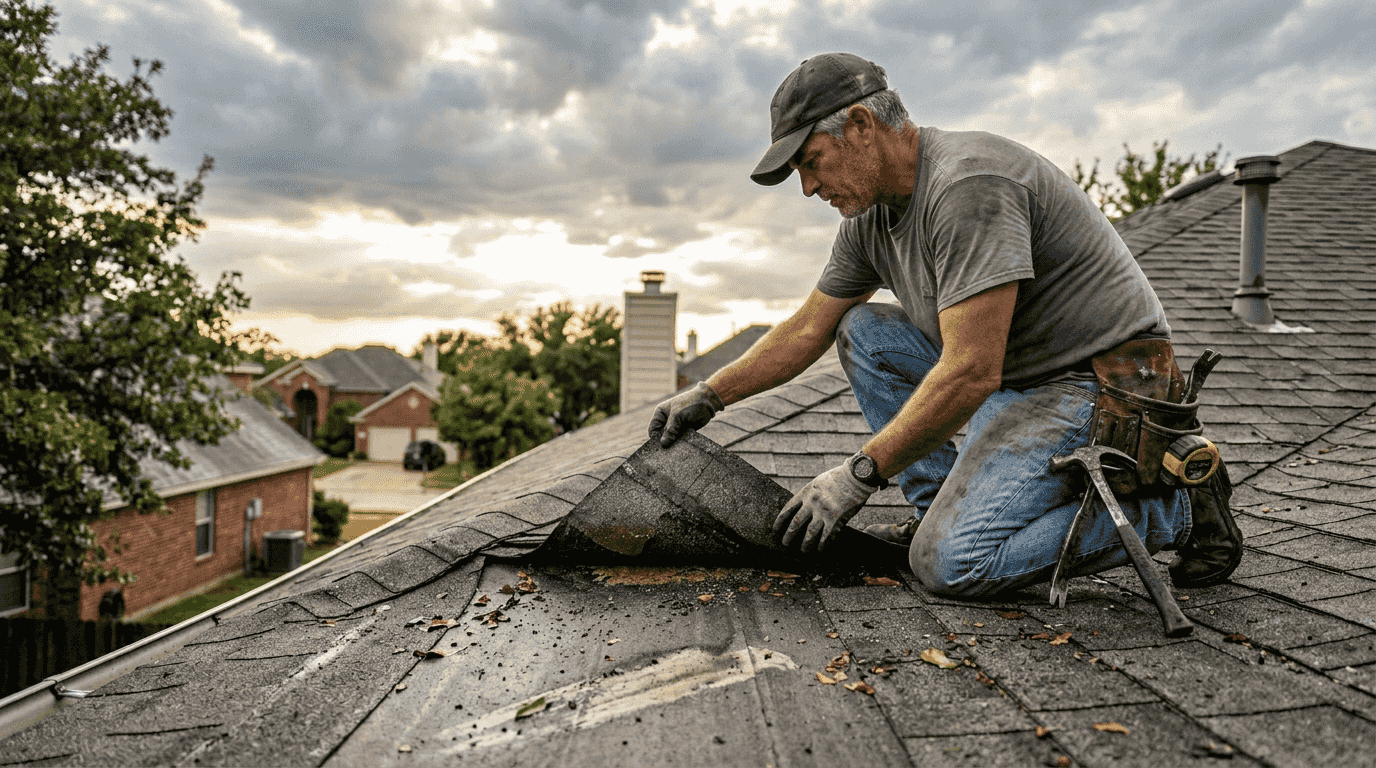
Texas weather swings from scorching heat to violent hailstorms, often in the same season. Many homeowners believe their roofs simply need repairs when problems arise, not realizing that weather patterns quietly degrade materials year after year. Understanding how sun, wind, hail, rain, and humidity interact with your roofing system helps you make smarter maintenance and replacement decisions. This guide breaks down the specific ways Texas weather challenges roofing durability, explains which materials withstand these conditions best, and provides actionable strategies to protect your investment. You will learn how to spot damage early, choose appropriate materials, and time replacements to maximize your roof’s lifespan in one of America’s most climatically diverse states.
Table of Contents
- Understanding Texas Weather And Its Impact On Roofing
- How Specific Weather Conditions Damage Roofing Materials
- Maintenance Strategies To Protect Roofs From Texas Weather Damage
- Choosing The Right Roofing Materials And Replacement Timing In Texas
- Protect Your Texas Home With Expert Roofing Services
- Frequently Asked Questions
Key takeaways
| Point | Details |
|---|---|
| Weather diversity | Texas experiences extreme heat, hail, wind, and moisture that each damage roofing materials differently |
| Material selection | Choosing weather-appropriate roofing materials significantly extends roof lifespan and reduces repair costs |
| Maintenance timing | Regular inspections after storms and seasonal maintenance prevent most weather-related damage |
| Replacement signals | Frequent repairs, visible deterioration, or roofs over 20 years old indicate replacement is needed |
Understanding Texas weather and its impact on roofing
Texas’s climate ranges from harsh sun and heat to severe hailstorms, each imposing distinct stresses on roofing materials. The Gulf Coast region experiences high humidity and tropical storms, while inland areas face intense UV exposure and temperature swings exceeding 40 degrees in a single day. These extremes create a challenging environment where roofing systems must perform under multiple simultaneous stressors.
High temperatures cause roofing materials to expand during the day and contract at night, creating stress fractures over time. UV radiation from intense sunlight degrades the chemical bonds in asphalt shingles, causing them to become brittle and lose protective granules. Metal roofs absorb heat rapidly, and without proper ventilation, this heat transfers into attic spaces and accelerates material aging from below.
Hailstorms pose one of the most immediate threats to Texas roofs. Ice pellets ranging from pea-sized to softball-sized can puncture membranes, crack shingles, and dent metal panels in minutes. The damage may not be visible from ground level, but compromised protective layers allow moisture infiltration that leads to rot and mold. Even small hail impacts create weak points where future weather events cause more extensive failure.
Strong winds threaten roofing systems by creating uplift forces that pull shingles away from the deck. Sustained winds above 50 mph can rip off improperly installed or aged shingles entirely, exposing the underlayment to rain. Wind-driven rain also forces water under shingles and flashing, bypassing the roof’s primary defense mechanisms. Coastal areas face additional salt spray that corrodes fasteners and accelerates metal deterioration.
Moisture from rain and humidity contributes to biological growth and material decay. Standing water on flat roofs creates ponding that weakens membranes and seeps through tiny cracks. High humidity levels allow mold and algae to colonize shingle surfaces, breaking down protective coatings. Wood decking underneath roofing materials absorbs moisture during humid periods, swelling and warping in ways that compromise the entire system’s integrity.
Key weather factors affecting Texas roofs:
- Extreme temperature fluctuations causing expansion and contraction cycles
- Intense UV radiation degrading material chemical structures
- Hail impacts creating punctures and compromising protective layers
- High winds generating uplift forces and driving rain under materials
- Persistent humidity enabling mold growth and wood rot
Pro Tip: When selecting roofing materials, prioritize products with high impact resistance ratings and UV stabilizers specifically designed for southern climates. These features add minimal cost upfront but can extend your roof’s lifespan by 5 to 10 years in Texas conditions.
Understanding local weather patterns is key to anticipating roofing challenges.
How specific weather conditions damage roofing materials
Different roofing materials respond uniquely to elements like sun, wind, hail, and rain, affecting their durability in measurable ways. Asphalt shingles, the most common residential roofing material, suffer accelerated aging under prolonged sun exposure. UV rays break down the asphalt binders holding granules in place, causing them to wash away during rains. Once granules disappear, the underlying mat becomes exposed and vulnerable to cracking and tearing.
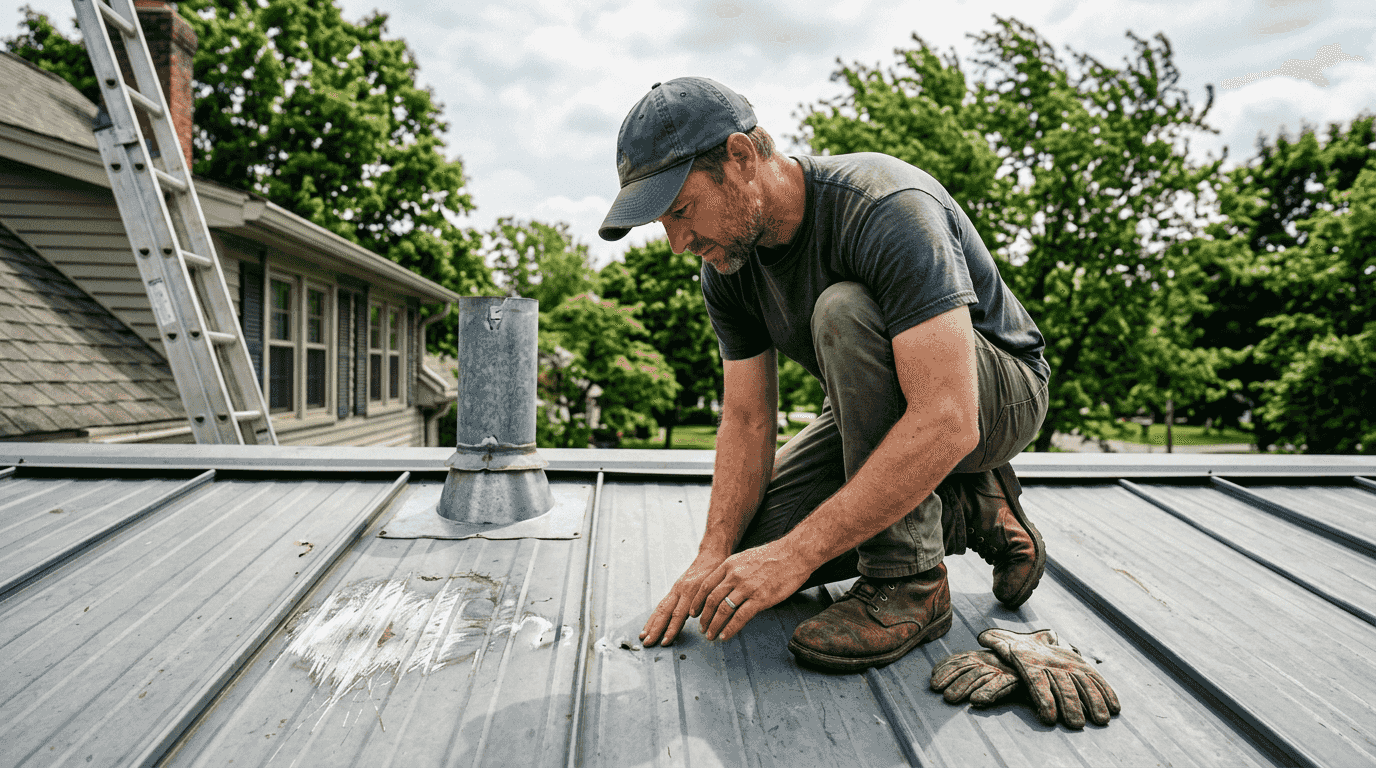
Metal roofing systems handle heat and UV exposure better than shingles but face different challenges. Hail can dent metal panels, and while these dents may not compromise waterproofing immediately, they create stress points where rust can develop. Coastal metal roofs experience galvanic corrosion when dissimilar metals contact each other in the presence of salt-laden moisture. Fastener holes represent weak points where wind uplift can begin tearing panels away from the structure.
Flat roof membranes, common on commercial buildings and some modern homes, struggle with ponding water after heavy rains. Standing water weighs down membranes and seeps into seams, causing adhesive failure. Extreme heat makes these membranes pliable and susceptible to punctures from foot traffic or falling branches. Cold snaps following heat waves cause rapid contraction that can split seams and create leak pathways.
TPO and EPDM rubber membranes offer different performance profiles under Texas weather. TPO reflects heat effectively but can become brittle under sustained UV exposure if not properly formulated. EPDM absorbs more heat but maintains flexibility across wider temperature ranges. Both materials rely on seam integrity, and wind-driven rain can exploit poorly welded or glued joints.
Clay and concrete tiles provide excellent longevity but come with weight and wind vulnerability considerations. Individual tiles can crack under hail impact or lift during high winds if not properly secured. The underlayment beneath tiles often fails before the tiles themselves, requiring complete roof replacement even when tiles appear intact. Water can penetrate through cracked tiles and saturate the underlayment, leading to wood rot in the decking.
| Material | Heat Resistance | Hail Resistance | Wind Resistance | Typical Texas Lifespan |
|---|---|---|---|---|
| Asphalt Shingles | Moderate | Low to Moderate | Moderate | 15 to 20 years |
| Metal Panels | High | Moderate to High | High | 30 to 50 years |
| TPO Membrane | High | Low | Moderate | 15 to 25 years |
| EPDM Rubber | Moderate | Low | Moderate | 20 to 30 years |
| Clay/Concrete Tile | High | Moderate | Moderate | 40 to 60 years |
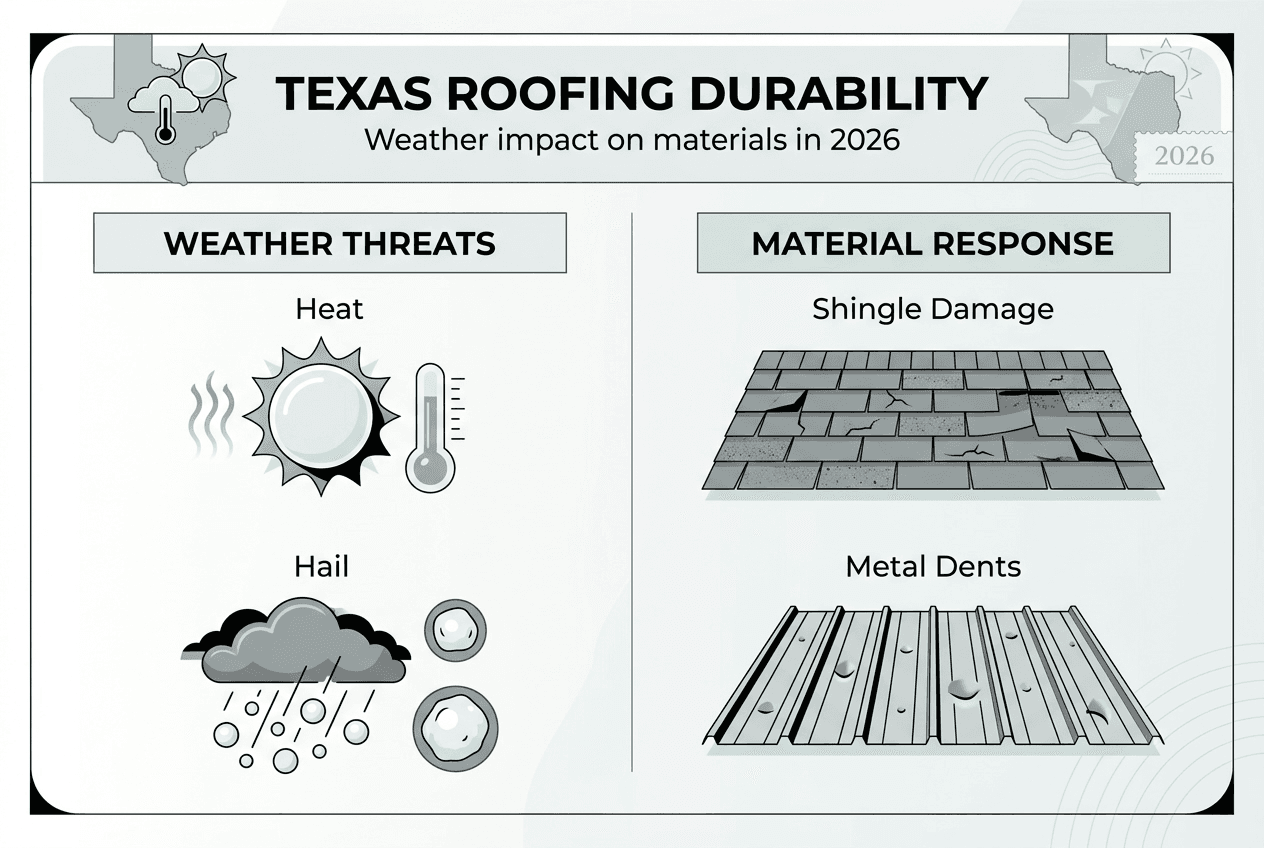
Shingle damage manifests in several ways depending on weather exposure. Curling edges indicate heat and UV degradation, while missing granules signal advanced aging. Cracked or broken shingles result from thermal cycling and hail impacts. Algae streaks, while primarily cosmetic, indicate moisture retention that can accelerate deterioration.
Metal roof damage often appears as dents, scratches in protective coatings, or rust spots around fasteners. Wind can loosen screws over time, creating gaps where water enters. Thermal expansion can cause oil canning, a wavy appearance that does not necessarily compromise function but indicates stress in the panels.
Flat membrane damage includes blistering from trapped moisture, cracking along seams, and punctures from debris. Ponding water leaves visible stains and often correlates with underlying structural sagging. Shrinkage pulls membranes away from edges and penetrations, creating entry points for wind-driven rain.
Pro Tip: Document your roof’s condition with photos after each major storm. This creates a timeline of damage progression that helps roofing professionals assess whether repairs or replacement makes more financial sense. Insurance claims also benefit from clear before and after documentation.
Maintenance strategies to protect roofs from Texas weather damage
Regular maintenance and timely repairs significantly increase roof lifespan and weather resilience. Post-storm inspections represent your first line of defense against cumulative damage. After hail or windstorms, check for missing shingles, dented metal, or debris accumulation in valleys and gutters. Even minor damage allows water infiltration that compounds over time, turning small repairs into major replacements.
Cleaning gutters and downspouts prevents water backup that can seep under roofing materials. Clogged gutters overflow during heavy rains, sending water cascading down exterior walls and pooling around foundations. This moisture migrates back up through attic spaces, rotting wood decking and creating ideal conditions for mold growth. Schedule gutter cleaning at least twice yearly, before spring rains and after fall leaf drop.
Sealing cracks and repairing punctures promptly stops minor issues from becoming catastrophic failures. Small gaps around flashing, vents, and chimneys allow water entry that rots surrounding wood and compromises structural integrity. Sealants degrade under UV exposure and temperature cycling, requiring reapplication every few years. Professional inspections identify these vulnerable points before leaks develop inside your home.
Annual roof care routine for Texas climates:
- Inspect the entire roof surface from the ground using binoculars, looking for missing or damaged materials
- Clean all gutters, downspouts, and roof valleys of debris, leaves, and biological growth
- Check and reseal all flashing around chimneys, vents, skylights, and roof penetrations
- Trim overhanging tree branches that could drop debris or scrape roofing materials during windstorms
- Schedule a professional inspection before hurricane season (May through November) to address vulnerabilities
- Document the roof’s condition with dated photos for insurance and maintenance records
- Verify attic ventilation is functioning properly to reduce heat buildup and moisture accumulation
- Apply algae-resistant treatments in humid areas to prevent biological growth that degrades materials
Attic ventilation plays a crucial role in roof longevity that many homeowners overlook. Proper airflow removes heat and moisture that accelerate material aging from below. Ridge vents, soffit vents, and gable vents work together to create continuous air circulation. Blocked or inadequate ventilation can raise attic temperatures to 150 degrees or higher, cooking shingles from underneath and voiding manufacturer warranties.
Tree management reduces multiple weather-related risks. Overhanging branches drop leaves that clog gutters and retain moisture on roof surfaces. During windstorms, branches become projectiles that puncture membranes and crack tiles. Falling limbs can cause catastrophic damage requiring emergency repairs. Maintain a 10-foot clearance between tree canopies and your roofline to minimize these hazards.
Professional inspections catch problems invisible to untrained eyes. Roofing experts use moisture meters to detect hidden leaks, infrared cameras to identify insulation gaps, and experience to spot early failure signs. They assess structural issues like sagging decking or inadequate support that contribute to premature material failure. Annual professional inspections cost a fraction of emergency repairs and provide peace of mind.
Pro Tip: Schedule professional roof inspections in early spring before severe weather season begins and again in late fall after hurricane season ends. This timing allows you to address vulnerabilities before they face their biggest tests and to repair any damage before winter moisture sets in.
Choosing the right roofing materials and replacement timing in Texas
Timely roof replacement with weather-appropriate materials reduces long-term repair costs and increases home value. Recognizing when repairs no longer make economic sense requires understanding your roof’s remaining functional life versus the cost of continued maintenance. Roofs approaching 20 years old often reach a tipping point where annual repair costs exceed the amortized cost of replacement.
Signs indicating roof replacement is necessary include widespread shingle loss, multiple leak locations, visible sagging or structural damage, and extensive granule loss exposing the underlying mat. Interior signs like water stains on ceilings, mold growth in attics, and increased energy bills from poor insulation also signal roof system failure. If you are scheduling repairs more than twice yearly, replacement typically offers better value.
Material selection should align with your specific Texas location and exposure. Coastal properties benefit from corrosion-resistant metal roofing or impact-rated shingles that withstand salt spray and hurricane-force winds. Inland areas with intense sun exposure favor reflective metal or light-colored materials that reduce cooling costs. Urban properties near large trees might prioritize impact-resistant materials that handle falling branches.
Key factors in roofing material choice:
- Durability ratings for wind, hail, and fire resistance appropriate to your region
- Energy efficiency through reflective coatings or thermal barriers that reduce cooling costs
- Maintenance requirements including cleaning frequency and expected repair intervals
- Installation complexity affecting labor costs and timeline
- Aesthetic compatibility with neighborhood standards and home architecture
- Warranty coverage for both materials and workmanship
Average roofing material lifespans under Texas climate conditions:
| Material Type | Expected Lifespan | Maintenance Level | Best Texas Applications |
|---|---|---|---|
| 3-Tab Asphalt Shingles | 15 to 20 years | Moderate | Budget-conscious inland properties |
| Architectural Shingles | 20 to 30 years | Moderate | Standard residential applications |
| Metal Standing Seam | 30 to 50 years | Low | Coastal areas and modern designs |
| TPO Membrane | 15 to 25 years | Moderate | Commercial flat roofs |
| Modified Bitumen | 20 to 25 years | Moderate to High | Low-slope residential and commercial |
| Clay or Concrete Tile | 40 to 60 years | Low | High-end homes in stable climates |
Timing replacements strategically maximizes value and minimizes risk. Fall represents the ideal season for roof replacement in most of Texas, offering mild temperatures for installation and completion before winter moisture arrives. Scheduling work before severe weather season ensures your new roof faces its first major test at full strength. Avoid summer replacements when extreme heat makes installation difficult and winter work when cold temperatures prevent proper adhesive curing.
Selecting appropriate roofing materials for Houston’s climate requires balancing upfront costs against long-term performance. Premium materials cost more initially but often provide lower total cost of ownership through extended lifespans and reduced maintenance. Energy-efficient options may qualify for tax credits or insurance discounts that offset higher purchase prices. Local building codes may mandate minimum wind or fire ratings that narrow your material choices.
Warranty coverage varies significantly between manufacturers and installation methods. Material warranties typically cover defects but exclude damage from weather events, improper installation, or inadequate maintenance. Workmanship warranties from your contractor protect against installation errors but usually last only 1 to 10 years. Extended warranties may be available for premium materials installed by certified contractors, providing additional protection worth considering for long-term peace of mind.
Protect your Texas home with expert roofing services
Texas weather demands roofing solutions engineered for extreme conditions. Professional installation ensures materials perform to their full potential, with proper ventilation, flashing, and fastening that amateur work often misses. Mister ReRoof specializes in weather-resistant roof replacements tailored to Texas climates, from shingle roof replacement in Sugar Land TX to metal roof replacement in Victoria TX.
Their team understands how Gulf Coast humidity, inland heat, and seasonal storms affect different roofing materials. They help homeowners select systems that balance durability, energy efficiency, and budget constraints. Quality installation extends your roof’s lifespan and protects your property investment through decades of challenging weather. Contact Mister ReRoof today for a free estimate and discover how professional roofing services deliver lasting peace of mind.
Frequently asked questions
How does hail specifically affect roof shingles?
Hail impacts crack shingle surfaces and dislodge protective granules, creating weak points where water penetrates. Even small hail bruises the underlying mat, reducing its ability to shed water effectively. These damaged areas age faster than surrounding materials, leading to premature failure and leak development within months of the storm.
What maintenance is recommended after extreme Texas storms?
Inspect your roof for missing or lifted shingles, dents in metal panels, and debris accumulation in valleys and gutters. Check all flashing around chimneys, vents, and skylights for gaps or damage. Document any visible damage with photos and schedule professional repairs promptly to prevent water infiltration and secondary damage.
When should I consider replacing my roof in Texas?
Consider replacement when repairs become frequent, visible material deterioration is widespread, or your roof exceeds 20 years old. Extensive storm damage, multiple leak locations, or sagging deck structure also indicate replacement is more cost effective than continued repairs. Professional assessment helps determine whether your roof has sufficient remaining life to justify repair investments.
Which roofing materials handle Texas heat best?
Metal roofing with reflective coatings and light-colored materials deflect solar heat most effectively, reducing cooling costs by up to 25 percent. Clay and concrete tiles also perform well in heat due to their thermal mass and ventilation characteristics. These materials maintain structural integrity under sustained high temperatures better than standard asphalt shingles, which can become brittle and crack in extreme heat.