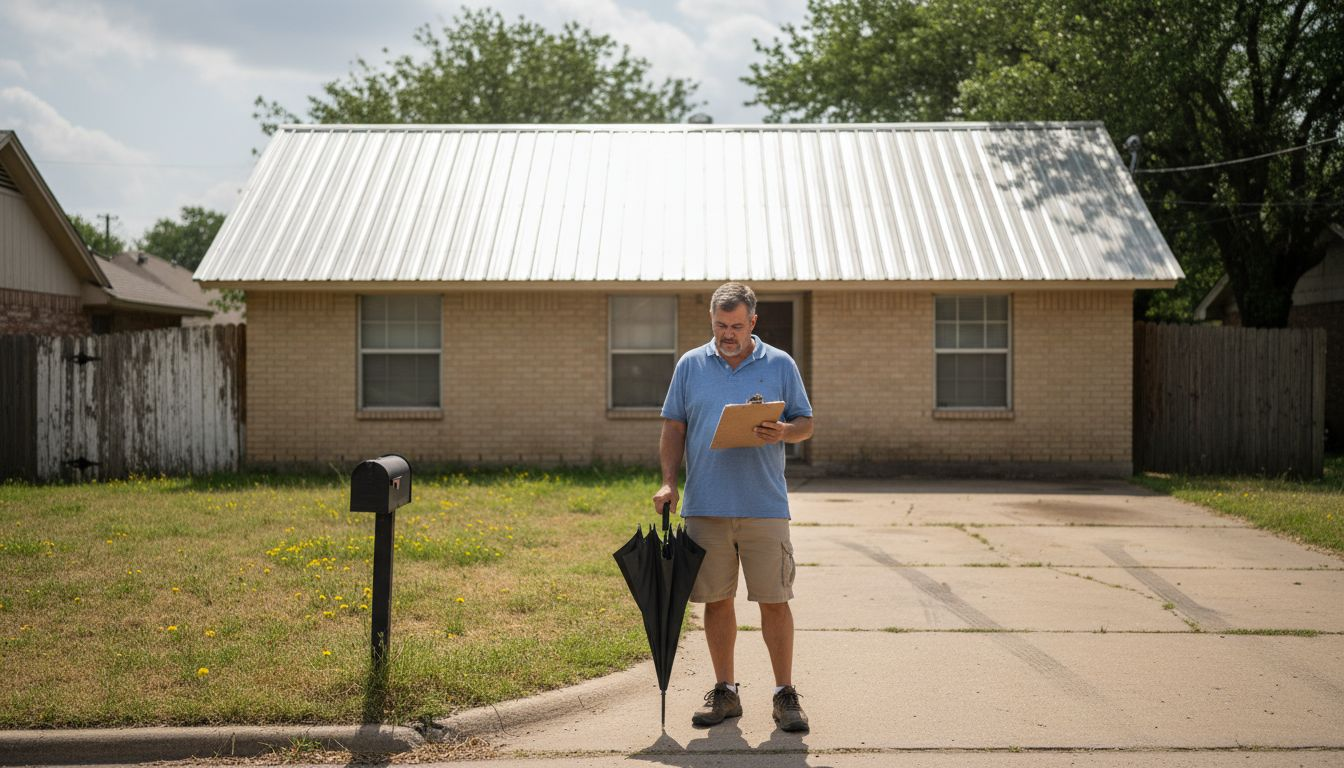
Metal roofs last 40 to 70 years, while asphalt shingles survive only 12 to 20 years. For Texas homeowners facing relentless heat, hailstorms, and severe weather, choosing durable roofing isn’t just smart—it’s essential. Metal roofing delivers unmatched weather resistance, energy savings, and long-term value. This guide breaks down the benefits, costs, and practical steps to help you decide if metal roofing is right for your Texas home.
Table of Contents
- The Texas Roofing Challenge
- How Metal Roofs Deliver Superior Durability And Weather Resistance
- Common Misconceptions About Metal Roofs
- Material Choices And Installation Best Practices For Texas Homes
- Long-Term Cost-Benefit Analysis Of Metal Roofing Vs Other Options
- Practical Decision Framework For Choosing Your Metal Roof
- Real-World Examples And Case Studies From Texas
- Summary: Why Metal Roofs Are The Smart Choice For Texas Homeowners
- Protect Your Texas Home With Expert Metal Roof Installation
Key Takeaways
| Point | Details |
|---|---|
| Exceptional Lifespan | Metal roofs last 40 to 70 years compared to shingles at 12 to 20 years. |
| Energy Efficiency | Reflecting up to 70% of solar heat cuts cooling costs by roughly 10% annually. |
| Noise Levels | Modern installation with proper underlayment makes metal roofs as quiet as shingles. |
| Long-Term Savings | Total roofing expenses drop 20 to 30% over 50 years despite higher upfront costs. |
| Weather Resilience | Class 4 impact resistance and proper material choice withstand Texas hail and heat. |
The Texas Roofing Challenge
Texas homeowners know the pain of extreme weather. Hailstorms pummel roofs with ice chunks the size of golf balls. Summer heat climbs past 100°F for weeks, baking shingles until they crack and warp. High winds from Gulf Coast storms rip off poorly secured materials. These conditions don’t just damage roofs—they drain wallets through constant repairs and skyrocketing energy bills.
Common roofing materials struggle under this onslaught. Asphalt shingles, the default choice for many, degrade rapidly in intense heat. They absorb solar radiation, turning attics into ovens and forcing air conditioners to work overtime. After a severe hailstorm, shingle roofs often require partial or full replacement. The cycle repeats every 15 years, creating headaches and expense.
Texas homeowners face unique roofing demands:
- Hail resistance to survive frequent spring and summer storms
- Heat reflection to lower cooling costs during brutal summers
- Wind resistance to withstand Gulf Coast hurricanes and inland thunderstorms
- Durability to minimize frequent repairs and replacements
- Long lifespan to protect the investment over decades
A roofing solution that checks all these boxes isn’t a luxury. It’s a necessity. Settling for materials that underperform means paying more over time and enduring stress every storm season. The right roofing choice turns your home into a fortress, not a liability.
How Metal Roofs Deliver Superior Durability and Weather Resistance
Metal roofs solve Texas’s toughest roofing challenges with engineering and materials built for extremes. Unlike shingles that crack under pressure, metal roofs have a service lifespan of 40 to 70 years, outlasting asphalt by decades. This longevity stems from their ability to resist warping, cracking, and degradation even in punishing conditions.
Heat management sets metal roofs apart. They reflect up to 70% of solar radiation instead of absorbing it like shingles. This reflection keeps attic temperatures lower and reduces cooling costs by about 10% annually. During Texas summers, that savings adds up fast. Homeowners report noticeable drops in energy bills within the first season.
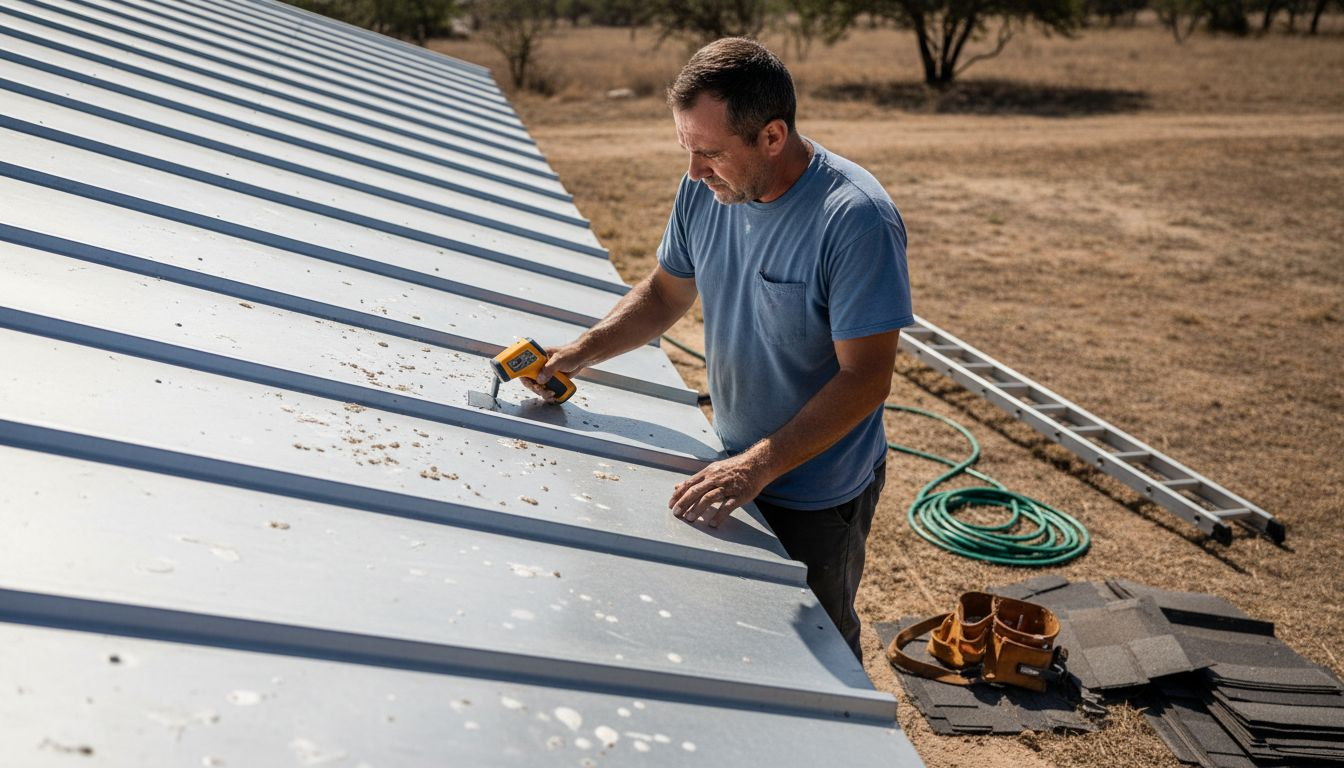
Impact resistance is another game changer. Metal roofs earn UL Class 4 ratings, the highest standard for hail resistance. When golf ball sized hail strikes, metal dents slightly but doesn’t crack or puncture. Shingles, by contrast, often need replacement after severe hailstorms. This durability translates to fewer insurance claims and lower premiums in hail prone regions.
Key benefits of metal roofing for Texas weather:
- Lifespan of 40 to 70 years versus 12 to 20 for shingles
- Reflects up to 70% of solar heat, cutting cooling costs significantly
- UL Class 4 impact resistance protects against hail damage
- Resists warping, cracking, and extreme weather effects
- Reduces frequency and cost of roof replacements
Metal roofs handle wind exceptionally well. Properly installed panels interlock and secure tightly, preventing wind from lifting edges. During hurricanes or strong thunderstorms, metal roofing stays put while shingles blow off. This resilience matters in Texas, where wind damage causes costly repairs year after year.
For homeowners exploring durable roofing solutions for Houston weather, metal roofing delivers unmatched performance. Comparing asphalt shingles advantages in Houston reveals that while shingles cost less upfront, metal roofing’s longevity and savings outweigh initial expense. Understanding metal roofing lifespan and durability helps homeowners make informed choices.
Metal roofs last three to five times longer than shingles, reflecting most solar heat and resisting hail impact. This durability means fewer repairs, lower energy bills, and decades of reliable protection.
Common Misconceptions About Metal Roofs
Myths about metal roofing keep many Texas homeowners from choosing the best long-term option. The most persistent misconception is noise. People imagine rain hammering on metal like a drum, creating unbearable racket. In reality, modern metal roofs installed with solid sheathing and quality underlayment produce noise levels comparable to asphalt shingles. The insulation and attic space buffer sound just as effectively.
Another myth centers on cost. Yes, metal roofing costs more upfront—often 50% to 100% higher than shingles. But this initial expense masks the real story. Over 50 years, metal roofs save 20% to 30% on total roofing expenses. You avoid multiple shingle replacements, pay less for repairs, and enjoy lower energy bills. The payback period typically falls between 15 and 25 years, depending on energy savings and avoided replacements.
Maintenance fears also deter buyers. Some believe metal roofs require constant upkeep or specialized care. The opposite is true. Metal roofs need about 50% less maintenance than asphalt shingles in Texas climates. No shingles to replace after storms. No moss or algae growth requiring cleaning. Occasional inspections and gutter clearing suffice.
Debunking common metal roofing myths:
- Myth: Metal roofs are noisy. Modern installations with proper underlayment match shingle noise levels.
- Myth: Upfront costs make metal roofs unaffordable. Long-term savings offset higher initial investment within 15 to 25 years.
- Myth: Metal roofs require extensive maintenance. They need roughly half the upkeep of asphalt shingles.
- Myth: Metal roofs attract lightning. Metal conducts electricity but doesn’t attract lightning any more than other materials.
- Myth: Metal roofs look industrial and unattractive. Modern metal roofing comes in varied styles mimicking shingles, tiles, or standing seam designs.
Pro Tip: When evaluating metal roofing, ask installers for local references and visit completed projects. Seeing and hearing a metal roof in person dispels myths faster than any sales pitch.
Understanding metal roof common misconceptions empowers homeowners to make decisions based on facts, not fear. Missing out on metal roofing due to outdated beliefs means leaving money and comfort on the table.
Material Choices and Installation Best Practices for Texas Homes
Choosing the right metal type for your Texas region makes a significant difference in performance and longevity. Steel and aluminum dominate the market, each excelling in specific conditions. Steel roofing, often coated with zinc or a zinc-aluminum alloy, offers exceptional strength and hail resistance. Its Class 4 impact rating makes it ideal for inland Texas areas like San Antonio, Austin, and Dallas, where hailstorms strike frequently.
Aluminum roofing shines in coastal regions like Corpus Christi, Galveston, and Houston. Its superior corrosion resistance withstands salty air that degrades steel over time. Coastal homeowners who choose steel without proper coatings face rust and premature failure. Aluminum costs more but pays off in longevity near the Gulf.
Installation quality matters as much as material choice. Improperly fastened panels create noise, leaks, and reduced lifespan. Skilled installers account for thermal expansion, the tendency of metal to expand and contract with temperature changes. They leave appropriate gaps and use fasteners designed for movement. This attention to detail prevents warping and buckling.
Best practices for metal roof installation in Texas:
- Use steel roofing in hail prone inland areas for Class 4 impact resistance
- Choose aluminum in coastal zones for corrosion resistance against salty air
- Ensure installers account for thermal expansion to prevent warping
- Install high-quality underlayment to reduce noise and add insulation
- Verify proper fastening techniques to prevent wind uplift and leaks
Experienced installers reduce common faults like inadequate ventilation, which traps heat and moisture. Proper ventilation extends roof life and maintains energy efficiency. They also ensure flashing around chimneys, vents, and skylights is sealed correctly, preventing leaks that undermine even the best materials.
Pro Tip: Always hire installers with specific metal roofing experience, not general roofers. Metal roofing requires specialized skills in fastening, sealing, and thermal management that shingle installers may lack.
For those exploring metal roof options in Victoria TX, understanding local climate demands guides material selection. A comprehensive metal roofing installation guide walks through best practices and common pitfalls to avoid.
Long-Term Cost-Benefit Analysis of Metal Roofing vs Other Options
Metal roofs cost more upfront but deliver substantial savings over decades. A typical metal roof installation runs $10,000 to $20,000 for an average Texas home, compared to $6,000 to $12,000 for asphalt shingles. This gap narrows dramatically when you calculate total cost of ownership over 50 years.
Asphalt shingles last 12 to 20 years, requiring two to four replacements in 50 years. Each replacement costs $6,000 to $12,000, plus disposal fees and potential decking repairs. Metal roofs, lasting 40 to 70 years, need one installation during the same period. Over five decades, metal roofing reduces total roofing expenses by 20% to 30%.
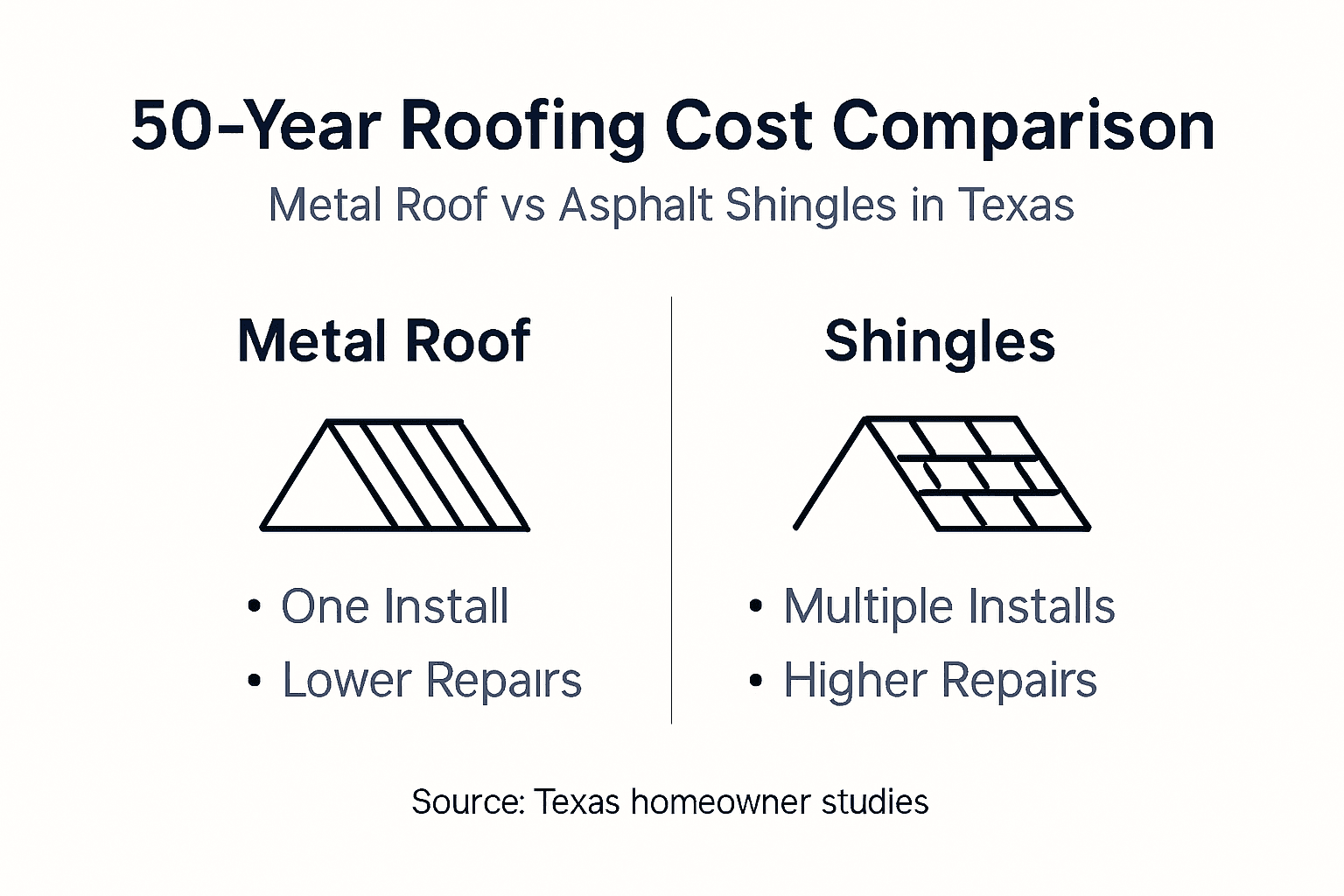
Energy savings amplify financial benefits. Metal roofs reflecting 70% of solar heat lower cooling costs by roughly 10% annually. In Texas, where air conditioning runs six to eight months yearly, this savings reaches $200 to $400 per year for typical homes. Over 50 years, energy savings alone can total $10,000 to $20,000.
Repair frequency and costs also favor metal. Shingles damaged by hail or wind require frequent patching or partial replacement. Metal roofs withstand impacts and weather with minimal damage. Homeowners spend significantly less on repairs over the roof’s lifetime.
| Factor | Metal Roof | Asphalt Shingles |
|---|---|---|
| Lifespan | 40 to 70 years | 12 to 20 years |
| Replacements in 50 Years | 1 | 2 to 4 |
| Upfront Cost | $10,000 to $20,000 | $6,000 to $12,000 |
| Total Cost Over 50 Years | $12,000 to $25,000 | $18,000 to $50,000+ |
| Annual Energy Savings | $200 to $400 | $0 |
| Maintenance Cost (50 Years) | $1,000 to $2,000 | $3,000 to $6,000 |
Key financial advantages of metal roofing:
- Reduces total roofing expenses by 20% to 30% over 50 years
- Cuts cooling bills by roughly 10% annually through heat reflection
- Requires fewer repairs, lowering maintenance costs significantly
- Avoids multiple replacement cycles common with shingles
Homeowners considering whether to invest in metal roofing Houston benefit from detailed roofing material cost comparison analysis. Despite higher initial outlay, metal roofing’s lower total cost of ownership makes it the financially smart choice for long-term homeowners.
Practical Decision Framework for Choosing Your Metal Roof
Deciding on a metal roof involves weighing durability, cost, and maintenance against your specific Texas weather risks and budget. A mental model to understand choosing metal roofs is evaluating roofing on three axes: durability against Texas-specific weather, upfront vs long-term costs, and maintenance burden over decades. This framework simplifies complex choices into clear steps.
Start by assessing your local weather risks. Do you live in a hail prone inland area or a coastal zone with salt air and hurricanes? Hail zones demand steel with Class 4 impact resistance. Coastal regions require aluminum to resist corrosion. Understanding your primary weather threat guides material selection.
Next, calculate your budget across both upfront and long-term horizons. If you plan to stay in your home 20+ years, metal roofing’s higher initial cost disappears into long-term savings. If you’re selling within five years, shingles might make more financial sense. Be honest about your timeline.
Step-by-step decision process:
- Assess Local Weather Risks: Identify primary threats like hail, heat, wind, or salt corrosion.
- Calculate Upfront Budget vs Long-Term Savings: Determine if you can afford higher initial cost for decades of savings.
- Match Metal Type to Regional Conditions: Choose steel for hail zones, aluminum for coastal areas.
- Select Experienced Installers: Verify metal roofing experience, references, and proper licensing.
- Plan for Maintenance: Understand that metal roofs need minimal upkeep but still require occasional inspections.
| Decision Factor | Priority for Inland Texas | Priority for Coastal Texas | Key Consideration |
|---|---|---|---|
| Hail Resistance | High | Medium | Choose Class 4 rated steel |
| Corrosion Resistance | Low | High | Opt for aluminum near coast |
| Heat Reflection | High | High | All metal roofs reflect heat well |
| Budget Flexibility | Medium | Medium | Higher upfront, lower long-term |
| Installer Experience | High | High | Critical for proper installation |
Pro Tip: Many homeowners overlook thermal expansion planning. In Texas, temperature swings from freezing winters to 100°F+ summers cause significant metal expansion and contraction. Ensure your installer uses fastening systems designed for this movement to prevent buckling and noise.
Understanding the roofing decision framework empowers you to evaluate options systematically. This approach removes guesswork and builds confidence in your final choice.
Real-World Examples and Case Studies from Texas
Texas homeowners who’ve switched to metal roofing report measurable benefits that validate the investment. A Houston area homeowner replaced asphalt shingles with steel roofing in 2014 after a hailstorm caused $8,000 in damage. Over 12 years, the metal roof survived three major hailstorms without a single claim. The homeowner estimates saving $15,000 in repairs and replacement costs compared to keeping shingles.
Another example comes from San Antonio, where a family installed aluminum roofing in 2010. Their energy bills dropped 12% in the first year, saving roughly $300 annually. After 16 years, the roof shows no signs of wear, while neighbors on their third shingle replacement. The family calculates total savings of $9,000 in energy costs plus avoided replacement expenses.
Insurance companies recognize metal roofing’s superior performance. Many Texas insurers offer discounts of 10% to 20% on premiums for homes with impact resistant metal roofs. These savings add up over decades, further tilting the cost benefit analysis in metal roofing’s favor.
Real benefits Texas homeowners experience:
- Significantly fewer hail damage claims compared to shingle roofs
- Energy savings of 10% to 15% annually, totaling thousands over decades
- Lower insurance premiums due to impact resistance and durability
- High satisfaction ratings after 10+ years of ownership
- Better storm performance with minimal damage during severe weather
“We installed our metal roof in 2012 after a brutal hailstorm destroyed our shingles. Fourteen years later, it still looks new. We’ve had zero leaks, no repairs, and our cooling bills dropped noticeably. Best decision we made for our home.” – Austin homeowner
Case studies consistently show metal roofs outperforming shingles during Texas storms. After Hurricane Harvey in 2017, metal roofs in affected areas sustained far less damage than shingle roofs. Homeowners with metal roofing returned to intact homes while neighbors faced costly repairs.
For more examples of how roofing performs in challenging conditions, explore Houston weather roofing examples. Real-world results from Texas homeowners provide the strongest evidence for metal roofing’s value.
Summary: Why Metal Roofs Are the Smart Choice for Texas Homeowners
Metal roofs deliver unmatched durability, energy efficiency, and long-term value for Texas homes. They last 40 to 70 years, reflect up to 70% of solar heat, and resist hail damage that destroys shingles. Common myths about noise, cost, and maintenance don’t hold up under scrutiny. Modern installations are quiet, and long-term savings offset higher upfront costs within 15 to 25 years.
Choosing the right metal type—steel for inland hail zones, aluminum for coastal areas—ensures optimal performance. Professional installation is critical. Skilled installers account for thermal expansion, use proper fastening techniques, and install quality underlayment. These details determine whether your metal roof performs as promised or disappoints.
Texas weather demands roofing that can handle extreme heat, hail, wind, and humidity. Metal roofing meets these challenges better than any alternative. For homeowners committed to protecting their investment and minimizing long-term costs, metal roofing is the clear choice. Don’t let outdated myths prevent you from making the smart decision.
For expert guidance and professional metal roof installation, seek experienced contractors who understand Texas-specific challenges and best practices.
Protect Your Texas Home with Expert Metal Roof Installation
Mister ReRoof brings decades of experience installing high-performance metal roofs across Texas. Whether you need metal roof replacement in Victoria, TX or expert guidance choosing materials for Houston’s climate, the team delivers quality workmanship and dependable service. Their comprehensive metal roofing installation guide walks you through the process, ensuring informed decisions.
Professional installation maximizes your metal roof’s lifespan and performance. Mister ReRoof’s installers understand thermal expansion, proper fastening, and ventilation requirements specific to Texas weather. They help you choose between steel and aluminum based on your location and budget. Contact Mister ReRoof today for a free estimate and protect your home with a roofing system built to last decades.
Frequently Asked Questions About Metal Roofs in Texas
Do metal roofs cost more than asphalt shingles?
Yes, metal roofs cost 50% to 100% more upfront than asphalt shingles. However, they save 20% to 30% on total roofing expenses over 50 years due to longer lifespan, lower maintenance, and energy savings.
Are metal roofs noisy during rain or hail?
Modern metal roofs installed with solid sheathing and quality underlayment produce noise levels comparable to asphalt shingles. Proper installation eliminates the drumming sound many people associate with metal roofing.
How much do metal roofs reduce cooling costs?
Metal roofs reflect up to 70% of solar heat, reducing cooling costs by roughly 10% annually in Texas. This translates to $200 to $400 in yearly savings for typical homes.
Which metal type is best for my Texas region?
Steel roofing with Class 4 impact resistance works best in inland hail prone areas like Austin and San Antonio. Aluminum roofing suits coastal regions like Houston and Corpus Christi due to superior corrosion resistance against salty air.
How much maintenance do metal roofs require?
Metal roofs need about 50% less maintenance than asphalt shingles. Occasional inspections and gutter clearing suffice. No shingle replacements, moss removal, or frequent repairs are necessary.
Will a metal roof lower my insurance premiums?
Many Texas insurers offer 10% to 20% discounts on premiums for homes with impact resistant metal roofs. Check with your insurance provider to verify available discounts in your area.