TL;DR:
- Regular roof inspections in Texas prevent costly repairs and protect insurance coverage.
- Professionals use specialized tools to detect hidden damage like micro-fractures and trapped moisture.
- Post-storm inspections within 30 days are crucial due to Texas’s aggressive weather and hail activity.
Most property owners wait until water is dripping from the ceiling before they think about their roof. By then, the damage has already spread, the repair bill has grown, and insurance coverage may be at risk. In Texas, where storms roll in fast and hail is a near-annual event, that reactive mindset is an expensive habit. Regular roof inspections catch problems early, protect your investment, and keep your insurance options open. This article walks you through the real costs of skipping inspections, what professionals actually find, why Texas weather makes all of this urgent, and how to take action today.
Table of Contents
- The high cost of ignoring roof inspections
- What professional roof inspections uncover
- The Texas weather factor: Why inspections matter more here
- When and how to schedule your roof inspection
- Our take: Why proactive inspections are an investment, not a chore
- Protect your Texas property with expert roof inspections
- Frequently asked questions
Key Takeaways
| Point | Details |
|---|---|
| Hidden damage risk | Subtle roof issues like hail bruising or granule loss can silently cause major problems if undetected. |
| Insurance claim timing | Quick post-storm inspection ensures you stay eligible for insurance coverage in Texas. |
| Cost savings | Regular roof checks save thousands by preventing expensive repairs and extending roof lifespan. |
| Local weather impact | Texas storms and heat make routine inspections vital for both homeowners and commercial properties. |
The high cost of ignoring roof inspections
A leaking roof is obvious. The damage hiding beneath intact-looking shingles is not. That is exactly why skipping routine roof inspections in Texas is such a costly mistake for homeowners and commercial property owners alike.
The financial impact compounds quietly. A small area of water intrusion can rot the decking underneath, weaken rafters, and allow mold to grow inside your walls before you ever notice a stain on the ceiling. By the time those symptoms appear, you are no longer looking at a patch job. You are looking at a full section replacement, and possibly mold remediation on top of that.
Consider these common consequences of skipping regular inspections:
- Structural wood rot from undetected moisture intrusion
- Mold growth inside attic spaces and wall cavities
- Decreased property value when buyers or appraisers spot deferred maintenance
- Higher repair costs because small issues become large ones over time
- Voided warranties on roofing materials when maintenance records are absent
The insurance angle is especially critical in Texas. Skipping roof inspections can result in undetected hail and storm damage that voids your insurance coverage if not reported promptly. Carriers expect you to act within a defined window after a storm, and without an inspection, you may not even know the damage exists until that window closes.
| Situation | Potential cost without inspection | Potential cost with early inspection |
|---|---|---|
| Minor shingle damage | $3,000 to $8,000 repair | $300 to $600 fix |
| Water intrusion and rot | $10,000 to $25,000 | $500 to $2,000 |
| Full roof replacement | $12,000 to $35,000 | Avoided entirely |
| Mold remediation | $5,000 to $15,000 | Not applicable |
Routine regular roof maintenance is not just preventive care. It is a financial strategy. Industry data consistently shows that every dollar spent on roof maintenance saves between four and eight dollars in future repair costs.
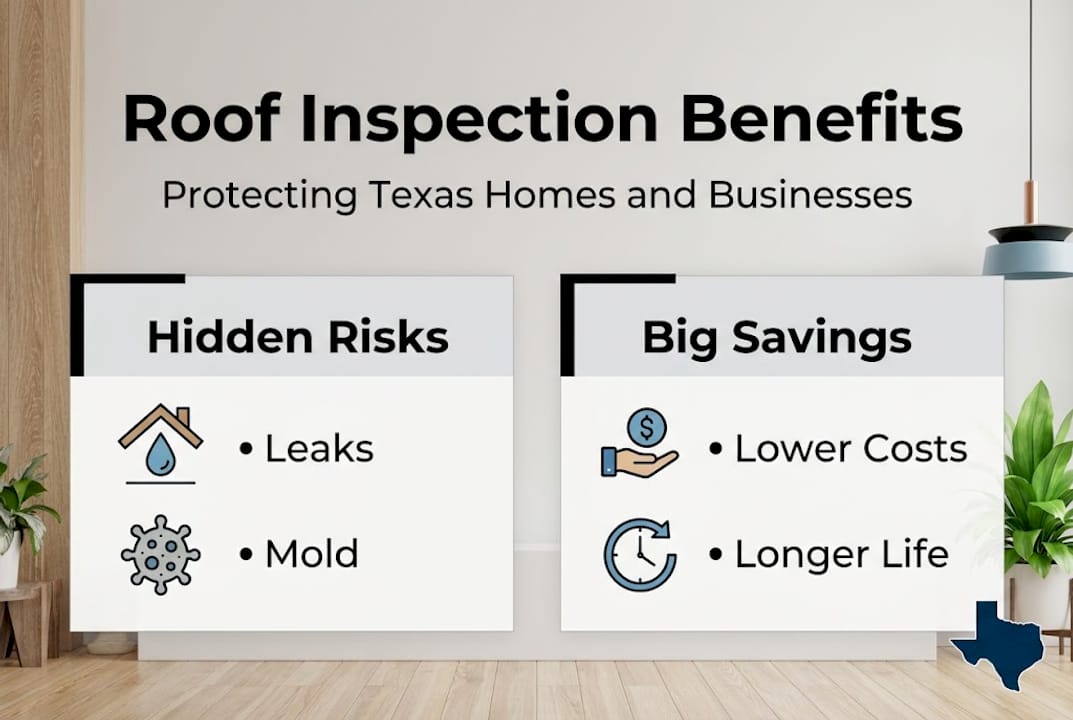
Pro Tip: Schedule a professional inspection within 30 days after any major Texas storm, even if your roof looks fine from the ground. Some damage is completely invisible without getting on top of the structure.
What professional roof inspections uncover
You might feel confident walking around your yard after a storm and scanning the roofline. That confidence is understandable but misleading. Professional inspectors bring tools and trained eyes that change everything about what gets detected.
Signs of roof damage that homeowners miss most often include bruised shingles from hail impact, granule loss that leaves asphalt exposed, micro-fractures along ridge caps, and subtle separations at flashing points around chimneys or HVAC units. None of these look alarming from thirty feet below.
“Subtle hail damage such as granule loss and micro-fractures are often missed without professional tools.”
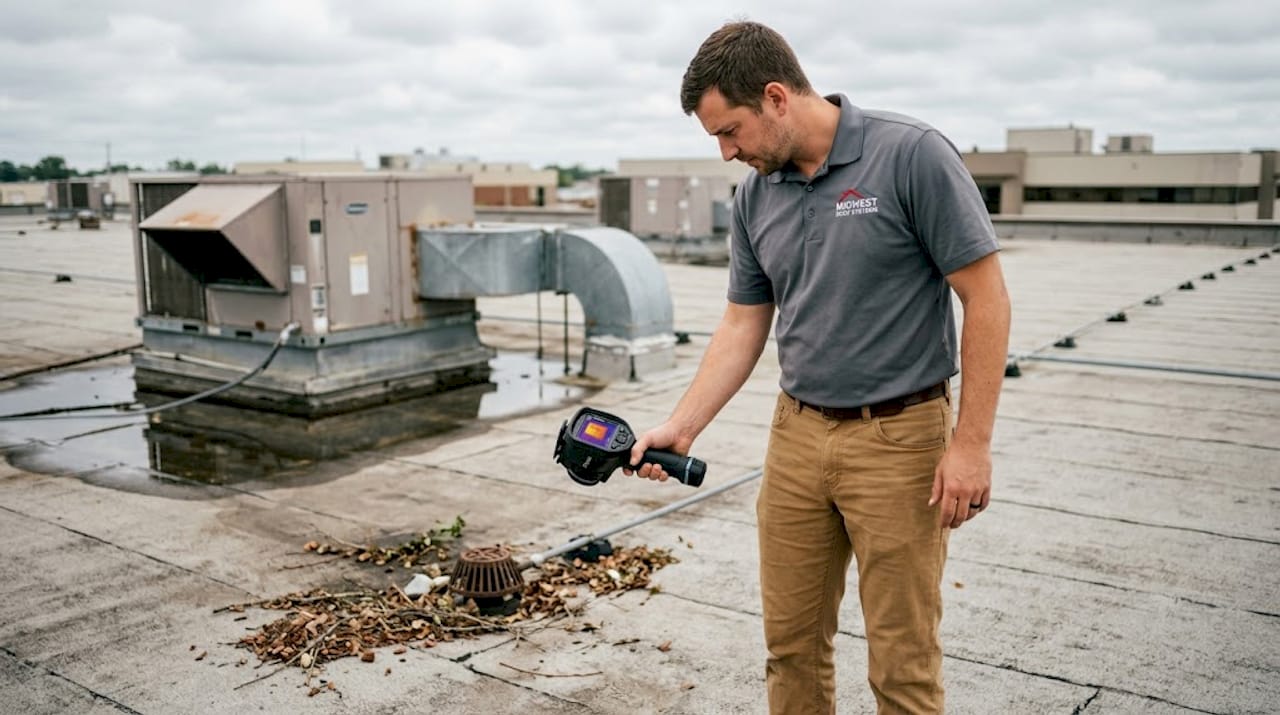
For flat and commercial roofs, the situation gets even more technical. Infrared imaging detects moisture trapped beneath membrane surfaces, which causes bubbling, delamination, and eventual failure. Without that technology, a flat roof can appear perfectly sound while silently holding water across hundreds of square feet. This is why a proper flat roof inspection guide matters so much for business owners.
Professional vs. DIY inspection: a clear comparison
| Inspection type | What it covers | Tools used | Reliability |
|---|---|---|---|
| DIY visual check | Obvious visible damage only | Eyes, binoculars | Low |
| Professional inspection | Surface and subsurface issues | Infrared, moisture meters | High |
| Post-storm professional | Hail bruising, micro-fractures, flashing | Specialized equipment | Essential for claims |
Here is what a typical professional inspection covers, step by step:
- Exterior surface review: Shingles, tiles, or membrane are examined for impact marks, lifting, cracking, and granule loss.
- Flashing and edge inspection: Every transition point, including valleys, ridges, and penetrations, is checked for separation or corrosion.
- Gutter and drainage assessment: Blockages and granule accumulation reveal shingle wear patterns.
- Attic interior check: Inspectors look for daylight penetration, moisture staining, and insulation compression from water.
- Infrared or moisture scan (commercial and flat roofs): Thermal imaging maps wet areas invisible to standard inspection.
Using a detailed hail damage checklist during and after inspection helps document findings precisely, which matters enormously when you file an insurance claim.
The Texas weather factor: Why inspections matter more here
Texas is not gentle on rooftops. The state sits in one of the most active hail corridors in the United States, regularly absorbs Gulf Coast hurricanes and tropical storms, and subjects roofing materials to relentless summer UV exposure that degrades shingles faster than nearly anywhere else in the country.
These conditions make routine inspections not just a good idea but a practical necessity:
- Hail season runs nearly year-round in many parts of Texas, with the greatest frequency from March through June
- Hurricane and tropical storm remnants bring sustained winds that lift shingles and tear flashing
- Extreme UV and heat causes shingles to dry out, curl, and lose granules at an accelerated rate
- Rapid temperature swings cause roofing materials to expand and contract repeatedly, stressing seams and fasteners
- Heavy rainfall events test every drainage point, flashing seal, and membrane edge simultaneously
Subtle hail damage and micro-fractures are especially common in Texas after storms and require timely inspections to remain eligible for insurance claims. The window matters as much as the damage itself.
“In Texas, the gap between ‘looks fine’ and ‘needs full replacement’ can close in a single storm season without a professional inspection.”
For commercial property owners, the stakes scale up accordingly. A large flat or low-slope roof over a warehouse, retail space, or office building represents tens of thousands of dollars in material alone. Understanding your storm repair workflow before a storm hits keeps you from scrambling for unreliable contractors afterward.
Following solid weather and roofing tips specific to the Gulf Coast and Central Texas regions helps both homeowners and business owners plan their inspection schedules around actual weather patterns rather than arbitrary calendar dates. Reviewing hail damage claim tips from professionals who handle these claims regularly can also strengthen your position when it is time to negotiate with your carrier.
When and how to schedule your roof inspection
Knowing you need an inspection is one thing. Knowing exactly when and how to act is what separates proactive property owners from reactive ones.
Timing your inspection correctly is the first step. Scheduling a professional roof inspection within 48 hours to 30 days after a major storm is vital for insurance eligibility. Beyond storms, annual inspections each spring or fall keep you ahead of seasonal wear before extreme weather arrives.
Here is a practical approach to getting the most from your inspection:
- Choose a licensed Texas roofing contractor with documented experience in storm damage assessment and insurance documentation.
- Request a written report with photos. Verbal summaries are not enough when you need to support a claim.
- Clear attic access before the inspector arrives so the interior check is not skipped.
- Note the date of the last storm in your area and mention it. Inspectors use this to prioritize what to look for.
- Ask specifically about flashing around all penetrations. This is where Texas roofs fail most quietly.
- Compare findings to last year’s report if one exists. Progressive changes tell a more complete story than any single snapshot.
Reviewing safe roof inspection steps before you attempt any personal visual checks helps you stay safe while gathering useful information for your contractor. And if you are curious about liability and safety during the process, roofing safety tips cover what homeowners need to know.
For additional context on how carriers evaluate storm-related damage, reviewing guidance on understanding hail insurance helps you speak the same language as your adjuster when the time comes.
Pro Tip: Keep a simple maintenance log with inspection dates, findings, and any repairs made. This record protects your warranty, satisfies insurance documentation requirements, and adds verifiable value when you sell the property.
Our take: Why proactive inspections are an investment, not a chore
After working with Texas property owners through hundreds of roof replacements, one pattern stands out: the most expensive jobs almost always trace back to years of skipped inspections. Not neglect in the dramatic sense. Just a quiet assumption that if the roof is not leaking, it is fine.
That assumption is the real risk. A proactive inspection habit changes your relationship with your property from reactive management to genuine asset stewardship. Insurance companies notice this too. Carriers are far more willing to settle claims fairly when there is documentation showing regular care and prompt post-storm action.
Inspections also give you negotiating power. When an adjuster lowballs an estimate, a professional inspection report with photos and measurements is your strongest counter. Without it, you are arguing from opinion. With it, you are presenting evidence.
The roof maintenance importance conversation always comes back to this: cutting corners on inspections is rarely worth the risk in Texas. The weather is too aggressive, the costs are too steep, and the insurance timelines are too tight. The property owners who come out ahead are the ones who treat inspection as a routine line item rather than an emergency response.
Protect your Texas property with expert roof inspections
Regular inspections do more than catch damage early. They extend the useful life of your roofing system, protect your property’s market value, and give you documented evidence when insurance claims are on the line. For Texas homeowners and commercial property owners, that peace of mind is genuinely worth scheduling.

At Mister ReRoof, we understand how Texas weather pushes roofing systems to their limits. Whether you need a metal roof replacement in Victoria, a durable TPO roof replacement for your commercial property, or guidance on protecting what you already have, our team is ready to help. Reach out to Mister ReRoof today for a free estimate and let us help you stay ahead of whatever Texas weather brings next.
Frequently asked questions
How often should my Texas roof be inspected?
Most experts recommend inspecting annually and after any major Texas storm, hail, or hurricane. Annual and post-storm inspections are essential in Texas given the state’s extreme and frequent weather events.
Can I inspect my own roof, or do I need a professional?
Basic visual checks from the ground are helpful for spotting obvious issues, but only professionals can detect subtle or hidden damage. Granule loss and micro-fractures require specialized tools that homeowners simply do not have access to.
Will my insurance cover roof damage if I skip inspection?
Insurance claims can be denied if you delay professional inspection past the carrier’s notification window after a storm. Inspection within 48 hours to 30 days post-storm is critical for maintaining eligibility.
What hidden problems are often uncovered in Texas roof inspections?
Common hidden issues include hail bruising, shingle granule loss, micro-fractures along ridges, and early water damage beneath the surface. Inspectors find subtle damage like bruising and micro-fractures that are completely invisible without professional equipment.