TL;DR:
- Commercial roof coatings extend roof life and improve energy efficiency at a lower cost than replacement.
- Proper surface preparation and correct coating chemistry are essential for long-lasting protection.
- Coatings are suitable for structurally sound roofs with minor damage, but not for heavily moisture-logged or damaged roofs.
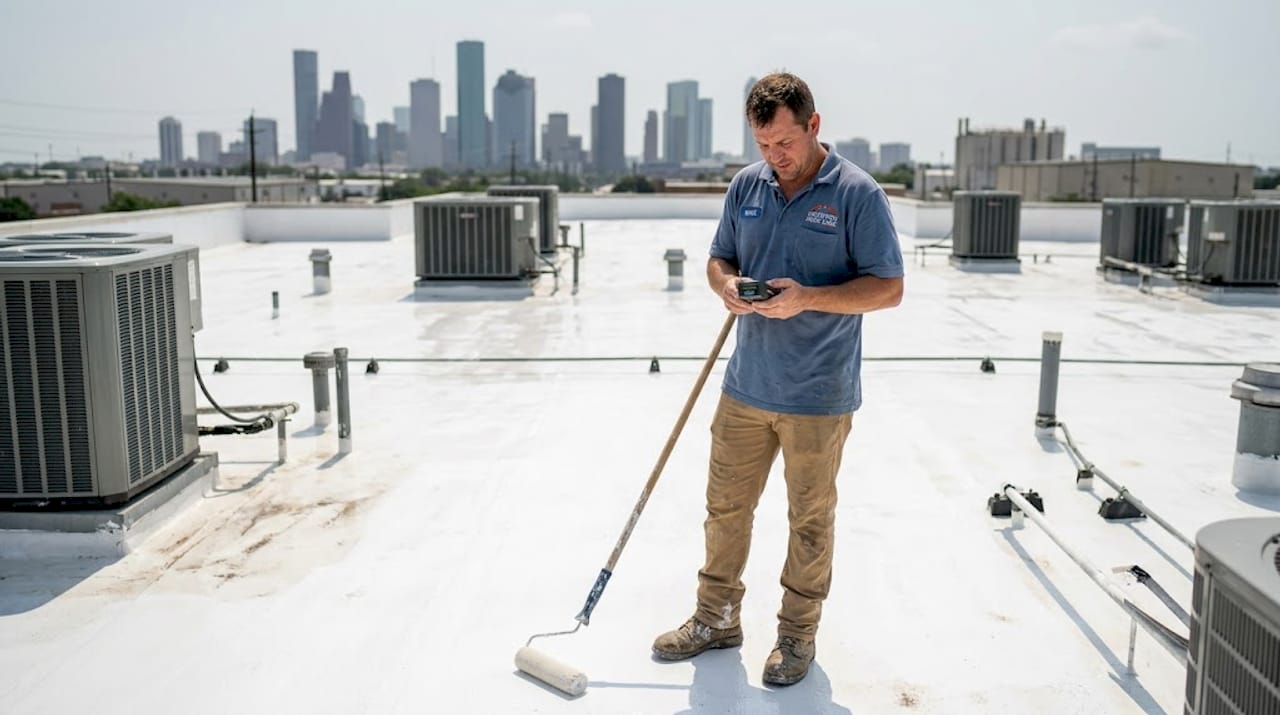
When a commercial roof starts showing its age, most property owners assume the only path forward is a full tear-off and replacement. That assumption can cost you tens of thousands of dollars you don’t need to spend. Commercial roof coatings offer a proven, fluid-applied membrane that restores weathertight protection, boosts energy efficiency, and extends your roof’s service life, often at a fraction of replacement cost. In this guide, we’ll cover what commercial roof coatings are, the main types available, how they get installed, and exactly when they make sense for Texas property owners.
Table of Contents
- What is commercial roof coating?
- Main types of commercial roof coatings explained
- How roof coatings are installed: The step-by-step process
- When commercial roof coatings are best (and when they’re not)
- A Texas pro’s take: What property owners really need to know
- Protect your roof investment: Get expert recommendations
- Frequently asked questions
Key Takeaways
| Point | Details |
|---|---|
| What roof coatings do | A commercial roof coating is a seamless, waterproof membrane applied over existing roofs to prolong their life and increase energy efficiency. |
| Main coating types | Popular chemistries like acrylic and silicone offer strengths for Texas climates but have different ideal use cases and limitations. |
| Installation steps matter | Thorough cleaning, repairs, and proper application are critical for coatings to deliver durability and leak protection. |
| Limitations exist | Roof coatings aren’t suitable for every roof, especially those with major structural or moisture issues. |
| Cost advantage | Quality roof coatings can cost up to 70 percent less than full roof replacement and offer substantial long-term savings. |
What is commercial roof coating?
A commercial roof coating is not paint, and it’s not a simple sealant you roll on and forget. It is, as industry standards define it, “a fluid-applied, monolithic membrane installed over existing roof substrates” to restore weathertight integrity, improve reflectivity, and extend service life. The word monolithic matters here. It means the coating forms a single, seamless layer with no seams or joints where water can sneak in.
Understanding the difference between a coating and ordinary paint is important before you spend a dollar. Paint is thin, decorative, and offers minimal waterproofing. A commercial roof coating is typically applied at much greater thickness, bonds directly to the substrate, and is engineered to flex with temperature swings without cracking. Texas roofs deal with intense UV exposure, summer heat above 100°F, and sudden hailstorms. A product that can’t flex and seal under those conditions isn’t worth applying.
“A coating is not just a surface treatment. It becomes a functional part of the roofing assembly, changing how the roof performs thermally and structurally.” This distinction separates coatings from temporary fixes.
Here’s a quick breakdown of how coatings compare to common alternatives:
| Feature | Roof coating | Roof paint | Roof sealant |
|---|---|---|---|
| Waterproofing | Full membrane | Minimal | Partial |
| Thickness | 20-40 mils | 2-4 mils | Variable |
| UV reflectance | High | Low to medium | Low |
| Life extension | 10-20 years | 1-3 years | 1-5 years |
| Flexibility | High | Low | Medium |
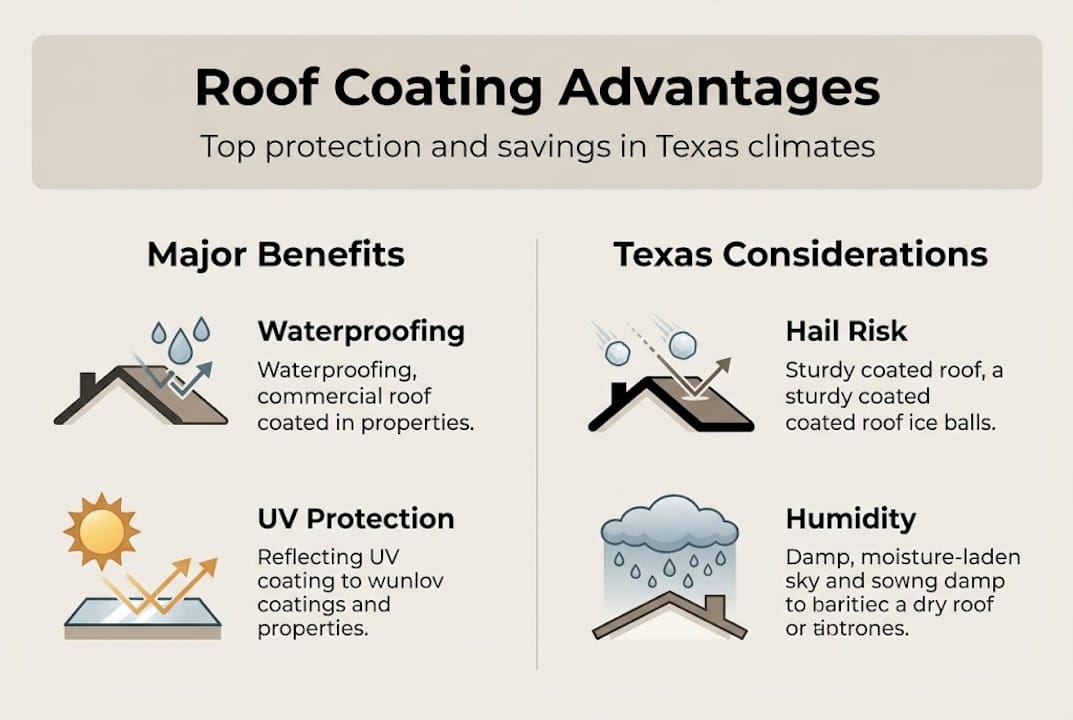
Key benefits Texas property owners see from quality commercial roof coatings include:
- Extended roof life without a full tear-off
- Lower cooling costs through solar reflectance on flat and low-slope roofs
- Seamless waterproofing that eliminates leak points at seams and penetrations
- Reduced urban heat island effect for commercial properties
Exploring your commercial roofing overview can help you understand where coatings fit within the broader spectrum of commercial roofing systems. If you want to see the specific roof coating benefits for Texas climates, those details are worth reviewing before you choose a product.
Main types of commercial roof coatings explained
Not every coating works on every roof, and in Texas, that distinction can mean the difference between 15 years of solid protection and a peeling mess within three years. The primary coating chemistries include acrylic, silicone, polyurethane, polyurea, and asphalt-based products, each with distinct strengths and limitations.
Here’s how they compare at a glance:
| Coating type | Best use | Key strength | Texas limitation |
|---|---|---|---|
| Acrylic | Low-slope, UV-heavy roofs | High reflectance, affordable | Poor in ponding water |
| Silicone | Flat roofs with drainage issues | Ponding water resistant | Dirt pickup over time |
| Polyurethane | High-traffic areas | High tensile strength | Requires UV topcoat |
| Polyurea | Fast turnaround projects | Rapid cure, high elongation | Higher material cost |
| Asphalt-based | Budget projects | Low cost | Lower reflectance, UV aging |
For most commercial flat roofs in the Houston area, silicone coatings are a strong choice because standing water after a heavy rain is almost guaranteed. Acrylic coatings shine on roofs with good drainage where UV protection is the top priority. Polyurethane is the go-to for rooftop walkway areas or spots with foot traffic. Polyurea’s fast cure time can be a lifesaver when you need to minimize downtime for a business.
Special Texas considerations include:
- Ponding water after Gulf Coast storms can destroy acrylic coatings quickly
- Extreme UV exposure degrades untreated polyurethane without a protective topcoat
- Dirt pickup on silicone surfaces reduces reflectance over time without periodic cleaning
- Hail impact requires coatings with high elongation to avoid cracking at impact sites
Pro Tip: Before any coating goes on your roof, run a compatibility test between the coating product and your existing membrane. Applying silicone over certain aged TPO or EPDM surfaces without compatibility verification can cause adhesion failure, and you won’t know until it starts peeling in the summer heat.
If you’re also evaluating flat roofing options across Houston, reviewing how coatings interact with different substrate types is a critical first step before signing any contractor agreement.
How roof coatings are installed: The step-by-step process
Even the most advanced coating chemistry in the world will fail if it goes on a poorly prepared surface. The full application process follows a defined sequence that cannot be shortcut without compromising performance.
Here’s how a professional installation should unfold:
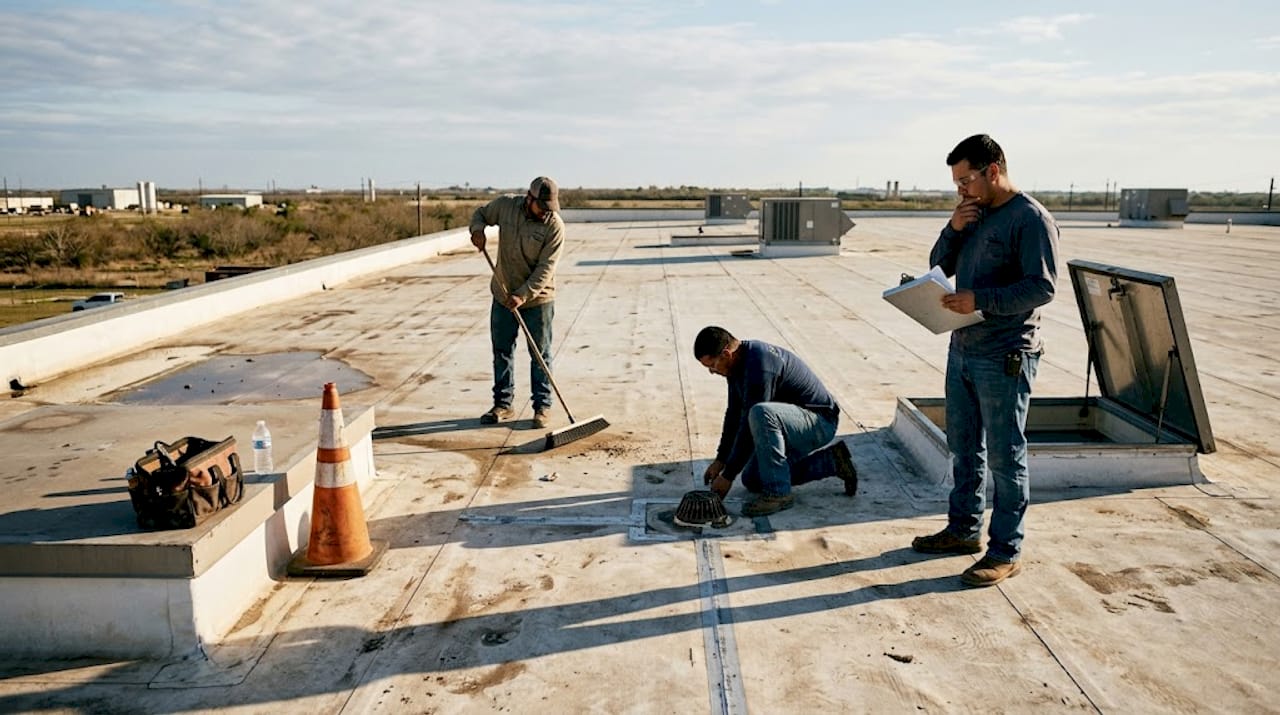
- Surface preparation: The roof is pressure washed at a minimum of 3,000 psi to remove dirt, algae, oils, and loose material. Any debris left behind breaks the bond between coating and substrate.
- Defect repairs: Cracks, blisters, open seams, and failing flashings get repaired before a single drop of coating touches the surface. Coating over damage locks in problems.
- Base coat application: The first coat is applied at roughly 1 to 1.5 gallons per 100 square feet, creating the initial waterproofing layer.
- Reinforcing fabric at seams: Polyester or fiberglass fabric is embedded in wet coating at all seams, transitions, and penetrations to prevent future cracking at movement points.
- Topcoat application: A second coat brings the total dry film thickness (DFT) to 20 to 40 mils, which is the industry-verified range for durable, long-lasting performance.
Statistic to know: A coating applied below 20 mils DFT loses a significant portion of its waterproofing and UV resistance. Always ask your contractor to verify final thickness with a wet film thickness gauge during application.
Pro Tip: Request documentation of the surface moisture reading before coating begins. If the substrate moisture content is too high, the coating can trap water and blister. Reputable contractors carry moisture meters and use them. If yours doesn’t, that’s a red flag.
The roof replacement process in Texas follows similar prep discipline, which is why experienced replacement contractors often make strong coating installers too. They understand what a properly prepared substrate looks like before any material goes down.
When commercial roof coatings are best (and when they’re not)
Roof coatings are a powerful tool, but they are not a universal solution. Knowing when to coat and when to replace can save you from spending money twice.
Coatings work best when:
- The existing roof is structurally sound with no significant deflection
- Moisture content in the substrate is below 25%
- The roof surface is clean and compatible with the coating chemistry
- You want to extend life and improve energy efficiency without a full tear-off
- Your roof has minor leaks or surface deterioration rather than systemic failure
However, there are clear situations where coatings are the wrong answer, as technical guidelines note, substrates with more than 25% moisture content, deflection beyond L/240, heavy persistent ponding on acrylic systems, or contaminated surfaces will cause coating failures regardless of product quality.
Coatings are a poor choice when:
- The deck has significant structural deflection or rot
- There is widespread moisture intrusion already saturating the insulation
- Heavy ponding water is a chronic problem with no drainage solution
- The roof surface has oil, grease, or chemical contamination that prevents adhesion
- The membrane has reached the end of its functional life with widespread failure
“A quality commercial roof coating costs 40 to 70 percent less than a full replacement, making it one of the highest-ROI maintenance investments available to commercial property owners.”
Texas property owners should also be aware that IBC (International Building Code) and ASTM standards govern how coatings must perform on commercial buildings, and ASHRAE 90.1 requirements impact energy performance expectations. Working with a contractor who understands those standards protects you from code issues on permitted projects.
For a broader look at commercial roof problems in Texas that might indicate coating eligibility or the need for replacement, reviewing common failure patterns helps you assess your own roof accurately. If you’re on the fence, understanding when roof replacement is needed gives you a clearer benchmark.
A Texas pro’s take: What property owners really need to know
After seeing hundreds of commercial roofs across Texas, one pattern stands out above everything else: prep shortcuts destroy more coating investments than any product failure ever could. Property owners see a low bid and assume the work is equivalent. It rarely is. A contractor who skips the 3,000 psi wash, skips the moisture scan, or skips fabric reinforcement at seams is handing you a coating that will fail within two or three seasons. The savings evaporate fast.
Texas weather is not forgiving. Hail, brutal UV, and Gulf Coast humidity create conditions that expose every weakness in a coating system. Choosing the wrong chemistry for your specific drainage situation or UV exposure level is a mistake that compounds over time.
Here’s the uncomfortable truth: sometimes a coating is not the right call, even if the math on cost looks attractive. If your roof has systemic moisture damage or structural issues, coating over it delays an inevitable replacement while adding cost. The honest answer from a qualified pro might be that replacement delivers better long-term ROI. Don’t let a low coating bid talk you out of asking that question.
Get familiar with roofing terminology in Texas so you can have an informed conversation with any contractor and recognize when answers don’t add up.
Protect your roof investment: Get expert recommendations
If you’ve made it this far, you understand that commercial roof coatings are a serious, high-value tool when applied correctly on the right roof. The next step is getting a professional set of eyes on your specific property.
Mister ReRoof works with commercial and residential property owners across El Campo and Houston, TX, offering honest assessments of whether coating, repair, or full replacement makes the most sense for your situation. From metal roof replacement in Victoria to flat roof replacement in El Campo, the team brings the kind of Texas-specific experience that protects your investment long term. Contact the Mister ReRoof team today for a free assessment and find out which solution delivers the best return for your roof.
Frequently asked questions
How long does a commercial roof coating last?
Most commercial roof coatings last 10 to 20 years depending on coating type, Texas climate exposure, and the quality of surface preparation. Extending service life is one of the core purposes a properly installed coating serves.
Is commercial roof coating better than a full roof replacement?
Coating is more affordable and less disruptive when the existing roof is structurally sound, since coatings cost 40 to 70% less than replacement. Severe structural or moisture damage makes full replacement the smarter investment.
Can roof coatings stop all leaks?
Coatings seal and prevent minor leaks effectively, but defect repairs must happen before any coating goes down. Major structural faults or widespread membrane failure need more than a coating can provide.
What standards apply to commercial roof coatings?
IBC, ASTM, and ASHRAE 90.1 govern performance and energy compliance requirements for commercial roof coatings. Texas property owners on permitted projects need contractors who understand and follow these standards.
Are roof coatings suitable for all types of roofs?
Flat and low-slope roofs are the best candidates for commercial coatings, but roofs with greater than 25% moisture in the substrate or deflection beyond L/240 are not eligible without major repairs first.