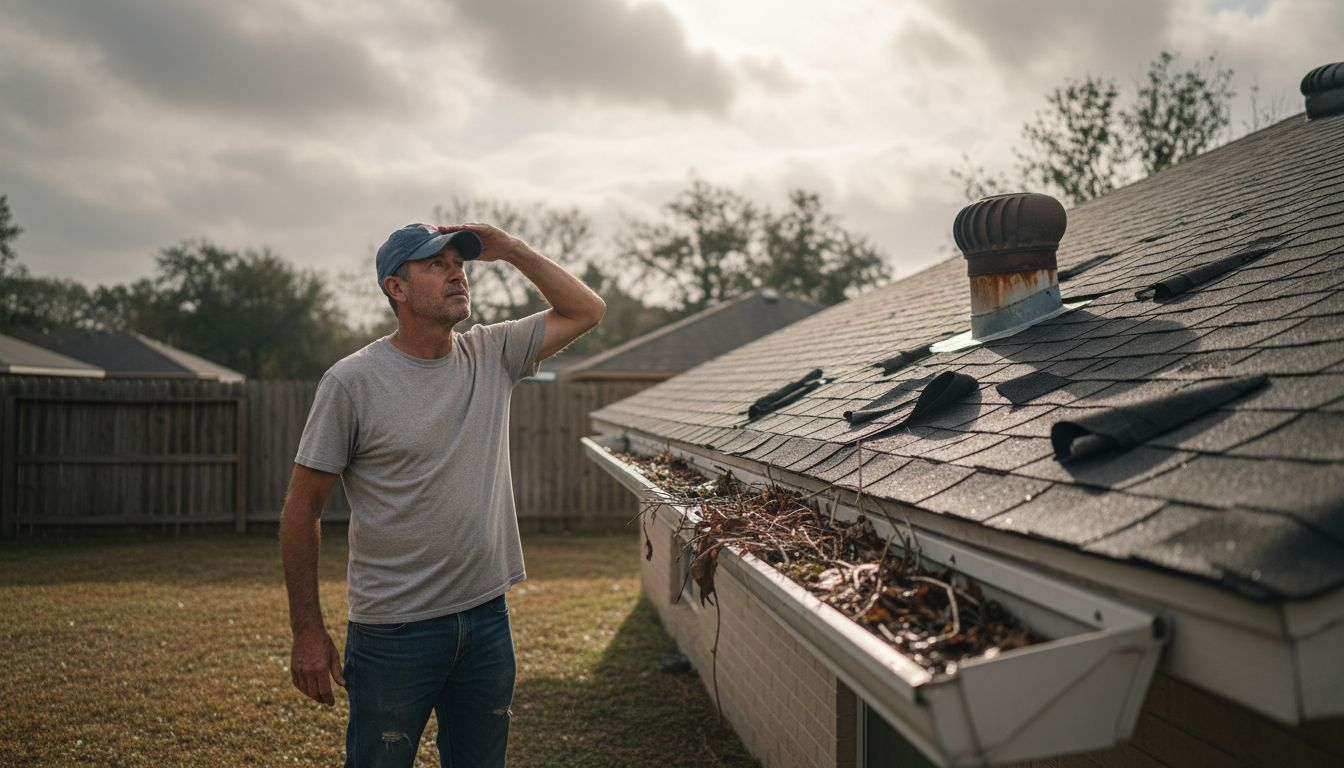
Heavy rainfall, blazing Texas heat, and sudden hailstorms can push any Houston homeowner’s peace of mind to its limits. When your roof starts showing stains, sagging spots, or missing shingles, the difference between normal wear and real damage is not always obvious. Many people overlook roof problems until leaks and costly repairs become urgent, but visible damage like creased or torn shingles means it’s time for a professional assessment. This guide gives you practical insight to spot warning signs and avoid the common myths that can lead to insurance headaches or missed repairs.
Table of Contents
- Defining Roof Damage And Common Misconceptions
- Common Types Of Roof Damage In Houston
- Visible Warning Signs On Residential Roofs
- Impact Of Severe Weather On Roof Integrity
- Risks Of Ignoring Roof Damage Repairs
Key Takeaways
| Point | Details |
|---|---|
| Understanding Roof Damage | Roof damage can compromise your home. It’s vital to distinguish between cosmetic wear and actual damage needing professional evaluation. |
| Importance of Professional Inspections | Schedule a professional roof inspection after severe weather to catch early signs of damage and prevent costly repairs. |
| Risk of Delayed Repairs | Ignoring minor damage can lead to significant issues, including structural failure and costly mold remediation. |
| Types of Roof Damage | Be aware of common damage types, such as weather-related deterioration and material failure, to address problems early. |
Defining Roof Damage and Common Misconceptions
Roof damage is any deterioration, structural failure, or material loss that compromises your roof’s ability to protect your home from water intrusion and weather damage. In Houston, where we face intense heat, severe storms, and occasional hail, understanding what qualifies as actual damage versus normal wear is crucial for homeowners. Many people assume their roof is fine based on a quick glance from the ground, but that approach misses critical problems. The truth is that damage often hides in plain sight, requiring a trained eye to spot the early warning signs that indicate professional assessment is needed.
The misconceptions about roof damage are numerous and costly. One common myth is that wind damage leaves no visible signs, when in reality, legitimate wind damage always produces visible evidence. Creases, tears, or missing shingle sections are the markers of true damage, not merely loose adhesion. Another widespread misunderstanding involves confusing normal wear with structural problems. Improper design flaws like inadequate slope or poor drainage cause water pooling and material deterioration, yet these design defects are difficult to detect without professional evaluation. Many homeowners also believe damage to asphalt shingles automatically qualifies for insurance claims when they have loose but otherwise undamaged shingles. This distinction matters because insurance covers actual damage, not maintenance issues.
Houston homeowners often misidentify what needs immediate attention. Some think minor creasing or small gaps are insignificant, while others panic at entirely normal weathering. The challenge is distinguishing between cosmetic deterioration and functional failure that threatens your home’s protection. Damage affecting structural integrity, creating entry points for water, or spreading deterioration requires professional intervention. Loose shingles that remain intact without tears or creases are not damage but rather an adhesive failure that needs attention before weather further compromises them. Understanding this difference between damage classification and maintenance needs helps you prioritize repairs correctly and communicate effectively with contractors about what requires immediate action versus what can be monitored.
Pro tip: Schedule a professional roof inspection after any significant storm or at least annually, as early identification of legitimate damage can prevent expensive water damage to your home’s interior and structure.
Common Types of Roof Damage in Houston
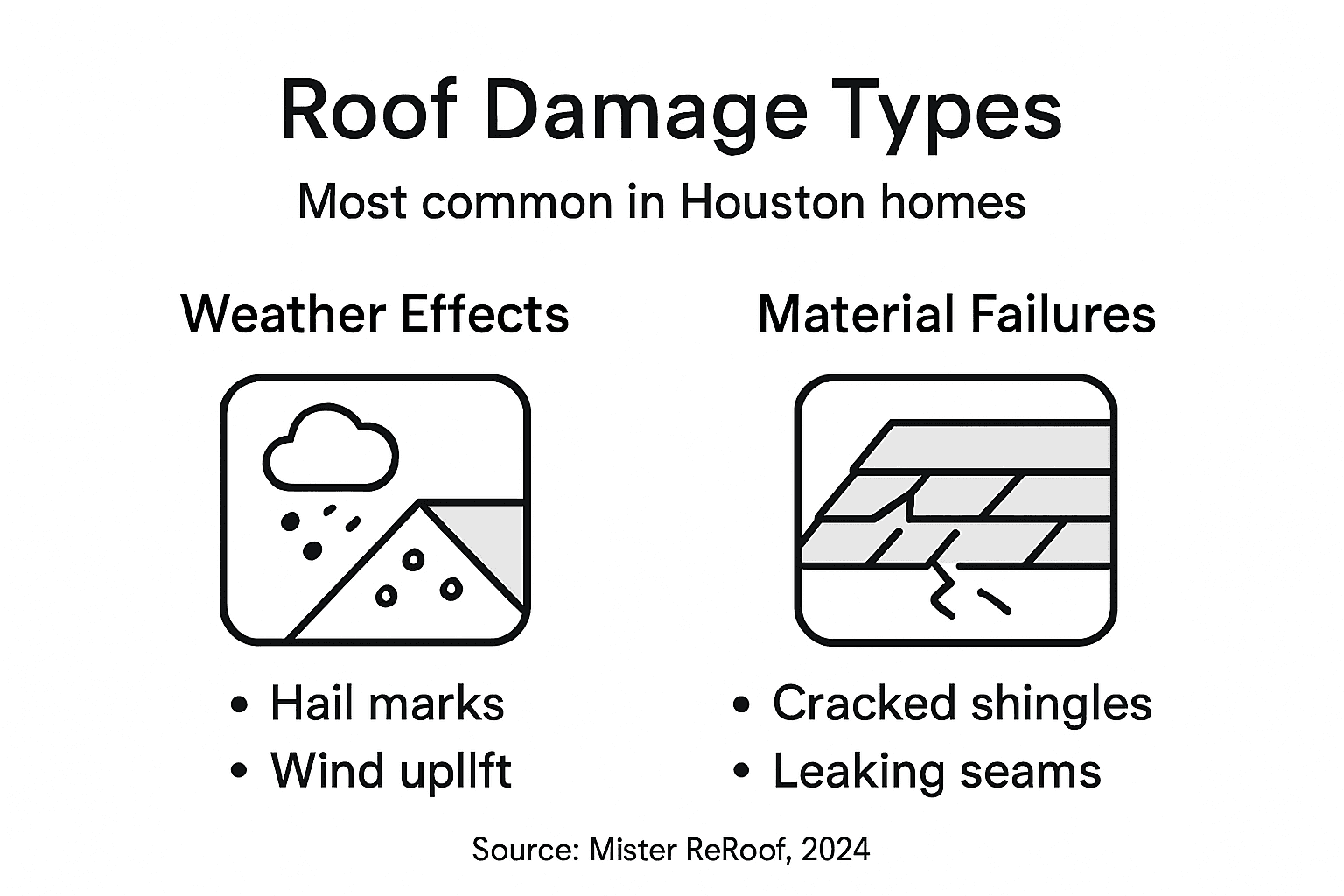
Houston’s climate creates a perfect storm for roof damage. The combination of intense heat, high humidity, and severe weather patterns means your roof faces constant stress. The most common damage types we see fall into three categories: weather-related deterioration, material failure, and design flaws. Understanding these types helps you recognize problems early before they compromise your home’s protection. Heat warps shingles and weakens adhesives, while heavy rainfall and occasional hail create immediate threats. Over time, these forces work together to accelerate the deterioration that would take decades in milder climates.
Weather damage shows up in specific ways across Houston roofs. Intense sun exposure causes shingles to curl, crack, and lose their protective granules. Hail storms create dents and fractures that compromise waterproofing, while heavy rain exploits any weakness in flashing or sealing. Wind damage produces creases, tears, or missing shingles that expose the underlying layers. Beyond the shingles themselves, poor drainage and inadequate roof design cause water pooling in low areas, leading to leaks and mold growth. Sagging roof sections indicate structural strain from water accumulation, a serious problem that demands immediate professional attention. Houston’s building codes specifically require materials and designs that address these local climate challenges, which is why standard roofing solutions sometimes fail in our region.
Material failure happens faster in Houston than anywhere else. Asphalt shingles deteriorate more quickly under sustained heat, while membrane damage on flat roofs spreads rapidly when not sealed properly. Age combined with weather creates a compounding effect. Metal roofing rusts in high humidity, and even premium materials degrade without proper ventilation and drainage. This is why Houston homes often need roof replacement sooner than homeowners expect. The key difference between minor damage and major failure often comes down to timing. Catching creased shingles before they tear, addressing pooling water before rot sets in, and fixing loose flashing before leaks penetrate the structure can mean the difference between a simple repair and a costly replacement.
Here’s a summary of roof damage types and their common indicators in Houston:
| Damage Type | Common Signs | Typical Causes |
|---|---|---|
| Weather-Related | Curled shingles, dents, leaks | Sun, hail, heavy rain, wind |
| Material Failure | Premature granule loss, rust, cracks | Heat, humidity, poor sealing |
| Design Flaw | Pooling water, sagging sections | Inadequate slope, drainage |
Pro tip: After any visible weather event (thunderstorm, hail, or strong wind), walk your property perimeter and look for shingles with creases, tears, or visible damage, then call a professional to assess before water infiltration occurs.
Visible Warning Signs on Residential Roofs
The visible signs of roof damage tell a clear story if you know what to look for. Most Houston homeowners can spot obvious problems like missing shingles or sagging sections, but the early warning signs are what matter. Catching damage at the beginning stages prevents water infiltration that leads to mold, structural rot, and expensive interior damage. The challenge is that many early signs appear subtle from ground level, which is why a professional inspection catches what the naked eye easily misses. Start by looking at your roof after any storm, paying attention to shingle condition, flashing integrity, and any visible discoloration that suggests moisture problems.
Shingles themselves provide the clearest damage indicators. Look for creasing, folding, or torn sections that expose the darker substrate underneath. Missing shingles create obvious gaps, but more commonly you’ll see granule loss that leaves shingles looking worn or discolored. Hail damage shows up as dents or dimples on shingles, though the damage severity depends on hail stone size and your roofing material type. Beyond individual shingles, examine your roof’s edges and valleys where water naturally flows. Damaged flashing around chimneys, vents, and skylights creates entry points for water even when shingles look fine. Lifted or separated flashing indicates the sealant has failed, allowing water to seep behind the shingles during heavy rain.
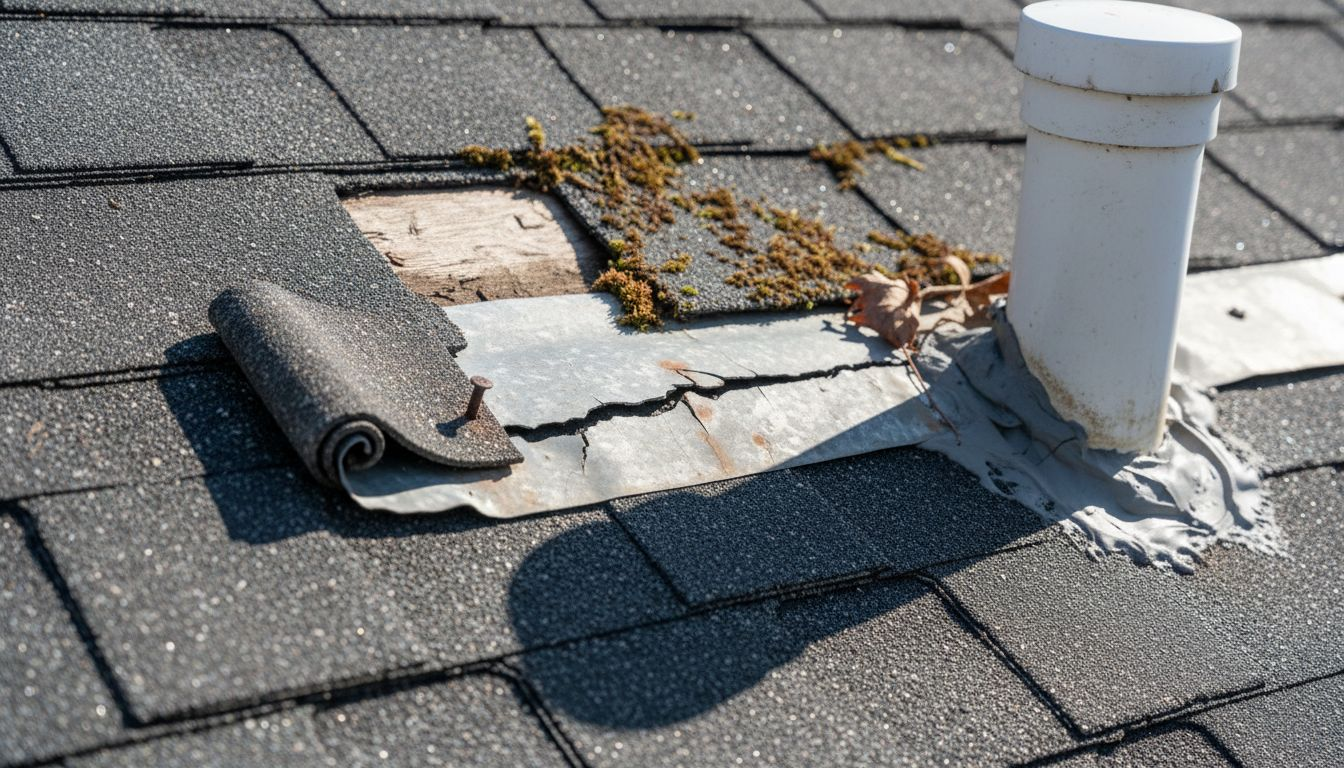
Water damage and moisture present different but equally serious warning signs. Visible discoloration, warping, cracking, or surface mold spots indicate moisture has already compromised your roofing materials. From inside your attic, look for water stains on the underside of roof decking or insulation. Mold growth appears as dark patches or discoloration and means moisture has been present long enough for biological growth. Interior ceiling stains or water marks on walls below the roof line confirm active leaks. These signs mean damage has progressed beyond surface issues into structural concerns. The roof’s structural integrity weakens when moisture saturates materials, and delays allow rot to spread into framing and support beams. Houston’s humidity accelerates mold growth, making early detection critical to preventing health hazards alongside structural failure.
Pro tip: Inspect your attic quarterly by checking for water stains on decking, discoloration on insulation, and mold growth, as these interior signs often appear before exterior damage becomes obvious from ground level.
Impact of Severe Weather on Roof Integrity
Houston’s severe weather attacks roofs from multiple angles simultaneously. High winds create uplift forces that stress shingles and flashing, hail strikes puncture and crack materials, and heavy rainfall exploits any vulnerability to cause water infiltration. The cumulative effect of these weather events weakens your roof’s ability to protect your home over time. A single major storm can cause damage that takes years to manifest as leaks or structural problems. Understanding how weather specifically damages roofs helps you recognize when professional assessment becomes urgent rather than optional.
Wind damage operates differently than homeowners expect. When strong winds blow across your roof, they create pressure differences that attempt to literally lift shingles and materials away from the deck. This wind uplift force doesn’t just tear shingles off instantly but gradually weakens adhesive bonds and causes creasing and folding. Properly sealed roof decks and stronger attachment methods using ring-shank nails significantly reduce this vulnerability by anchoring materials more securely. Houston’s coastal location means tropical storms and hurricanes present real threats. Even winds below hurricane strength can cause progressive damage that compounds with each subsequent weather event. The edges and corners of your roof face the highest wind pressures, which is why damage often appears first in these zones.
Hail and water work together to compromise roof integrity. Hail impacts create surface damage and material penetration that exposes layers underneath to moisture infiltration. A single hailstone dents a shingle, but multiple impacts across your roof create dozens of potential water entry points. Heavy rain following hail then exploits these weaknesses, saturating the roof assembly and eventually reaching interior structures. The timing matters too. A hailstorm followed immediately by heavy rain causes far more damage than the same hail during a dry period. Houston’s frequent afternoon thunderstorms combine these threats regularly, making roof durability essential. Flat roofs face particular risk because water pools in damaged areas rather than running off, extending exposure time and deepening penetration.
Pro tip: Document any visible damage with dated photos after storms before contacting your insurance company, as this evidence supports claims and helps adjusters quickly assess the extent of weather damage to your roof.
Risks of Ignoring Roof Damage Repairs
Delaying roof repairs feels like saving money in the short term, but it creates exponential costs down the line. Small damage that could be fixed with a few hundred dollars in repairs balloons into thousands when water infiltration spreads to attic insulation, framing, and interior walls. Houston’s humidity accelerates this deterioration dramatically. A pinhole leak that would take years to cause serious damage in Arizona causes mold growth within weeks here. The financial risk of postponement far outweighs the cost of addressing problems immediately. Beyond money, deferred maintenance threatens your family’s health and safety.
Water damage compounds rapidly once it starts. Leaks lead to mold growth, loss of insulation effectiveness, and structural deterioration that weakens the framing holding your home together. What begins as a damp spot on the attic insulation becomes black mold colonies within weeks. Wet insulation loses its R-value, forcing your air conditioning to work harder and driving up energy bills. The moisture spreads into wall cavities where it rots wood framing silently for months before visible damage appears inside your home. By the time you notice water stains on your ceiling, structural damage has likely already begun. The repair costs jump from replacing a few shingles to replacing entire roof sections, reworking interior walls, and addressing mold remediation. Insurance coverage often doesn’t apply if inspectors determine the damage resulted from negligence rather than a sudden weather event.
The most severe consequence of roof neglect involves catastrophic failure. Accumulated water load combined with design flaws increases structural risk and can lead to roof collapse, resulting in severe financial loss, safety hazards, and legal consequences. Flat roofs in Houston face particular danger because water pools in low areas rather than draining away. Years of improper drainage add thousands of pounds of weight to your roof deck. Structural supports deteriorate under constant moisture exposure. In worst cases, roofs collapse during heavy storms when the combination of wind load and standing water exceeds what weakened structures can support. A collapsed roof means not just replacement costs but potential injury, complete loss of interior contents, and months of reconstruction.
Compare the consequences of prompt repair versus neglecting roof damage:
| Action Taken | Short-Term Effect | Long-Term Impact |
|---|---|---|
| Prompt Repair | Minor fix cost, maintains protection | Prevents costly interior and mold damage |
| Delayed Response | Spreading water, hidden mold growth | Roof failure, high repair and health costs |
Pro tip: Schedule repairs within 48 hours of discovering damage rather than waiting for optimal weather, as this prevents water from exploiting small openings and spreading deeper into your home’s structure.
Protect Your Houston Home from Costly Roof Damage Today
Ignoring early roof damage signs like creased shingles or damaged flashing can lead to expensive repairs and health risks from mold growth. Homeowners in Houston face unique challenges due to our harsh weather and humidity, making timely roof repairs essential. Mister ReRoof understands these local risks and offers expert inspections and durable roofing solutions designed to withstand Houston’s severe storms, intense sun, and heavy rains.

Don’t wait for minor issues to become structural failures. Visit Mister ReRoof to schedule a professional roof inspection. Our experienced team provides free estimates and custom recommendations tailored to your needs. Protect your investment and family with lasting repairs or roof replacement from Houston’s trusted roofing contractor. Act now to safeguard your home against further water infiltration and roof deterioration before expensive damage occurs.
Frequently Asked Questions
What are the most common signs of roof damage?
Common signs include missing shingles, curling, cracking, sagging sections, and visible water stains on the interior ceilings or walls. Look for granular loss on shingles and damaged flashing around chimneys or vents as well.
How can I tell if roof damage requires immediate repair?
If you notice creased or torn shingles, pooling water on your roof, sagging sections, or signs of water infiltration inside your home, it’s vital to seek professional assessment immediately to avoid further damage.
Does insurance cover roof damage from storms?
Insurance typically covers damage that results from sudden, unexpected events like storms, but it may not cover maintenance issues or damage that results from neglect. Always check your specific policy details and document visible damage promptly.
How often should I inspect my roof for damage?
It’s advisable to inspect your roof at least annually and after major storms. Early identification of damage can prevent costly repairs and protect your home from water intrusion.
