
TL;DR:
- Hailstorms are highly frequent in Texas and can cause hidden, functional damage to roofs that lead to long-term issues.
- Homeowners should conduct timely inspections and document damage carefully to ensure proper insurance claims and repairs.
Texas sits at ground zero for hail. More hail storms strike this state than anywhere else in the country, and hailstones as small as 1 inch can tear through asphalt shingles and leave lasting damage that is not always obvious right away. Most homeowners assume that if nothing is obviously broken, the roof is fine. That assumption is costing Texas families thousands of dollars every year. This guide walks you through how to recognize hail damage, what your insurance actually covers, and what your real repair options look like before a small problem turns into a major disaster.
Table of Contents
- Understanding hail damage: What it means for your roof
- How to identify hail damage: Signs and symptoms
- Texas insurance and hail: What homeowners need to know
- Repairing hail damage: Options and costs for Texas roofs
- A roofing expert’s perspective: What most homeowners get wrong about Texas hail damage
- Restore your peace of mind with expert roof repairs
- Frequently asked questions
Key Takeaways
| Point | Details |
|---|---|
| Texas faces highest hail risk | Hailstorms are more frequent in Texas than anywhere else in the U.S., making roof checks vital for homeowners. |
| Hail over 1 inch is serious | Even hailstones just one inch across can physically ruin shingles and compromise your roof. |
| Act quickly for insurance | Promptly inspecting, documenting, and filing a claim maximizes your chances of full coverage. |
| Professional repairs offer peace of mind | Professional inspection and repair ensure all damage—visible or hidden—is addressed to protect your home long-term. |
Understanding hail damage: What it means for your roof
Hail damage is not always about craters and broken tiles. In fact, the most dangerous hail damage is often the kind you cannot see from the ground. When a hailstone hits a shingle, it bruises the material underneath, loosening the granules (the small gravel-like particles that coat the surface and protect the shingle from UV rays and moisture). That kind of impact creates a weak spot that lets water in slowly over weeks or months.
Texas leads the U.S. in hail events, with storms rolling through every region of the state from the Panhandle to the Gulf Coast. The Houston and San Antonio corridors are especially active, with multiple significant hail events recorded most years. For homeowners, that means the question is not whether hail will hit your roof. It is whether your roof will survive it intact.
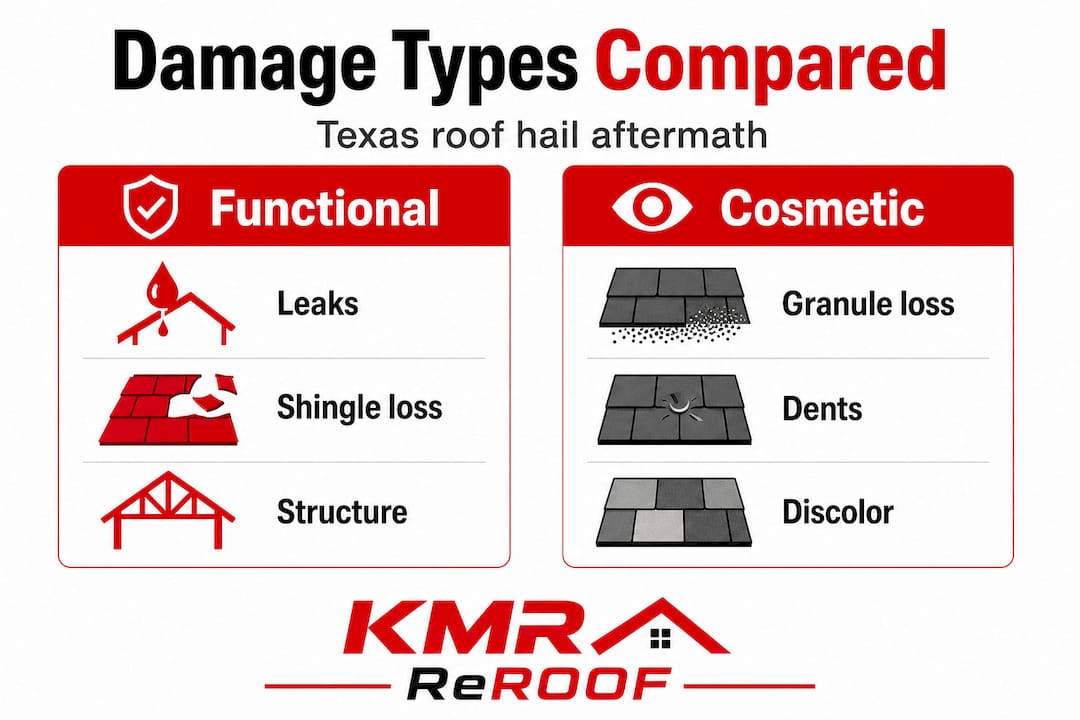
It helps to understand two categories of damage: functional damage and cosmetic damage. Functional damage affects your roof’s ability to protect your home. It includes things like cracked shingles, exposed underlayment, granule loss that accelerates shingle aging, and punctures. Cosmetic damage, on the other hand, refers to dents or marks that do not affect performance. Insurance companies treat these very differently, so knowing the distinction can affect your claim.
Here is what functional hail damage looks like on common roofing materials:
| Roofing material | Visible signs of damage | Hidden risk |
|---|---|---|
| Asphalt shingles | Bruising, granule loss, cracks | Accelerated aging, leaks in 6-18 months |
| Metal roofing | Dents, paint chips | Rusting at impact points |
| Flat/TPO roofing | Punctures, seam stress | Water pooling, membrane failure |
| Wood shakes | Splits, splintering | Rot, mold, structural weakening |
Quick signs your shingles may be compromised:
- Dark, circular bruise marks (similar to a bruise on fruit)
- Shingle granules collecting in gutters or at downspout exits
- Shingles that feel soft or spongy when pressed
- Exposed black underlayment where granules have been stripped away
- Missing or cracked shingles in a pattern consistent with storm direction
Use our hail damage checklist to walk through each of these points systematically after a storm. And if you are currently working with asphalt shingles in Houston, understanding how this material ages under repeated hail impact is especially important.
After a major storm event, also review the storm response steps recommended by water damage professionals so you can act before secondary damage sets in.
How to identify hail damage: Signs and symptoms
Once you understand what hail can do, it is time to check if your own roof shows any warning signs. The challenge is that some damage is obvious and some is not. Doing a proper visual check right after a storm gives you the best chance of catching problems early, documenting them for insurance, and stopping minor damage from becoming a full structural failure.
Here is a practical step-by-step approach for a safe initial inspection:
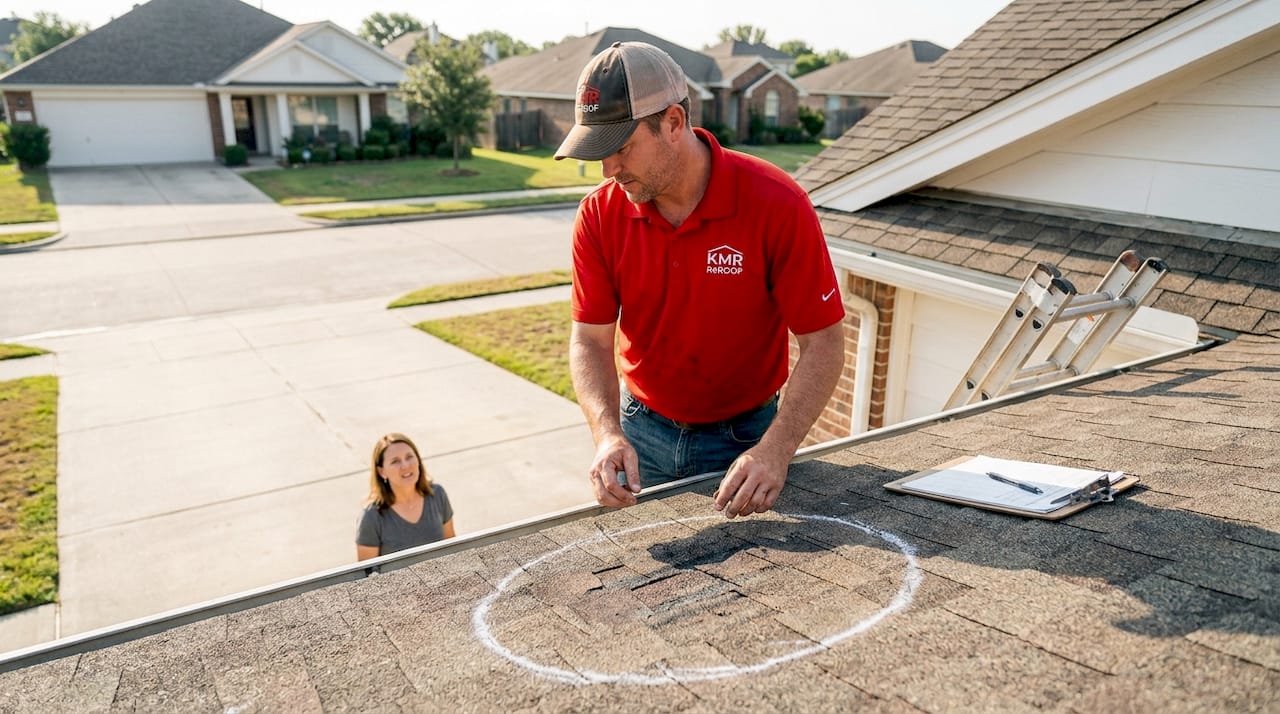
- Start from the ground. Use binoculars to scan the roof surface, gutters, and downspouts. Look for shingle displacement or dark patches where granules have been stripped.
- Check your gutters. A significant amount of granule loss will collect here. If you see sandy buildup after a storm, that is a red flag.
- Inspect your downspouts. Dented aluminum downspouts are an easy indicator that hail was large enough to cause surface damage.
- Check soft metals on the roof. Flashing, vent caps, and gutters dent more easily than shingles, so they reveal hail size and intensity clearly.
- Look inside the attic. Water stains, damp insulation, or light coming through the decking are signs that the roof has already been breached.
- Document everything. Take time-stamped photos from multiple angles before anything is touched or temporarily patched.
Pro Tip: The best time to perform your initial inspection is within 48 hours of a storm. After that window, wind and rain can spread or worsen damage, and it becomes harder to prove what was caused by the specific storm event versus prior wear.
Some hail damage takes weeks to show up as interior leaks or attic moisture. That is why ongoing observation matters even if your first check looks clean. For help preventing compounding problems, review tips on how to prevent further roof damage in the days following a storm.
Here is a quick reference for what to look for by material type:
| Roofing material | What to look for after hail |
|---|---|
| Asphalt shingles | Bruise marks, granule loss, cracking |
| Metal panels | Dents, scratched paint, loose fasteners |
| TPO/flat roof | Punctures, lifted seams, standing water |
| Wood shake | Splits along grain, missing pieces |
Use the step-by-step hail inspection guide to make sure nothing gets missed during your walkthrough.
Texas insurance and hail: What homeowners need to know
After spotting possible issues, knowing what your insurance covers can make the difference between a simple fix and a costly headache. Texas homeowner policies almost always include hail coverage, but the details matter a lot.
Most standard policies carry a wind and hail deductible that is calculated as a percentage of your home’s insured value, typically between 1% and 2%. On a $300,000 home, that means you could owe $3,000 to $6,000 out of pocket before insurance pays anything. That surprises a lot of homeowners who assume a flat dollar deductible applies to every claim. It does not.
Important: Homeowners along the Texas Gulf Coast may need separate coverage through the Texas Windstorm Insurance Association (TWIA) because standard carriers often exclude wind and hail in high-risk coastal zones. If you live in Galveston, Brazoria, or nearby counties, check your policy carefully for this gap before a storm hits.
Here is what to do immediately after a hail event strikes your area:
- Photograph all visible damage with time stamps, including context shots showing the full roof, gutters, and downspouts
- Save local news reports and weather service data as independent confirmation of the storm date, size, and location
- File your claim promptly because Texas policies often require reporting within one year of the event, and early documentation helps adjusters assess the scope accurately
- Do not make permanent repairs before the adjuster inspects, as this can reduce or void your payout
- Get a written contractor estimate from a licensed local roofer that details materials, labor, and scope
Pro Tip: Print out a local radar image or pull a weather report from the National Weather Service showing hail size in your zip code on the storm date. Attach it to your claim documentation. Adjusters take this seriously and it removes any doubt about the cause of damage.
One major legal note: Texas law prohibits contractors from waiving your deductible as an incentive to use their services. If a contractor offers to “cover your deductible,” walk away. That arrangement is considered insurance fraud in Texas and can jeopardize your entire claim.
For a fuller breakdown of the claims process, read through our guide on roof repair insurance steps and get familiar with roof repair insurance coverage specifics for the Houston area.
Repairing hail damage: Options and costs for Texas roofs
With insurance covered, it is time to consider your actual repair or replacement choices. The right path depends on how widespread the damage is, how old your roof is, and what material you are working with.
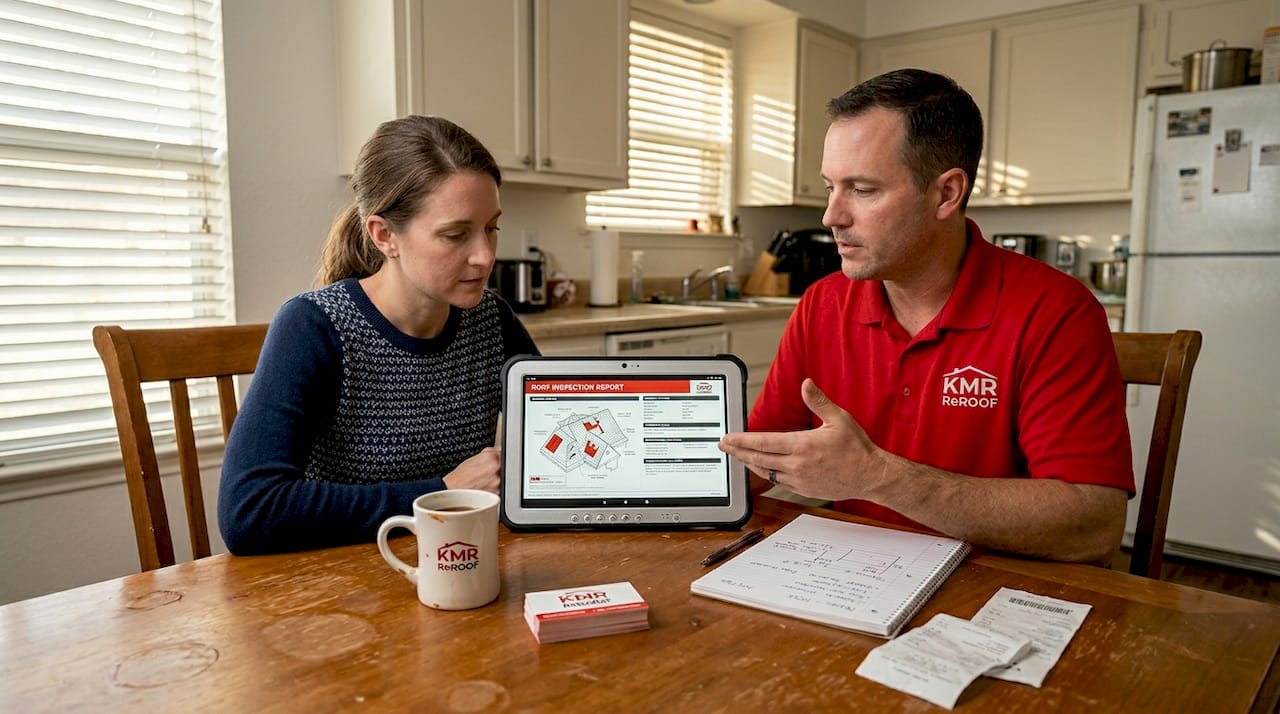
When spot repair is enough: If hail damage is limited to a small area, say a few bruised or cracked shingles over a garage or one section of slope, a targeted repair can restore function without replacing the whole roof. A licensed roofer can swap out damaged shingles, reseal flashing, and check underlying decking for moisture damage. This typically costs anywhere from $300 to $1,500 depending on scope and material.
When full replacement makes more sense: If your roof is already 15 years old or more, or if damage covers more than 25% to 30% of the surface, most roofing professionals will recommend a full replacement. Patching an aging roof after hail damage often just delays the inevitable, and insurance adjusters frequently agree because widespread granule loss shortens the remaining lifespan of the entire system.
Here is a summary of the most common repair approaches and their trade-offs:
- Shingle replacement (partial): Cost-effective for localized damage, but new shingles may not match in color or texture
- Full shingle replacement: Restores uniform protection, qualifies for updated warranty coverage, and resets the lifespan clock
- Metal roof installation: Higher upfront cost but dramatically more resistant to future hail events, especially in storm-prone areas
- Flat roof membrane repair: Seam repairs and patch kits work for minor punctures, but widespread damage often requires a full membrane replacement
For detailed guidance on flat roofing situations, see our flat roof repair workflow. If you are dealing with shingle-specific issues, the guide on repairing roof shingles walks through both DIY limits and when to call a pro.
On DIY repairs: Replacing one or two shingles is within reach for a confident homeowner with the right tools. But hail damage almost always involves hidden issues beneath the surface, like compromised decking or damaged underlayment, that require professional eyes. For anything beyond cosmetic touch-ups, hire a licensed Texas roofing contractor who can also provide documentation for your insurance file. When water infiltration is already happening, act fast and read through resources on addressing water leaks to limit secondary damage while you wait for repairs.
Pro Tip: Keep a folder (digital or physical) with every receipt, photo, inspection report, and contractor invoice related to roof work. Some repairs may be partially deductible if your home is used for business, and complete records make future insurance claims far easier to process.
Texas hailstones of 1 inch or larger can cause functional damage to asphalt shingles, which means that even a storm you barely noticed could have shortened your roof’s life.
A roofing expert’s perspective: What most homeowners get wrong about Texas hail damage
After covering the repair paths, here is an expert’s take on what actually matters when storms hit Texas roofs.
The biggest mistake we see is homeowners treating hail damage as a one-time event to respond to rather than an ongoing risk to manage. A storm rolls through, nothing is visibly leaking, the homeowner moves on. Six months later, a water stain appears on the ceiling. By that point, the damage has spread into the decking and insulation, turning a $2,000 repair into a $12,000 replacement.
Here is the uncomfortable truth: roof age matters more than most people realize. A 15-year-old asphalt shingle roof hit by a 1-inch hailstone is in a fundamentally different situation than a 5-year-old roof hit by the same storm. The older roof has less granule coverage, less structural flexibility, and far less tolerance for impact stress. Many homeowners look at the same storm event and assume both roofs got equally “minor” damage. They did not.
We also see homeowners skip maintenance after smaller hail events because they feel like the damage was not serious enough to worry about. That is exactly when preventive inspection pays off. A professional roofer can identify early-stage bruising, reseal loose flashing, and clear debris from valleys before the next storm compounds the problem. For context on what leads to early roof failure in Texas, our article on reasons Texas roofs fail covers the patterns we see most often.
The financial logic of proactive maintenance is clear. A $300 inspection and minor repair now is almost always better than a $15,000 emergency replacement after a second or third storm finds the weakened spots the first one created.
Restore your peace of mind with expert roof repairs
Armed with this knowledge, taking action is the final and most crucial step to protect your Texas home.
Even the most thorough DIY inspection has limits. Professional roofers know exactly where to look for damage that is invisible from the surface, and a formal assessment creates the paper trail your insurance claim needs to hold up. Delaying that step is where homeowners lose the most money.

At Mister ReRoof, we specialize in roofing systems built for the Texas climate. Whether you need metal roof solutions in Victoria or shingle replacement in Hallettsville, our team brings the same attention to detail and workmanship to every job. From El Campo to Houston and beyond, we are here to help you assess the damage and move forward with confidence. Visit Mister ReRoof to explore all our local roof repair services and get your free estimate today.
Frequently asked questions
What size hail causes roof damage in Texas?
Hailstones 1 inch or larger can cause functional damage to asphalt shingles commonly used in Texas, though wind speed and roof age also affect how severe the impact turns out to be.
Does homeowners insurance cover hail damage repairs?
Most homeowner policies in Texas cover hail damage, but your deductible is often 1% to 2% of your home’s insured value. Document everything carefully and file as soon as possible to protect your claim.
How soon should I inspect my roof after a hail storm?
Check your roof as soon as it is safe to do so, ideally within 48 hours. Early inspection helps you spot damage while it is still clearly connected to the storm, which supports both repairs and your insurance claim.
What if hail damage isn’t immediately visible?
Some hail damage takes weeks or even months to appear as interior leaks or ceiling stains. Ongoing observation after any significant storm is important, even if your first check looks clean.
Are deductible waivers allowed for roofing work after hail?
No. Texas law prohibits contractors from waiving insurance deductibles for roof repairs. Any contractor who offers to waive your deductible is engaging in a practice considered insurance fraud under Texas law.