
Most American home and business owners in Houston face major roof worries after just one severe Texas storm. Flat roofs here can develop hidden cracks, punctures, or leaks that only get worse in the tough Gulf Coast climate. Knowing how to assess, clean, and repair these issues quickly helps you defend your investment and avoid expensive surprises. This guide shares the expert steps and practical tips you need to keep your American property watertight despite unpredictable Houston weather.
Table of Contents
- Step 1: Assess Flat Roof Damage Thoroughly
- Step 2: Clean and Prepare Roof Surface Efficiently
- Step 3: Select Proper Repair Materials Strategically
- Step 4: Apply Repairs to Impacted Roof Sections
- Step 5: Verify Roof Integrity After Repairs
Quick Summary
| Key Point | Explanation |
|---|---|
| 1. Conduct a Thorough Inspection | Assess your flat roof for visible damage like cracks, punctures, and standing water to prevent escalating issues. |
| 2. Clean the Roof Properly | Remove any debris or biological growth before repairs to ensure proper adhesion of new materials. |
| 3. Choose Suitable Repair Materials | Select materials that match the specific damage and environmental conditions to ensure effective repairs. |
| 4. Apply Repairs with Precision | Use careful techniques to install patches or membranes, ensuring no air bubbles and a watertight seal. |
| 5. Verify Repairs Thoroughly | Inspect repaired areas for consistency and perform water tests to confirm effectiveness before concluding the project. |
Step 1: Assess Flat Roof Damage Thoroughly
Identifying and documenting damage to your Houston flat roof requires systematic observation and precise evaluation. Understanding hail and weather damage characteristics allows homeowners to recognize potential structural issues before they escalate.
Begin your assessment by conducting a thorough visual inspection from both ground level and roof surface if safely possible. Look for telltale signs of damage such as punctures, cracks, bubbling membranes, standing water areas, or granule loss. Pay special attention to seams, edges, and transitions where water infiltration commonly occurs. Document each observed issue with clear photographs that show location, size, and extent of damage.
Carefully examine your flat roof for subtle indicators of stress or deterioration. Check for pooling water which suggests improper drainage, inspect flashings around penetrations like vents or HVAC units, and note any areas showing discoloration or material degradation. By methodically assessing each section, you can prevent minor issues from becoming expensive repairs.
Pro tip: Consider scheduling a professional roof inspection if you are uncertain about damage assessment or notice multiple concerning signs, as expert evaluation can prevent costly future structural problems.
Step 2: Clean and Prepare Roof Surface Efficiently
Cleaning and preparing your flat roof surface is a critical step in ensuring successful repair and preventing future damage. Proper roof cleaning techniques involve carefully removing biological growth, debris, and contaminants that could compromise your repair efforts.
Begin by thoroughly sweeping the roof surface to remove loose dirt, leaves, and small debris. Use a soft bristled brush or leaf blower to avoid damaging the roofing membrane. Pay special attention to areas around vents, edges, and seams where debris tends to accumulate. Remove any moss, algae, or organic growth carefully, ensuring you do not scrape or puncture the existing roofing material. If biological growth is extensive, consider using a gentle cleaning solution specifically designed for roof surfaces, avoiding harsh pressure washing that can cause additional damage.
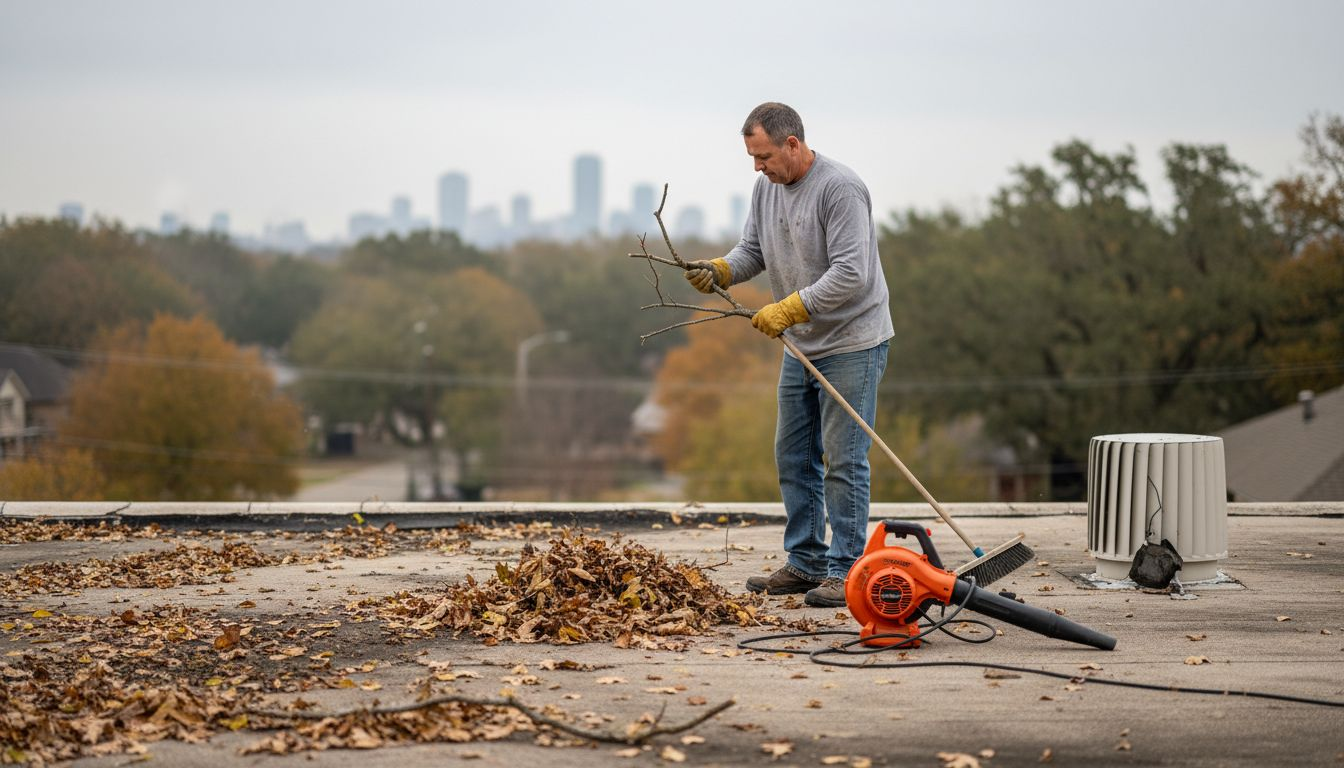
After initial cleaning, conduct a detailed inspection to ensure the surface is completely clear and ready for repair. Look for any remaining dirt, loose materials, or areas of potential moisture retention. Wipe down the surface with a clean cloth or specialized roof cleaner to remove any remaining contaminants, creating an optimal environment for repair materials to adhere properly.
Pro tip: Allow the roof surface to dry completely after cleaning, as moisture can interfere with repair materials and compromise the effectiveness of your repair work.
Step 3: Select Proper Repair Materials Strategically
Selecting the right repair materials is crucial for ensuring the longevity and effectiveness of your flat roof restoration. Flat roof material selection involves careful consideration of multiple factors including local climate conditions, roof structure, and specific damage characteristics unique to Houston properties.
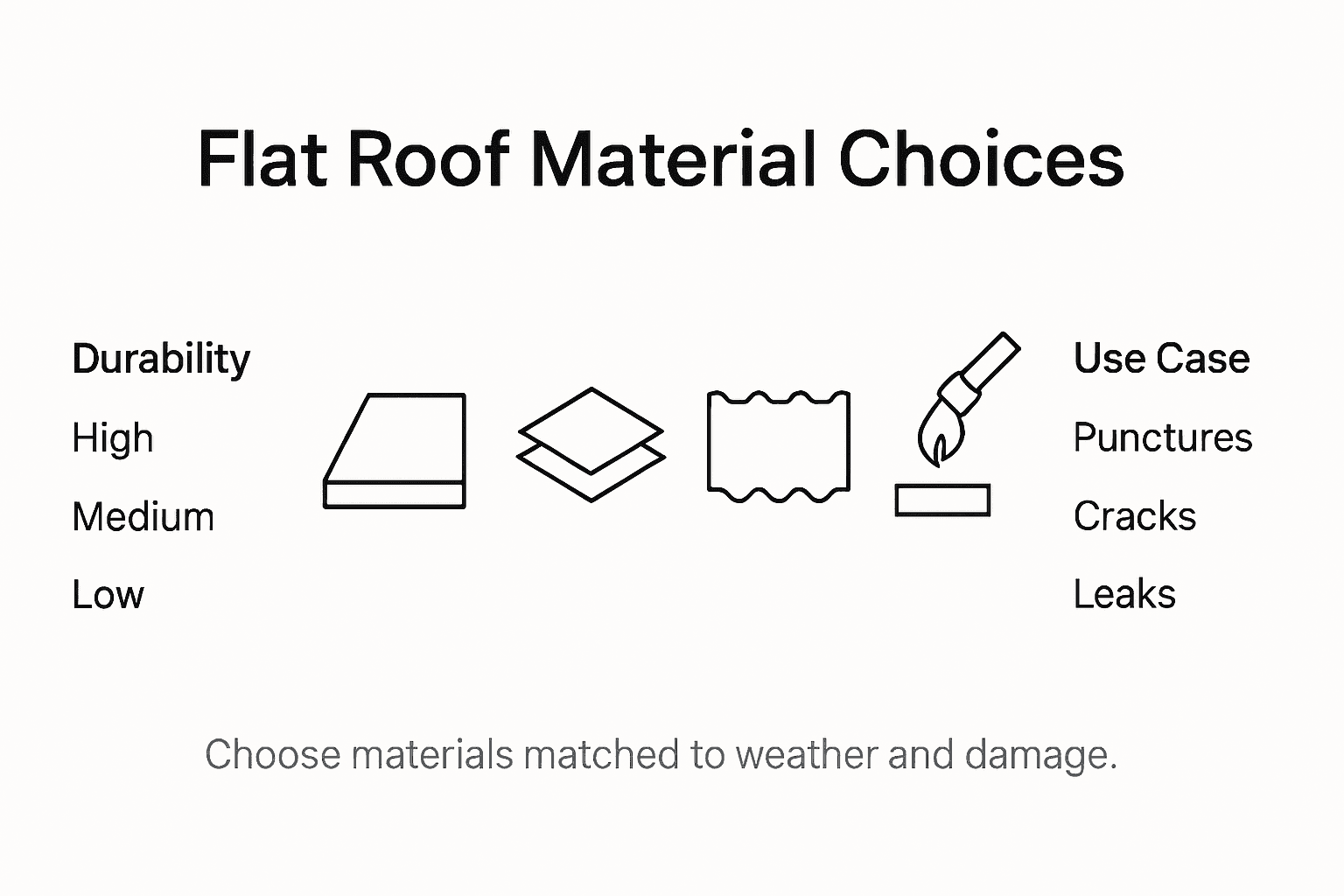
Examine the extent of damage and choose materials that match your specific repair needs. For minor punctures or small areas of deterioration, liquid applied membranes or patch kits designed for flat roofing systems work well. Larger damaged sections might require full sheet membrane replacements or specialized waterproofing compounds. Consider materials that offer strong adhesion, flexibility, and resistance to Houston’s intense sunlight and occasional severe weather conditions. Synthetic rubber membranes like EPDM or modified bitumen sheets often provide excellent durability and water resistance for flat roof applications.
Prioritize materials compatible with your existing roof substrate and previous repair work. Consult manufacturer specifications to ensure chemical compatibility and proper application techniques. Some materials require specific temperature ranges or preparation methods, so carefully review installation guidelines before purchasing. Match material performance characteristics to your roof’s specific environmental challenges and structural requirements.
Pro tip: Always purchase slightly more repair material than your initial measurements suggest to account for potential application errors or unexpected surface variations.
Here’s a quick comparison of common flat roof repair materials and their advantages:
| Material Type | Durability | Weather Resistance | Typical Use Case |
|---|---|---|---|
| EPDM Rubber Membrane | High (20+ years) | Excellent, UV stable | Large patches or full roof |
| Modified Bitumen | Very good | Great against hail | Seams, edges, larger areas |
| Liquid Membrane | Good | Waterproof, flexible | Small cracks or puncture repair |
| Asphalt Patch Kits | Moderate | Water resistant | Quick fixes, minor damage |
Step 4: Apply Repairs to Impacted Roof Sections
Applying repairs to damaged flat roof sections requires precision and careful technique to ensure long lasting protection for your Houston property. Operational procedures for implementing roof repairs demand systematic attention to detail and strategic material application.
Begin by carefully cutting out the damaged section using a utility knife with a sharp blade, creating clean edges that provide a solid foundation for the repair patch. Ensure you remove all compromised roofing material, extending your cut slightly beyond the visibly damaged area to guarantee complete removal of weakened sections. Clean the exposed substrate thoroughly, removing any debris or moisture that could compromise the repair. Apply a compatible primer to the cleaned area to promote strong adhesion of your repair material.
Carefully position your selected repair membrane or patch, pressing firmly to eliminate air bubbles and create a watertight seal. Use a roller to apply consistent pressure and ensure complete contact between the repair material and the existing roof surface. Pay special attention to edges and seams, applying additional sealant as needed to prevent potential water infiltration. Allow the repair to cure completely according to manufacturer specifications, protecting the area from foot traffic and potential moisture during the curing process.
Pro tip: Work during dry weather conditions with temperatures between 50 and 85 degrees Fahrenheit to ensure optimal material adhesion and curing.
Step 5: Verify Roof Integrity After Repairs
Completely verifying the integrity of your flat roof repairs is a critical final step to ensure long-term protection for your Houston property. Best practices for documenting and inspecting roof repairs require a systematic and thorough approach to confirm the effectiveness of your restoration work.
Begin your verification process with a comprehensive visual inspection. Check the repaired sections carefully for any signs of uneven surfaces, air bubbles, or incomplete sealing. Run your hand gently over the repair area to feel for any inconsistencies or raised edges that might indicate improper application. Conduct a water test by carefully spraying the repaired section with a garden hose, observing how water flows and checking for any signs of leakage or pooling. Pay close attention to seams and edges where water might potentially penetrate.
Document your repair work meticulously by taking clear photographs from multiple angles. These images serve as important records for future reference and potential insurance claims. Make notes about the repair materials used, date of repair, and any specific observations about the repair process. Consider scheduling a professional inspection within 30 days to validate the quality of your repair work and catch any potential issues that might not be immediately apparent.
The table below summarizes essential post-repair inspection checkpoints:
| Checkpoint | What to Look For | Why It Matters |
|---|---|---|
| Surface Consistency | Even levels, no bumps | Ensures proper adhesion |
| Seams and Edges | Fully sealed, no gaps | Prevents water infiltration |
| Water Test Results | No leakage or pooling | Confirms waterproof repair |
| Visual Documentation | Clear photos, all angles | Supports future claims |
Pro tip: Perform your verification inspection on a dry day with good natural light to ensure you can detect even the most subtle imperfections in your roof repair.
Secure Your Houston Flat Roof with Expert Repairs from Mister ReRoof
Flat roof damage can quickly escalate if not properly assessed and repaired using the right materials and techniques. This article highlights the challenges Houston property owners face such as identifying hail and weather damage, ensuring thorough cleaning, selecting durable repair materials like EPDM or modified bitumen, and verifying the integrity of repairs to prevent costly leaks and structural issues. Understanding these pain points helps you take control of your roof’s health before minor problems turn into major expenses.
Don’t risk your home or commercial property to incomplete or temporary fixes. Trust the Houston roofing professionals at Mister ReRoof who specialize in flat roof repair workflows tailored for Houston’s unique climate challenges. We combine detailed damage assessment, expert material selection, and precise application to restore your roof’s durability while protecting against future weather impacts.
Elevate your roof’s lifespan today with proven solutions from a team committed to your satisfaction and safety.

Ready to protect your Houston property with trusted flat roof repairs? Visit Mister ReRoof now for a comprehensive consultation and free estimate. Don’t wait for small damages to turn catastrophic. Schedule your professional roof inspection and repair service today and secure long-lasting peace of mind.
Frequently Asked Questions
How can I assess the damage to my flat roof?
To assess the damage to your flat roof, conduct a thorough visual inspection from both the ground and the roof surface if it’s safe. Look for signs of punctures, cracks, and standing water; document each issue with photographs and notes for future reference.
What should I do to prepare my flat roof before repairs?
Clean the roof surface by sweeping away debris and biological growth. Use a soft brush or a leaf blower, and if necessary, apply a gentle cleaning solution to remove any contaminants, ensuring the surface is completely dry before starting repairs.
What types of materials are best for repairing a flat roof?
Select repair materials that suit the damage extent and local climate conditions. Options include EPDM rubber membranes for larger patches and liquid applied membranes for small cracks; always ensure compatibility with your existing roof materials.
How do I apply repairs to my flat roof?
Begin by cutting out the damaged sections of your roof, making clean edges for your patch. Apply a compatible primer, position your repair material, and use a roller to ensure a watertight seal; allow it to cure completely according to the manufacturer’s guidelines.
How can I verify the effectiveness of my flat roof repairs?
Perform a visual inspection of the repaired area, looking for any inconsistencies or signs of leakage. Conduct a water test by spraying the area with a hose, and document the repairs with photographs to maintain a record for future reference.
When should I consider getting a professional to inspect my flat roof?
Consider scheduling a professional roof inspection if you notice multiple signs of damage, are unsure about your assessment, or want to ensure the quality of your repair work. Aim for a professional review within 30 days after completing repairs for optimal protection.
