TL;DR:
- Proper installation is crucial, as 62% of warranty denials result from faulty work.
- Maintaining documentation, inspections, and proper registration helps keep warranty coverage active.
- Using certified contractors and understanding warranty transferability adds value and protection for homeowners.
Most Texas homeowners breathe a sigh of relief when a new roof goes on. The job is done, the house is protected, and the worries are over. But that feeling can be short-lived. Improper installation accounts for 62% of denied warranty claims, which means the single biggest threat to your coverage isn’t a storm. It’s a bad install. Understanding what your roof warranty actually covers, where it can fall apart, and how to keep it intact is one of the most valuable things you can do to protect your home and your budget.
Table of Contents
- What a roof warranty really covers
- The hidden risks of skipping or misunderstanding warranties
- Warranty fine print: transferability, voids, and what most people miss
- Maximizing your roof warranty: strategies every Texas homeowner should know
- A Texas pro’s perspective: why most homeowners lose roof warranty value
- Secure your roof and your peace of mind with a trusted Texas contractor
- Frequently asked questions
Key Takeaways
| Point | Details |
|---|---|
| Warranties aren’t automatic coverage | Most roof warranties require specific installers, documentation, and care to deliver actual protection. |
| Denials are usually preventable | Improper installation or overlooked fine print account for the majority of denied warranty claims. |
| Texas weather amplifies risk | High rates of wind and hail mean warranty gaps in Texas can be costly for homeowners. |
| Transferability impacts resale | A transferable warranty can protect your home’s value if you sell. |
| Partner with pros | Working with certified, local contractors dramatically boosts your warranty success rate. |
What a roof warranty really covers
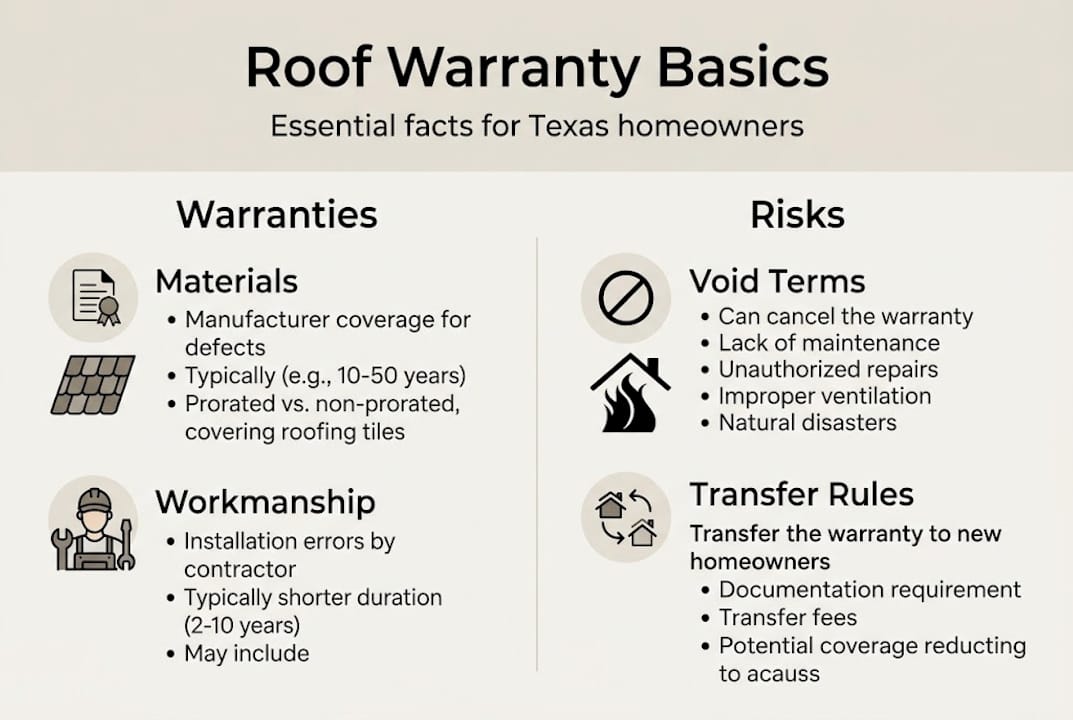
There are two main types of roof warranties, and most homeowners confuse them or assume they work together automatically. They don’t.
A manufacturer’s warranty covers defects in the roofing materials themselves. If shingles crack, curl, or fail before their rated lifespan, the manufacturer may replace them. These warranties often run 25 to 50 years, but the coverage terms get weaker over time through a process called prorating.
A workmanship warranty covers how the roof was installed. This comes from your contractor, not the manufacturer. If flashing is improperly sealed or nails are overdriven, the workmanship warranty is what you’d use. These typically run 1 to 10 years, though premium contractors sometimes offer longer terms.
Here’s a side-by-side look at the key differences:
| Warranty Type | Issued By | Covers | Typical Duration |
|---|---|---|---|
| Manufacturer’s warranty | Roofing material brand | Defective materials | 25 to 50 years |
| Workmanship warranty | Your contractor | Installation errors | 1 to 10 years |
| System warranty (enhanced) | Manufacturer + contractor | Both materials and labor | 25 to 50 years |
Both types carry exclusions. Standard exclusions include:
- Storm and hail damage (covered by insurance, not the warranty)
- Damage from foot traffic or improper maintenance
- Repairs made by non-certified or unapproved contractors
- Issues caused by poor attic ventilation
Ventilation voids top warranty claims, and contractor bankruptcy can nullify a workmanship warranty entirely. That’s why the contractor you hire matters as much as the materials they use.
Coverage also varies significantly by provider. Some manufacturers only honor full warranties when a certified installer is used. Others require product registration within 30 to 90 days of installation. Skipping that step can cut your coverage in half.
Pro Tip: Always ask whether the warranty is transferable before signing anything. If you sell your home, a transferable warranty adds real value for the buyer and can make your listing more competitive. If it’s non-transferable, that’s a gap worth knowing about early.
For Texas homeowners, staying ahead of these details starts with understanding why roof inspections matter in Texas homes specifically, especially given the climate conditions here.
The hidden risks of skipping or misunderstanding warranties
Knowing the basics is one thing. Understanding what’s at stake when things go wrong is another.
Premature roof failures are expensive. The roofing industry absorbs $1.2 billion annually in costs from premature shingle failures, and that cost doesn’t disappear. It shifts to homeowners when claims get denied. A full roof replacement in Texas can run anywhere from $8,000 to $20,000 or more depending on the size and material. If your warranty is voided, that bill lands on you.
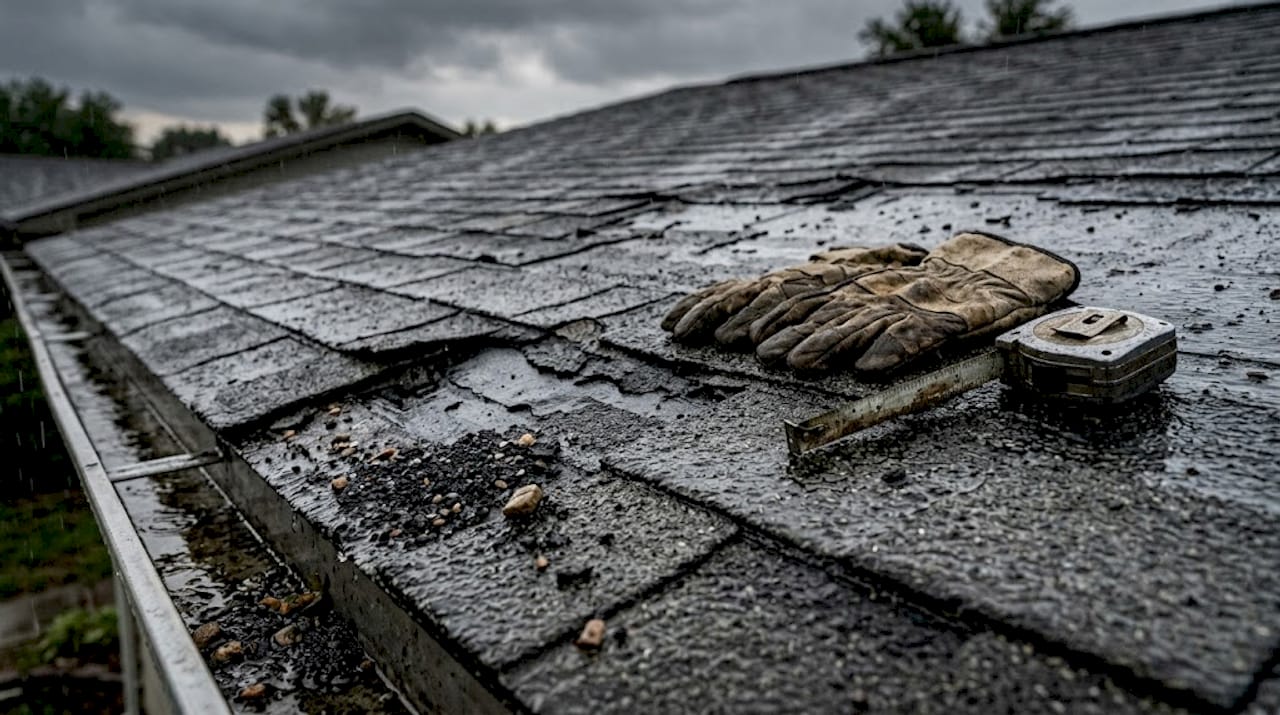
Texas weather compounds the problem. Wind and hail cause roughly 50% of all homeowner insurance claims nationwide, and Texas sits squarely in the middle of hail alley. Understanding why roofs fail in Texas helps put the warranty stakes into sharper focus.
Here’s a look at common denied claim scenarios and what they typically cost:
| Reason for Denial | Estimated Homeowner Cost |
|---|---|
| Improper installation (voided warranty) | $8,000 to $18,000 |
| Missed maintenance (no inspection records) | $3,000 to $7,000 |
| Unregistered warranty | Loss of full coverage |
| Repairs by non-certified contractor | Full warranty void |
| Poor ventilation damage | $2,500 to $6,000 |
“Most homeowners don’t realize their warranty is void until they need it most. By then, the out-of-pocket costs can be devastating.”
The actions most likely to void coverage before a claim is ever filed include:
- Hiring a non-certified contractor to save money upfront
- Skipping the product registration after installation
- Missing annual or post-storm roof inspections
- Allowing unapproved repairs or additions to the roof system
- Failing to address ventilation issues in the attic
For homeowners in Houston and surrounding areas, knowing how roof repair insurance in Houston works alongside your warranty is equally important. Insurance and warranties serve different purposes and should never be treated as interchangeable coverage.
Warranty fine print: transferability, voids, and what most people miss
Most homeowners read the summary page of their warranty and call it done. The real risk is buried deeper.
Transferability matters more than most people realize. When you sell your home, the roof is one of the first things buyers ask about. A transferable warranty adds tangible value to the transaction. Non-transferable or restricted transfers reduce the home value protection that a new roof is supposed to provide. Some warranties allow one transfer with a small fee. Others require the original homeowner to be on the title. A few simply void upon sale.
Common reasons warranties get voided mid-term include:
- Poor attic ventilation: Manufacturers require specific ventilation ratios. If your attic runs too hot, it accelerates shingle aging and gives the manufacturer grounds to deny a claim.
- Improper installation: Even one misstep during install, like overdriven fasteners or insufficient underlayment overlap, can create grounds for denial.
- Unapproved repairs: If a handyman patches your roof with materials not approved by the manufacturer, that can void the entire warranty.
- Failure to register: Many manufacturers require product registration within a set window. Miss it, and you may only have a limited basic warranty instead of the full coverage.
- Mixing product lines: Using shingles from one brand with accessories from another can sometimes break a system warranty.
Here’s what most guides skip entirely: verbal assurances from a salesperson or contractor mean nothing in a warranty dispute. If the contractor tells you something is covered, get it in writing. That’s not just good advice. It’s the difference between a paid claim and a five-figure repair bill.
For a full breakdown of how these issues play out in Texas specifically, the Texas roof warranty tips page covers the local nuances in detail.
Pro Tip: Before signing your installation contract, ask for a copy of the manufacturer’s warranty document and highlight the void conditions. If any of those conditions exist in your home right now, fix them before installation day.
Maximizing your roof warranty: strategies every Texas homeowner should know
Getting a good warranty is step one. Keeping it active and usable is where most homeowners fall short.
Here are the steps to take before and during installation to lock in your coverage:
- Hire a manufacturer-certified contractor. Many enhanced warranties are only available through certified installers. This is the single most important decision you’ll make.
- Confirm the full system is being used. Shingles, underlayment, starter strips, and ventilation components should all come from the same manufacturer’s system when possible.
- Register the warranty promptly. Do this within 30 days of installation. Set a phone reminder the day the job is complete.
- Get all documentation in writing. This includes the contractor’s license, the installation date, the product model numbers, and the warranty terms from both the manufacturer and contractor.
- Request a final inspection report. A good contractor should walk you through what was installed and document it.
Once the roof is on, here’s how to keep coverage intact:
- Schedule a professional inspection at least once a year and after every major storm
- Clear gutters and downspouts regularly to prevent water backup
- Trim overhanging tree branches that can scrape or damage shingles
- Never allow unapproved contractors to perform repairs
- Address minor issues immediately rather than letting them grow
Documentation is your best defense. Improper installation accounts for the majority of denied claims, but poor record-keeping is a close second reason homeowners lose their cases. If you can’t prove what was done and when, the manufacturer has no obligation to accept the claim.
Pro Tip: Ask your contractor to provide a maintenance log template at the end of the job. Record every inspection, every repair, and every storm event with dates and photos. That log is your evidence if a claim dispute ever arises.
For ongoing protection guidance, reviewing roof maintenance in Texas and keeping a hail damage roof checklist on hand will help you stay proactive all year long.
A Texas pro’s perspective: why most homeowners lose roof warranty value
Here’s the uncomfortable truth we see play out time and again: most homeowners who lose warranty coverage didn’t lose it because of bad luck. They lost it because they chose a contractor based on price, skipped the paperwork, and assumed everything would work itself out.
In Texas, that mindset is especially costly. The hidden causes of Texas roof failures often trace back to rushed installs during peak storm season, when demand is high and corners get cut. A manufacturer’s warranty that looks impressive on paper becomes worthless when the installer isn’t certified, the products weren’t registered, or the attic ventilation was never addressed.
A warranty is not a guarantee. It’s a contract with conditions. And in our experience, the homeowners who actually collect on claims are the ones who treated their warranty like a living document from day one. They kept records, scheduled inspections, and asked hard questions upfront. That kind of diligence is non-optional in Texas weather.
Secure your roof and your peace of mind with a trusted Texas contractor
Everything covered in this article points to one core truth: a roof warranty is only as strong as the team that installs it and the homeowner who maintains it.
At Mister ReRoof, we work with certified installers who know how to protect your warranty from day one. Whether you’re exploring metal roof replacement in Victoria, looking into shingle roof replacement in Hallettsville, or simply need guidance on your options, our team brings local knowledge and warranty expertise to every job. As trusted Texas roofing contractors, we make sure your documentation, registration, and inspection needs are handled correctly. Contact us today for a free estimate.
Frequently asked questions
Are roof warranties really worth the cost in Texas?
Yes, absolutely. Texas’s severe weather means wind and hail cause roughly 50% of insurance claims, and without solid warranty coverage, a denied claim can cost homeowners tens of thousands out of pocket.
What voids a roof warranty most often?
The most common causes are improper installation, poor attic ventilation, and unapproved repairs. Ventilation voids top claims consistently, and contractor bankruptcy can eliminate workmanship coverage entirely.
Can I transfer my roof warranty if I sell my home?
Many warranties allow one transfer, but terms vary widely. Non-transferable or restricted transfers limit the protection you can pass along to a buyer, so always review this clause before listing your home.
How can I keep my roof warranty active?
Keep thorough records of all inspections and repairs, register your warranty promptly after installation, and always hire manufacturer-approved contractors for any follow-up work.
Does my homeowners insurance cover what warranties don’t?
Insurance covers sudden events like storm damage, while warranties protect against defective materials and installation errors. The two work side by side but cover completely different types of problems.