
TL;DR:
- Proper roof ventilation in Texas reduces attic heat, moisture buildup, and extends shingle life.
- Systems should be balanced with intake and exhaust vents to ensure effective airflow.
- Regular maintenance and code compliance are essential to prevent costly attic and roof damage.
Most Texas homeowners assume attic vents exist for one reason: keeping the house cool in summer. That’s only part of the picture. Proper roof ventilation affects your energy bills year-round, protects your shingles from premature failure, and prevents the kind of moisture buildup that quietly destroys attic wood over time. Texas heat, humidity, and severe storms create conditions that demand more than a basic setup. If you’ve never given your roof ventilation a second thought, this guide will change that. You’ll walk away knowing exactly what ventilation is, why it matters here in Texas, and which options actually fit your home.
Table of Contents
- What is roof ventilation and why does it matter?
- Main types of roof ventilation systems
- Understanding Texas ventilation codes and common mistakes
- Special situations: Hot roofs, spray foam, and edge cases
- A Texas expert’s perspective: What most guides miss about roof ventilation
- Next steps: Get peace of mind with expert Texas roofing solutions
- Frequently asked questions
Key Takeaways
| Point | Details |
|---|---|
| Balanced airflow is essential | A ventilation system needs intake and exhaust to truly work and protect your roof. |
| Texas codes set minimums | State code usually requires at least 1 square foot of vent for every 150 square feet of attic. |
| Some homes need no venting | Unvented ‘hot roofs’ with spray foam insulation can skip traditional vents if code requirements are met. |
| Check for common failures | Blocked or imbalanced vents are frequent causes of energy waste and roof damage in Texas homes. |
What is roof ventilation and why does it matter?
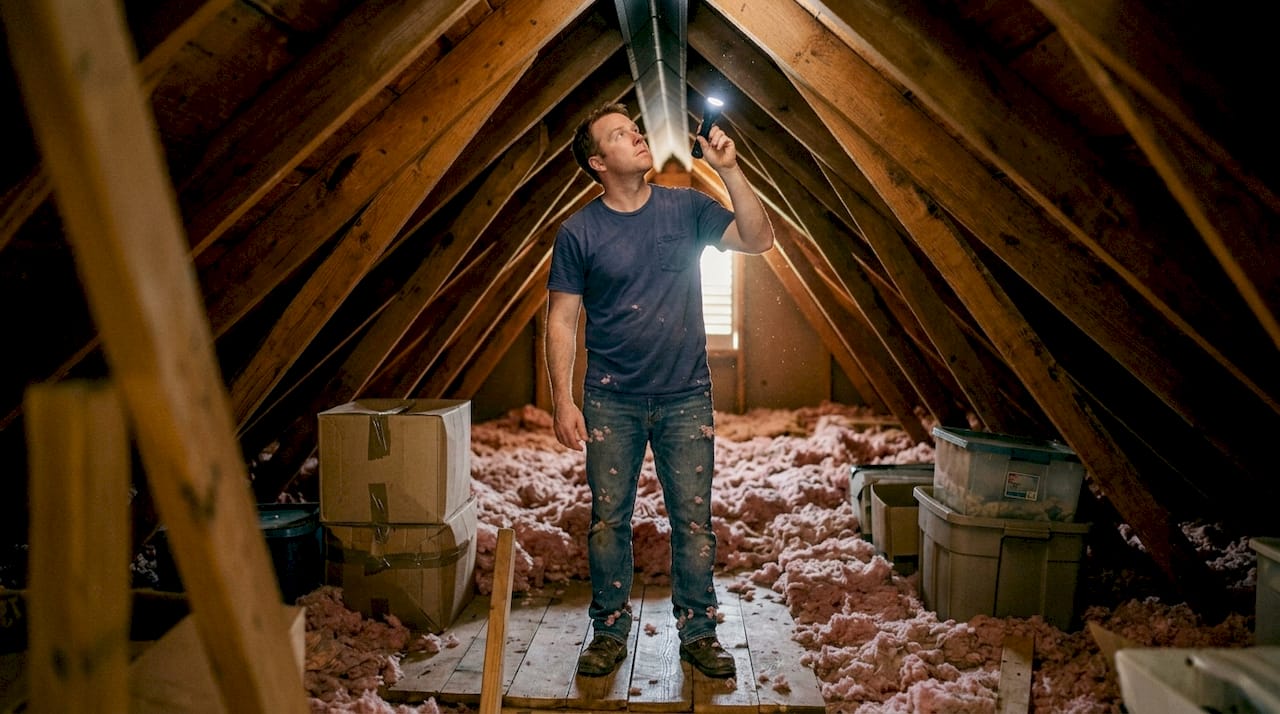
Roof ventilation is the engineered exchange of air between an attic or enclosed roof cavity and the exterior. In plain terms, it means air flows in from one point and exits from another, keeping the space from becoming a sealed, stagnant heat trap. Without that exchange, your attic becomes a pressure cooker in July and a moisture magnet in winter.
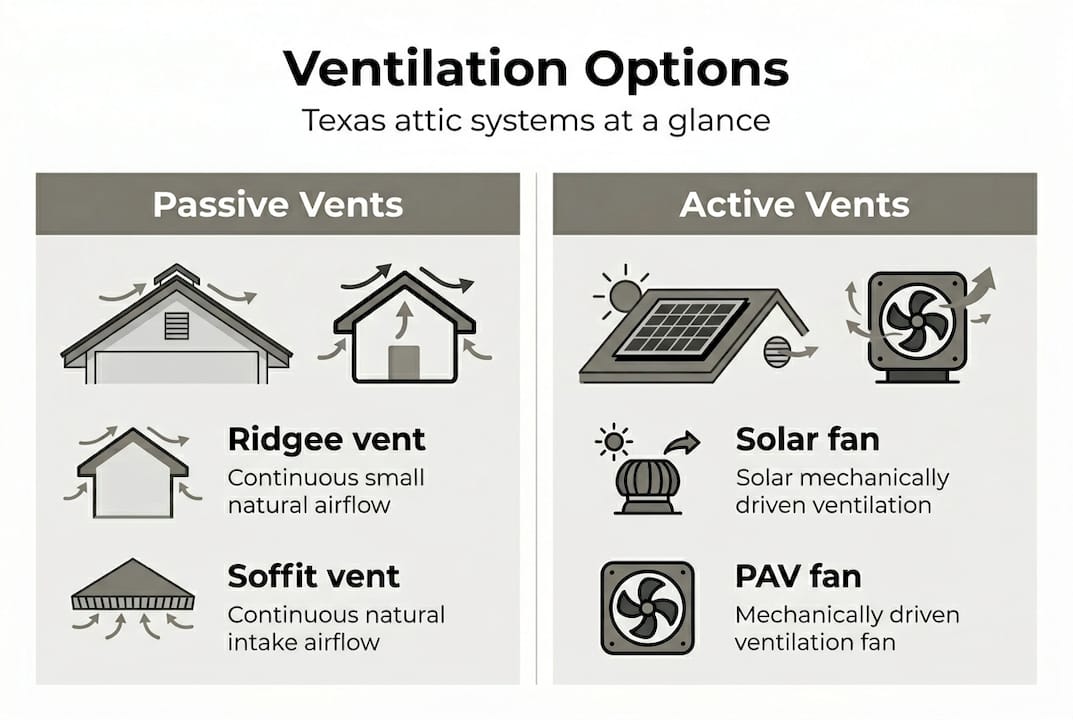
There are two broad categories: passive systems, which rely on natural airflow and temperature differences, and active systems, which use powered fans to move air mechanically. We’ll dig into those more in the next section, but it helps to picture the basic principle first: cool air enters low on the roof, rises as it warms, and exits near the peak.
The attic should function like a well-ventilated room, not a sealed box. When airflow is disrupted, every other system in your home pays the price.
For Texas homeowners, the stakes are higher than in most states. Summer temperatures routinely exceed 100°F, and attic temps without ventilation can spike above 150°F. That excess heat radiates down into your living space, forcing your AC to work harder and pushing energy bills up. The weather impacts on roofs in Texas also include high humidity on the Gulf Coast, which means moisture trapped in an unventilated attic creates ideal conditions for mold, rot, and structural damage.
Here’s a quick look at what poor ventilation actually costs you:
- Higher energy bills: Trapped heat forces your HVAC system to run longer cycles.
- Shingle damage: Heat buildup from below degrades asphalt shingles from the underside, shortening their lifespan.
- Mold and mildew: Warm, humid air with nowhere to go creates the perfect breeding ground.
- Wood rot: Roof decking and rafters absorb moisture, weakening your entire roof structure.
- Voided warranties: Many shingle manufacturers require proper ventilation as a condition of their warranty.
Pro Tip: If your upstairs rooms feel significantly hotter than the rest of the house even with AC running, a ventilation problem is often the first thing to check.
Main types of roof ventilation systems
Once you understand why ventilation matters, the next step is knowing your options. Every roof ventilation system relies on a balance between intake and exhaust. Get that balance wrong and the system underperforms, regardless of how many vents are installed.
Key types include intake vents such as soffit and eave vents, and exhaust vents such as ridge, gable, turbine, box/static, and powered attic ventilators. Intake vents let fresh air enter at the lowest points of the roof. Exhaust vents let hot air escape near the top. A balanced system means roughly equal amounts of both.
Passive options include:
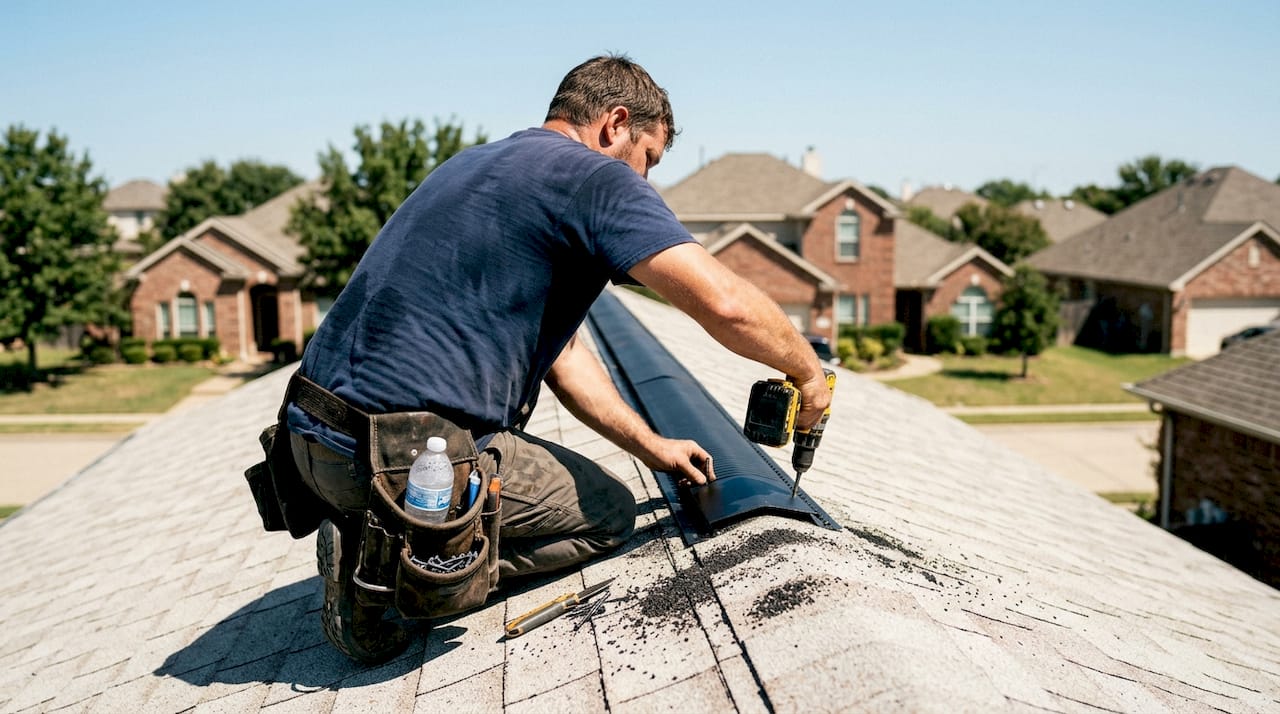
- Ridge vents: Installed along the peak of the roof. Low profile, works with natural convection, excellent for most Texas pitched roofs.
- Static/box vents: Small, fixed vents cut into the roof deck. Simple and affordable, but less effective on their own for large attics.
- Turbine vents: Wind-powered spinning vents that draw air out. Work well in areas with consistent breeze.
- Gable vents: Installed in the triangular wall at each end of the roof. Effective in certain roof shapes but less consistent without wind.
Active options include powered attic ventilators (PAVs), which use electric or solar-powered fans to move air. These make sense for larger attics, complex roof shapes, or homes where passive airflow just isn’t enough.
Pro Tip: Pairing ridge vents with continuous soffit vents is widely considered the most effective passive setup for Texas homes. It creates a steady chimney effect even on calm days.
| Vent type | How it works | Best for Texas | Main downside |
|---|---|---|---|
| Ridge vent | Convection along peak | Most pitched roofs | Needs soffit intake |
| Soffit vent | Intake at eave | All homes | Can be blocked by insulation |
| Turbine vent | Wind-powered exhaust | Windy areas | Inconsistent in calm weather |
| Powered ventilator | Fan-driven exhaust | Large or complex attics | Energy use, cost |
| Gable vent | Cross-ventilation | Simple gable roofs | Wind-direction dependent |
For homeowners exploring upgrades, pairing the right ventilation system with cool roofing options can dramatically reduce summer cooling costs. If you’re unsure which roof shape you have and how it affects airflow, a quick review of roof types in Texas will give you useful context.
Understanding Texas ventilation codes and common mistakes
Knowing your options is only half the equation. Your ventilation system also needs to meet code, and that’s where a surprising number of Texas homeowners run into trouble, sometimes without even knowing it.
Texas has adopted the International Residential Code (IRC), which sets clear standards. The IRC code requires 1 square foot of net free ventilating area (NFA) per 150 square feet of attic floor. That ratio can drop to 1 per 300 if at least 40 to 50 percent of the required vent area is placed in the upper portion of the roof and a vapor retarder is installed on the warm-in-winter side of the ceiling.
NFA (net free area) refers to the actual open area through which air can pass, not the total size of the vent cover. A vent might measure 16 by 8 inches, but its NFA could be significantly smaller due to the screen, louvers, or baffles inside.
Here’s the vent area you’d typically need for common attic sizes, using the 1/150 standard:
| Attic floor area | Required NFA (1/150) | Required NFA (1/300 with conditions) |
|---|---|---|
| 1,000 sq ft | 6.7 sq ft | 3.3 sq ft |
| 1,500 sq ft | 10 sq ft | 5 sq ft |
| 2,000 sq ft | 13.3 sq ft | 6.7 sq ft |
| 2,500 sq ft | 16.7 sq ft | 8.3 sq ft |
Local building departments in Texas enforce these codes during new construction and permitted renovations. If you’re buying a home or filing an insurance claim after storm damage, non-compliant ventilation can create serious complications. For a deeper look at what local authorities expect, the full roofing code details are worth reviewing.
The most common mistakes contractors and DIYers make include:
- Blocking soffit vents with blown-in insulation during attic insulation upgrades.
- Installing exhaust-only systems without adequate intake, creating negative pressure.
- Mixing ridge vents with powered fans on the same roof plane, which short-circuits airflow.
- Misreading the NFA rating and installing too few vents.
- Skipping inspection after a roofing job that added new layers over existing vents.
Ventilation failures rarely announce themselves immediately. They build slowly through moisture accumulation and heat stress, often showing up as shingle granule loss or sagging decking years later.
Regular roof maintenance tips can catch these problems early, before they become costly repairs.
Special situations: Hot roofs, spray foam, and edge cases
Most homes benefit from standard roof ventilation, but a few scenarios call for a different approach. Understanding when the normal rules don’t apply can save you from making expensive mistakes or failing an inspection.
An unvented (hot) roof assembly eliminates the ventilated attic space entirely. Instead of relying on airflow, the insulation is installed directly against the underside of the roof deck. This seals the roof cavity and keeps the entire assembly at a more stable temperature. Unvented hot roofs with spray foam insulation are exempt from standard ventilation requirements if the conditions outlined in IRC R806.5 are met.
So when does this come up in Texas? More often than you’d think. Spray foam insulation is popular here because it offers excellent air sealing, which is valuable in our humid climate. When spray foam is applied directly to the roof deck from the inside, it creates a conditioned attic space that doesn’t need airflow to manage moisture or temperature.
Here’s what to know if you think you might have a special case:
- Closed-cell spray foam applied to the roof deck qualifies under IRC R806.5 if the foam meets minimum thickness requirements based on your climate zone.
- Open-cell foam alone may not be sufficient in Texas without an additional interior vapor retarder.
- Hybrid assemblies using both spray foam and traditional insulation require careful design to avoid condensation at the transition point.
- Existing vents should not be blocked during a spray foam retrofit without a full system redesign by a qualified professional.
- Common failure comes from blocking soffit vents or adding insulation incorrectly, which is a known reason roofs fail prematurely in Texas.
Pro Tip: If you’re not sure whether your attic is vented or conditioned, look at where your HVAC ducts run. If they’re in the attic and the space feels close to room temperature, you likely have a conditioned attic setup, and different ventilation rules apply.
A Texas expert’s perspective: What most guides miss about roof ventilation
Here’s what years of working on Texas roofs teaches you: passing code inspection and having a truly effective ventilation system are not the same thing. Codes set a floor, not a ceiling.
Every home is different. Roof pitch, attic depth, tree coverage, nearby structures, and even neighborhood wind patterns all affect how well your ventilation actually performs. A ridge vent that works perfectly on one side of a street may underperform on the other because of how prevailing Gulf winds hit the house.
The other thing most guides skip is the maintenance side. Ventilation systems don’t fail all at once. They degrade quietly. Soffit vents get painted over during exterior updates. Insulation contractors block intake paths. Wind-driven debris settles into turbine vents over years. None of these show up on paperwork.
Our advice: stop relying on the last inspection report and start doing a simple visual check every spring and fall. Walk your attic perimeter, look for daylight through soffit vents, and make sure nothing is blocking the airflow path. Roof maintenance matters far more than most homeowners realize, and ventilation is always the first place to start.
Next steps: Get peace of mind with expert Texas roofing solutions
Understanding roof ventilation is the first step. Making sure your home actually has the right system in place is where local expertise becomes essential.

At Mister ReRoof, we assess ventilation as part of every roofing project, whether it’s a full replacement or an upgrade. Our team works across El Campo, Houston, and surrounding areas, helping homeowners meet code and get real performance out of their roofing systems. If you’re considering a metal roof replacement in Victoria or need flat roof solutions in El Campo, we factor ventilation into the solution from day one. Request a free roof assessment and let us show you exactly what your home needs.
Frequently asked questions
How does roof ventilation help reduce attic heat in Texas?
Roof ventilation removes trapped hot air from the attic, lowering temperatures in the attic and throughout the home during intense Texas summers. This reduces the load on your air conditioning and helps prevent heat damage to shingles and decking.
What are the minimum attic ventilation codes for Texas homes?
Texas homes must meet the IRC standard of 1 sq ft NFA per 150 square feet of attic floor, or as little as 1 per 300 if upper vents are balanced correctly and a vapor retarder is in place.
When might a Texas home not need traditional roof ventilation?
Homes with unvented hot roofs using qualifying spray foam insulation applied to the roof deck can be exempt under IRC R806.5, provided all code conditions are properly satisfied.
What can happen if roof vents become blocked?
Blocked soffits or vents trap moisture and heat in the attic, driving up energy costs and accelerating damage to shingles, decking, and structural framing over time.