TL;DR:
- Proper materials and installation methods significantly improve Texas roofs’ storm resistance.
- Sealed decks and ring-shank nails are essential for preventing water intrusion and increasing wind resilience.
- Investing in storm-resistant roofing can lower insurance premiums and protect homes from severe weather.
A hailstorm rolls through Houston at 2 a.m., pounding your roof with golf-ball-sized ice. By sunrise, your neighbor’s shingles litter the street while your home sits dry and intact. That difference is not luck. It comes down to materials, fasteners, and installation methods chosen specifically for Texas weather. Texas ranks among the top states for severe weather events, including hurricanes, hail, and tornadoes, and standard roofing products frequently fall short. This guide walks you through the exact methods, materials, and steps that make a roof genuinely storm-resistant, so you can protect your home and avoid the financial wreckage that follows a storm.
Table of Contents
- Understanding storm risks and why roofing fails in Texas
- Essential materials and techniques for storm-resistant roofing
- Step-by-step guide to installing a storm-resistant roof
- verification, maintenance, and weathering future storms
- Why skipping storm-resistant methods isn’t worth the risk
- Ready for a storm-resistant roof in Texas?
- faq
Key Takeaways
| Point | Details |
|---|---|
| Texas storms demand strong roofs | Using reinforced methods and materials dramatically reduces storm damage risk for Texas homes. |
| FORTIFIED Roof standards work | Sealed decks and ring-shank nails double wind resistance and lower water intrusion. |
| Choose proven materials | Metal, advanced composite, and properly installed shingles outperform standard choices in tests and real Texas weather. |
| Check and maintain regularly | Annual inspections and keeping records ensure maximum storm protection and possible insurance benefits. |
Understanding storm risks and why roofing fails in Texas
To make sense of how to protect your home, it helps to first know exactly what Texas roofs are up against. Texas is one of the most weather-volatile states in the country. Along the Gulf Coast, homeowners face hurricanes and tropical storms every season. Move inland and you are dealing with hailstorms, high straight-line winds, and flash flooding from torrential rain. The threat is not occasional. It is a recurring, predictable reality.
Most roofing failures during storms come down to a few repeating weak points. Understanding these helps you ask the right questions before a storm, not after.
Common reasons Texas roofs fail in storms:
- Wind uplift: Standard 3-tab shingles and even some architectural shingles can peel back when sustained winds exceed 60 mph. Wind gets under the edge and lifts whole sections off.
- Poor fastener placement: When nails are placed too high or too few are used, shingles lose grip. A single misplaced fastener can start a chain reaction of shingle loss.
- Water infiltration at the deck: Once shingles lift, exposed roof decking soaks up rain. If the deck is not sealed, water enters the attic and can destroy insulation, framing, and ceilings within hours.
- Failed seams and flashing: Around chimneys, vents, and valleys, improperly sealed flashing is one of the most common entry points for water during heavy rain.
- Single-layer protection: Many older Texas homes have roofs with minimal underlayment, leaving the deck nearly unprotected if shingles fail.
Research from the [Insurance Institute for Business and Home Safety (which manages the **ring-shank nail standards that ring-shank nails double wind uplift strength compared to smooth shank nails, and properly sealed decks significantly reduce water intrusion when the outer layer fails.
Important: Even a roof that looks fine after a storm may have hidden fastener pull-through or micro-cracking in shingles. These damage points worsen over time and create the conditions for catastrophic failure in the next storm.
When you understand why roofs fail in Texas, the solution becomes clear: you need to address every weak point, not just the surface layer. And how weather affects roofing durability is directly tied to the choices made during installation, not just the quality of materials sitting on the shelf.
Essential materials and techniques for storm-resistant roofing
With the threats clear, let’s look at exactly what separates regular roofs from those proven to withstand Texas storms. Not every material performs equally, and installation quality can make or break even a premium product.
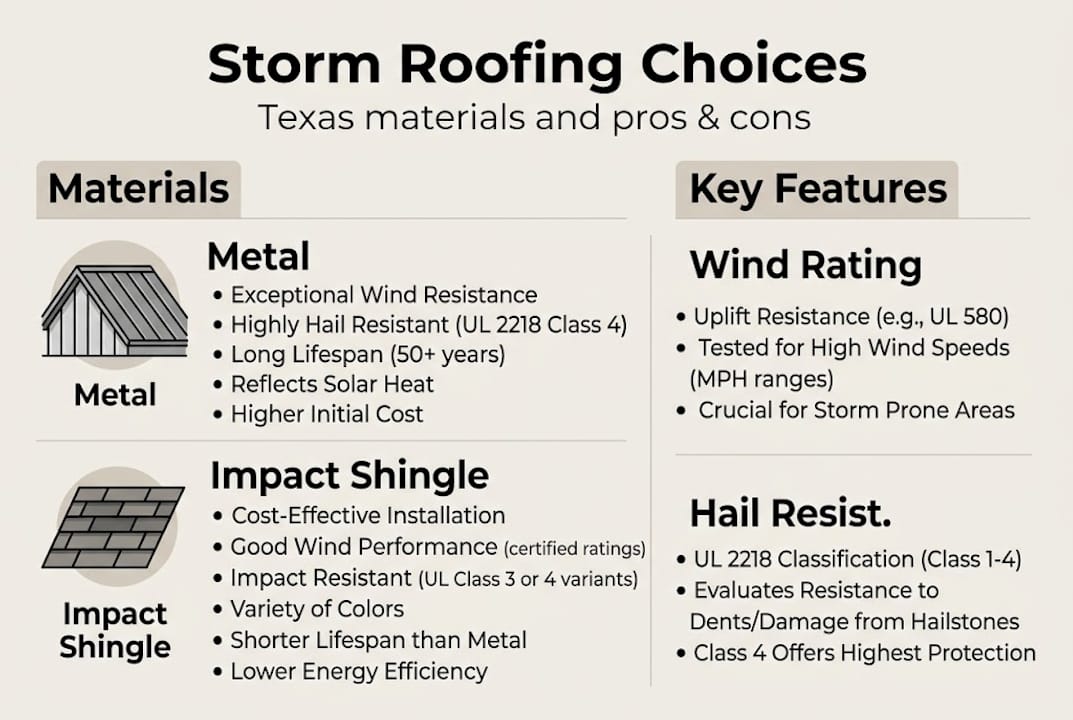
Material comparison for storm resistance:
| Material | Wind rating | hail resistance | relative cost | Best for Texas use case |
|---|---|---|---|---|
| 3-tab shingles | 60-70 mph | Low | $ | Not recommended for storm zones |
| Impact-resistant shingles | 90-130 mph | Class 4 (highest) | $$ | Great for hail-prone inland areas |
| Metal (standing seam) | 140+ mph | Very high | $$$ | Gulf Coast and high-wind corridors |
| TPO (flat roofs) | 90-115 mph | Good | $$ | Commercial and flat-roof applications |
| Clay or concrete tile | 125-150 mph | Very high | $$$$ | South Texas and hurricane zones |
Material choice matters, but so does how it all goes together. The [][][][]sealed roof decks and ring-shank nails are core requirements of the **][][ ][][ [][][][][] The [] [] The [] program, [] has proven in real Texas conditions that these methods keep water out even when the outer shingle layer is damaged. Learn more about storm-resistant material choices and how they stack up locally.
How to choose the right materials for your home:
- Check your local wind zone. Harris County and Gulf Coast areas need products rated for 130 mph or higher.
- Review your insurance policy. Some policies offer discounts specifically for impact-resistant or Class 4 shingles.
- Match the material to your roof slope. TPO works for low-slope and flat roofs; steep-slope homes do better with metal or impact shingles.
- Set a realistic budget. Metal roofing costs more upfront but rarely needs replacement within a 40-year window.
- Ask your contractor about certifications. A certified installer changes the performance outcome, not just the warranty.
Pro tip: upgrading for durability is rarely just about the material itself. A premium shingle installed with standard smooth-shank nails will underperform a mid-grade shingle installed with ring-shank nails and a sealed deck every single time.
Step-by-step guide to installing a storm-resistant roof
Once you’ve chosen the right products and methods, these are the steps your contractor should follow for optimal results. A proper storm-resistant installation is not just about nailing shingles down faster. Every layer matters.
Storm-resistant installation checklist:
- Full inspection first. Remove all existing layers and inspect the decking for rot, soft spots, or damaged sheathing. Replace compromised sections before anything goes on top.
- Install a sealed deck system. Apply self-adhering underlayment or cover all deck joints with approved tape, creating a sealed barrier. This step alone changes the outcome of a storm.
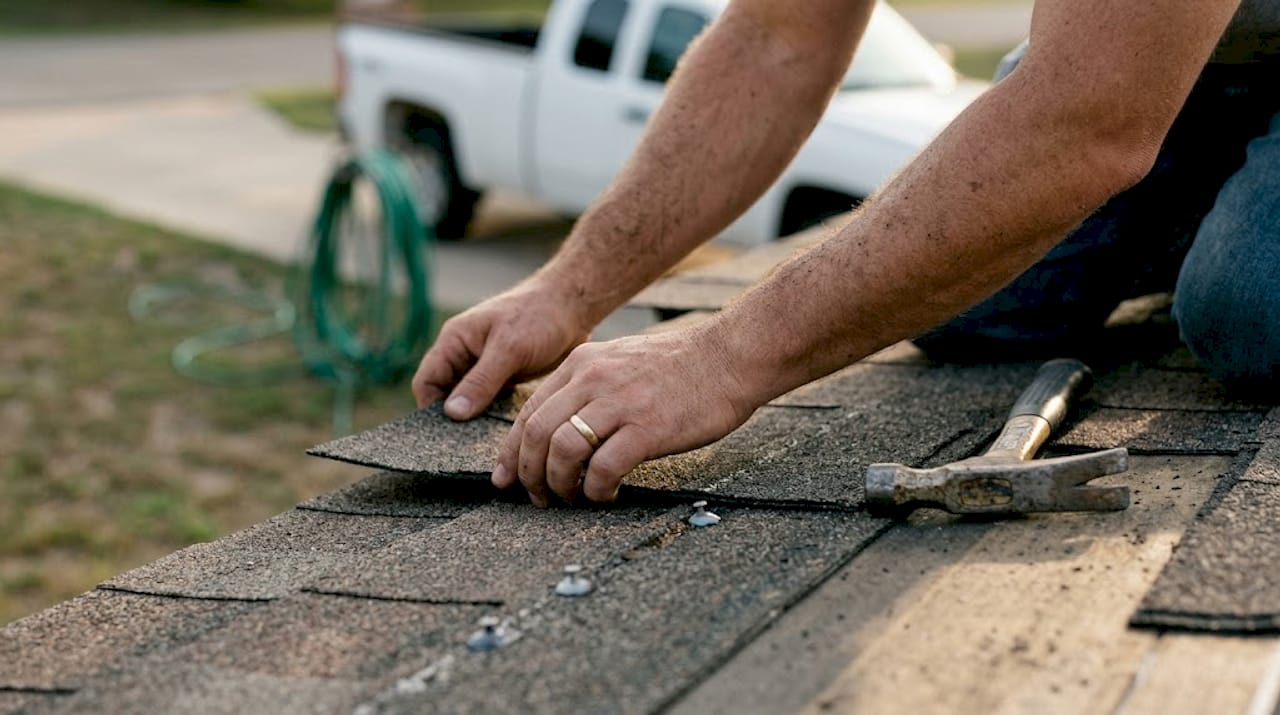
- Use ring-shank nails. Install all decking panels using ring-shank nails at specified spacing, typically 6 inches at panel edges and 12 inches in the field.
- Install starter strips and drip edge. A wide drip edge and proper starter course prevent wind from getting under the shingle’s first row.
- Apply underlayment across the full deck. Use synthetic underlayment rated for high-wind zones. Self-adhering ice-and-water barrier in valleys and eaves adds a second level of protection.
- Install skirted or step flashing at all penetrations. This includes chimneys, vents, and skylights. Poor flashing is where most water damage starts.
- Apply the roof covering per the manufacturer’s wind-rating instructions. For shingles, this often means a 6-nail pattern instead of 4.
** ** The ] According to [[], [] ring-shank nails and sealed decks together double wind resistance and dramatically cut water intrusion risk during events that would compromise a standard install.
Never skip the deck sealing step. A single unprotected seam in your roof deck is all it takes for a storm to drive water into your attic. This one shortcut accounts for a large portion of interior damage claims after Texas storms.
Pro tip: Request that your contractor provide [] documentation verifying they followed compliant installation steps. Some Texas insurers recognize this and reduce your deductible or annual premium. Always follow the hail damage steps outlined by certified professionals to document storm events properly.
verification, maintenance, and weathering future storms
Once your roof is installed, it’s not quite “set it and forget it.” verifying and caring for it keeps your investment stormproof.
How to verify your roof is storm-ready right after installation:
- Request a final photo report from your contractor showing sealed deck joints, nail patterns, and flashing details.
- Have an independent inspector confirm ring-shank nail installation if you are pursuing insurance discounts.
- Check that all flashing is properly counter-flashed, caulked, and sealed at edges.
- Document every step with date-stamped photos stored in a cloud folder or your insurance app.
Annual maintenance tasks:
- Spring: Clear gutters and downspouts before storm season. Check flashing around vents and pipes for cracking or separation.
- Post-storm: Walk the perimeter and use binoculars to check for missing shingles, lifted edges, or dented metal panels. Don’t wait for a leak to appear.
- Fall: Remove debris from valleys, which channels water and can trap moisture against the deck.
- Every 3 years: Schedule a professional inspection to check fastener pull-through and underlayment condition.
Steps to stay insurance-compliant:
- File your installation documentation with your insurer immediately after your roof is complete.
- Request a re-evaluation of your premium based on the upgrade.
- Ask your insurer what wind and hail ratings qualify for a discount in your specific county.
- Keep a digital log of every inspection, repair, or maintenance task performed.
Homeowners with [] sealed decks and qualified installs can qualify for meaningful premium reductions through several major Texas insurers. Beyond savings, a storm-resistant roof also improves year-round energy performance. Metal and TPO roofing reflect solar heat, reducing attic temperatures and cutting summer cooling costs. That translates into value every month, not just storm season. You can explore energy-saving roof upgrades that pair well with storm-resistant replacements.
Why skipping storm-resistant methods isn’t worth the risk
We see homeowners make this calculation all the time: the storm-resistant option costs a few thousand dollars more, so they go with a standard replacement and hope for the best. It is understandable. But here in Texas, that bet rarely pays off.
The reality is that a standard roof installed over an unsealed deck with smooth-shank nails may hold up through a mild season. Then a Category 2 windfield or a direct hail strike hits, and suddenly you are facing interior water damage, mold remediation, and a claim that your insurer disputes because the installation didn’t meet enhanced standards. The math flips fast.
What we have seen time and again is that the smart roofing choices are not always obvious from the estimate sheet. Two quotes may look similar in price, but one uses ring-shank nails and a sealed deck while the other uses whatever is cheapest and fastest. That gap in method is the difference between walking away from a storm intact and filing a six-figure claim.
The other factor people rarely think about: a verifiable, compliant installation gives you leverage. With your insurer, with a future buyer, with your own peace of mind. It’s proof that your home was built to withstand what Texas throws at it, not just what last Tuesday’s weather looked like.
Ready for a storm-resistant roof in Texas?
If you’ve read this far, you already know more than most homeowners about what a properly built roof requires. The next step is working with people who execute it correctly, every time.
At [] []****[] [] **[]**storm-resistant roofing experts at ****At **** **** **** At **** **** At **** At **** At **** The storm-resistant roofing experts at **** **** The storm-resistant roofing experts at **** The storm-resistant roofing experts at **** The storm-resistant roofing experts at **** work across the El Campo and Houston region, helping homeowners make the right call for their specific location, budget, and insurance situation. Whether you need metal roof replacement in Victoria or a shingle roof replacement in hallettsville, we build every roof to perform when Texas weather gets serious. Contact us today for a free estimate tailored to your home.
faq
What is the most storm-resistant roofing for Texas homes?
Metal and [][] Metal and [] Metal and [] Metal and [] Metal and [] Metal and [] Metal and Metal roofs paired with ring-shank nail systems and sealed decks offer the strongest storm resistance available for Texas homes, providing double the uplift resistance of standard methods.
Does insurance cost less if I have a storm-resistant roof?
Yes. Most Texas insurers reduce premiums for homes with compliant installed systems using sealed decks and enhanced materials, particularly when documented under a recognized standard.
Can I upgrade my existing roof, or do I need a full replacement for storm resistance?
Some flashing and fastener improvements can be made without a full replacement, but a sealed deck requirement typically demands removing existing layers, making full replacement the most effective path.
What should I ask my roofer to ensure storm resistance?
Ask whether they use ring-shank nails, sealed roof decks, and follow the enhanced installation patterns required to double wind uplift resistance. Request documentation you can file with your insurer.