TL;DR:
- Fire resistance depends on the entire roofing system, not just shingles or tiles.
- Proper assembly with compatible materials is crucial for achieving a true Class A fire rating.
- Combining a Class A roof with ember-resistant vents and defensible space enhances wildfire resilience.
Many Texas homeowners believe their roof is fire-resistant simply because the shingles look solid and new. That assumption can be costly. Less fire protection than expected is a reality for many homes because true fire resistance depends on the entire roofing assembly, not just the surface layer. In this guide, you’ll learn exactly what fire ratings mean, how to compare materials, what installation mistakes to avoid, and how to build a roof system that genuinely protects your home and your family in Texas.
Table of Contents
- What makes a roof fire-resistant?
- Comparison of fire-resistant roofing materials
- Hidden pitfalls: assembly mistakes and misconceptions
- Going all-in: advanced strategies for wildfire resilience in Texas
- Our take: what most homeowners miss about fire-resistant roofing
- Get expert help for your Texas fire-resistant roofing upgrade
- Frequently asked questions
Key Takeaways
| Point | Details |
|---|---|
| Whole system matters | Fire resistance is determined by the complete roof assembly, not just the outer material. |
| Class A provides best safety | For Texas, Class A fire-rated roofs give the highest protection, resale, and insurance benefits. |
| Installation expertise is crucial | Even top-rated materials can fail if not properly installed with compatible components. |
| Go beyond the roof | Combine a fire-resistant roof with ember-resistant vents and defensible landscaping for best wildfire defense. |
| Consider local factors | Texas heat and wildfire zones require special roofing material and assembly choices for lasting safety. |
What makes a roof fire-resistant?
A fire-resistant roof isn’t just about the shingles or tiles you can see from the street. It’s about the entire roofing assembly working together as a system. That means the roof deck, the underlayment, and the surface covering all need to be compatible and properly installed to achieve a meaningful fire rating.
Fire-resistant roofing is classified into Class A (highest), Class B (moderate), and Class C (lowest) based on standardized tests under ASTM E108 and UL 790. These tests simulate real fire scenarios, including flame spread, burning brand exposure, and intermittent flame application. A Class A roof can withstand severe fire exposure. Class B handles moderate exposure. Class C offers only light protection.
Here’s what each class means in practical terms:
- Class A: Highest protection, resists severe fire exposure, required in many wildfire-prone areas of Texas
- Class B: Moderate protection, suitable for areas with lower fire risk but still vulnerable to embers
- Class C: Minimal protection, may not meet local codes in higher-risk Texas regions
One thing that surprises many homeowners is that ratings apply to the entire assembly, not just the individual materials. You could install a premium Class A shingle over the wrong underlayment and lose your Class A rating entirely. The deck material, fasteners, and even ventilation components all factor into how the system performs under fire conditions.
A roof can look completely solid and new from the outside while still failing to meet Class A standards because of what’s underneath.
For Texas homeowners exploring fire-resistant roofing options, understanding this system-level thinking is the first real step toward genuine protection. A good starting point is also reviewing the Roof 101 overview from the Insurance Institute for Business and Home Safety, which breaks down how assemblies are evaluated.
Comparison of fire-resistant roofing materials
With a grasp on classes and assembly requirements, it’s time to look at which roofing materials actually deliver proven fire resistance and practical advantages in Texas.
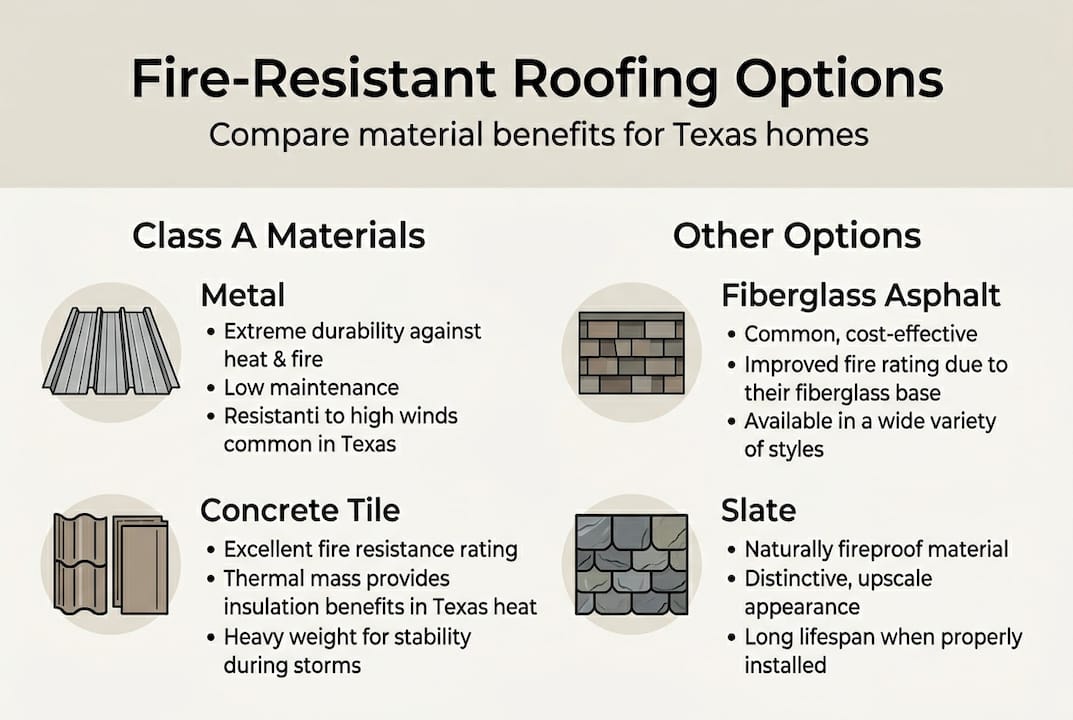
Class A roofs include metal, concrete and clay tile, fiberglass asphalt, and slate, all of which offer added benefits for Texas homes beyond fire protection alone. Each material performs differently in the Texas heat, and your choice affects energy bills, insurance costs, and long-term durability.
| Material | Fire rating | Avg. lifespan | Cooling effect | Main advantage | Main drawback |
|---|---|---|---|---|---|
| Standing seam metal | Class A | 50+ years | High solar reflectance | Durable, low maintenance | Higher upfront cost |
| Concrete or clay tile | Class A | 40-50 years | Moderate | Great for heat, classic look | Heavy, needs structural support |
| Fiberglass asphalt shingles | Class A (when assembled correctly) | 20-30 years | Low to moderate | Affordable, widely available | Assembly-dependent rating |
| Slate | Class A | 75-100 years | Moderate | Exceptional longevity | Very heavy, expensive |
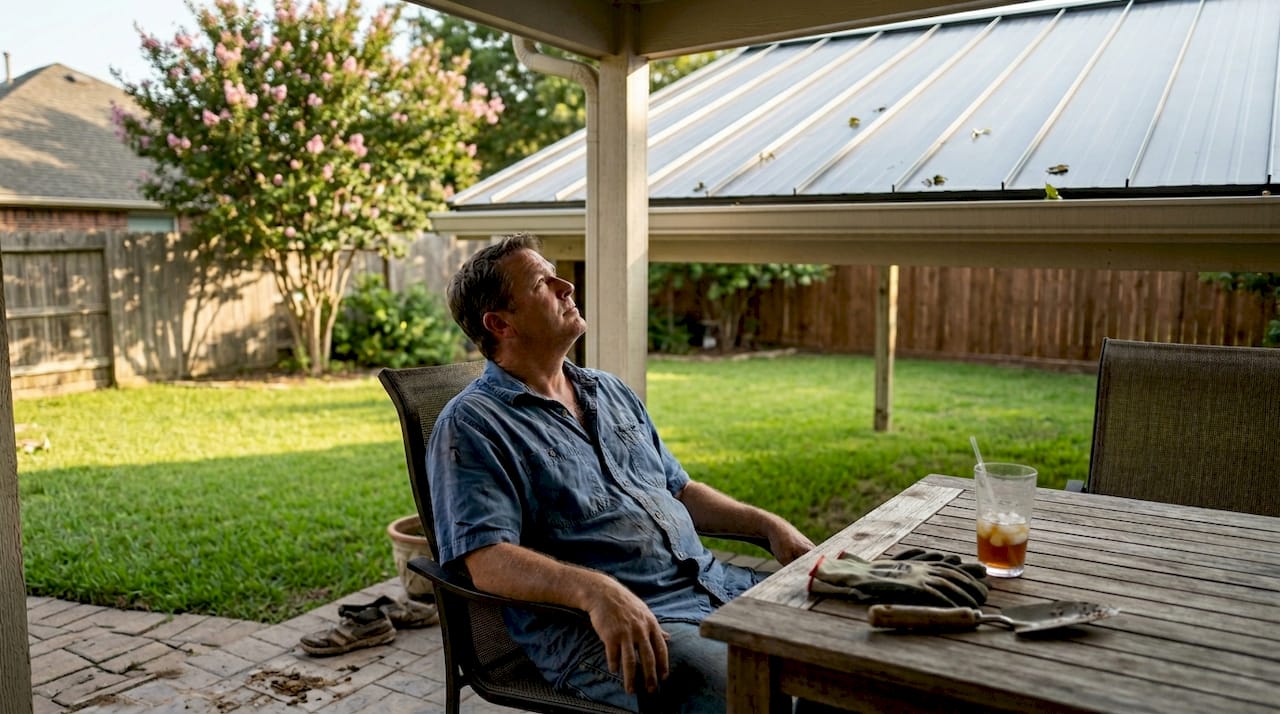
Metal roofing stands out in Texas for several reasons. It reflects solar heat, which can reduce cooling costs noticeably during long summers. It also handles high winds and hail better than most alternatives. For homeowners near wildland areas, metal is often the first recommendation from fire safety professionals.
Fiberglass asphalt shingles are the most common choice because of cost, but they require careful attention to assembly. The Class A rating only holds when the right underlayment and deck are used together. Cut corners here and you may end up with a Class B or C system without realizing it.
Pro Tip: Ask your roofing contractor to provide the specific assembly listing number from the manufacturer. This confirms that every layer of your roof has been tested together as a Class A system, not just the shingle alone.
Beyond fire safety, choosing the right material also affects your home’s resale value. Texas buyers increasingly look for energy-efficient and durable roofing, and a Class A metal or tile roof can be a genuine selling point. Reviewing Texas roofing material choices can help you weigh all the factors before committing.
Hidden pitfalls: assembly mistakes and misconceptions
Understanding material options is essential, but the reality is that installation errors and assembly shortcuts can negate even the best products.
The most dangerous misconception in fire-resistant roofing is that buying the right shingle is enough. It isn’t. The full system has to be built correctly from the deck up. Here’s how assembly mistakes typically unfold:
- Wrong underlayment: A contractor uses a standard felt underlayment instead of a fire-rated one, immediately dropping the assembly below Class A.
- Incompatible deck material: The roof deck doesn’t match the tested assembly specification, voiding the fire rating.
- Skipped layers: Time or budget pressure leads to omitting a layer entirely, which can cause even Class A materials to fail when tested.
- Improper fastening: Incorrect nail patterns or fastener types compromise how the assembly holds together under heat stress.
- Mixing brands without verification: Not all components from different manufacturers are tested together; mixing them can invalidate the assembly rating.
The roof that looks perfect from the curb may be one assembly shortcut away from failing a fire test.
This is exactly why professional roof installation matters so much. An experienced contractor knows which products are tested together and how to document the assembly for insurance and code compliance purposes.
Pro Tip: Before your project starts, ask your contractor for the manufacturer’s assembly specification sheet. It lists every component required for the Class A rating. If they can’t produce it, that’s a red flag.
For Texas homeowners near wooded or rural areas, the stakes are even higher. The Texas A&M Forest Service provides wildfire construction tips that align closely with what roofing professionals recommend. Investing in quality roofing for longevity means getting the assembly right the first time, not patching problems later.
Going all-in: advanced strategies for wildfire resilience in Texas
Fixing assembly issues is vital, but wildfire defense means thinking beyond the roof line.
Even a perfect Class A roof assembly has limits. No roof is fully fireproof; enhanced protection demands Class A systems combined with defensible space, ember-resistant vents, and regular maintenance. Embers from a wildfire can travel over a mile and land in gutters, on decks, or near vents. If those entry points aren’t protected, even the best roof won’t save your home.
Here are the key upgrades Texas homeowners should consider alongside a Class A roof:
- Ember-resistant vents: Standard vents allow embers to enter your attic. Ember-resistant or mesh-screened vents block this entry point.
- Defensible space: Clear vegetation and combustible materials at least 30 feet from your home to reduce fire fuel.
- Gutter guards: Debris-filled gutters are a common ignition point. Guards keep them clear of leaves and twigs.
- Routine inspections: Damaged or missing shingles create gaps in your assembly’s fire protection. Annual checks matter.
| Upgrade | Estimated cost | Resilience impact | Long-term value |
|---|---|---|---|
| Ember-resistant vents | $200-$800 | High | Reduces attic ignition risk significantly |
| Defensible space landscaping | $500-$2,000 | Very high | Lowers fire fuel near structure |
| Class A roof assembly | $8,000-$25,000+ | Highest | Insurance savings, durability, resale value |
| Gutter guards | $300-$1,500 | Moderate | Prevents debris ignition in gutters |
| Annual roof inspection | $150-$400/year | Moderate | Catches assembly gaps before they worsen |
Texas weather adds another layer of urgency. Heat, UV exposure, and severe storms all degrade roofing components faster than in cooler climates. Understanding Texas weather and durability helps you plan maintenance schedules that keep your fire-resistant assembly performing as rated. The Texas A&M Forest Service also offers detailed wildfire home preparation guidance worth bookmarking.
Our take: what most homeowners miss about fire-resistant roofing
After years of replacing roofs across Texas, the pattern we see most often is this: homeowners focus on the shingle brand or tile color and assume the fire rating follows automatically. It doesn’t.
The real risk isn’t choosing the wrong material. It’s treating the roof as a single product instead of an assembled system. A warranty on a shingle means nothing if the underlayment beneath it wasn’t part of a tested Class A assembly. We’ve seen brand-new roofs that looked great but provided no more fire protection than a decades-old installation because the assembly was never verified.
Local Texas factors make this even more critical. Proximity to wildland areas, extreme heat cycling, and high UV exposure all stress roofing components in ways that assembly shortcuts can’t withstand. The benefits of system upgrades go well beyond fire safety alone, but fire safety is the most urgent reason to get the whole system right. Always ask for the assembly listing. Always verify every layer. That’s where real protection lives.
Get expert help for your Texas fire-resistant roofing upgrade
If you’re ready to take the next step, partnering with local experts can ensure your investment delivers full fire safety benefits. Choosing a Class A assembly isn’t just about picking the right shingle. It requires verified compatibility across every layer of your roof, knowledge of Texas building codes, and experience with local wildfire risk factors.
At Mister ReRoof, we help Texas homeowners get fire-resistant roof replacements that are built correctly from the deck up. Whether you’re considering a metal roof replacement in Victoria or a shingle roof replacement in El Campo, our team ensures every assembly meets Class A standards and local code requirements. Contact us today for a free estimate and find out exactly what your home needs for genuine fire protection.
Frequently asked questions
What is the difference between Class A, B, and C fire-rated roofs?
Class A, B, and C represent increasing levels of vulnerability: Class A offers the highest fire resistance, withstanding severe flames and burning debris, while Class B and C provide moderate or minimal protection respectively.
Are metal roofs the best fire-resistant option in Texas?
Metal roofs are a top Class A choice for Texas homeowners because standing seam metal offers Class A fire resistance, a 50-plus year lifespan, and high solar reflectance, especially when professionally installed.
Can a fire-resistant roof lower my homeowner’s insurance?
Yes, upgrading to a Class A assembly can reduce premiums because Class A assemblies boost resale and insurance value by demonstrating verified, higher-level fire protection to insurers.
Do I need to replace my whole roof for better fire resistance?
In most cases, yes. Since ratings apply to the entire assembly, swapping only the top material without replacing compatible underlayment and deck components rarely achieves a new fire rating.
What other steps should I take besides upgrading my roof?
Combine your Class A roof with ember-resistant vents and defensible space plus routine maintenance inspections to build a genuinely wildfire-hardened home.