Commercial property managers and business owners in Texas face serious financial risks when roof problems go undetected. A small leak or minor membrane damage can quickly escalate into structural issues requiring expensive emergency repairs or premature replacement. Understanding early signs of roof damage helps you make informed decisions about maintenance priorities and budgeting. This guide walks you through the most common commercial roofing problems specific to Texas conditions, explains how to recognize them before they worsen, and provides practical criteria for choosing between repair and replacement options.
Table of Contents
- Key takeaways
- How to recognize common commercial roof problems
- Top common commercial roof problems in Texas
- Comparing severity and repair options for commercial roof problems
- Choosing the right action: repair or replacement guidance
- Expert commercial roof replacement and repair in Texas
- Frequently asked questions
Key Takeaways
| Point | Details |
|---|---|
| Prompt damage detection | Early signs identified during inspections allow cost effective repairs before problems escalate. |
| Roof type considerations | Different roof types face unique weather related challenges in Texas and require tailored maintenance strategies. |
| Ponding drainage risks | Ponding water after rainfall signals drainage problems and increases load stress on the roof. |
| Flashing and seams | Flashing and seam failures drive most leaks and must be inspected during routine checks. |
How to recognize common commercial roof problems
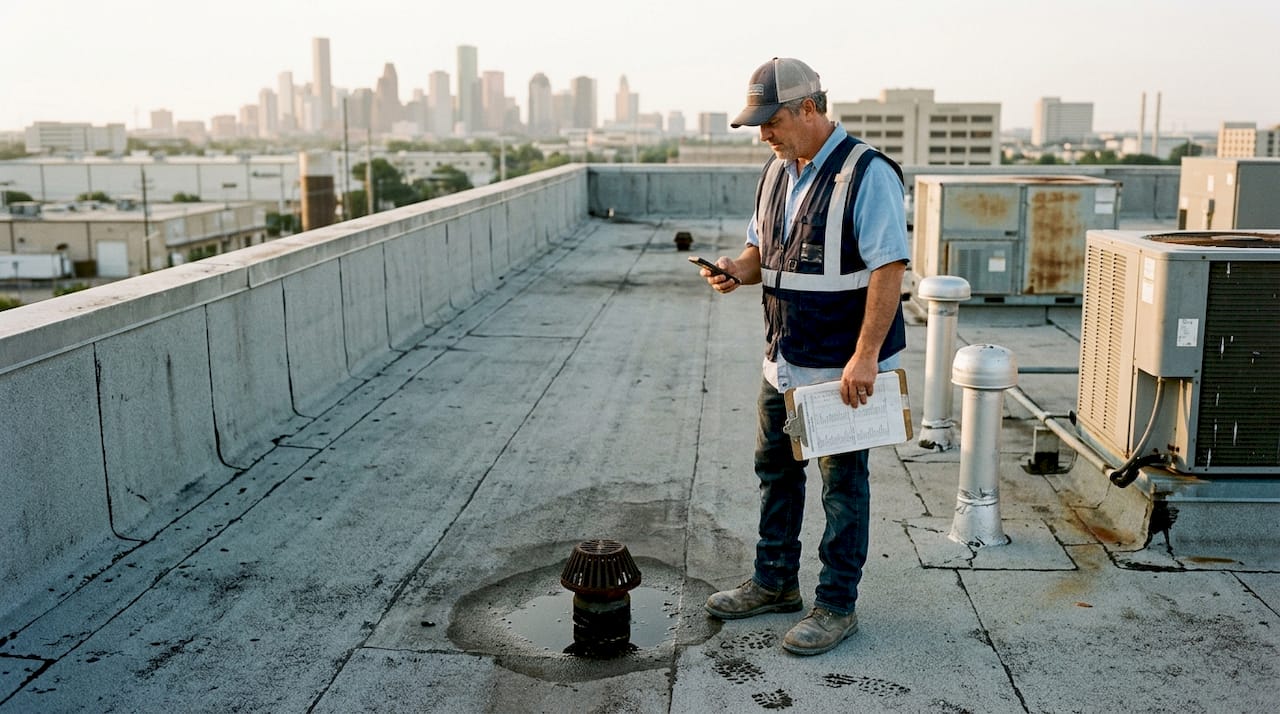
Successful commercial property management starts with knowing what to look for during routine roof inspections. Visual signs provide your first line of defense against costly damage. Walk your roof quarterly to check for surface deterioration, leaks, and pooling water that signal developing problems. Pay special attention after severe weather events, which are common across Texas.
Texas climate puts exceptional stress on commercial roofing systems. Intense UV exposure breaks down protective coatings and membrane layers over time. Summer temperatures exceeding 100 degrees cause expansion and contraction cycles that weaken seams and flashing connections. Spring hailstorms create punctures and impact damage that compromise waterproofing. These environmental factors mean Texas commercial roofs typically show wear patterns faster than roofs in milder climates.
Document everything you observe during inspections. Take dated photographs of suspicious areas, measure ponding water depth, and note any interior signs like water stains on ceilings or walls. This documentation helps roofing professionals assess whether problems are progressing and provides valuable records for insurance claims. Create a simple inspection checklist that includes examining membrane surfaces, checking all penetrations and flashing, inspecting drainage systems, and looking for debris accumulation.
Pro Tip: Schedule inspections in early morning when temperatures are cooler and you can safely walk the roof surface. Bring a tape measure to document ponding water areas that haven’t drained within 48 hours after rain.
Physical symptoms inside your building often reveal roof problems before exterior damage becomes obvious. Water stains, musty odors, or visible mold growth indicate moisture penetration that requires immediate attention. Check around HVAC units, skylights, and roof edges where leaks commonly develop first. Even minor interior moisture signs can indicate significant hidden damage within roof layers or insulation.
Top common commercial roof problems in Texas
Membrane damage represents the most frequent issue affecting commercial roofing systems across Texas. Blistering occurs when moisture or air becomes trapped beneath the membrane surface, creating bubbles that eventually rupture and expose underlying layers. Splits and cracks develop from thermal stress as roofing materials expand during hot days and contract overnight. These openings allow water infiltration that damages insulation and structural decking. TPO and EPDM single-ply membranes are particularly vulnerable to UV degradation without proper maintenance.
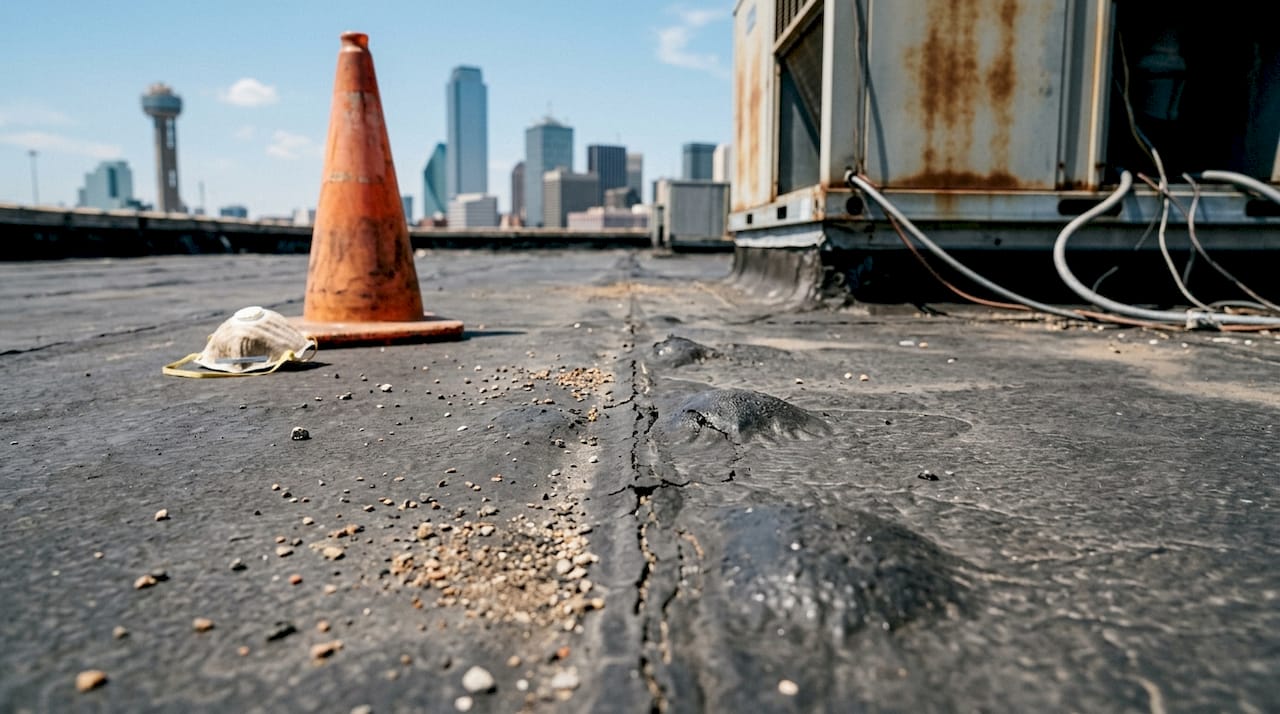
Ponding water creates serious structural risks that many property managers underestimate. Any area holding water for more than 48 hours after rainfall qualifies as ponding. This standing water accelerates membrane deterioration, adds excessive weight to roof structures, and provides breeding grounds for algae and vegetation growth. Poor drainage design, clogged drains, or sagging roof sections typically cause ponding problems. The weight of accumulated water can exceed design load limits and lead to catastrophic roof collapse in extreme cases.
Flashing and seam failures account for approximately 70% of commercial roof leaks. Flashing protects vulnerable transition points where roofing membranes meet walls, penetrations, or roof edges. Texas temperature extremes cause flashing materials to expand and contract repeatedly, breaking sealant bonds and creating gaps. Seam failures occur when adhesive deteriorates or mechanical fasteners work loose. Wind-driven rain easily penetrates these openings. Regular inspection of all flashing and seams helps catch problems before water enters the building.
Weather damage from hail and high winds presents unique challenges for Texas commercial properties:
- Hailstones create punctures, cracks, and bruising that compromise membrane integrity
- Wind uplift tears membranes from attachment points and peels back roof edges
- Flying debris during storms damages roof surfaces and penetrates protective layers
- Rapid temperature changes after storms stress already weakened materials
Pro Tip: After any hail event, inspect your roof within 72 hours and document all damage with photographs. Many insurance policies have strict claim filing deadlines.
Aging roofs combined with deferred maintenance create compounding problems. Most commercial roofing systems have expected lifespans between 15 and 30 years depending on material type and maintenance quality. As roofs age, minor issues multiply and repair costs increase. Brittle membranes crack more easily, fasteners corrode, and protective coatings wear away. Property managers who postpone routine maintenance to save money typically face much higher costs when multiple problems require simultaneous attention or emergency repairs become necessary.
Comparing severity and repair options for commercial roof problems
Understanding when repairs suffice versus when replacement becomes necessary requires evaluating multiple factors beyond visible damage. Roof age provides your starting baseline. A 10-year-old roof with localized membrane damage usually benefits from targeted repairs. That same damage on a 25-year-old roof may indicate systemic deterioration where replacement delivers better long-term value. Material type also influences repair feasibility since some roofing systems accept patches and modifications better than others.
| Problem type | Repair option | Replacement indicator | Cost factor |
|---|---|---|---|
| Small membrane tears | Patch with compatible material | Multiple tears across roof surface | Low to moderate |
| Isolated leak | Seal flashing and seams | Leaks in multiple locations | Low |
| Ponding water | Improve drainage, add tapered insulation | Structural sagging, widespread ponding | Moderate to high |
| Hail damage | Replace damaged sections | Damage exceeds 25% of roof area | Varies by extent |
| Aging membrane | Coating system restoration | Brittleness, widespread cracking | Moderate |
Damage extent determines whether repairs make financial sense. Industry professionals generally recommend replacement when damage affects more than 25% of total roof area. Repairing numerous small problems across a large roof often costs nearly as much as replacement while providing only short-term solutions. Calculate the cost per square foot for repairs versus replacement, then factor in how long each option extends roof life. Replacement typically offers 15 to 25 additional years of protection, while repairs might add only 3 to 5 years.
Common repair techniques include membrane patching, seam reinforcement, flashing replacement, and coating applications. These targeted interventions work well for localized problems on otherwise sound roofing systems. Patches must use materials compatible with existing membranes and require proper surface preparation for lasting adhesion. Coating systems can extend roof life by 5 to 10 years when applied to roofs with minimal existing damage. These coatings provide new UV protection and seal minor imperfections.
Replacement advantages become clear when considering total lifecycle costs. New roofing systems include updated materials with better weather resistance, improved energy efficiency through enhanced insulation, and comprehensive warranties covering both materials and labor. Modern commercial roofing options like TPO and metal roofs offer superior durability against Texas weather compared to older technologies. The disruption and expense of replacement pays dividends through decades of reliable performance and lower maintenance requirements.
Choosing the right action: repair or replacement guidance
Assessing roof age and damage severity together provides your decision framework. Start by reviewing installation records to determine exact roof age and compare it against expected lifespan for your roofing material. Next, have a qualified roofing professional conduct a thorough inspection documenting all problems. Ask for a written assessment that categorizes issues as minor, moderate, or severe. This professional evaluation removes guesswork and provides objective data for your decision.
Warranty coverage significantly impacts repair versus replacement economics. Review your existing warranty terms to understand what remains covered. Many manufacturer warranties become void if unauthorized repairs are performed or if required maintenance was neglected. Some warranties offer prorated coverage that reduces replacement costs on older roofs. Insurance considerations also matter since policies typically cover sudden damage from storms but exclude gradual deterioration from poor maintenance. Document all damage immediately and understand your policy’s claim procedures and deadlines.
Preventive maintenance strategies deliver the best return on investment for commercial roofing systems. Implement a program including:
- Quarterly visual inspections by trained personnel
- Annual professional inspections with detailed reports
- Immediate debris removal and drain cleaning
- Prompt repair of minor issues before they expand
- Regular resealing of penetrations and flashing
- Coating reapplication on schedule per manufacturer recommendations
Pro Tip: Budget 1% to 2% of replacement cost annually for preventive maintenance. This modest investment typically doubles roof lifespan and prevents emergency repair expenses.
Full replacement becomes the smarter long-term choice when repair costs approach 50% of replacement cost, when your roof exceeds 75% of expected lifespan, or when you face recurring problems despite recent repairs. Replacement also makes sense when planning other building improvements since coordinating projects reduces overall disruption and cost. Modern roofing systems offer energy savings through reflective surfaces and better insulation that can offset replacement costs over time through lower utility bills. Consider replacement an investment in property value and operational reliability rather than just an expense.
Expert commercial roof replacement and repair in Texas
Protecting your commercial property requires partnering with roofing professionals who understand Texas weather challenges and building requirements. Whether you need targeted repairs or complete system replacement, working with experienced contractors ensures quality workmanship and materials that withstand intense heat, severe storms, and demanding conditions.
Mister ReRoof delivers comprehensive commercial roofing solutions across Texas including shingle roof replacement in Sugar Land, flat roof replacement in El Campo, and metal roof replacement in Victoria. Their team specializes in TPO, EPDM, metal, and modified bitumen systems designed for commercial applications. Every project includes detailed assessment, transparent pricing, quality materials, and installation backed by solid warranties. Contact Mister ReRoof today for a free commercial roof evaluation and discover how professional roofing services protect your property investment and business operations.
Frequently asked questions
What are the most common commercial roof problems in Texas?
The most frequent issues include membrane blistering from trapped moisture, ponding water caused by poor drainage, damaged or deteriorated flashing around penetrations, and weather damage from hail and high winds. Regular inspections help identify these problems early before they require expensive emergency repairs.
How can I prevent commercial roof problems before they get severe?
Implement quarterly visual inspections to catch early warning signs like small cracks or loose flashing. Keep drains clear of debris, remove standing water within 48 hours, and address minor repairs immediately. Following a structured maintenance program extends roof life significantly and prevents small issues from becoming major failures.
When is it time to replace my commercial roof instead of repairing it?
Replacement becomes necessary when damage exceeds 25% of roof area, when you face recurring leaks despite recent repairs, or when your roof surpasses 75% of its expected lifespan. Multiple problems appearing simultaneously usually indicate systemic deterioration where replacement delivers better value than continued repairs.
What should I consider when choosing a roofing material for Texas commercial buildings?
Prioritize materials proven to withstand extreme heat, hail impact, and high winds common across Texas. Evaluate maintenance requirements since some systems need more frequent attention than others. Consider energy efficiency through reflective surfaces that reduce cooling costs. Compare total lifecycle costs including installation, maintenance, and expected lifespan when reviewing different commercial roofing options.