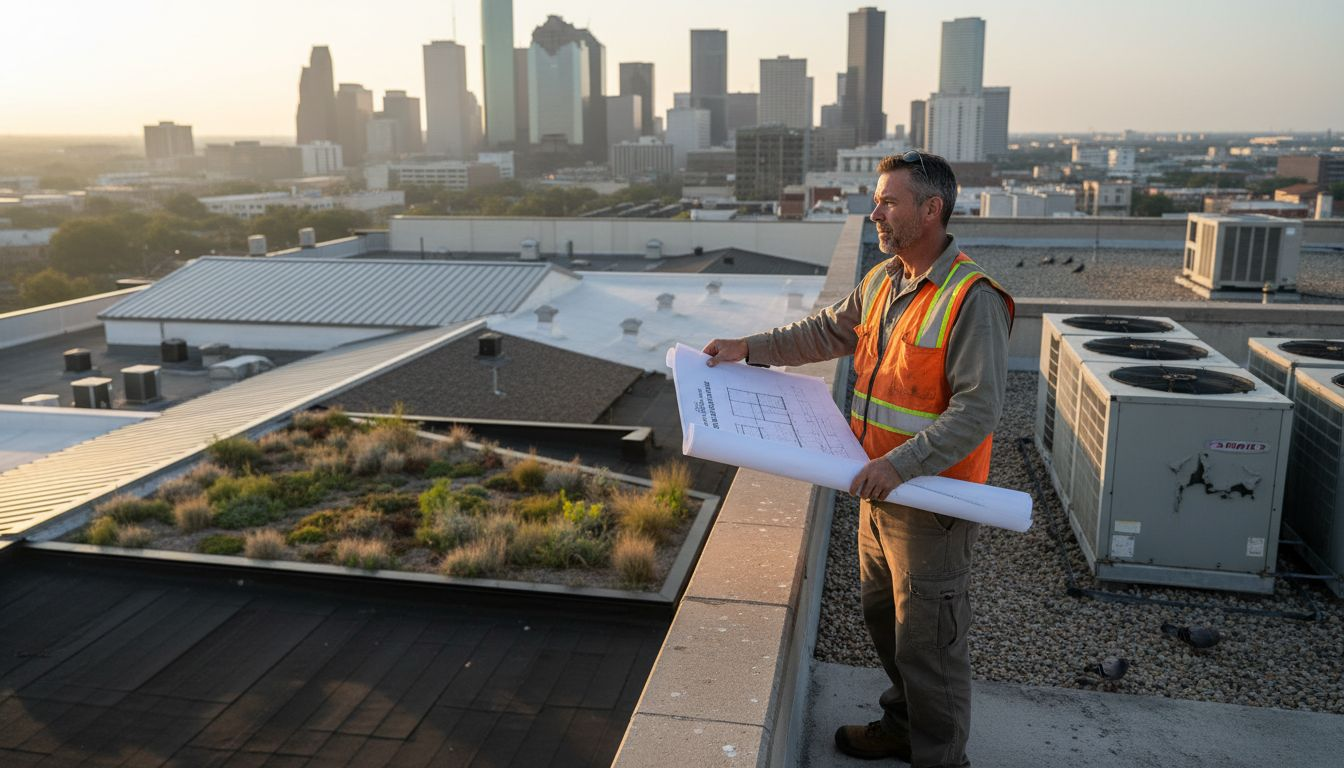
Protecting your commercial property in Houston can be a real challenge with the city’s intense heat, frequent storms, and threat of hail damage. Picking the wrong roofing system can mean costly repairs, energy waste, and even business interruptions when the weather turns severe. You need solutions that offer real strength, durability, and lasting value—especially when your building’s roof is tested year after year.
This guide reveals which roofing systems truly stand up to Houston’s climate. You’ll discover the key advantages each option brings, from weather resistance and energy efficiency to maintenance savings. Get ready to learn which reliable choices give your property long-term protection and meet your budget needs. The insights ahead will help you make smarter, more confident decisions for your building’s future.
Table of Contents
- 1. Metal Roofing: Strong and Weather-Resistant
- 2. TPO Roofing: Energy-Efficient and Cost-Effective
- 3. Built-Up Roofing (BUR): Durable and Multi-Layered
- 4. Modified Bitumen Roofing: Flexible and Impact-Resistant
- 5. EPDM Roofing: Reliable for Large Flat Roofs
- 6. Shingle Roofing: Versatile for Smaller Commercial Buildings
- 7. Green Roofing: Environmentally Friendly for Urban Spaces
Quick Summary
| Key Message | Explanation |
|---|---|
| 1. Metal Roofing Offers Exceptional Durability | Metal roofs withstand intense weather, lasting 40 to 70 years, significantly outperforming traditional roofing materials in Houston’s climate. |
| 2. TPO Roofing Provides Cost Savings | With energy savings of 10 to 30 percent and lower maintenance needs, TPO is both practical and budget-friendly for commercial properties. |
| 3. Built-Up Roofing Ensures Long-Term Protection | BUR’s multi-layer system enhances durability against hail and impact, providing a life expectancy of 20 to 40 years with proper maintenance. |
| 4. Green Roofing Improves Energy Efficiency | Green roofs absorb stormwater and reduce urban heat effects, leading to lower cooling costs and enhanced environmental benefits. |
| 5. EPDM Roofing Allows for Easy Repairs | EPDM’s flexibility simplifies maintenance, and its extensive lifespan of 30 to 50 years provides stable long-term planning for facility managers. |
1. Metal Roofing: Strong and Weather-Resistant
Metal roofing stands out as one of the most reliable options for Houston commercial properties facing intense heat, frequent storms, and hail damage. These systems use metal panels or shingles that deliver exceptional durability and can stand up to the punishing weather conditions that define our region.
When Houston’s summer thunderstorms roll in with 70+ mph winds and golf ball sized hail, your roof faces real consequences. Metal roofing performs exceptionally well under these pressures because of its inherent strength. Unlike traditional materials that degrade under UV exposure or crack when temperature swings hit, metal panels flex with the wind and resist impact damage. Your roof won’t just survive severe weather, it actively protects your building and the operations inside.
The real advantage comes from understanding what makes metal roofs so effective. Metal panels offer wind resistance that meets or exceeds 140+ mph ratings depending on the fastening system and profile selected. More importantly, the metal roofing durability and weather resistance characteristics make these systems ideal for warehouses, office buildings, and industrial facilities across Houston. Your building gains protection that lasts 40 to 70 years, far exceeding most other roofing materials.
Energy efficiency represents another significant benefit for facility managers watching monthly utility costs. Metal surfaces reflect solar radiation rather than absorbing it like dark shingles or tar based systems. During Houston’s brutal summers when your HVAC system runs constantly, this reflective quality measurably reduces cooling costs. Some commercial property owners report 10 to 25 percent energy savings compared to traditional roofing, which directly impacts your bottom line.
For facilities managers considering a roof replacement, metal roofing also means reduced maintenance demands. Metal doesn’t develop the leaks, moss growth, or debris accumulation issues that plague other materials. You’ll spend less time and money on repairs, and fewer emergency calls about leak damage during storms. This is particularly valuable for properties with extensive roof areas or complex architectural designs.
Implementing a metal roofing system requires working with contractors who understand the specific installation requirements for Houston’s climate. Proper fastening, ventilation, and insulation create the weather resistant envelope you need. Insulated metal panels combine metal skins with insulating foam cores that deliver superior protection and faster installation compared to conventional metal roofing approaches. These panels span wider distances, which means fewer support points and greater interior flexibility for your commercial space.
Pro tip: Request a wind rating inspection specific to your facility’s location and roof profile before making your final selection, as Houston’s exposure levels vary significantly based on building height and surrounding structures.
2. TPO Roofing: Energy-Efficient and Cost-Effective
TPO roofing has become one of the most practical choices for Houston commercial property owners who want reliability without breaking the budget. Thermoplastic polyolefin membranes offer a straightforward solution that balances durability, energy savings, and affordability in a single system.
What makes TPO stand out from other flat roofing options comes down to how the material responds to Houston’s extreme conditions. Unlike older roofing membranes that degraded under intense UV exposure and heat, TPO membranes demonstrate strong real-world performance even after years of exposure to our region’s punishing summer temperatures. The membrane was specifically engineered to address previous shortcomings in heat resistance and UV degradation, which means your investment holds up over decades rather than requiring early replacement.
The energy efficiency aspect directly impacts your operating costs month after month. TPO’s white or light-colored surface reflects solar radiation instead of absorbing it into your building. During summer months when your air conditioning system works overtime, this reflective quality keeps interior temperatures lower without forcing your HVAC equipment to run harder. Property managers report measurable reductions in cooling costs, typically ranging from 10 to 30 percent depending on building size and insulation levels. Over a 20-year roof lifespan, these savings accumulate significantly.
Cost-effectiveness goes beyond just energy savings. TPO roofing requires less maintenance compared to traditional tar based or rubber systems. The membrane resists ponding water, dirt accumulation, and mold growth that plague other flat roof materials. You won’t need expensive maintenance contracts or frequent repairs during Houston’s rainy season. Installation costs also run lower than metal roofing or multiple ply systems, making TPO an attractive option when budget constraints matter.
For facility managers overseeing multiple properties or working with tight capital budgets, TPO offers practical flexibility. The membrane comes in standard widths that minimize seams, reducing potential leak points. Installation crews can complete the work quickly, meaning less disruption to your business operations. The lower initial investment compared to alternative systems means you can allocate funds to other facility improvements or operational needs.
Durability and longevity represent another crucial advantage for your long-term planning. Quality TPO systems last 20 to 30 years with proper installation and routine maintenance. This lifespan gives you predictable replacement cycles for budgeting purposes, unlike older materials that fail unexpectedly and create emergency situations. The reliable performance means fewer surprise calls from your maintenance team about roof leaks or weather damage.
When evaluating TPO for your facility, consider the thickness of the membrane you select. Thicker membranes provide better puncture resistance and longer service life, though they cost slightly more upfront. For warehouses, manufacturing facilities, or properties with foot traffic on the roof, investing in a thicker membrane pays dividends through reduced maintenance issues and extended lifespan.
Pro tip: Request TPO samples exposed to Houston weather for at least three years when comparing contractor bids, as this verifies the specific product performs well in our climate before committing to a full installation.
3. Built-Up Roofing (BUR): Durable and Multi-Layered
Built-Up Roofing represents one of the time-tested solutions that commercial property owners in Houston have relied on for decades. This traditional approach creates an exceptionally thick and protective membrane through multiple alternating layers of asphalt and reinforcing felts, resulting in a roofing system that handles our region’s demanding weather.
Understanding how BUR works helps explain why it remains popular for commercial buildings. The system layers asphalt with embedded felts in a carefully controlled process that builds a waterproof barrier from the bottom up. Each layer adds strength and redundancy to the overall structure. When one layer faces damage or wear, the underlying layers continue protecting your building. This multi-layered approach means your roof does not depend on a single membrane staying intact to keep water out. The thick final membrane that results from this layering process can be several inches thick, creating substantial physical protection against impacts and penetration.
The durability factor makes BUR attractive when you want to invest in a roofing system with exceptional longevity. Well-installed BUR systems typically last 20 to 40 years depending on maintenance and environmental exposure. The asphalt-based layers actually improve with age, becoming more cohesive over time rather than degrading like some modern materials. For facility managers evaluating the total cost of ownership over decades, this extended lifespan provides reliable budgeting predictability.
Where BUR truly shines against Houston’s weather challenges becomes apparent during severe storms. BUR roofs demonstrate strong resistance to hail and impact damage due to their thick construction and layered composition. When golf ball sized hail strikes your roof, the multiple plies absorb the impact force across the entire system. Single-membrane systems might puncture or tear, but BUR’s redundancy means damage to the top layer does not compromise the waterproofing. Testing shows that commercial properties with BUR systems experience significantly fewer weather-related claims compared to other flat roofing options.
Maintenance requirements for BUR deserve attention when planning your facility budget. The system requires proper drainage and regular inspections to catch any issues early. Gravel or stone that protects the asphalt needs occasional raking to prevent water pooling. Unlike some newer membranes, BUR cannot simply sit without attention. However, when properly maintained, the system remains reliable and cost-effective. Many property owners find that establishing a routine maintenance schedule prevents expensive emergency repairs and extends the roof’s useful life significantly.
Installation matters considerably with BUR systems. Temperature control during the installation process directly affects long-term durability and performance. Hot weather affects how the asphalt sets and bonds with the reinforcing felts. Professional contractors understand these requirements and plan installations carefully around Houston’s seasonal conditions. Choosing experienced installers who understand BUR specifications ensures your investment performs as intended.
For properties with flat roof designs or commercial structures with limited pitch, BUR offers practical advantages over sloped roofing systems. The system adapts well to complex roof layouts with multiple penetrations and transitions. Equipment mounted on the roof integrates more easily with a BUR base compared to single-membrane systems that require careful flashing details.
Pro tip: Schedule BUR roof inspections every 12 months to identify and repair minor damage before it compromises the underlying layers, which typically costs far less than waiting for visible water leaks inside your building.
4. Modified Bitumen Roofing: Flexible and Impact-Resistant
Modified bitumen roofing brings together the proven durability of traditional bitumen with modern polymer technology to create a flexible and highly impact-resistant solution. This hybrid approach addresses the limitations of older bitumen systems while delivering exceptional performance in Houston’s demanding climate.
The key to understanding modified bitumen lies in how polymers transform the material’s behavior. Manufacturers blend bitumen with polymers such as SBS or APP to enhance flexibility and impact resistance. These polymer modifications allow the membrane to expand and contract with temperature swings without becoming brittle or cracking. Traditional asphalt roofs can develop stress cracks when Houston’s summer heat causes materials to expand, then contract sharply during cool mornings. Modified bitumen resists this thermal stress because the polymer network allows movement without compromising structural integrity. Your roof maintains flexibility across a wider temperature range, which directly translates to fewer maintenance issues and longer service life.
When hail strikes your commercial roof, modified bitumen proves its value immediately. The polymer enhanced membrane absorbs impact force more effectively than single-ply systems or traditional bitumen. Testing confirms that modified bitumen roofs exhibit high impact resistance against hail, making them particularly suitable for commercial buildings in severe weather regions. The flexibility allows the material to deform slightly under impact and then return to its original shape, rather than cracking or tearing. This capacity to absorb punishment from weather events means your facility experiences fewer emergency repairs and insurance claims.
Installation flexibility represents another practical advantage for facility managers. Modified bitumen roofing can be installed using multiple methods depending on your specific needs and building characteristics. Adhesive application works well for some situations, while hot asphalt installation provides alternatives for other projects. Some contractors use torch application, which creates strong seams and rapid installation progress. This flexibility in installation methods means you can select the approach that best fits your building’s design, timeline, and budget constraints. Professional contractors understand which installation method works best for different roof configurations and weather exposure.
The multi-ply construction of modified bitumen roofing provides built-in redundancy that protects your investment. Like BUR systems, modified bitumen consists of multiple layers that work together. If the top ply develops minor damage, underlying plies continue protecting your building from water infiltration. This redundancy means small problems do not become emergency roof leaks. Many property owners appreciate this security knowing their building has backup protection against weather damage.
Compliance with building codes matters for new construction or major renovations in Houston. Modified bitumen roofing meets International Building Code standards and performs to specifications required for commercial properties. This compliance simplifies the permitting process and ensures your roof meets all regulatory requirements for your property type and location.
Long-term durability under Houston’s variable weather conditions represents a significant advantage. The polymer modifications increase the roof’s ability to accommodate thermal expansion and contraction while retaining strength. Year after year, your modified bitumen roof handles temperature swings, UV exposure, and severe weather events. Property owners often find that this combination of flexibility and strength extends the roof’s useful life compared to less sophisticated systems.
Pro tip: When comparing modified bitumen installation quotes, ask contractors specifically whether they use SBS or APP polymer modifications, as this influences the roof’s flexibility and performance characteristics in different temperature ranges.
5. EPDM Roofing: Reliable for Large Flat Roofs
EPDM roofing stands as one of the most dependable choices for commercial property owners managing large flat roof surfaces. This synthetic rubber membrane has earned its reputation through decades of reliable performance in diverse climates, including Houston’s demanding conditions.
Understanding what makes EPDM special begins with its material composition. Ethylene propylene diene monomer creates a synthetic rubber membrane that remains flexible across wide temperature ranges. Unlike materials that become brittle in cold or overly soft in extreme heat, EPDM maintains consistent performance characteristics year-round. This flexibility matters tremendously in Houston where summer temperatures soar above 95 degrees Fahrenheit, then cool considerably at night. The membrane expands and contracts with these temperature swings without developing stress cracks or losing its ability to shed water.
The elasticity of EPDM provides practical advantages when your building experiences settling or minor structural movement. Many large commercial buildings shift slightly over time due to soil conditions or structural loads. EPDM’s rubber-like properties allow accommodation of this movement without compromising the waterproof seal. Single-ply membranes with less flexibility might crack or separate at seams when buildings move, but EPDM adapts without failure.
Weather resistance represents another core strength that keeps EPDM membranes performing reliably. The material demonstrates exceptional resistance to heat, ozone, and ultraviolet exposure. Houston’s intense sun exposure would degrade many roofing materials over time, but EPDM membranes have proven track records for long-term performance with durability that resists environmental degradation. Your roof continues protecting your building year after year without the accelerated deterioration you might see with less robust materials.
Installation flexibility makes EPDM particularly attractive for facility managers with specific building needs. EPDM can be installed fully adhered to the roof deck using approved adhesives, mechanically attached with fasteners and plates, or ballasted with gravel or pavers. This versatility means contractors can select the best installation method for your particular building configuration. Buildings with limited structural capacity might benefit from ballasted systems that avoid fastening into the deck. Properties requiring maximum wind resistance might prefer fully adhered installations. Mechanically attached systems offer a middle ground that works well for many commercial applications.
For large flat roofs covering warehouse spaces, manufacturing facilities, or office buildings, EPDM provides economical coverage. The material comes in large sheets with widths up to 50 feet, which means fewer seams across massive roof areas. Fewer seams directly translate to reduced potential leak points and faster installation progress. Contractors can cover significant square footage in a single day, minimizing disruption to your business operations.
Repair and maintenance of EPDM roofing proves straightforward compared to more complex roofing systems. When damage occurs, patches apply easily using adhesives and additional EPDM material. Contractors can make repairs without extensive drying time or special equipment. This ease of repair means small problems get fixed quickly before they develop into larger issues. Property owners appreciate knowing that maintenance costs remain manageable throughout the roof’s service life.
Environmental considerations appeal to property owners focused on sustainability. EPDM roofing carries a low carbon footprint among single-ply roofing systems and demonstrates responsiveness to environmental concerns. The material’s longevity means fewer replacement cycles over decades, which reduces waste and environmental impact compared to short-lived alternatives.
Durability expectations for EPDM typically range from 30 to 50 years with proper maintenance. This extended service life provides predictable budgeting for facility managers planning long-term capital expenditures. Unlike materials that fail prematurely and force emergency replacement decisions, EPDM’s reliability allows orderly planning and scheduled replacement when the time comes.
Pro tip: If you have existing EPDM roofing, maintain clear drainage by inspecting gutters and downspouts regularly, as pooled water reduces the membrane’s lifespan even though EPDM resists water infiltration.
6. Shingle Roofing: Versatile for Smaller Commercial Buildings
Asphalt shingle roofing offers a practical and cost-effective solution for smaller commercial buildings that need reliable protection without the expense of specialized flat roofing systems. For boutique retail spaces, professional offices, or smaller commercial structures, shingles deliver solid performance at budget-friendly prices.
The appeal of shingle roofing for smaller commercial properties starts with affordability and accessibility. Asphalt shingles cost significantly less than metal roofing, TPO membranes, or complex multi-ply systems. Installation proceeds quickly since contractors are familiar with standard shingle application techniques used across residential and commercial projects. This familiarity means faster project timelines and reduced labor costs. Your smaller commercial building can get a quality roof replacement without the capital expense required for premium roofing systems.
Versatility extends beyond just pricing. Shingles come in multiple styles, colors, and textures that allow you to match your building’s aesthetic requirements. A professional office might choose traditional charcoal gray shingles for a conservative appearance, while a retail storefront could select architectural shingles in warmer tones to enhance curb appeal. This aesthetic flexibility matters when your roof directly influences how customers perceive your business. Unlike flat roofing membranes that offer limited visual options, shingles provide design choices that support your brand image.
Weather resistance for asphalt shingles has improved significantly over recent decades. Modern shingles are specifically designed for durability and resistance to weather conditions typical in Houston and surrounding areas. The shingles withstand wind exposure, rain penetration, and UV degradation. Quality installation ensures water sheds effectively from your roof, protecting the building structure and contents below. Proper installation and routine maintenance enhance shingle lifespan, making them a reliable choice that requires reasonable care to perform well.
For smaller buildings with existing roofing, a recover option can reduce costs and disruption. In some cases, contractors can install new shingles directly over existing roofing without removing the old material. This approach eliminates disposal costs and minimizes business interruption during the project. The existing layer provides additional insulation and protection, which some property owners find advantageous. However, building codes and structural capacity must be assessed before proceeding with a recover installation.
Maintenance demands for shingle roofing remain manageable compared to flat roof systems. Regular inspections catch damaged or missing shingles before water infiltration becomes problematic. Cleaning gutters prevents water backup that could damage the roof edge. These straightforward maintenance tasks keep your roof performing well throughout its service life. Property managers appreciate that shingle roof maintenance does not require specialized equipment or professional services for routine care.
Roof pitch accommodates shingle installation naturally. Steeper slopes shed water efficiently and prevent ponding, which enhances shingle performance. If your smaller commercial building has pitched roof architecture, shingles work exceptionally well. Buildings designed with architectural peaked roofs or multiple slope angles benefit from shingle systems that follow the roof’s natural contours.
Service life expectations for quality asphalt shingles typically range from 15 to 25 years depending on climate exposure and maintenance. This timeframe allows reasonable planning cycles for facility managers scheduling replacement projects. Unlike materials with unpredictable failure patterns, shingles provide fairly consistent performance windows. You can budget for replacement knowing approximately when the system will need attention.
When evaluating shingle roofing for your commercial building, understand that asphalt shingle systems are designed for durability and weather resistance through proper installation methods and quality materials. Select contractors experienced with commercial shingle applications, not just residential work. The installation techniques differ slightly between residential and commercial applications, and experienced contractors understand these distinctions.
Pro tip: For smaller commercial buildings in high-wind areas, request impact-resistant or architectural-grade shingles specifically engineered for wind uplift and hail resistance, which protects your investment during severe Houston storms.
7. Green Roofing: Environmentally Friendly for Urban Spaces
Green roofing represents an innovative approach to commercial roofing that transforms your building’s roof into a living, breathing ecosystem while providing tangible benefits for the environment and your bottom line. For Houston property owners committed to sustainability, green roofs offer a forward-thinking solution that goes far beyond traditional roofing.
Understanding green roof construction helps explain how they deliver multiple benefits simultaneously. These systems layer waterproofing, root barriers, drainage systems, and growing medium to create vegetated roof spaces where plants thrive. The waterproofing layer protects your building just like conventional roofing. The root barrier prevents plant roots from penetrating the structure. The drainage system manages water flow, and the growing medium provides soil for vegetation. Plants then grow across this engineered platform, creating a living roof surface that transforms your building’s exterior.
The environmental benefits make green roofs increasingly attractive for urban commercial properties. Plants absorb rainwater that would normally run off into overwhelmed drainage systems, reducing stormwater management burden on city infrastructure. This is particularly valuable in Houston where intense summer thunderstorms create rapid runoff that strains drainage capacity. Your green roof becomes part of the solution, managing water naturally through plant absorption and evapotranspiration. The vegetation also improves air quality by filtering pollutants and releasing oxygen into the urban environment. Plants support biodiversity by providing habitat for birds, insects, and pollinators in an urban setting where green space is limited.
Urban heat mitigation represents another crucial advantage that directly impacts your facility costs. Houston’s urban areas experience heat island effects where dark roofing materials absorb solar radiation and radiate heat back into the atmosphere. This drives up cooling costs for buildings and raises ambient temperatures throughout the city. Green roofs reduce this effect dramatically. Plants and soil reflect and absorb solar radiation differently than dark membranes, keeping roof surfaces cooler. This reduces the heat your building absorbs, lowering air conditioning demands during peak summer months. Some property owners report 15 to 30 percent reductions in cooling costs when green roofs replace conventional roofing.
Energy efficiency improvements extend beyond just cooling costs. The vegetation and growing medium provide additional insulation value, reducing heating requirements during cooler months. The overall thermal performance of your building improves, which translates to lower energy consumption year-round. This efficiency improvement appeals to facility managers evaluating total cost of ownership and operating expenses.
Building code alignment supports green roofing adoption in Houston. Houston’s adoption of new building codes includes provisions that encourage sustainable practices such as green roofing. These codes aim to enhance energy efficiency, reduce water runoff, and improve urban climate resilience. Green roofs contribute to broader city strategies that mitigate heat islands and manage stormwater in urban commercial developments. Choosing a green roof positions your property in compliance with forward-thinking environmental standards while contributing to Houston’s sustainability goals.
Maintenance requirements differ from traditional roofing and require careful planning. Your green roof needs irrigation during dry periods to keep plants healthy. Periodic weeding prevents unwanted vegetation from dominating the plantings. Nutrient management keeps the growing medium productive. Some property owners hire specialized contractors for green roof maintenance, while others incorporate it into existing landscaping services. The maintenance commitment is real but manageable when properly planned and budgeted.
Structural capacity must be assessed before installing a green roof. The growing medium, water saturation, and plants create additional weight on your building. Older structures or buildings with limited load capacity might require structural reinforcement before installation. Modern buildings and those designed with green roof potential typically handle the load without modifications. Your contractor will evaluate structural requirements during the planning phase.
Aesthetic and property value impacts appeal to many property owners. Green roofs transform building exteriors from industrial looking machinery and dark surfaces to vibrant living landscapes. This visual transformation enhances property appeal and can positively influence tenant attraction and retention. Some studies suggest that properties with green features command premium rental rates in competitive markets.
Long-term durability of green roofs compares favorably with conventional roofing. The vegetation actually protects the underlying waterproofing membrane from UV exposure and extreme temperature swings. This protection can extend the life of the membrane significantly. Well-maintained green roofs routinely last 30 to 40 years, with the roofing system potentially lasting even longer when the membrane remains protected.
Pro tip: Start with a smaller green roof section to test your building’s structural capacity, maintenance capabilities, and irrigation systems before committing to a full roof conversion, which reduces risk and provides valuable operational experience.
Below is a comprehensive table summarizing the main roofing options discussed throughout the article, highlighting their features, advantages, and considerations.
| Roofing Type | Features | Advantages | Considerations |
|---|---|---|---|
| Metal Roofing | Durable panels with wind resistance above 140 mph | Long lifespan of 40–70 years; energy savings up to 25% | Requires experienced contractors for proper installation |
| TPO Roofing | Thermoplastic Polyolefin membranes with high heat resistance | Reflective surface lowers cooling costs; economical installation | Thickness impacts durability and cost |
| Built-Up Roofing (BUR) | Multiple asphalt layers reinforced with felts | Resilient against hail; lifespan of 20–40 years | Requires consistent drainage maintenance |
| Modified Bitumen Roofing | Polymer-modified surfaces for flexibility | Superior impact resistance; adapts to temperature shifts | Choose suitable polymer type (SBS or APP) |
| EPDM Roofing | Synthetic rubber membrane suitable for flat roofs | Lasts 30–50 years; resistant to UV and ozone | Ensure proper drainage for optimal lifespan |
| Shingle Roofing | Asphalt shingles offering diverse aesthetic options | Affordable for smaller buildings; lifespan of 15–25 years | Suitable for pitched roofs; may require regular inspections |
| Green Roofing | Systems supporting vegetation atop rooftops | Reduces urban heat island effects; fosters biodiversity | Assess structural capacity and maintenance needs |
Protect Your Houston Commercial Property with Expert Roofing Solutions
Houston’s extreme weather demands roofing systems that offer durability, energy efficiency, and long-term protection. Whether you are considering metal roofing to withstand intense storms or exploring TPO membranes for cost-effective energy savings, Mister ReRoof understands the unique challenges Houston properties face. Our team specializes in high-quality installations designed to resist severe weather, reduce maintenance headaches, and improve your building’s overall resilience.
Choosing the right commercial roof is vital to safeguarding your investment and operations. Mister ReRoof combines local expertise with premium materials like metal, TPO, and shingle roofing tailored specifically for Houston’s climate. With decades of experience, we deliver durable roofs that stand up to hail, high winds, and Houston’s harsh sun while helping you control energy costs and maintenance challenges.
Don’t wait for storm damage or costly repairs to disrupt your business. Visit Mister ReRoof today to schedule a free roof inspection and explore our comprehensive commercial roofing services. Discover how our expert team can customize a roofing solution that meets your facility’s needs and stands the test of time in Houston’s demanding environment. Protect your building with confidence by contacting us now.
Frequently Asked Questions
What are the advantages of metal roofing for commercial properties in Houston?
Metal roofing offers exceptional durability and weather resistance, making it ideal for Houston’s intense heat and storms. To optimize your investment, consider implementing a metal roofing system for at least 40 to 70 years of protection.
How does TPO roofing save on energy costs for commercial buildings?
TPO roofing reflects solar radiation, which helps reduce cooling costs during Houston’s hot summers. To experience savings, many property owners report reductions in energy expenses by 10 to 30 percent compared to traditional roofing systems.
What maintenance is required for Built-Up Roofing (BUR) systems?
BUR systems require regular inspections and proper drainage management to prevent issues like water pooling. Schedule annual inspections to identify and address minor damages before they lead to larger problems, which can save you money on emergency repairs.
How do I choose between modified bitumen and EPDM roofing for my facility?
Both modified bitumen and EPDM offer durability and flexibility, but modified bitumen provides enhanced impact resistance. Evaluate your building’s needs, such as foot traffic or weather exposure, to determine the best option for optimal performance.
Can I install a green roof on my commercial property in Houston?
Yes, green roofs are a viable option for commercial buildings in Houston, providing environmental benefits and potential energy savings. Assess your building’s structural capacity and aim to start with a smaller section to test maintenance requirements before full installation.
