Heavy downpours and surprise storms in Houston can turn a small roof issue into a costly nightmare overnight. Ignoring the early signs of trouble often leads to major water leaks, mold growth, or even structural damage that threatens your entire home. But you are not powerless against the elements.
This guide lays out clear, practical steps to spot the most common roof problems before they spiral out of control. You will discover how clogged gutters, flashing failures, and high-wind or hail damage can impact your roof—and what you can do right now to protect your investment and avoid expensive repairs.
Get ready to learn how to identify subtle warning signs, understand which areas are most at risk, and gain quick action tips trusted by roofing experts. A little attention today can spare you thousands in preventable damage.
Table of Contents
- Leaky Roofs And How To Spot Early Signs
- Shingle Damage From High Winds And Hail
- Clogged Gutters Leading To Water Build-Up
- Flashing Failures And Preventing Roof Leaks
- Moss And Algae Growth On Houston Roofs
- Improper Roof Ventilation Issues
- Storm Damage And When To Call A Professional
Quick Summary
| Key Insight | Explanation |
|---|---|
| 1. Early Detection Saves Money | Identifying early signs of roof leaks can prevent costly water damage and extensive repairs. Regular inspections are crucial. |
| 2. Clean Gutters Are Essential | Keeping gutters free from debris prevents water build-up, which can damage your home’s foundation and structure. Regular maintenance is key. |
| 3. Regular Roof Inspections Needed | Schedule professional roof inspections after major weather events to ensure prompt assessment and repairs of potential damage. |
| 4. Flashing Integrity is Critical | Proper installation and maintenance of flashing prevent water infiltration at key roof junctions, protecting your home from leaks. |
| 5. Address Moss and Algae Growth | Regular cleaning and prevention strategies for moss and algae can prolong your roof’s lifespan and prevent structural damage. |
1. Leaky Roofs and How to Spot Early Signs
Houston homeowners know that roof leaks can quickly transform from minor nuisances into major financial nightmares. Understanding how to identify early warning signs is crucial for preventing extensive water damage and costly repairs.
Leaky roofs often start small but can escalate rapidly in Houston’s unpredictable weather conditions. Water intrusion typically begins with subtle indicators that many homeowners overlook:
- Water stains on interior ceiling or walls
- Discolored spots or bubbling paint near ceiling edges
- Musty odors in attic or upper rooms
- Visible moisture trails or drip marks
- Dark spots or greenish-black areas indicating potential mold growth
The primary culprits behind roof leaks include:
- Damaged or missing shingles
- Compromised flashing around chimneys and vents
- Clogged gutters preventing proper water drainage
- Age-related roof material deterioration
- Improperly sealed roof penetrations
Early detection can save homeowners thousands in potential repair costs.
Physical roof inspections should be conducted at least twice yearly. Look for cracked, curling, or missing shingles. Check flashings for signs of rust or separation. Pay special attention to areas around roof penetrations like chimneys, skylights, and vent pipes.
Water damage moves quickly. If you notice any warning signs, document them immediately and contact a professional roofing contractor for a comprehensive assessment.
Pro tip: Keep a moisture log and photograph any suspicious areas to track potential leak progression and provide visual evidence for professional inspection.
2. Shingle Damage from High Winds and Hail
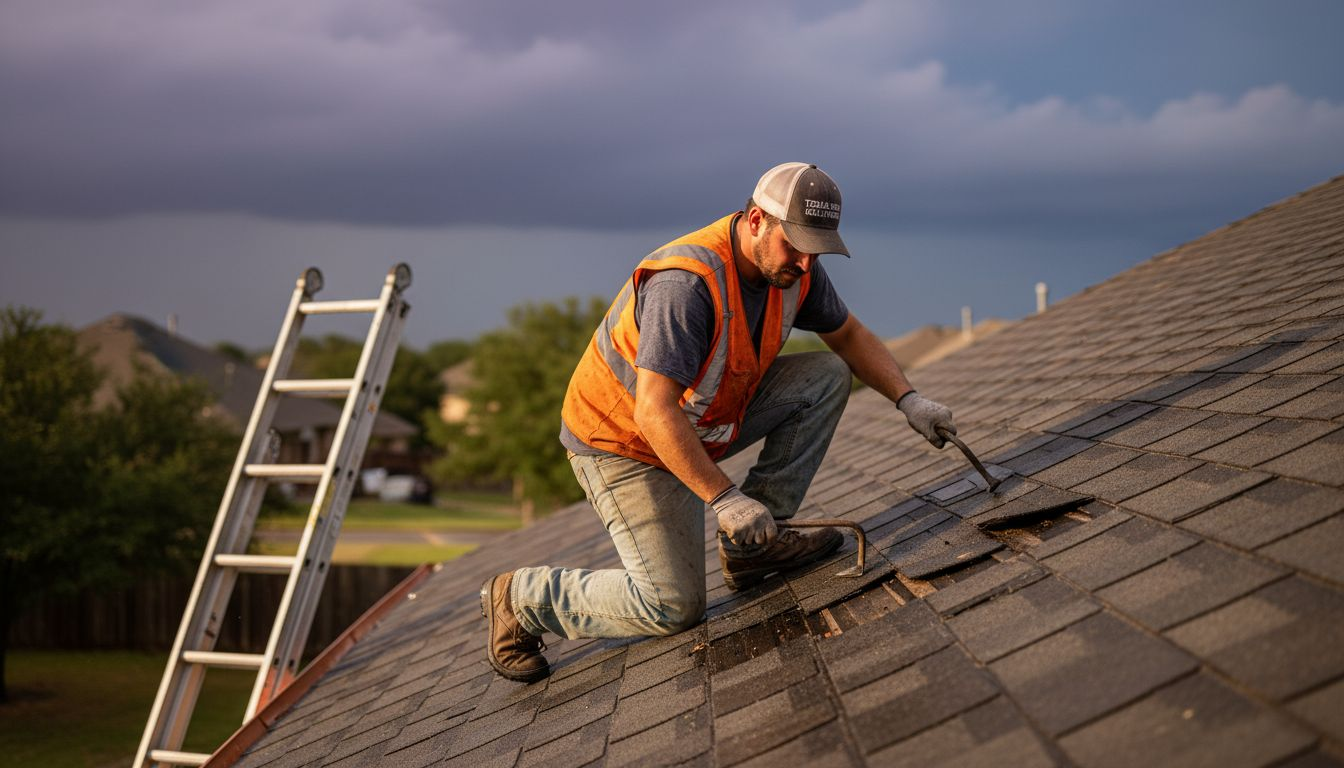
Houston homeowners face a constant battle against nature’s most destructive elements: high winds and hailstorms. These extreme weather events can wreak havoc on your roof, causing significant shingle damage that compromises your home’s primary defense against the elements.
Hail and wind damage are not just cosmetic issues. They can dramatically reduce your roof’s structural integrity and lifespan. Research shows that even sub-severe hail events can accelerate shingle aging and degrade roof durability.
Key signs of wind and hail damage include:
- Cracked or split shingles
- Granule loss on shingle surfaces
The most vulnerable areas of your roof are:
- Roof edges
- Ridge lines
- Exposed surface areas
Wind speeds above 50 miles per hour can cause significant roof damage, particularly in older roofing systems.
Wind-related shingle damage typically occurs through two primary mechanisms: direct wind lift and edge-zone stress. Shingles at the roof’s perimeter are especially susceptible because they experience higher wind pressures.
Hailstones can create small punctures and remove protective granules, which accelerates shingle deterioration. Even small hailstones measuring less than an inch can cause cumulative damage over time.
Pro tip: Schedule a professional roof inspection within 30 days after any significant hailstorm or high-wind event to catch and address potential damage early.
3. Clogged Gutters Leading to Water Build-Up
Houston homeowners often overlook one of the most critical maintenance tasks that can prevent significant property damage: keeping gutters clean and functional. Proper gutter maintenance is your first line of defense against water-related home destruction.
Clogged gutters are more than just an eyesore. They create a cascade of potential problems that can compromise your home’s structural integrity and lead to costly repairs.
How water accumulates with clogged gutters:
- Water overflows roof edges
- Moisture seeps into foundation walls
- Soil erosion around home’s perimeter
- Potential basement flooding
- Increased risk of mold growth
The most vulnerable areas affected by gutter blockages include:
- Foundation walls
- Basement interior
- Landscaping near home
- Roof edge and fascia boards
One inch of rainfall can generate up to 500 gallons of water runoff from an average roof.
Gutter blockages happen quickly in Houston’s environment. Leaves, twigs, bird nests, and debris accumulate rapidly especially after storms. This prevents proper water channeling and creates potential structural risks.
Regular inspection helps prevent water damage. Look for signs like water stains on exterior walls water pooling near foundation and visible debris in gutters.
Pro tip: Install gutter guards and schedule professional cleaning twice yearly to minimize blockage risks and protect your home’s foundation.
4. Flashing Failures and Preventing Roof Leaks
Flashing is the unsung hero of roof integrity. Preventing water penetration at critical roof junctions requires understanding how this essential component protects your home from devastating leaks.
Metal flashing serves as a critical barrier against water intrusion. Located at vulnerable points like chimneys, vents, skylights, and roof edges, these thin metal strips redirect water away from potential entry points.
Common flashing failure areas include:
- Roof valleys
- Chimney intersections
- Skylight perimeters
- Vent pipe penetrations
- Dormer windows
Potential risks of flashing failures:
- Water damage to interior walls
- Mold growth
- Structural wood rot
- Ceiling stains
- Insulation deterioration
Improperly installed flashing can compromise your entire roof’s water resistance.
Corrosion resistant materials are essential for long-term protection. Aluminum and galvanized steel remain popular choices for Houston’s challenging climate. Professional installation ensures proper overlap and secure attachment.
Regular roof inspections help identify early signs of flashing damage. Look for loose sections lifted edges or visible rust that might indicate potential water infiltration risks.
Pro tip: Schedule professional flashing inspections every two years to catch and repair potential vulnerabilities before they become expensive water damage problems.
5. Moss and Algae Growth on Houston Roofs
Houston’s humid climate creates the perfect breeding ground for moss and algae on residential roofs. Preventing roof vegetation growth requires understanding these microscopic invaders and their potential damage.
Moss and algae are more than just unsightly roof decorations. They represent serious threats to your roofing system’s longevity and performance.
Primary locations for moss and algae growth:
- North-facing roof sections
- Shaded areas near trees
- Areas with consistent moisture
- Sections with minimal sunlight
- Low-slope roof surfaces
Damage potential from moss and algae includes:
- Shingle deterioration
- Water retention
- Reduced roof reflectivity
- Increased energy costs
- Potential structural damage
Unchecked moss growth can lift shingles and create entry points for water.
Blue-green algae spores spread quickly in Houston’s warm environment. The species Gloeocapsa magma commonly creates those distinctive black streaks on asphalt shingles.
Controlling moss and algae requires a multifaceted approach. Trim overhanging tree branches to increase sunlight. Consider zinc sulfate treatments or biodegradable cleaning solutions specifically designed for roof surfaces.
Pro tip: Clean your roof using a low-pressure bleach solution and soft brush annually to prevent moss and algae buildup without damaging shingle granules.
6. Improper Roof Ventilation Issues
Roof ventilation is the silent guardian of your home’s structural health. Understanding proper roof ventilation can prevent catastrophic damage and protect your investment.
Improper ventilation transforms your attic from a passive space into a potential moisture trap that threatens your entire roofing system.
Key indicators of ventilation problems:
- Excessive attic heat during summer
- Ice dams in winter
- Moisture condensation on interior surfaces
- Peeling paint or wallpaper
- Unexplained musty odors
Potential consequences of poor ventilation:
- Accelerated roof material deterioration
- Mold and mildew growth
- Increased energy costs
- Reduced insulation effectiveness
- Potential structural damage
Balanced airflow prevents moisture buildup and extends roof life.
Intake and exhaust vents work together to create natural air circulation. Intake vents allow cool air to enter while exhaust vents push hot air out creating a continuous airflow that regulates temperature and moisture.
Houston’s climate amplifies ventilation challenges. High humidity combined with intense heat makes proper roof ventilation crucial for preventing long-term damage.
Pro tip: Schedule a professional roof ventilation assessment every three years to ensure your attic maintains optimal airflow and moisture control.
7. Storm Damage and When to Call a Professional
Houston’s volatile weather can transform a seemingly intact roof into a potential disaster zone in minutes. Identifying storm damage risks requires expert knowledge and careful assessment.
Storm damage goes beyond visible surface destruction. What appears minor could indicate significant underlying structural compromise.
Warning signs that demand professional inspection:
- Missing or curled shingles
- Visible granule loss
- Dents in metal flashing
- Exposed roof deck
- Water stains on interior ceilings
Critical moments requiring immediate professional evaluation:
- After severe hailstorms
- Following hurricane-force winds
- When large tree branches impact roof
- Visible structural deformations
- Unexplained interior water leaks
Professional inspections can prevent thousands of dollars in potential damages.
Insurance documentation matters significantly. Professional roof inspections provide detailed reports crucial for potential insurance claims. Experts understand exactly what documentation insurers require.
Timely intervention prevents minor damage from escalating into catastrophic roof failures. Houston’s unpredictable weather demands proactive professional assessment.
Pro tip: Schedule a comprehensive roof inspection within 30 days after any significant storm event, even if damage seems minimal.
Below is a comprehensive table summarizing the essential insights and strategies discussed throughout the article.
| Issue | Details | Solutions/Recommendations |
|---|---|---|
| Leaky Roofs | Warning signs include stains, odors, and mold. | Conduct semi-annual inspections; document issues visually. |
| Shingle Damage | Caused by high winds and hailstorms. | Inspect for cracks; schedule inspections post-storm. |
| Clogged Gutters | Lead to water overflow and foundation damage. | Install guards; clean gutters professionally twice yearly. |
| Flashing Failures | Occur at roof junctions like chimneys or skylights. | Use corrosion-resistant materials; schedule biennial checks. |
| Moss and Algae Growth | Common in shaded, moist roof sections. | Trim trees; clean roofs yearly using mild solutions. |
| Ventilation Issues | Result in heat, condensation, and energy loss. | Assess ventilation triannually; maintain balanced airflow. |
Protect Your Houston Home from Common Roofing Problems Today
Roof issues like leaky roofs, shingle damage from storms, clogged gutters, and flashing failures can quickly lead to costly repairs and stress. Houston homeowners deserve durable solutions tailored to withstand local weather challenges while preventing damage from moss, poor ventilation, and storm impacts. Understanding these common problems is only the first step—acting swiftly with trusted professionals is critical to preserving your home’s safety and value.

Choose Mister ReRoof for expert roof replacement and repairs designed specifically for Houston’s climate. Our team focuses on high-quality, storm-resistant roofing systems including metal, shingle, flat, and TPO options to keep your home secure for years. Don’t wait for leaks or damage to escalate. Visit Mister ReRoof’s homepage now to schedule your free estimate. Learn more about how we can address your roofing needs in detail at https://misterreroof.com. Protect your investment before the next storm strikes and experience peace of mind with Houston’s reliable roofing contractor.
Frequently Asked Questions
How can I identify early signs of a leaky roof?
You can spot early signs of a leaky roof by looking for water stains on ceilings or walls, musty odors, and visible moisture trails. Conduct a thorough inspection of your roof at least twice a year, paying attention to damaged shingles and compromised flashing.
What are the common causes of shingle damage from high winds and hail?
Shingle damage is often caused by high winds lifting or cracking shingles and hail creating punctures that degrade shingle integrity. Inspect your roof within 30 days after a severe storm and look for cracked shingles and granule loss.
How do clogged gutters lead to water-related damage?
Clogged gutters can cause water to overflow, leading to foundation issues, soil erosion, and increased risk of mold growth. Regularly clean your gutters twice a year to prevent blockages and ensure proper water drainage away from your home.
What can I do to prevent flashing failures on my roof?
Prevent flashing failures by ensuring all metal flashings are properly installed and regularly inspected for corrosion or damage. Schedule a professional inspection every two years to identify vulnerabilities and repair any issues before they lead to leaks.
How can I control moss and algae growth on my roof?
To control moss and algae growth, trim overhanging branches to ensure sunlight reaches the roof and clean your roof annually using a low-pressure bleach solution. Implementing these steps can significantly reduce the chances of moss and algae, prolonging your roof’s lifespan.
When should I call a professional for storm damage assessment?
You should call a professional for storm damage assessment immediately after severe storms if you notice missing shingles, visible granule loss, or water leaks. It’s crucial to address these issues within 30 days to prevent further damage and ensure you have the necessary documentation for any insurance claims.
Recommended
- 7 Essential Roof Maintenance Tips for Houston Homeowners
- 7-Step Roof Replacement Checklist for Houston Homeowners
- What Causes Roof Leaks – Houston Homeowner Impact
- 7 Roof Replacement Tips for Houston Homeowners
- Top 5 Renovation Mistakes (And How to Avoid Them) – Henley Contracting Ltd.
