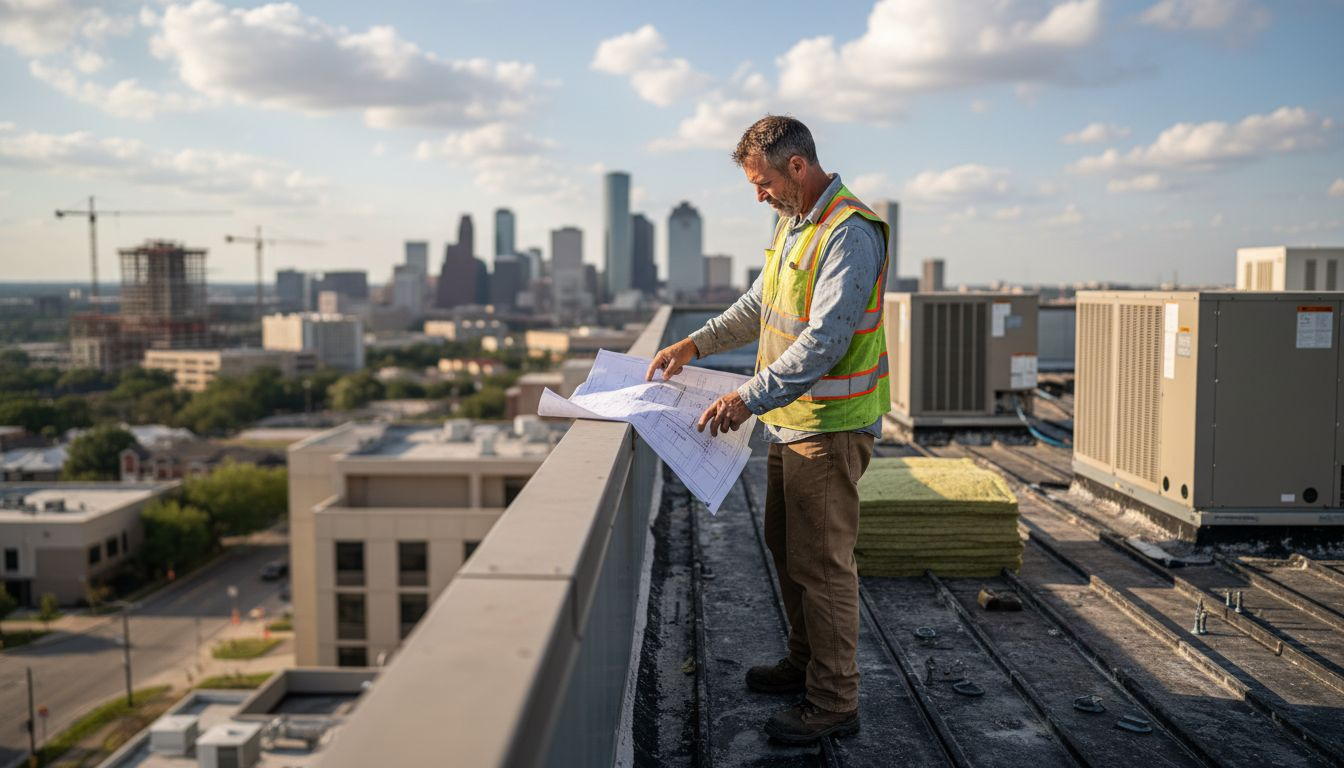
Finding the right roofing solution for your Houston property often starts with decoding professional terms that shape both performance and protection. Clear knowledge of commercial roofing terminology empowers property managers and business owners to make confident choices, whether considering repairs or planning new installations. This guide breaks down essential roof terms and types, helping you evaluate materials and systems suited for Houston’s demanding climate so your commercial investment stays safeguarded and resilient.
Table of Contents
- Defining Commercial Roof Terminology Clearly
- Primary Roof Types and Material Distinctions
- Critical Components and Structural Elements
- Houston-Specific Performance and Regulation Factors
- Financial Implications, Lifespan, and Common Pitfalls
Key Takeaways
| Point | Details |
|---|---|
| Understanding Terminology is Crucial | Comprehending commercial roofing terms enhances communication about materials and performance among property managers and business owners. |
| Choosing the Right Roof System | Each commercial roof type offers unique benefits and challenges, making it essential to select one tailored to specific environmental conditions. |
| Financial Considerations are Key | Long-term costs, including maintenance and energy savings, significantly impact the overall investment in commercial roofing. |
| Regular Inspections are Essential | Annual professional inspections can identify structural weaknesses and prevent costly repairs, ensuring the longevity of the roof system. |
Defining Commercial Roof Terminology Clearly
Understanding commercial roof terminology isn’t just technical jargon—it’s the language of protection for Houston’s complex business landscape. Each term represents critical insights into how roofing systems defend commercial properties against challenging environmental conditions.
The commercial roofing best practices provide foundational terminology that every property manager and business owner should comprehend. Key terminology helps stakeholders communicate precisely about roof performance, materials, and maintenance requirements.
Commercial Roof Components include several essential elements:
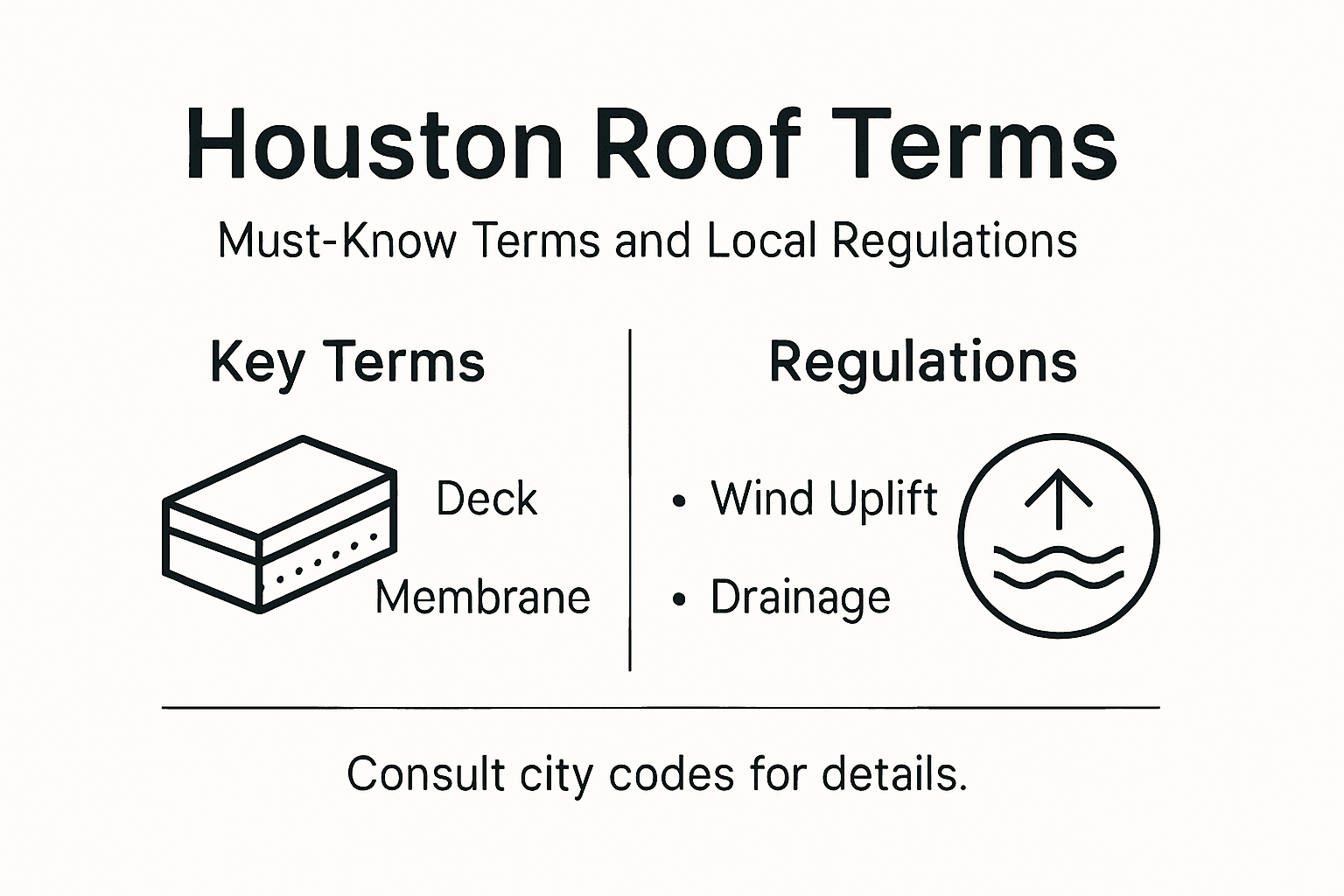
- Roof Deck: The structural base layer supporting the entire roofing system
- Membrane: The waterproof layer preventing moisture penetration
- Insulation: Material providing thermal resistance and energy efficiency
- Flashing: Metal or plastic components sealing roof edges and transitions
- Substrate: The foundational surface onto which roofing materials are applied
Professional roofing terminology goes beyond simple labels. These terms represent complex engineering decisions that directly impact a building’s longevity, energy efficiency, and resilience against Houston’s unpredictable weather patterns. Construction terminology nuances reveal the intricate considerations behind each roofing system.
Types of Commercial Roof Systems include:
- Built-Up Roofing (BUR)
- Modified Bitumen
- Single-Ply Membrane (TPO, EPDM)
- Metal Roofing Systems
- Spray Polyurethane Foam (SPF)
Each system has unique characteristics that determine its suitability for specific commercial applications, making precise terminology crucial for informed decision-making.
Pro tip: Always request a comprehensive glossary from your roofing contractor to ensure you fully understand the technical specifications of your proposed roofing system.
Primary Roof Types and Material Distinctions
Commercial roofing in Houston demands sophisticated understanding of material types and their unique performance characteristics. The complexity of roof systems goes far beyond simple covering—each material represents a strategic engineering solution tailored to withstand extreme environmental challenges.
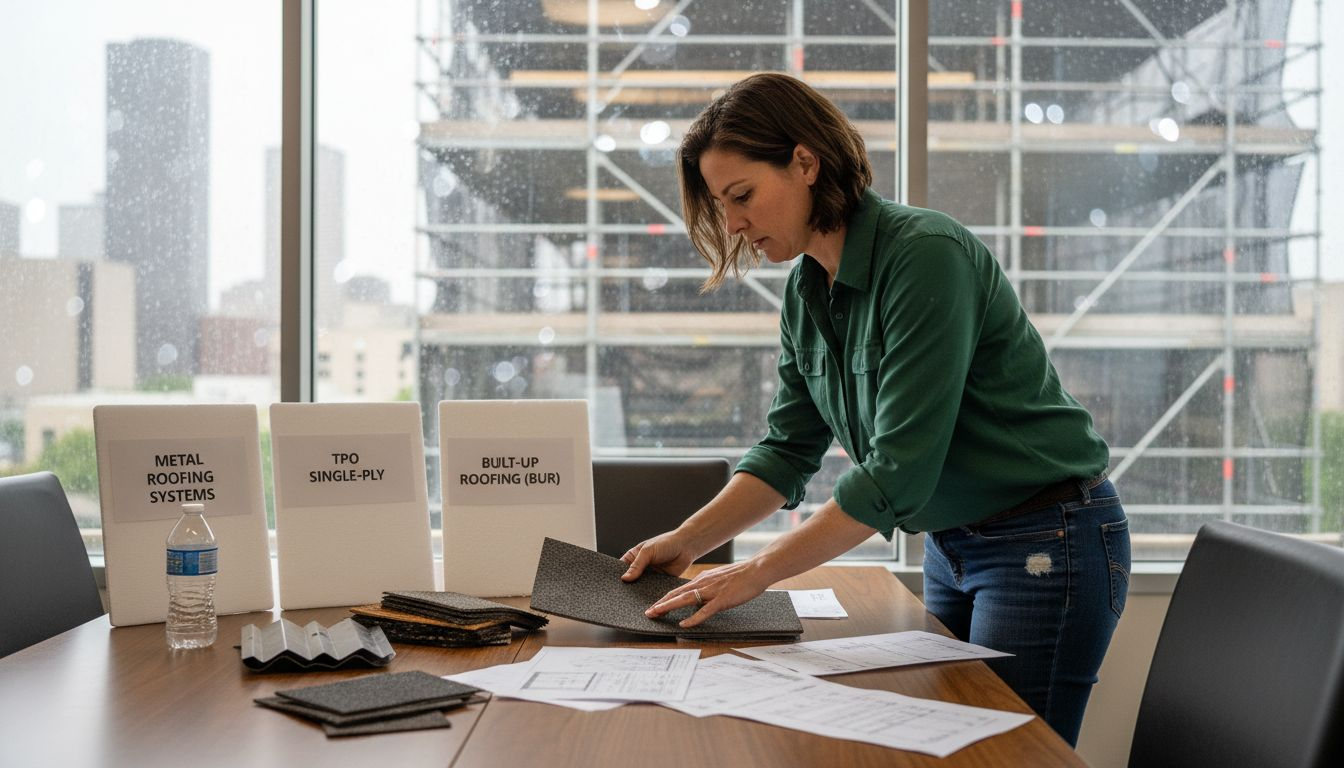
Roofing design standards reveal the intricate considerations behind selecting appropriate roof types for commercial applications. These systems are not one-size-fits-all but carefully engineered solutions matching specific performance requirements.
Primary Commercial Roof Types include:
- Built-Up Roofing (BUR): Multiple layers of bitumen and reinforcing fabrics
- Modified Bitumen: Asphalt-based materials with polymer modifications
- Single-Ply Membranes: Lightweight, flexible sheets including TPO and EPDM
- Metal Roofing Systems: Durable panels offering long-term protection
- Spray Polyurethane Foam (SPF): Seamless insulation and waterproofing solution
Material distinctions become critical when considering Houston’s unique climate challenges. Different roofing systems offer varied benefits:
Here’s a concise comparison of primary commercial roof systems and their performance impacts in Houston:
| Roof System Type | Unique Benefit | Typical Challenge | Best Use Case |
|---|---|---|---|
| Built-Up Roofing (BUR) | Superior waterproofing | Heavy weight, difficult repairs | Older industrial properties |
| Modified Bitumen | Enhanced flexibility | Vulnerable to UV damage | Warehouses requiring adaptability |
| Single-Ply Membrane | Lightweight installation | Potential punctures | Retail buildings, quick renovations |
| Metal Roofing Systems | Exceptional durability | Higher upfront cost | Long-term office complexes |
| Spray Polyurethane Foam | Seamless insulation | Specialized installation | Modern commercial structures |
- Heat Resistance: Crucial for intense Texas sunlight
- Water Drainage Capabilities
- Thermal Insulation Performance
- Wind Uplift Resistance
- Long-Term Durability
The architectural copper roofing specifications demonstrate how material selection impacts overall roof performance, emphasizing that each component plays a strategic role in protecting commercial investments.
Pro tip: Always consult a professional who understands Houston’s specific environmental conditions when selecting your commercial roofing material.
Critical Components and Structural Elements
Understanding the intricate anatomy of a commercial roof requires deep knowledge of its critical components and structural elements. Each part plays a vital role in protecting Houston businesses from extreme weather conditions and ensuring long-term structural integrity.
Commercial roof structural components represent a complex engineering system designed to provide maximum protection and performance. These elements work together seamlessly to create a robust roofing solution that can withstand Houston’s challenging climate.
Key Structural Components include:
- Roof Deck: The foundational structural layer
- Structural Supports: Rafters, trusses, and beams
- Insulation Layer: Thermal and moisture barrier
- Membrane: Primary waterproofing protection
- Flashing: Critical sealing components
- Edge Reinforcement: Perimeter structural protection
The commercial roofing best practices highlight the importance of understanding how these components interact. Each element serves a specific function in maintaining roof performance:
- Structural Integrity
- Moisture Prevention
- Thermal Regulation
- Wind Resistance
- Load Distribution
Commercial roof systems are engineered with precision, considering factors like weight distribution, thermal expansion, and environmental stress. Houston’s unique climate demands robust structural elements that can handle intense heat, sudden storms, and potential hurricane conditions.
Pro tip: Schedule professional inspections annually to identify potential structural weaknesses before they become costly repairs.
Houston-Specific Performance and Regulation Factors
Houston’s extreme climate demands specialized roofing considerations that go far beyond standard engineering practices. Commercial roofing in this region requires a sophisticated understanding of performance metrics and regulatory requirements unique to Southeast Texas’s challenging environmental conditions.
Roofing performance requirements emphasize critical factors specific to Houston’s dynamic weather patterns. These regulations address wind resistance, energy efficiency, and structural resilience that commercial properties must meet to ensure long-term protection.
Key Performance Considerations include:
- Wind Resistance Ratings: Critical for hurricane-prone regions
- Thermal Efficiency: Managing extreme heat and humidity
- Water Drainage Systems: Preventing flooding and water damage
- UV Protection: Mitigating intense solar radiation
- Structural Flexibility: Adapting to temperature fluctuations
The commercial roofing best practices highlight Houston’s unique regulatory landscape. Commercial roofing systems must navigate complex requirements:
- Local Building Code Compliance
- Hurricane Zone Design Standards
- Energy Efficiency Regulations
- Wind Load Specifications
- Material Performance Certifications
Houston’s building regulations are particularly stringent, reflecting the city’s vulnerability to severe weather events. Roofing systems must demonstrate exceptional performance under extreme conditions, including sudden temperature changes, intense thunderstorms, and potential hurricane impacts.
Pro tip: Consult local building authorities and obtain comprehensive wind resistance certifications specific to Houston’s regulatory requirements before final roof installation.
Financial Implications, Lifespan, and Common Pitfalls
Commercial roofing represents a significant financial investment that extends far beyond initial installation costs. Understanding the complex economic landscape of roof systems is crucial for Houston businesses seeking long-term value and risk mitigation.
Construction contract terminology reveals the intricate financial considerations underlying commercial roof projects. Strategic planning can dramatically impact overall project economics and future maintenance expenses.
Key Financial Considerations include:
- Initial Installation Costs: Upfront investment
- Long-Term Maintenance Expenses: Ongoing financial commitment
- Energy Efficiency Savings: Potential cost reduction
- Repair vs. Replacement Calculations: Economic decision-making
- Insurance and Liability Implications: Risk management
The roof coating strategies demonstrate how proactive maintenance can extend roof lifespan and minimize financial risks. Commercial property managers must navigate several critical financial challenges:
- Budgeting for Regular Inspections
- Understanding Warranty Coverage
- Calculating Long-Term Performance Costs
- Evaluating Material Durability
- Assessing Potential Energy Savings
Common financial pitfalls in commercial roofing often stem from short-sighted decision-making. Choosing the lowest initial bid without considering long-term performance can lead to exponentially higher expenses through frequent repairs and premature replacement.
This summary highlights key financial and lifespan factors for commercial roof investments:
| Financial Factor | Impact on Roof Lifespan | Risk if Overlooked |
|---|---|---|
| Initial Cost | Determines material quality | Frequent repairs |
| Maintenance Budget | Influences durability | Shorter roof life |
| Energy Savings | Boosts ROI over time | Missed cost reduction |
| Warranty Coverage | Protects against defects | Costly surprises |
| Insurance Requirements | Mitigates risk exposure | Potential liability |
Pro tip: Develop a comprehensive 20-year financial model that includes installation, maintenance, potential repairs, and energy efficiency savings before selecting a roofing system.
Master Houston Commercial Roofing with Confidence
Navigating the complex terminology and specialized requirements of commercial roofing in Houston can be overwhelming. The article highlights how understanding key components like roof decks, membranes, and wind resistance ratings is crucial to protecting your business investment under severe weather conditions. If you want to avoid costly mistakes and ensure your roof performs optimally through heat, storms, and hurricanes, you need a trusted partner who knows these challenges inside and out.
At Mister ReRoof, we specialize in commercial roof replacement services tailored to Houston’s unique environment. Our experts speak your language, explaining every roofing option clearly, from metal and TPO systems to built-up roofing solutions. Don’t leave your commercial property’s future to chance. Contact us today for a free estimate and discover how our durable, storm-resistant roofing can safeguard your business assets.
Ready to make an informed decision that protects your investment and complies with Houston’s strict roofing standards? Visit Mister ReRoof now to schedule your consultation and get started on a roofing solution built to last.
Frequently Asked Questions
What are the main components of a commercial roof?
The main components of a commercial roof include the roof deck, membrane, insulation, flashing, and substrate. Each component plays a crucial role in maintaining the roof’s integrity and performance.
How do different commercial roofing systems compare in terms of durability?
Built-up roofing (BUR) and metal roofing systems are typically more durable due to their layered structure and resistance to harsh weather, while single-ply membranes are lighter but may be more prone to punctures. Choosing the right type depends on specific needs and environmental conditions.
What should businesses consider when selecting a roofing material?
Businesses should consider factors such as heat resistance, waterproofing ability, thermal insulation performance, wind uplift resistance, and the system’s overall durability to ensure the roof is well-suited to the local climate and building requirements.
Why is understanding commercial roof terminology important for property managers?
Understanding commercial roof terminology helps property managers communicate effectively with contractors, make informed maintenance decisions, and ensure compliance with building codes, thereby protecting their investment in the roof system.
