
TL;DR:
- Texas climate reduces roof lifespan by 25-40% compared to national averages.
- Regular inspections and maintenance can extend roof life by up to 10 years.
- Replacement is advisable when repair costs exceed half of the roof’s value or 25% of the surface is damaged.
If you’ve ever been told your roof will last 30 years, Texas has a different story to tell. Most roofing materials are rated under ideal conditions that simply don’t exist here. Between brutal summer heat, sudden hailstorms, and relentless UV exposure, Texas climate cuts roof life by 25-40% compared to national averages. That means a shingle roof rated for 25 years might realistically give you 15 to 18 years in Houston or El Campo. Understanding the roof lifecycle, what it means, how it progresses, and what you can do about it, puts you in control of one of your home’s biggest investments.
Table of Contents
- What is the roof lifecycle? Key phases explained
- How roof materials and Texas climate shape lifecycle length
- Maintenance strategies that extend your roof’s life
- When repair isn’t enough: Roof replacement benchmarks in Texas
- What most homeowners miss about roof lifecycles
- Upgrade your roof with confidence
- Frequently asked questions
Key Takeaways
| Point | Details |
|---|---|
| Roof lifecycle phases | Every roof goes through specific stages that each bring new maintenance needs. |
| Texas climate impact | Hail, sun, and extreme heat shorten Texas roof lifespans by up to 40 percent. |
| Maintenance matters most | Simple regular actions like biannual inspections and gutter cleaning can add years to your roof. |
| Replacement thresholds | When your roof hits 80 percent of its expected life or has over 25 percent damage, full replacement is the smart move. |
| Expert installation wins | A well-installed roof outlasts higher-cost materials with poor workmanship every time. |
What is the roof lifecycle? Key phases explained
The roof lifecycle is simply the full journey your roof takes from the day it’s installed to the day it needs replacing. It’s not just about age. It’s about how your roof performs, degrades, and signals distress along the way. Roof lifecycles move through five distinct phases: installation and curing, peak performance, mid-life, aging, and end-of-life. Each phase looks and behaves differently, and knowing which one your roof is in changes how you respond to it.
Phase 1: Installation and curing (years 0 to 2). This is when your roof settles in. Shingles seal down, flashing beds into place, and the system adjusts to thermal expansion. Minor issues like lifted tabs or small gaps can appear here, but they’re usually easy fixes.
Phase 2: Peak performance (years 2 to 8). Your roof is doing exactly what it was built to do. Minimal maintenance is needed beyond routine cleaning and inspections. In Texas, this phase can feel shorter because heat and UV start working on materials earlier than in cooler climates.
Phase 3: Mid-life (years 8 to 15). This is when you start to notice the first real signs of wear. Granule loss on asphalt shingles becomes visible in gutters. Sealant around vents and chimneys may start to crack. This phase is critical because lifespan explained for Houston conditions mean mid-life often arrives faster than homeowners expect.
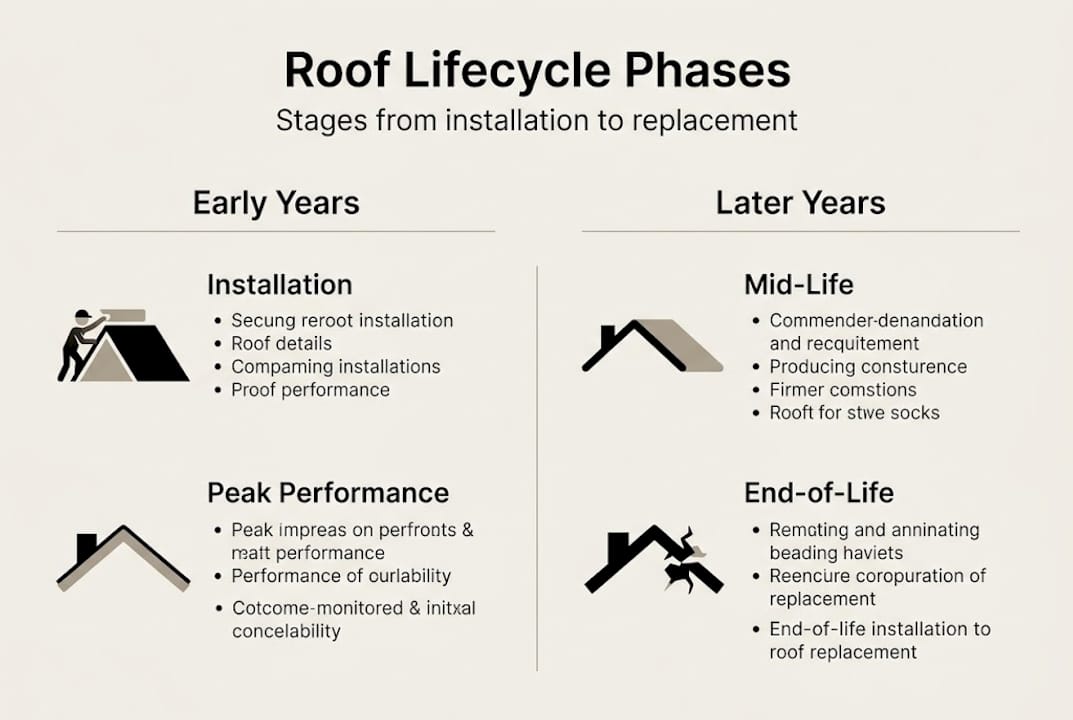
Phase 4: Aging (years 15 to 20+). Shingles curl at the edges. Cracks appear. Flashing pulls away from walls. Leaks become more frequent after storms. The roof is still technically functional but increasingly vulnerable.
Phase 5: End-of-life. Structural integrity is compromised. Sagging decking, widespread leaks, and visible daylight through the attic are clear signals. At this stage, repairs are a temporary patch on a system that needs full replacement.
A roof doesn’t fail overnight. It gives you signals for years before the final breakdown. The homeowners who catch those signals early spend far less money than those who wait.
In Texas, the timeline above compresses. Heat accelerates granule loss. Hail punches through protective layers. UV breaks down adhesives faster. Knowing which phase your roof is in right now is the first step toward making smart decisions.
How roof materials and Texas climate shape lifecycle length
Not all roofs age the same way, and material choice plays a huge role in how long your roof survives Texas conditions. Here’s a realistic look at what you can expect:
| Material | National avg. lifespan | Texas realistic lifespan | Key Texas risk |
|---|---|---|---|
| Asphalt shingles | 20-30 years | 15-20 years | UV granule loss, hail impact |
| Metal roofing | 40-70 years | 30-50 years | Thermal expansion, denting |
| Clay or concrete tile | 50+ years | 35-45 years | Hail cracking, weight stress |
| Slate | 75-100 years | 50-70 years | Hail fractures, installation cost |
Manufacturer warranties often promise lifespans that assume moderate climates, regular maintenance, and zero storm damage. Texas delivers none of those guarantees. NRCA benchmarks confirm that Texas climate reduces expected roof life by 25-40%, which means even premium materials underperform their rated lifespan here.
Three forces drive accelerated aging in Texas:
- Heat. Attic temperatures in Texas can exceed 160°F in summer. That constant thermal cycling causes materials to expand and contract, weakening bonds and cracking sealants over time.
- Hail. Texas leads the nation in hail damage claims. Even small hailstones strip granules from asphalt shingles, exposing the asphalt layer directly to UV rays.
- UV radiation. Prolonged sun exposure breaks down the oils in asphalt, making shingles brittle and prone to cracking years earlier than in northern states.
Understanding weather impacts on roofing durability helps you choose materials that hold up under real Texas conditions rather than optimistic lab ratings. If you’re weighing the upfront cost of metal versus shingles, the math often shifts when you factor in quality roofing lifespan savings over a 30-year window.
Pro Tip: When comparing roofing materials, ask your contractor for Texas-specific performance data, not just the manufacturer’s warranty card. Local experience tells a very different story.
Maintenance strategies that extend your roof’s life
Your roof doesn’t just age on its own. Neglect accelerates every phase of the lifecycle. The good news is that consistent, simple maintenance can add years to your roof’s life and save you serious money along the way.
Biannual inspections, gutter cleaning, and post-storm checks can extend roof life by 5-10 years and reduce repair costs by 30-50%. That’s not a small return on a few hours of attention each year.
Here’s what a solid Texas roof maintenance routine looks like:
- Inspect twice a year. Schedule inspections every spring and fall. Spring catches winter damage; fall prepares your roof for summer heat. Look for lifted shingles, cracked flashing, and debris buildup.
- Clean gutters regularly. Clogged gutters force water under your roofline, accelerating rot and leak damage. In Texas, debris from oak and pecan trees makes this a must.
- Check after every major storm. Hail and high winds can cause damage that isn’t visible from the ground. A quick post-storm inspection catches problems before they become leaks.
- Trim overhanging branches. Tree limbs scraping against your roof wear down shingles and deposit moisture-trapping debris. Keep branches at least 6 feet from your roofline.
- Clear moss and algae. Texas humidity encourages biological growth on roofs. Moss holds moisture against shingles, speeding up decay. Treat it early with a roof-safe cleaner.
For more on protecting your investment, roof maintenance for homeowners in Texas covers the seasonal specifics in detail.
Pro Tip: Keep a simple roof log. Record every inspection, repair, and storm event with dates and photos. This documentation is invaluable when filing an insurance claim or selling your home.
Neglect doesn’t just shorten your roof’s life. It also voids many manufacturer warranties and complicates insurance claims. A roof with no maintenance record looks like a liability to an adjuster, even if the damage was storm-related.
When repair isn’t enough: Roof replacement benchmarks in Texas
Even the best-maintained roof eventually reaches a point where repairs stop making financial sense. Knowing when that line is crossed saves you from throwing money at a system that’s already past its prime.
The general industry benchmark is clear: replacement is recommended when more than 25% of the roof is damaged or more than 80% of its expected lifespan has been used. In Texas, that 80% mark arrives faster than most homeowners realize, especially on asphalt shingle roofs.
Here are the key signals that repair is no longer the right call:
- Multiple leaks in different areas. One leak is a repair. Three leaks in separate locations signal systemic failure.
- Widespread granule loss. When you see bare asphalt patches across large sections of your roof, the protective layer is gone.
- Sagging or soft spots. These indicate decking damage beneath the shingles, which is a structural issue that patching won’t fix.
- Repair costs exceeding 50% of replacement value. If you’re spending that much to keep an aging roof alive, replacement delivers better long-term value.
- Roof age past 15 years with hail history. Texas insurance policies often shift terms after year 15, and why roofs fail in Texas is frequently tied to cumulative hail damage that goes unaddressed.
From a resale perspective, buyers and appraisers notice roof age immediately. A roof within 3 to 5 years of end-of-life can reduce your home’s appraised value or become a negotiating point in a sale. Upgrading for durability before listing can return significant value.
Pro Tip: Get a written roof assessment from a licensed contractor before accepting any insurance settlement. Adjusters sometimes underestimate scope, and a professional report gives you leverage.
What most homeowners miss about roof lifecycles
Here’s the uncomfortable truth we’ve seen play out repeatedly: the material on your roof matters far less than the quality of the installation and the consistency of your maintenance. A premium metal roof installed poorly will fail before a mid-grade shingle roof installed with precision and cared for properly.
Workmanship impacts roof longevity more than material quality alone. That’s not a knock on materials. It’s a reality check on where homeowners focus their attention and budget.
Most people obsess over shingle brand or tile style and then hire the lowest bidder to install it. That’s backwards. The contractor’s skill, the quality of the underlayment, the flashing details around penetrations, and the ventilation design all determine how long your roof actually lasts in Texas heat and storms.
Manufacturer warranties are also widely misunderstood. They cover material defects, not installation errors, storm damage, or premature aging from neglect. In Texas, very few roofs actually reach their warranted lifespan under real-world conditions. Insurers and appraisers know this, which is why they factor in age and condition independently of what’s printed on a warranty card.
If you want smart roofing choices for Texas that actually deliver on their promise, focus on who installs your roof just as much as what they install.
Upgrade your roof with confidence
Now that you understand what drives roof lifespan in Texas, the next step is connecting with a team that knows these conditions from the ground up. At Mister ReRoof, we work with homeowners across El Campo, Houston, and surrounding areas to replace aging roofs with systems built for Texas weather.

Whether you’re considering metal roof replacement in Victoria for maximum durability or exploring shingle roof replacement in Hallettsville for a cost-effective upgrade, our team brings the workmanship and local knowledge your home deserves. We’ll assess your current roof’s lifecycle stage, walk you through your material options, and give you a free estimate with no pressure. Contact Mister ReRoof today and make your next roof your last worry.
Frequently asked questions
What are the first signs my roof is nearing end-of-life?
Look for widespread granule loss, shingle curling or cracking, and recurring leaks. These signs typically emerge after 15 to 20 years in Texas, with granule loss starting as early as year 6-10 on heat-stressed roofs.
Does Texas weather really reduce roof lifespan that much?
Absolutely. Hail, intense UV, and heat cycles mean Texas roofs last 25-40% less than national averages, regardless of the material you choose.
How often should I schedule roof inspections?
Twice a year is the standard recommendation, once in spring and once in fall. Always add an inspection after any major hail or wind event as well.
What’s the tipping point where replacement beats repair?
Replacement makes more sense when repair costs exceed 50% of replacement value or when more than 25% of the roof surface is damaged. At that point, you’re paying to delay the inevitable.
Recommended
- Roof Installation Process: Houston’s Impact on Longevity
- Why roof maintenance matters for Texas homeowners in 2026
- Roof Replacement Timelines: What Houston Homeowners Need
- Why upgrade your roofing system in Texas: durability and savings
- Solar thermal maintenance guide 2026: maximise efficiency – Skan Plumbing & Heating