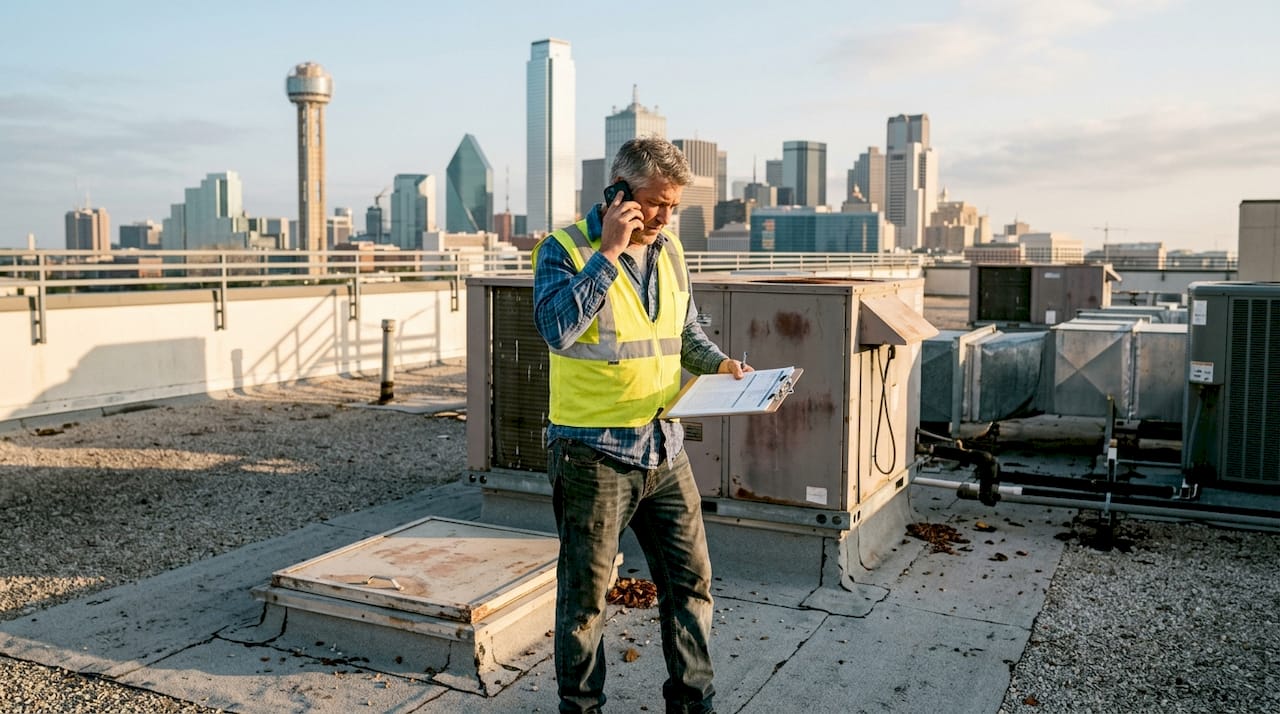
Commercial roof replacement in Texas isn’t just about fixing leaks or updating worn materials. It’s about protecting your building from intense heat, sudden hailstorms, and hurricane-force winds that can cause catastrophic damage and financial losses. Poor planning leads to code violations, insurance claim denials, and costly repairs that could have been avoided. This guide walks you through every critical step, from assessing your roof’s condition to selecting materials that meet Texas-specific codes, materials must handle heat, hail, hurricanes, and ensuring your project stays on budget and on schedule.
Table of Contents
- Assess the condition and timing for replacement
- Understand Texas codes, materials, and certification requirements
- Plan your project: budget, scope, and timelines
- Choose the right contractor and oversee the project
- Verify installation quality and set up maintenance
- Protect your investment with trusted Texas roofers
- Frequently asked questions
Key Takeaways
| Point | Details |
|---|---|
| Start with a thorough assessment | A detailed condition review and timing plan can prevent costly surprises. |
| Factor local Texas codes | Know your region’s requirements to avoid failed inspections and ensure safety. |
| Choose resilient materials | TPO, EPDM, and metal roofing offer excellent durability for Texas weather. |
| Work with certified experts | Hiring experienced, certified Texas contractors ensures compliance and quality. |
| Commit to ongoing maintenance | A scheduled inspection and maintenance plan protects your investment long after replacement. |
Assess the condition and timing for replacement
Recognizing when your commercial roof needs replacement saves you from emergency repairs and business interruptions. Start by looking for visible warning signs: persistent leaks, ponding water that doesn’t drain within 48 hours, membrane cracks, or missing flashing. These issues signal that your roof has reached the end of its service life.
Texas weather demands special attention during inspections. Your roof must withstand extreme temperature swings, UV exposure, and severe storms. Texas roofs must be evaluated for wind uplift resistance and reflectivity standards to meet state requirements. If your building sits in a coastal county, TWIA certification becomes mandatory for insurance coverage.
Document everything during your assessment. Take dated photographs of problem areas, measure ponding depths, and note any interior water damage. This documentation helps when requesting bids from contractors and filing insurance claims. Keep a detailed log of all repairs made in the past five years, as this history reveals patterns that indicate systemic failure.
Pro Tip: Schedule inspections after major weather events and before peak storm season. Spring assessments give you time to complete replacements before summer heat or fall hurricanes arrive.
Timing your replacement strategically reduces costs and weather-related delays. Fall and winter offer the most predictable conditions in Texas, with fewer rain delays and moderate temperatures that help materials cure properly. Avoid summer replacements when possible, as extreme heat stresses workers and can affect material performance during installation.
- Conduct biannual inspections in spring and fall
- Document all damage with photos and measurements
- Request professional assessments from licensed contractors
- Review your building’s maintenance records for recurring issues
- Check insurance policy requirements for inspection frequency
“The best time to replace a commercial roof is before you absolutely need to. Proactive replacement costs less than emergency repairs and prevents business disruption.”
For more guidance on identifying roof problems specific to Texas buildings, review common failure patterns in your region. Understanding when to replace your roof helps you budget appropriately and avoid rushed decisions.
Understand Texas codes, materials, and certification requirements
Texas building codes vary by city and county, but all commercial roofs must meet minimum wind resistance and energy efficiency standards. Houston, Dallas, and San Antonio each have specific permitting processes that require detailed plans, engineering stamps, and multiple inspections. Coastal counties add another layer with TWIA requirements that mandate specific installation methods and materials.
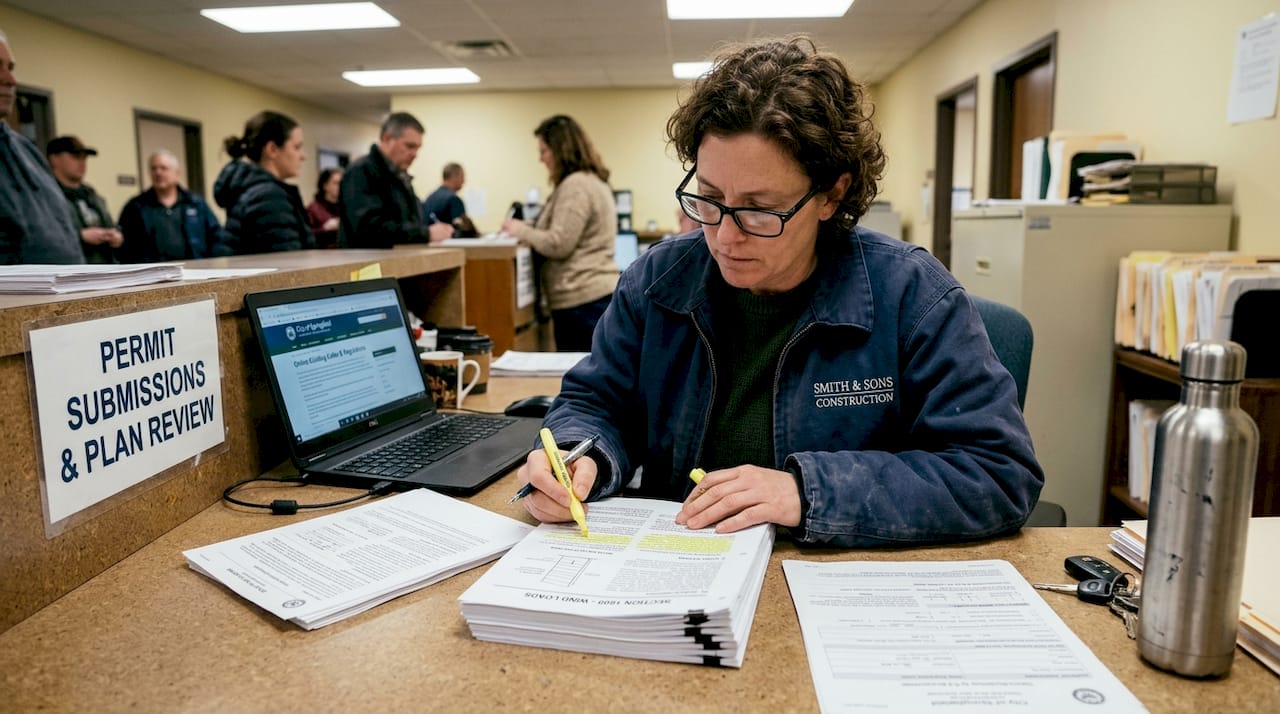
City codes, wind resistance, reflectivity, and TWIA all affect roof planning and material selection. Your contractor must understand these requirements before starting work. Failure to comply results in failed inspections, insurance coverage gaps, and potential liability if storm damage occurs.
Material selection directly impacts your roof’s performance in Texas conditions. Each option offers distinct advantages:
| Material | Heat Resistance | Hail Resistance | Wind Rating | Typical Lifespan | Best For |
|---|---|---|---|---|---|
| TPO | Excellent | Good | Up to 150 mph | 20-30 years | Flat commercial roofs |
| EPDM | Very Good | Excellent | Up to 120 mph | 25-35 years | Low-slope buildings |
| Metal | Excellent | Excellent | Up to 180 mph | 40-50 years | Industrial facilities |
| Modified Bitumen | Good | Good | Up to 110 mph | 15-20 years | Budget-conscious projects |
Reflectivity matters in Texas heat. Cool roofing materials with high solar reflectance reduce cooling costs by 15-25% compared to traditional dark membranes. Many Texas cities now require minimum reflectivity ratings for new commercial installations, particularly in urban heat island zones.
Key considerations for material selection:
- Building use and occupancy type
- Existing roof structure and load capacity
- Budget for initial installation and long-term maintenance
- Local code requirements and TWIA certification needs
- Energy efficiency goals and utility rebate eligibility
Stay current with 2026 roofing trends that emphasize sustainability and performance. Energy-efficient roofs deliver measurable cost savings while meeting increasingly strict environmental standards. For coastal properties, verify windstorm certification requirements before selecting materials.
Plan your project: budget, scope, and timelines
Accurate budgeting starts with understanding all project costs beyond material and labor. Permits, engineering reviews, disposal fees, and temporary weather protection add 15-20% to base estimates. Request detailed bids from at least three licensed Texas contractors, ensuring each includes identical scope items for fair comparison.
Proper planning around material requirements and certifications reduces delays and ensures code compliance. Material lead times vary from two weeks for standard TPO to eight weeks for custom metal panels. Order materials early and confirm delivery dates before scheduling tear-off.
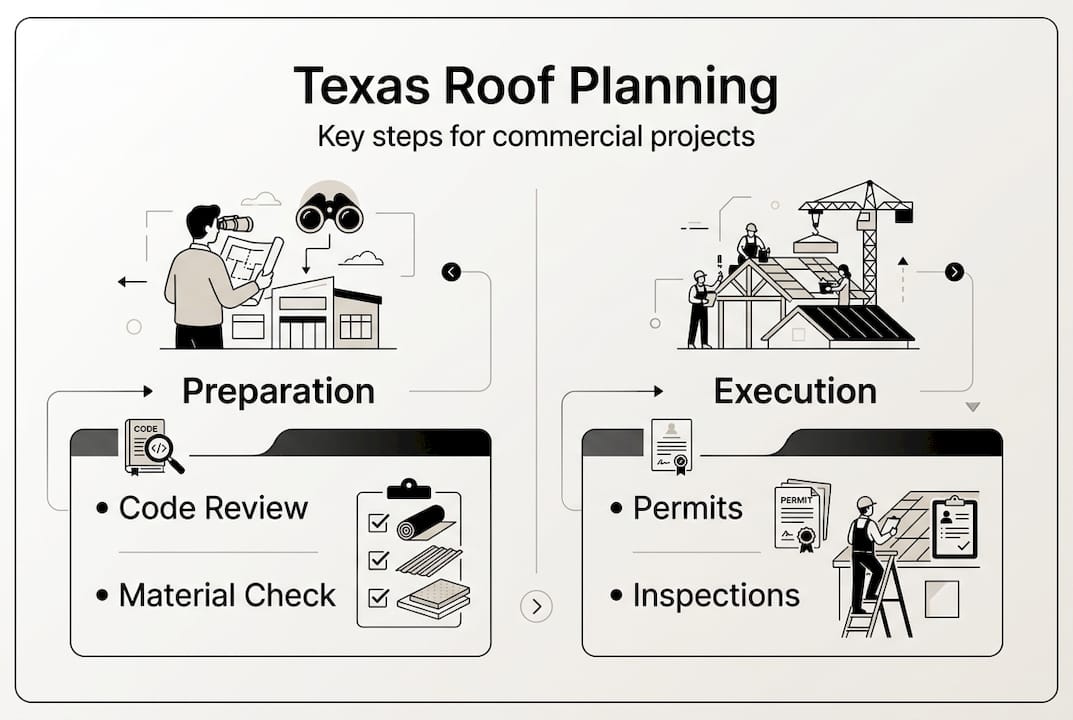
Your timeline must account for multiple inspection points and potential weather delays. A typical 20,000 square foot commercial roof replacement takes three to four weeks under ideal conditions, but Texas weather can extend this by 30-50%.
| Project Phase | Duration | Key Activities | Potential Delays |
|---|---|---|---|
| Permitting | 1-2 weeks | Submit plans, engineering review | City backlog, plan revisions |
| Material procurement | 2-8 weeks | Order, manufacture, delivery | Supply chain, custom items |
| Tear-off and prep | 3-5 days | Remove old roof, inspect deck | Hidden damage, weather |
| Installation | 1-2 weeks | Install membrane, flashing, details | Rain, extreme heat |
| Inspections | 3-7 days | City, TWIA, final walkthrough | Failed tests, corrections |
Pro Tip: Build a 20% time buffer into your schedule for weather delays and unexpected substrate repairs. Texas storms can halt work for days, and rushing installation compromises quality.
Create a detailed project timeline that sequences tasks logically:
- Obtain all permits and engineering approvals
- Order materials with confirmed delivery dates
- Schedule tear-off during favorable weather windows
- Coordinate inspections at required milestones
- Plan for final TWIA certification if applicable
- Schedule warranty registration immediately after completion
Learn from roof replacement steps that apply to commercial projects. For larger facilities, review industrial roof budgeting strategies that account for phased installations and operational continuity.
Choose the right contractor and oversee the project
Selecting a qualified Texas commercial roofing contractor requires thorough vetting. Verify active licenses, insurance coverage, and bonding that meets your project size. Request references from similar commercial projects completed in the past two years, and actually call those references to ask about quality, communication, and problem resolution.
Texas firms should have experience with both city codes and TWIA certification if in a coastal area. Ask contractors about their familiarity with local building departments and their track record for passing inspections on the first attempt. Contractors who regularly work in your city navigate permitting faster and understand inspector expectations.
Questions to ask during contractor interviews:
- How many commercial projects have you completed in Texas in the past year?
- What is your process for handling unexpected substrate damage?
- Who will be the on-site supervisor, and what is their experience level?
- How do you handle weather delays and schedule adjustments?
- What warranties do you offer beyond manufacturer coverage?
- Can you provide proof of TWIA certification if required?
Project oversight protects your investment and ensures quality installation. Designate someone from your organization to serve as the owner’s representative, conducting daily site visits and maintaining communication with the project manager. Document progress with photographs and verify that work matches approved plans.
Safety matters on commercial roof projects. Confirm that your contractor maintains OSHA compliance, provides fall protection for all workers, and carries adequate liability insurance. Request copies of safety plans and incident reports if accidents occur.
Pro Tip: Never release final payment until you have all city sign-offs, TWIA certification (if applicable), and registered warranties in hand. This leverage ensures contractors complete punch list items promptly.
“The difference between a good roof and a great roof often comes down to installation quality and attention to detail during critical flashing and penetration work.”
Weather monitoring becomes critical during installation. Texas storms develop quickly, and contractors must secure work areas before rain arrives. Establish clear protocols for weather delays and ensure your contract addresses how these delays affect the schedule and payment terms.
Find experienced professionals through resources like finding Texas roof contractors who understand regional challenges. Consider flat roof durability factors when evaluating contractor recommendations for material selection.
Verify installation quality and set up maintenance
Post-installation inspection catches issues before they become expensive problems. Walk the entire roof with your contractor, checking seam integrity, flashing details, and penetration seals. Pay special attention to areas prone to failure: roof drains, HVAC curbs, and parapet walls.
Only roofs that pass final code/TWIA inspection and have maintenance plans are eligible for full warranties in Texas. Schedule city inspections promptly after installation completes, and address any deficiencies immediately. For coastal properties, TWIA certification requires specific testing protocols that verify wind uplift resistance and proper attachment.
Warranty review and registration protect your investment long-term. Most manufacturers offer 15-20 year material warranties, while contractors typically provide 5-10 year workmanship warranties. Read warranty terms carefully, noting exclusions and maintenance requirements that could void coverage.
- Conduct a detailed final walkthrough with your contractor
- Verify all penetrations are properly sealed and flashed
- Test drainage by observing water flow during rain
- Obtain all inspection certificates and TWIA documentation
- Register manufacturer warranties within required timeframes
- Create a maintenance schedule based on warranty requirements
Preventative maintenance extends roof life and maintains warranty coverage. Texas weather demands more frequent inspections than moderate climates. Schedule professional inspections twice yearly, after spring storms and before winter. Between professional visits, conduct monthly visual checks for debris accumulation, standing water, and visible damage.
“A well-maintained commercial roof in Texas can exceed its expected lifespan by 30-40%, delivering exceptional return on investment through proper care and timely repairs.”
Documentation supports insurance claims and future roof assessments. Maintain a comprehensive file including installation photos, inspection reports, warranty certificates, and maintenance logs. This documentation proves proper care if you need to file an insurance claim or sell the property.
Prepare thoroughly using guidance from roof replacement preparation resources that outline what building owners should expect during and after installation.
Protect your investment with trusted Texas roofers
Commercial roof replacement represents a significant investment in your property’s future. The complexity of Texas codes, material selection, and certification requirements demands expertise that only experienced regional contractors provide. Choosing the wrong team leads to code violations, failed inspections, and roofs that underperform when Texas weather strikes.
Mister ReRoof brings deep expertise in Texas commercial roofing, from navigating city permitting to ensuring TWIA certification in coastal counties. Our team understands how different materials perform in Texas heat, humidity, and storm conditions. We handle every detail, from initial assessment through final inspection, ensuring your project meets all requirements and protects your building for decades.
Whether you need TPO roof services in Texas for energy efficiency, metal roof experts for maximum durability, or comprehensive guidance on material selection, our team delivers quality workmanship backed by solid warranties. We serve property owners throughout El Campo, Houston, and surrounding areas with Texas commercial roofing solutions designed for long-term performance. Contact us today for a free inspection and detailed project estimate.
Frequently asked questions
Which roofs are best for Texas commercial buildings?
Materials like TPO and EPDM are popular for their UV, heat, and hail resistance in Texas. Metal roofing offers the longest lifespan and superior wind resistance for industrial facilities.
What certifications are required for coastal Texas roofs?
Coastal counties require TWIA certification for insurance eligibility and code compliance. This certification verifies proper installation methods and wind uplift resistance.
How long does a commercial roof replacement take in Texas?
Most replacements take two to four weeks depending on scope, weather, and material lead times. Larger buildings or complex designs may require phased installations over several months.
What is the average cost per square foot for commercial roof replacement in Texas?
Costs range from $6 to $12 per square foot based on material choice and code requirements. TPO and EPDM fall on the lower end, while metal roofing costs more upfront but lasts longer.
How do I maintain my new commercial roof to prevent weather damage?
Schedule regular inspections, ensure drainage is clear, and keep up with manufacturer maintenance requirements. Texas roofs need biannual professional inspections plus monthly visual checks for debris and damage.