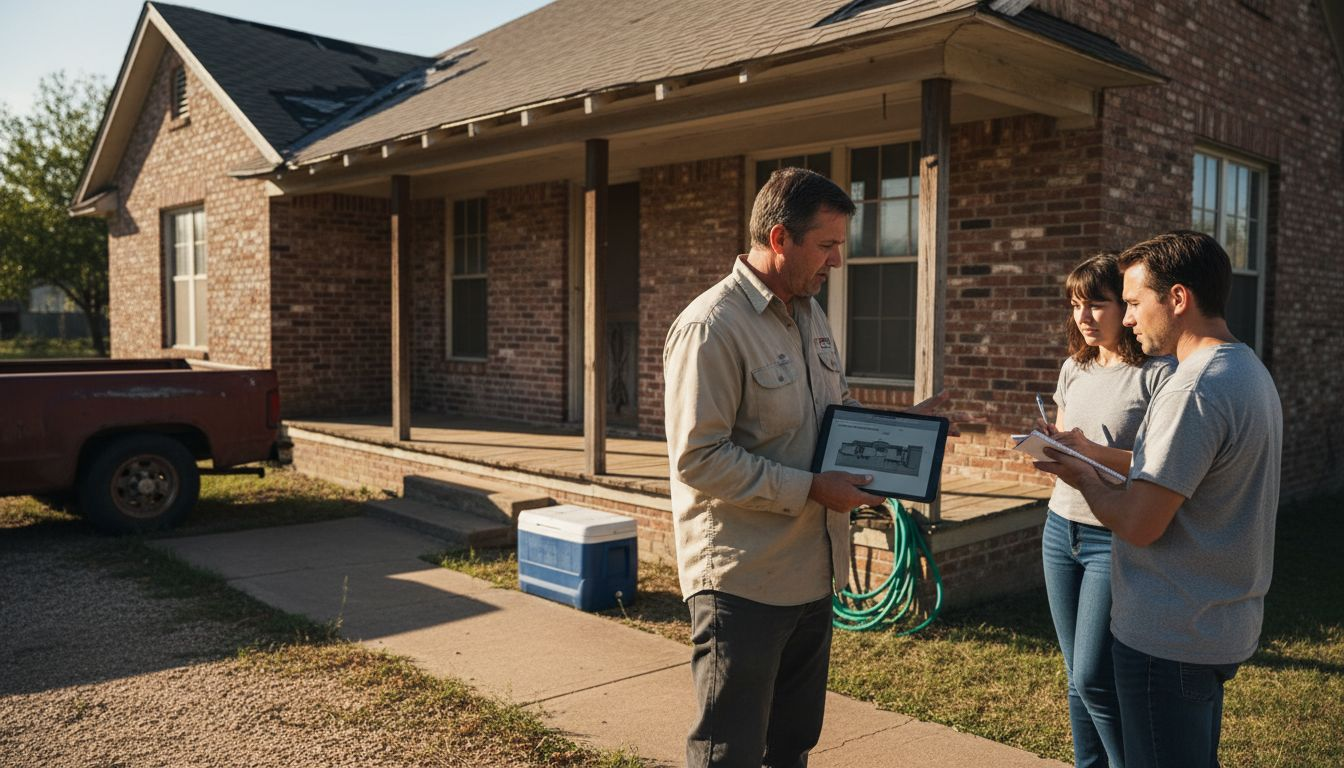
Choosing a roofing contractor in Texas can feel overwhelming when licenses, materials, warranties, and pricing all demand scrutiny. This article provides essential questions to ask contractors, ensuring you hire qualified professionals who deliver quality roofing repair or replacement tailored to Texas conditions. With the right questions, you gain confidence and protect your investment.
Table of Contents
- How To Choose The Right Roofing Contractor: Key Selection Criteria
- Licensing And Insurance Verification Questions
- Questions About Roofing Materials And Suitability For Texas Weather
- Warranty And Workmanship Guarantee Questions
- Reference, Reviews, And Experience Verification Questions
- Pricing, Estimates, And Transparency Questions
- Contractor Compliance With Texas Building Codes And Regulations
- Questions About Contractor Experience With Specific Roof Types
- Summary Comparison Table Of Key Contractor Questions And Factors
- Situational Recommendations: Which Questions Matter Most For Your Roofing Need
- Find Trusted Roofing Contractors For Your Texas Home
Key takeaways
| Point | Details |
|---|---|
| Licensing and insurance verification protect you legally | Confirm Texas state roofing license and liability and workers’ compensation insurance before hiring. |
| Choose roofing materials suited for Texas climate conditions | Ask about materials designed to withstand heat, wind, and hail for long-term durability. |
| Obtain written warranties covering workmanship and materials | Ensure warranties are transferable and clearly outline coverage duration and claim procedures. |
| Check contractor references and reviews for reliability | Request recent Texas project references and verify Better Business Bureau ratings to assess reputation. |
| Get detailed, transparent pricing to avoid hidden costs | Compare written estimates breaking down labor, materials, permits, and fees across multiple contractors. |
How to choose the right roofing contractor: key selection criteria
Selecting a roofing contractor requires evaluating multiple critical factors to ensure your Texas home receives quality service and long-term protection. Understanding these criteria helps you interview contractors confidently and avoid costly mistakes.
Verify the contractor’s license and insurance status for legal safety. Texas requires roofing contractors to hold valid licenses, and insurance protects you from liability if accidents occur on your property. Select materials suited to keep your home protected from Texas heat, wind, and hail. Written warranties ensure long-term protection of your investment by covering both workmanship and materials.
Transparent pricing avoids unexpected expenses. Request detailed estimates that itemize labor, materials, permits, and potential extra costs. Experience with specific roof types improves quality and efficiency, reducing project delays. Compliance with Texas building codes is required for insurance coverage and legal safety.
Contractors with Better Business Bureau ratings of A or higher show 40% fewer complaints about project delays and workmanship issues. Higher ratings correlate strongly with reliability and customer satisfaction.
Pro Tip: Create a checklist of these criteria before interviewing contractors to stay organized and ensure you cover all essential factors during consultations.
- Verify licensing and insurance credentials
- Confirm material suitability for Texas weather
- Request written warranties with clear terms
- Check references and online reviews
- Compare detailed written estimates from at least three contractors
- Ensure Texas building code compliance and permit handling
Licensing and insurance verification questions
Confirming a contractor’s legal credentials is your first line of defense against liability and financial risk. Unlicensed contractors may offer lower prices but increase your exposure to poor workmanship, legal issues, and invalidated insurance claims.
Ask to see the contractor’s Texas state roofing license and verify it through the Texas Department of Licensing and Regulation. This online verification confirms the license is current and free of disciplinary actions. Confirm the contractor carries both liability and workers’ compensation insurance to protect you if property damage or worker injuries occur during the project.
Request proof of insurance documents before signing a contract. Review certificates to ensure coverage limits are adequate and policies are active. Understand that hiring unlicensed contractors increases risk and may invalidate your homeowner’s insurance claims if roofing defects cause damage later.
Pro Tip: Call the insurance company listed on the certificate of insurance to verify coverage is current and meets state requirements, ensuring documents are legitimate.
- Ask for the contractor’s Texas roofing license number and verify it online
- Request copies of liability insurance and workers’ compensation certificates
- Confirm insurance coverage limits meet or exceed state minimums
- Verify insurance policies are active and not expired
- Understand the consequences of hiring unlicensed contractors for your insurance coverage
Questions about roofing materials and suitability for Texas weather
Roofing materials must withstand Texas’s extreme heat, high winds, and hail to provide lasting protection and energy efficiency. Asking the right questions ensures your contractor recommends materials suited to your home’s needs and local climate demands.
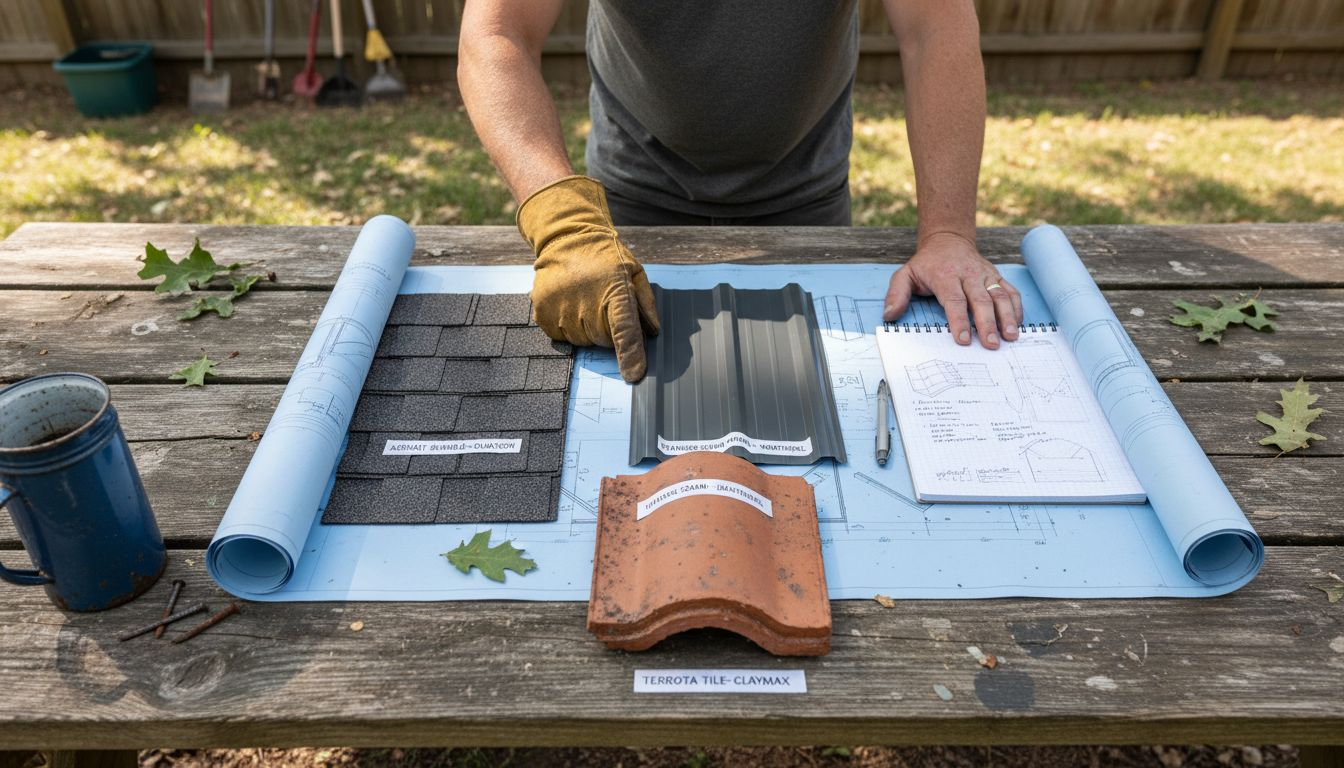
Ask which roofing materials are best suited for Texas heat, wind, and hail and why. Contractors should explain how materials perform under intense sun exposure and severe weather events. Explore the pros and cons of metal versus asphalt shingles regarding energy efficiency and durability, as both are popular in Texas but offer different benefits.
Confirm material warranties and request manufacturer certification. Quality materials come with manufacturer warranties covering defects, and certified products meet industry standards. Discuss special considerations for TPO and flat roofs in Texas, as these systems require different installation techniques and drainage management to prevent leaks.
| Material Type | Durability (Years) | Energy Efficiency | Cost Range |
|---|---|---|---|
| Asphalt Shingles | 15 to 25 | Moderate | Low to Moderate |
| Metal Roofing | 40 to 70 | High | Moderate to High |
| TPO (Flat Roof) | 15 to 30 | High | Moderate |
| Tile Roofing | 50+ | High | High |
Understanding how quality roofing extends lifespan and delivers long-term savings helps you evaluate material recommendations. Metal roofs offer benefits like energy efficiency and durability that justify higher upfront costs in Texas.
Pro Tip: Ask contractors to provide samples of recommended materials so you can inspect quality and finish before committing to a purchase.
- Which roofing materials perform best in Texas heat, wind, and hail?
- What are the advantages and disadvantages of metal versus asphalt shingles for my home?
- Do materials come with manufacturer warranties, and are they certified?
- How do you handle special considerations for TPO or flat roofs?
- Can you provide material samples for inspection?
Warranty and workmanship guarantee questions
Warranties protect your roofing investment by covering defects and workmanship failures. Without written warranties, you have limited recourse if problems arise after installation.
Ask what warranties are offered on roofing materials and workmanship. Materials typically come with manufacturer warranties, while contractors provide workmanship guarantees covering installation quality. Ensure warranties are provided in writing and are transferable, as transferability adds value if you sell your home.
Clarify the length of warranty coverage and specific inclusions or exclusions. Some warranties cover only material defects, while others include labor costs for repairs. Ask how claims on warranties are handled and who authorizes repairs or replacements, as this affects how quickly issues get resolved.
- What warranties are offered on roofing materials and workmanship?
- Are warranties provided in writing and transferable to future homeowners?
- How long does warranty coverage last, and what is specifically included or excluded?
- What is the process for filing warranty claims and getting repairs authorized?
- Who is responsible for labor costs during warranty repairs?
Reference, reviews, and experience verification questions
Verifying contractor reputation through references and customer feedback helps you assess reliability and work quality. Past performance is the strongest predictor of future results.
Request references from recent Texas roofing projects and contact them directly. Ask references about project timeliness, communication, cleanup, and overall satisfaction. Ask about the percentage of positive feedback and check verified reviews online on platforms like Google, Yelp, and the Better Business Bureau.
Request portfolios or photos of completed roofing replacements or repairs. Visual evidence demonstrates the contractor’s skill and attention to detail. Research any complaints or dispute resolutions on Better Business Bureau or similar platforms to uncover red flags.
Contractors with Better Business Bureau ratings of A or higher show 40% fewer complaints about project delays and workmanship issues, making BBB ratings a reliable indicator of contractor dependability.
- Can you provide references from recent Texas roofing projects I can contact?
- What percentage of your customer feedback is positive?
- Do you have a portfolio or photos of completed roofing projects?
- What is your Better Business Bureau rating, and are there any complaints?
- How do you resolve disputes or customer concerns?
Pricing, estimates, and transparency questions
Detailed written estimates prevent surprise costs and help you budget accurately. Transparent pricing reflects a contractor’s honesty and professionalism.
Request a detailed written estimate breaking down labor, materials, permits, and fees. Itemized estimates allow you to compare costs fairly and identify where your money goes. Ask about potential extra or hidden costs that may arise, such as structural repairs discovered during tear-off or disposal fees for old materials.
Compare at least three contractor estimates to gauge fair pricing. Significant price differences may indicate varying quality levels or incomplete scopes of work. Inquire about payment schedules, required deposits, and financing options to plan cash flow and avoid overcommitting upfront.
Understand your budget constraints while ensuring quality needs are met. The cheapest estimate may cut corners, while the highest may not guarantee better results. Learning how to get roofing estimates in Houston helps you navigate the process confidently.
- Request a detailed written estimate itemizing labor, materials, permits, and fees.
- Ask about potential extra or hidden costs that may arise during the project.
- Compare at least three contractor estimates to gauge fair market pricing.
- Inquire about payment schedules, required deposits, and available financing options.
- Clarify what is included in the estimate and what might incur additional charges.
- Ensure the estimate specifies project timelines and completion dates.
Contractor compliance with Texas building codes and regulations
Compliance with Texas building codes and regulations ensures your roof meets safety standards and qualifies for insurance coverage. Noncompliant work can void insurance policies and create legal liabilities.
Ask how the contractor ensures compliance with Texas windstorm and roofing codes. Texas has specific requirements for wind resistance and installation methods, especially in coastal areas. Request proof of building permits and code adherence documentation, as permits demonstrate the contractor follows legal processes.
Verify if materials meet the Texas Department of Insurance requirements. Some insurance companies mandate specific materials or installation standards for coverage eligibility. Confirm if the contractor is registered with local authorities and licensed as required, ensuring they operate legally in your jurisdiction.
- How do you ensure compliance with Texas windstorm and roofing codes?
- Will you obtain all necessary building permits for my project?
- Do the materials and installation methods meet Texas Department of Insurance requirements?
- Are you registered and licensed with local authorities in my area?
- Can you provide documentation proving code compliance after project completion?
Questions about contractor experience with specific roof types
Experience with your specific roof type ensures skilled workmanship and efficient project completion. Contractors specializing in certain materials or systems deliver better results than generalists.
Ask how many metal roofing installations the contractor has completed and details about suppliers. Metal roofing requires specialized tools and techniques, and supplier relationships indicate material quality. Inquire about experience specifically with shingle roof replacements in Texas, as shingle installation demands precision to prevent leaks and ensure longevity.
Discuss how the contractor handles challenges with flat and TPO roofs. Flat roofs require careful drainage design and seam welding expertise. Request typical project timelines by roof type to anticipate duration and plan accordingly.
Emphasize that type-specific experience reduces risk and improves quality. Contractors with proven track records in your roof type are more likely to deliver satisfactory results and handle unexpected issues competently.
- How many metal roofing installations have you completed, and who are your suppliers?
- What is your experience with shingle roof replacements in Texas?
- How do you handle challenges specific to flat and TPO roofs?
- What are typical project timelines for my roof type?
- Can you provide examples of past projects similar to mine?
Summary comparison table of key contractor questions and factors
This table consolidates all essential questions and evaluation factors, enabling you to quickly compare and prioritize during contractor interviews. Use it as a checklist to ensure comprehensive vetting.
| Factor | Key Questions | Why It Matters |
|---|---|---|
| Licensing and Insurance | Texas license verified? Liability and workers’ comp coverage? | Protects you from liability and ensures contractor legitimacy |
| Material Suitability | Best materials for Texas heat, wind, hail? Manufacturer warranties? | Ensures durability and energy efficiency suited to local climate |
| Warranty Coverage | Written workmanship and material warranties? Transferable? | Provides long-term protection and recourse for defects |
| References and Reviews | Recent Texas project references? BBB rating? | Verifies reputation, reliability, and customer satisfaction |
| Pricing Transparency | Detailed written estimate? Hidden costs disclosed? | Prevents surprise expenses and enables fair cost comparison |
| Code Compliance | Texas windstorm and building code adherence? Permits obtained? | Ensures insurance eligibility and legal compliance |
| Roof Type Experience | Experience with your specific roof type? Typical timelines? | Improves workmanship quality and project efficiency |
Referring to this table throughout your contractor search keeps you organized and focused. Explore how to get roofing estimates in Houston for additional guidance on the estimation process.
Situational recommendations: which questions matter most for your roofing need
Different roofing projects demand different priorities. Tailoring your questions to your specific situation optimizes decision-making and ensures you hire the right contractor.
For roof repairs, prioritize warranty and material compatibility questions to ensure lasting fixes. Repairs must blend seamlessly with existing materials to prevent leaks and maintain appearance. For full roof replacements, emphasize licensing verification and contractor experience with large projects, as replacements involve greater complexity and investment.
Metal roof buyers should focus heavily on contractor metal roofing expertise and supplier relationships. Metal roofing demands specialized installation skills and quality materials to achieve durability and energy efficiency. Budget-conscious homeowners must rigorously scrutinize pricing transparency and seek detailed estimates to avoid overpaying or encountering hidden costs.
Always ensure full Texas code compliance to protect insurance eligibility regardless of project. Noncompliant work can void coverage and create costly legal issues.
Pro Tip: If your project involves insurance claims for storm damage, ask contractors about their experience working with insurance adjusters to streamline the claims process and maximize coverage.
- Roof repairs: Focus on warranty coverage and material compatibility
- Full replacements: Emphasize licensing, insurance, and large project experience
- Metal roofing: Prioritize contractor metal roofing expertise and supplier quality
- Budget projects: Scrutinize pricing transparency and compare multiple estimates
- Insurance claims: Ask about adjuster experience and claims support
Find trusted roofing contractors for your Texas home
Now that you understand the essential questions to ask, it’s time to connect with experienced roofing contractors who meet these standards. Mister ReRoof offers expert roofing contractors experienced with Texas-specific roof types and regulations, ensuring your home receives quality workmanship tailored to local conditions.
Services include shingle roof replacement in Sugar Land, metal roof replacement in Victoria, and TPO roof replacement in El Campo, all installed with attention to durability and energy efficiency. Transparent pricing and licensed workmanship with written warranties secure your investment and provide peace of mind. Explore specialized options and get a free estimate today to protect your Texas home with roofing built to withstand extreme weather.
Frequently asked questions
What questions should I ask to verify a roofing contractor’s license in Texas?
Ask to see the contractor’s Texas roofing license and verify it online with the Texas Department of Licensing and Regulation to confirm it’s current and free of disciplinary actions. Request proof of current liability and workers’ compensation insurance to protect yourself from liability if accidents occur.
How do I ensure roofing materials are suitable for Texas weather?
Ask contractors about roofing materials recommended specifically for heat, wind, and hail resistance in Texas and why they perform well under extreme conditions. Request manufacturer certifications and warranties to confirm materials meet durability standards and are backed by reputable suppliers.
What should be included in a roofing warranty?
Warranties should cover both materials and workmanship in writing, with clear duration and transferability to future homeowners if you sell. Understand how claims are processed, what circumstances are covered, and who is responsible for labor costs during warranty repairs.
How can I check a roofing contractor’s reputation?
Request recent Texas project references and contact them to ask about timeliness, communication, and overall satisfaction. Check online reviews and Better Business Bureau ratings for complaint history and customer feedback, as higher ratings correlate with fewer issues.
Why is getting a detailed roofing estimate important?
A detailed estimate breaks down labor, materials, permits, and fees to prevent surprise costs and help you budget accurately. Comparing multiple estimates helps ensure fair pricing, identifies scope differences, and enables informed decision-making based on value rather than lowest price alone.