
Sudden storms and scorching summer temperatures can put any Houston homeowner’s roof to the test. Choosing durable roofing materials matters here because your property faces unpredictable weather and must meet strict local building codes for lasting protection. This guide shows how to balance performance, cost, and reliability, with special attention to wind resistance ratings and material choices designed for Houston’s unique climate.
Table of Contents
- Step 1: Assess Houston-Specific Roofing Needs
- Step 2: Compare Popular Roofing Material Options
- Step 3: Evaluate Durability and Storm Resistance
- Step 4: Estimate Costs and Long-Term Value
- Step 5: Confirm Contractor Recommendations and Warranties
Quick Overview
| Key Insight | Explanation |
|---|---|
| 1. Assess Local Roofing Needs | Understand Houston’s climate and regulations to choose suitable roofing materials. |
| 2. Compare Material Benefits | Evaluate options like asphalt, metal, tile, and slate based on durability and cost. |
| 3. Evaluate Storm Resistance | Focus on materials’ ability to resist wind, hail, and temperature changes. |
| 4. Analyze Future Costs | Consider long-term maintenance and energy efficiency, not just initial costs. |
| 5. Understand Warranties Properly | Verify warranty details to ensure coverage against material defects and installation issues. |
Step 1: Assess Houston-Specific Roofing Needs
Assessing your roofing requirements starts with understanding Houston’s unique climate challenges and local regulatory landscape. Your roof must withstand intense heat, sudden storms, and potential hurricane-force winds while meeting local building standards.
To effectively evaluate your roofing needs, consider these critical factors specific to Houston’s environment:
- Wind resistance ratings critical for hurricane-prone regions
- Material durability against extreme temperature fluctuations
- Heat reflection capabilities to manage energy efficiency
- Compliance with local building code requirements
Houston homeowners must navigate complex local regulations when selecting roofing materials. Unlike many states, Texas does not mandate statewide roofer licensing, which means you’ll need to conduct thorough research and verify contractor credentials independently. This makes understanding local permit processes even more crucial.
Selecting the right roofing material isn’t just about aesthetics – it’s about protecting your most significant investment against Houston’s unpredictable weather.
Comprehensive material assessment involves reviewing multiple factors beyond initial cost. Consider long-term performance, maintenance requirements, and how specific materials respond to Houston’s challenging environmental conditions.
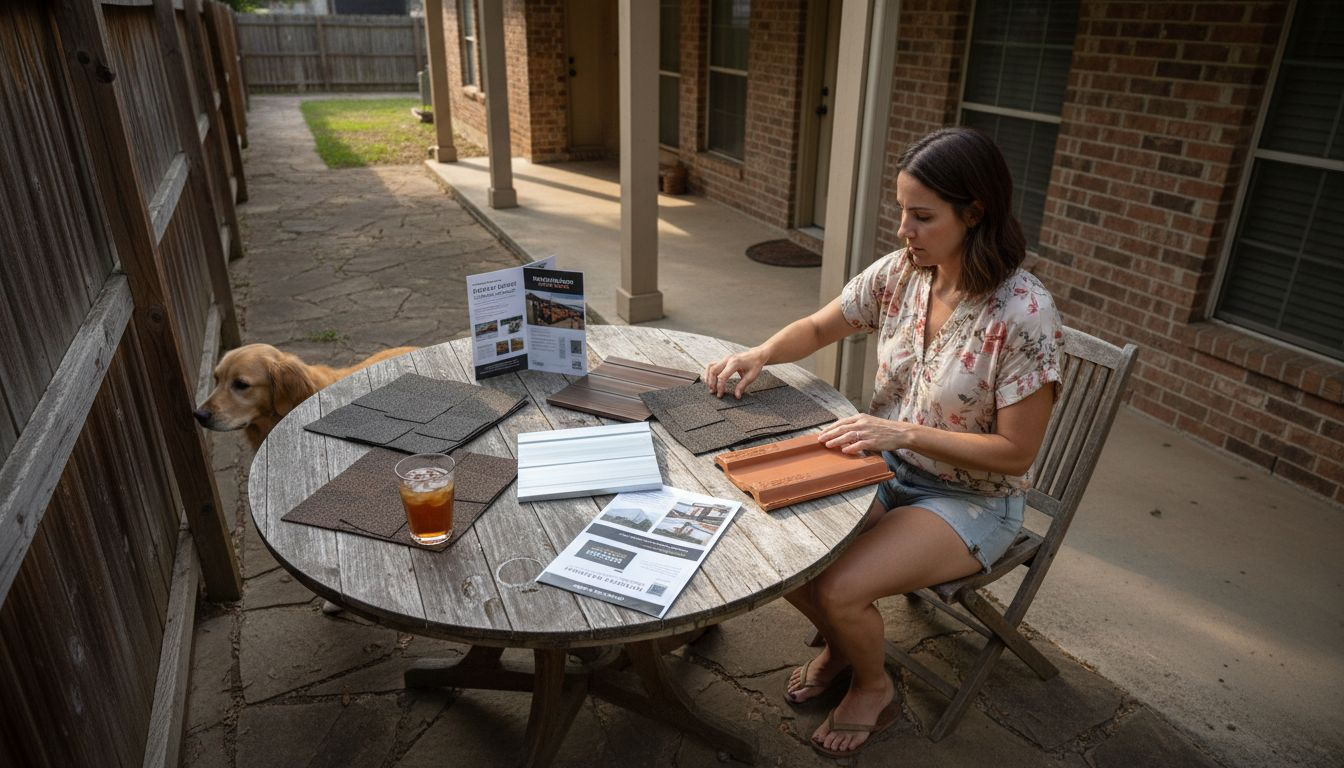
Pro tip: Request documentation proving your chosen roofing material meets Houston’s specific building code standards before beginning any installation project.
Step 2: Compare Popular Roofing Material Options
Comparing roofing materials requires a strategic approach that balances durability, cost, and performance specific to Houston’s challenging climate. Your goal is to select a material that provides long-lasting protection while meeting your budget and aesthetic preferences.
When evaluating roofing options, consider these primary material categories:
- Asphalt shingles: Most common and budget-friendly
- Metal roofing: Excellent durability and heat reflection
- Tile roofing: High aesthetic value and exceptional longevity
- Slate roofing: Premium material with superior weather resistance
Each material offers unique advantages. Roofing material comparisons reveal critical differences in performance, with factors like wind resistance, heat tolerance, and installation complexity playing significant roles in your decision.
Not all roofing materials are created equal – your choice directly impacts your home’s protection and long-term value.
Comprehensive material evaluation means examining more than just upfront costs. Consider long-term maintenance requirements, energy efficiency, and how each material performs under Houston’s intense heat and potential storm conditions.
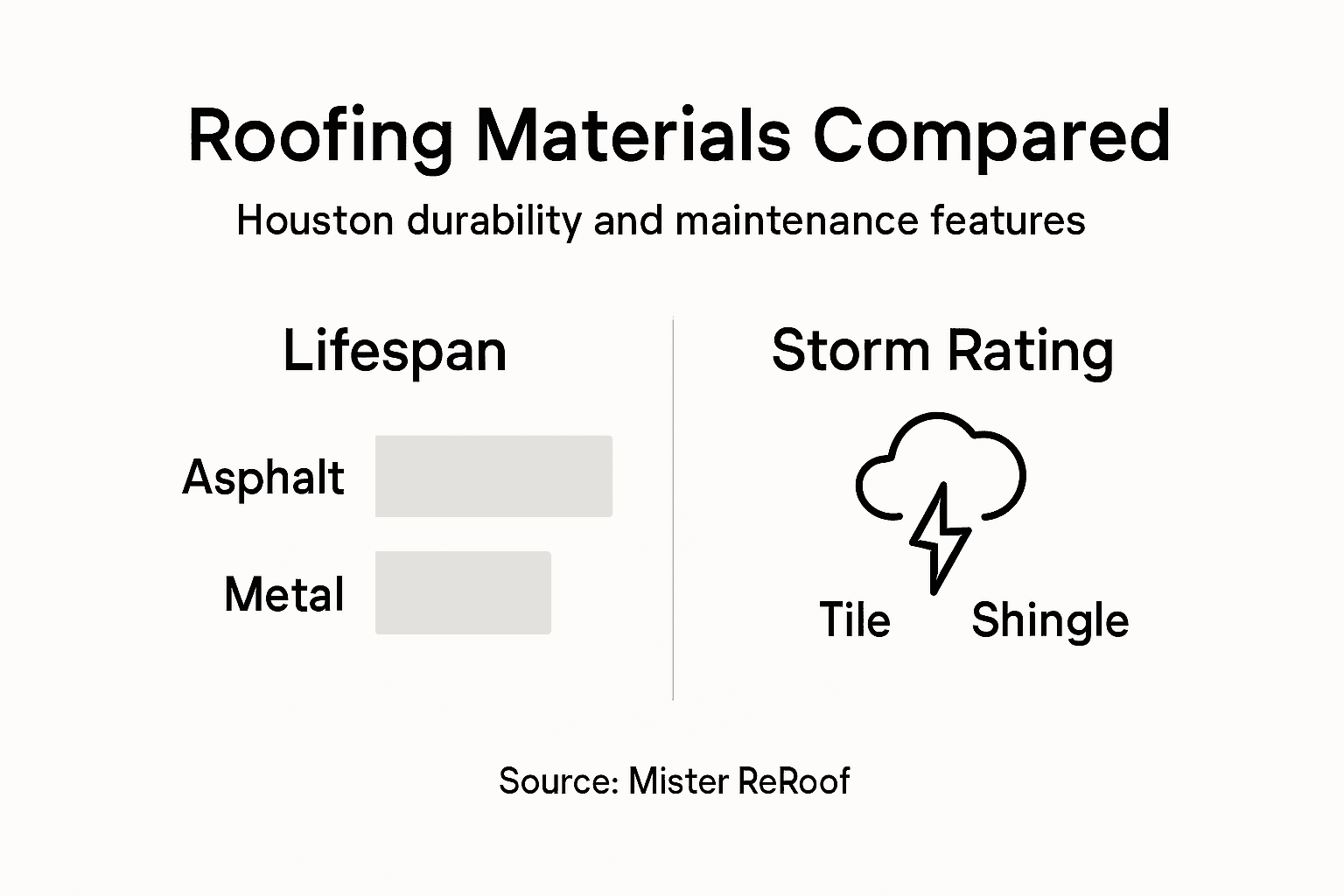
Here’s how popular roofing materials compare for Houston homes:
| Material Type | Lifespan Estimate | Storm Resistance Level | Typical Maintenance Needs |
|---|---|---|---|
| Asphalt Shingles | 15-25 years | Moderate | Occasional inspections, repairs |
| Metal Roofing | 40-70 years | High | Minimal, periodic checks |
| Tile Roofing | 50+ years | Very High | Rare, mostly broken tiles |
| Slate Roofing | 75-100 years | Exceptional | Specialty care, rarely needed |
Pro tip: Request sample materials and professional installation recommendations to understand how each roofing option performs in Houston’s specific environmental conditions.
Step 3: Evaluate Durability and Storm Resistance
Evaluating the durability and storm resistance of roofing materials is crucial for protecting your Houston home against extreme weather conditions. Understanding how different materials perform under intense heat, high winds, and potential hail damage will help you make an informed decision that safeguards your property.
When assessing storm resistance, focus on these key performance indicators:
- Wind speed tolerance for hurricane-prone regions
- Impact resistance against hail and debris
- Material’s ability to withstand temperature fluctuations
- Fire and moisture resistance capabilities
Tile roofing durability tests demonstrate remarkable resilience, with some materials capable of withstanding wind speeds up to 200 MPH. This makes certain roofing options particularly attractive for Houston’s unpredictable weather patterns.
Your roof is your home’s first line of defense – choosing the right material can mean the difference between minor repairs and catastrophic damage.
Material-specific durability varies significantly. Asphalt shingles offer moderate protection, while premium options like metal and tile roofing provide enhanced longevity and performance under extreme conditions. Consider not just the initial cost, but the long-term protection and potential insurance benefits of more resilient roofing materials.
Pro tip: Request wind and impact resistance ratings from manufacturers to understand exactly how each roofing material will perform during Houston’s most challenging weather events.
Step 4: Estimate Costs and Long-Term Value
Estimating roofing costs goes far beyond simply calculating the initial price tag. Your goal is to understand the comprehensive financial investment, including upfront expenses, maintenance requirements, and potential long-term savings for your Houston home.
When developing a thorough cost analysis, consider these critical financial factors:
- Initial material and installation costs
- Projected maintenance expenses
- Energy efficiency potential
- Insurance premium implications
- Expected lifespan of roofing material
Construction cost surveys reveal that roofing represents a significant portion of home construction budgets, making careful financial planning essential.
A smart roofing investment balances immediate affordability with long-term performance and durability.
Material-specific cost considerations vary widely. Asphalt shingles typically represent the most budget-friendly option, while metal and tile roofing offer higher upfront costs but potentially lower lifetime expenses through improved durability and energy efficiency. Analyze not just the initial price, but the total cost of ownership over your roof’s expected lifespan.
Pro tip: Request detailed life-cycle cost estimates from roofing professionals to understand the true financial impact of your roofing material choice.
Step 5: Confirm Contractor Recommendations and Warranties
Verifying contractor recommendations and understanding warranty details are critical steps in ensuring your roofing investment provides long-lasting protection for your Houston home. Your goal is to thoroughly evaluate professional advice and warranty coverage before making a final decision.
When reviewing contractor recommendations, focus on these essential verification points:
- Contractor certification credentials
- Detailed warranty documentation
- Specific coverage terms and conditions
- Workmanship guarantees
- Professional references and past project examples
Roof certification warranties differ from standard manufacturer warranties by guaranteeing the roof’s current condition and leak-free performance through professional inspections.
A comprehensive warranty is more than just a piece of paper – it’s your protection against potential future roofing failures.
Warranty investigation requires careful scrutiny of both manufacturer and contractor guarantees. Look for warranties that cover materials, workmanship, and potential installation defects. Premium roofing materials often come with more extensive coverage, so understand exactly what protections are included in your specific contract.
Compare the key warranty features you should review:
| Warranty Aspect | Why It Matters | What to Clarify |
|---|---|---|
| Coverage Duration | Affects long-term value | Start/end dates, transferability |
| Material vs. Labor | Protects against defects | Who covers repairs or materials |
| Exclusions | Avoid surprises | Storm, fire, poor installation |
| Claim Process | Impacts support speed | How and whom to contact |
Pro tip: Request a line-by-line explanation of warranty terms and have a roofing professional translate any complex legal language into plain English.
Secure Your Houston Home with Expert Roofing Solutions from Mister ReRoof
Choosing the right roofing materials is critical to protect your home against Houston’s intense heat, powerful storms, and strict building codes. This article highlights key challenges like storm resistance, durability, and long-term value that every homeowner must consider. Don’t let uncertainty about material performance or warranty coverage put your investment at risk.
At Mister ReRoof, we specialize in providing durable, storm-resistant roofing systems tailored specifically for Houston’s climate. Whether you need professional advice on metal, shingle, flat, or TPO roofing, our experienced contractors ensure expert installation backed by clear warranty terms. We understand how important it is to balance initial costs with long-term protection and energy efficiency.
Ready to select roofing materials that stand the test of Houston weather while adding lasting value to your property? Contact us today for a free estimate and personalized consultation. Visit Mister ReRoof now and secure your home with trusted local experts who care about quality, safety, and your peace of mind.
Frequently Asked Questions
How do I assess my roofing needs specific to my location?
To assess your roofing needs, evaluate factors like local climate conditions, including heat and storm frequency, and check for wind resistance ratings necessary for your area. Analyze these requirements by conducting a detailed inspection of your home’s roofing structure and consulting local building codes.
What are the most durable roofing materials for extreme weather conditions?
The most durable roofing materials for extreme weather include metal and tile roofing, which offer high wind resistance and longevity. Research the specific performance ratings for these materials to ensure they meet your area’s weather challenges.
How can I compare the long-term costs of different roofing materials?
To compare long-term costs, consider not just the initial price of materials, but also maintenance, energy efficiency, and lifespan. Calculate potential savings from reduced maintenance and insurance premiums by estimating each material’s total cost over its expected lifespan.
What features should I look for in roofing material warranties?
When reviewing roofing material warranties, look for coverage duration, what is included (materials versus labor), and any exclusions that apply. Clarify the claim process to understand how to access support in case of future roofing issues.
How do I verify contractor credentials before hiring?
To verify contractor credentials, check their certification, ask for detailed warranty documentation, and request professional references. Ensure thorough research by reviewing past project examples to gauge their quality of work and reliability.
