Storm season in Houston often leaves homeowners concerned as unexpected drips or stains signal a hidden roof leak. With extreme rainfall and frequent flooding, local roofs face increased vulnerability to storm damage and material breakdown. Understanding these unique challenges helps Houston residents identify early warning signs and avoid costly problems. This guide offers practical insights to help you protect your home, maintain roof durability, and know when to call a trusted roofing expert for repairs.
Table of Contents
- What Causes Roof Leaks in Houston
- Types of Roofs Most Prone to Leaks
- Weather and Storm Damage Risks
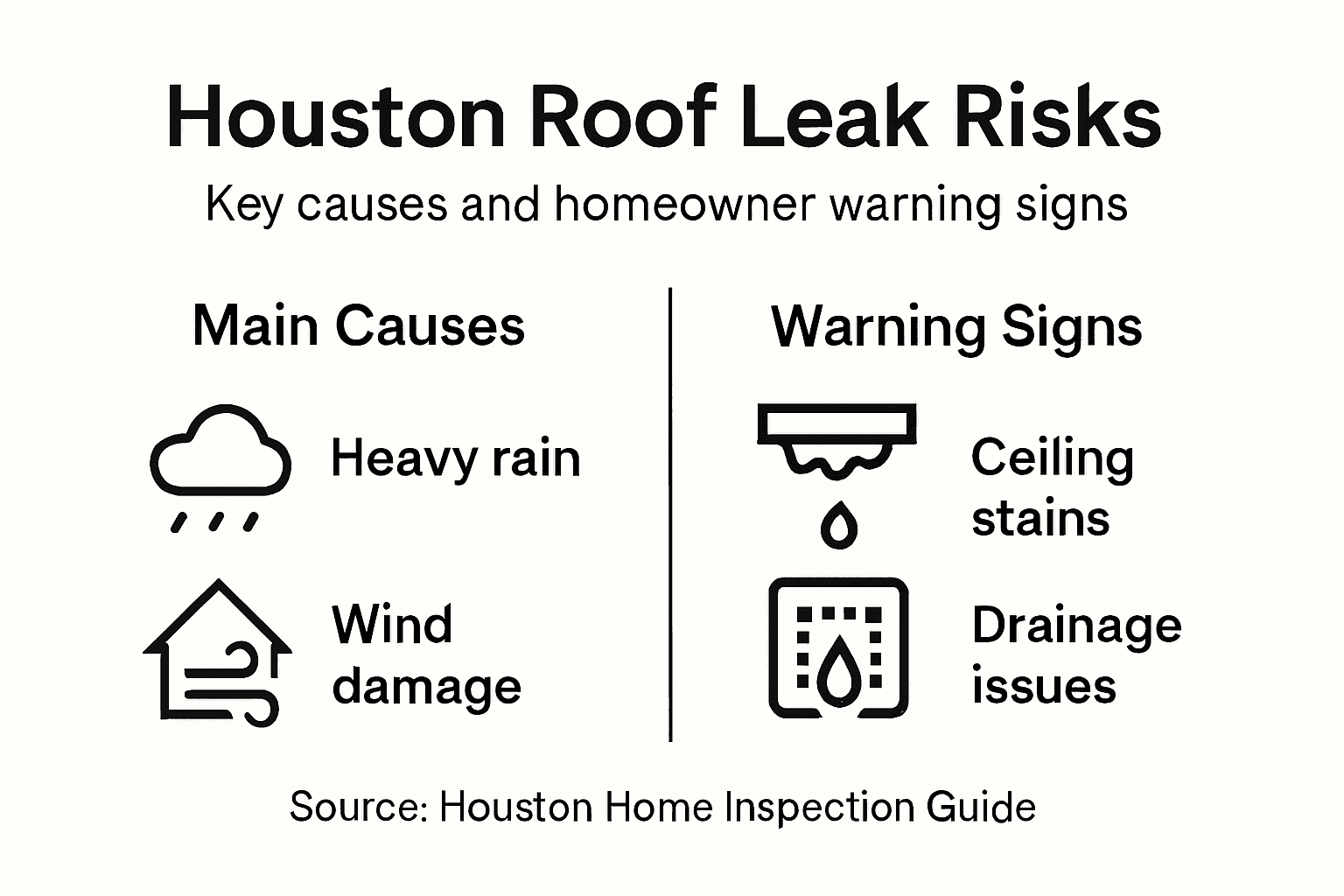
- Common Warning Signs of a Leak
- Mistakes to Avoid in Roof Leak Repair
Key Takeaways
| Point | Details |
|---|---|
| Roof Leaks in Houston | Heavy rainfall, clay soil, and frequent storms significantly increase the risk of leaks, necessitating proactive roof maintenance. |
| High-Risk Roof Types | Flat roofs, low-slope roofing, and aged asphalt shingles are particularly vulnerable to leaks and require regular inspections. |
| Importance of Inspections | Scheduling professional inspections post-storm and at least semi-annually is crucial for identifying vulnerabilities early. |
| Avoiding Repair Mistakes | Homeowners should avoid DIY quick fixes and incomplete leak source identification to prevent escalating repair costs. |
What Causes Roof Leaks in Houston
Houston’s complex weather patterns and environmental conditions create a perfect storm for roof damage. Extreme rainfall events and flooding risks dramatically increase the likelihood of roof leaks for local homeowners. Understanding these unique challenges helps residents proactively protect their most significant investment.
The primary causes of roof leaks in Houston stem from several interconnected factors:
- Heavy Rainfall: Houston receives an average of 49.77 inches of rain annually, far exceeding national averages
- Clay Soil Conditions: Local soil does not absorb water efficiently, increasing structural stress
- Storm Intensity: Frequent severe thunderstorms and hurricane-related wind events
- Rapid Urban Development: Increased impermeable surfaces reduce natural water drainage
Houston’s flat topography compounds these challenges. Wind damage and improper roof design frequently contribute to leak vulnerabilities. Professional roofing inspections become critical in identifying potential weak points before catastrophic failures occur.
Weathering processes accelerate roof deterioration faster in Houston compared to many other regions. Constant temperature fluctuations, intense UV exposure, and moisture create a perfect environment for material degradation. Metal flashings, shingle edges, and roof seams become particularly susceptible to developing microscopic cracks that eventually lead to significant water intrusion.
Pro tip: Schedule professional roof inspections twice annually, ideally before and after hurricane season, to catch potential leak sources early and prevent extensive water damage.
Here’s a summary of how Houston’s climate affects roof durability and maintenance decisions:
| Climate Factor | Impact on Roofs | Best Maintenance Practice |
|---|---|---|
| Heavy Rainfall | Increased leak risk | Regular gutter and drainage checks |
| High Humidity | Faster material breakdown | Ventilation improvements |
| Intense Sunlight | Accelerated UV degradation | Use UV-resistant materials |
| Frequent Storms | Wind and impact damage | Post-storm professional inspections |
| Temperature Swings | Material expansion/contraction | Seal and reinforce flashings |
Types of Roofs Most Prone to Leaks
Houston homeowners face unique challenges when it comes to roof durability, with certain roof types presenting higher risks of water infiltration. Flat roofs and complex roof designs are particularly vulnerable to leaks due to their structural characteristics and potential drainage issues.
The most leak-prone roof types in the Houston area include:
- Flat Roofs: Minimal slope prevents efficient water runoff
- Low-Slope Roofing: Increases water pooling potential
- Metal Roofs: Susceptible to expansion and contraction
- Aged Asphalt Shingle Roofs: Material degradation over time
- Modified Bitumen Roofs: Common in commercial buildings
Chemical and physical stresses dramatically impact roof system integrity. Roof material and installation quality play critical roles in determining long-term leak resistance. Factors like ventilation, thermal cycling, and UV exposure accelerate material breakdown, creating microscopic vulnerabilities that can lead to significant water damage.
Regional environmental conditions in Houston exponentially increase roof leak risks. The combination of high humidity, intense sunlight, frequent storms, and temperature fluctuations creates a perfect storm for roof deterioration. Homeowners must understand that proactive maintenance and periodic professional inspections are not optional but essential strategies for protecting their property.
Pro tip: Invest in annual professional roof assessments, focusing on potential weak points like flashings, seams, and drainage areas to prevent costly water damage.
Compare different roof types for leak susceptibility and key maintenance priorities:
| Roof Type | Leak Susceptibility Level | Main Maintenance Focus |
|---|---|---|
| Flat Roofs | High | Drainage system upkeep |
| Low-Slope Roofs | Moderate to High | Routine sealant checks |
| Metal Roofs | Moderate | Fastener and seam inspection |
| Asphalt Shingle Roofs | Increasing with age | Shingle replacement, moss removal |
| Modified Bitumen | High in aging structures | Recoating and seam sealing |
Weather and Storm Damage Risks
Houston’s geographical location makes it particularly vulnerable to severe weather events that can devastate residential roofing systems. Extreme rainfall and frequent flooding create significant challenges for homeowners seeking to protect their property from water intrusion and structural damage.
The primary storm-related risks to Houston roofs include:
- High-Velocity Winds: Can lift or tear shingles
- Hurricane-Force Gusts: Potential for complete roof system failure
- Intense Rainfall: Overwhelming drainage systems
- Hail Damage: Puncturing and compromising roof materials
- Debris Impact: Causing structural roof penetrations
Severe weather events like Hurricane Beryl demonstrate the catastrophic potential of storm damage. Winds exceeding 70 miles per hour can create immediate and long-term roofing vulnerabilities, with potential consequences ranging from minor leaks to total roof collapse.
The cumulative impact of repeated storm exposure accelerates roof deterioration. Thermal cycling, moisture penetration, and mechanical stress progressively weaken roofing materials, creating microscopic failures that eventually lead to significant water intrusion. Houston homeowners must recognize that storm damage is not always immediately visible, and professional post-storm inspections are crucial for identifying hidden vulnerabilities.
Pro tip: Schedule a comprehensive roof inspection within 30 days after any major storm event, documenting potential damage for insurance purposes and preventing escalating repair costs.
Common Warning Signs of a Leak
Identifying roof leaks early can save Houston homeowners thousands in potential repair costs. Visible warning signs of water damage provide critical indicators of potential structural vulnerabilities that demand immediate attention.
Critical warning signs every Houston homeowner should monitor include:
- Interior Ceiling Stains: Yellow or brown discoloration
- Water Dripping: Active water penetration during or after rainfall
- Mold Growth: Dark spots or fuzzy patches near ceiling corners
- Peeling Paint: Bubbling or separating wall and ceiling surfaces
- Musty Odors: Persistent dampness indicating hidden moisture
Roof drainage system deterioration often precedes significant water intrusion. Damaged or clogged gutters, blocked drainage points, and compromised flashing can transform minor vulnerabilities into extensive structural problems. Houston’s humid climate accelerates these deterioration processes, making regular inspection crucial.
Understanding the progression of water damage helps homeowners recognize subtle signs before catastrophic failures occur. Microscopic leaks can quickly evolve into major structural issues, potentially compromising the entire roofing system. Proactive monitoring and swift professional assessment are the most effective strategies for mitigating long-term damage and protecting your home’s structural integrity.
Pro tip: Conduct a thorough visual roof inspection after every major storm, using binoculars to safely examine roof surfaces from ground level without risking personal injury.
Mistakes to Avoid in Roof Leak Repair
Houston homeowners frequently make critical errors when addressing roof leaks that can transform minor problems into expensive catastrophes. Incorrect repair techniques can dramatically accelerate roof system deterioration and lead to extensive structural damage.
Common mistakes to avoid during roof leak repairs include:
- DIY Quick Fixes: Temporary patches that mask underlying issues
- Ignoring Manufacturer Guidelines: Using incompatible repair materials
- Incomplete Leak Source Identification: Addressing symptoms instead of root causes
- Delaying Professional Assessment: Allowing damage to compound
- Improper Drainage Correction: Neglecting gutter and runoff systems
Manufacturer installation recommendations are critical for maintaining warranty coverage and ensuring proper repair techniques. Each roofing material requires specific approaches, and generic solutions can void warranties and create long-term structural vulnerabilities.
Understanding the complexity of roof systems requires professional expertise. Houston’s unique climate compounds repair challenges, with humidity, temperature fluctuations, and frequent storms creating intricate damage patterns that demand specialized knowledge. Amateur repairs often introduce more problems than they resolve, potentially compromising the entire roofing structure and leading to significantly higher repair costs.
Pro tip: Always document roof damage with dated photographs and detailed notes before attempting any repairs, which can help with insurance claims and professional assessment.
Protect Your Houston Home From Costly Roof Leaks Today
Houston’s unique weather challenges like heavy rainfall and intense storms create serious risks for roof leaks that can quickly become expensive problems. If you’re noticing warning signs such as ceiling stains or suspect damage after a storm, it’s critical to act before small leaks lead to major structural issues. Mister ReRoof understands these local challenges and specializes in high-quality, durable roofing solutions tailored to Houston’s climate conditions.

Don’t let roof vulnerability put your home or business at risk. Visit Mister ReRoof for expert inspections, reliable repairs, and long-lasting roof replacements that stand up to Houston’s climate. Schedule your free estimate now and secure your property with professional care designed specifically for Houston homeowners. Protect your investment with trusted roofing professionals who know how to prevent leaks and storm damage effectively.
Frequently Asked Questions
What are the primary causes of roof leaks?
The primary causes of roof leaks include heavy rainfall, clay soil conditions, storm intensity, and rapid urban development that leads to inadequate drainage.
How do weather conditions in Houston contribute to roof leaks?
Houston’s unique weather conditions, including high humidity, intense sunlight, and frequent storms, accelerate roof material deterioration and increase leak susceptibility.
Which types of roofs are most prone to leaking?
Flat roofs, low-slope roofing, aged asphalt shingle roofs, and modified bitumen roofs are particularly prone to leaks due to their structural characteristics and drainage issues.
What should homeowners look for as warning signs of a roof leak?
Homeowners should watch for interior ceiling stains, water dripping, mold growth, peeling paint, and musty odors, as these are common indicators of potential water intrusion.
Recommended
- Signs of Roof Damage: Protecting Houston Homes
- Why Timely Roof Repair Matters in Houston Homes
- 7 Essential Roof Maintenance Tips for Houston Homeowners
- Insurance for Roof Repairs – Protecting Houston Homes
- Leak Detection And Repair Project in Tampa FL 33616 – Home Therapist Cooling, Heating, and Plumbing
- Roofing Contractor El Campo TX
- Metal Roof Replacement El Campo TX
