Choosing a new roof isn’t just about picking colors or style. Houston homeowners know that intense heat, sudden storms, and humidity all put roofing systems to the ultimate test. Understanding the true meaning of roofing system lifespan can help you avoid costly mistakes and myths that risk your investment. This guide unpacks what actually determines roof longevity, compares popular Houston options, and reveals how climate, maintenance, and warranties shape what you can expect from your roof.
Table of Contents
- Defining Roofing System Lifespan And Myths
- Types Of Roofing Systems Used In Houston
- Key Factors Affecting Roof Durability
- Houston Climate’s Impact On Roof Longevity
- Roof Maintenance To Maximize Lifespan
- Costs, Warranties, And Replacement Timing
Key Takeaways
| Point | Details |
|---|---|
| Roof Lifespan Factors | Roof longevity in Houston is influenced by construction quality, materials, maintenance, and local environmental conditions, rather than just age. |
| Common Roofing Systems | prevalent systems include Asphalt Shingles, Metal Roofing, Tile Roofs, and Modified Bitumen, each with distinct durability and maintenance needs. |
| Climate Impact | Houston’s weather demands roofing materials resistant to extreme heat, high humidity, and storm-related stress for optimal lifespan. |
| Maintenance Importance | Regular, professional roof inspections and proactive repairs significantly enhance a roof’s longevity and prevent costly replacements. |
Defining Roofing System Lifespan and Myths
Roofing system lifespan represents the anticipated period a roof can effectively protect a home before requiring significant replacement or major rehabilitation. Houston homeowners face unique challenges when assessing roof longevity, given the region’s intense weather conditions and environmental stressors.
Understanding the nuanced concept of roofing system lifespan involves recognizing multiple critical factors beyond simple calendar years. Architectural longevity research demonstrates that lifespan relates directly to several interconnected elements:
- Construction protocols and material quality
- Maintenance frequency and intensity
- Local environmental conditions
- Installation expertise
- Material degradation rates
Many homeowners mistakenly believe that a roof’s age is the sole determinant of its functional capacity. In reality, estimated useful life calculations consider complex interactions between materials, maintenance, and environmental exposure.
Common roofing lifespan myths can lead to costly misconceptions. For instance, assuming all roofs uniformly deteriorate or that visual integrity guarantees structural protection represents dangerous oversimplification. Professional assessment remains crucial for accurate evaluation.
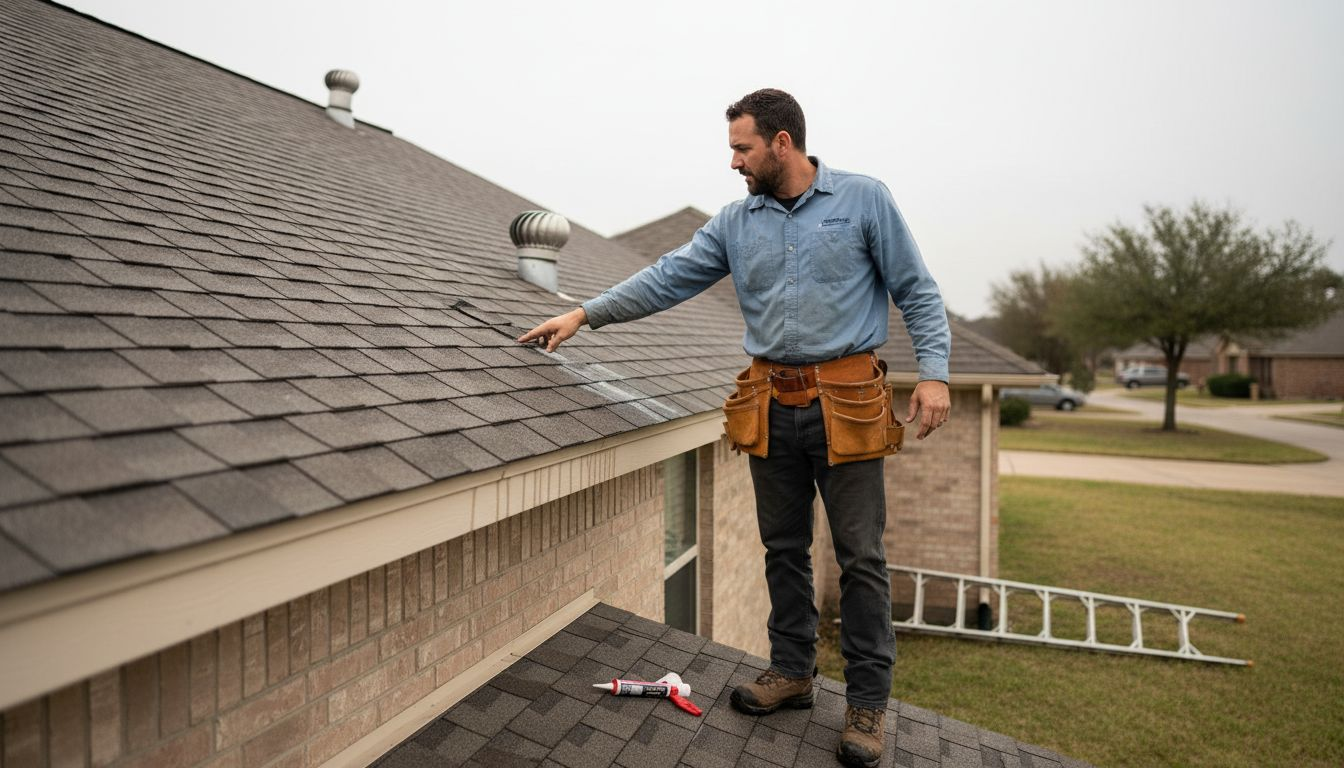
Pro tip: Schedule professional roof inspections every 2-3 years to accurately track your roofing system’s actual condition and potential remaining lifespan.
Types of Roofing Systems Used in Houston
Houston’s diverse climate demands robust and adaptable roofing systems capable of withstanding intense heat, humidity, and severe storm conditions. Roofing material selection plays a critical role in ensuring long-term home protection and resilience against regional environmental challenges.
The most prevalent roofing systems in Houston include:
- Asphalt Shingles: Most common residential roofing option
- Cost-effective
- Easy installation
- Multiple design variations
- Metal Roofing: Growing in popularity for durability
- Excellent heat reflection
- Long-lasting performance
- Enhanced wind resistance
- Tile Roofs: Aesthetic and functional alternative
- Superior durability
- Enhanced architectural appeal
- Better insulation properties
Modified bitumen systems offer specialized solutions for flat and low-slope roofs, particularly in commercial and some residential settings. These roofing types provide enhanced waterproofing and are engineered to address Houston’s unique environmental demands.
Each roofing system presents distinct advantages, with selection depending on factors like budget, architectural style, maintenance capacity, and specific performance requirements. Professional consultation remains crucial in determining the most suitable roofing solution for individual property needs.
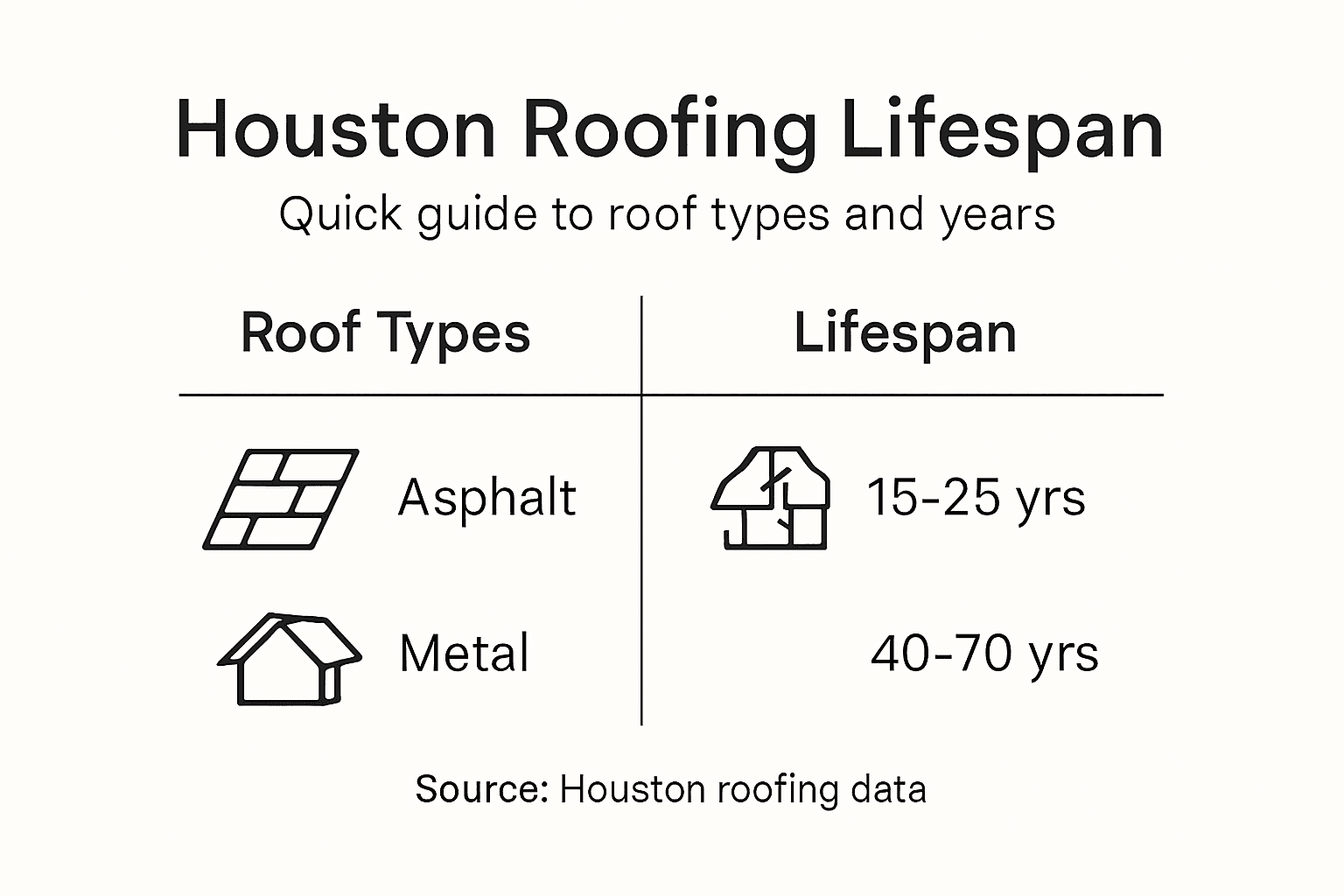
Here’s how common Houston roofing systems compare on key criteria:
| Roofing System | Typical Lifespan | Climate Suitability | Maintenance Level |
|---|---|---|---|
| Asphalt Shingles | 15-25 years | Moderate heat resistance | Needs periodic upkeep |
| Metal Roofing | 40-70 years | Excellent for extreme heat | Low, occasional inspection |
| Tile Roofs | 50+ years | High humidity resilience | Minimal, mostly repair chips |
| Modified Bitumen | 20-30 years | Superior waterproofing | Biannual professional check |
Pro tip: Consult a local roofing professional who understands Houston’s specific weather patterns to recommend the most appropriate roofing system for your specific property.
Key Factors Affecting Roof Durability
Roof durability in Houston represents a complex interplay of multiple critical factors that directly impact a roofing system’s long-term performance and resilience. Material selection and environmental exposure emerge as primary determinants of how effectively a roof can withstand the region’s challenging climate conditions.
Key factors influencing roof durability include:
- Material Composition
- Chemical resistance
- Structural integrity
- Thermal stability
- Installation Quality
- Precision of attachment methods
- Proper sealing techniques
- Alignment and overlap standards
- Environmental Stress
- Wind resistance
- UV radiation exposure
- Temperature fluctuation tolerance
Roof performance depends critically on understanding and mitigating potential environmental challenges. Houston’s unique weather patterns demand roofing systems capable of handling intense heat, sudden storms, and periodic hurricane-force winds.
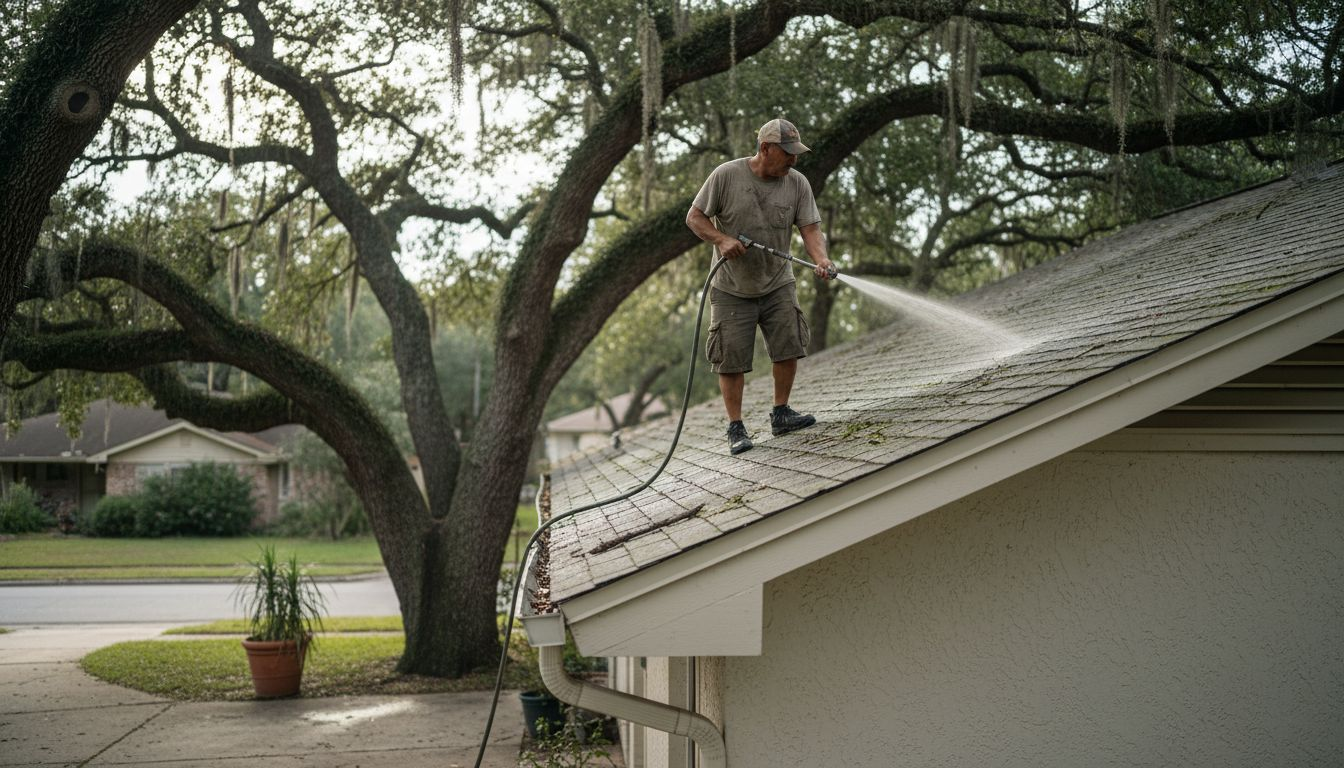
Professional maintenance plays an equally crucial role in extending roof durability. Regular inspections, prompt repairs, and proactive intervention can significantly extend a roof’s functional lifespan, preventing minor issues from escalating into major structural problems.
Pro tip: Schedule comprehensive roof inspections twice annually to identify and address potential durability concerns before they become expensive repairs.
Houston Climate’s Impact on Roof Longevity
Houston’s unique climate presents extraordinary challenges for roofing systems, demanding extraordinary resilience and strategic engineering. Climate-induced roofing vulnerabilities represent a critical consideration for homeowners seeking to protect their most significant investment.
Key climate-related factors impacting roof longevity include:
- Temperature Extremes
- Intense summer heat
- Rapid temperature fluctuations
- Thermal expansion and contraction
- Humidity Challenges
- High moisture levels
- Potential mold growth
- Material degradation risks
- Storm-Related Stress
- Hurricane-force winds
- Sudden heavy rainfall
- Potential debris impact
Climate resilient infrastructure strategies become essential in mitigating the persistent environmental challenges facing Houston homeowners. The region’s complex weather patterns demand roofing solutions that can withstand sudden thunderstorms, extreme heat, and periodic hurricane conditions.
Understanding these environmental stressors allows homeowners to make informed decisions about roofing materials, installation techniques, and maintenance strategies that can significantly extend roof longevity and performance.
Pro tip: Invest in roofing materials specifically engineered for Houston’s climate, prioritizing wind resistance and heat reflectivity to maximize your roof’s durability.
Roof Maintenance to Maximize Lifespan
Maintaining a roof in Houston requires strategic and systematic approaches that go beyond occasional repairs. Comprehensive roof maintenance protocols represent the most effective strategy for extending a roofing system’s functional lifespan and protecting your home’s structural integrity.
Critical maintenance practices include:
- Regular Inspection Protocols
- Biannual professional assessments
- Detailed damage documentation
- Comprehensive visual examinations
- Proactive Repair Strategies
- Immediate addressing of minor damages
- Seal and flashing integrity checks
- Preventative material treatments
- Debris and Drainage Management
- Clear gutters and drainage systems
- Remove accumulated organic materials
- Prevent water pooling and potential leaks
Maintenance best practices emphasize the importance of selecting qualified contractors who understand Houston’s unique environmental challenges. Professional expertise ensures proper repair techniques, material compatibility, and long-term performance optimization.
Understanding that preventative maintenance costs significantly less than comprehensive roof replacement, Houston homeowners should view systematic care as a critical investment in their property’s longevity and value.
Key maintenance actions and their expected benefits:
| Action | Recommended Frequency | Longevity Benefit |
|---|---|---|
| Professional Inspection | Every 6-12 months | Detects hidden issues early |
| Gutter & Drainage Cleaning | Every season | Prevents moisture damage |
| Minor Repairs (e.g., flashing) | As needed | Stops small leaks spreading |
| Maintenance Log Review | Annually | Tracks age and problem areas |
Pro tip: Create a detailed maintenance log tracking each inspection, repair, and intervention to help professionals diagnose potential issues more effectively.
Costs, Warranties, and Replacement Timing
Understanding the financial landscape of roof replacement requires careful consideration of multiple interconnected factors specific to Houston’s unique market conditions. Roof warranty complexities play a critical role in determining long-term investment strategies for homeowners.
Key cost and warranty considerations include:
- Warranty Duration
- Manufacturer warranties: 2-50 years
- Workmanship coverage: 2-10 years
- Material-specific variations
- Replacement Cost Factors
- Roof size and complexity
- Material selection
- Local labor rates
- Removal and disposal expenses
- Timing Indicators
- Age of current roofing system
- Visible structural damage
- Maintenance history
- Performance degradation
National replacement cost ranges demonstrate significant variability, typically spanning from $5,867 to $13,211 depending on specific project requirements. Houston homeowners should anticipate potential variations based on regional labor costs and material availability.
Comprehensive warranty evaluation involves understanding not just coverage length, but specific terms regarding material defects, installation issues, and prorated replacement options. Professional consultation can help decode these complex contractual nuances.
Pro tip: Request detailed warranty documentation and thoroughly review coverage terms before finalizing any roofing project to avoid unexpected future expenses.
Protect Your Houston Home with Expert Roofing Solutions
Houston’s challenging climate demands roofing systems that deliver durability and resilience tailored specifically for this region. Understanding the roofing system lifespan and key factors like material quality and environmental stress is crucial. At Mister ReRoof, we specialize in high-quality roof replacement services designed to withstand Houston’s intense heat, humidity, and storms. We help homeowners extend their roof’s life by using proven materials like metal, shingles, and flat roofing options backed by professional installation and maintenance expertise.
Don’t let weather wear and uncertainty compromise your home’s protection. Visit Mister ReRoof for a free estimate and expert consultation. Act now to secure a roof that stands strong against Houston’s toughest conditions. Learn more about our durable roofing options and how we safeguard your investment here. Partner with a trusted Houston roofing contractor who prioritizes lasting quality and customer satisfaction.
Frequently Asked Questions
What is the average lifespan of different roofing systems?
The typical lifespan varies by roofing type: asphalt shingles last 15-25 years, metal roofing can last 40-70 years, tile roofs may exceed 50 years, and modified bitumen systems generally last 20-30 years.
What factors affect the durability of a roof?
Key factors include material composition, installation quality, and environmental stressors such as UV radiation, humidity, and wind resistance. Regular maintenance also plays a crucial role in extending roof durability.
How does Houston’s climate impact roofing longevity?
Houston’s hot summers, high humidity, and storm conditions can accelerate roof degradation, making it essential to select materials and systems that offer excellent heat reflection, moisture resistance, and structural integrity.
How often should I conduct roof inspections to maximize lifespan?
It’s advisable to schedule professional roof inspections every 6-12 months to identify potential issues early, ensuring proactive maintenance can be performed to extend the roof’s lifespan.