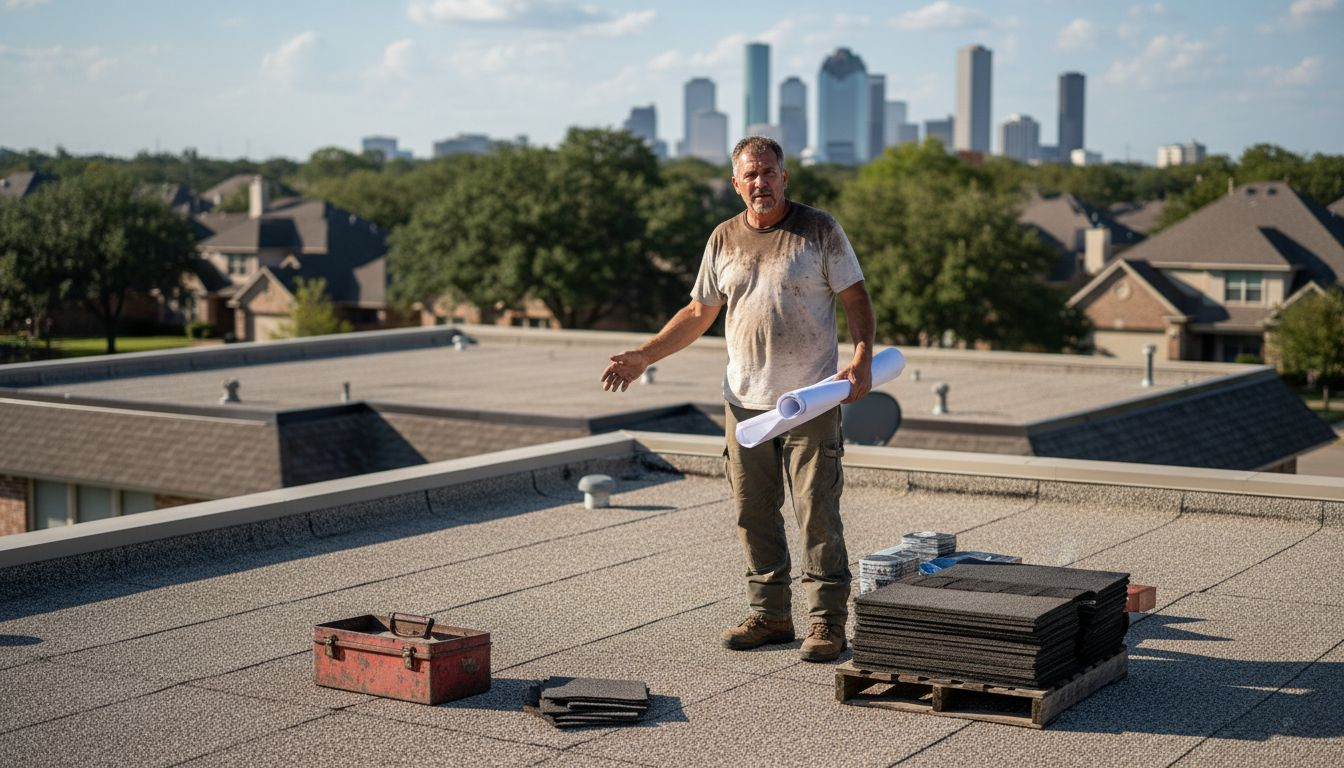
Every Houston homeowner knows that a roof does more than provide shelter when storms hit or heat waves roll in. Choosing the right roofing system is about protecting your investment against the city’s persistent wind pressures, heavy rain, and humidity challenges. Low-slope roofing demands specialized materials and expert installation to manage drainage and withstand local environmental extremes. This guide offers practical insights for anyone considering a durable low-slope roof solution tailored to Houston’s tough climate.
Table of Contents
- Defining Low-Slope Roofing For Homes
- Major Types Of Low-Slope Roof Systems
- Essential Materials And Drainage Solutions
- Unique Installation Challenges In Houston
- Costs, Lifespan, And Common Mistakes
- Comparisons With Steep-Slope Alternatives
Key Takeaways
| Point | Details |
|---|---|
| Importance of Professional Assessment | Consult a qualified roofing contractor to ensure compliance with local building codes and specific installation challenges in Houston. |
| Material Selection Matters | Choosing the right roofing materials (e.g., Built-Up, Modified Bitumen, Single-Ply) directly influences durability and performance, especially in harsh climates. |
| Drainage Design is Critical | Effective drainage solutions are essential to prevent water accumulation and ensure the longevity of low-slope roofing systems. |
| Understand Cost and Maintenance | Factor in initial installation costs, long-term maintenance, and potential repairs when budgeting for low-slope roofing to maximize your investment. |
Defining Low-Slope Roofing for Homes
Low-slope roofing represents a unique architectural approach that significantly impacts home design and performance, particularly for Houston homeowners. These roofs, characterized by a minimal pitch, typically have a slope less than 2:12, which means for every horizontal foot, the roof rises less than two inches. Low-slope roof configurations require specialized waterproofing techniques to manage drainage and protect against environmental challenges.
Understanding the technical specifications is crucial for Houston residents. Low-slope roofs differ from traditional steep-slope designs in several key aspects:
- Minimal vertical rise (less than 18 degrees)
- Specialized waterproofing membranes
- Alternative drainage systems
- Enhanced wind resistance requirements
These roofing systems are particularly prevalent in regions with unique architectural styles or specific climate considerations. In Houston, where extreme weather conditions are common, low-slope roofs offer strategic advantages for residential structures. Roof design standards mandate precise installation methods to ensure durability and performance.
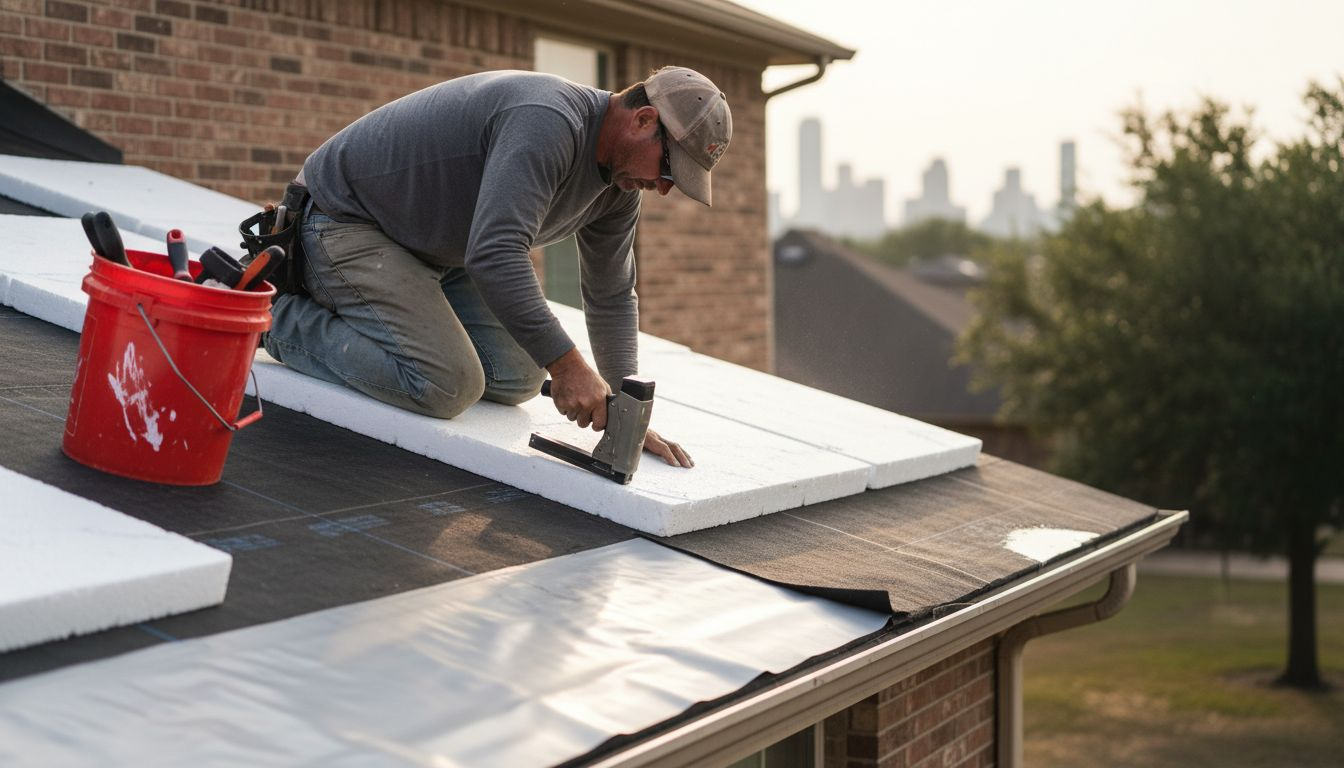
The construction of low-slope roofs involves multiple layers designed to create a robust, water-resistant surface. Common membrane materials include built-up bitumen, modified bitumen, and single-ply options like TPO, PVC, and EPDM. These materials are engineered to withstand Houston’s challenging environmental conditions, providing homeowners with a reliable roofing solution that balances aesthetic appeal and functional resilience.
Pro tip: Always consult a professional roofing contractor who understands local building codes and can assess your specific home’s structural requirements for low-slope roofing installation.
Major Types of Low-Slope Roof Systems
Low-slope roofing encompasses several sophisticated systems designed to meet the unique challenges of residential and commercial structures in Houston’s demanding climate. Low-slope roof configurations offer homeowners multiple options that provide robust protection against environmental stresses, each with distinct characteristics and installation methods.
The primary categories of low-slope roof systems include:
- Built-Up Roofing (BUR): Traditional system with multiple layers
- Modified Bitumen: Enhanced flexibility with polymer-modified materials
- Single-Ply Membrane Systems: Lightweight synthetic sheet materials
- Thermoplastic Polyolefin (TPO)
- Polyvinyl Chloride (PVC)
- Ethylene Propylene Diene Monomer (EPDM)
Built-Up Roofing represents the oldest low-slope roofing technology, constructed by alternating layers of bitumen and reinforcing fabrics. These systems create a durable, multi-layered surface that can withstand significant environmental challenges. Roofing membrane technologies have evolved to provide enhanced protection and longevity for Houston homes.
Modern single-ply membrane systems offer incredible versatility for low-slope applications. These lightweight synthetic materials provide exceptional waterproofing and can be mechanically attached, fully adhered, or ballasted depending on specific structural requirements. Each membrane type offers unique benefits: TPO provides excellent heat reflection, PVC delivers superior chemical resistance, and EPDM ensures remarkable durability in extreme temperature fluctuations.
Here’s a summary comparing the main low-slope roof system types for Houston homes:
| System Type | Typical Materials | Strengths | Key Limitation |
|---|---|---|---|
| Built-Up Roofing (BUR) | Layers of bitumen, felt | Excellent durability, thick layers | Heavy, slow to install |
| Modified Bitumen | Asphalt with polymers | Flexible in temperature swings | Heat-weld install needed |
| Single-Ply (TPO) | Thermoplastic polyolefin | High heat reflectivity, lightweight | Can puncture easily |
| Single-Ply (PVC) | Polyvinyl chloride sheet | Resists chemicals and grease | More costly material |
| Single-Ply (EPDM) | Synthetic rubber membrane | Withstands extreme temperatures | Dark color absorbs heat |
Pro tip: Consult a professional roofing contractor to determine the most suitable low-slope roof system for your specific Houston home’s architectural design and environmental exposure.
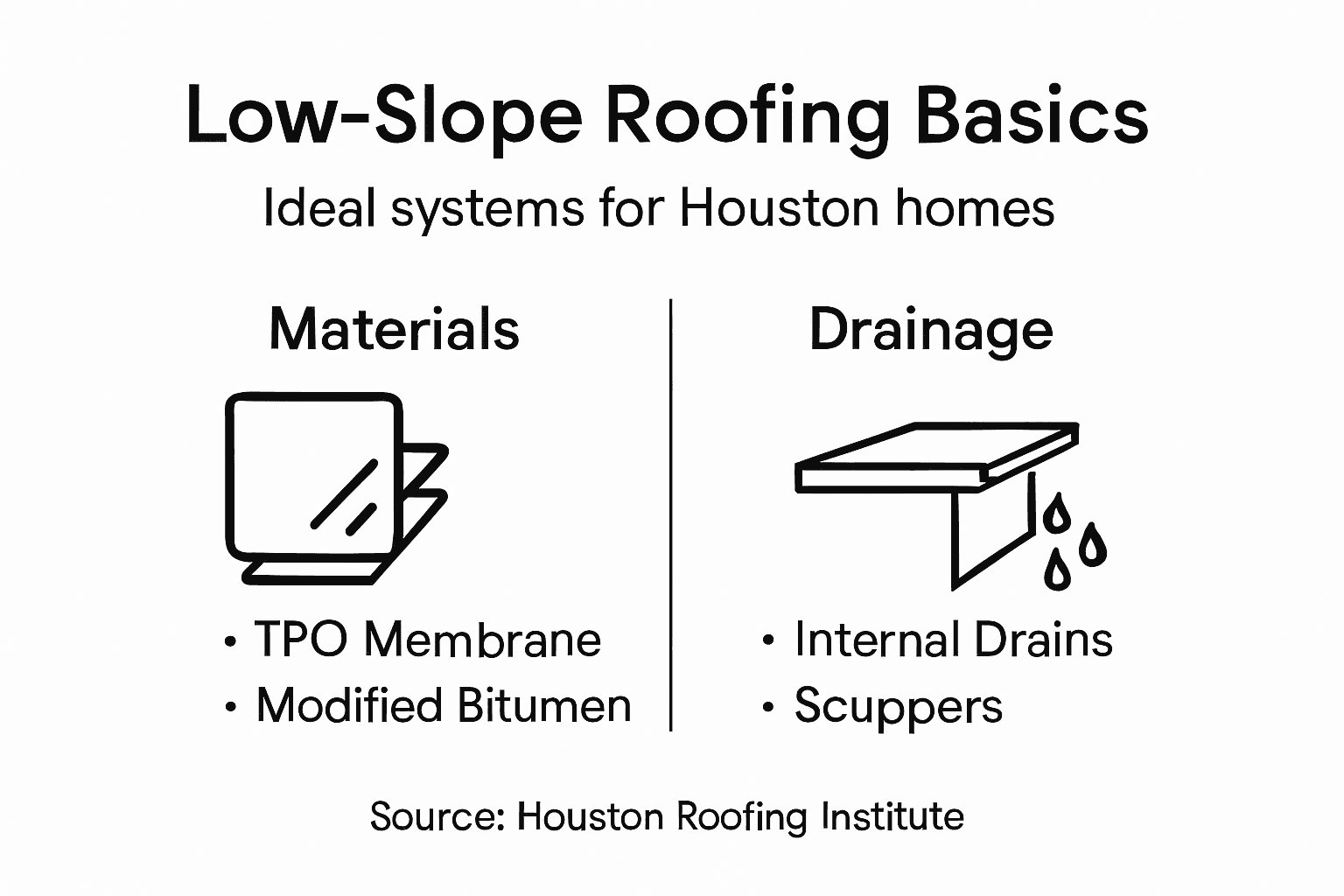
Essential Materials and Drainage Solutions
Designing an effective low-slope roofing system for Houston homes requires careful selection of materials and innovative drainage solutions. Low-slope roofing components must address the region’s challenging environmental conditions, particularly heavy rainfall and intense heat.
The critical components of a robust low-slope roofing system include:
- Structural Deck: Foundation of the roofing system
- Thermal Insulation: Energy efficiency and temperature regulation
- Waterproofing Membrane: Primary protection against moisture
- Drainage Accessories:
- Roof drains
- Scuppers
- Tapered insulation systems
Drainage Design is paramount in preventing water accumulation, which can compromise roof integrity. Roof drainage solutions incorporate strategic techniques to manage water flow, including:
- Creating minimal slope for water redirection
- Installing multiple drainage points
- Using tapered insulation to guide water movement
Additional protective components like air retarders, vapor barriers, and specialized flashing help enhance the overall performance of low-slope roofing systems. These elements work together to create a comprehensive defense against moisture intrusion, temperature fluctuations, and structural stress.
Pro tip: Have a professional roofing contractor conduct a comprehensive drainage assessment to ensure your low-slope roof’s long-term performance and water management capabilities.
Unique Installation Challenges in Houston
Low-slope roofing installation in Houston demands extraordinary precision due to the city’s complex environmental challenges. Wind uplift resistance standards create critical requirements that go far beyond typical roofing installations, making professional expertise essential for successful implementation.
The primary installation challenges specific to Houston include:
- Extreme Wind Conditions:
- Hurricane-force wind pressures
- Rapidly changing atmospheric conditions
- Higher wind uplift risks
- High Humidity Environments:
- Accelerated material degradation
- Increased moisture penetration risks
- Complex waterproofing requirements
ASCE 7 Standard guidelines mandate stringent installation protocols that address multiple critical factors. Roofing professionals must carefully consider specific design elements such as:
- Precise membrane attachment techniques
- Strategic deck seam sealing
- Robust insulation layer installation
- Wind zone-specific reinforcement methods
The installation process requires meticulous attention to detail, particularly in managing potential water accumulation and ensuring comprehensive wind resistance. Every component must be precisely engineered to withstand Houston’s unpredictable weather patterns, from intense summer heat to potentially destructive hurricane seasons.
Pro tip: Always verify your roofing contractor’s experience with local building codes and their understanding of Houston-specific installation challenges before beginning any low-slope roofing project.
Costs, Lifespan, and Common Mistakes
Low-slope roofing represents a significant investment for Houston homeowners, with long-term performance directly tied to initial installation quality and ongoing maintenance. Service life assessment reveals that strategic material selection and professional installation can dramatically extend roof durability.
Typical cost considerations for low-slope roofing include:
- Initial Installation Expenses:
- Material costs
- Labor complexity
- Design engineering
- Long-Term Investment Factors:
- Maintenance requirements
- Energy efficiency
- Potential repair frequencies
Common low-slope roof failures often stem from preventable installation and design mistakes. The most critical errors homeowners should avoid include:
- Inadequate drainage design
- Using incompatible roofing materials
- Neglecting regular professional inspections
- Choosing low-quality installation services
Material lifespan can range dramatically, with high-quality systems potentially lasting 60-375 years when properly maintained. However, economic constraints and poor workmanship can significantly reduce this potential, making professional expertise crucial in maximizing your roofing investment.
Pro tip: Budget for periodic professional inspections and maintenance, as these small investments can prevent catastrophic and expensive roof failures.
Comparisons With Steep-Slope Alternatives
Understanding the critical differences between low-slope and steep-slope roofing is essential for Houston homeowners making informed architectural decisions. Roof system overview reveals fundamental structural and functional variations that impact long-term performance and maintenance requirements.
Key comparative characteristics include:
- Structural Composition:
- Low-slope: Membrane-based systems
- Steep-slope: Rafter and shingle/tile configurations
- Water Management:
- Low-slope: Complex drainage design
- Steep-slope: Natural water shedding
- Material Complexity:
- Low-slope: Advanced waterproof membranes
- Steep-slope: Traditional roofing materials
Steep-slope versus low-slope differences fundamentally revolve around slope angle and its implications. Steep-slope roofs typically shed water rapidly, reducing moisture intrusion risks, while low-slope roofs require meticulous engineering to achieve effective drainage.
Houston’s unique environmental conditions make the roofing selection process particularly nuanced. Steep-slope roofs offer simpler installation and fewer maintenance challenges, but low-slope systems provide modern architectural flexibility and potential energy efficiency advantages when properly designed.
For quick reference, review this comparison of low-slope vs. steep-slope roofing in Houston:
| Aspect | Low-Slope Roofing | Steep-Slope Roofing |
|---|---|---|
| Water Management | Engineered drainage systems | Water sheds naturally |
| Maintenance Frequency | Regular, to prevent pooling | Less frequent, easier repairs |
| Cost Range | Higher upfront, complex install | Lower upfront, simpler build |
| Suitability | Modern, flat roof designs | Traditional, pitched roofs |
Pro tip: Consult a professional roofing contractor to assess your specific architectural needs and local environmental factors before choosing between low-slope and steep-slope roofing systems.
Expert Low-Slope Roofing Solutions Tailored for Houston Homes
Low-slope roofing demands precise design and installation to withstand Houston’s extreme weather challenges such as heavy rain, intense heat, and hurricane-force winds. Homeowners face key challenges including complex drainage needs, specialized waterproof membranes, and high wind uplift resistance. At Mister ReRoof, we understand these crucial pain points and deliver durable roofing systems specifically engineered to protect your home and extend roof lifespan.
Our experienced team specializes in low-slope roofing options like TPO, modified bitumen, and built-up membranes that align with local building codes and Houston’s unique climate demands. We provide free, comprehensive roofing assessments to identify the most suitable materials and drainage solutions tailored just for your property. Don’t risk costly mistakes from improper installation or drainage failures.
Ready to secure your Houston home with proven low-slope roofing expertise
Trust Mister ReRoof for professional installation and maintenance designed to keep your roof strong and leak-free through every season. Contact us today at Mister ReRoof and explore our full range of roof replacement services customized for Houston homes.
Frequently Asked Questions
What is low-slope roofing?
Low-slope roofing is a roofing system characterized by a minimal pitch, typically having a slope less than 2:12. This design requires specialized waterproofing techniques to manage drainage effectively and protect against environmental challenges.
What are the main types of low-slope roofing systems?
The primary types of low-slope roofing systems include Built-Up Roofing (BUR), Modified Bitumen, and Single-Ply Membrane Systems such as TPO, PVC, and EPDM. Each has its unique materials and benefits, tailored to meet various environmental demands.
How long does low-slope roofing typically last?
The lifespan of low-slope roofing can range anywhere from 15 to 50 years, depending on the materials used and the quality of installation. High-quality systems can last even longer with proper maintenance.
What are the key installation challenges associated with low-slope roofing?
Key installation challenges include extreme weather conditions such as high winds and humidity, which necessitate precise installation techniques and robust waterproofing methods to ensure the roofing system can withstand the local environment.
