Facing roofing work in Houston can feel intimidating when terms like fascia, flashing, and ridge sound more confusing than clear. Without a grasp on this language, homeowners risk miscommunication or costly mistakes. By breaking down common roofing terminology and debunking widespread misconceptions, you can make decisions that protect your investment and your home against Houston’s unpredictable weather.
Table of Contents
- Roofing Terminology And Common Misconceptions
- Types Of Roofing Systems And Materials
- Key Components And Features Of A Roof
- Essential Terms For Roof Replacement Projects
- Risks, Costs, And Mistakes To Avoid
Key Takeaways
| Point | Details |
|---|---|
| Understand Roofing Terms | Familiarize yourself with essential roofing terminology to make informed decisions and communicate effectively with professionals. |
| Choose Suitable Materials | Consider the unique climate challenges in Houston when selecting roofing materials to ensure durability and long-term value. |
| Recognize Project Risks | Be aware of potential safety, financial, and management risks during roof replacement to minimize problems and costs. |
| Verify Contractor Credentials | Always validate the credentials and reputation of roofing contractors to protect against fraud and ensure quality work. |
Roofing terminology and common misconceptions
Roofing can feel like navigating a complex maze of technical terms and specialized language that leaves many Houston homeowners feeling confused. Understanding the basic terminology is crucial for making informed decisions about your roof’s maintenance, repair, or replacement.
Many homeowners encounter common misconceptions about roofing components and their functions. These misunderstandings can lead to costly mistakes or unnecessary repairs. For instance, some people might confuse roof pitch with roof slope, or misinterpret the role of different roofing elements. Common roof inspection standards help clarify these technical distinctions.
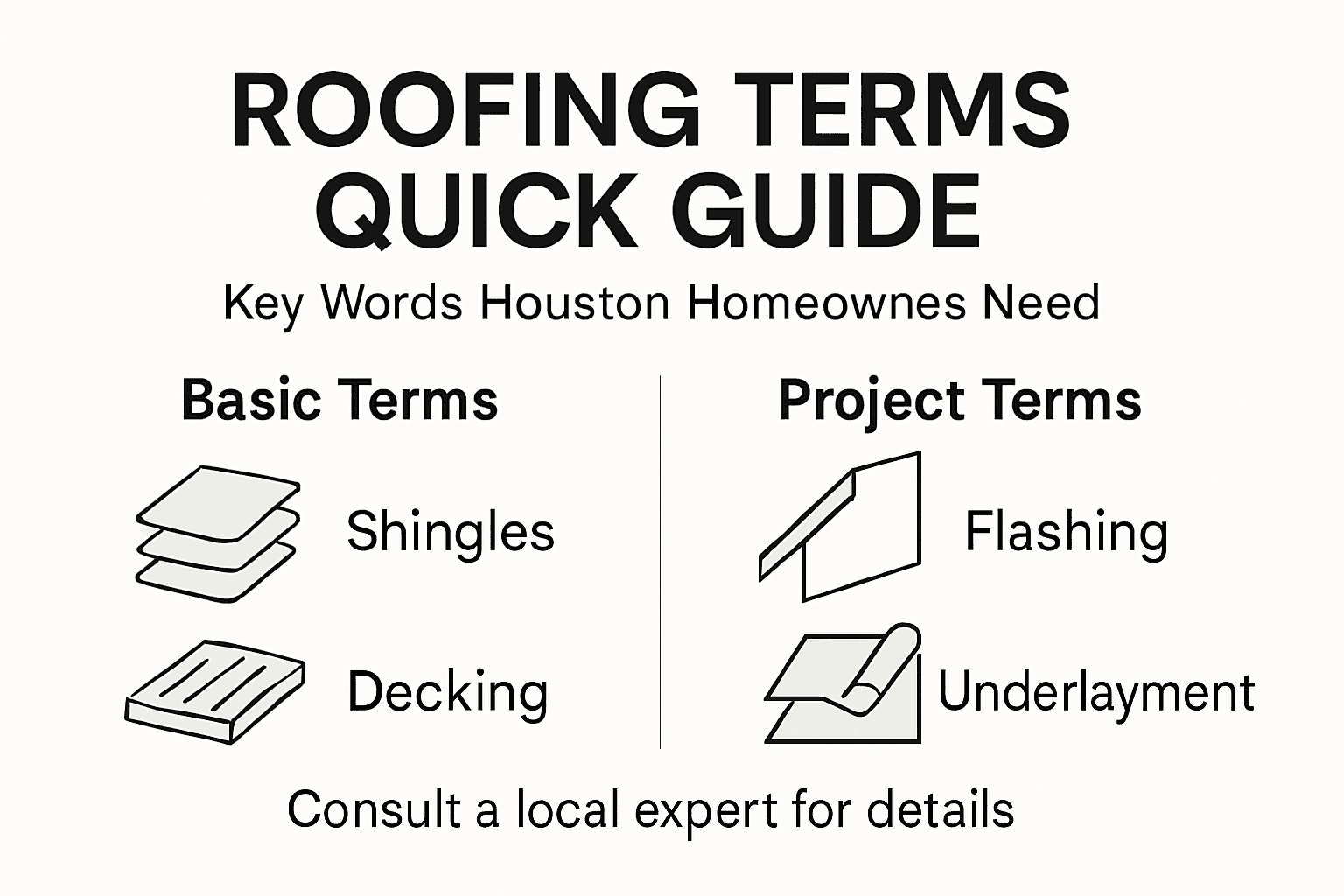
Here are some key roofing terms every Houston homeowner should understand:
- Eaves: The lower edge of a roof that extends beyond the exterior walls
- Fascia: The horizontal board running along the roof’s lower edge
- Flashing: Thin metal strips used to prevent water penetration around roof joints and edges
- Ridge: The highest point where two roof planes meet
- Valley: The internal angle formed where two roof surfaces intersect
Understanding these terms can help you communicate more effectively with roofing professionals and make more informed decisions about your home’s roof maintenance. Each component plays a critical role in protecting your home from Houston’s unpredictable weather conditions.
Pro tip: Always ask your roofing contractor to explain any terms you don’t understand, ensuring you have a clear picture of your roof’s condition and needed repairs.
Types of roofing systems and materials
Houston homeowners face unique challenges when selecting roofing systems due to the region’s extreme weather conditions. Understanding the various commercially available roofing materials is crucial for making an informed decision that protects your home and provides long-term value.
Modern roofing systems offer a diverse range of materials, each with distinct advantages and considerations for Houston’s climate. The most common roofing materials include:
- Asphalt Shingles: Most popular, affordable, and available in multiple styles
- Lightweight
- Easy to install
- Cost-effective
- Metal Roofing: Durable and excellent for heat reflection
- Longer lifespan
- Energy efficient
- Resistant to storm damage
- Slate Tiles: Premium option with exceptional longevity
- Naturally fire-resistant
- Elegant appearance
- Can last over 100 years
- Clay Tiles: Traditional in Southwestern architectural styles
- Excellent heat resistance
- Low maintenance
- Distinctive aesthetic
Each roofing material must meet specific performance and safety standards to ensure durability and protection against Houston’s challenging weather patterns. Factors like wind resistance, heat reflection, and moisture protection are critical considerations when choosing your roofing system.
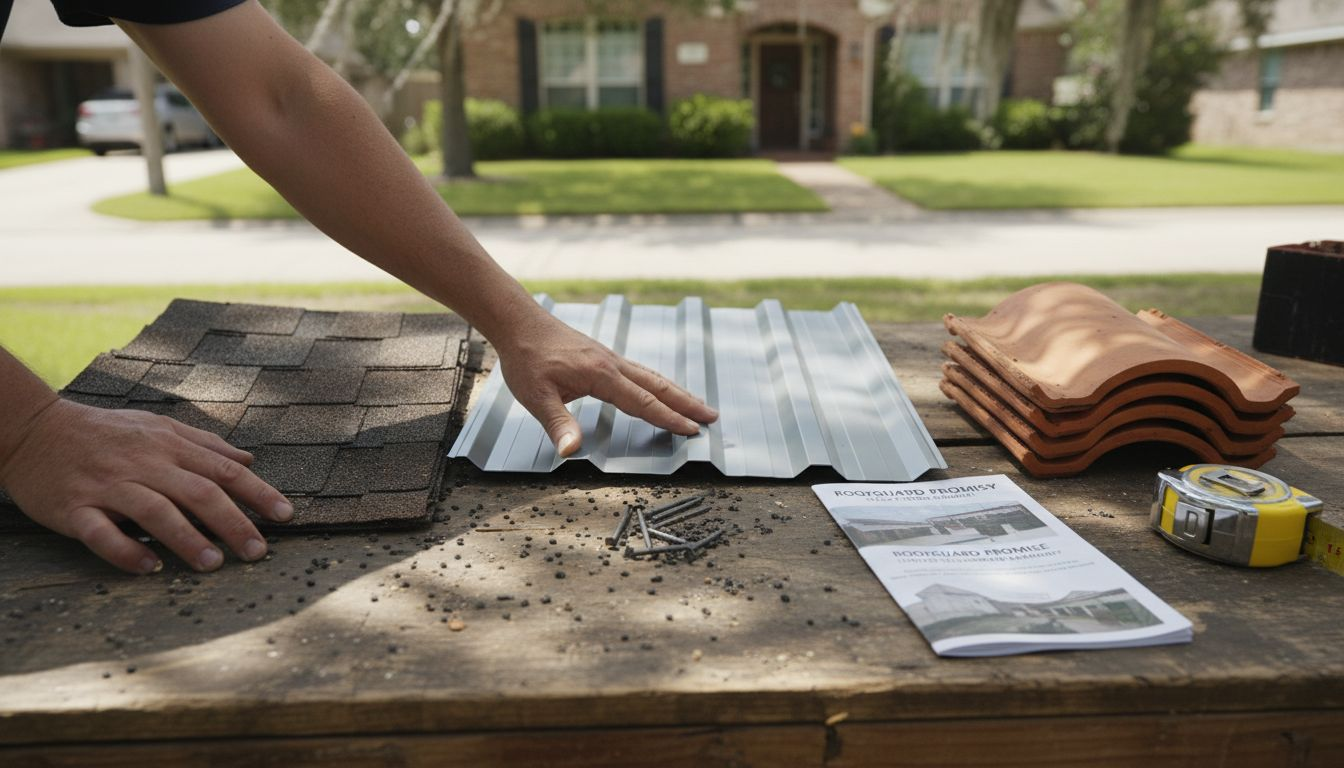
Here is a comparison of popular roofing materials for Houston homes:
| Roofing Material | Typical Lifespan | Ideal For | Key Houston Benefit |
|---|---|---|---|
| Asphalt Shingles | 15-30 years | Most budgets | Lower upfront cost |
| Metal Roofing | 40-70 years | Modern homes | Superior storm durability |
| Slate Tiles | 75-100+ years | Historic/estate | Fire and weather resistant |
| Clay Tiles | 50-100 years | Southwest styles | Excellent heat resistance |
Pro tip: Consult a local roofing professional who understands Houston’s specific climate challenges to select the most appropriate roofing material for your home.
Key components and features of a roof
Understanding the intricate roof structure components is essential for Houston homeowners to maintain their home’s structural integrity and protect against extreme weather conditions. A roof is more than just the visible exterior layer – it’s a complex system of interconnected elements working together to shield your home.
The primary structural components of a roof include:
- Trusses: Triangular structural frameworks that support the roof’s weight
- Distribute load evenly
- Provide overall roof stability
- Minimize stress on individual building elements
- Rafters: Sloped beams that extend from the ridge to the exterior walls
- Create the roof’s basic shape
- Support decking and roofing materials
- Allow for proper water drainage
- Decking: Flat surface layer typically made of plywood or oriented strand board (OSB)
- Provides a solid base for roofing materials
- Adds structural rigidity
- Serves as a moisture barrier
Beyond the structural elements, low-slope roof components play crucial roles in protecting your home. These include thermal insulation, roofing membranes, flashing, and vapor retarders – each serving a specific purpose in maintaining the roof’s performance and longevity.
A well-designed roof is your home’s first line of defense against Houston’s unpredictable weather conditions.
Pro tip: Schedule annual professional roof inspections to identify and address potential structural issues before they become costly repairs.
Essential terms for roof replacement projects
Navigating the world of roof replacement can feel overwhelming, especially when confronted with technical roofing terminology and replacement options. Houston homeowners need to understand key concepts to make informed decisions about their roofing project and avoid potential costly mistakes.
Critical terms every homeowner should know include:
- Reroofing: Installing a new layer of roofing material over an existing roof
- Less expensive option
- Limited to one additional layer
- Does not address underlying deck issues
- Roof Replacement: Complete removal of existing roofing layers
- Allows full inspection of roof deck
- Enables repair of any structural damage
- Provides opportunity to upgrade roofing system
- Roof Recover: Adding a new roofing system directly over the existing one
- Minimal disruption to current structure
- May have limitations based on local building codes
- Not suitable for roofs with significant existing damage
Understanding specific roofing components and design terms is crucial for effective communication with roofing professionals. These include technical elements like flashing, vents, and various roof design configurations that impact the overall performance and longevity of your roofing system.
Knowledge of roofing terminology empowers homeowners to make confident, informed decisions about their roof replacement project.
Pro tip: Request a detailed written explanation of any unfamiliar terms during your roof replacement consultation to ensure complete understanding of the proposed work.
Risks, costs, and mistakes to avoid
Roof replacement projects involve significant financial investment and potential safety risks that Houston homeowners must carefully navigate. Roofing safety requires vigilant risk management to protect both property and personal well-being during the renovation process.
Common risks and potential mistakes include:
- Physical Safety Risks
- Potential for serious falls
- Lack of proper safety equipment
- Inadequate worker training
- Financial Vulnerabilities
- Unexpected cost overruns
- Potential contractor fraud
- Hidden structural damage
- Project Management Challenges
- Poor contractor selection
- Incomplete or vague contracts
- Insufficient project documentation
Fraudulent practices represent another critical concern for homeowners. Roofing scams can result in significant financial losses when homeowners fail to perform due diligence. Protecting yourself requires careful verification of contractor credentials, requesting detailed written estimates, and understanding the full scope of work before signing any agreements.
Refer to this summary of safety, financial, and management risks during roof replacement:
| Risk Type | Example Issue | How to Mitigate |
|---|---|---|
| Physical Safety | Worker falls | Enforce safety gear, trained crew |
| Financial Overruns | Unanticipated extra expenses | Get detailed written estimates |
| Fraudulent Practices | Contractor scams | Verify licenses and reputation |
| Management Errors | Poor documentation | Maintain clear contracts |
Always validate a contractor’s credentials, insurance, and local reputation before beginning any roofing project.
Pro tip: Request comprehensive documentation, including detailed written estimates, proof of insurance, and contractor licenses, to minimize your financial and safety risks during roof replacement.
Navigate Houston Roofing Challenges with Expert Guidance
Understanding roofing terminology is the first step in making smart decisions for your home amid Houston’s demanding weather conditions. If you feel overwhelmed by terms like ridge, flashing, or roof replacement options, you are not alone. Many homeowners struggle with knowing which roofing material suits their needs or how to avoid costly mistakes during repairs or replacement. This article highlights the importance of clear communication and thorough knowledge when discussing roof projects to protect your most valuable investment.
At Mister ReRoof, we specialize in translating complex roofing language into straightforward solutions tailored for Houston residences. Our team focuses on durable roofing systems including metal, shingles, flat, and TPO options designed to withstand storms, heat, and wear. When you work with us, you gain:
- Trusted expertise in local roofing terminology and standards
- Detailed consultations explaining every aspect of your project
- High-quality materials selected for long-term value
Do not let roofing confusion delay your home’s protection. Visit Mister ReRoof now for a free estimate and experience roofing confidence with professionals who put safety and durability first. Act today to safeguard your home with a roofing system designed to meet Houston’s toughest demands.
Frequently Asked Questions
What is the difference between roof pitch and roof slope?
Roof pitch refers to the steepness or angle of a roof, often expressed as a ratio. Roof slope, on the other hand, describes the incline of a roof surface. Understanding the difference can help homeowners make informed decisions regarding roofing design and functionality.
What are the key components of a roof structure?
The primary components of a roof structure include trusses, rafters, and decking. Trusses provide stability and support weight, rafters create the roof’s shape, and decking forms the base for roofing materials.
What are the different types of roofing materials available for homes?
Common roofing materials include asphalt shingles, metal roofing, slate tiles, and clay tiles. Each material has unique benefits and considerations, such as cost, durability, and aesthetic appeal, suited for different homeowner needs.
What does reroofing involve, and how is it different from roof replacement?
Reroofing involves adding a new layer of roofing material over the existing roof, which is typically a less expensive solution. In contrast, roof replacement entails removing the old roofing completely, allowing for inspection and repairs of the underlying structure.
