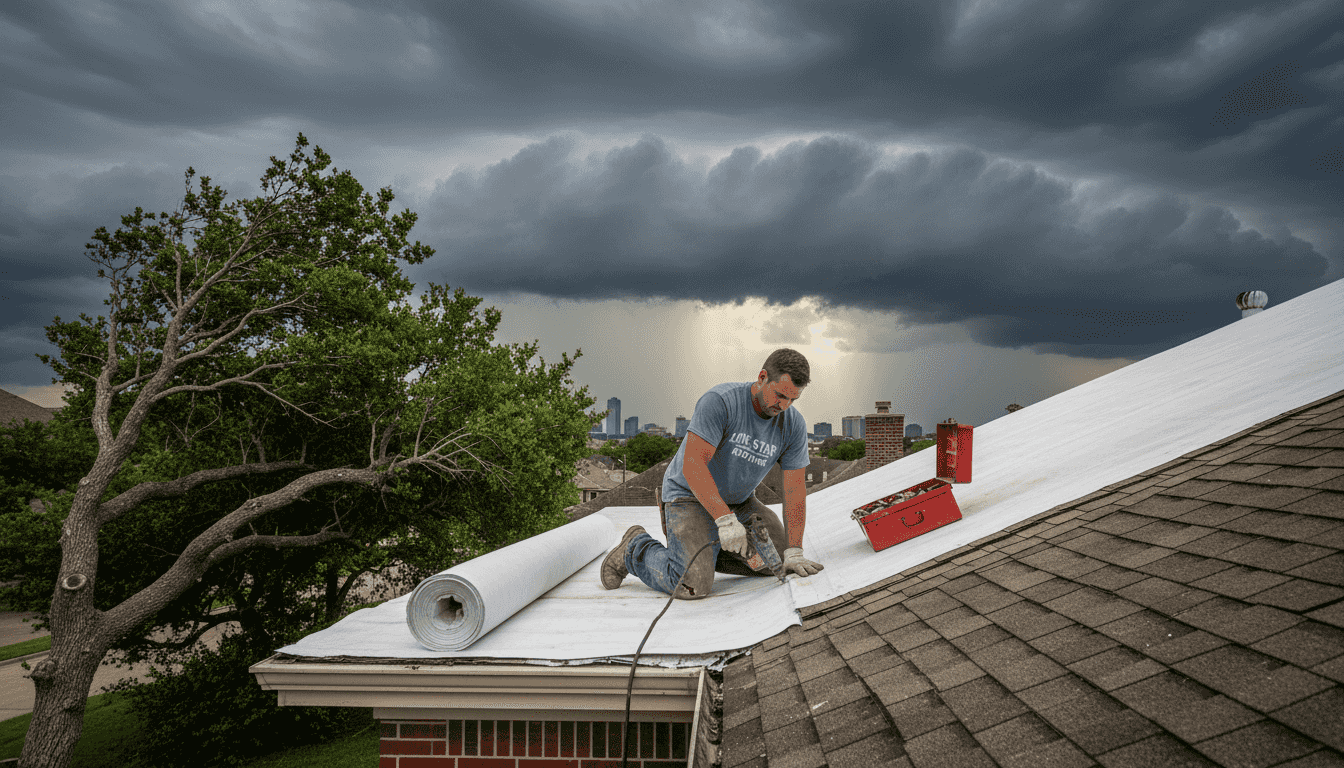
Heavy rain and fierce storms are common challenges for Houston homeowners. These weather events often expose weaknesses in traditional roofing materials, leading to costly water damage and mold issues. Durable roofing membranes act as a flexible, waterproof barrier, providing storm resistance and shielding your home from Houston’s intense heat and unexpected weather. Discover how the right roofing membrane can protect your investment and extend the life of your roof under Texas conditions.
Table of Contents
- Roofing Membranes And Their Essential Functions
- Types Of Roofing Membranes For Houston Weather
- How Roofing Membranes Enhance Storm Resistance
- Installation, Maintenance, And Common Mistakes
- Costs, Lifespan, And Comparing Alternatives
Key Takeaways
| Point | Details |
|---|---|
| Importance of Roofing Membranes | Roofing membranes are crucial for protecting homes from water intrusion and UV damage, significantly extending roof lifespan. |
| Membrane Types for Houston | TPO, EPDM, and PVC membranes each provide unique benefits, with TPO membranes offering excellent value for Houston’s specific climate. |
| Installation Matters | Proper installation is essential for membrane effectiveness; poor methods can lead to significant long-term damage. |
| Regular Maintenance | Routine inspections and maintenance are key to catching small issues before they escalate into expensive repairs. |
Roofing membranes and their essential functions
Roofing membranes are flexible, waterproof barriers that shield your Houston home from rain, wind, hail, and intense UV exposure. They form the backbone of modern roof systems, protecting everything beneath them from weather damage and water intrusion.
Think of a roofing membrane as your home’s first and most critical defense layer. It sits directly on your roof deck and creates a continuous seal against the elements.
What roofing membranes do
These protective layers perform several vital jobs:
- Prevent water intrusion – They stop rain from seeping into your attic, walls, and interior spaces
- Resist UV damage – Houston’s intense sun can degrade roofing materials, but quality membranes hold up
- Accommodate building movement – As your home expands and contracts with temperature changes, membranes flex without tearing
- Extend roof lifespan – A strong membrane can add 10-20+ years to your roof’s life
Membrane roofing systems use synthetic rubber, thermoplastics like PVC and TPO, or modified bitumen to create this protective layer. Each material offers different benefits, but all share the same core purpose: keeping water out.
Why Houston homes need them
Houston’s climate is brutal on roofs. We get torrential rain, severe thunderstorms, tropical storm surge, and scorching heat all in one year.
A quality roofing membrane is what stops your attic from becoming a swimming pool after a downpour.
Without a strong membrane, water finds its way through even tiny gaps. It sits in your insulation, rots wood framing, and creates mold that affects your family’s health. The cost of water damage repairs—often $10,000 to $50,000+—far exceeds the investment in a solid membrane system.
How they work in storms
When a hurricane or strong thunderstorm hits, your membrane becomes the critical barrier between your home’s interior and the chaos outside. EPDM synthetic rubber membranes withstand extreme temperature swings, UV radiation, and heavy moisture without degrading.
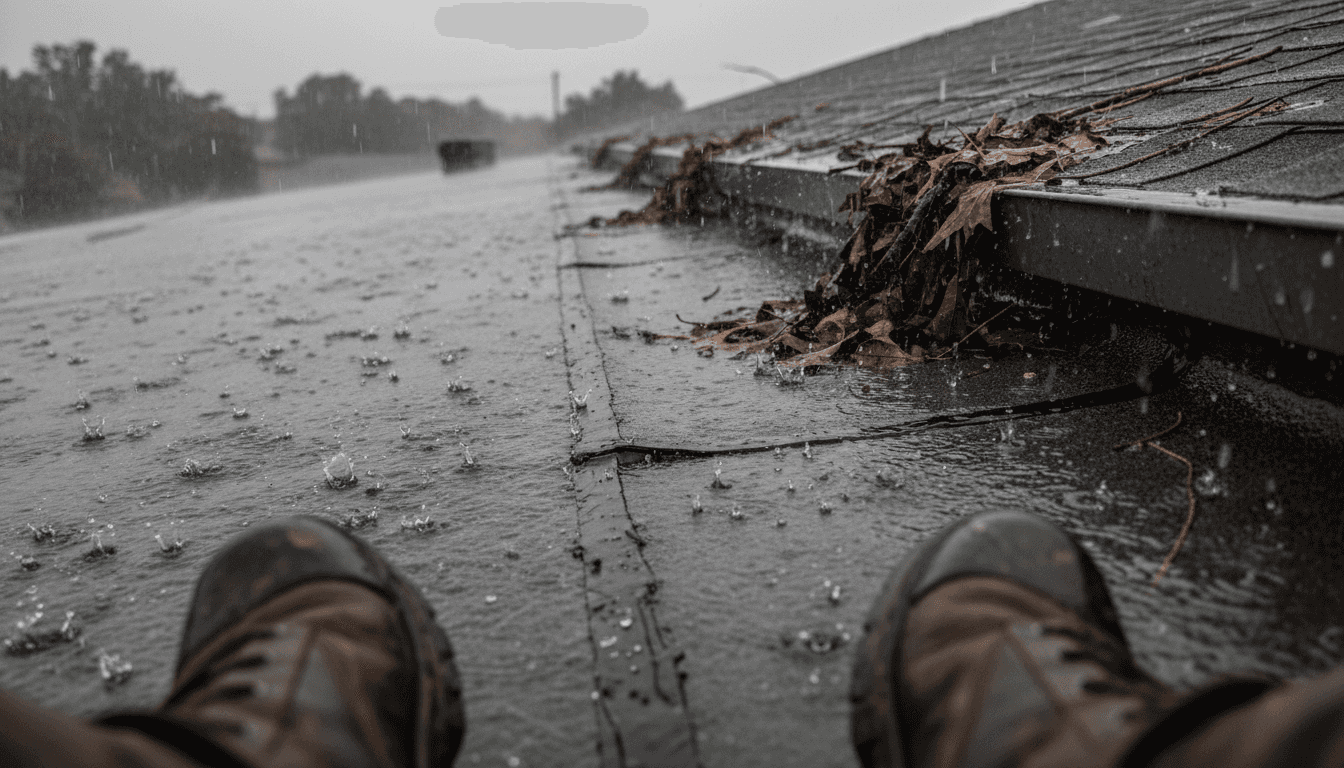
The membrane doesn’t just sit on your roof—it’s installed as a continuous sheet with seams sealed to create one unified barrier. This approach eliminates the weak points where water typically enters.
Pro tip: Ask your roofer about the specific membrane material they recommend for your home, as different types perform better under different conditions in Houston’s varied weather patterns.
Types of roofing membranes for Houston weather
Houston’s heat, humidity, and storms demand specific roofing membrane materials that can handle the extremes. Not all membranes perform equally in our climate, so choosing the right type makes a significant difference in durability and protection.
The three main membrane types used in Houston homes are TPO, EPDM, and PVC. Each offers distinct advantages for our weather conditions.
TPO membranes
TPO (thermoplastic polyolefin) membranes have become increasingly popular in Houston because they balance affordability with excellent performance.
TPO membranes offer several key benefits for Houston homes:
- Reflective surfaces that reduce cooling costs by bouncing away heat
- Strong seam welds that withstand high winds and heavy rainfall
- Flexibility in hot temperatures without becoming brittle in cooler weather
- Cost-effective pricing compared to other premium membrane types
- Quick installation that minimizes labor time and expense
These membranes excel during Houston’s intense summer heat. The reflective white surface keeps your attic cooler, which reduces air conditioning strain and lowers energy bills by 10-15%.
EPDM membranes
EPDM (ethylene propylene diene monomer) is a synthetic rubber that has proven its durability across decades of use in Houston.
EPDM membranes provide exceptional resistance to UV radiation, hail, and wind uplift. They come in various colors and thicknesses, allowing customization for different roof requirements.
EPDM works particularly well because:
- Extreme temperature swings don’t cause cracking or brittleness
- Hail strikes bounce off without permanent damage
- Installation can be fully adhered or mechanically attached depending on needs
- Lifespan often exceeds 25 years with proper maintenance
EPDM’s proven track record makes it one of the most reliable choices for Houston’s unpredictable weather patterns.
PVC membranes
PVC (polyvinyl chloride) membranes combine strength with chemical resistance, making them ideal for homes in areas with industrial pollution or specific environmental concerns.
PVC offers strong seams through heat welding and excellent wind resistance. Like TPO, PVC surfaces reflect solar heat effectively.
Comparison for Houston
For most Houston homeowners, TPO membranes provide the best value. They handle our climate well and cost less upfront. EPDM suits homeowners prioritizing longevity and proven durability. PVC works best when superior seam strength and chemical resistance matter.
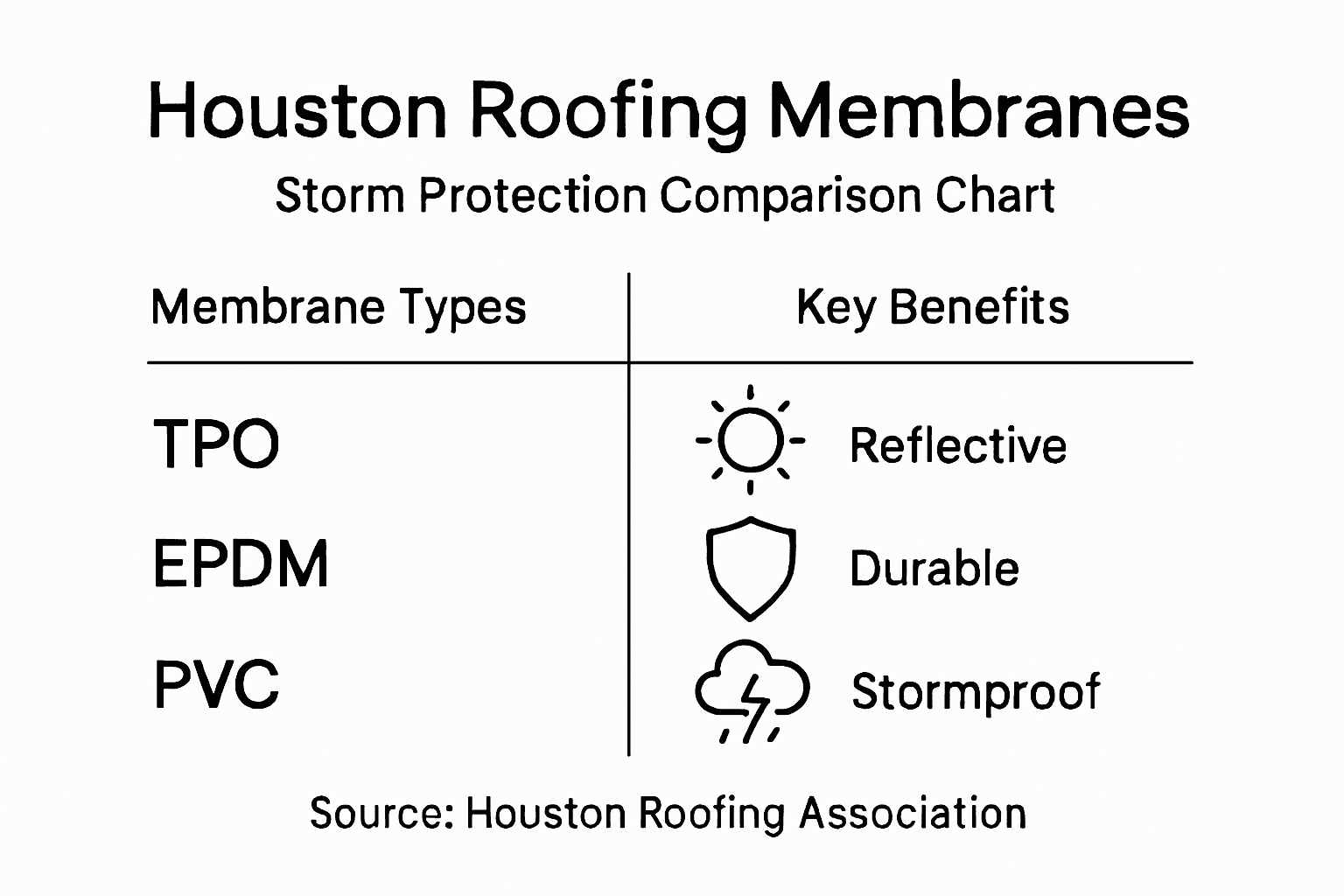
Here’s a quick comparison of roofing membrane types used in Houston and how they perform in the region’s climate:
| Membrane Type | Key Strengths in Houston | Typical Lifespan | Ideal Use Case |
|---|---|---|---|
| TPO | Reduces cooling costs, withstands storms | 20-25 years | Standard residential roofs |
| EPDM | Handles temperature swings, resists hail | 20-25 years | Maximum durability focus |
| PVC | Excellent chemical resistance, strong seams | 20-25 years | Industrial or high pollutant areas |
| Modified Bitumen | Lower cost, but needs frequent upkeep | 15-20 years | Budget-sensitive projects |
Pro tip: Ask your roofer about membrane thickness (typically 45-100 mil) and installation method, as these choices impact how well your roof handles Houston’s thunderstorms and summer heat.
How roofing membranes enhance storm resistance
Roofing membranes are your home’s strongest defense against Houston’s most violent weather. When installed correctly, they create a protective barrier that withstands hurricane-force winds, heavy rain, and hail that would otherwise penetrate your roof structure.
Understanding how membranes resist storm damage helps explain why they matter so much for Houston homeowners facing annual severe weather threats.
Creating a continuous barrier
The key to storm protection is continuity. Unlike traditional shingle roofs with thousands of individual overlap points, a quality roofing membrane forms one unified sheet across your entire roof.
This continuous design prevents water from finding entry points through:
- Seams sealed with adhesive or tape that prevent wind-driven rain penetration
- No gaps, valleys, or overlaps where water can work its way underneath
- A single protective layer that covers every inch of your roof deck
- Heat-welded seam connections that bond as one rather than relying on fasteners alone
When a hurricane sends rain sideways at 100+ mph, that continuous barrier stops water in its tracks.
Resisting uplift forces
Winds don’t just push rain sideways. They create uplift pressure that tries to peel your roof right off your home. Membrane systems resist uplift through proper anchoring and flexible material properties.
Membranes withstand uplift because:
- Flexible materials flex with wind gusts instead of cracking or tearing
- Ring-shank nails and reinforced attachment methods secure membranes firmly to the roof deck
- The membrane accommodates structural movement without separating from its attachment points
- Material strength prevents wind from delaminating layers
A properly installed membrane absorbs wind force rather than fighting it, maintaining its seal even under extreme pressure.
Quality installation makes all the difference
Membranes only protect as well as they’re installed. The FORTIFIED approach uses sealed attachment methods that maximize storm resistance.
Proper installation includes:
- Ring-shank fasteners (not smooth nails) that grip better
- Sealed seams with adhesive or heat-welding, not just overlaps
- Quality tape at all penetrations and transitions
- Correct fastener spacing per manufacturer specifications
- Waterproof membrane under all exposed fastener heads
Cutting corners on installation undermines everything else. A membrane installed with inadequate sealing or fastening becomes a liability rather than protection.
Why Houston needs this protection
Our storm season runs from June through November. A single hurricane can generate $50,000+ in damage to an under-protected roof. Investment in a quality membrane system with expert installation pays for itself after one major storm event.
Pro tip: When hiring a roofer, ask them to explain their seam-sealing method and fastener spacing, then verify these details match the membrane manufacturer’s storm-resistance specifications.
Installation, maintenance, and common mistakes
A quality roofing membrane only delivers protection if it’s installed correctly and maintained regularly. Many Houston homeowners discover too late that shortcuts during installation or neglected maintenance turn their investment into a liability.
Understanding what separates good installations from poor ones—and what maintenance actually requires—helps you protect your roof investment.
Getting installation right
Proper membrane installation starts before the membrane ever touches your roof. Substrate preparation is absolutely critical.
Installation steps that matter:
- Clean the roof deck thoroughly to remove dust, debris, and loose material
- Repair any damaged substrate before installing the membrane
- Ensure the deck is smooth and level to prevent membrane stress points
- Install appropriate insulation and vapor barriers per manufacturer specs
- Apply adhesive or fasteners exactly as the manufacturer specifies
The NRCA Roofing Manual provides detailed installation guidelines covering substrate prep, adhesion techniques, and seam welding procedures. Skipping these steps creates failure points where water infiltration begins.
Maintenance that actually prevents problems
Once your membrane is installed, regular inspections catch small issues before they become expensive repairs.
Basic maintenance tasks include:
- Visual inspection every 6 months, especially after storms
- Checking seams for separation or gaps in sealant
- Removing debris and leaves that hold moisture
- Repairing punctures or tears immediately
- Cleaning gutters so water drains properly
- Inspecting around penetrations like vents and chimneys
These tasks take a few hours yearly but prevent thousands in water damage. Neglecting them guarantees early membrane failure.
Common mistakes that cause failure
Most roofing problems stem from preventable errors during installation or maintenance.
Dangerous mistakes include:
- Poor seam sealing – Using inadequate tape or skipping heat welding creates water entry points
- Insufficient fastening – Wrong nail type, spacing, or pattern causes wind uplift
- Substrate neglect – Installing membrane over dirty or damaged deck causes separation
- Ignoring manufacturer specs – Using wrong adhesives or fastening patterns voids warranties
- Skipped inspections – Missing small damage until it becomes catastrophic
- DIY repairs – Improper patching compounds that fail under UV and heat
The most expensive membrane failure starts as a small sealing mistake that grows into structural damage costing $20,000+.
Houston-specific maintenance concerns
Our heat, humidity, and frequent storms create unique maintenance challenges. Thermal cycling stresses seams. Humidity promotes mold if debris traps moisture. Heavy rains reveal small leaks quickly.
Schedule inspections after major storms and before hurricane season (June). Watch for seam separation in high-heat areas like south-facing sections.
Pro tip: Document your roof condition with photos during annual inspections, maintain written records of any repairs made, and keep your membrane manufacturer’s warranty information accessible for future reference or insurance claims.
Costs, lifespan, and comparing alternatives
Roofing membranes represent a significant investment for Houston homeowners. Understanding what they cost, how long they last, and how they compare to other roofing options helps you make an informed decision that matches your budget and protection needs.
The right choice balances upfront cost with long-term durability and storm protection.
Lifespan expectations
EPDM membranes typically last 20-25 years when properly installed and maintained. TPO membranes offer similar lifespans of 20-25 years, making both solid choices for Houston homeowners.
Modified bitumen membranes fall shorter, typically lasting 15-20 years. They require more frequent maintenance and don’t handle our heat as well. Metal roofs significantly outlast membranes, often exceeding 50 years, but cost considerably more upfront.
Lifespan depends heavily on installation quality and maintenance. A poorly installed membrane fails much earlier. Regular inspections and timely repairs extend lifespan significantly.
What membranes actually cost
Membranes are cost-effective compared to their durability. Here’s what Houston homeowners typically pay:
- EPDM membranes – $4-8 per square foot installed
- TPO membranes – $5-9 per square foot installed
- PVC membranes – $8-12 per square foot installed
- Modified bitumen – $4-7 per square foot installed
These prices vary based on your roof size, complexity, and local labor rates. A 2,000 square foot roof typically costs $8,000-$18,000 fully installed.
To help you budget and compare options, here’s a summary of roofing choices for Houston with cost and longevity:
| Roofing Type | Installed Cost (per sq. ft.) | Avg. Lifespan | Storm Resistance |
|---|---|---|---|
| Asphalt Shingle | $2-5 | 15-20 years | Poor in storms |
| TPO Membrane | $5-9 | 20-25 years | Good |
| EPDM Membrane | $4-8 | 20-25 years | Excellent |
| PVC Membrane | $8-12 | 20-25 years | Very good |
| Metal Roof | $10-20 | 50+ years | Exceptional |
Comparing roofing alternatives
Membranes aren’t your only option. Understanding how they stack against alternatives helps clarify value.
Traditional asphalt shingles cost less upfront ($2-5 per square foot) but last only 15-20 years. They perform poorly in Houston’s heat and don’t handle storm uplift as well.
Metal roofs cost significantly more ($10-20 per square foot) but outlast membranes. They excel in storms and reflect heat effectively. The tradeoff: much higher initial expense.
Modified bitumen costs less than TPO or EPDM but requires more maintenance and fails faster in Houston heat.
A membrane costs more initially than asphalt shingles but protects better during storms and lasts longer—making it the practical choice for Houston’s climate.
The value calculation
Don’t just compare upfront costs. Calculate cost-per-year over the membrane’s lifespan.
For a 2,000 square foot roof costing $12,000 installed:
- EPDM at 22 years = $545/year
- TPO at 22 years = $545/year
- Asphalt shingles at 17 years = $470/year (looks cheaper until failure)
- Metal roof at 50 years = $300/year (eventually cheaper)
When a storm damages your roof midway through its expected life, that calculation changes dramatically. One hurricane claim pays for much of a quality membrane system.
Pro tip: Get written quotes from at least three roofers specifying material brand, warranty length, and installation methods, then compare total cost-per-year over the membrane’s expected lifespan rather than upfront price alone.
Strengthen Your Houston Home With Expert Roofing Membrane Solutions
Protecting your home from Houston’s relentless storms requires more than just any roof. The article highlights the critical role of roofing membranes in preventing water intrusion, resisting UV damage, and withstanding powerful wind uplift. If you want to avoid costly repairs caused by poor installation or aging membranes it is essential to choose the right materials like TPO or EPDM combined with professional installation that ensures sealed seams and proper fastening.
At Mister ReRoof we specialize in durable, storm-resistant roofing solutions tailored specifically for Houston’s unique weather challenges. Our expert team understands how to install and maintain membrane systems that add years of dependable protection to your home. We prioritize quality workmanship to keep your family safe from water damage and costly mold growth.
Ready to enhance your roof’s defense against storms and harsh heat with proven membrane technology? Contact Mister ReRoof today to schedule a free consultation and experience the confidence that comes with Houston’s trusted roofing experts. Don’t wait for the next storm to uncover hidden weaknesses in your roof. Learn more about our roof replacement services and secure your home’s future now.
Frequently Asked Questions
What are roofing membranes and how do they protect my home?
Roofing membranes are flexible, waterproof barriers that shield your home from rain, wind, hail, and UV exposure. They form a continuous seal that prevents water intrusion and protects everything beneath them from weather damage.
How long do roofing membranes typically last?
Most roofing membranes, such as TPO and EPDM, last between 20 to 25 years with proper installation and maintenance. Modified bitumen membranes usually last 15 to 20 years, while metal roofs can exceed 50 years.
What factors should I consider when choosing a roofing membrane for storm resistance?
When choosing a roofing membrane for storm resistance, consider factors such as the material’s durability against extreme weather, its ability to withstand temperature changes, and how well the seams are sealed to prevent leaks.
How often should I inspect and maintain my roofing membrane?
You should inspect your roofing membrane every six months, especially after storms. Regular maintenance includes checking seams for separation, clearing debris, and repairing any punctures or tears to ensure optimal performance.
