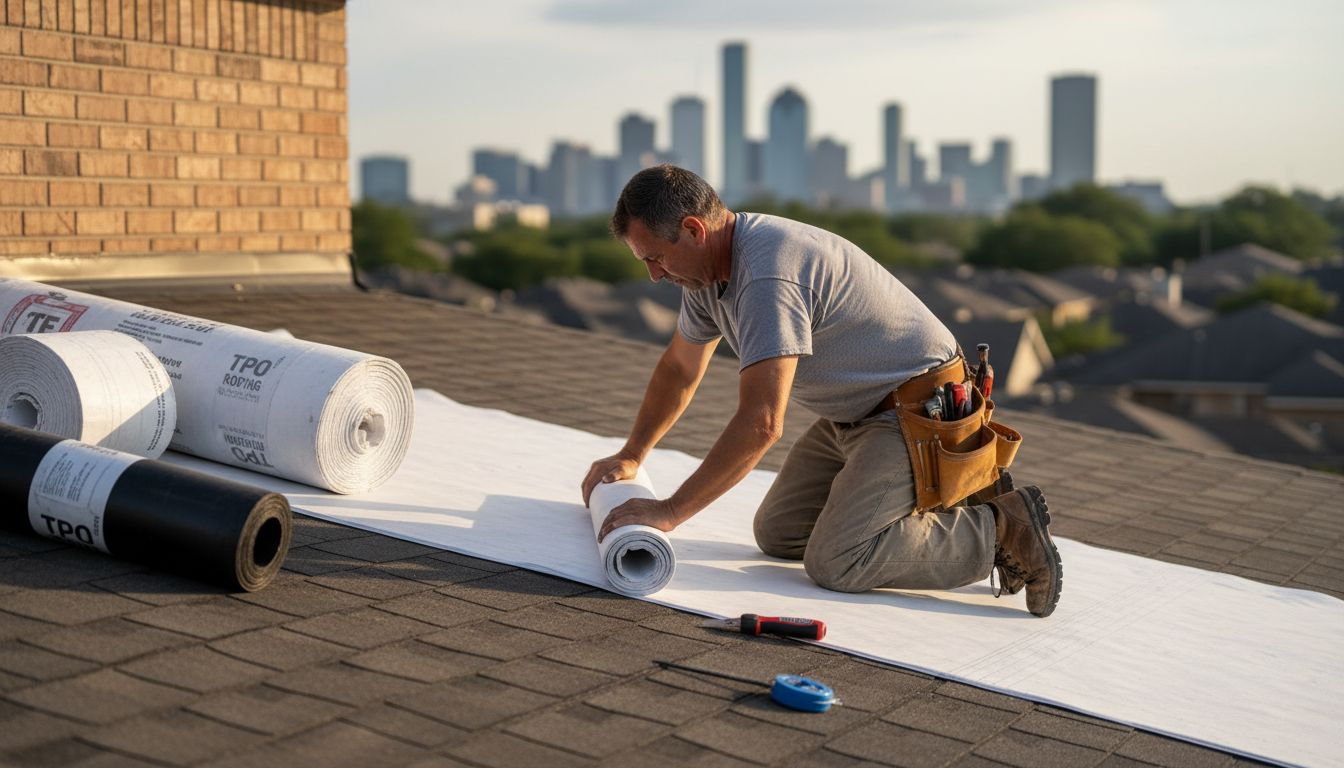
Relentless Houston heat and sudden downpours can test any residential roof, leaving homeowners searching for protection that truly stands up to local weather extremes. Choosing the right roofing membrane means more than just picking a material, it means investing in lasting security for your home. This guide breaks down the key types of roofing membranes and explains how they help create powerful, watertight barriers, giving you confidence in your next residential upgrade.
Table of Contents
- Roofing Membranes Defined And How They Work
- Comparing TPO, EPDM, And PVC Membranes
- Modified Bitumen And Built-Up Roofing Options
- Installation Methods And Durability Factors
- Cost, Lifespan, And Maintenance Considerations
Key Takeaways
| Point | Details |
|---|---|
| Roofing Membrane Functionality | Roofing membranes provide effective waterproof barriers, protecting homes from moisture while enhancing durability against environmental factors. |
| Types of Membranes | TPO, EPDM, and PVC membranes each offer unique benefits for specific roofing scenarios, helping homeowners make informed choices based on climate and roof slope. |
| Installation Techniques | Proper installation is critical for the longevity of roofing membranes, with methods like fully adhered, mechanically fastened, and ballasted each influencing durability. |
| Maintenance Importance | Regular maintenance and inspections are essential for extending the lifespan of roofing systems and preventing expensive repairs. |
Roofing Membranes Defined and How They Work
Roofing membranes represent sophisticated protective layers designed to shield Houston homes from environmental challenges. These advanced systems create a continuous waterproof barrier that prevents moisture penetration and protects the underlying building structure. Membrane roofing systems utilize single or multi-layered sheets made from synthetic materials engineered to resist water, UV radiation, and extreme weather conditions.
At their core, roofing membranes function through a simple yet powerful principle: creating an uninterrupted, sealed surface that blocks water intrusion. These materials come in several primary categories, each with unique characteristics:
- Thermoplastic Membranes: Flexible sheets that can be heat-welded together
- Thermoset Membranes: Synthetic rubber materials that cure into durable configurations
- Modified Bitumen Membranes: Asphalt-based systems with enhanced performance capabilities
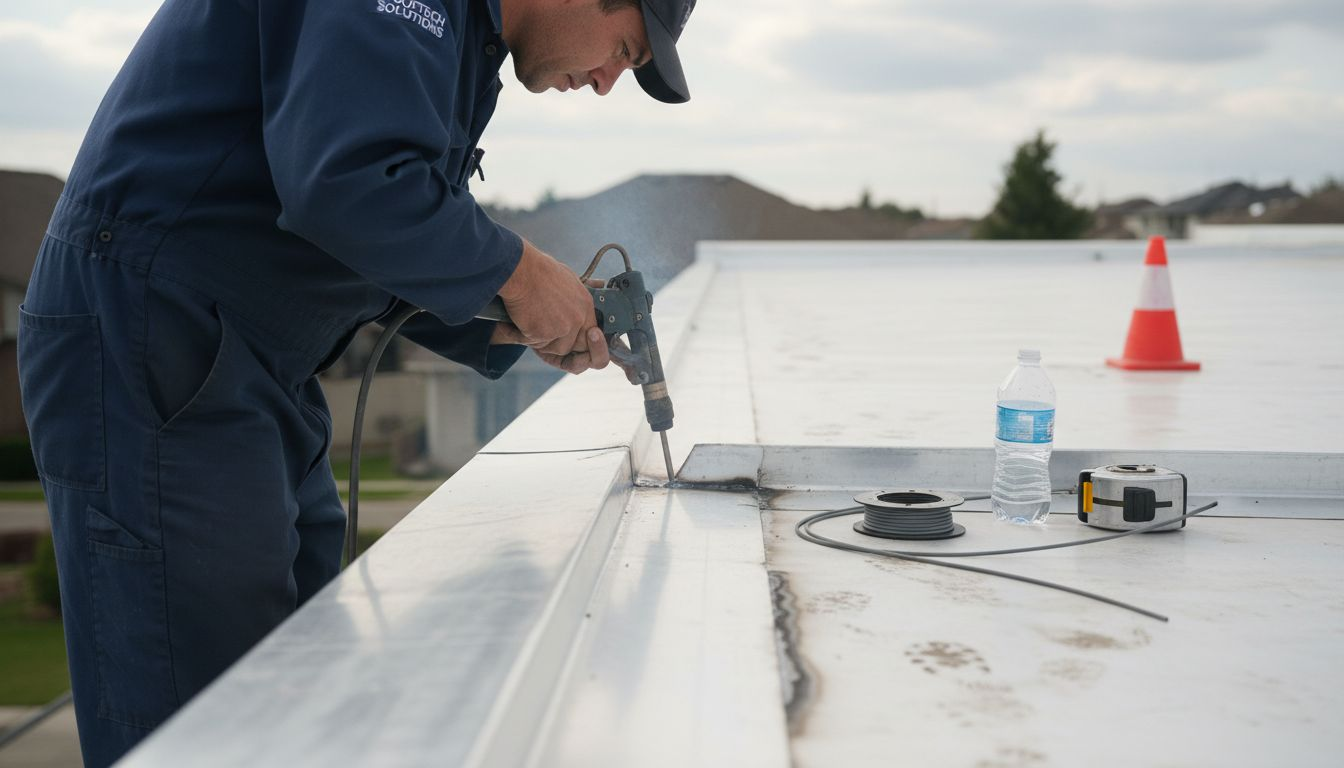
The installation techniques for these membranes vary depending on their composition. PVC roofing membranes, for instance, typically involve heat welding to create strong, watertight seams that can withstand Houston’s challenging climate conditions. Each membrane type offers distinct advantages in durability, flexibility, and environmental resistance.
Pro tip: When selecting a roofing membrane, consider your specific environmental challenges, budget, and long-term performance requirements to make the most informed decision.
Comparing TPO, EPDM, and PVC Membranes
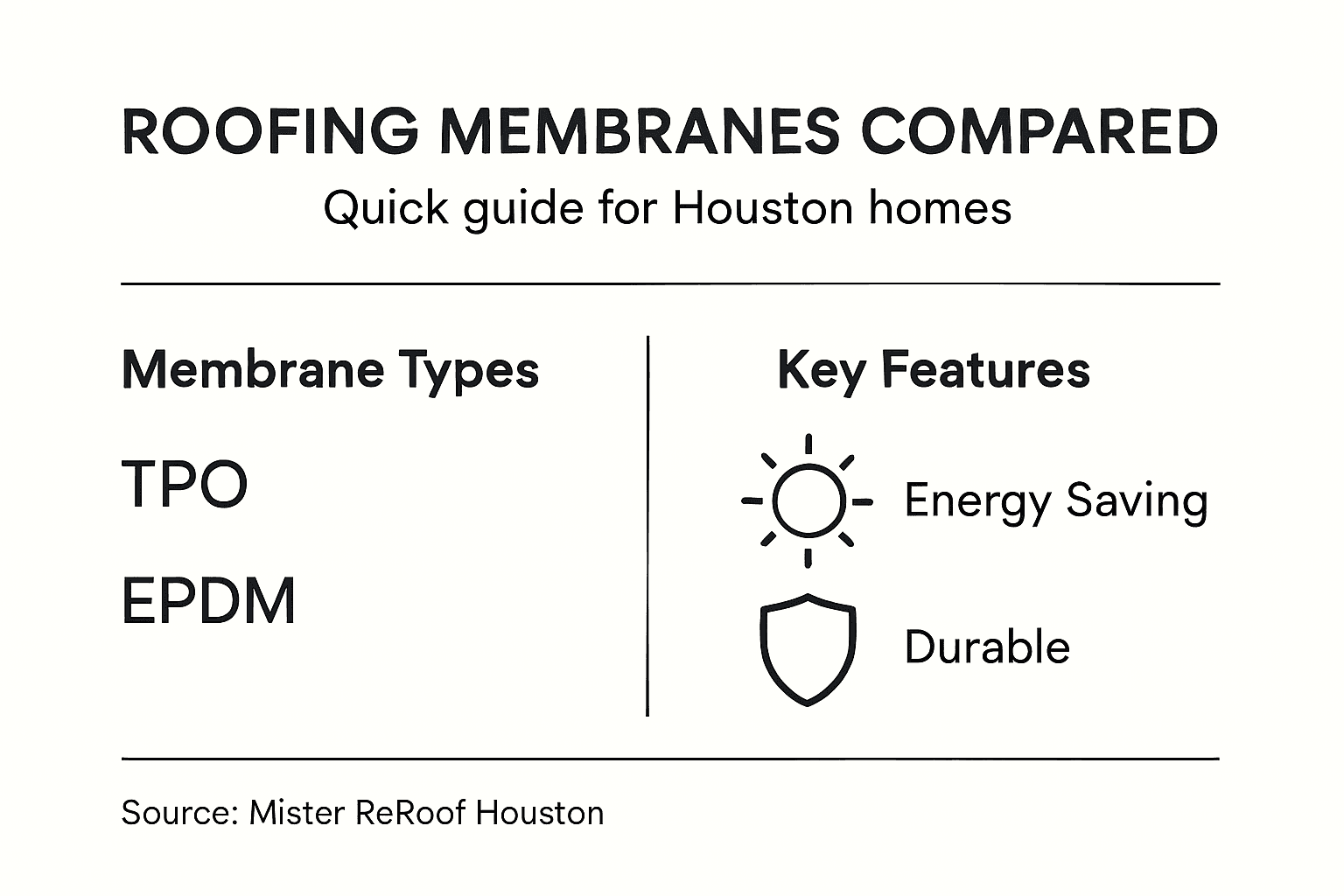
Roofing membranes represent critical protective solutions for Houston homeowners, with three primary materials dominating the market: TPO, EPDM, and PVC. Roofing membrane evaluations demonstrate each material’s unique characteristics and performance capabilities in protecting residential structures.
These three membrane types offer distinct advantages for different roofing scenarios:
- TPO (Thermoplastic Polyolefin)
- Highly energy-efficient
- Excellent heat-welding capabilities
- Lightweight and flexible
- Typically white, reflecting solar radiation
- EPDM (Ethylene Propylene Diene Monomer)
- Superior chemical resistance
- Excellent durability
- Dark color absorbs more heat
- Ideal for flat or low-slope roofs
- PVC (Polyvinyl Chloride)
- Highly reflective surface
- Strong resistance to chemical exposure
- Excellent for commercial and residential applications
- Long-lasting performance
Each membrane type brings specific benefits tailored to Houston’s challenging climate. TPO membranes, for instance, offer remarkable energy efficiency with their reflective white surfaces, helping reduce cooling costs during intense summer heat. EPDM provides exceptional durability against ultraviolet radiation and temperature fluctuations, making it an excellent choice for homes experiencing significant weather variations.
Here’s a concise comparison of leading roofing membrane types in Houston:
| Membrane Type | Key Strength | Best Roof Slope |
|---|---|---|
| TPO | High energy efficiency | Low-slope to flat |
| EPDM | Superior UV resistance | Flat or very low-slope |
| PVC | Chemical resistance | Flat and low-slope |
| BUR | Multiple waterproof layers | Low-slope |
| Modified Bitumen | Flexible, temperature-tolerant | Low-slope roofs |
Houston homeowners should prioritize membrane selection based on specific environmental conditions, roof slope, and long-term performance requirements.
Pro tip: Consult a professional roofing contractor to assess your specific roof configuration and local climate challenges before selecting a membrane type.
Modified Bitumen and Built-Up Roofing Options
Houston homeowners seeking durable low-slope roofing solutions have two exceptional options: Built-Up Roofing (BUR) and Modified Bitumen membranes. Asphalt-based roofing systems provide robust protection against the city’s challenging weather conditions, offering multiple layers of defense for residential and commercial structures.
Built-Up Roofing (BUR) and Modified Bitumen membranes each bring unique characteristics to roof protection:
- Built-Up Roofing (BUR)
- Multiple alternating layers of asphalt and reinforcing felts
- Topped with weather-resistant surfacing like gravel
- Exceptional durability and puncture resistance
- Traditional roofing method with proven performance
- Modified Bitumen Roofing
- Polymer-modified asphalt sheets
- Enhanced elasticity and UV resistance
- Two primary polymer types: SBS and APP
- Flexible installation methods (torch-applied or self-adhered)
Modified bituminous roofing techniques offer sophisticated options for Houston homeowners. SBS (Styrene-Butadiene-Styrene) membranes provide remarkable flexibility, especially beneficial during temperature fluctuations, while APP (Atactic Polypropylene) membranes excel in high-temperature resistance.
Proper installation and maintenance are critical for maximizing the performance and longevity of asphalt-based roofing systems.
Pro tip: Consult a professional roofing contractor to determine the most suitable membrane type for your specific roof configuration and local climate challenges.
Installation Methods and Durability Factors
Roofing membrane performance in Houston depends critically on proper installation techniques and careful material selection. Polymer roofing membrane installation requires meticulous attention to surface preparation, substrate conditions, and manufacturer specifications to ensure long-term durability.
Roofing professionals typically employ three primary installation methods:
- Fully Adhered Method
- Complete surface bonding with specialized adhesives
- Maximum contact between membrane and substrate
- Excellent wind uplift resistance
- Ideal for flat or low-slope roofs
- Mechanically Fastened Method
- Membrane secured using mechanical fasteners
- Faster installation process
- Works well with various roof deck configurations
- Cost-effective installation approach
- Ballasted Method
- Membrane held in place by weighted materials
- Typically uses gravel or concrete pavers
- Minimal roof deck penetration
- Good for lightweight membrane systems
Bituminous roofing installation techniques involve complex layering processes that demand expert precision. Proper seam welding, edge treatment, and careful management of roof penetrations determine the ultimate performance and longevity of the roofing system.
The following table summarizes installation methods and how they affect durability:
| Installation Method | Durability Impact | Best Application |
|---|---|---|
| Fully Adhered | Excellent wind resistance | Large, flat surfaces |
| Mechanically Fastened | Reliable for most climates | Multiple deck types |
| Ballasted | Minimal deck penetration | Lightweight roofs |
Durability is not just about materials, but about the quality of installation and ongoing maintenance.
Pro tip: Always verify the contractor’s expertise in your specific membrane type and installation method before committing to a roofing project.
Cost, Lifespan, and Maintenance Considerations
Roofing membrane investments for Houston homeowners require careful evaluation of long-term performance and maintenance requirements. Roof membrane life expectancy varies significantly depending on material selection, installation quality, and ongoing maintenance strategies.
Lifespan expectations for different roofing membrane types include:
- Built-Up Roofing (BUR)
- Typical lifespan: 15-20 years
- Moderate maintenance requirements
- Cost-effective initial installation
- Suitable for low-slope roofs
- EPDM Membranes
- Typical lifespan: 20-25 years
- Minimal maintenance needs
- Excellent weather resistance
- Consistent performance in temperature variations
- TPO Membranes
- Typical lifespan: 20-25 years
- Energy-efficient design
- Lightweight and flexible
- Competitive pricing
Effective roof maintenance programs are essential for extending membrane longevity. Regular inspections help identify and address potential issues before they escalate, including checking seams, monitoring membrane integrity, and clearing drainage systems.
Preventative maintenance can significantly extend roof life and protect your property investment.
Pro tip: Schedule professional roof inspections twice annually to catch and resolve potential issues before they become costly repairs.
Protect Your Houston Home with Expert Roofing Membrane Solutions
Choosing the right roofing membrane is critical to safeguarding your Houston home against harsh weather and costly repairs. Whether you are leaning toward TPO’s energy efficiency, EPDM’s durability, or the robust protection of Modified Bitumen, you need a roofing contractor who understands these materials inside and out. At Mister ReRoof, we specialize in tailored roofing membrane installation and replacement that matches your roof’s slope and environmental needs — ensuring lasting protection and peace of mind.
Don’t let uncertain choices put your home at risk. Trust the Houston experts at Mister ReRoof to guide you through selecting the ideal membrane and provide professional installation that exceeds industry standards. Act now to schedule your free estimate and secure a storm-resistant, durable roof designed specifically for Houston’s climate. Visit Mister ReRoof and discover how our expertise can give your home the roofing membrane performance it deserves. Learn more about our Roof Replacement Services today.
Frequently Asked Questions
What are the main types of roofing membranes available for homes?
The main types of roofing membranes include TPO (Thermoplastic Polyolefin), EPDM (Ethylene Propylene Diene Monomer), PVC (Polyvinyl Chloride), Built-Up Roofing (BUR), and Modified Bitumen. Each type offers unique characteristics suited for different roofing scenarios.
How do TPO, EPDM, and PVC membranes compare in terms of energy efficiency?
TPO membranes are highly energy-efficient, reflective, and help reduce cooling costs. EPDM has a darker color that absorbs more heat, while PVC also has a reflective surface but provides strong chemical resistance. Each material’s efficiency may vary depending on specific roof configuration and environmental conditions.
What installation methods are commonly used for roofing membranes?
Three primary installation methods for roofing membranes include the fully adhered method, mechanically fastened method, and ballasted method. Each method impacts durability and suitability for various roof types.
What factors influence the lifespan of roofing membranes?
The lifespan of roofing membranes is influenced by material selection, installation quality, ongoing maintenance, and environmental factors. For example, EPDM and TPO membranes typically last 20-25 years with proper care, while Built-Up Roofing may last 15-20 years.
