
Every year, severe storms leave thousands of American homes in Houston vulnerable to costly roof damage. When unpredictable Gulf Coast weather strikes, choosing the right roofing material can determine whether your property stays protected or faces repeated repairs. This guide breaks down which options stand up best to heat, wind, and hail, helping you make a smart, weather-resistant choice for your Houston home.
Table of Contents
- What Are Roofing Materials for Houston Homes
- Comparing Shingle, Metal, Tile, and Flat Roofs
- Key Features and Benefits of Each Material
- Weather Resistance and Houston Climate Performance
- Costs, Longevity, and Maintenance Needs
- How to Choose the Right Roofing Material
Key Takeaways
| Point | Details |
|---|---|
| Roofing Material Options | Homeowners in Houston typically choose from asphalt shingles, metal roofing, tile roofing, and flat roofing systems, each suited to different environmental challenges and aesthetic preferences. |
| Climate Adaptability | Selecting roofing materials must account for Houston’s extreme weather, including heat, thunderstorms, and hurricane winds, ensuring durability and resistance. |
| Cost Considerations | Different materials present varying installation costs and maintenance needs, with asphalt shingles being the most affordable option initially, while metal and tile roofing offer longer-term value. |
| Professional Consultation | Homeowners are advised to consult local roofing professionals for assessments tailored to their homes, ensuring optimal material selection based on environmental conditions and budget. |
What Are Roofing Materials for Houston Homes
Roofing materials are the critical protective layers that shield Houston homes from extreme weather conditions, making their selection a crucial decision for homeowners. Roofing materials serve as the outermost building layer providing protection from elements, specifically designed to withstand the challenging climate of South Texas. These materials must effectively resist intense heat, sudden thunderstorms, potential hurricane winds, and occasional hail – environmental stressors unique to the Gulf Coast region.
In Houston, homeowners typically choose from several primary roofing material categories: asphalt shingles, metal roofing, tile roofing, and flat roofing systems. Asphalt shingles remain the most prevalent option due to their affordability and relatively straightforward installation process. Metal roofing has gained significant popularity for its durability and energy efficiency, particularly in areas with extreme temperature fluctuations. Tile roofing offers aesthetic versatility and excellent heat resistance, while flat roofing systems provide practical solutions for certain architectural designs.
Each roofing material presents distinct characteristics tailored to different homeowner needs. Commercially available roofing materials vary significantly in water permeability, durability, and maintenance requirements, making careful selection critical. Factors such as initial cost, expected lifespan, thermal performance, and aesthetic appeal all play important roles in determining the most suitable option for a specific Houston home.
Pro tip: Before selecting a roofing material, consult with a local Houston roofing professional who understands the specific environmental challenges and can recommend the most appropriate solution for your specific property and budget.
Comparing Shingle, Metal, Tile, and Flat Roofs
Roof shingles represent individual overlapping elements engineered to provide comprehensive protection for Houston homes, with each material offering unique advantages tailored to different architectural and environmental needs. Asphalt shingles remain the most common choice, providing an affordable and versatile roofing solution that balances cost-effectiveness with reliable performance. These materials are designed to interlock, creating a water-resistant barrier that helps shield homes from intense Texas weather conditions.
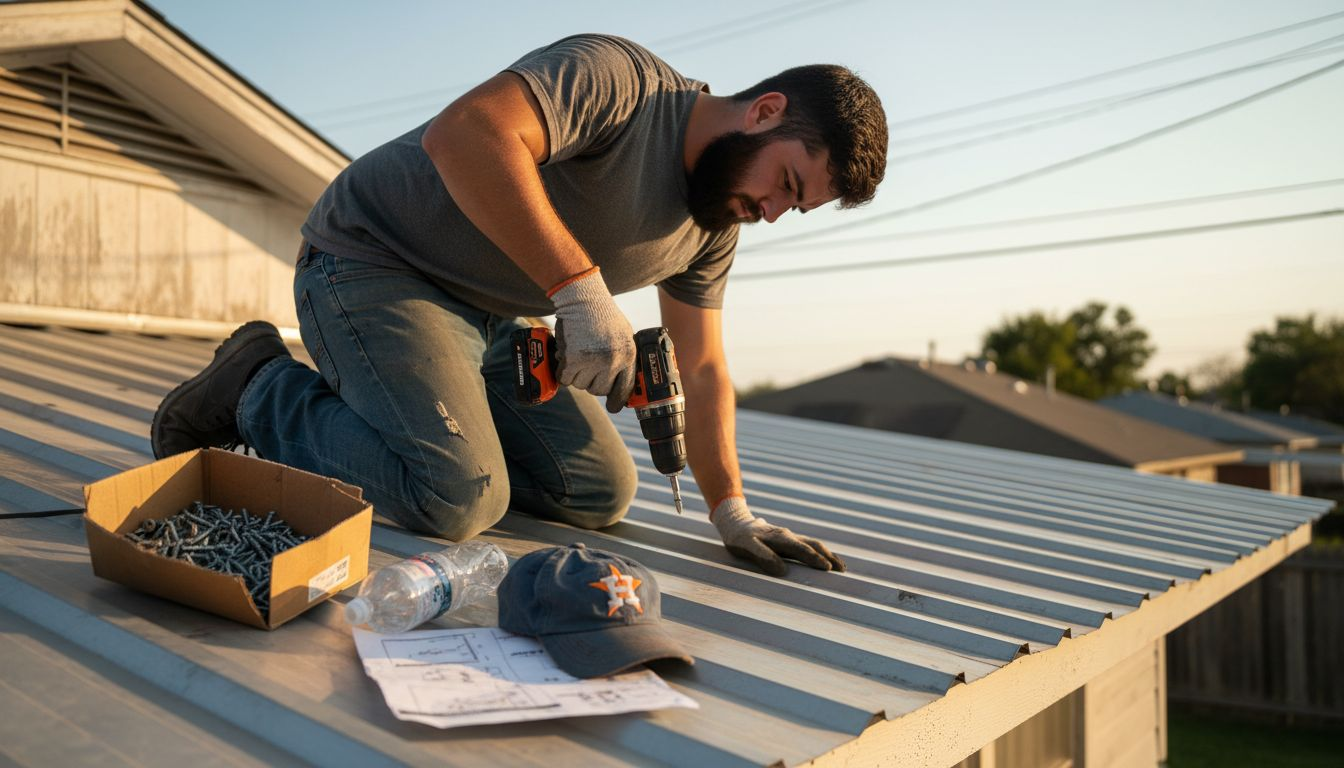
Metal roofing systems present a robust alternative, characterized by exceptional durability and long-term value. Metal roofs utilize materials like steel, aluminum, and copper, offering superior corrosion resistance and significantly longer lifespans compared to traditional shingle installations. Metal roofing technologies include corrugated and standing seam designs that provide enhanced waterproofing and environmental resilience, making them particularly attractive for homeowners seeking energy-efficient and low-maintenance solutions.
Tile and flat roofing systems complete the spectrum of residential roofing options in Houston. Tile roofs, constructed from clay or concrete, deliver remarkable aesthetic appeal and excellent heat resistance, though they require substantial structural support due to their significant weight. Flat roofs, typically employed in modern or commercial architectural designs, utilize specialized membrane layers that prioritize water drainage and thermal performance. These systems demand precise installation and regular maintenance to ensure optimal functionality in the challenging Houston climate.
Pro tip: Consider scheduling a professional roof inspection that evaluates your specific home’s structural characteristics, local weather exposure, and budget to determine the most suitable roofing material for your unique requirements.
Key Features and Benefits of Each Material
Copper roofing represents a sophisticated and durable material offering exceptional elemental resistance, with unique characteristics that set it apart from traditional roofing solutions. Asphalt shingles excel in affordability and ease of installation, making them the most popular residential roofing choice in Houston. These materials provide reliable protection with a lower upfront cost, typically lasting 15-25 years under proper maintenance. Their interlocking design creates a robust barrier against rain, wind, and moderate hail impacts.
Metal roofing systems deliver remarkable long-term value, characterized by extraordinary durability and energy efficiency. Steel, aluminum, and copper options offer corrosion resistance, reflecting solar radiation and potentially reducing cooling costs by up to 25%. These roofs can withstand extreme temperature variations, making them particularly suited to Houston’s challenging climate. Built-up roofing systems provide multi-layered protection through sophisticated material combinations, incorporating bitumen and felt layers that create exceptional water resistance and thermal performance.
Tile roofing presents a premium option with unparalleled aesthetic appeal and remarkable heat resistance. Clay and concrete tiles provide superior insulation, helping regulate indoor temperatures and potentially reducing energy consumption. While heavier and more expensive, these materials offer exceptional longevity, often lasting 50-100 years with proper installation and maintenance. Flat roofing systems, typically used in modern architectural designs, utilize specialized membrane technologies that prioritize water drainage and structural integrity, making them ideal for commercial and contemporary residential applications.
Pro tip: Consult a local Houston roofing professional to conduct a comprehensive property assessment, which will help determine the most suitable roofing material based on your specific structural requirements, budget constraints, and long-term performance expectations.
Weather Resistance and Houston Climate Performance
The FORTIFIED Roof program provides critical guidelines for addressing Houston’s severe weather challenges, emphasizing the importance of selecting roofing materials capable of withstanding extreme environmental conditions. Houston’s unique climate demands robust roofing solutions that can resist intense heat, sudden thunderstorms, hurricane-force winds, and potential hail damage. Wind resistance becomes a paramount consideration, with roofing materials needing to maintain structural integrity during rapid atmospheric pressure changes and high-velocity wind events.
Texas building codes mandate specific performance standards for roofing materials, ensuring homes can withstand the region’s unpredictable weather patterns. Roofing systems must comply with stringent windborne debris protection and attachment strength requirements, which are particularly critical in hurricane-prone areas like Houston. Metal and tile roofing systems typically outperform traditional asphalt shingles, offering superior wind uplift resistance and longer-term durability against temperature fluctuations and moisture intrusion.
Each roofing material demonstrates unique performance characteristics in Houston’s challenging climate. Metal roofs reflect solar radiation, reducing heat absorption and potentially lowering cooling costs. Tile roofs provide exceptional thermal insulation, helping stabilize indoor temperatures during extreme heat waves. Asphalt shingles, while more economical, require more frequent maintenance and replacement when exposed to prolonged sunlight and intense storm conditions. Flat roofing systems utilize specialized membrane technologies designed to manage water drainage and provide additional protection against humidity and potential water infiltration.
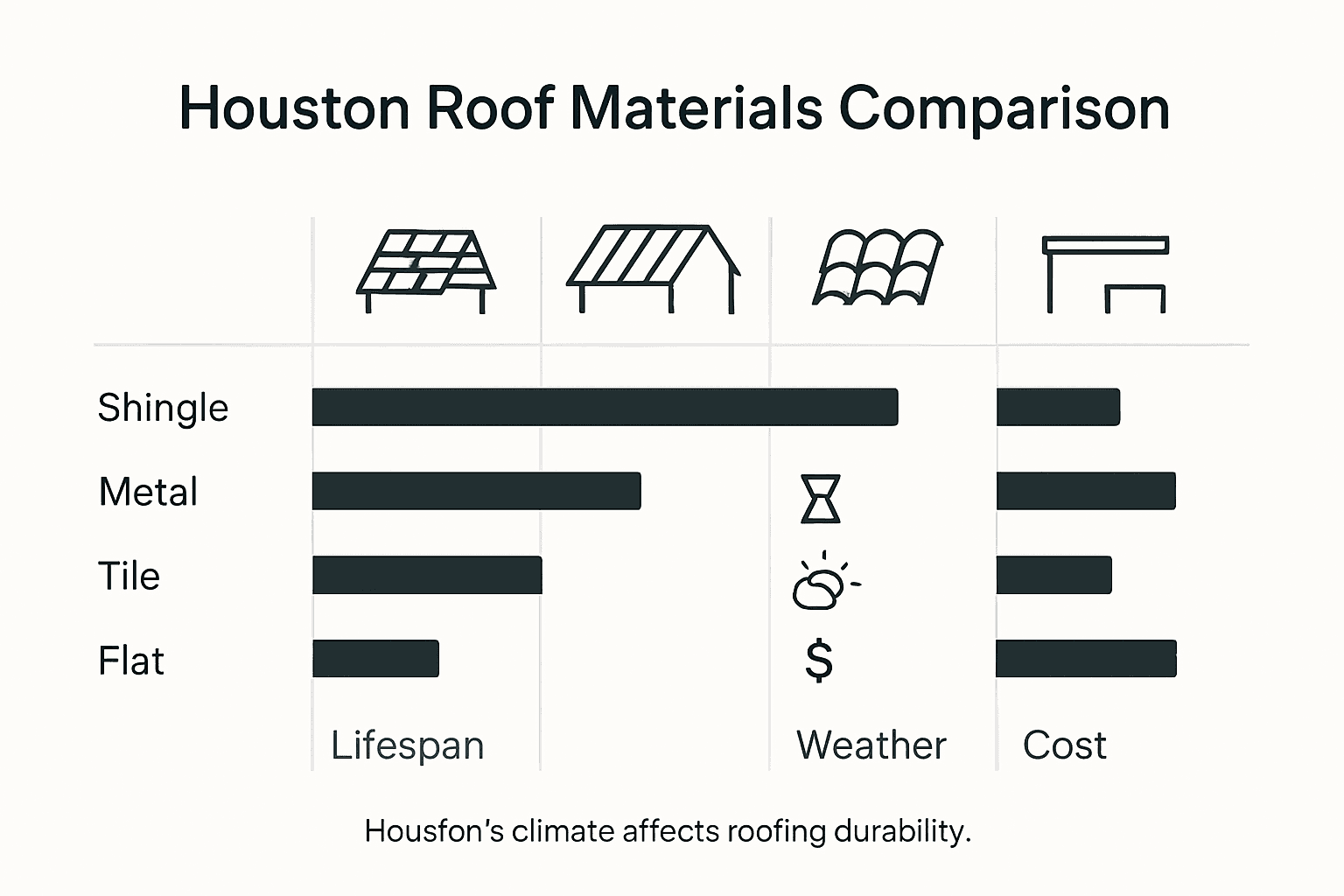
Here is a summary of how major roofing materials perform in Houston’s climate:
| Roofing Material | Climate Resilience | Estimated Lifespan | Annual Maintenance Needs |
|---|---|---|---|
| Asphalt Shingles | Fair, may suffer in strong storms | 20-30 years | Storm inspection, minor repairs |
| Metal Roofing | Excellent against wind and heat | 40-70 years | Visual inspection, occasional cleaning |
| Tile Roofing | Superior heat resistance, heavy | 50-100 years | Specialized repair if cracked |
| Flat Roofing | Good water drainage, heat exposed | 10-30 years | Regular membrane checks |
Pro tip: Consider scheduling an annual professional roof inspection to assess weather-related wear and proactively address potential vulnerabilities before they escalate into significant damage.
Costs, Longevity, and Maintenance Needs
Roof replacement costs demonstrate significant variation across different roofing materials, with each option presenting unique financial considerations for Houston homeowners. Asphalt shingles represent the most budget-friendly initial investment, typically ranging from $3-$5 per square foot, with an expected lifespan of 20-30 years. These materials offer an economical solution for homeowners seeking immediate affordability, though they may require more frequent replacements compared to more durable alternatives.
Metal roofing has emerged as a cost-effective long-term solution, offering remarkable durability and minimal maintenance requirements. While initial installation costs run higher at approximately $8-$15 per square foot, metal roofs can last 40-70 years with minimal repair needs. Their ability to withstand Houston’s extreme weather conditions and potential energy savings through improved thermal reflection make them an increasingly attractive investment for discerning homeowners. Tile roofing represents the premium option, with potential lifespans exceeding 100 years, but requiring substantial upfront investment and robust structural support.
Maintenance needs vary dramatically across roofing materials, directly impacting long-term value and performance. Asphalt shingles demand periodic inspections and occasional repairs, particularly after severe storms. Metal roofing systems require minimal maintenance, typically needing only annual visual inspections and occasional cleaning. Tile roofs, while extremely durable, may require specialized repair techniques if individual tiles crack or become damaged. Flat roofing systems need regular membrane inspections and prompt addressing of any potential water drainage issues to prevent long-term structural damage.
Review the following financial and practical factors for each roofing option:
| Material | Installation Cost (per sq. ft.) | Expected Energy Savings | Structural Requirement |
|---|---|---|---|
| Asphalt Shingles | $3-$5 | Minimal | Standard |
| Metal Roofing | $8-$15 | Up to 25% cooling cost | Reinforced recommended |
| Tile Roofing | $10-$20 | High insulation | Strong support required |
| Flat Roofing | $5-$12 | Moderate | Depends on membrane type |
Pro tip: Request detailed lifecycle cost analyses from professional roofing contractors, comparing not just initial installation expenses but projected maintenance, repair, and potential energy savings for each roofing material option.
How to Choose the Right Roofing Material
Selecting the optimal roofing material requires a comprehensive evaluation of multiple critical factors specific to Houston’s unique environmental conditions, ensuring long-term protection and performance for your home. Homeowners must carefully consider climate resilience, budget constraints, aesthetic preferences, and structural requirements when making this crucial decision. Wind resistance and heat tolerance become particularly important in the Gulf Coast region, where extreme weather can rapidly compromise inferior roofing systems.
Roofing material selection involves understanding complex interactions between material properties, installation techniques, and local building regulations, with each option presenting distinct advantages. Asphalt shingles offer affordability and straightforward installation, making them attractive for budget-conscious homeowners. Metal roofing provides superior durability and energy efficiency, particularly beneficial in Houston’s intense heat. Tile roofing delivers exceptional aesthetic appeal and remarkable longevity, though requiring more substantial initial investment and structural reinforcement.
Critical evaluation criteria should include projected lifespan, maintenance requirements, energy efficiency, and compatibility with your specific home’s architectural design. Local building codes mandate specific windstorm ratings and installation standards, which can significantly influence material selection. Professional roofing contractors can provide invaluable insights into material performance, helping homeowners navigate complex technical considerations and make informed decisions that balance immediate cost with long-term value.
Pro tip: Request comprehensive material performance reports from potential roofing contractors, including detailed assessments of wind resistance ratings, thermal performance, and expected maintenance requirements specific to Houston’s challenging climate conditions.
Protect Your Houston Home with Expert Roofing Solutions
Choosing the right roofing material that can endure Houston’s extreme weather is not easy. With challenges like intense heat, heavy storms, and hurricane winds, the roofing material you select must offer durable protection and long-term value. At Mister ReRoof, we understand these unique demands and specialize in high-quality roofing systems such as metal, shingle, flat, and TPO roofs designed specifically for Houston homes and businesses. Whether you want the energy efficiency of metal roofing or the classic dependability of asphalt shingles, we tailor our services to fit your budget, style, and structural needs to ensure lasting performance.
Our expert team is committed to helping you navigate the complex choices from comparing wind resistance ratings to understanding maintenance needs. Getting a roof that truly matches Houston’s climate starts with the right professional guidance. Visit Mister ReRoof today and discover how our experience can protect your investment for decades to come.
Looking for a roofing contractor with proven Houston expertise? Choose reliability and quality with Mister ReRoof. Get started by scheduling your free roof consultation now.
Secure your home with confidence.
Get your personalized estimate today.
Frequently Asked Questions
What are the most common types of roofing materials used in Houston?
The most common roofing materials in Houston include asphalt shingles, metal roofing, tile roofing, and flat roofing systems. Each option offers unique benefits tailored to the local climate.
How do roofing materials perform in Houston’s climate?
Roofing materials must withstand extreme heat, thunderstorms, and potential hurricane winds in Houston. Metal roofs excel in durability and resistance to heat, while tile roofs provide excellent heat insulation. Asphalt shingles are more economical but may require more maintenance.
What is the lifespan of different roofing materials?
Asphalt shingles typically last 20-30 years, metal roofing can last 40-70 years, tile roofing may exceed 50-100 years, and flat roofing generally lasts 10-30 years depending on the specific material used.
How do I choose the right roofing material for my home?
Choosing the right roofing material involves evaluating climate resilience, budget, aesthetic preferences, and structural requirements. Consulting with a local roofing professional can help ensure you select the best option for your specific needs.
