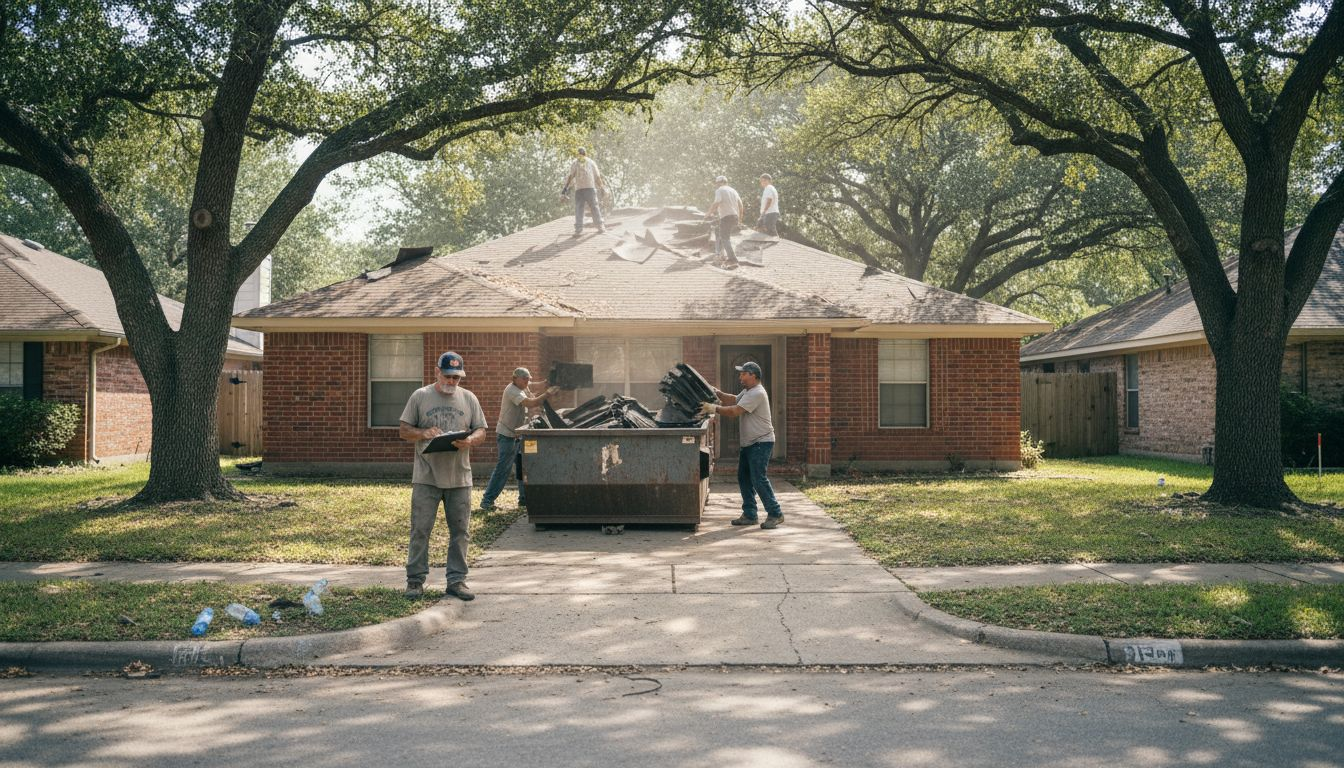
Replacing your roof in Houston can feel like navigating a financial minefield. Weather damage and hidden structural issues create unpredictable expenses that derail even careful budgets. This guide arms you with practical strategies to accurately estimate costs, identify hidden expenses, and plan a roof replacement that protects both your home and your wallet.
Table of Contents
- Understanding Houston Roof Replacement Costs
- Prerequisites: What You Need Before Budgeting
- Step-by-Step Budgeting For Roof Replacement
- Choosing The Right Materials For Houston’s Climate
- Selecting A Contractor And Avoiding Common Mistakes
- Expected Outcomes And Budgeting Benchmarks
- Discover Expert Roof Replacement Solutions In Houston
- Frequently Asked Questions
Key Takeaways
| Point | Details |
|---|---|
| Cost Range | Houston roof replacement typically costs $8,500 to $28,000 based on materials and hidden repairs |
| Labor Dominance | Labor represents up to 60% of total project costs, requiring careful contractor selection |
| Contingency Planning | Building code compliance and 10-15% contingency reserves prevent budget surprises |
| Insurance Savings | Impact-resistant materials can reduce insurance premiums by 5-10% annually |
| Contractor Selection | Licensed, insured contractors prevent costly workmanship errors and warranty issues |
Understanding Houston Roof Replacement Costs
Roof replacement in Houston isn’t a one size fits all expense. Houston roof replacement costs range from $8,500 to $28,000 depending on material and hidden damage, making upfront research essential. Your final bill depends on roof size, material choice, and the extent of structural repairs discovered during installation.
Material costs vary dramatically across roofing types. Asphalt shingles cost $3.75 to $7.50 per square foot, offering the most budget friendly entry point. Metal roofing jumps to $10 to $15 per square foot but delivers superior longevity. Impact-resistant shingles add 10% to 30% more to standard shingle costs but meet hurricane building codes and qualify for insurance discounts.
Labor accounts for the lion’s share of your budget at $2 to $6 per square foot. This typically represents up to 60% of total costs for Houston installations. Complex roof designs, steep pitches, and multi story homes push labor expenses toward the higher end of this range.
Houston’s humid, hurricane prone climate demands storm proof materials that withstand severe weather. This climate reality increases material specifications and installation standards compared to milder regions. Local building codes add another 10% to 20% to project costs through compliance requirements including enhanced wind ratings and proper ventilation systems.
When you estimate roof replacement costs, factor in these Houston specific challenges:
- Hurricane force wind requirements increasing material specifications
- High humidity demanding superior ventilation systems
- Frequent severe weather necessitating impact resistant options
- Building code compliance for wind uplift and water intrusion protection
Cost Breakdown by Component:
| Component | Percentage of Total | Cost Range |
|---|---|---|
| Materials | 40% | $3,400 – $11,200 |
| Labor | 60% | $5,100 – $16,800 |
| Permits | Included | $200 – $500 |
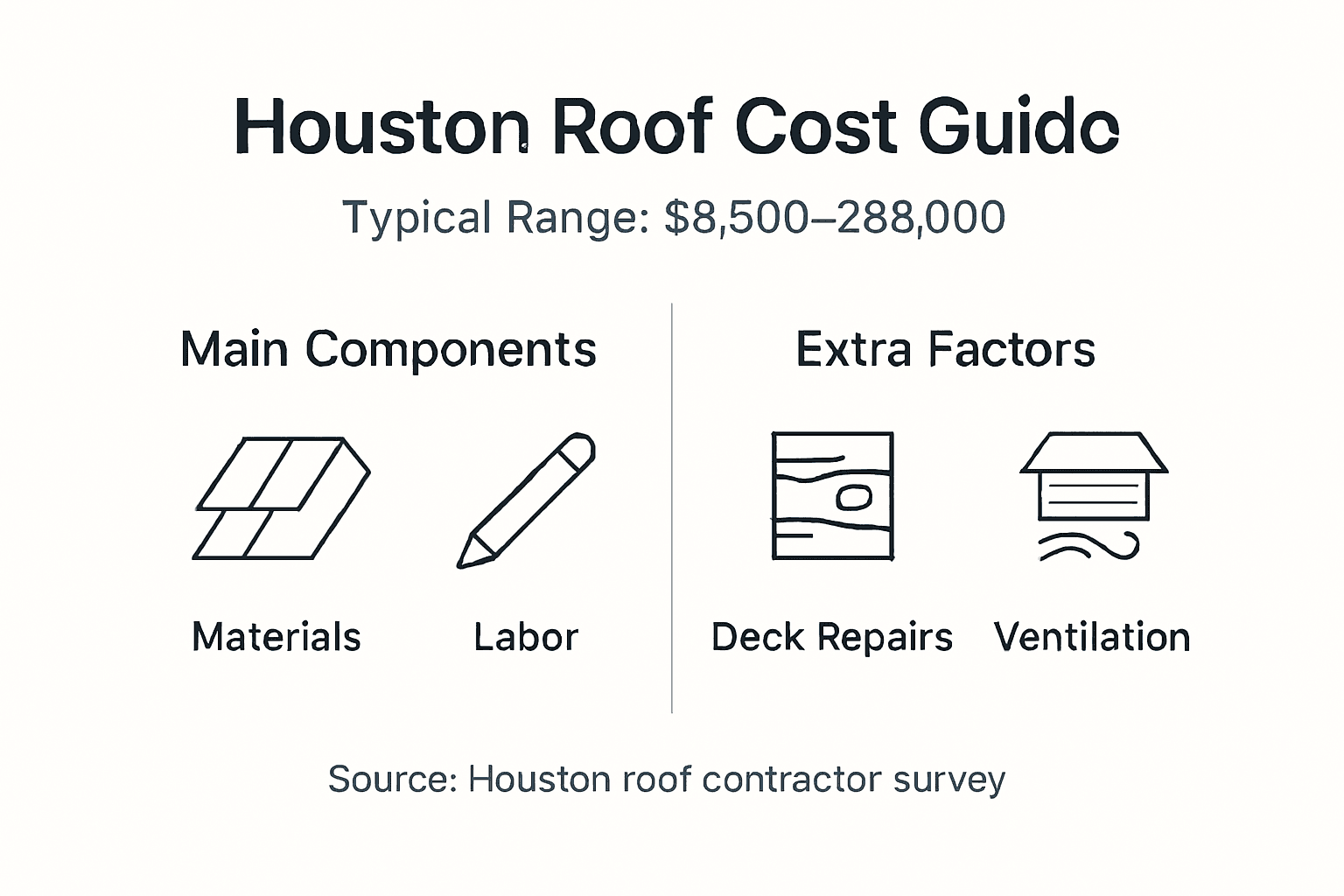
Understanding these cost drivers helps you build a realistic budget before requesting contractor quotes. The next step involves gathering critical information about your specific roof condition.
Prerequisites: What You Need Before Budgeting
Accurate budgeting starts with thorough preparation, not contractor quotes. Professional roof inspection reveals hidden damage affecting budgeting and must be included early to avoid surprises. A detailed inspection uncovers issues invisible from ground level that can dramatically alter your final costs.
Hidden decking damage poses the biggest budget surprise for Houston homeowners. Rotted or damaged decking requires replacement at $75 to $150 per sheet, and you won’t know the extent until removal begins. Water intrusion from previous storms often compromises multiple sheets, potentially adding thousands to your project.
Your attic ventilation condition directly impacts both installation costs and long term roof performance. Inadequate ventilation traps heat and moisture, reducing shingle lifespan by years. Upgrading ventilation systems adds upfront expense but protects your investment and may be required by current building codes.
Roof pitch and total square footage are fundamental cost drivers. Steep roofs require additional safety equipment and slow installation, increasing labor costs. Measure your roof’s square footage accurately or have your inspector provide precise measurements for quote comparisons.
Before creating your budget, gather these essential items:
- Complete professional roof inspection report with photos
- Documentation of previous repairs and warranty information
- Current homeowner’s insurance policy details
- Local building permit requirements and associated fees
- Available financing options or cash reserves
Pro Tip: Schedule your roof inspection at least 30 days before requesting contractor quotes. This timeline allows you to research materials, understand code requirements, and adjust your budget before committing to a contractor. Early inspection also lets you address urgent repairs that might worsen and increase costs if delayed.
Allocate 10% to 15% of your estimated budget as a contingency reserve. Houston’s climate creates unpredictable damage patterns, and this cushion prevents project delays when contractors discover additional repairs. When you prepare for roof replacement, this financial buffer keeps your project moving smoothly regardless of discoveries during tear off.
Step-by-Step Budgeting for Roof Replacement
Building a comprehensive roof budget requires systematic organization of multiple cost categories. Separating material and labor costs with building code compliance and contingencies leads to accurate budgeting. Follow these steps to create a realistic financial plan.
- Start with your inspection report. Review all identified damage including missing shingles, compromised flashing, and potential decking issues. Request cost estimates for repairing each item. This baseline reveals your minimum project scope.
- Select materials matching Houston requirements. Choose roofing materials that meet local wind ratings and building codes. Impact resistant shingles or metal roofing withstand hurricane conditions better than standard options. Research insurance discounts available for upgraded materials to offset higher initial costs.
- Collect itemized contractor quotes. Request at least three detailed quotes separating material costs, labor, permit fees, and code compliance work. Ensure each quote addresses the same scope to enable accurate comparisons. Verify that contractors include disposal fees for old roofing materials.
- Budget for essential upgrades. Include ventilation system improvements and potential decking repairs in your financial plan. Set aside $75 to $150 per sheet for decking replacement, estimating conservatively based on your roof’s age and inspection findings. Proper ventilation protects your investment and may be required for warranty validity.
- Add your contingency fund. Allocate 10% to 15% above your quoted price for unforeseen issues. Houston’s severe weather history means hidden damage is common. This reserve prevents project delays when contractors discover problems during installation.
- Schedule promptly after budgeting. Delaying replacement after damage discovery allows problems to worsen, potentially increasing costs by 5% to 15%. Book your project during dry seasons when possible, but don’t postpone necessary repairs to wait for ideal weather.
Pro Tip: Get quotes from licensed, insured contractors only. Verify credentials through the Texas Department of Licensing and Regulation. Licensed professionals provide accurate estimates reflecting true code compliance costs, while unlicensed contractors often underbid then add surprise charges mid project.
Use this budgeting for roof replacement framework alongside your roof replacement checklist to track progress. Document all quotes, material selections, and timeline agreements in writing. Understanding roof replacement cost factors specific to Houston ensures your budget reflects local reality, not national averages that don’t account for hurricane building standards.
Choosing the Right Materials for Houston’s Climate
Material selection dramatically impacts both upfront costs and long term value. Houston’s brutal climate demands roofing that withstands hurricane winds, intense heat, and heavy rainfall without premature failure.
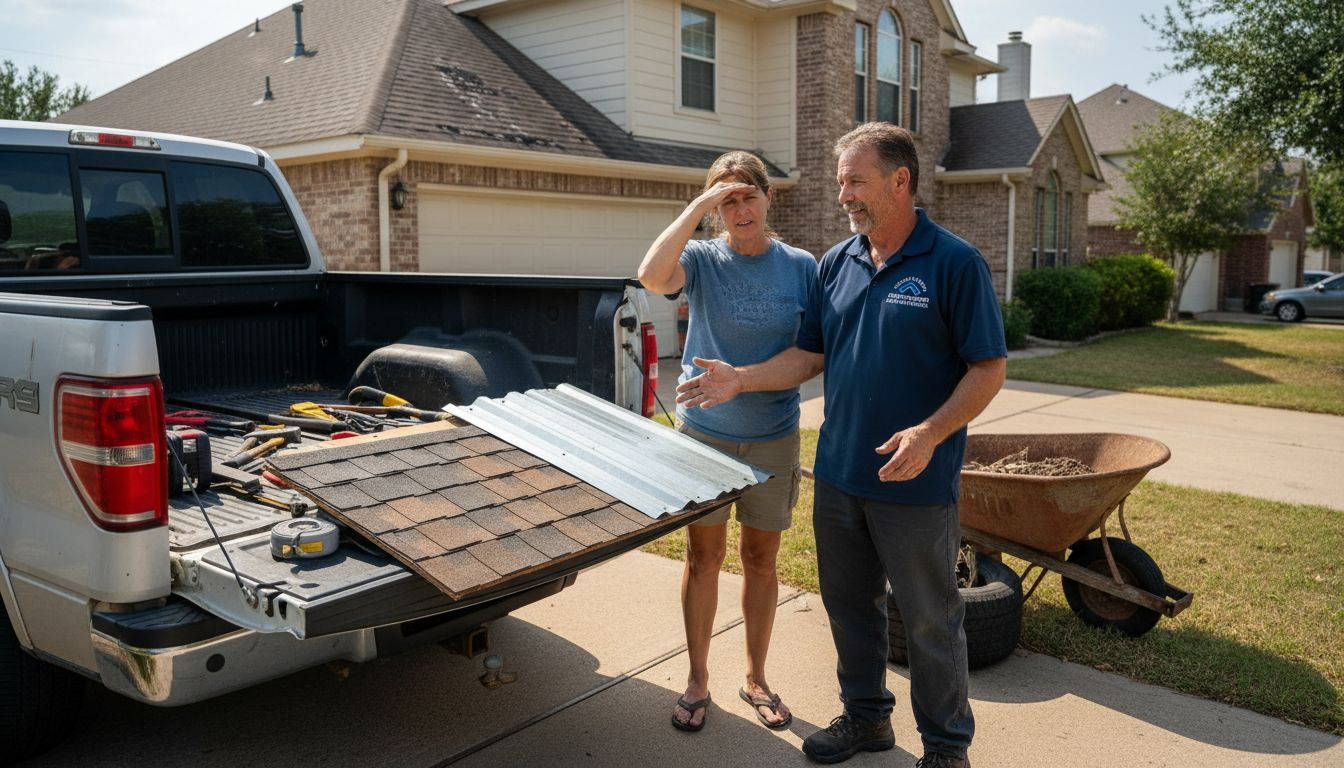
Asphalt shingles offer the most affordable entry point at $3.75 to $7.50 per square foot. They provide adequate protection for 15 to 30 years under normal conditions. However, Houston’s climate accelerates wear, often pushing replacement toward the lower end of this range. Budget oriented homeowners choose architectural shingles over basic three tab varieties for better wind resistance and appearance.
Metal roofing costs significantly more upfront at $10 to $15 per square foot. This investment pays dividends through 40 to 70 year lifespans and superior storm resistance. Metal roofs reflect heat, reducing cooling costs by up to 25% during Houston’s scorching summers. They also withstand hurricane force winds better than any shingle product.
Impact resistant shingles meet hurricane codes and can reduce insurance premiums by 5% to 10%, offering both protection and savings. These specialized shingles cost 10% to 30% more than standard options but resist hail damage and high winds. Many insurance companies offer premium discounts recognizing their superior performance, helping offset higher installation costs within a few years.
Material Comparison for Houston:
| Material | Cost/Sq Ft | Lifespan | Wind Resistance | Insurance Benefit |
|---|---|---|---|---|
| Asphalt Shingles | $3.75-$7.50 | 15-30 years | Moderate | Standard rates |
| Impact Resistant | $4.50-$9.75 | 20-35 years | High | 5-10% discount |
| Metal Roofing | $10-$15 | 40-70 years | Excellent | Possible discount |
When you select roofing materials Houston contractors install, weigh these factors:
- Initial budget constraints versus long term ownership plans
- Energy efficiency goals and cooling cost reduction
- Insurance premium impact over 5 to 10 years
- Resale value considerations for your neighborhood
- Maintenance requirements and associated costs
Darker colored roofing absorbs more heat, increasing attic temperatures and cooling demands. Lighter colors or reflective coatings reduce heat absorption, cutting energy costs. However, HOA restrictions may limit color choices in some Houston neighborhoods.
Proper ventilation becomes even more critical with certain materials. Metal roofing requires adequate attic ventilation to prevent condensation issues. Insufficient ventilation voids many manufacturer warranties and accelerates material degradation regardless of roofing type.
Selecting a Contractor and Avoiding Common Mistakes
Your contractor choice determines whether your carefully planned budget survives contact with reality. Using licensed and insured contractors reduces risk of costly workmanship errors and warranty issues, major budget threats that plague homeowners who prioritize low bids over credentials.
Verify every contractor’s license through the Texas Department of Licensing and Regulation before requesting quotes. Licensed contractors understand local building codes and carry proper insurance protecting you from liability. Unlicensed operators offer tempting low bids but leave you financially exposed when injuries occur or work fails inspection.
Insurance coverage matters as much as licensing. Require proof of both general liability and workers compensation insurance. A roofer falling from your home becomes your financial nightmare without proper coverage. Request certificates of insurance directly from the carrier, not photocopies easily forged.
Common budgeting mistakes derail even well planned projects:
- Underestimating hidden damage costs leads to mid project budget crises
- Skipping professional inspections results in incomplete scope definitions
- Choosing the lowest bid without verifying credentials invites poor workmanship
- Failing to include permit costs and code compliance requirements
- Omitting contingency funds for weather related delays
Delaying replacement after discovering damage increases costs by 5% to 15% as problems worsen. Small leaks expand into major water damage affecting ceilings, insulation, and electrical systems. What starts as a straightforward roof replacement becomes a complex restoration project touching multiple home systems.
Pro Tip: Check contractor reviews on multiple platforms including Google, Better Business Bureau, and local community forums. Look for patterns in feedback about budget adherence, timeline accuracy, and communication quality. A contractor’s response to negative reviews reveals their professionalism and problem solving approach.
When getting roofing estimates, request references from projects completed in the past year. Contact these homeowners directly about budget accuracy, surprise costs, and overall satisfaction. Understanding the role roofing contractor plays in project success helps you evaluate qualifications beyond price alone.
Never pay the full amount upfront. Legitimate contractors request deposits of 10% to 30% with remaining payments tied to project milestones. Full upfront payment eliminates your leverage if problems arise and signals potential fraud.
Expected Outcomes and Budgeting Benchmarks
Understanding realistic expectations helps you evaluate whether your budget aligns with project scope. Roof replacement typically takes 1 to 3 weeks; cost to value ratio affects home resale value positively when done right. Your timeline depends on roof complexity, weather interruptions, and contractor scheduling.
Simple ranch style homes with straightforward roof lines often complete in just days under ideal conditions. Complex multi level designs with multiple valleys, chimneys, and skylights extend projects to two or three weeks. Houston’s unpredictable weather adds buffer time for rain delays that halt installation.
Cost to value ratios vary by material choice and neighborhood standards. Quality roof replacement typically recovers 60% to 70% of costs in increased home value. Premium materials like metal roofing in upscale neighborhoods may recover more, while basic shingles in modest areas return less. Curb appeal improvements from new roofing accelerate sales and justify asking prices.
Material longevity directly impacts your long term cost efficiency:
- Asphalt shingles last 15 to 30 years requiring replacement twice or more during typical homeownership
- Metal roofing spans 40 to 70 years, often outlasting the home itself
- Impact resistant shingles extend standard shingle lifespan by 5 to 10 years
- Proper installation and maintenance add years to any material’s service life
Regular maintenance protects your investment and maximizes material lifespan. Annual inspections catch minor issues before they escalate into costly repairs. Clean gutters prevent water backup damaging roof edges. Trim overhanging branches to reduce debris accumulation and physical damage during storms.
Budget for these ongoing costs:
- Annual professional inspections at $150 to $300
- Gutter cleaning twice yearly at $100 to $200 per service
- Minor repairs averaging $300 to $500 every few years
- Seal and flashing maintenance extending roof lifespan
Return on investment extends beyond resale value. Energy efficient materials reduce cooling costs by hundreds annually. Insurance premium reductions from impact resistant materials compound over decades. Eliminating leak related interior damage prevents costly repairs to ceilings, walls, and furnishings.
Understanding roof replacement timelines helps you plan around Houston’s weather patterns. Schedule projects during drier months when possible, but don’t delay necessary repairs waiting for perfect conditions. Roof integrity matters more than ideal installation weather.
Discover Expert Roof Replacement Solutions in Houston
Navigating roof replacement budgets becomes simpler with expert guidance tailored to Houston’s unique challenges. Mister ReRoof delivers professional roofing services designed specifically for our climate’s demands, ensuring your investment withstands whatever weather comes next.
Our licensed contractors eliminate budgeting surprises through thorough inspections and transparent pricing. We separate material, labor, and compliance costs so you understand exactly where your money goes. Explore our 7 roof replacement tips to maximize your project success, or learn what is roof replacement from foundation to finish. When you’re ready for quality installation, our shingle roof replacement services provide the durability Houston homes demand.
Frequently Asked Questions
Why is labor such a large part of roof replacement cost?
Labor intensive roofing work requires skilled crews working at dangerous heights with specialized equipment. Houston’s climate demands meticulous installation meeting strict building codes for wind and water resistance. Quality installation takes time and expertise, justifying the 60% labor allocation that ensures your roof performs as designed.
How much should I budget for unexpected roof decking repairs?
Set aside $75 to $150 per sheet for potential decking replacement, estimating based on your roof’s age and visible damage indicators. Older homes or roofs with known leak history may need 10 to 20 sheets replaced. Include $1,500 to $3,000 in your contingency fund specifically for decking to avoid mid project funding crises.
Can impact resistant shingles lower my insurance rates?
Yes, most major insurers offer 5% to 10% premium discounts for impact resistant roofing meeting Texas building codes. Request a quote update after installation with documentation proving your new roof’s impact rating. These savings accumulate over years, offsetting the higher initial material cost within the first decade.
What are typical permit costs in Houston for roof replacement?
Permit fees range from $200 to $500 depending on project scope and jurisdiction. City of Houston permits differ slightly from surrounding municipalities. Your contractor typically handles permit acquisition, but verify this inclusion in your quote to avoid surprise fees when work begins.
How quickly should I schedule replacement after roof damage is discovered?
Schedule within 30 to 60 days of damage discovery to prevent cost escalation from worsening conditions. Each storm season risks additional damage that compounds repair needs. Immediate temporary repairs may buy time if scheduling delays occur, but permanent replacement should follow as soon as contractor availability permits.
