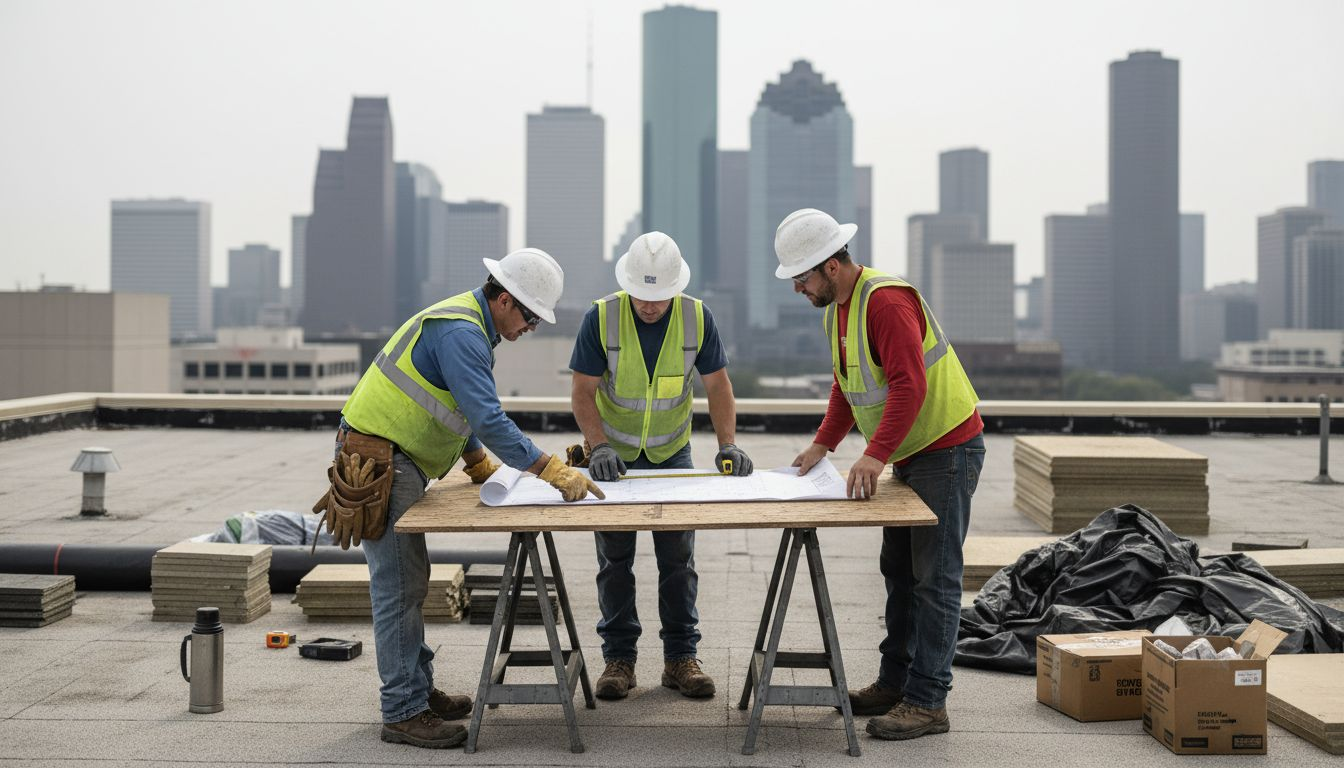
Over 85 percent of American commercial properties in Houston face recurring roof damage from extreme heat, high winds, and sudden downpours each year. For property owners and facility managers, safeguarding multi-story buildings and warehouses requires more than simple repairs. Choosing the right commercial re-roofing solution can mean fewer costly emergencies and a stronger defense against harsh weather. Discover clear insights on durable options designed to minimize future repair bills and help your business thrive through every season in Houston.
Table of Contents
- Defining Commercial Re-Roofing For Property Owners
- Types Of Commercial Re-Roofing Solutions Explained
- Typical Process And Key Steps Involved
- Major Benefits And Common Challenges
- Costs, Risks, And Houston Compliance Essentials
Key Takeaways
| Point | Details |
|---|---|
| Investment in Commercial Re-Roofing | Commercial re-roofing is a strategic investment that enhances structural integrity and protects against environmental challenges for non-residential buildings. |
| Importance of Compliance | Adhering to building codes and obtaining necessary permits is crucial for ensuring project success and legal operation. |
| Energy-Efficient Solutions | Incorporating energy-efficient roofing solutions can lead to significant energy savings and extended roof system lifespan. |
| Risk Management | Property owners should budget for potential unexpected costs and ensure thorough planning to minimize project delays and compliance issues. |
Defining Commercial Re-Roofing for Property Owners
Commercial re-roofing represents a strategic infrastructure investment that goes beyond simple roof replacement. This specialized process involves systematically removing and replacing the entire roof covering system on commercial buildings, ensuring structural integrity and protection against environmental challenges. Specifically, re-roofing applies to multi-story office complexes, retail centers, warehouses, and other non-residential structures where standard residential roofing techniques cannot be applied.
According to the International Building Code provisions, commercial re-roofing must meet rigorous standards that address material selection, structural requirements, and comprehensive inspection protocols. These guidelines ensure that new roof systems can withstand local weather conditions, provide adequate drainage, and maintain building safety. The process typically involves detailed assessment of existing roof conditions, precise removal of old materials, and installation of new roofing systems tailored to specific commercial property needs.
The FORTIFIED Commercial program highlights another critical aspect of commercial re-roofing: weather resilience. By implementing advanced roofing techniques, property owners can significantly enhance their buildings’ ability to resist severe weather events like hurricanes, high winds, and hailstorms. This approach not only protects the physical structure but also minimizes potential business interruption by creating more durable roof assemblies that can quickly restore normal operations after extreme weather incidents.
Pro tip: Before initiating a commercial re-roofing project, conduct a comprehensive structural assessment and obtain multiple professional evaluations to ensure you select the most appropriate roofing system for your specific building requirements.
Types of Commercial Re-Roofing Solutions Explained
Commercial re-roofing encompasses a diverse range of sophisticated roofing solutions designed to meet the complex needs of modern business infrastructure. From traditional materials to cutting-edge technologies, property owners now have multiple options to enhance building performance, energy efficiency, and long-term durability. The selection of an appropriate roofing system depends on factors such as building structure, local climate conditions, budget constraints, and specific operational requirements.
Membrane roofing technologies represent a prominent category of commercial re-roofing solutions, offering versatile options like synthetic rubber, thermoplastic (PVC and TPO), and modified bitumen materials. These advanced systems are particularly effective for flat or low-slope commercial roofs, providing watertight protection and exceptional longevity. Single-ply membrane systems have gained significant popularity due to their lightweight construction, ease of installation, and superior resistance to environmental stressors.
Innovative re-roofing solutions now extend beyond traditional protective functions. Energy-efficient roofing composites are emerging as a transformative approach, integrating thermal insulation, advanced waterproofing, and even renewable energy capabilities like solar photovoltaic panel integration. These sophisticated systems not only protect commercial structures but also contribute to substantial energy savings and reduced environmental impact. Property owners can now select roofing solutions that simultaneously address protection, performance, and sustainability goals.
Pro tip: When evaluating commercial re-roofing solutions, consider conducting a comprehensive energy performance audit to identify the most cost-effective and technologically advanced roofing system for your specific building requirements.
Here is a comparison of major commercial re-roofing solutions and their distinctive benefits:
| Roofing Solution | Key Features | Common Applications |
|---|---|---|
| Single-Ply Membrane | Lightweight, flexible, watertight | Flat office, warehouses |
| Modified Bitumen | Multi-layer, robust, weather resistant | Retail, industrial sites |
| Built-Up Roofing (BUR) | Multiple layers, gravel surface | Large multi-story buildings |
| Energy-Efficient Composites | Superior insulation, supports solar panels | New/retrofit eco-friendly design |
Typical Process and Key Steps Involved
Commercial re-roofing represents a complex, multi-stage process that requires meticulous planning, expertise, and adherence to strict building regulations. Property owners must understand the comprehensive steps involved to ensure a successful roof replacement that meets both structural and performance requirements. The process demands careful coordination between building managers, roofing professionals, and local regulatory authorities.
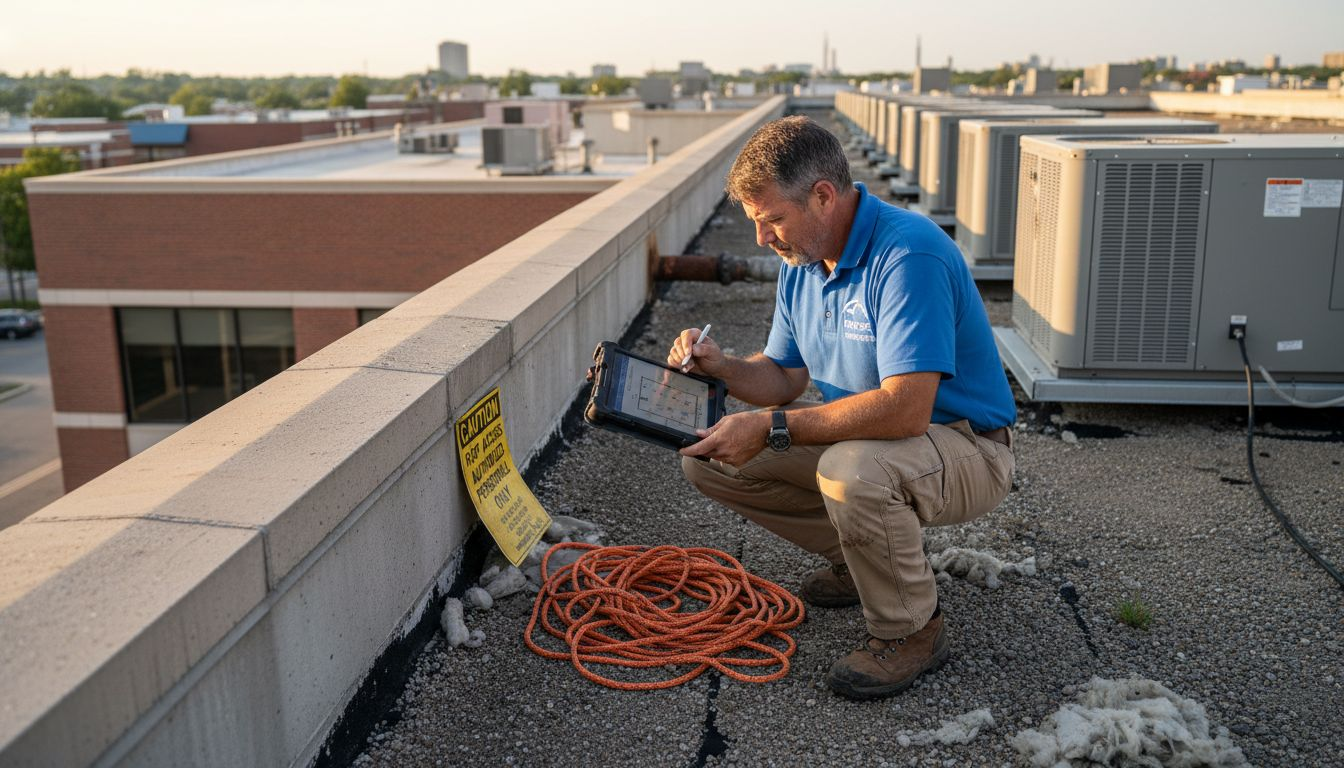
Detailed re-roofing procedures typically begin with an extensive preliminary assessment and permitting phase. This critical initial stage involves comprehensive roof inspections, documenting existing conditions, and obtaining necessary municipal permits. Professionals conduct thorough structural evaluations, measuring roof deck integrity, identifying potential moisture damage, and assessing the existing roofing system’s condition. Key preliminary steps include:
- Comprehensive roof condition assessment
- Moisture and structural integrity testing
- Precise measurement of roof dimensions
- Evaluation of existing roofing materials
- Identification of potential underlying damage
The professional re-roofing process subsequently involves detailed design and implementation stages. This includes developing precise construction documents, selecting appropriate roofing materials, and creating a strategic replacement plan that minimizes business disruption. Roofing professionals carefully plan material removal, structural repairs, and new system installation, ensuring compliance with local building codes and manufacturer specifications. The implementation phase requires coordinated efforts to remove existing roofing, prepare the underlying structure, and install new roofing systems with exceptional precision.
Pro tip: Schedule re-roofing projects during your business’s lowest activity period to minimize operational disruptions and ensure maximum efficiency during the installation process.
Major Benefits and Common Challenges
Commercial re-roofing represents a strategic investment that offers significant advantages while simultaneously presenting complex challenges for property owners. Understanding the nuanced landscape of potential benefits and potential obstacles is crucial for making informed decisions about infrastructure improvements and long-term building maintenance strategies.
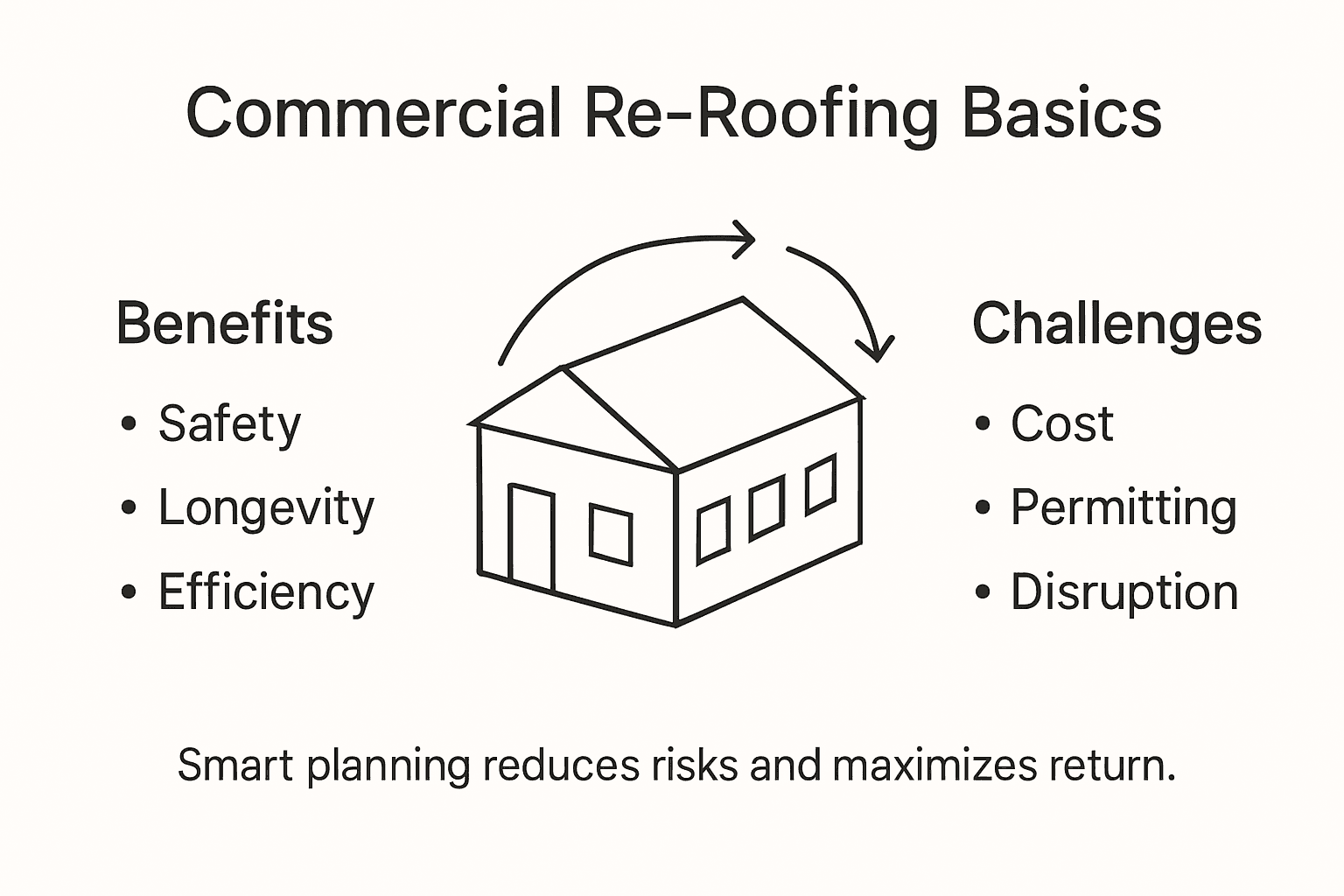
Energy-efficient re-roofing solutions provide multiple compelling advantages for commercial properties. The primary benefits include:
- Substantial reduction in energy consumption
- Enhanced thermal performance
- Improved building insulation
- Potential integration of renewable energy systems
- Increased overall property value
- Extended roof system lifecycle
However, sustainable commercial retrofitting also presents significant challenges that require careful navigation. Property owners must carefully balance design objectives with practical constraints, managing complex technical requirements while minimizing operational disruptions. Critical challenges include material compatibility issues, stringent code compliance requirements, managing installation costs, and minimizing business interruption during the re-roofing process.
Pro tip: Conduct a comprehensive cost-benefit analysis that evaluates both short-term installation expenses and long-term energy savings before initiating your commercial re-roofing project.
Costs, Risks, and Houston Compliance Essentials
Commercial re-roofing in Houston demands a sophisticated understanding of complex regulatory requirements, financial considerations, and potential risks unique to the local building environment. Property owners must navigate a intricate landscape of municipal regulations, building codes, and financial planning to ensure successful project completion and long-term structural reliability.
Houston building permit requirements establish critical compliance standards for commercial re-roofing projects. Obtaining a Certificate of Occupancy is mandatory, which necessitates meeting stringent local standards including:
Below is a summary of essential compliance steps for commercial re-roofing projects in Houston:
| Compliance Requirement | Description | Business Impact |
|---|---|---|
| Certificate of Occupancy | Mandatory city approval after completion | Legal operation, safety assured |
| Structural Integrity Check | Engineering verification before permit granted | Prevents failure, protects asset |
| Energy Efficiency Standard | Local codes mandate minimum roof performance | Reduced energy costs, compliance |
| Detailed Documentation | Permits, inspections, and engineering reports | Streamlines project approval |
- Structural integrity verification
- Fire safety compliance
- Energy efficiency standards
- Detailed inspection protocols
- Comprehensive documentation submission
- Professional engineering assessments
The financial landscape of commercial re-roofing involves multiple dynamic factors that directly impact project scope and budget. Permitting center resources highlight that total project costs fluctuate based on several key variables such as building size, selected roofing materials, complexity of installation, and specific compliance requirements. Potential risks include project delays, unexpected structural repairs, code violation penalties, and potential denial of occupancy certification if documentation fails to meet municipal standards.
Pro tip: Allocate an additional 15-20% contingency budget beyond initial estimates to accommodate potential unexpected compliance requirements or structural modifications during your commercial re-roofing project.
Protect Your Houston Commercial Property with Expert Re-Roofing Solutions
Understanding the complexities and critical importance of commercial re-roofing can make all the difference in safeguarding your business from Houston’s unpredictable weather. The challenges of complying with stringent local building codes, ensuring energy efficiency, and managing potential disruptions demand a trusted roofing partner who prioritizes your property’s structural integrity and long-term value. Mister ReRoof specializes in delivering high-quality, storm-resistant commercial roofing systems tailored for Houston’s climate, helping you avoid costly repairs and business interruptions.
Take the first step to secure your commercial investment by partnering with a local expert who understands your needs. Visit Mister ReRoof to explore our professional roofing replacement services. Our team offers free estimates and detailed consultations to help you navigate compliance requirements and select the most durable, energy-efficient roofing solution for your building. Don’t wait until small issues become expensive problems. Contact Mister ReRoof today and ensure your commercial roof is built to last.
Frequently Asked Questions
What is commercial re-roofing?
Commercial re-roofing is the process of removing and replacing the entire roof covering system on a commercial building. This ensures the structural integrity and protection of the property against environmental challenges.
Why is commercial re-roofing important for property owners?
Re-roofing is vital for maintaining building safety, enhancing weather resilience, and preventing potential business interruptions caused by roof failures. It can also improve energy efficiency and increase property value.
What types of roofing solutions are available for commercial re-roofing?
Common commercial re-roofing solutions include single-ply membrane systems, modified bitumen, built-up roofing, and energy-efficient composites. Each type offers distinctive benefits tailored to different building needs and environments.
What are the key steps involved in the commercial re-roofing process?
The commercial re-roofing process involves comprehensive roof assessments, removal of old materials, structural evaluations, and the precise installation of new roofing systems. Proper planning and compliance with local building codes are essential for success.
