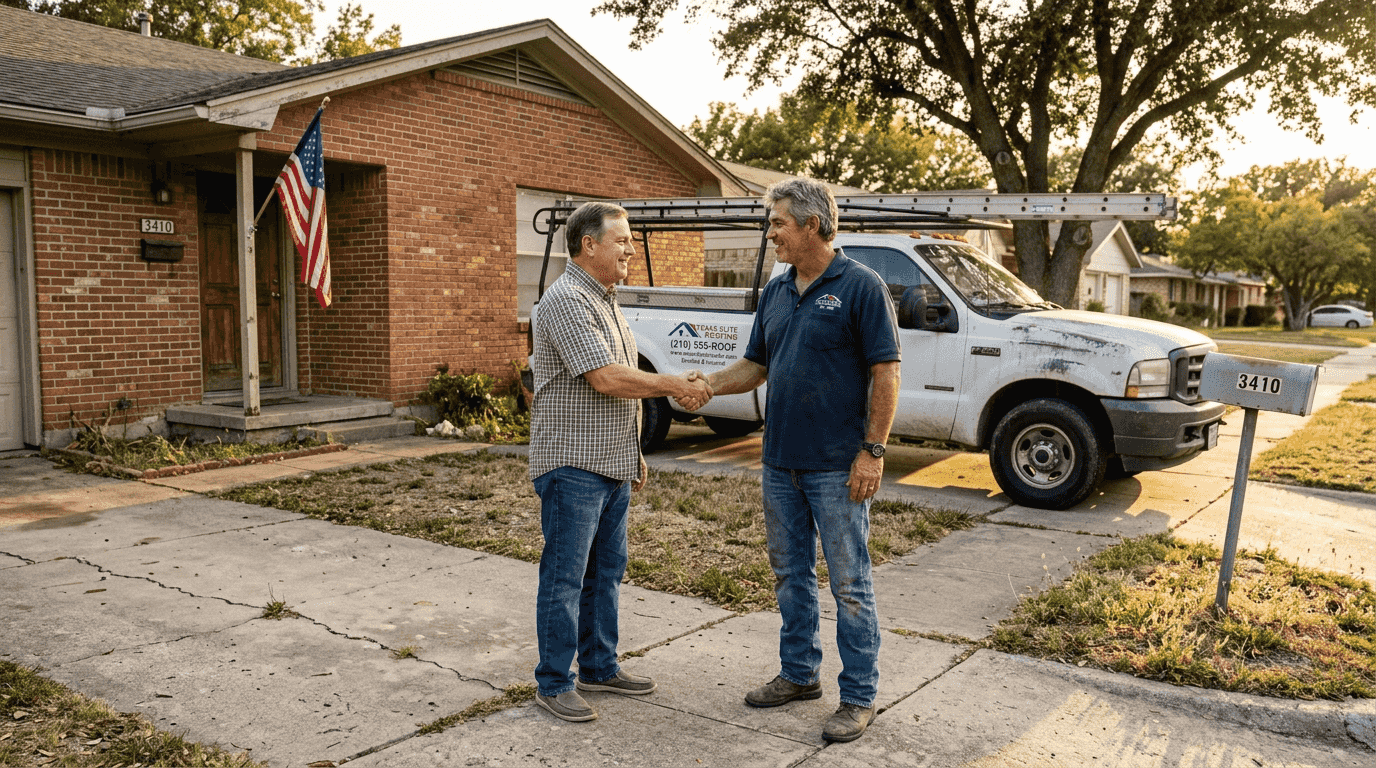
Choosing a roofing contractor in Texas can feel overwhelming, especially after storm damage or when your aging roof demands immediate attention. With no statewide licensing requirement, homeowners in El Campo and Houston must navigate local regulations, insurance verification, and credential checks to protect their investment. This guide walks you through the essential steps to verify credentials, understand Texas-specific requirements, and confidently hire a qualified roofing contractor in 2026.
Table of Contents
- Understand Texas Roofing Contractor Licensing And Registration Requirements
- Verify Roofing Contractor Credentials And Insurance For Safety And Trust
- Steps To Effectively Hire A Roofing Contractor In El Campo And Houston
- Common Pitfalls And How To Avoid Roofing Contractor Scams In Texas
- Reliable Roofing Services In El Campo And Houston With Mister Reroof
- Frequently Asked Questions
Key takeaways
| Point | Details |
|---|---|
| No statewide license required | Texas lacks mandatory state roofing licenses, but cities enforce local registration and permit rules. |
| RCAT certification matters | This voluntary credential proves a contractor’s experience, insurance, and legitimacy in Texas. |
| Insurance is non-negotiable | Verify general liability coverage with limits around $300,000 to $1 million before signing contracts. |
| Ask targeted questions | Requesting detailed estimates, references, and permit proof reduces your hiring risk significantly. |
| Beware common scams | Contractors waiving insurance deductibles or lacking proper registrations signal serious red flags. |
Understand Texas roofing contractor licensing and registration requirements
Texas stands apart from many states by not requiring a statewide roofing license. However, this doesn’t mean contractors operate without oversight. Many Texas cities, including Houston, require contractors to register locally and meet insurance requirements, creating a patchwork of municipal regulations homeowners must understand.
Major metropolitan areas enforce their own rules to protect residents. Houston, for example, mandates business registration and requires contractors to pull permits for roofing projects. These local registrations typically demand proof of general liability insurance, ensuring contractors can cover property damage or injuries during work. El Campo and surrounding areas follow similar patterns, though specific requirements vary by jurisdiction.
Insurance minimums differ across cities but commonly fall between $300,000 and $1 million in liability coverage. No statewide license for roofing contractors exists in Texas, but cities may mandate permits and registrations, making it critical to verify your city’s specific demands before hiring. Failing to confirm these details can leave you financially exposed if accidents occur or work quality falls short.
Before you sign any contract, contact your local building department to clarify registration and permit requirements. This simple step prevents project delays, potential fines, and ensures your contractor operates legally in your area.
Pro Tip: Save your city’s building department contact information in your phone. You’ll need it to verify permits and registrations quickly during the hiring process.
Verify roofing contractor credentials and insurance for safety and trust
Without state licensing, Texas homeowners need alternative methods to assess contractor legitimacy. The Roofing Contractors Association of Texas (RCAT) offers voluntary certification that serves as a reliable trust signal. RCAT certification demonstrates a roofer’s legitimacy, experience, and sufficient insurance, requiring members to maintain good standing, prove experience, and carry adequate coverage.

General liability insurance around $1 million represents the industry standard, though Texas doesn’t mandate this statewide. Homeowners should verify insurance and local registrations to protect against liability and project risks, as uninsured contractors expose you to devastating financial consequences if workers get injured or property damage occurs. Always request current insurance certificates and call the insurer directly to confirm active coverage.
Beware contractors who offer to waive your insurance deductible. This practice violates Texas law and signals a willingness to cut other corners. Legitimate professionals respect insurance regulations and price their work accordingly. If a contractor suggests this arrangement, walk away immediately.
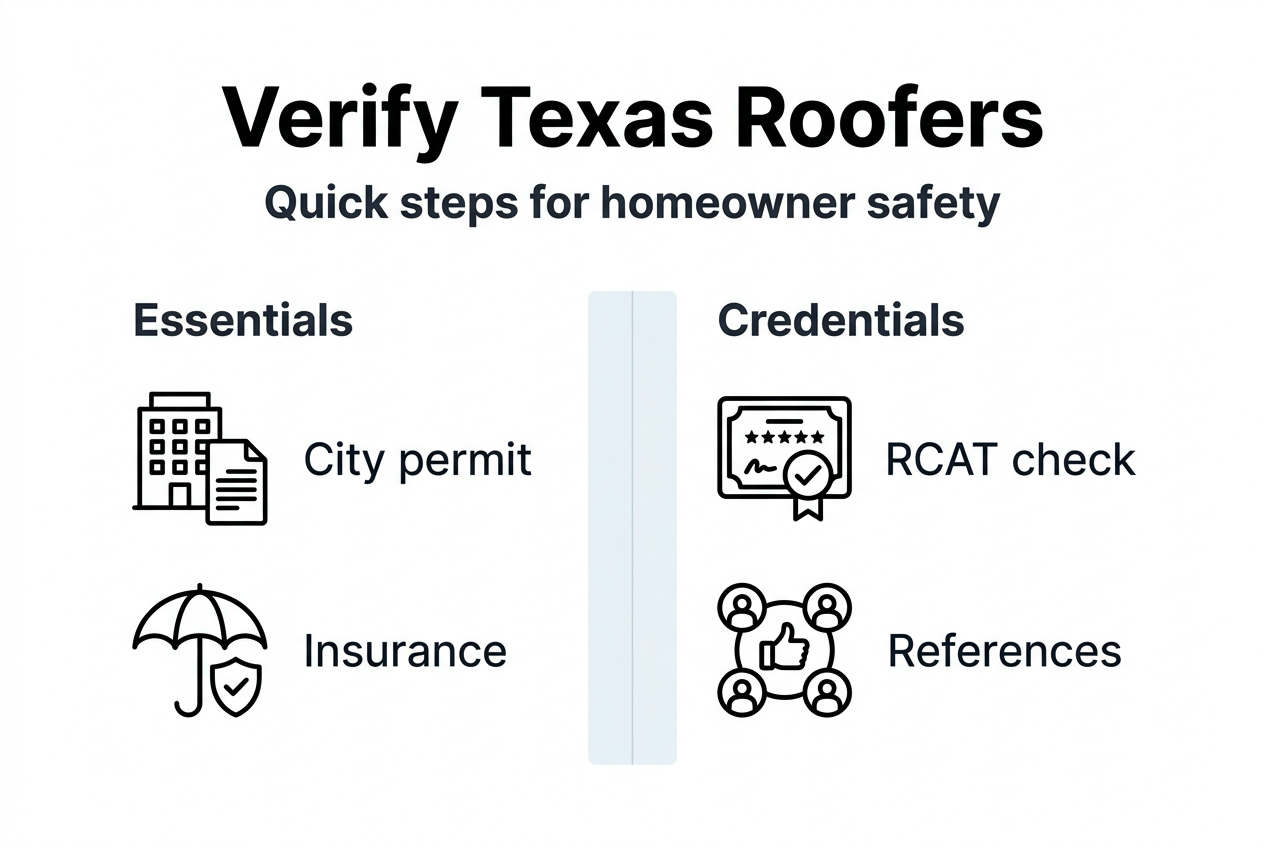
Verification takes minimal time but provides maximum protection. Check RCAT’s online registry, confirm city registrations through municipal websites, and validate insurance certificates by contacting carriers. You can also review our questions to ask roofing contractors to ensure you’re covering all critical bases during initial conversations.
Pro Tip: Request insurance certificates naming you as an additional insured party. This extra layer of protection costs the contractor nothing but shields you from potential liability claims during the project.
Steps to effectively hire a roofing contractor in El Campo and Houston
A systematic approach transforms the overwhelming contractor search into a manageable process. Follow these steps to hire confidently and avoid costly mistakes that plague unprepared homeowners.
-
Verify city registration and insurance compliance first. Check your local building department’s website or call directly to confirm the contractor’s registration status. Request current insurance certificates and validate them with the carrier before proceeding.
-
Gather at least three detailed written estimates. Each estimate should specify materials, labor costs, project timeline, and warranty terms. Vague proposals signal unprofessional operations and make comparing contractors nearly impossible.
-
Request proof of voluntary certifications like RCAT membership. While not required, these credentials demonstrate commitment to industry standards and professional development. Verify certifications through official registries rather than trusting contractor-provided documentation alone.
-
Confirm the contractor will pull all necessary permits. Homeowners should verify contractor permits and insurance before starting roofing projects to avoid fines or delays. Permits ensure work meets building codes and protects your property value during future sales.
-
Review references and online reviews carefully. Contact at least three recent customers and ask specific questions about communication, timeline adherence, and final quality. Check multiple review platforms to identify consistent patterns.
-
Sign a comprehensive written contract before any work begins. The agreement should detail payment schedules, change order procedures, cleanup responsibilities, and warranty coverage. Never accept verbal promises without written documentation.
Maintain open communication throughout the project by scheduling regular check-ins and documenting any changes in writing. For more guidance on gathering accurate proposals, explore our roofing estimates guide and contractor questions checklist.
| Verification Step | Purpose | How to Complete |
|---|---|---|
| City Registration | Confirms legal operation | Check municipal website or call building department |
| Insurance Certificate | Protects against liability | Request certificate and verify with carrier |
| RCAT Certification | Validates industry standards | Search RCAT online registry |
| Permit Confirmation | Ensures code compliance | Verify contractor will pull required permits |
| Reference Checks | Assesses real customer experience | Contact minimum three recent clients |
Pro Tip: Schedule your contractor search during off-peak seasons (late fall or winter). You’ll receive more attention, potentially better pricing, and contractors have more flexibility to accommodate your timeline preferences.
Common pitfalls and how to avoid roofing contractor scams in Texas
Texas homeowners lose thousands annually to contractor scams and preventable mistakes. Understanding these pitfalls protects your investment and ensures quality work.
Hiring uninsured or unregistered contractors creates catastrophic financial risk. If workers get injured on your property, you become liable for medical expenses and lost wages. Property damage from inadequate work falls entirely on your shoulders without proper contractor insurance. The savings from hiring cheap, uninsured labor evaporate when accidents occur.
Contractors offering to waive your insurance deductible break Texas law and signal broader ethical problems. Ignoring local registration and insurance can lead to fines, project halts, or lawsuits, creating headaches that extend far beyond the initial project. These contractors often cut corners in workmanship, use substandard materials, or disappear before completing repairs.
Always demand current insurance certificates and verify coverage by calling the carrier directly. Check local registration status through city building departments rather than trusting contractor claims. Our guide on roof repairs insurance protection explains additional coverage considerations for Texas homeowners.
Carefully verify contractor referrals and read online reviews across multiple platforms. One or two glowing testimonials mean little compared to dozens of detailed reviews showing consistent quality. Watch for review patterns mentioning communication problems, timeline delays, or billing disputes.
Never pay large deposits upfront before contracts are signed and permits are pulled. Legitimate contractors request reasonable down payments (typically 10 to 25 percent) with remaining payments tied to project milestones. Scammers demand full payment upfront then vanish or deliver substandard work.
A reputable roofing contractor welcomes verification questions and provides documentation freely. If someone gets defensive about insurance proof or registration status, that defensiveness tells you everything you need to know about their business practices.
Reliable roofing services in El Campo and Houston with Mister ReRoof
Navigating contractor requirements and verification steps takes time and diligence. When you’re ready to work with a trusted professional who handles Texas regulations seamlessly, Mister ReRoof brings expertise and reliability to every project.
Mister ReRoof specializes in comprehensive roof replacement in El Campo TX and surrounding areas, delivering solutions built to withstand intense Texas weather. Whether you need shingle roof replacement in El Campo TX or flat roof replacement in El Campo TX, our team maintains full insurance coverage and understands local permit requirements completely. We handle the verification steps discussed throughout this guide, so you can focus on selecting the right roofing solution for your home. Contact Mister ReRoof today for a free consultation and experience the difference that proper credentials and professional service make.
Frequently asked questions
What licensing do roofing contractors need in Texas?
Texas does not require statewide roofing licenses, unlike many other states. However, local city registrations and permits often apply, especially in major metropolitan areas like Houston, Dallas, and San Antonio. RCAT certification is voluntary but recommended to confirm contractor competence and commitment to industry standards. General liability insurance proof is generally required by cities and vital to protect homeowners from liability if accidents occur during roofing work.
How can I verify a roofing contractor’s insurance and credentials?
Ask your contractor for current insurance certificates and verify coverage by calling the insurer directly to confirm active policies. Check RCAT’s online registry to validate voluntary certifications that demonstrate professional standing. Confirm city registration and permit status through local government portals or by calling your building department directly. These verification steps take minimal time but provide maximum protection against scams and unqualified contractors.
What questions should I ask before hiring a roofing contractor in Texas?
Inquire about proof of general liability insurance and any local licenses or registrations required in your area. Ask for at least three references from recent projects and contact them to discuss communication quality, timeline adherence, and final results. Request detailed written estimates that specify materials, labor costs, project duration, and warranty coverage. For a comprehensive list of critical questions, review our questions to ask roofing contractors guide tailored for Texas homeowners.
Why is RCAT certification important for Texas roofers?
RCAT certification provides voluntary third-party validation that contractors meet industry standards for experience, insurance coverage, and professional conduct. While not legally required, RCAT membership signals a contractor’s commitment to quality and ongoing education. Members must maintain good standing, prove sufficient insurance, and demonstrate roofing expertise, making certification a reliable trust indicator when state licensing doesn’t exist.
What insurance coverage should my roofing contractor carry?
General liability insurance with limits around $300,000 to $1 million represents industry standard coverage, though Texas doesn’t mandate specific amounts statewide. This insurance protects you if workers get injured on your property or if contractor work damages your home. Always request certificates naming you as an additional insured party and verify coverage directly with the insurance carrier before work begins.