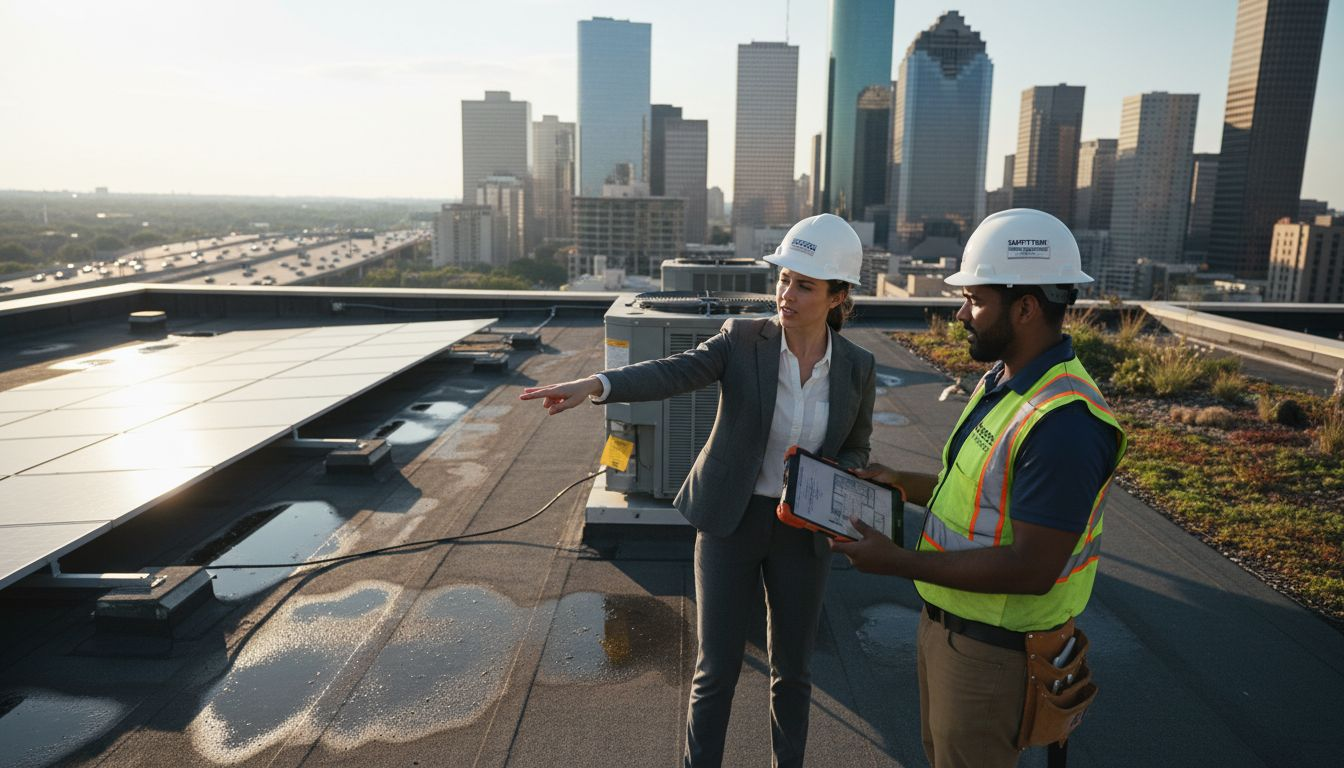
Rising energy bills and tough environmental regulations challenge every Houston commercial property owner. Sustainable roofing goes beyond buzzwords, offering real solutions that cut operating costs while helping you stay ahead of changing codes. Choosing the right system means balancing durability, efficiency, and compliance tailored to Houston’s climate. Discover how a sustainable roof can deliver long-term savings, lower environmental impact, and stronger market appeal for your property.
Table of Contents
- What Sustainability Means for Commercial Roofing
- Types of Eco-Friendly Roofing Options
- Benefits and Limitations for Property Owners
- Houston Laws and Energy-Saving Incentives
- Costs, Risks, and Alternative Solutions
Key Takeaways
| Point | Details |
|---|---|
| Sustainability Factors | Sustainable roofing involves environmental responsibility, financial performance, and regulatory compliance. All components must work together for optimal impact. |
| Three Pillars | A sustainable roof emphasizes material durability, energy performance, and waste reduction throughout its lifespan. |
| Cost and Savings | Investing in sustainable roofing can lead to reduced operational costs and improved property value, despite higher initial expenses. |
| Incentives and Financing | Take advantage of local, state, and federal incentives to offset the initial costs of sustainable roofing systems. |
What Sustainability Means for Commercial Roofing
Sustainability in commercial roofing isn’t just an environmental buzzword. It’s a practical approach to building systems that perform well, last longer, and reduce your property’s overall impact.
For commercial property owners in Houston, sustainability means selecting roofing solutions that balance three critical factors:
- Environmental responsibility: reducing waste, energy consumption, and carbon emissions
- Financial performance: lowering operating costs through improved energy efficiency and durability
- Regulatory compliance: meeting building codes and emerging green building standards
The difference between a sustainable roof and a standard one comes down to materials, design, and long-term performance. What makes commercial roofing sustainable isn’t a single feature—it’s how all the components work together.
Three Pillars of Sustainable Commercial Roofing
A truly sustainable roof addresses environmental goals across its entire lifespan. This means starting with material selection and continuing through installation, maintenance, and eventual replacement. Sustainable roofing system design emphasizes performance-based standards that balance environmental benefits with real-world building needs.
The first pillar focuses on material durability. A roof that lasts 30+ years instead of 20 years eliminates the environmental cost of premature replacement and multiple installation cycles.
The second pillar centers on energy performance. Lighter-colored or reflective roofing materials reduce heat absorption, lowering cooling costs significantly during Houston’s hot summers. This directly cuts your building’s energy consumption and operating expenses.
The third pillar involves waste reduction. Sustainable roofing practices minimize scrap during installation and design systems that eventually recycle or decompose responsibly at end-of-life.
True sustainability means your roof works harder for less, delivering environmental and financial benefits simultaneously over decades.
Why This Matters for Your Bottom Line
Houston property managers face real pressure: operational costs keep rising, and tenants increasingly demand energy-efficient buildings. A sustainable roof addresses both concerns simultaneously.
According to industry research on sustainability adoption in construction, effective sustainability requires integrating environmental knowledge across the entire project lifecycle. For roofing, this means planning for performance from day one, not treating sustainability as an afterthought.
When you invest in a sustainable commercial roofing system, you’re not just reducing energy bills. You’re also extending the roof’s service life, reducing replacement frequency, minimizing emergency repairs, and improving your building’s market value.
Local Houston contractors understand how intense sun, humidity, and occasional storms affect roofing performance. Choosing materials and designs specifically suited to these conditions—while prioritizing sustainability—delivers measurable results.
Pro tip: When evaluating roofing options, ask contractors to calculate your 25-year total cost of ownership, including energy savings from reflective materials and durability benefits from premium systems, not just the upfront price.
Types of Eco-Friendly Roofing Options
Houston commercial property owners have multiple sustainable roofing solutions available today. Each option delivers different environmental benefits and financial returns depending on your building’s location, structure, and goals.
Choosing the right eco-friendly roofing system means understanding what each type offers and how it performs in Houston’s specific climate. The most effective choice depends on your budget, maintenance capacity, and long-term sustainability objectives.
Cool Roofs: The Most Accessible Option
Cool roofs use light-colored or reflective materials to minimize heat absorption. During Houston summers, this translates directly into lower cooling costs and reduced strain on HVAC systems.
These roofs work by reflecting sunlight rather than storing it as heat. The result: your building stays cooler with less energy consumption, cutting operating expenses year-round.
Cool roofs are relatively affordable and don’t require major structural changes. They’re an immediate, practical upgrade for most commercial buildings in the area.
Key benefits include:
- 20–40% reduction in cooling costs during peak summer months
- Lower roof surface temperatures extending material lifespan
- Reduced urban heat island effect benefiting the surrounding community
- Minimal maintenance requirements compared to other options
Metal Roofs: Durability and Recyclability
Metal roofing represents a premium sustainable choice. These systems often incorporate recycled aluminum or steel, reducing demand for new material extraction.
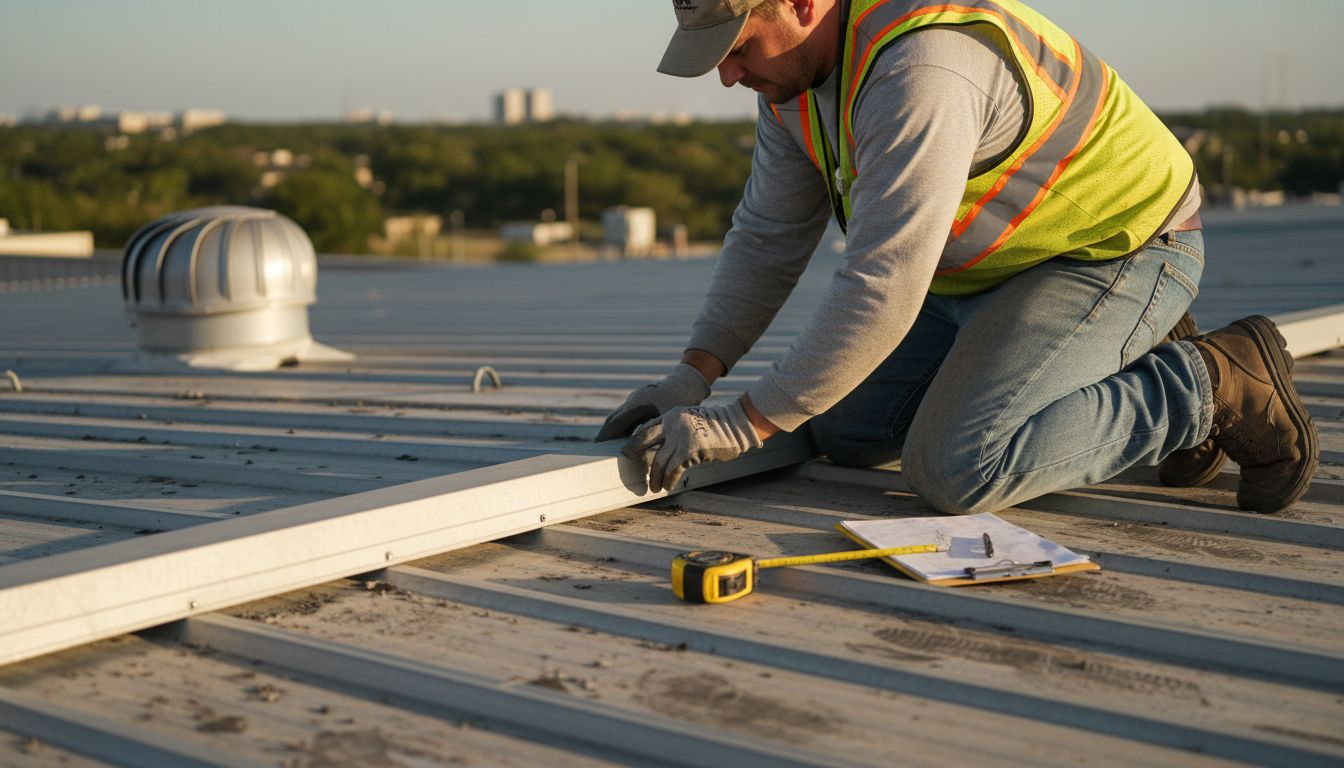
Metal roofs last 40–70 years, far exceeding traditional asphalt alternatives. Energy-efficient metal roofing systems can reflect sunlight effectively while delivering exceptional durability through Houston’s intense weather.
At end-of-life, metal roofs recycle completely without harming the environment. This creates a true circular lifecycle compared to materials that degrade in landfills.
Metal roofing excels when:
- Your building needs maximum longevity and minimal replacement cycles
- Reflecting heat while maintaining structural integrity matters
- You want a material that’s 100% recyclable after decades of service
Green Roofs: Nature-Based Insulation
Green roofs feature living vegetation that provides insulation, absorbs stormwater, and improves air quality. These systems work like nature’s own HVAC system.
The vegetation layer reduces heat transfer into the building, lowering cooling demands. It also captures rainfall that would otherwise strain drainage systems, a significant benefit in Houston’s humid climate.
Green roofs require structural assessment before installation. Your building must support the additional weight of soil and plants. They also demand regular maintenance to keep vegetation healthy.
Green roofs transform your roof into a living system, providing insulation, stormwater management, and environmental benefits simultaneously.
Solar Roofs: Energy Generation
Solar roofing systems generate electricity from sunlight while protecting the building below. This option goes beyond sustainability—it creates a revenue stream through energy production.
Solar roofs work best on buildings with strong southern or western exposure and minimal shade from neighboring structures. You’ll need a structural evaluation to ensure your roof can support the additional weight of panels.
Initial costs are higher, but tax incentives, energy savings, and potential utility credits recover the investment over 10–15 years. Solar is ideal for forward-thinking property owners targeting long-term energy independence.
Recycled Material Roofs
Recycled roofing materials transform waste into durable protective systems. These products reduce landfill burden while delivering solid performance.
Sustainable roofing options using recycled materials conserve resources and lower production emissions compared to virgin materials.
They perform similarly to standard roofing while reducing environmental impact. This makes them a budget-friendly entry point into eco-conscious building practices.
Here’s a side-by-side comparison of Houston’s main eco-friendly commercial roofing options:
| Roofing Type | Lifespan | Upfront Cost Range | Key Strength in Houston |
|---|---|---|---|
| Cool Roof | 20–25 years | $5,000–$15,000 | Fastest energy savings |
| Metal Roof | 40–70 years | $25,000–$75,000+ | Long-term durability |
| Green Roof | 25–40 years | $30,000–$100,000+ | Insulation, stormwater control |
| Solar Roof | 25–30 years | $60,000–$120,000+ | Onsite energy generation |
| Recycled Material | 15–25 years | $8,000–$18,000 | Low environmental footprint |
Comparing Your Options
The best choice depends on three factors: your budget, structural capacity, and sustainability priorities. Cool roofs offer immediate savings with minimal investment. Metal roofs deliver maximum lifespan and recyclability. Green roofs provide insulation and stormwater benefits. Solar roofs generate ongoing income.
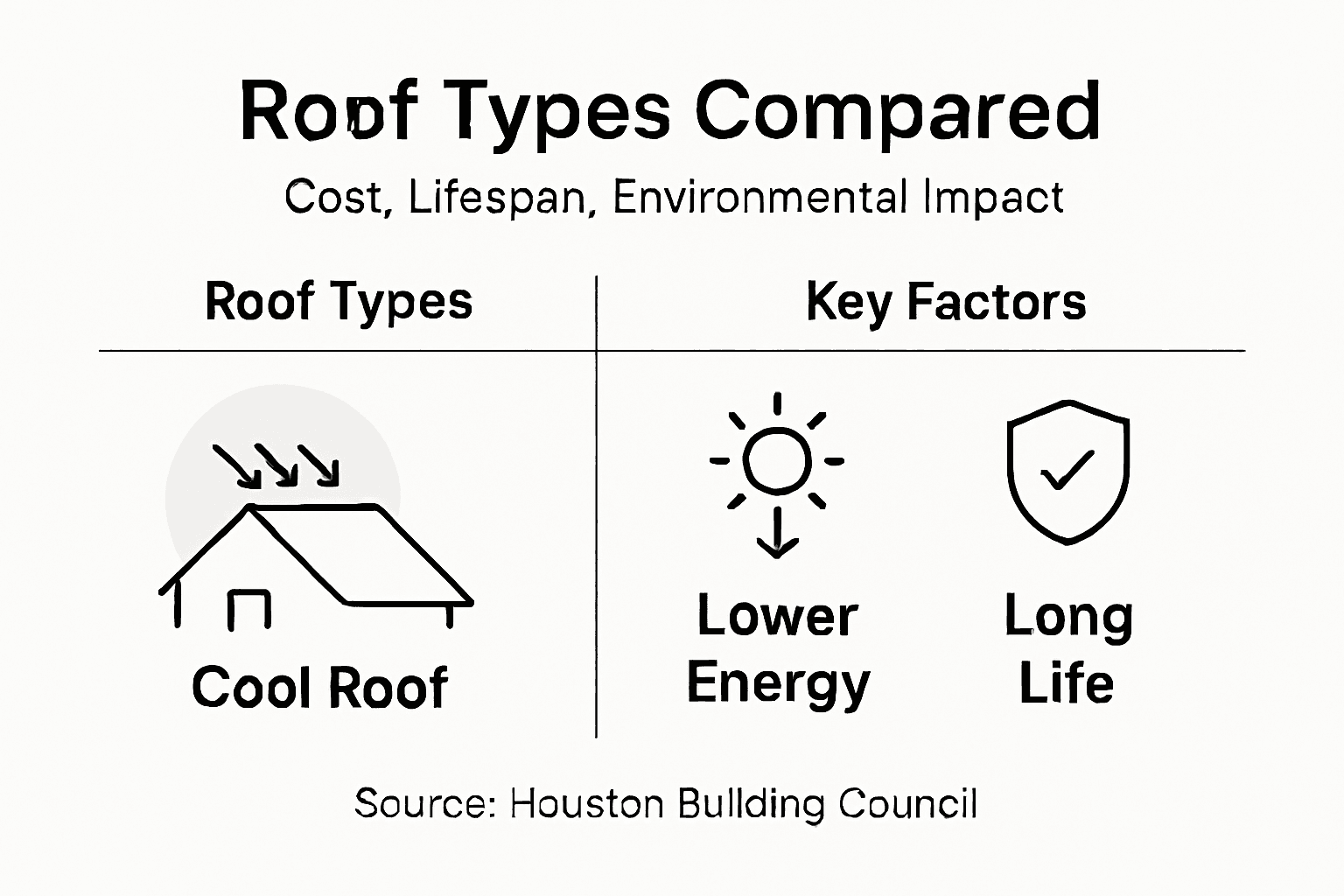
Local Houston contractors can evaluate your building’s structural capacity and recommend the system best suited to your needs and goals.
Pro tip: Request a 25-year lifecycle cost analysis from your roofing contractor that includes installation, maintenance, energy savings, and end-of-life value for each option before deciding.
Benefits and Limitations for Property Owners
Sustainable roofing delivers real financial and operational advantages, but also presents challenges that Houston property owners need to understand before committing.
The benefits often outweigh the limitations when you take a long-term perspective. However, recognizing both sides helps you make an informed decision aligned with your property’s specific situation.
The Real Benefits
Lower energy costs represent the most immediate advantage. Cool roofs and reflective systems reduce cooling demand during Houston’s intense heat, cutting utility bills by 20–40% in many cases.
Your building becomes more valuable when buyers and tenants see reduced operating expenses. Green buildings attract investors and occupiers prioritizing energy efficiency, commanding higher rents and resale prices.
Benefits include:
- Measurable monthly savings on electricity and HVAC maintenance
- Extended roof lifespan reducing replacement frequency and disruption
- Improved tenant satisfaction and retention through comfort and sustainability
- Potential tax credits and rebates for eco-friendly upgrades
- Enhanced property appeal to environmentally conscious tenants
Durability and Longevity
Quality sustainable roofs outlast conventional systems significantly. A metal roof lasting 50+ years eliminates the cost and disruption of multiple replacements over your ownership period.
This extended lifespan compounds your savings. When you factor in installation labor, material costs, and business interruption, replacing a roof every 20 years costs substantially more than installing one durable system once.
You also reduce environmental waste from old roofing material going to landfills. The sustainability benefit becomes self-evident over decades.
The Honest Limitations
Higher upfront costs present the biggest barrier for many property owners. Sustainable roofing systems typically cost 15–40% more initially than standard alternatives.
Not every building’s structure supports all options. Green roofs demand structural reinforcement. Solar systems need adequate roof space and sun exposure. These prerequisites can add significant preparation costs.
Limitations to consider:
- Initial investment may strain capital budgets
- Structural modifications sometimes necessary before installation
- Some systems require specialized maintenance expertise
- Performance depends heavily on regional climate and building orientation
- Measuring return on investment requires careful calculation
Measuring ROI and Payback
Understanding your actual return requires honest analysis. Calculate your payback period by dividing upfront cost by annual savings. A system costing $50,000 with $5,000 annual savings delivers a 10-year payback.
You also gain intangible benefits: improved tenant retention, enhanced property marketability, and reduced environmental impact. These don’t show up on spreadsheets but have real value.
The smartest property owners view sustainable roofing as a long-term investment, not just an expense, measuring returns over 20–30 years, not 5.
Making the Decision
Your situation matters. If you own the property long-term and plan to occupy it for decades, sustainable roofing almost always makes financial sense. If you’re planning to sell within five years, upfront costs may not recover quickly enough.
Houston’s climate makes sustainability particularly valuable. Our intense heat and occasional severe weather mean energy-efficient, durable roofing delivers measurable savings year-round.
Consider your tenants’ expectations too. Modern commercial tenants increasingly demand sustainable facilities. Offering them saves turnover costs and justifies premium rental rates.
Pro tip: Calculate your total 25-year cost of ownership including energy savings, maintenance, and replacement value—not just upfront price—before deciding whether to invest in sustainable roofing.
Houston Laws and Energy-Saving Incentives
Houston and Texas offer substantial financial incentives and regulatory requirements that directly affect your roofing investment. Understanding these programs can dramatically reduce your net cost for sustainable roofing.
These aren’t hidden benefits—they’re designed to encourage property owners like you to upgrade to energy-efficient systems. Taking advantage of them is straightforward when you know where to look.
Federal Tax Credits and State Exemptions
Federal tax credits provide immediate financial relief for certain sustainable roofing upgrades. Solar panel installations qualify for federal Investment Tax Credit, offsetting a significant portion of your installation costs.
Texas state law exempts solar energy systems and renewable energy equipment from property taxation. This means your sustainable roofing improvements won’t trigger property tax increases, a major financial advantage most owners don’t realize.
Available federal and state benefits include:
- Solar Panel Tax Credit reducing federal income tax liability
- Texas property tax exemption for renewable energy systems
- State incentives targeting energy-efficient commercial construction
- Potential utility rebates for cool roof installations
Houston’s Local Tax Abatement Program
Houston’s Tax Abatement Program rewards commercial property owners who achieve LEED certification or similar green building standards. This program reduces property taxes for certified sustainable buildings, delivering ongoing savings throughout your ownership.
The incentive applies directly to your commercial property taxes, not just installation credits. Over 10–20 years, this compounds into substantial savings beyond energy bill reductions.
Harris County offers similar green building tax abatements, extending incentives across the greater Houston area. If your property qualifies, you gain both county and municipal tax advantages simultaneously.
Texas PACE Financing Program
Property Assessed Clean Energy (PACE) financing eliminates the upfront cost barrier entirely. Texas PACE provides 100% financing for energy-saving improvements, allowing you to fund sustainable roofing upgrades without capital expenditure.
With PACE, you borrow funds for installation, then repay through property tax assessments over time. Monthly payments typically stay below your monthly energy savings, meaning the roof essentially pays for itself.
This program removes the biggest objection most property owners have: “We don’t have $100,000 in capital right now.”
Building Code Compliance Requirements
Houston enforces energy conservation standards through updated construction codes. The 2021 International Building Code with Houston Amendments effective January 2024 includes specific energy efficiency requirements for commercial buildings.
These codes reference ASHRAE 90.1 standards, which establish minimum energy performance requirements. Meeting these standards ensures your roofing installation passes permitting and inspection without delays.
Many sustainable roofing systems exceed these minimum code requirements, providing a safety margin for compliance.
Maximizing Your Benefits
Combining multiple incentive programs multiplies your financial advantage. You might simultaneously qualify for federal tax credits, state exemptions, PACE financing, and municipal tax abatement.
Calculate your true net cost by subtracting all available incentives before comparing roofing options. A system costing $80,000 might effectively cost $40,000 or less after tax credits and abatement programs.
Strategic use of Houston’s available incentives can cut your sustainable roofing cost in half, making premium systems financially comparable to basic alternatives.
Local Houston contractors familiar with these programs help you navigate applications and documentation. They understand permitting requirements and ensure your installation qualifies for every available incentive.
See how common Houston sustainable roofing incentives compare by type, qualification, and impact:
| Incentive Program | Applies To | Main Benefit | Financial Impact |
|---|---|---|---|
| Federal Solar Tax Credit | Solar and select green roofs | Up to 30% cost offset | Immediate tax reduction |
| Texas Property Tax Exempt | Renewable energy systems | Avoids property tax increases | Ongoing yearly savings |
| Houston Tax Abatement | LEED & green buildings | Lower property taxes multiple years | Extended multi-year benefit |
| Texas PACE Financing | Energy-efficient upgrades | 100% project financing | No upfront capital needed |
Pro tip: Before committing to any roofing project, request that your contractor calculate savings from federal tax credits, state exemptions, PACE financing, and Houston tax abatement programs specific to your property.
Costs, Risks, and Alternative Solutions
Sustainable roofing delivers long-term value, but upfront costs and implementation risks deserve honest examination. Understanding these challenges helps you make realistic decisions aligned with your financial situation.
The good news: solutions exist for nearly every cost and risk concern. Your challenge is identifying which approach works best for your specific property and goals.
The Real Cost Barrier
High upfront costs remain the biggest obstacle to sustainable roofing adoption. Premium systems cost 25–50% more than conventional alternatives, straining capital budgets even when long-term returns justify the investment.
High costs and uncertain returns continue limiting widespread sustainability adoption across the construction industry. This isn’t unique to Houston—it’s a national trend affecting thousands of property owners.
Cost challenges include:
- Initial installation premium of $25,000–$75,000+ depending on system type
- Structural modifications adding $10,000–$40,000 for certain systems
- Extended payback periods requiring long-term ownership commitment
- Hidden costs like specialized maintenance and replacement parts
Understanding Material and Performance Trade-offs
Not all sustainable roofing options offer identical cost-benefit ratios. Life cycle assessments reveal economic and environmental trade-offs between different roofing systems—some deliver better insulation at higher costs, while others balance affordability with moderate environmental benefits.
Metal roofs offer superior durability but require upfront investment. Cool roofs deliver quick energy savings at lower cost. Green roofs provide environmental benefits but demand ongoing maintenance.
Choosing wisely means matching the system to your priorities, not simply selecting the “most sustainable” option available.
Risk Mitigation Strategies
Phased implementation reduces financial risk substantially. Instead of replacing your entire roof at once, upgrade sections strategically as your budget allows.
You might install cool roofing now, then add solar panels in three years when tax incentives improve. This approach spreads costs across multiple budgets while capturing incentives when available.
Start with these lower-risk steps:
- Install reflective cool coating on existing roof (minimal cost, immediate savings)
- Apply for available tax credits and PACE financing before major installation
- Conduct structural assessment determining which premium options your building supports
- Request contractor warranties covering performance guarantees
Budget-Friendly Alternatives
Cool roofing offers the fastest path to sustainability when budget constraints exist. For $5,000–$15,000, you gain 20–40% cooling cost reductions without major structural work.
This isn’t flashy, but it works. Many Houston property managers start here, prove the concept, then plan premium upgrades when capital becomes available.
Reflective coatings also extend your existing roof’s lifespan by 5–10 years, delaying full replacement costs while delivering immediate energy savings.
Financing Solutions
Texas PACE financing eliminates the capital requirement entirely. Your monthly loan payments typically stay below the monthly energy savings, creating positive cash flow from day one.
This transforms sustainable roofing from a burden to an investment that pays for itself through operational savings.
Smart property owners view cost as a temporary obstacle, not a permanent barrier—using phased implementation and financing options to achieve sustainability over time.
Making Your Decision
Your situation determines the best approach. If capital is tight, start with cool roofing and PACE financing. If you have capital and plan long-term ownership, premium systems make sense immediately.
Don’t let perfect be the enemy of good. Installing an affordable sustainable roof now beats waiting years for ideal conditions that may never arrive.
Pro tip: Request your contractor compare three scenarios: premium system with PACE financing, phased implementation over five years, and basic cool roof upgrade—then choose based on your actual cash flow and ownership timeline.
Enhance Your Houston Commercial Roof with Sustainable Solutions Today
The article highlights critical challenges faced by Houston commercial property owners such as balancing energy efficiency, long-term durability, and the high upfront costs of sustainable roofing. If you aim to reduce operating expenses while meeting evolving environmental standards, your roofing system must deliver on all these fronts. Concepts like cool roofs, metal roofing longevity, and leveraging tax incentives show how smart choices today can lead to decades of savings and environmental benefits.
At Mister ReRoof, we specialize in tackling these exact challenges with high-quality, storm-resistant roofing solutions tailored for Houston’s tough climate. Whether you are interested in energy-saving cool roofs, durable metal options, or integrating reflective coatings, our expert team guides you through selecting a system that aligns with your budget and sustainability goals. Learn how to maximize your return on investment by exploring our roofing services and discover the difference of working with a trusted local contractor who understands Houston’s unique weather impact.
Make your commercial property stand out with a reliable, eco-friendly roof that pays dividends for years. Don’t wait until costly repairs force your hand. Partner with Mister ReRoof now to secure a roofing solution that meets Houston’s environmental demands with financial sense.
Ready to save energy and protect your investment for the long haul Get your free estimate today at Mister ReRoof and start your journey toward a sustainable commercial roof designed for Houston’s climate. Contact us now and experience roofing done right.
Frequently Asked Questions
What are the main benefits of a sustainable commercial roof?
Sustainable commercial roofs can lower energy costs significantly, extend the lifespan of the roof, improve tenant satisfaction, and enhance property value by attracting environmentally conscious tenants.
How do cool roofs contribute to energy savings?
Cool roofs use light-colored or reflective materials that minimize heat absorption, resulting in lower cooling costs by 20–40% during peak summer months, thus reducing energy consumption.
What factors should I consider when choosing a sustainable roofing option?
Consider upfront costs, potential energy savings, the lifespan of the materials, structural capacity of your building, and how each option aligns with your long-term sustainability goals.
How can I financially offset the costs of sustainable roofing?
You can explore federal tax credits for renewable energy systems, state property tax exemptions, local tax abatement programs, and financing options like PACE that allow you to spread costs over time.
Recommended
- What Is Commercial Roofing and Why It Matters
- Energy Efficiency in Roofing: Lower Bills in Houston
- What Is Commercial Re-Roofing and Why It Matters
- Roofing System Lifespan Explained: Houston Impact
- Milieuvriendelijke Kozijnen: Keuze Voor Duurzaam Wonen
- Roofing Contractor El Campo TX
- Metal Roof Replacement El Campo TX
