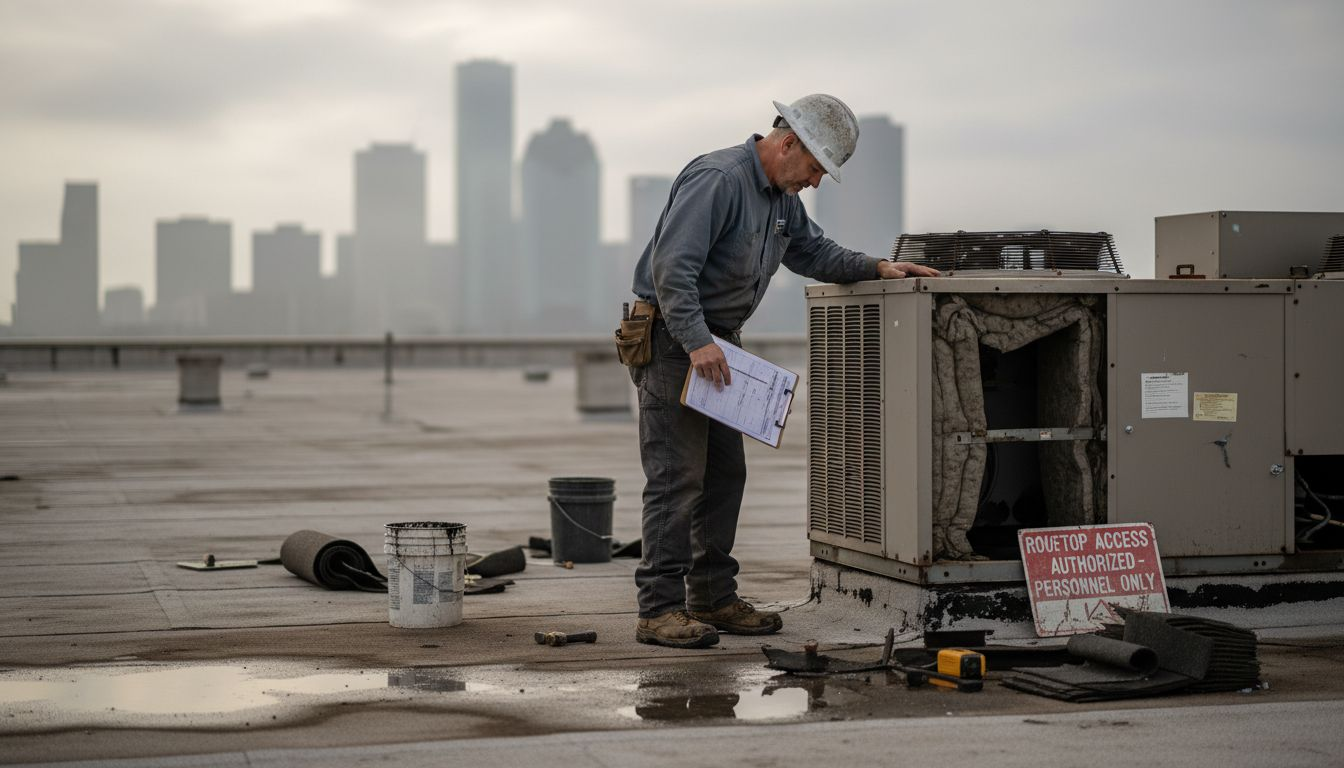
Severe Houston storms can turn a routine roof maintenance call into a major financial setback for commercial property owners. Roofs on offices, warehouses, and hospitals in Houston face relentless wind, heat, and moisture, quickly wearing down materials and pushing repair costs higher. This guide breaks down how commercial roof replacement, smart material choices, and lifecycle analysis can help you minimize costs and protect your property from weather-related damage.
Table of Contents
- Commercial Roof Replacement Explained
- Key Roofing Types For Houston Properties
- Houston’s Weather Impact On Roof Durability
- Building Codes And Insurance Requirements
- Financial Risks Of Delaying Roof Replacement
- Choosing The Right Contractor For Replacement
Key Takeaways
| Point | Details |
|---|---|
| Importance of Roof Replacement | Regular commercial roof replacement is essential for maintaining building integrity and preventing costly repairs. Understand lifecycle analysis for making informed replacement decisions. |
| Consider Climate Factors | Houston’s extreme weather necessitates selecting durable roofing materials that can withstand intense heat and storms. Consult local experts for appropriate solutions. |
| Compliance with Building Codes | Adhering to local building codes is crucial to ensure safety, insurance coverage, and long-term roof performance. Keep detailed documentation to support compliance. |
| Financial Implications of Delays | Delaying roof replacement can lead to exponentially higher costs and insurance complications. Implement a proactive maintenance budget to manage future expenses effectively. |
Commercial roof replacement explained
Commercial roof replacement represents a critical maintenance strategy for protecting valuable building infrastructure. Commercial buildings encompass a diverse range of property types, including offices, warehouses, hospitals, and schools, each with unique roofing requirements and performance needs.
The decision to replace a commercial roof involves multiple strategic considerations. Lifecycle analysis becomes paramount, evaluating factors such as existing roof condition, potential energy efficiency improvements, and long-term cost implications. Replacement often emerges as the preferred option when repair costs exceed a specific percentage of total replacement expenses.
Key factors driving commercial roof replacement include:
- Structural integrity degradation
- Persistent water infiltration
- Energy efficiency limitations
- Compliance with updated building codes
- Technological advancements in roofing materials
Professional roof replacement typically involves comprehensive assessment, precise material selection, and expert installation techniques. Property managers must consider not just immediate costs, but projected performance, maintenance requirements, and potential energy savings over the roof’s anticipated lifespan.
Pro tip: Schedule a professional roof assessment annually to identify potential replacement needs before critical failures occur.
Key roofing types for Houston properties
Houston’s extreme climate demands robust roofing solutions tailored to withstand intense heat and occasional severe weather. Cool roofing technologies offer strategic advantages for local commercial properties, providing energy efficiency and temperature management crucial in the region’s challenging environmental conditions.
Commercial roofing systems in Houston typically encompass several key material types, each with unique performance characteristics:
- Built-up roofing (BUR): Multiple layers of bitumen and reinforcing fabrics
- Modified bitumen: Asphalt-based sheets with added polymer reinforcement
- Single-ply membranes: Lightweight, flexible roofing materials
- Metal roofing: Durable options with excellent heat reflection
- Asphalt shingles: Cost-effective steep-slope roofing solutions
Asphalt-based roofing systems remain particularly popular due to their adaptability, cost-effectiveness, and proven performance in Houston’s demanding climate. Property managers must carefully evaluate material characteristics, considering factors like thermal resistance, durability, and long-term maintenance requirements when selecting roofing solutions.
Moisture resistance and heat reflection represent critical considerations for Houston commercial properties. Advanced roofing technologies now incorporate specialized coatings and materials designed to mitigate solar heat absorption, reduce energy costs, and extend roof longevity.
Here’s a quick reference to common commercial roofing systems in Houston and their key performance traits:
| Roofing Type | Best For | Typical Lifespan | Energy Efficiency |
|---|---|---|---|
| Built-up roofing | Large flat roofs | 20-30 years | Moderate |
| Modified bitumen | Weather resistance | 15-25 years | Good |
| Single-ply membrane | Quick installations | 15-30 years | Excellent |
| Metal roofing | Longevity and reflection | 40-60 years | Very high |
| Asphalt shingles | Sloped surfaces | 15-25 years | Moderate |
Pro tip: Consult a local roofing professional who understands Houston’s unique climate challenges to select the most appropriate roofing system for your specific property.
Houston’s weather impact on roof durability
Houston’s unique climate presents extraordinary challenges for commercial roofing systems, subjecting them to extreme environmental stresses that can rapidly compromise structural integrity. Wind uplift pressures pose significant risks to commercial roof performance, creating potential for catastrophic damage during severe weather events.
Roof durability factors specific to Houston’s challenging environment include:
- High humidity levels causing moisture degradation
- Intense solar radiation leading to material breakdown
- Frequent thunderstorms with potential wind speeds exceeding 60 mph
- Temperature fluctuations causing thermal expansion and contraction
- Occasional hail and extreme precipitation events
Durable roofing materials play a critical role in withstanding Houston’s harsh climate conditions, with specific material selections capable of mitigating weather-related deterioration. Clay and concrete tiles, for instance, demonstrate exceptional resistance to wind damage and temperature variations, providing superior long-term protection for commercial properties.
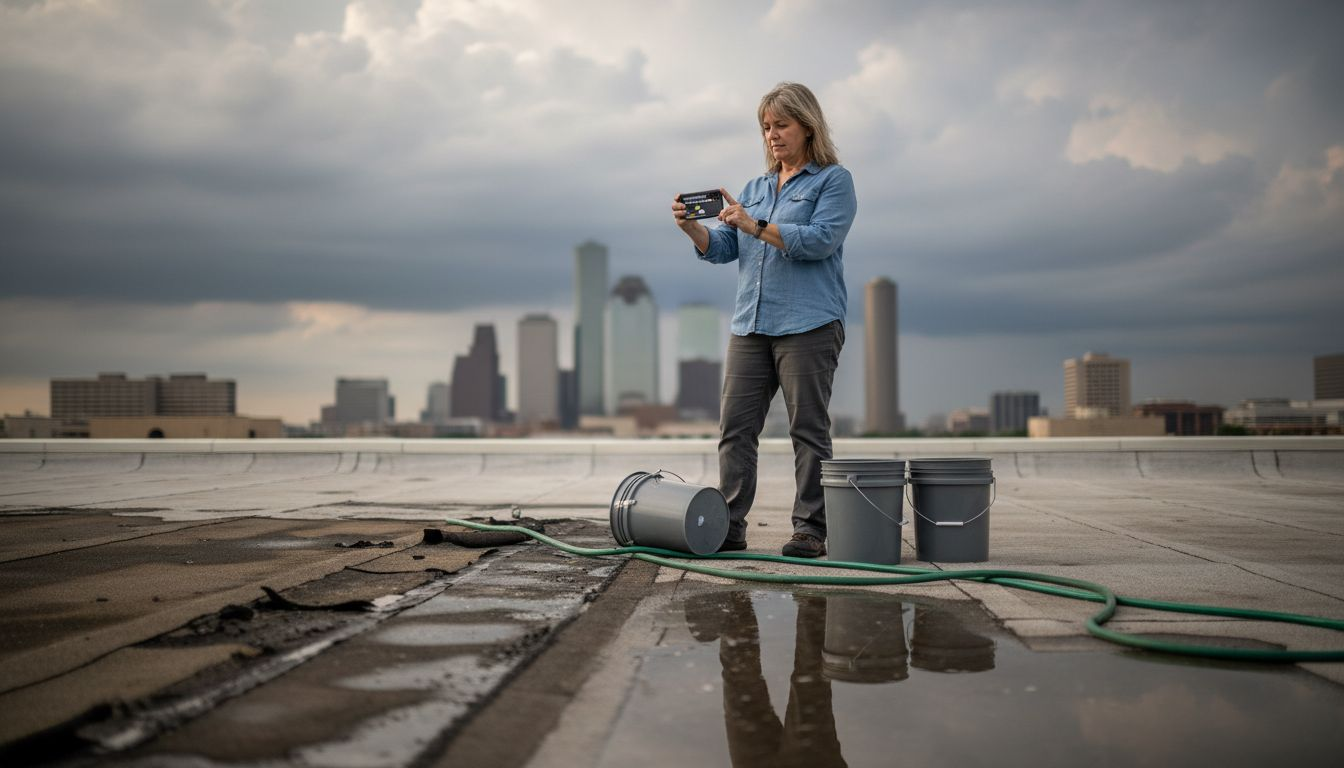
Commercial property owners must prioritize proactive maintenance and strategic material selection to counteract the relentless environmental challenges presented by Houston’s unpredictable weather patterns. Understanding the specific mechanisms of weather-induced roof degradation allows for more informed decision-making in roof replacement and maintenance strategies.
Pro tip: Schedule comprehensive roof inspections twice annually to identify and address potential weather-related damage before it becomes a costly repair.
Building codes and insurance requirements
Navigating the complex landscape of Houston’s building regulations requires a comprehensive understanding of local construction standards and their direct impact on insurance coverage. Houston’s building standards establish critical requirements for roofing systems, creating a framework that ensures structural safety and resilience against the city’s challenging environmental conditions.
Key compliance requirements for commercial roofing include:
- Adherence to wind uplift resistance standards
- Mandatory structural load specifications
- Energy efficiency performance metrics
- Water intrusion protection protocols
- Material quality and installation certifications
Minimum construction standards dictate specific rules for roof rehabilitation and new installations, directly influencing insurance eligibility and risk assessment. These regulations serve as a critical mechanism for protecting property owners from potential financial losses by establishing rigorous performance benchmarks for roofing systems.
Insurance providers typically leverage these building codes as a baseline for determining coverage eligibility, premium rates, and potential claim approvals. Commercial property owners must meticulously document code compliance, ensuring that their roofing systems meet or exceed local regulatory standards to maintain comprehensive insurance protection.
Pro tip: Maintain detailed documentation of roof installations, repairs, and code compliance to streamline insurance claims and validate your property’s adherence to local building standards.
Financial risks of delaying roof replacement
Commercial property owners face significant financial exposure when postponing necessary roof replacements. Construction delays can dramatically escalate potential financial risks, transforming what might be a manageable maintenance expense into a potentially catastrophic business liability.
Critical financial consequences of delaying roof replacement include:
- Exponential repair cost increases
- Potential structural damage
- Business interruption expenses
- Higher insurance premium rates
- Reduced property market value
- Increased risk of total system failure
Unaddressed construction delays often trigger substantial financial penalties, creating a cascading effect of escalating expenses. Emergency roof replacements can cost up to 300% more than planned replacements, with additional indirect costs stemming from potential business interruptions and operational downtime.
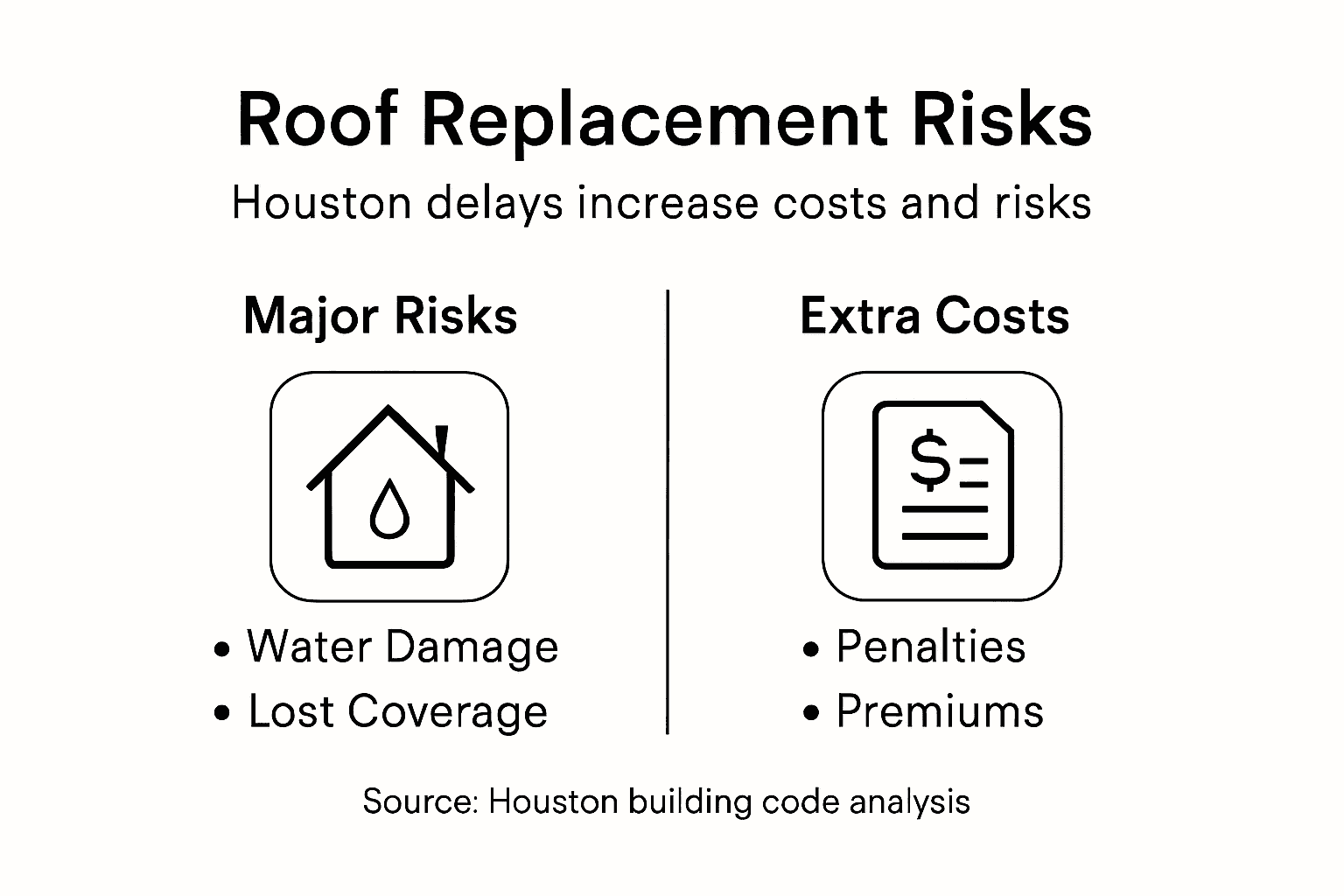
Insurance providers increasingly scrutinize maintenance records, potentially denying claims or significantly raising premiums for properties with deferred roof maintenance. Commercial property managers must recognize that proactive roof replacement represents a strategic financial investment, not merely an operational expense.
To clarify financial risks, here’s a summary comparing proactive roof replacement with delayed action:
| Strategy | Long-Term Cost Impact | Insurance Implications |
|---|---|---|
| Proactive replacement | Lower total expenses | Maintains coverage & lower rates |
| Delayed replacement | Higher repair costs | Risk of denied or costly claims |
| Emergency replacement | Up to 300% higher cost | Premium surges, possible gaps |
Pro tip: Develop a comprehensive roof maintenance and replacement budget that anticipates potential expenses, helping to mitigate unexpected financial burdens.
Choosing the right contractor for replacement
Selecting an exceptional roofing contractor represents a critical decision for commercial property owners in Houston. Comprehensive contractor evaluation requires systematic verification of credentials and expertise, ensuring long-term roofing system performance and protection.
Critical contractor selection criteria include:
- Valid state and local licensing
- Comprehensive insurance coverage
- Proven experience with commercial roofing
- Positive customer references
- Detailed written estimates
- Manufacturer certifications
- Professional training documentation
Professional roofing certifications indicate advanced technical expertise, with credentials like Registered Roof Observer (RRO) and Registered Roof Consultant (RRC) signaling a contractor’s commitment to industry excellence. These professional designations help property owners distinguish between average contractors and true roofing specialists.
Beyond technical qualifications, successful roofing contractors demonstrate transparent communication, responsive customer service, and a deep understanding of Houston’s unique environmental challenges. Property managers should request comprehensive project portfolios, verify insurance documentation, and conduct thorough background investigations before finalizing contractor selection.
Pro tip: Request detailed project references specific to commercial roofing installations similar to your property’s requirements.
Protect Your Houston Commercial Property with Expert Roof Replacement
Houston’s unique weather challenges demand roofing solutions that stand the test of time. If you face issues like structural degradation, energy inefficiency, or worry about costly delays discussed in this article, it is critical to act without hesitation. Mister ReRoof specializes in durable commercial roof replacement designed specifically for Houston’s climate, from metal and TPO systems to shingle and flat roofs. Our experienced team ensures every project meets local building codes and maximizes long-term protection.
Don’t let weather damage or expensive repairs threaten your business operations. Connect with the trusted local experts at Mister ReRoof today for a free professional assessment and discover how our quality roofing services in Houston can safeguard your property. Ready to secure your investment and avoid emergency replacements? Visit our site to learn more or request your estimate now at Mister ReRoof.
Frequently Asked Questions
Why is it necessary to replace commercial roofs?
Replacing commercial roofs is essential to maintain the integrity of the building, prevent structural damage, and improve energy efficiency. Signs like persistent leaks or significant wear indicate that replacement is often more cost-effective than continual repairs.
What factors should be considered before replacing a commercial roof?
Key factors include the existing roof’s condition, potential energy efficiency improvements, long-term cost implications, local building codes, and weather conditions that may affect roofing material performance.
How often should commercial roofs be inspected for replacement needs?
It’s recommended to schedule a professional roof assessment at least annually. Regular inspections can help identify deterioration early, potentially preventing critical failures and costly repairs.
What types of roofing materials are suitable for commercial buildings?
Common roofing materials for commercial properties include built-up roofing (BUR), modified bitumen, single-ply membranes, metal roofing, and asphalt shingles. Each type has distinct advantages related to longevity, energy efficiency, and weather resistance.
Recommended
- What Is Commercial Re-Roofing and Why It Matters
- What Is Roof Replacement and Why Houston Homes Need It
- What Is Commercial Roofing and Why It Matters
- 7 Essential Commercial Roofing Systems List for Houston
- What is Commercial Property Insurance? Understanding Its Importance – Rental Income Insurance
- Roofing Contractor El Campo TX
- Metal Roof Replacement El Campo TX
