When powerful storms hit Houston, flat roofs often take the brunt, leaving both home and commercial property owners searching for reliable solutions. Every year, more than 150,000 American roof-related injuries are reported, highlighting just how risky DIY repairs can become without the right approach. Whether you are fixing minor punctures or addressing widespread leaks, having a clear, step-by-step plan can make all the difference in achieving a long-lasting, professional-quality result.
Table of Contents
- Step 1: Assess Roof Damage And Safety
- Step 2: Gather Tools And Materials
- Step 3: Clean And Prepare The Roof Surface
- Step 4: Apply Repair Materials Effectively
- Step 5: Inspect And Test The Repaired Area
Quick Summary
| Key Insight | Explanation |
|---|---|
| 1. Ensure Personal Safety First | Always prioritize safety by using proper gear, including a harness and non-slip shoes, and consider hiring professionals for compromised roofs. |
| 2. Document Roof Damage Thoroughly | Take clear photographs of roof damage from various angles to aid in evaluation and communication with roofing professionals. |
| 3. Gather Projects Tools Beforehand | Assemble necessary tools and materials ahead of time to streamline the repair process and ensure efficiency. |
| 4. Prepare Roof Surface Properly | Clean debris and contaminants thoroughly and ensure the surface is dry prior to applying repair materials for optimal adhesion. |
| 5. Inspect Repairs for Quality | Conduct a thorough inspection of the repaired area, including a water test, to confirm it is watertight and durable against weather elements. |
Step 1: Assess Roof Damage and Safety
When addressing flat roof damage in Houston, your first critical task is thoroughly and safely inspecting the roof’s condition. Understanding the extent of damage requires careful evaluation while prioritizing personal safety, especially given the significant risks associated with roof falls.
Before climbing onto any roof surface, gather essential protective equipment including non slip shoes, a safety harness, and a sturdy ladder. Inspect the ladder for any structural damage and ensure it can support your weight safely. If the roof appears significantly compromised or you feel uncertain about navigating the surface, consider hiring a professional inspector who understands Houston’s specific roofing challenges.
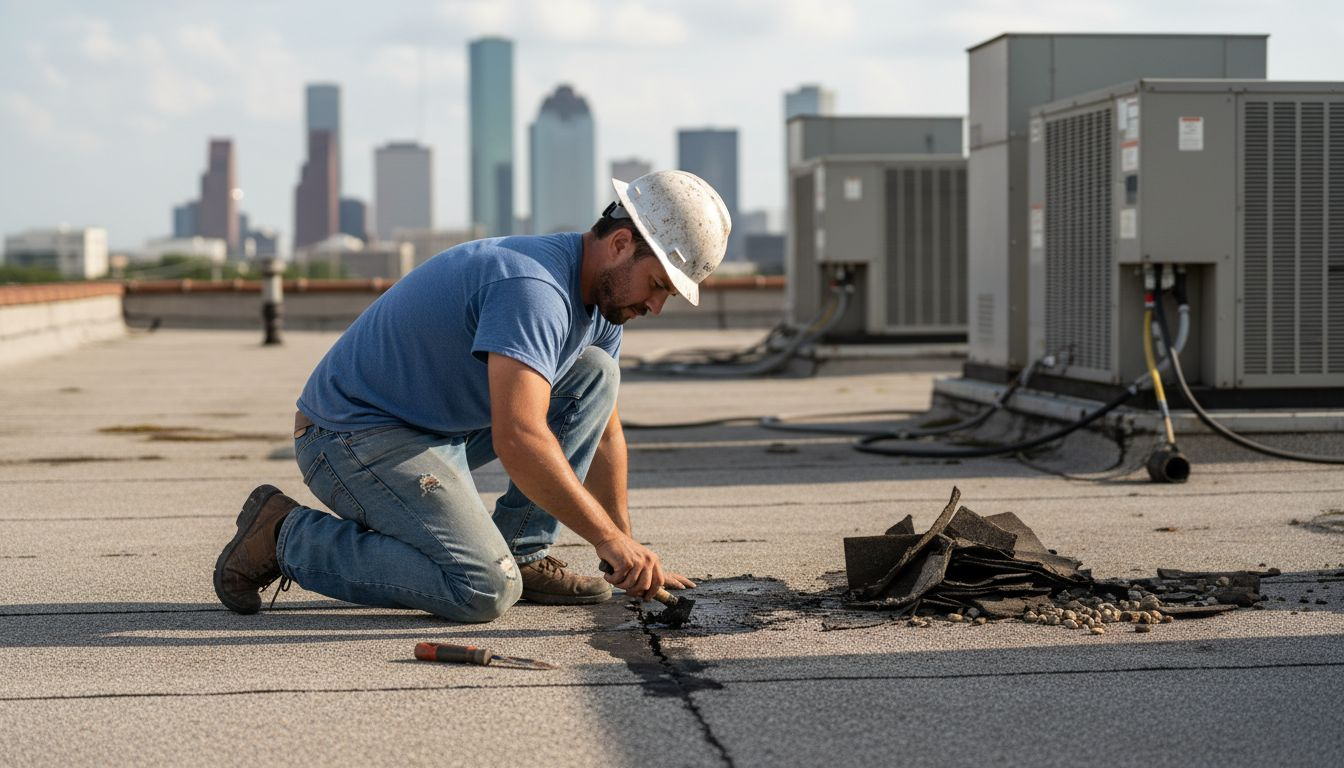
During your inspection, look for key indicators of damage such as pooling water, visible cracks, blistering membrane surfaces, separated seams, or areas with apparent structural weakness. Pay special attention to roof edges, seams, and areas around potential penetration points like vents or HVAC units. Document your findings with clear photographs from ground level and close up perspectives, which will help you determine the repair strategy and communicate effectively with potential roofing professionals.
Here’s a quick reference for common flat roof damage signs and their likely causes:
| Damage Indicator | Typical Cause | Potential Impact |
|---|---|---|
| Pooling water | Poor drainage | Increases leak risk |
| Blistering membrane | Trapped moisture or heat | Weakens roof durability |
| Visible cracks | Aging, weather extremes | Accelerates water intrusion |
| Separated seams | Structural shifts, stress | Produces gaps and leaks |
| Algae or moss | Prolonged moisture | Compromises material lifespan |
Pro tip: Always have a spotting partner present when conducting roof inspections to provide immediate assistance in case of an emergency and enhance overall safety.
Step 2: Gather Tools and Materials
Preparing for your flat roof repair starts with assembling the right tools and materials that align with professional roofing installation standards. Collecting everything beforehand will streamline your repair process and help you work efficiently through the project.
Your essential toolkit should include safety gear like work gloves, non slip shoes, and a safety harness. For tools, gather a utility knife, measuring tape, chalk line, roofing nails, hammer, caulking gun, and a sturdy ladder. Material requirements will depend on your specific roof damage but typically include roofing felt, patch materials, sealant, and replacement membrane sections. Consider purchasing slightly more materials than your initial estimate to account for unexpected complications or additional repairs.
Organize your tools and materials near the work area but away from potential trip hazards. Group similar items together and keep sharp tools secured. If you are uncertain about specific material compatibility or quantities, consult with a local Houston roofing professional who understands the unique environmental challenges of your region.
Pro tip: Always purchase professional grade materials from reputable suppliers to ensure your repair work meets local building code requirements and provides lasting protection.
Step 3: Clean and Prepare the Roof Surface
Effective roof repair begins with thorough surface preparation. Proper roof surface cleaning is crucial for ensuring that repair materials adhere correctly and your flat roof receives a durable solution that can withstand Houston’s challenging weather conditions.
Start by removing all loose debris such as leaves, twigs, and dirt using a soft push broom or leaf blower. Carefully inspect the surface for signs of organic growth like algae or moss, which can compromise your roof’s integrity. Use a gentle cleaning solution specifically designed for roof surfaces to remove these contaminants without causing damage. Work systematically across the roof, paying special attention to areas around seams, edges, and potential water pooling zones. Rinse the surface thoroughly with clean water and allow it to dry completely before proceeding with repairs.
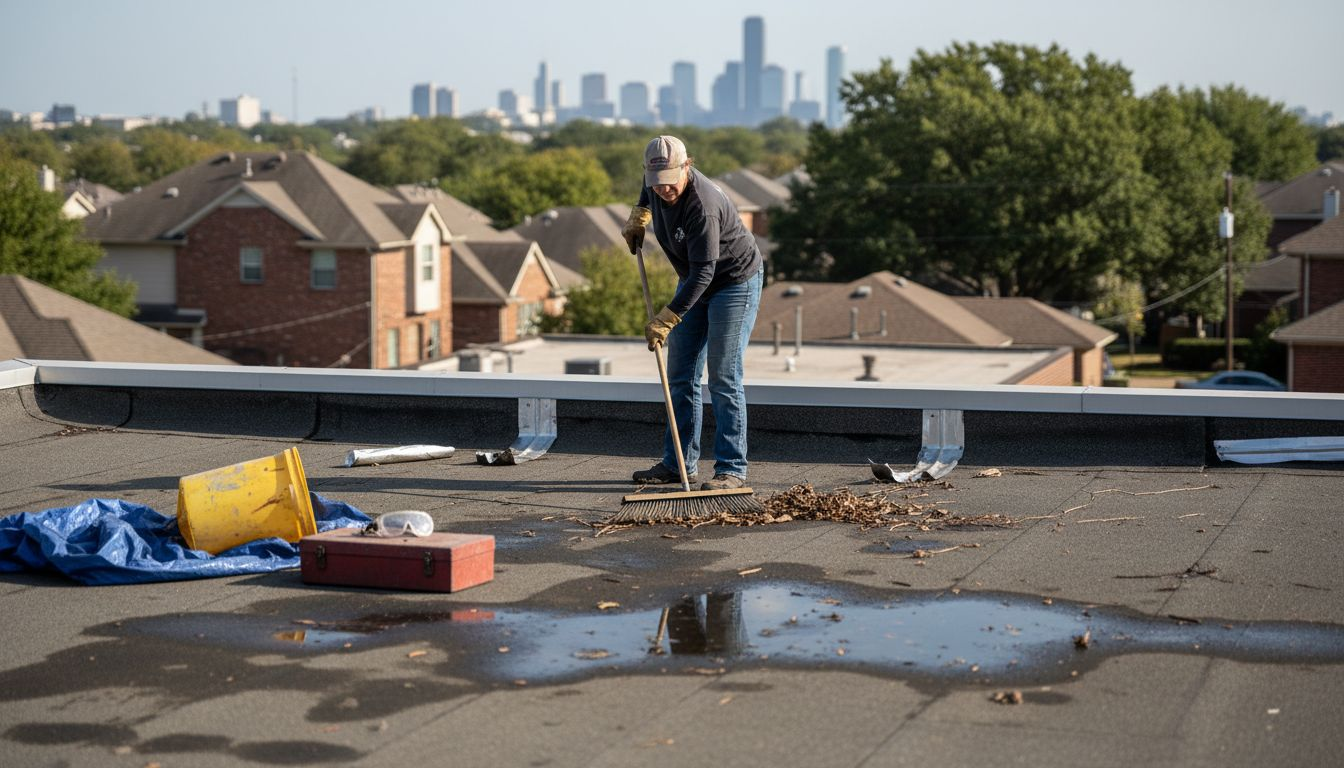
Ensure the roof surface is completely dry and free of any moisture or loose materials. Check for any existing damage or weak spots that might require additional attention before applying repair materials. If you encounter extensive damage or are unsure about the surface condition, consulting a professional Houston roofing expert can provide valuable insights.
Pro tip: Choose a dry, mild day for roof cleaning to ensure optimal drying conditions and maximum adhesion of repair materials.
Step 4: Apply Repair Materials Effectively
Successfully repairing your flat roof requires precise application of repair materials. Roofing best practices demand careful attention to detail to ensure a watertight and durable solution that can withstand Houston’s unpredictable weather conditions.
Begin by selecting the appropriate repair materials based on your specific roof damage. For most flat roof repairs, you will need roofing sealant, patch materials, and potentially a new membrane section. Cut your repair materials slightly larger than the damaged area to ensure complete coverage. Apply roofing adhesive or sealant evenly across the prepared surface, making sure to eliminate any air bubbles or uneven spots. When layering patch materials, create smooth overlaps of at least 2 to 3 inches to guarantee complete coverage and prevent future water infiltration.
Work methodically and carefully, applying materials in consistent layers and pressing firmly to create a secure bond. Pay special attention to edges and seams, as these are typical areas where water can penetrate. Allow each layer to set according to the manufacturer’s recommended drying time before applying subsequent layers. If the repair area is extensive or you feel uncertain about the process, consider consulting a professional Houston roofing expert who can provide guidance specific to your roof’s condition.
Pro tip: Always check the weather forecast and choose a dry day with moderate temperatures for applying repair materials to ensure optimal adhesion and curing.
Step 5: Inspect and Test the Repaired Area
After completing your flat roof repair, a thorough professional roof inspection is crucial to validate the quality and effectiveness of your work. This final step ensures that your repair will stand up to Houston’s challenging weather conditions and provide long lasting protection.
Begin by visually examining the entire repaired section carefully. Look for any signs of uneven surfaces, air bubbles, or incomplete adhesion. Check the edges and seams to confirm they are smooth and fully sealed. If possible, perform a water test by gently spraying the repaired area with a garden hose and observing how water moves across the surface. Watch for any pooling or potential leak points that might indicate an imperfect repair. Pay special attention to the transition zones between the original roof surface and the new repair material, as these areas are most prone to potential water infiltration.
Document your repair by taking clear photographs from multiple angles. These images can serve as a reference for future maintenance and can be helpful if you need to consult a professional roofing contractor. If you notice any significant issues or feel uncertain about the repair quality, do not hesitate to contact a local Houston roofing expert who can provide a professional assessment and additional guidance.
Pro tip: Schedule your roof inspection on a clear day with good lighting to ensure you can detect even the smallest imperfections in your repair work.
This table summarizes each step’s goal and the main professional tip to keep in mind:
| Step | Main Objective | Pro Tip Focus |
|---|---|---|
| Assess Roof Damage & Safety | Identify & document all issues | Always work with a spotter |
| Gather Tools & Materials | Ensure all items are ready to begin | Purchase only professional grade |
| Clean & Prepare Surface | Enable strong repair adhesion | Clean and dry on a mild day |
| Apply Repair Materials | Achieve a watertight patch | Work in good weather |
| Inspect & Test Area | Verify repair quality and durability | Use clear daylight for checks |
Protect Your Houston Flat Roof with Expert Repairs and Lasting Results
Flat roof damage can lead to costly leaks and structural problems if not addressed properly. The article highlights key challenges such as pooling water, cracked membranes, and the critical need for safe inspection and professional-grade materials to ensure a durable repair. If you are facing these issues or want peace of mind knowing your flat roof will withstand Houston’s weather, it is crucial to rely on trusted local experts specializing in lasting solutions.
At Mister ReRoof, we understand the unique demands Houston roofs face. We combine thorough damage assessment, quality materials, and professional installation techniques to deliver repairs and replacements that protect your home or business for years. Don’t risk subpar fixes or unsafe inspections when you can partner with professionals committed to your roof’s longevity.

Take the next step toward securing your property with confidence. Visit Mister ReRoof today to learn how our comprehensive roofing services can address your flat roof challenges. Contact us now for a free estimate and expert guidance tailored to Houston’s climate conditions. Your roof deserves reliable care from a top Houston roofing contractor focused on safety and durability.
Frequently Asked Questions
How do I safely assess flat roof damage?
Start by inspecting your roof with protective gear like non-slip shoes and a safety harness. If you’re uncertain about climbing, consider hiring a professional roof inspector.
What tools and materials do I need for flat roof repair?
Gather essential items such as a utility knife, roofing nails, and patch materials. Ensure you have enough materials to cover unexpected complications; it’s often wise to buy 10-20% more than you estimate.
How should I clean the roof surface before repairs?
Remove all debris using a soft broom or leaf blower, then wash the surface with a gentle cleaner. Allow it to dry completely to ensure proper adhesion of repair materials.
What steps should I follow to apply repair materials effectively?
Apply roofing sealant evenly across the damaged area and layer patch materials with smooth overlaps of at least 2 to 3 inches. Follow the manufacturer’s instructions for drying times to ensure a strong bond.
How can I test my flat roof repair for quality?
Perform a visual inspection and a water test after repairs. Spray the area with water and check for pooling or leaks to ensure a watertight seal.
Why is it important to document the repair process?
Taking photos of the repair work can help you track changes and note future maintenance needs. Use these images to consult with professionals if any issues arise later.
