What makes one roof estimate truly reliable for Houston homeowners facing relentless heat, sudden downpours, and hurricane winds? In Houston, the complexity of local building codes and the constant threat of severe weather mean a simple number is never enough. This guide breaks down the key details that must be included in a thorough roof estimate, helping you spot the difference between a rushed quote and a plan built to protect your home.
Table of Contents
- What A Roof Estimate Includes
- Types Of Roof Estimates For Homeowners
- Key Details To Review In Houston Estimates
- Cost Factors And Local Weather Risks
- How Estimates Protect Your Investment
Key Takeaways
| Point | Details |
|---|---|
| Understand the Estimate Components | A quality roof estimate includes detailed breakdowns of materials, labor, permits, and any potential complications. This transparency is essential for accurate comparisons. |
| Request Detailed Line-Item Estimates | Always seek detailed estimates before hiring, as they provide specific costs that allow for informed decision-making and negotiations. |
| Verify Permits and Compliance | Ensure your estimate explicitly includes permit costs and clarifies who is responsible for obtaining them to avoid delays and legal issues. |
| Beware of Exclusions | Carefully review the exclusions section to understand what is not included, preventing unexpected costs during the project. |
What a Roof Estimate Includes
When you call Mister ReRoof for a roof estimate, you’re not just getting a number on a piece of paper. A professional estimate is a detailed breakdown of your entire roofing project. Understanding what should be included helps you compare quotes accurately and avoid unpleasant surprises when work begins.
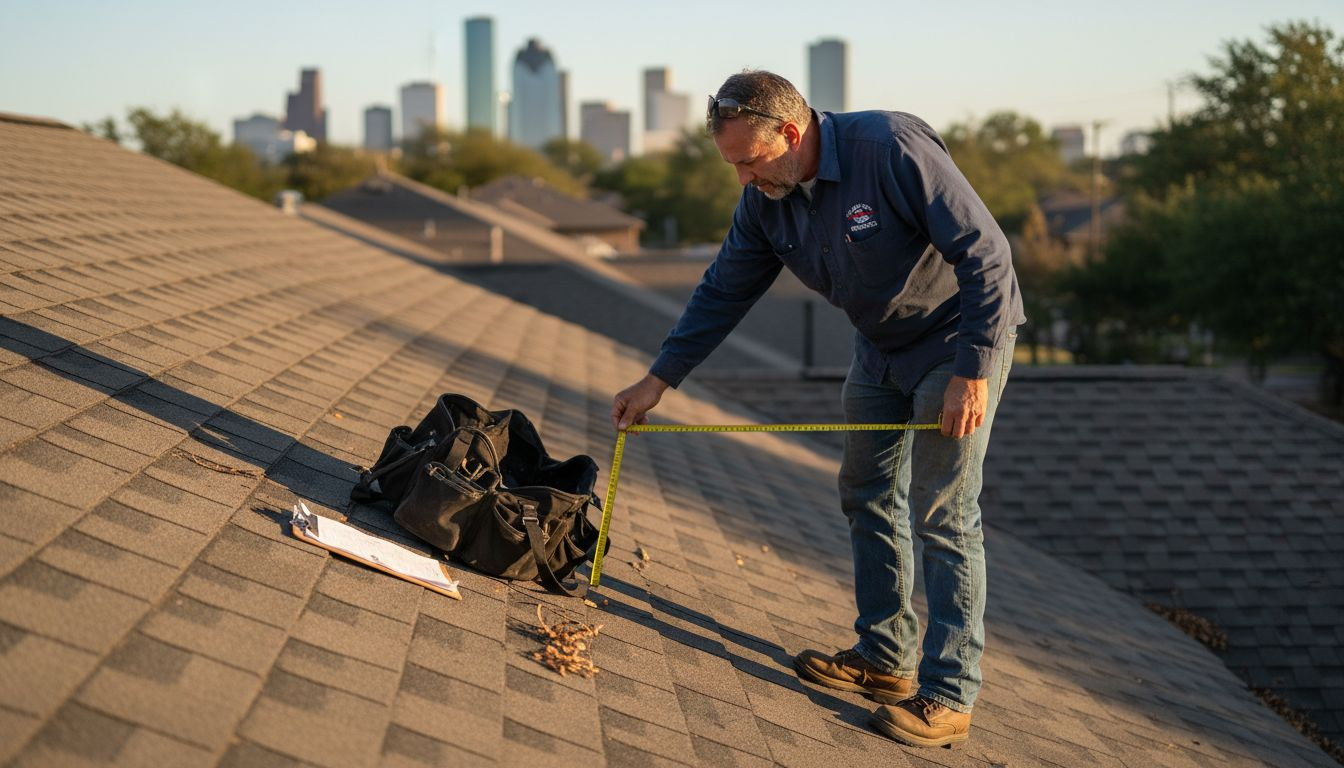
A quality roof estimate starts with the fundamentals. Your estimator will measure your roof’s size and pitch, identify the specific roofing materials you need, and document any existing damage or complications. The estimate then breaks down the actual costs: labor for installation, tear-off and disposal fees for your old roofing, permit costs required by Houston’s building department, and allowances for additional features like chimneys, skylights, or ventilation systems. Materials, labor, and disposal costs form the core of what you’ll see.
But there’s more that separates a thorough estimate from an incomplete one. A comprehensive estimate includes a scope of work that clearly states exactly what will and will not be done. This is your protection. You’ll see an “inclusions” section listing everything the contractor will provide (removing old shingles, installing new underlayment, sealing flashing, for example) and an “exclusions” section stating what’s outside the agreement. The estimate also covers your specific situation: project timeline, any alternates you might choose (like upgrading to metal roofing instead of asphalt shingles), and assumptions the contractor made when creating the price. It includes the estimator’s name, your property address, the proposal date, and when the estimate expires. For Houston homeowners, this documentation is especially important given the region’s exposure to severe weather and the complexity that storm damage can add to a project.
You’ll often see estimates presented as a price range rather than a single number. This reflects the reality of roofing work. The low end assumes straightforward installation with minimal complications, while the high end accounts for potential issues discovered during tear-off (like rotted decking that needs replacement) or additional materials needed. Houston’s hot, humid climate and severe weather patterns mean some homes face more complications than others. A professional estimate acknowledges these variables instead of locking you into a price that might be inaccurate. When you compare multiple estimates for Houston properties, you’ll notice the detailed ones take longer to prepare because they’re taking your property seriously.
Pro tip: Before signing anything, verify that your estimate includes permit costs and specifies whether the contractor handles permits or if that responsibility falls to you. Houston building codes require proper permits for roof replacement, and knowing who manages this process prevents costly delays.
Types of Roof Estimates for Homeowners
Not all roof estimates are created equal. When you contact roofers in Houston, you might receive different types of estimates depending on the stage of your project and what information you need. Understanding these variations helps you know what to expect and why one estimate might look different from another.
The first type you may encounter is a preliminary or conceptual estimate. This is the quick version, often provided over the phone or after a brief visual inspection. You might get this when you call asking, “What’s a ballpark figure for replacing my roof?” These estimates serve a specific purpose: they help you decide whether a roofing project fits your budget before investing time in a detailed proposal. Preliminary estimates lack specifics because they’re based on limited information about your roof. They’re useful for initial planning but not reliable for actual project costs. In Houston’s competitive market, some contractors provide these quickly to hook interested homeowners, so take them as rough guidance rather than final numbers.
The second type is the detailed line-item estimate, which is what you should demand before hiring anyone. This estimate breaks down every cost separately: materials for your specific roofing system, labor hours at the contractor’s rate, tear-off and disposal fees, permit costs, and any add-ons you’ve requested. Detailed estimates with customizable line-items let you see exactly where your money goes and make informed comparisons between contractors. If one company charges significantly more for materials, you can see it immediately. If another includes costs you don’t need, you can negotiate. This transparency is crucial. Mister ReRoof provides detailed estimates because they show respect for your decision-making process and allow you to compare apples to apples.
A third variation you might encounter is the digital or aerial estimate. Some roofing companies use satellite imagery and automated software to calculate roof size and generate price estimates without sending someone to your home. These are convenient and quick, but they have real limitations. Aerial measurements can’t detect damage, assess structural integrity, or account for complications like old flashing that needs replacement or decking damage hidden under shingles. Houston’s weather can hide problems that only an in-person inspection reveals. For a rough idea, digital estimates work fine. For an actual project, you need someone climbing your roof and documenting what they find.
You’ll also see estimates presented with pricing ranges: low, medium, and high options. This approach acknowledges that roofing isn’t one-size-fits-all. The low-end price assumes straightforward conditions with minimal surprises. The medium option factors in typical complications for Houston homes. The high-end price covers best-quality materials and labor plus contingencies for major issues discovered during tear-off. Rather than locking you into a single number that might be wrong, ranges give you realistic scenarios. This is especially smart in Houston, where age, weather exposure, and hidden damage vary dramatically from property to property. When you request detailed roofing estimates for Houston homes, expect contractors to explain which pricing level applies to your situation and why.
Pro tip: Always request in-person estimates from at least three contractors rather than relying on phone quotes or digital tools alone. An inspector who takes time to examine your roof’s condition, check for damage, and discuss complications will give you an estimate you can actually trust.
Here’s a quick comparison of the main types of roof estimates Houston homeowners may receive:
| Estimate Type | Speed of Delivery | Accuracy | When to Use |
|---|---|---|---|
| Preliminary/Conceptual | Same day | Low | Early budgeting, initial inquiry |
| Detailed Line-Item | Few days | High | Contractor selection, final pricing |
| Digital/Aerial | Within 24 hours | Moderate | Rough sizing, remote properties |
| Price Range | Varies | Moderate | Understanding possible scenarios |
Key Details to Review in Houston Estimates
Once you have estimates in hand, knowing what to scrutinize separates smart homeowners from those who get blindsided later. Houston estimates require specific attention to details that matter in our local context. The document you’re reviewing isn’t just a price quote. It’s a contract promise, a compliance document, and your protection against miscommunication.
Start by examining the scope of work section closely. This is where the contractor specifies exactly what they will and will not do. Does it mention removing your old shingles completely, or just placing new ones over the existing roof? Will they replace damaged decking if found during tear-off, or is that extra? Are gutters, flashing, and ventilation included? In Houston, where age and weather damage vary dramatically, this matters enormously. A contractor who commits to replacing all damaged wood is taking responsibility. One who lists decking replacement as “additional work if needed” might bill you thousands extra mid-project. Read this section word by word and ask clarifying questions before signing anything.

Next, verify that permit costs and compliance requirements are explicitly included. Houston’s Building Code Enforcement office requires permits for roof replacement, and adherence to Houston’s building code standards ensures your roof meets safety and structural requirements. Some contractors include permit fees in their estimate. Others charge them separately or expect you to handle permitting yourself. Either way, the estimate should state clearly who manages permits and what that costs. Missing or unclear permit language is a red flag. You could end up responsible for obtaining permits yourself, dealing with inspection delays, or discovering mid-project that the contractor’s design violates Houston code. Legitimate contractors know Houston permitting inside and out and account for it in their pricing.
Examine the material specifications in detail. The estimate should name the exact roofing system you’re getting: asphalt shingles with a specific shingle rating, metal roofing with the gauge and color, TPO membrane with thickness specifications. Vague descriptions like “standard shingles” or “quality roofing material” give the contractor room to downgrade mid-project. If the estimate doesn’t specify brands or ratings, ask for clarification in writing. Houston’s severe weather demands materials rated for wind and hail resistance, so confirm that the estimate reflects storm-rated materials appropriate for our climate. The estimate should also itemize underlayment, flashing material, fasteners, and sealant specifications. These components matter as much as the visible shingles. Cheap underlayment fails faster in Houston’s heat and humidity.
Check the labor breakdown carefully. Does the estimate show labor as a single lump sum, or does it break down specific tasks like tear-off, installation, flashing work, and cleanup? A detailed labor breakdown shows the contractor has thought through the work sequence and staffing. It also helps you understand why one contractor costs more than another. If Contractor A charges $1500 for labor and Contractor B charges $3500, you need to understand why. Is Contractor B using more workers, spending more time, or planning more complex work? The labor section should also clarify the timeline: how many days will the project take, will crews work weekends, and what happens if weather delays the job.
Review the warranty and guarantee terms explicitly. Houston weather is harsh, and you need clarity on what happens if something fails. Does the estimate warranty cover materials, labor, or both? For how long? What conditions void the warranty? Is there a separate manufacturer warranty on shingles or roofing material? Will the contractor honor that warranty, or does the manufacturer handle claims directly? Write down warranty specifics before signing because verbal promises mean nothing when problems arise six months later.
Finally, check the exclusions list carefully. This section details what is NOT included and reveals potential surprise costs. Common exclusions in Houston estimates include structural repairs, chimney work, skylight replacement, and mold remediation. If your roof shows damage requiring additional work, you need to know in advance whether that’s included or extra. Ask the contractor about likely exclusions based on your home’s age and condition. Older Houston homes often need decking replacement that younger homes avoid. Understanding exclusions prevents sticker shock.
Pro tip: Request that the contractor provide specific references to Houston design and construction standards on the estimate itself, confirming the project meets city engineering and construction standards. This documentation protects you legally and ensures the roof passes Houston permit inspection on the first try.
Cost Factors and Local Weather Risks
Houston’s roofing estimates differ from those in other cities because of one unavoidable reality: weather. Your estimate isn’t just reflecting materials and labor. It’s reflecting the real costs of building a roof that survives what Houston throws at it. Understanding this context helps you see why estimates sometimes feel expensive and why cutting corners on materials or contractor quality creates false savings.
Houston sits in one of America’s most hurricane-prone regions, and that shapes everything about roofing costs here. Hurricanes, tropical storms, hail events, and extreme heat aren’t occasional concerns. They’re regular risks that drive material choices and installation standards. When contractors price estimates for Houston homes, frequent severe weather exposure means they must account for building resilience into the job. You’re not paying just for a roof. You’re paying for a roof engineered to withstand 100 mph winds, hail impact, and intense heat cycles that degrade materials faster than in calmer climates. A contractor pricing a roof for Dallas or San Antonio can use different materials and methods than one building in Houston. That difference shows up in your estimate.
Material costs reflect these weather demands directly. Storm-rated shingles cost more than standard shingles because they’re engineered for impact resistance and wind uplift performance. Metal roofing, increasingly popular in Houston, commands premium pricing partly because of superior durability in our climate but also because fewer local installers specialize in it, driving labor costs up. TPO membrane systems offer energy efficiency benefits suited to our scorching summers, but quality TPO rated for wind resistance costs more than basic options. Your estimate should reflect these weather-appropriate material choices. If a contractor quotes budget-grade materials without explaining why they’re suitable for Houston’s climate, that’s a warning sign. The cheapest option often fails fastest here.
Labor costs increase because Houston’s weather risks demand experienced installers who understand local building code updates focused on resilience. Recent updates to Houston building codes have tightened requirements around energy efficiency and resilience against climate extremes. Contractors must follow these standards, which means more careful installation, additional inspection points, and workers trained in current techniques. An inexperienced crew might install a roof faster and cheaper, but it won’t meet current Houston codes and won’t survive our weather. Experienced contractors build in more labor hours because they’re doing the job right, not rushing through it.
Permit and inspection costs also climb because Houston’s building department takes roofing seriously given weather risks. Your estimate should include permit fees and account for multiple inspections: one after tear-off to check decking condition, one after underlayment installation, and one final inspection before the contractor leaves. These inspections ensure your roof meets code. They cost money, but they protect you legally and structurally. A contractor who minimizes inspection requirements is cutting corners that will hurt you when storm damage occurs.
Beyond material and labor, consider the timeline impact of Houston’s weather. Your estimate should specify how the contractor handles rain forecasts or high wind warnings. Will they stop work and protect your partially-roofed home? That costs money through extended timelines and protective measures. A contractor who doesn’t address weather contingencies in the estimate might rush your roof installation during marginal conditions or leave your home vulnerable mid-project.
Finally, understand that roofing material longevity in Houston differs from national averages. A 20-year shingle rated for national conditions might last only 15 years in Houston because of UV exposure, heat cycling, and humidity stress. Your estimate should reflect realistic local lifespan expectations, not manufacturer ratings based on milder climates. When comparing estimates, consider not just upfront cost but durability in Houston’s specific environment. The most expensive option often costs least over time because it survives longer.
Pro tip: Ask each contractor to explain specifically how their estimate addresses Houston’s weather risks and recent building code updates. Contractors who can detail why materials, labor hours, and methods reflect local climate demands are showing you they understand Houston roofing, not just generic roofing work.
This table summarizes key Houston-specific cost factors that impact roof estimates:
| Cost Factor | Houston Impact | Why It Matters |
|---|---|---|
| Severe Weather | Higher material standards | Prevents storm damage |
| Permit Requirements | Multiple inspections required | Ensures code compliance |
| Labor Expertise | Skilled crews needed | Meets resilience codes |
| Timeline Delays | Weather can extend project | Protects exposed home |
How Estimates Protect Your Investment
A roof estimate is more than a price quote. It’s a written contract that protects you legally, financially, and structurally. When you invest tens of thousands of dollars in a roof replacement, the estimate becomes your defense against misunderstandings, scope creep, and substandard work. Understanding how estimates protect you changes how you approach the entire process.
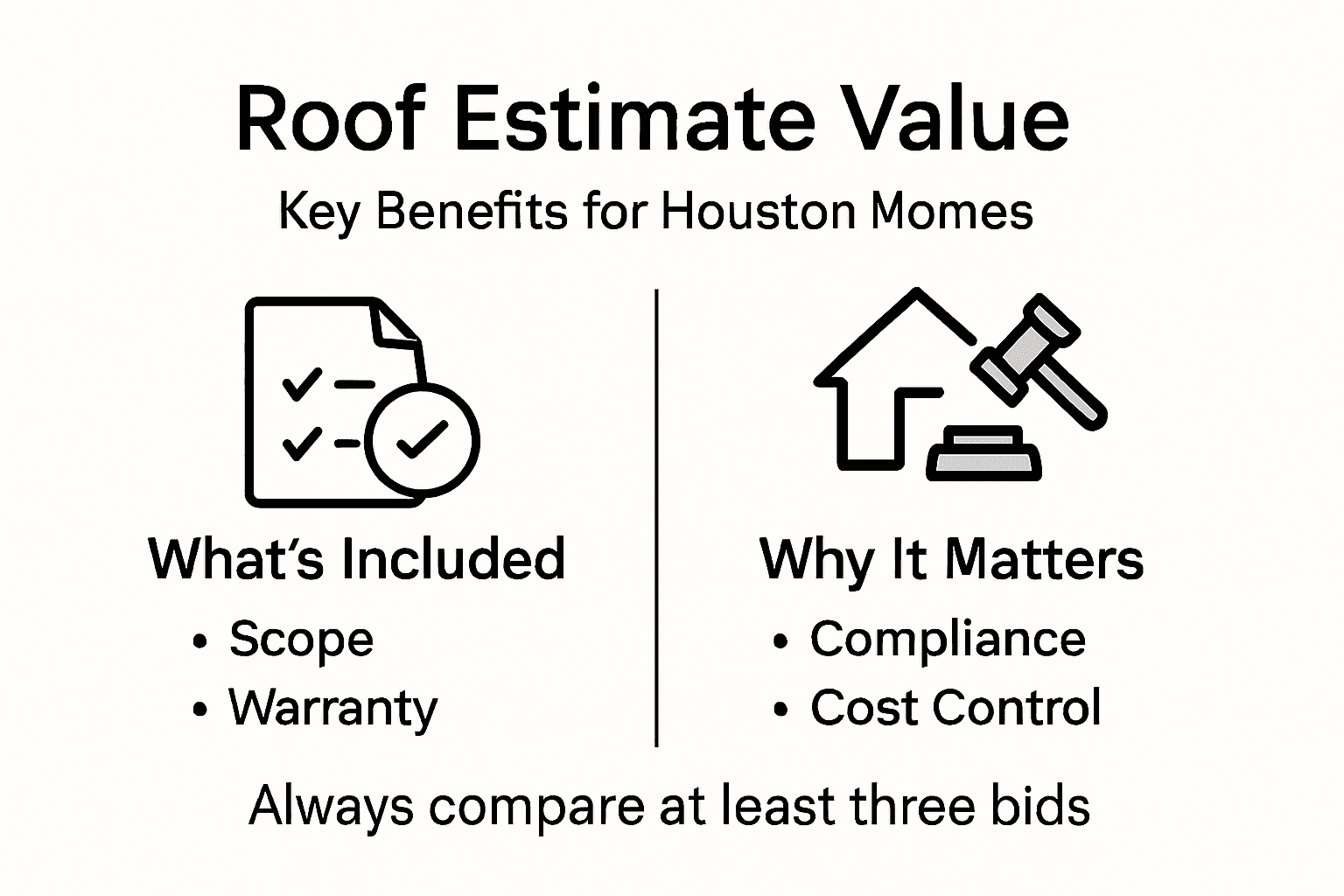
First, a detailed estimate creates a binding agreement about what will be done and what will not. When you sign an estimate, you’re creating a contract that specifies materials, labor scope, timeline, and price. If the contractor later claims decking replacement wasn’t included and charges you an extra five thousand dollars, you can point to the estimate and say no. The estimate is your evidence. This protection matters enormously in Houston, where hidden damage under old shingles often requires decisions during the project. A good estimate includes language about how those decisions get made and priced. It might say decking replacement is included up to a certain cost, with anything above that negotiated with you in writing. That protects both you and the contractor by setting clear expectations upfront.
Second, the estimate protects your property value. A roof done right using quality materials appropriate for Houston’s climate protects your home’s structural integrity and resale value. A roof done wrong with improper materials or shortcuts fails faster, leading to water damage, mold, structural rot, and insurance issues. When your estimate specifies storm-rated materials and follows rigorous resilience standards, you’re documenting that your roof meets quality criteria. This documentation becomes valuable if you ever need to file an insurance claim after storm damage. Insurance companies want to see that your roof was built to current standards, not that you installed the cheapest option available. The estimate proves you invested properly in your home’s protection.
Third, estimates protect you by forcing clarity on warranty coverage. Many homeowners don’t discover warranty gaps until problems emerge. An estimate should spell out exactly what the contractor warrants, for how long, and under what conditions. Does the contractor warranty their labor for five years? Does the manufacturer warranty shingles for 20 years? Does either warranty cover wind damage, hail damage, or poor installation? These details sound tedious, but they’re critical when your roof needs repair at year three and you discover the contractor’s warranty expired. A clear estimate prevents that nightmare.
Estimates also protect you through the permit and inspection documentation they represent. When an estimate includes permit costs and specifies that the contractor will obtain permits and pass inspections, you know the work will be inspected by Houston’s building department. That inspection is independent verification that the roof meets code. It protects you legally if the roof ever fails and someone questions whether it was built properly. An estimate that skips permits or minimizes inspection requirements is a warning that the contractor might not be meeting code standards.
Financially, estimates protect you by allowing meaningful price comparisons. You can’t compare one estimate to another fairly if they include different scopes of work. But when both estimates specify materials, labor tasks, timeline, and warranty, you can see exactly why one costs more. Maybe Contractor A charges more because they’re using superior materials rated for higher wind resistance. Maybe Contractor B charges more because they warranty labor longer. Those differences matter and justify different prices. Without detailed estimates, you’re just comparing numbers without understanding what you’re getting.
Perhaps most importantly for Houston homeowners, estimates protect you by documenting your home’s condition before work starts. A professional estimate includes photos and detailed notes about your roof’s current state, damage found, and decisions made based on that condition. If problems occur later, you have documentation of what existed before the contractor touched your roof. This protects you against contractors claiming you had pre-existing damage, and it protects the contractor by showing they didn’t cause problems that were already present.
Pro tip: Keep every estimate you receive, along with all correspondence with the contractor you hire, in a organized folder either physical or digital. Include photos, warranty documents, permit approval notices, and inspection reports. This complete documentation becomes invaluable if you need to file insurance claims or address roofing issues years later.
Protect Your Houston Home with a Reliable Roof Estimate
Understanding exactly what a roof estimate includes is essential to avoid unexpected costs and ensure your home is fortified against Houston’s severe weather. From detailed line-item breakdowns to permit management and material specifications, a comprehensive estimate gives you control and peace of mind during your roof replacement process. Mister ReRoof specializes in providing detailed, transparent estimates that align with Houston building codes and climate demands so you can trust your investment will stand strong for years.
Don’t wait until hidden damages or permit issues create costly delays. Get your free, personalized roof estimate today from Mister ReRoof. Learn how our expert team handles every detail from inspection through completion to deliver storm-resistant roofs built to last. Visit us now to discover why so many Houston homeowners rely on our clear proposals and proven roofing solutions. Take the first step to protect your property with confidence by requesting your thorough estimate at Mister ReRoof.
Frequently Asked Questions
What does a roof estimate include?
A roof estimate typically includes measurements of your roof’s size and pitch, identification of necessary materials, documentation of existing damage, and a breakdown of costs for labor, permit fees, and other features. It also features a scope of work detailing what services are included and any exclusions.
Why is a detailed line-item estimate important?
A detailed line-item estimate breaks down every cost individually, allowing you to see where your money goes and make informed comparisons between contractors. This clarity ensures you understand what is included and what additional costs may arise during the roofing project.
How do Houston’s weather conditions impact roof estimates?
Houston’s weather conditions increase the complexity and cost of roofing projects. Estimates must reflect the use of storm-rated materials and labor that adheres to local building codes, accounting for severe weather risks that can affect roofing durability and longevity.
How can I ensure my estimate protects my investment?
To protect your investment, ensure your estimate is detailed and includes elements such as material specifications, warranties, permit costs, and a scope of work. Keeping all documentation organized helps safeguard against potential future issues or disputes with contractors.
Recommended
- How to Get Roofing Estimates for Houston Homes Easily
- Role of Roofing Contractor – Why It Matters in Houston
- Roof Installation Process: Houston’s Impact on Longevity
- What Is Roof Replacement and Why Houston Homes Need It
- How to Evaluate Contractors for Your Ontario Renovation
- Roofing Contractor El Campo TX
- Metal Roof Replacement El Campo TX
