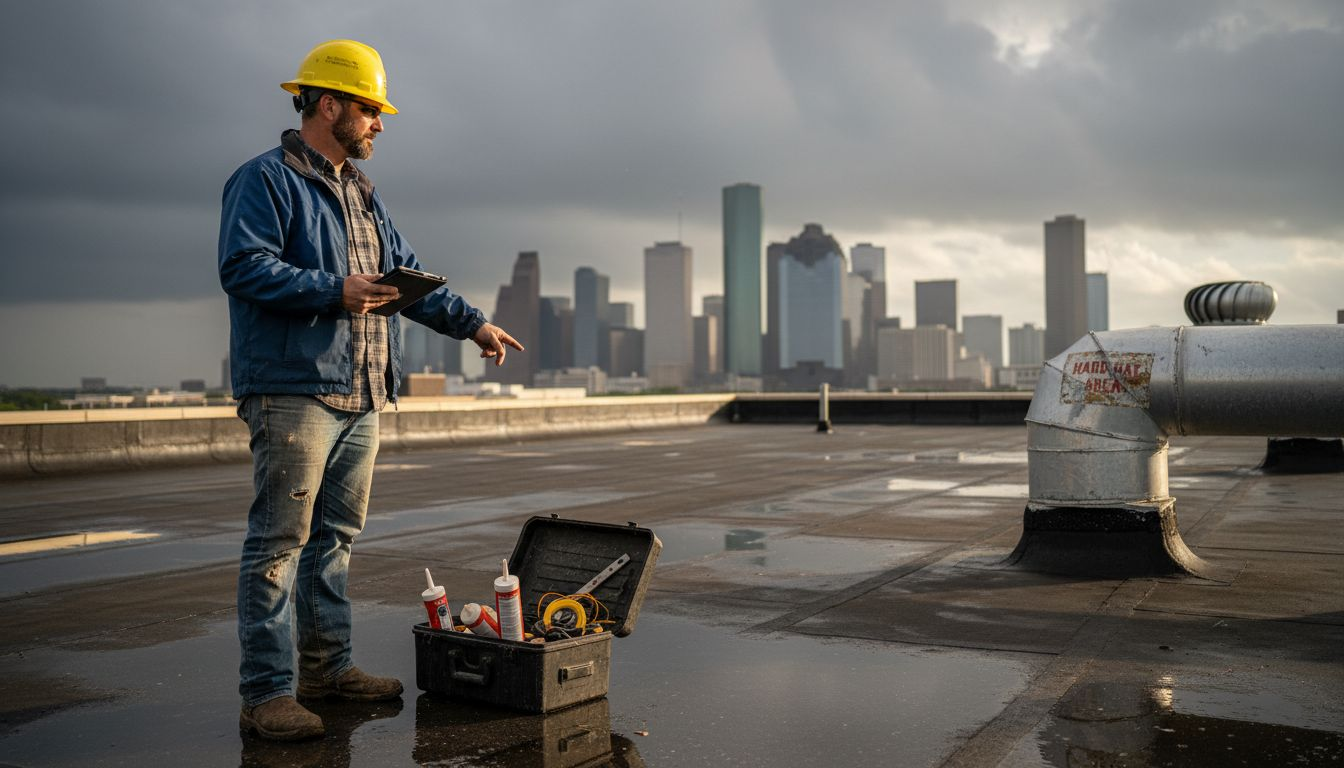
Every Houston property manager knows how quickly one severe storm can turn a minor roof issue into a major financial headache. When intense rain and high winds hit, flat roofs are put to the test, making reliable weatherproofing a necessity rather than a luxury. By focusing on tested and approved weatherproofing products installed by licensed contractors, you build a strong defense that not only shields your building from costly damage but also protects long-term investments and tenant satisfaction.
Table of Contents
- Weatherproofing Commercial Roofs Explained
- Types of Roof Weatherproofing Systems
- Key Materials for Houston Climate
- Risks of Poor Weatherproofing Choices
- Cost Factors and Long-Term Savings
Key Takeaways
| Point | Details |
|---|---|
| Weatherproofing is Essential | For commercial roofs in Houston, effective weatherproofing is crucial to protect against intense storms and reduce long-term repair costs. |
| Choose Quality Materials | Selecting premium materials tailored for Houston’s climate ensures durability and longevity of the roof. |
| Regular Maintenance is Key | Ongoing inspections and timely repairs prevent small issues from escalating into costly problems. |
| Cost-Benefit Analysis is Important | Investing in high-quality weatherproofing upfront can save significantly on repairs and energy costs over time. |
Weatherproofing Commercial Roofs Explained
Weatherproofing your commercial roof means creating a protective barrier that stops water, wind, and weather from damaging your building’s structure and interior. For Houston property managers, this is not optional—it’s survival.
Houston’s weather demands action. Intense storms roll through regularly, bringing hail, wind gusts exceeding 60 mph, and torrential rain that exploits any weakness in your roof. A weatherproofed roof resists these conditions, keeping your tenants safe and your repair bills manageable.
What Weatherproofing Actually Does
Weatherproofing involves multiple defensive strategies working together:
- Sealing gaps and cracks that allow water infiltration
- Installing protective membranes that repel moisture
- Ensuring proper drainage so water moves off the roof quickly
- Securing fasteners and flashing to prevent wind uplift
- Ventilation management to reduce moisture buildup inside the structure
These components work together to protect your building envelope. Weatherproofing differs from insulation but complements it—one controls water and air movement, the other manages temperature. You need both.
Why Commercial Roofs Need Extra Attention
Flat roofs are standard in Houston’s commercial landscape. They’re cost-effective and practical. But flat roofs are more vulnerable to standing water, UV damage, and ponding issues than pitched roofs.
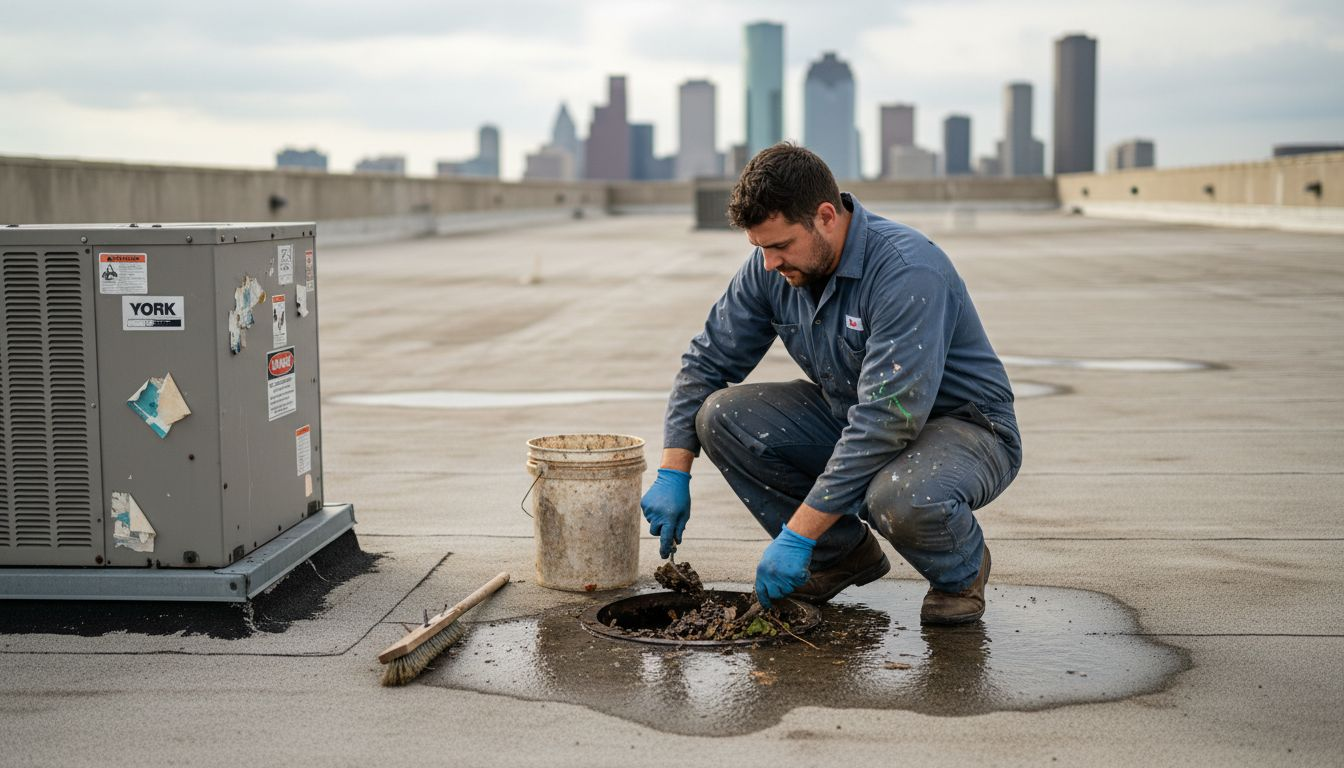
When water sits on your roof instead of draining, it finds every weakness. Seams fail. Fasteners corrode. Membranes deteriorate. This is why tested and approved weatherproofing products installed by licensed contractors matter—they’re designed specifically to prevent these failures.
A single storm can cost you tens of thousands in repairs if your roof isn’t properly weatherproofed. Prevention now saves money later.
The Three Core Elements
Effective weatherproofing rests on three foundations:
- Materials: Premium membranes, sealants, and flashing rated for Houston’s climate
- Installation: Proper technique by experienced contractors who understand local weather demands
- Maintenance: Regular inspections and repairs that address problems before they spread
Skip any one of these, and your weatherproofing fails under pressure.
Weatherproofing is not a one-time project—it’s an ongoing commitment that protects your building, your tenants, and your bottom line.
Pro tip: Schedule quarterly roof inspections during Houston’s storm season (June through November) to catch seal failures, membrane damage, and drainage issues before heavy rains arrive.
Types of Roof Weatherproofing Systems
Not all roofing systems are created equal. Houston’s commercial roofs need specific weatherproofing solutions designed for local climate challenges. Choosing the right system determines how well your building withstands storms, heat, and moisture for years to come.
Your roof is only as strong as its weakest component. A complete weatherproofing system includes roof framing, connectors, sheathing, insulation, roofing membranes, drainage, and flashing—each piece working together to keep water out.
Built-Up Roofs (BUR)
Built-up roofs are traditional systems layered with alternating asphalt and felt. They’ve protected commercial buildings for decades, and for good reason.
BUR systems provide excellent weatherproofing through multiple protective layers. Water must penetrate several barriers to reach the building structure. The thick construction offers durability, but installation requires expertise and takes time.
These roofs work well in Houston but need regular maintenance to prevent seam failures.
Modified Bitumen Membranes
Modified bitumen combines asphalt with rubber or plastic polymers for improved flexibility and performance. This system bridges the gap between traditional BUR and modern single-ply options.
The added elasticity allows modified bitumen to expand and contract with Houston’s temperature swings without cracking. Installation is faster than BUR, making it cost-effective for many commercial properties.
Single-Ply Membranes
Single-ply systems have revolutionized commercial roofing. These sheets come in three main types:
- EPDM (ethylene propylene diene monomer): Rubber-based, affordable, proven track record
- PVC (polyvinyl chloride): Excellent chemical resistance, superior durability
- TPO (thermoplastic olefin): Modern option balancing cost and performance
Single-ply membranes are easier to install than built-up systems and offer consistent protection. Cool roofs using reflective single-ply materials reduce building cooling costs while protecting the membrane from UV degradation.
Here’s a side-by-side comparison of major commercial roof weatherproofing systems for Houston:
| System Type | Key Strength | Longevity (Years) | Ideal Use Case |
|---|---|---|---|
| Built-Up (BUR) | Thick multi-layered barrier | 20-30 | High-traffic, heavy-duty roofs |
| Modified Bitumen | Flexibility in heat swings | 15-25 | Large roofs, quick installation |
| Single-Ply (EPDM, PVC, TPO) | Fast, efficient installation | 15-30 | Energy efficiency, UV exposure |
Which System Fits Your Building?
Consider these factors when selecting weatherproofing:
- Building age and structure type – Older buildings may limit material options
- Budget constraints – Initial cost versus long-term maintenance spending
- Maintenance capacity – How involved do you want to be?
- Climate demands – Houston requires wind and water resistance
The best weatherproofing system for your building combines durability, local climate compatibility, and realistic maintenance expectations.
Pro tip: Get estimates from licensed contractors familiar with Houston’s weather patterns—they’ll recommend systems proven to perform in your specific area rather than generic national solutions.
Key Materials for Houston Climate
Houston’s climate is relentless. High humidity, intense heat, and seasonal storms demand roofing materials built to endure. The wrong materials fail quickly; the right ones protect your investment for decades.
Successful weatherproofing starts with material selection. Your roof faces constant moisture exposure, temperature extremes, and wind pressure that would destroy inferior products. Houston requires materials specifically engineered for these conditions.
Asphalt-Based Products
Rubberized asphalt membranes are Houston workhorses. Hot or cold-applied liquid versions create flexible, moisture-resistant barriers that bond securely to roof surfaces.
These materials excel in humid climates. Asphalt-based weatherproofing products provide long-lasting weather resistance and air sealing critical for Houston’s heavy rains. Peel-and-stick flashing tapes seal penetrations and vulnerable joints quickly without special equipment.
The flexibility matters. Houston temperature swings cause materials to expand and contract, and asphalt-based products accommodate this movement without cracking or peeling.
Insulation for Energy and Moisture Control
Insulation does more than manage temperature—it prevents condensation damage. Houston’s humidity creates moisture problems inside roofing assemblies if insulation isn’t properly selected.
Commercial roofs in Houston typically use these rigid foam options:
- Polyisocyanurate foam: Highest thermal resistance, excellent moisture protection
- Extruded polystyrene (XPS): Dense, durable, consistent performance
- Expanded polystyrene (EPS): Affordable, still effective in Houston applications
Polyisocyanurate insulation is the premium choice for Houston because it provides superior thermal resistance while resisting moisture absorption—critical in our hot, humid environment.
Flashing and Sealants
Flashing seals the gaps where roofs meet walls, pipes, and other penetrations. A single failed seal creates an entry point for water damage.
Quality flashing materials include aluminum, galvanized steel, and rubberized membranes. Pair these with compatible sealants rated for Houston’s temperature range and UV exposure.
Material Selection Strategy
Choose materials based on:
- Humidity resistance – Houston stays wet; materials must repel moisture aggressively
- Thermal cycling tolerance – From 40°F winter nights to 95°F summer days
- UV stability – Intense sun degrades inferior materials quickly
- Manufacturer reputation – Proven performance in Gulf Coast climates
The cheapest material upfront costs far more when it fails during a storm or develops leaks in year three.
Pro tip: Request material specifications and installation documentation proving products are rated for Houston’s specific climate zone—generic national products often underperform in our unique humidity and heat combination.
Risks of Poor Weatherproofing Choices
Cutting corners on weatherproofing creates a ticking time bomb. Poor material choices and faulty installation transform your roof from protection into a liability. The costs of failure dwarf the savings from taking shortcuts.
Many property managers learn this lesson during Houston’s next major storm. By then, it’s too late. Understanding the real risks helps you make informed decisions that protect your investment.
Water Intrusion and Structural Damage
Water is relentless. A single failed seal becomes a pathway into your building. Once inside, water attacks wood framing, insulation, electrical systems, and stored inventory.
Poor weatherproofing allows water infiltration that leads to structural rot and hidden damage developing for months before discovery. By the time you notice soft spots or staining, thousands in repair costs already exist behind the walls.
Structural compromises affect your building’s safety and resale value. Insurance claims for water damage often face denial if inspectors determine weatherproofing was inadequate.
Mold Growth and Health Hazards
Houston’s humidity creates perfect mold conditions. When water enters via poor weatherproofing, mold follows quickly. Mold grows inside walls, above drop ceilings, and in insulation where you can’t see it.
Mold causes:
- Respiratory problems for tenants and employees
- Expensive abatement and remediation costs
- Potential liability lawsuits from occupants
- Building code violations that block occupancy
Tenants sick from mold-contaminated air will leave. You’ll face vacancy, lost revenue, and legal exposure that costs far more than proper weatherproofing installation upfront.
Premature Roof Failure
Inferior materials and poor installation shorten roof lifespan dramatically. A properly weatherproofed roof lasts 20-30 years. Poor weatherproofing fails in 5-10 years, sometimes sooner.
When a storm hits and your roof fails, you face emergency repairs during peak demand seasons when contractors charge premium rates. Emergency crews work slower and less thoroughly than planned maintenance. You’re also managing tenant disruptions, water damage cleanup, and potential business interruption.
Condensation and Corrosion
Misspecified weatherproofing creates condensation inside roof assemblies. Inadequate insulation or weatherproofing causes moisture accumulation that corrodes metal components and degrades membranes from the inside out.
Property managers often mistake condensation damage for actual leaks, leading to incorrect repairs that don’t solve the problem. This wastes time and money while the real issue continues destroying your roof.
Wind Uplift Failure During Storms
Houston storms bring destructive winds. Poor weatherproofing and faulty fastening allow roofs to fail under wind uplift pressure. During severe weather, inadequately weatherproofed sections simply separate from the structure.
Wind failures are catastrophic:
- Immediate water intrusion from exposed decking
- Progressive damage spreading as weather continues
- Building closure and tenant evacuation
- Emergency repair costs multiplied by storm demand
- Business interruption losses
Poor weatherproofing choices create cascading failures that cost magnitudes more than investing in quality materials and expert installation from the start.
Pro tip: Document your roof’s condition before storm season with photos and written condition reports—this protects you during insurance claims if poor weatherproofing contributes to damage.
This table breaks down common risks of poor weatherproofing and their business consequences:
| Risk | Typical Outcome | Potential Business Impact |
|---|---|---|
| Water Intrusion | Hidden rot, insulation loss | Safety issues, denied insurance |
| Mold Growth | Indoor air quality decline | Sick tenants, lawsuits, vacancies |
| Premature Roof Failure | Frequent repairs, downtime | Emergency costs, lost revenue |
| Wind Uplift Failure | Structural compromise | Tenant evacuation, high repair bills |
Cost Factors and Long-Term Savings
Weatherproofing costs money upfront. This is undeniable. But comparing only initial prices misses the full financial picture. The real question is what you spend over 20 years, not what you pay on day one.
Property managers who focus solely on lowest bid often spend three times more fixing failures than they would have investing in quality upfront. The math becomes obvious when you calculate total cost of ownership.
Understanding Initial Installation Costs
Quality weatherproofing installation costs vary based on several factors:
- Roof size and complexity – Larger roofs and multiple penetrations cost more
- Material selection – Premium membranes cost more than budget alternatives
- Current roof condition – Extensive prep work increases labor costs
- Local contractor rates – Houston market rates differ from national averages
- Timeline – Rushed jobs cost more than planned, scheduled work
A 10,000-square-foot commercial roof might cost $15,000 to $35,000 for professional weatherproofing installation depending on these factors. This seems significant until you compare it to repair costs.
The Repair Cost Multiplier
Here’s where the math shifts dramatically. Quality weatherproofing and professional installation reduce repair frequency and costs significantly by protecting your roof from storm damage.
A single significant storm repair can cost $25,000 to $100,000 or more. Emergency repairs cost 40-60% more than planned maintenance. If your roof fails prematurely due to poor weatherproofing, you’ll face emergency replacement at peak pricing when every contractor is swamped.
Meanwhile, a properly weatherproofed roof survives that same storm with minimal damage.
Energy Efficiency and HVAC Savings
Modern weatherproofing systems do more than repel water. They manage thermal performance, reducing cooling loads significantly.
Cool roofs reflecting solar energy reduce cooling costs by 10-30% depending on building size, HVAC efficiency, and Houston’s climate. For a typical commercial building, this means $2,000-$8,000 annual energy savings.
Over a 20-year roof lifespan, energy savings alone can recover your entire installation investment.
Extended Roof Lifespan Economics
Proper weatherproofing extends roof life from 10-15 years (poor choices) to 20-30 years (quality installation).
Consider this scenario:
- Poor weatherproofing: $20,000 install + $50,000 emergency repair (year 8) + $80,000 replacement (year 15) = $150,000 total
- Quality weatherproofing: $30,000 install + $5,000 maintenance (year 10) + $35,000 planned replacement (year 25) = $70,000 total
The quality approach costs half as much over the same period while eliminating emergency disruptions.
Downtime and Business Interruption
Failure costs extend beyond repairs. When your roof fails during a storm, you face tenant evacuation, business closure, and lost revenue.
A week of business interruption for a typical commercial tenant might cost $5,000-$50,000 depending on operations. This invisible cost often exceeds direct repair expenses but gets forgotten when budgeting.
Investing in proper weatherproofing today prevents cascading costs that compound over decades and destroy your operating budget.
Pro tip: Request a 20-year cost projection from contractors showing installation, expected maintenance, and estimated replacement costs—this reveals true value better than comparing initial quotes alone.
Protect Your Houston Commercial Roof with Expert Weatherproofing Solutions
Houston storms test every inch of your commercial roof with relentless rain, fierce winds, and intense heat. The risks of poor weatherproofing are real and costly from water intrusion to premature roof failure. At Mister ReRoof, we understand these challenges deeply. We specialize in durable, storm-resistant roofing systems tailored to withstand Houston’s unique climate—whether you need flat roof weatherproofing with advanced membranes or energy-efficient TPO systems designed for long-lasting performance.
Don’t wait for the next storm to reveal hidden damage or costly emergency repairs. Protect your investment by choosing a trusted local partner that delivers expert installation, premium materials, and ongoing maintenance options. Visit Mister ReRoof to explore our commercial roofing services and schedule a free estimate. Safeguard your building with proven solutions that keep your tenants safe and your repair costs low. Get started now and experience Houston’s top roofing contractor dedicated to your peace of mind.
Frequently Asked Questions
What is weatherproofing for commercial roofs?
Weatherproofing for commercial roofs involves creating a protective barrier that prevents water, wind, and weather from damaging the building’s structure and interior. It encompasses sealing gaps, installing membranes, ensuring proper drainage, and managing ventilation.
Why is weatherproofing essential for commercial roofs in Houston?
Houston experiences intense storms with high winds and heavy rain, making it crucial for commercial roofs to be weatherproofed. A well-weatherproofed roof helps protect tenants and minimizes costly repairs due to storm damage.
What are the main types of weatherproofing systems for roofs?
The primary types of weatherproofing systems include Built-Up Roofs (BUR), Modified Bitumen Membranes, and Single-Ply Membranes like EPDM, PVC, and TPO. Each system has its own strengths and suitability based on specific needs and conditions.
How can I maintain a weatherproofed roof effectively?
Effective maintenance involves scheduling regular inspections, particularly during storm seasons, to catch any seal failures, membrane damage, or drainage issues before they escalate. It also includes adhering to maintenance repairs as needed to prolong the roof’s lifespan.
