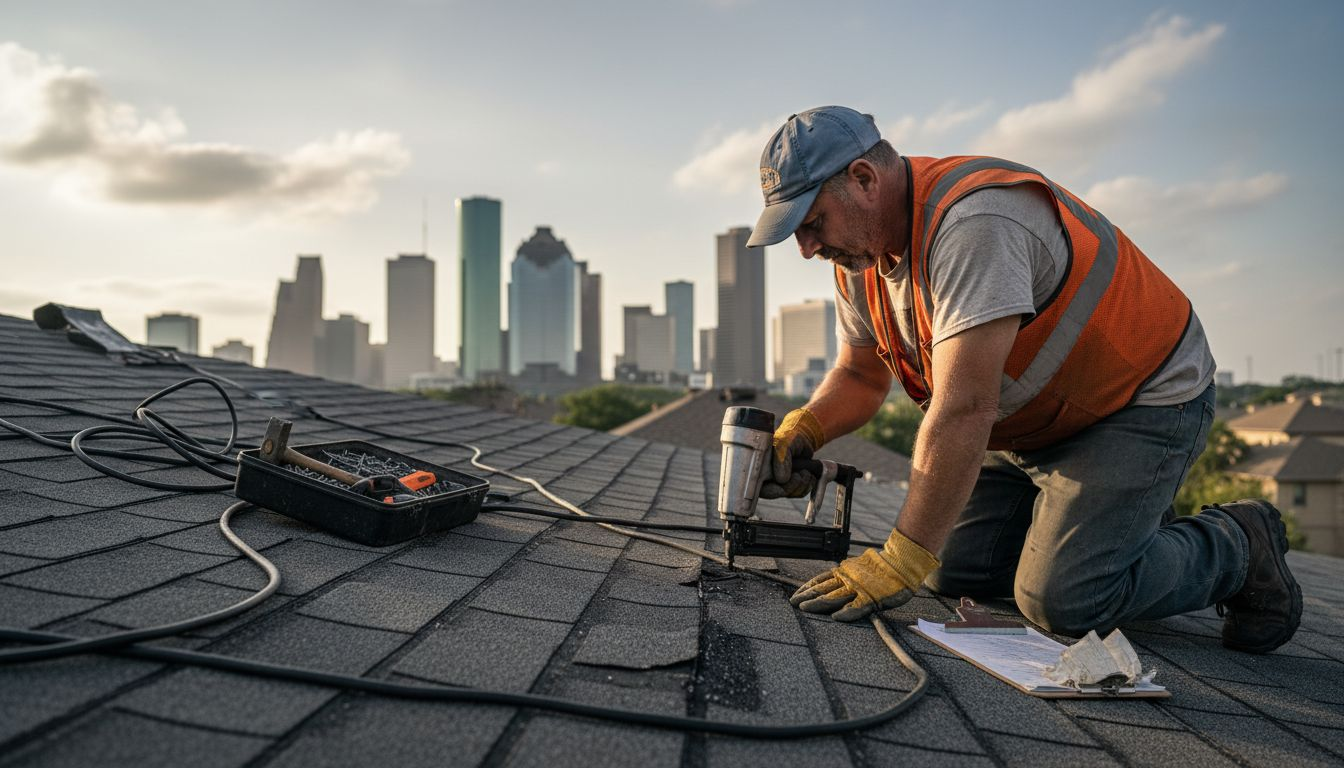
Waking up after a Houston thunderstorm often means facing a new leak, water stains, or missing shingles from overnight winds and rain. Each passing day you delay a roof repair increases the risk of small isolated problems becoming major issues impacting your roof’s performance and threatening your home’s internal structure. This guide explains how timely action and proper maintenance can protect your investment, prevent costly damage, and keep your Houston property weather-ready all year.
Table of Contents
- Understanding Timely Roof Repair Needs
- Types of Roof Damage in Houston Weather
- How Delays Cause Structural and Financial Harm
- Benefits of Prompt Roof Maintenance and Repairs
- Risks of Ignoring Roof Issues Over Time
Key Takeaways
| Point | Details |
|---|---|
| Timely Repairs are Essential | Address roof issues immediately to prevent minor problems from escalating into costly repairs and structural damage. |
| Regular Inspections are Crucial | Schedule routine roof inspections, especially after severe weather, to catch hidden damage early. |
| Delays Increase Costs | Postponing repairs can lead to exponentially higher costs due to compounded damage and necessary extensive repairs. |
| Maintenance Preserves Value | Prompt maintenance and repairs protect the underlying structures and help maintain your property’s value in the real estate market. |
Understanding Timely Roof Repair Needs
Your roof faces constant assault in Houston. The combination of intense sun, humidity, occasional hail storms, and seasonal rain creates an environment where small problems quickly balloon into expensive disasters. The difference between catching a leak early and waiting for it to spread throughout your attic comes down to understanding what timely repair actually means.
Timely repair is not about convenience or waiting for the perfect weather. It’s about addressing problems at the moment they develop, before they compound into structural damage. A properly executed roof maintenance program detects minor problems early before they become major issues, extending your roof’s lifespan while protecting the building’s internal functions. When water starts seeping through a small puncture or a few shingles begin to curl, that’s your window of opportunity. Wait another month, and that moisture spreads into multiple rafters, insulation absorbs water like a sponge, and you’ve gone from a 500-dollar repair to a 5,000-dollar one.
Houston’s weather patterns make timing especially critical. Summer thunderstorms roll through with little warning, and winter cold snaps can stress roofing materials without obvious damage at first glance. Your roof may look fine from the ground while underneath, worn flashing allows water to pool, or deteriorating seals let moisture creep into the wood. Small isolated problems, if left unrepaired, become major issues impacting the entire roof system’s performance and your home’s structural integrity. The process involves more than just patching a hole. Timely roof repair requires identifying deterioration early and using appropriate methods to ensure repairs are both safe and effective. This means professionals need to inspect not just the visible damage, but the underlying conditions that caused it in the first place. A roof repair done right at the first sign of trouble protects your investment and prevents exponential costs down the road.
Understanding your specific repair needs starts with recognizing warning signs early. Stained ceilings, missing or damaged shingles, sagging areas, or visible gaps between flashing and walls all demand immediate attention. Temperature fluctuations throughout Houston’s seasons can cause materials to expand and contract, creating stress points that fail progressively. The longer you allow these conditions to persist, the more your roof’s ability to shed water and maintain structural support diminishes. When multiple systems fail simultaneously, replacement becomes the only viable option rather than targeted repair. By acting quickly on individual problems as they arise, you keep your roof functioning effectively for years longer and avoid the financial hit of complete replacement.
Pro tip: Schedule a professional roof inspection immediately after any severe weather event, even if you don’t see obvious damage from the ground. Houston contractors often find hidden damage that becomes costly leaks within weeks if left unaddressed.
Types of Roof Damage in Houston Weather
Houston’s climate creates a perfect storm of roofing threats. You’re dealing with intense heat that can warp materials, torrential rains that test every seam and penetration, occasional hail that pounds shingles like a hammer, and wind gusts that can lift and tear coverings. Understanding what damage actually looks like helps you catch problems before they escalate into major repairs.
Wind damage tops the list of Houston roof problems. Summer thunderstorms routinely bring winds exceeding 40 miles per hour, and hurricane season brings far worse. Wind doesn’t just blow off shingles—it lifts edges, separates flashing from walls, and stresses the connector systems that hold everything together. Water intrusion follows close behind because Houston receives significant rainfall year-round, with peak moisture during hurricane season. When wind damage opens gaps in your covering or weakens flashing seals, rain finds those entry points within hours. Water then travels under shingles, soaks into sheathing, and creeps into framing before you even realize there’s a problem. Hail damage appears more obviously but often gets missed. Quarter-sized hail hits like a thrown rock, creating small indentations and bruises in shingles that don’t show obvious tears. These dents compromise the granule coating that protects asphalt, accelerating deterioration. Sloped roofs in Houston face damage from framing failures, connector failures, and sheathing deterioration when these stressors combine over time.
Thermal stress represents another silent killer specific to Houston’s climate. Temperatures swing dramatically between seasons and even between day and night during shoulder months. Materials expand in the heat and contract in cooler periods, creating stress on seams, fasteners, and membranes. Over years, this constant flexing weakens connections and opens microscopic cracks that let moisture in. Deterioration from age and exposure accelerates faster in Houston than in most regions. The combination of intense UV radiation, high humidity, and temperature swings breaks down asphalt binders in traditional shingles and degrades protective coatings on metal roofing. Flashing materials corrode, seals harden and crack, and penetrations around vents and chimneys develop gaps. Connectors can fail when subjected to repeated stress cycles, compromising the structural integrity of the entire system.
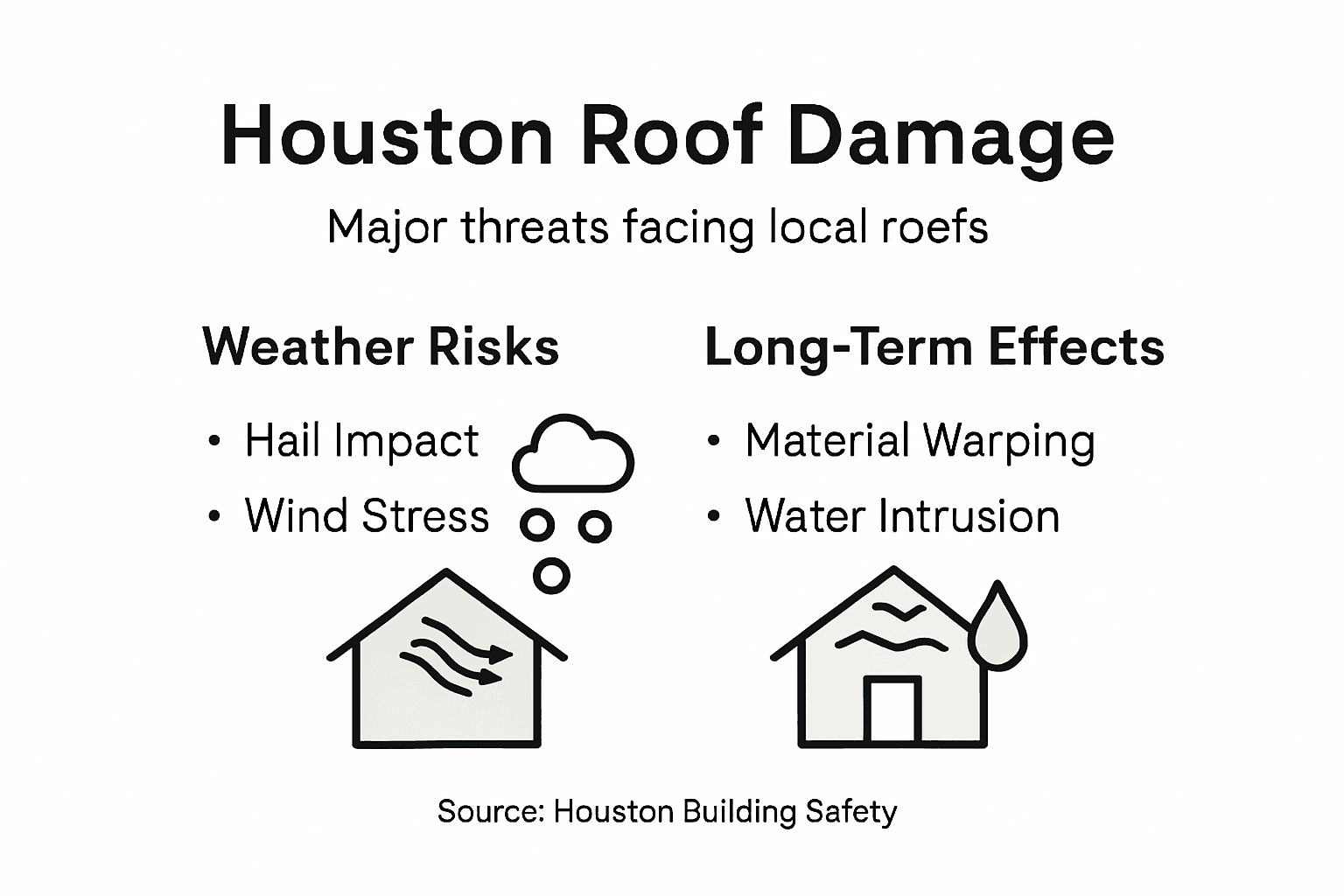
The challenge with Houston roof damage is that different types often appear together. A windstorm might tear covering and loosen flashing, then rain finds both entry points, and thermal stress continues stressing the weakened connections underneath. Small problems compound into major structural issues. Regular inspections catch individual issues before they become compounded failures requiring expensive replacement rather than targeted repair.
Here’s a summary of common roof damages Houston homeowners face and their typical consequences:
| Damage Type | Typical Cause | Immediate Effect | Long-Term Consequence |
|---|---|---|---|
| Wind Damage | Storms, hurricanes | Shingles lifted/loose | Structural connector failure |
| Water Intrusion | Heavy rain, leaks | Insulation soaks, stains | Mold, wood rot |
| Hail Impact | Severe hail storms | Shingle bruises/dents | Accelerated material aging |
| Thermal Stress | Rapid temp swings | Cracks at seams/membranes | Microscopic moisture ingress |
| Age/Exposure | Sun, humidity, UV | Minor corrosion/cracks | Widespread seal failure |
Pro tip: After any storm with winds above 35 miles per hour, climb into your attic with a flashlight to check for water stains or active leaks, even if the roof looks fine from below. Early detection means the difference between a simple patch and structural damage.
How Delays Cause Structural and Financial Harm
Putting off roof repair is like ignoring a small crack in your windshield. That crack seems harmless today, but tomorrow it spreads across the glass, and suddenly you need a complete replacement instead of a quick fix. With roofing, the mathematics of delay are brutal. A 500-dollar leak repair that you postpone for three months becomes a 3,000-dollar water damage claim by the time you call a contractor. The damage compounds exponentially because water doesn’t just sit in one spot. It spreads through insulation, soaks into wooden framing, promotes mold growth, and weakens structural integrity across multiple systems simultaneously.
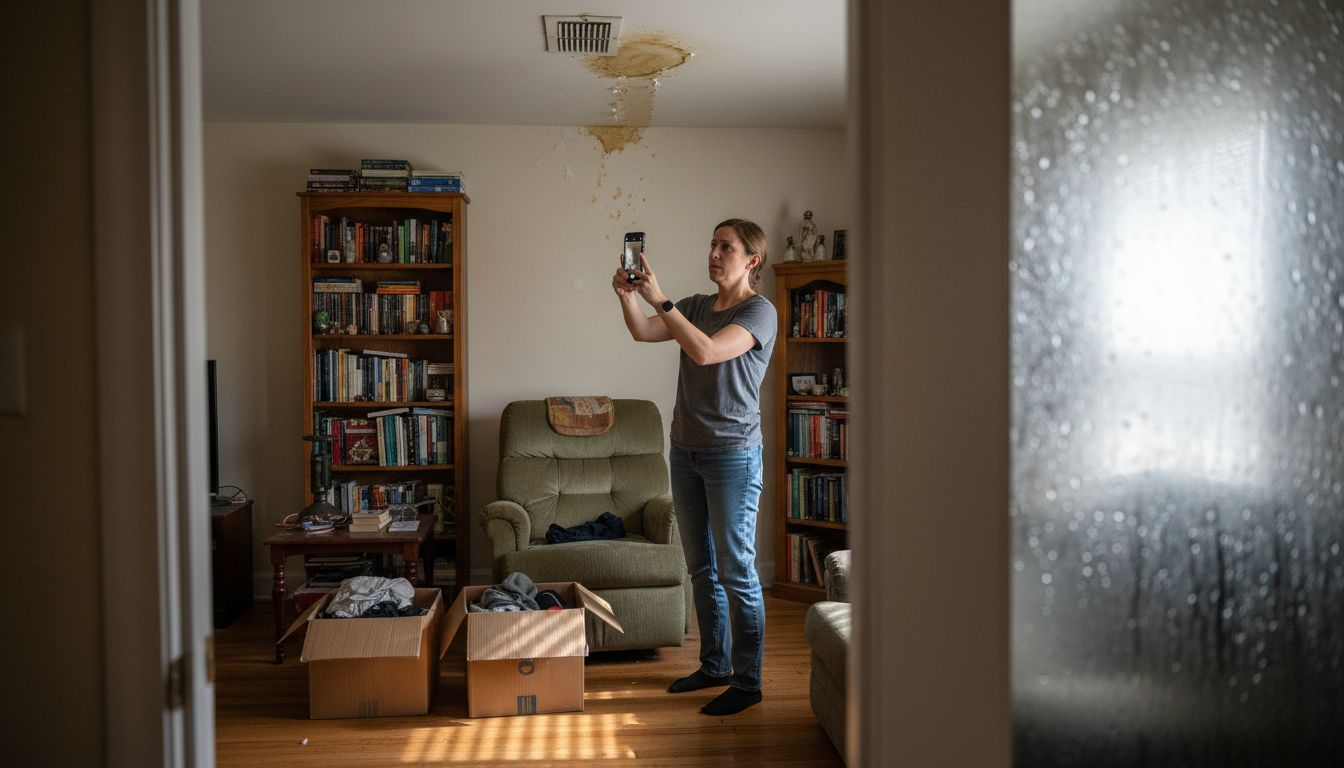
Here’s what actually happens when you delay roof repairs in Houston. Water enters through a small opening or compromised seal. For the first week, you don’t notice anything obvious. By week two, moisture has traveled into the attic space and begun saturating insulation, which loses its thermal resistance immediately. By week four, wood framing absorbs moisture and starts to weaken. By month two, mold begins colonizing the damp surfaces, creating health hazards and further degrading materials. By month three, you finally call for repairs, but now the contractor finds structural damage requiring replacement of sections of framing that should have been simple patching. Delays in construction projects lead to cost overruns, extended durations, and increased risk of material degradation and structural failure, turning a manageable repair into an emergency replacement.
The financial impact accelerates with each passing week. A timely repair uses targeted materials and focused labor for a few hours. A delayed repair requires contractors to tear out damaged framing, replace insulation, treat mold, and potentially address electrical or HVAC components that got wet. Labor costs multiply. Material costs increase as you need more supplies. Insurance may deny claims if you failed to address known damage promptly, leaving you responsible for the entire cost. Resale value of your home drops when future buyers discover previous water damage, even after repairs. Property values in Houston decrease when structural integrity has been compromised, sometimes by tens of thousands of dollars.
Beyond the numbers, delays create safety risks. Weakened framing can sag or fail unexpectedly. Mold exposure affects respiratory health, particularly for children and elderly family members. Electrical systems in wet attics pose fire hazards. The longer you wait, the more systems become involved in the failure cascade. What started as a single-point repair spreads to multiple building systems, each requiring specialized contractors and separate timelines. A repair scheduled within days gets completed in one visit. That same repair delayed two months requires multiple contractors working sequentially, taking weeks to complete and creating ongoing disruption to your home.
To help you see the impact of fast versus delayed roof repairs, compare these scenarios:
| Scenario | Initial Cost Estimate | Result of Delay | Total Cost After Delay |
|---|---|---|---|
| Immediate repair | $500 leak patch | Quick fix, low risk | $500 (minimal) |
| 1 month delay | $500 leak patch | Insulation damage | $1,500 (moderate) |
| 3 month delay | $500 leak patch | Mold, structure repairs | $5,000 or more |
| Ignored entirely | $500 leak patch | Complete roof failure | $15,000+ replacement |
Pro tip: Get written repair quotes from at least two contractors within 48 hours of discovering damage, even if you’re not ready to act immediately. These quotes lock in pricing and create a documented timeline that helps with insurance claims if damage spreads while you’re deciding.
Benefits of Prompt Roof Maintenance and Repairs
When you address roof problems quickly, you unlock a cascade of advantages that compound over time. The most obvious benefit is cost savings. A leak sealed before it spreads costs a fraction of what water damage remediation costs after it has saturated framing and insulation. A single missing shingle replaced immediately costs under 100 dollars. That same shingle ignored for three months allows water underneath, eventually requiring 2,000 dollars in water damage repair. The mathematics are simple: act now and spend less, or act later and spend dramatically more.
Extended roof lifespan ranks as the second major benefit. Roofs naturally degrade over time, but neglect accelerates that degradation exponentially. Small cracks allow water penetration that weakens surrounding materials. Loose flashing allows wind to lift and stress nearby sections. One compromised area stresses adjacent areas, creating a cascade of failure. Regular roof maintenance extends a roof’s life by detecting and repairing minor defects early, preventing them from escalating into system-wide problems. A roof that should last 20 years lasts only 12 when neglected. That same roof lasts 25 years when properly maintained. In Houston’s harsh climate, those extra years of functionality represent tremendous value.
Protection of underlying structures cannot be overstated. Your roof isn’t just an aesthetic feature—it’s a shield protecting everything below. When it fails, water infiltrates attic spaces, soaks insulation, weakens framing, and promotes mold growth that spreads into living areas. Prompt roof maintenance prevents water damage, slows material degradation, and protects underlying structures, helping maintain energy efficiency and home safety. Quick action stops this cascade before it begins. Early repairs are more cost-effective than major replacements, reducing long-term expenses and preserving property value. You avoid the dual nightmare of structural repair costs plus the health and safety complications of mold remediation.
Property value preservation matters especially in Houston’s competitive real estate market. Homes with roof damage or previous water intrusion sell for significantly less than comparable homes without that history. Future buyers discover evidence of damage during inspections and demand substantial discounts. Proactive maintenance and prompt repairs prevent this value erosion. Your home’s resale value depends partly on roof condition. Buyers want confidence that the roof will protect their investment. A well-maintained roof signals competent ownership and eliminates concerns about hidden damage.
Pro tip: Set a recurring calendar reminder for spring and fall roof inspections, and document any observations with photos and notes. This maintenance history becomes powerful evidence of responsible ownership when you eventually sell your home.
Risks of Ignoring Roof Issues Over Time
Every day you ignore a roof problem, the situation deteriorates behind the scenes. You cannot see the damage accelerating in your attic or crawl space, but physics doesn’t care about your schedule. Gravity pulls water downward. Moisture seeks expansion into wood and insulation. Temperature fluctuations stress weakened materials. What starts as a minor issue becomes a catastrophe when left unaddressed. The longer you wait, the more building systems become entangled in the failure cascade.
Structural deterioration is the silent killer of ignored roof problems. Water infiltrates wood framing, and saturation begins immediately. Wood loses strength as moisture content increases. After weeks of exposure, structural members weaken noticeably. After months, framing can develop soft spots where decay has advanced significantly. Ignoring roof defects can lead to leaks, water damage, mold, structural weakening, and compromised safety, with damage worsening over time and leading to costly repairs or complete roof failure. The cost to replace a rafter that should have been simple patching far exceeds the original repair. Beyond cost, structural failure creates genuine safety hazards. A weakened roof can sag unexpectedly. In extreme cases, roof collapse becomes possible, potentially injuring occupants or destroying contents below.
Mold growth and health risks compound quickly once moisture penetrates your attic. Mold spores germinate within 24 to 48 hours of moisture exposure. Visible colonies appear within weeks. Mold releases mycotoxins and spores that travel through ventilation systems into living spaces, causing respiratory problems, allergic reactions, and asthma exacerbation. Children and elderly family members face heightened risks. Ignoring roof issues such as moisture ingress leads to condensation, mold growth, and loss of thermal efficiency, creating serious risks to occupant health over time. Mold remediation becomes exponentially more expensive as colonies spread. Professional mold removal can cost thousands of dollars, and some damage cannot be reversed. Your home’s air quality deteriorates, affecting everyone’s health and well-being.
Energy efficiency collapse happens gradually but inevitably. Wet insulation loses its thermal resistance almost immediately. Saturated insulation that once provided R-value becomes thermal dead weight. Your heating and cooling systems work harder to maintain temperature, driving utility bills upward. A 10 percent increase in energy consumption seems small until you calculate annual costs across multiple years. That small leak ignored for one year costs you hundreds in excess energy bills. Ignored for three years, you have spent thousands in wasted energy while structurally compromising your home. Eventually, replacement of soaked insulation becomes necessary, adding thousands more to your total cost. The cascading financial impact dwarfs the original repair cost by orders of magnitude.
Pro tip: Document the date and location of any roof damage with photos and written notes, then request contractor estimates immediately to establish a baseline cost. This creates proof of when you discovered the damage, protecting you in insurance disputes and helping contractors understand the timeline when damage eventually requires emergency response.
Protect Your Houston Home With Timely Roof Repairs
Houston’s harsh weather demands that homeowners act quickly at the first sign of roof damage. As the article explains, delays in repairs can lead to structural deterioration, mold growth, and skyrocketing costs. Don’t let a small leak turn into a major emergency. You deserve peace of mind knowing your roof shields your home and family from storms, heat, and water damage.
Mister ReRoof specializes in professional, durable roofing solutions designed specifically for Houston’s challenging climate. From metal and shingle to flat and TPO systems, our expert contractors deliver prompt inspections and reliable repairs to extend your roof’s lifespan and protect your investment. We understand the urgency of early intervention and offer free estimates to help you make informed decisions before damage worsens.
Schedule your professional roof inspection today and stop costly problems before they start.
Expert Houston Roof Repair Services
Durable Roof Replacement Solutions
Contact Mister ReRoof Now

Frequently Asked Questions
What are the signs that I need a roof repair?
Common signs that indicate you need a roof repair include stained ceilings, missing or damaged shingles, sagging areas, and visible gaps between flashing and walls.
How does delaying roof repairs affect my home’s value?
Delaying roof repairs can lead to structural deterioration and water damage, which significantly decreases your home’s value and may result in costly repairs or complete roof replacement.
Why is it crucial to schedule roof inspections after severe weather?
Scheduling roof inspections after severe weather is important because hidden damage can occur that may not be visible from the ground, potentially leading to leaks and expensive repairs if left unaddressed.
How can timely roof repairs benefit my home’s energy efficiency?
Timely roof repairs help maintain the integrity of insulation and roofing materials, ensuring optimal thermal resistance. This reduces energy costs, as a well-maintained roof prevents excess heat loss or gain, improving overall energy efficiency.
Recommended
- Signs of Roof Damage: Protecting Houston Homes
- Role of Roofing Contractor – Why It Matters in Houston
- Insurance for Roof Repairs – Protecting Houston Homes
- 7 Roof Replacement Tips for Houston Homeowners
- How to Create Disaster Recovery Plan That Actually Works – Heights Consulting Group
- Roofing Contractor El Campo TX
- Metal Roof Replacement El Campo TX
