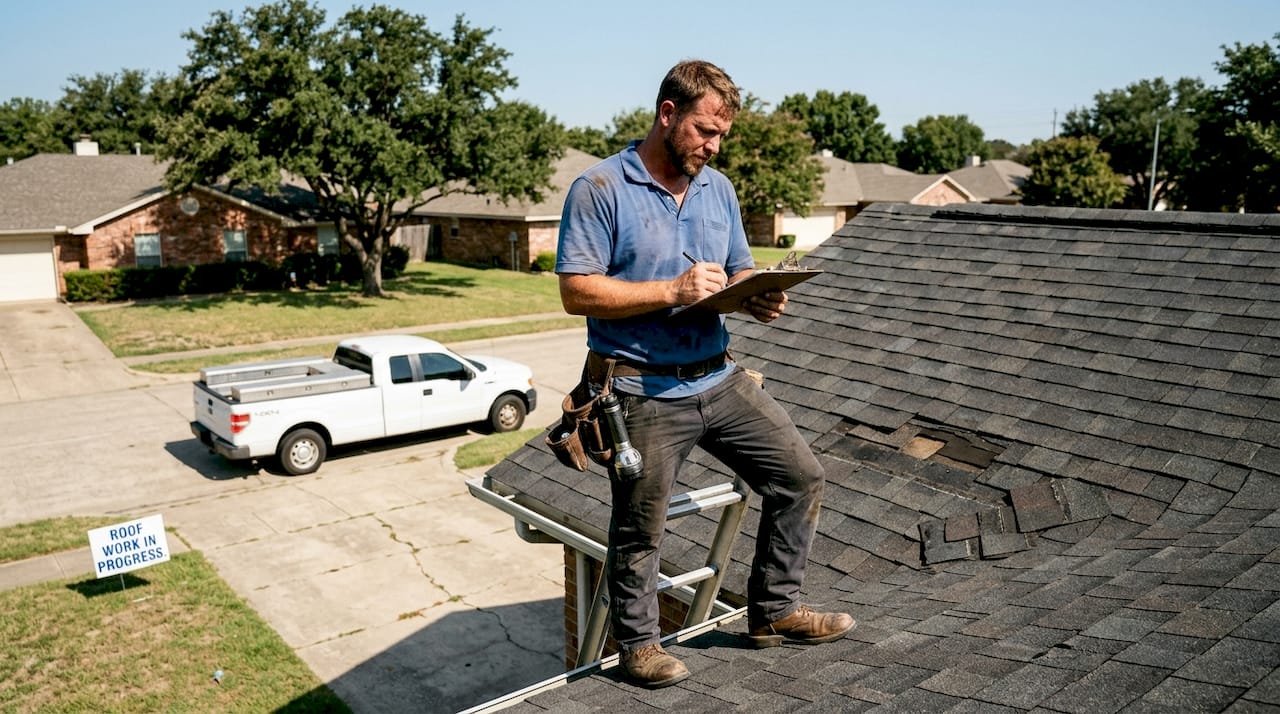
Finding a trustworthy roofing contractor in Texas can feel overwhelming, especially after storm damage leaves your home vulnerable. With thousands of contractors operating across the state and fraud risks spiking after severe weather events, homeowners and property managers face real challenges separating quality professionals from opportunistic scammers. This guide walks you through the essential steps for selecting a reliable roofing contractor who will protect your investment, handle insurance claims properly, and deliver durable results that stand up to Texas weather conditions.
Table of Contents
- Key takeaways
- Verify credentials and licenses before hiring
- Evaluate experience, certifications, and local reputation
- Choose durable materials and ensure weather-resistant construction
- Protect yourself with smart contracting and project verification
- Find expert roofing services in Texas
- What credentials should I check when hiring a roofing contractor in Texas?
Key Takeaways
| Point | Details |
|---|---|
| Verify credentials and licenses | Confirm RCAT status, insurance, and other certifications before signing a contract. |
| Local experience and certifications | Choose contractors with five plus years of Texas experience and manufacturer certifications. |
| Durable materials for Texas weather | Demand materials suited for Texas weather such as UL 2218 Class 4 shingles. |
| Review references and documents | Request recent project references, read reviews, and verify insurance documents before signing. |
Verify credentials and licenses before hiring
Texas has no statewide roofing license, creating a unique challenge for homeowners trying to verify contractor legitimacy. Unlike many states with mandatory licensing, Texas relies on voluntary certification programs to identify quality professionals. The Roofing Contractors Association of Texas offers RCAT certification requiring insurance and exams, which serves as your best credential indicator.
RCAT members must demonstrate at least two years of roofing experience, pass comprehensive exams with scores of 70% or higher, and maintain liability insurance coverage of $300,000 or more. This certification signals a contractor’s commitment to professional standards and financial responsibility. Beyond RCAT membership, verify that contractors carry both general liability insurance and workers’ compensation coverage to protect you from financial liability if accidents occur on your property.
Check for membership in additional reputable roofing associations that require adherence to ethical business practices and quality standards. Request copies of all insurance certificates and certifications before signing any agreements. Legitimate contractors will provide these documents without hesitation, while those who resist or make excuses raise immediate red flags.
Pro Tip: Keep copies of all contractor credentials in a dedicated file for your roofing project. This documentation becomes invaluable if disputes arise or you need to verify coverage during insurance claims.
When hiring roofing contractors in Texas, take time to verify these essential credentials:
- RCAT membership status and certification date
- General liability insurance with minimum $300,000 coverage
- Workers’ compensation insurance for all crew members
- Manufacturer certifications from major roofing brands
- Better Business Bureau rating and complaint history
Evaluate experience, certifications, and local reputation
Experience matters significantly when selecting a roofing contractor, particularly in Texas where weather conditions create unique challenges. Prioritize contractors with 5+ years local experience who understand regional weather patterns, building codes, and common roofing issues specific to your area. Manufacturer certifications like GAF Master Elite or Owens Corning Preferred Contractor status demonstrate advanced training and access to premium materials with extended warranties.
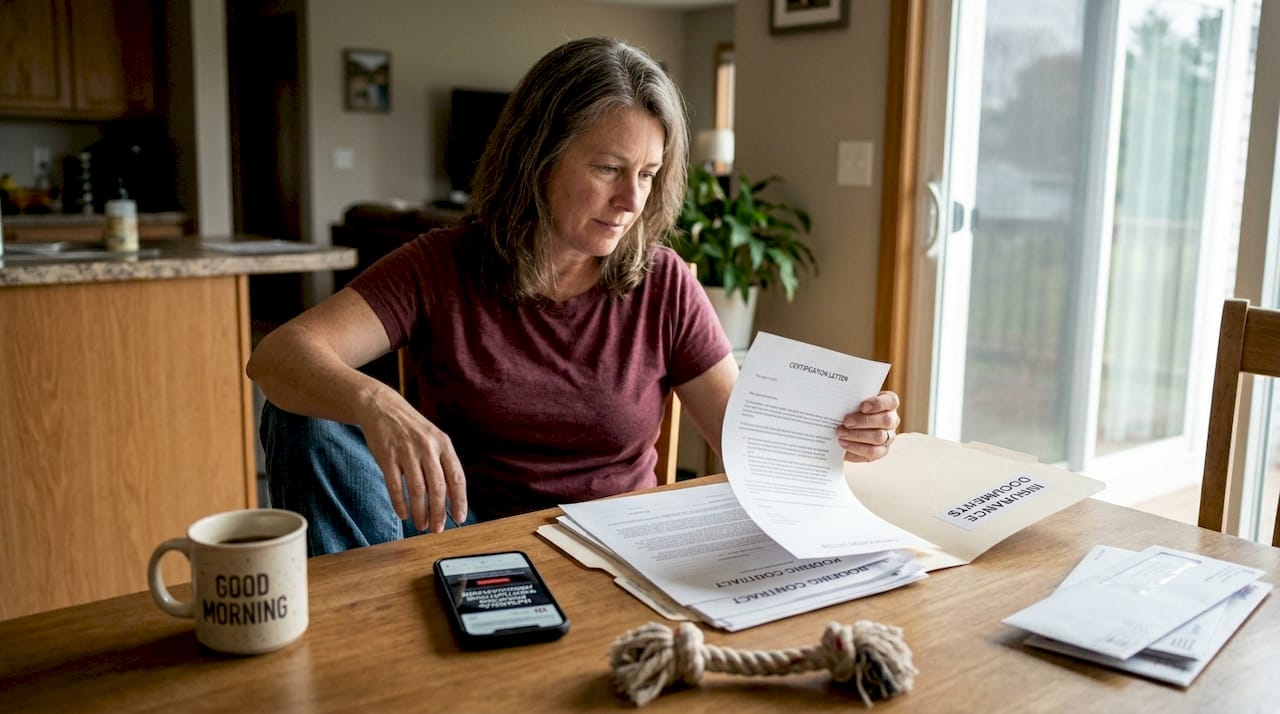
Local reputation provides insight into contractor reliability that credentials alone cannot reveal. Request at least three references from projects completed within the past year, focusing on jobs similar in scope to yours. Online reviews offer additional perspective, but look beyond star ratings to read detailed customer experiences about communication, timeline adherence, and problem resolution.
Follow these steps to thoroughly evaluate contractor reputation:
- Request references from recent projects in your area
- Read reviews on multiple platforms including Google, Yelp, and industry sites
- Verify past project details by viewing completed work when possible
- Contact previous clients directly to ask about their experience
The Texas Department of Licensing and Regulation maintains records of complaints and licensing for high-value projects. While general roofing work does not require state licensing, contractors performing work over certain dollar thresholds may need additional permits. Check TDLR records to identify any patterns of complaints or regulatory issues.
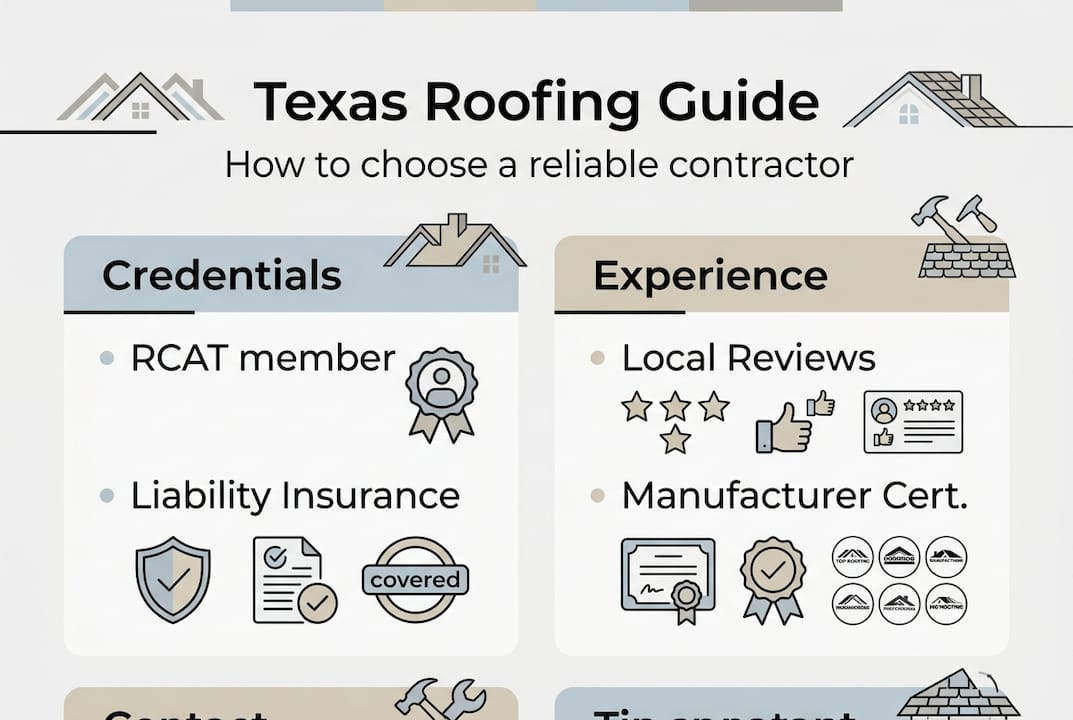
Manufacturer certifications provide another layer of quality assurance. These programs require contractors to complete specialized training, maintain high customer satisfaction ratings, and meet strict installation standards. Certified contractors typically offer better warranties and have direct relationships with manufacturers for technical support and material warranties.
Ask questions for roofing contractors about their experience with insurance claims, especially if you are filing for storm damage. Contractors familiar with the claims process can provide documentation that streamlines approval and ensures you receive appropriate compensation. Understanding the benefits of professional roofers helps you appreciate the value of investing in experienced contractors rather than choosing based solely on price.
Choose durable materials and ensure weather-resistant construction
Texas weather requires impact-resistant shingles rated for high winds, making material selection critical for long-term roof performance. UL 2218 Class 4 shingles resist hail impact and wind uplift forces that regularly damage Texas roofs. These materials undergo rigorous testing to ensure they withstand steel balls dropped from specific heights without cracking, providing superior protection against hail storms common across the state.
Wind resistance matters equally in Texas, where hurricanes, tornadoes, and severe thunderstorms generate extreme forces. Quality shingles should carry ratings of 110 mph or higher to meet Texas wind zone requirements. Beyond shingle ratings, proper installation techniques including adequate fastener patterns and starter strip application determine whether your roof survives severe weather events.
Top-rated shingles like GAF Grand Sequoia and Owens Corning Duration consistently earn high marks from the Insurance Institute for Business and Home Safety for impact resistance and wind performance. These premium options cost more upfront but deliver superior durability and often qualify for insurance discounts that offset the investment over time.
| Shingle brand | Impact rating | Wind resistance | Warranty | Insurance discount potential |
|---|---|---|---|---|
| GAF Grand Sequoia | Class 4 | 130 mph | Lifetime limited | 10-35% |
| Owens Corning Duration | Class 4 | 130 mph | Lifetime limited | 10-35% |
| CertainTeed Landmark | Class 4 | 110 mph | Lifetime limited | 10-25% |
| Atlas StormMaster | Class 4 | 130 mph | Limited lifetime | 10-30% |
Proper roof construction extends beyond shingle selection to include structural elements that support weather resistance. Contractors should inspect decking condition, replace damaged sections, and ensure adequate attic ventilation to prevent moisture damage and extend roof lifespan. Roof-to-wall bracing connections must meet current wind zone codes to prevent catastrophic failure during severe storms.
Pro Tip: Using approved impact-resistant materials can reduce your insurance premiums by 10-35%. Request documentation from your contractor confirming material ratings and proper installation to submit with your insurance discount application.
Demand that contractors provide written documentation confirming all materials and installation methods meet Texas wind standards. This paperwork becomes essential for insurance discounts and proves compliance if questions arise during future inspections. Learn more about durable roofing materials Texas contractors recommend and understand weather impact on roofing durability to make informed decisions.
- Verify UL 2218 Class 4 impact resistance certification
- Confirm wind ratings meet or exceed local code requirements
- Inspect decking and structural components before installation
- Ensure proper attic ventilation design
- Request material documentation for insurance discount applications
Protect yourself with smart contracting and project verification
Storm chasers flood Texas communities after severe weather events, pressuring homeowners to sign contracts immediately while emotions run high and damage assessment remains incomplete. Delaying contract signing after storms protects you from fraudulent contractors who disappear after collecting deposits or perform substandard work that creates more problems than it solves.
Texas law provides a mandatory three-day right to cancel home repair contracts, giving you time to reconsider decisions made under pressure. Use this cooling-off period to verify contractor credentials, compare estimates, and consult with your insurance adjuster before committing to repairs. TDI offers free inspections in wind zones before roof covering installation, providing expert verification of damage legitimacy and repair necessity.
These inspections help prevent unnecessary repairs and ensure contractors accurately assess damage rather than inflating claims for profit. Schedule your free TDI inspection before signing any contract to gain an independent assessment of required work. This step proves particularly valuable when contractors provide estimates that differ significantly from insurance adjuster assessments.
Follow these steps to verify contractor work quality and protect your interests:
- Require detailed photographic documentation of damage before repairs begin
- Review all insurance claim submissions for accuracy and completeness
- Inspect final work personally or hire an independent professional inspector
- Confirm all permits were obtained and final inspections passed
Property managers should seek contractors experienced in storm claims who provide comprehensive photo documentation supporting insurance claims. Multi-family properties require contractors who understand commercial insurance processes and can coordinate repairs across multiple buildings efficiently.
Every roofing contract should include these essential elements:
- Proof of current liability and workers’ compensation insurance
- Detailed project timeline with start and completion dates
- Payment schedule tied to project milestones, never full payment upfront
- Specific material brands, models, and ratings
- Warranty information for both materials and workmanship
- Permit acquisition responsibilities and costs
Delaying contract signing and using cancellation rights protects you from common storm repair scams that cost Texas homeowners millions annually.
Understanding how to prevent issues before they start helps you avoid the need for emergency repairs. Learn about preventing roof failure through proper contractor selection and maintenance practices.
Find expert roofing services in Texas
Mister ReRoof specializes in Texas roofing challenges with certified contractors who understand local weather conditions and building code requirements. Our team provides comprehensive roof replacement services including shingle, flat, and metal options designed specifically for Texas climate demands. We handle insurance claims documentation thoroughly, providing the detailed photo records and material specifications adjusters need to process claims efficiently.
Our expertise spans residential and commercial projects across El Campo, Houston, and surrounding communities. Whether you need shingle roof replacement Sugar Land homeowners trust, flat roof replacement El Campo businesses rely on, or metal roof replacement Victoria that delivers decades of performance, our certified team delivers quality workmanship backed by solid warranties.
Pro Tip: Schedule a free consultation to assess your roof condition and receive a detailed estimate. Our team provides transparent pricing and helps you understand all available material options for your specific situation.
What credentials should I check when hiring a roofing contractor in Texas?
What credentials should I check when hiring a roofing contractor in Texas?
Verify RCAT membership, current liability insurance with minimum $300,000 coverage, and workers’ compensation insurance for all crew members. Check for manufacturer certifications from brands like GAF or Owens Corning that demonstrate advanced training. Confirm the contractor has at least five years of experience specifically with Texas roofs and local weather challenges.
Review their Better Business Bureau rating and read recent customer reviews on multiple platforms. Request and verify references from projects completed within the past year. Learn more about essential roofing contractor credentials Texas homeowners should verify before signing contracts.
When is the best time to sign a roofing contract after a storm?
Wait at least three to five days after storm damage before signing any roofing contract. Texas law allows contract cancellation within three days, so avoid immediate signing when emotions run high and damage assessment remains incomplete. This delay allows time to verify contractor credentials, compare multiple estimates, and consult with your insurance adjuster.
Request a free TDI inspection in designated wind zones before finalizing any agreement. These inspections provide independent verification of damage and help prevent unnecessary repairs. Understanding proper roof contract timing protects you from storm chasers who pressure homeowners into quick decisions they later regret.
What roofing materials are best for Texas weather conditions?
UL 2218 Class 4 impact-resistant shingles provide superior protection against hail and wind damage common in Texas. Look for products rated for winds of 110 mph or higher to meet state wind zone requirements. Premium options like GAF Grand Sequoia and Owens Corning Duration consistently earn top ratings for impact resistance and durability.
These materials cost more initially but reduce long-term repair expenses and often qualify for insurance discounts of 10-35%. Ensure your contractor provides documentation confirming material ratings and proper installation to support insurance discount applications. Explore more about Texas roofing materials that deliver the best performance for local conditions.
How can property managers ensure smooth insurance claims for roofing projects?
Select contractors with proven storm claim experience who understand insurance documentation requirements and adjuster expectations. Ensure contractors provide comprehensive photographic documentation of damage before repairs begin, including close-up shots of specific problem areas and wide-angle views showing overall roof condition.
Request detailed written reports describing damage causes, required repairs, and material specifications that support claim submissions. Experienced contractors coordinate directly with adjusters to clarify questions and provide additional documentation as needed. This expertise proves particularly valuable for multi-family properties where coordinating repairs across multiple buildings requires efficient claim processing and clear communication with insurance companies.