TL;DR:
- Flat roofs in El Campo face harsh weather conditions, requiring UV-resistant materials, proper drainage, and strong fastening systems to prevent damage. Proper preparation, including slope creation and deck assessment, is essential before installing durable membranes like heat-welded TPO for optimal longevity. Ongoing maintenance and skilled local installation ensure your flat roof withstands Texas’s intense heat, storms, and temperature fluctuations over decades.
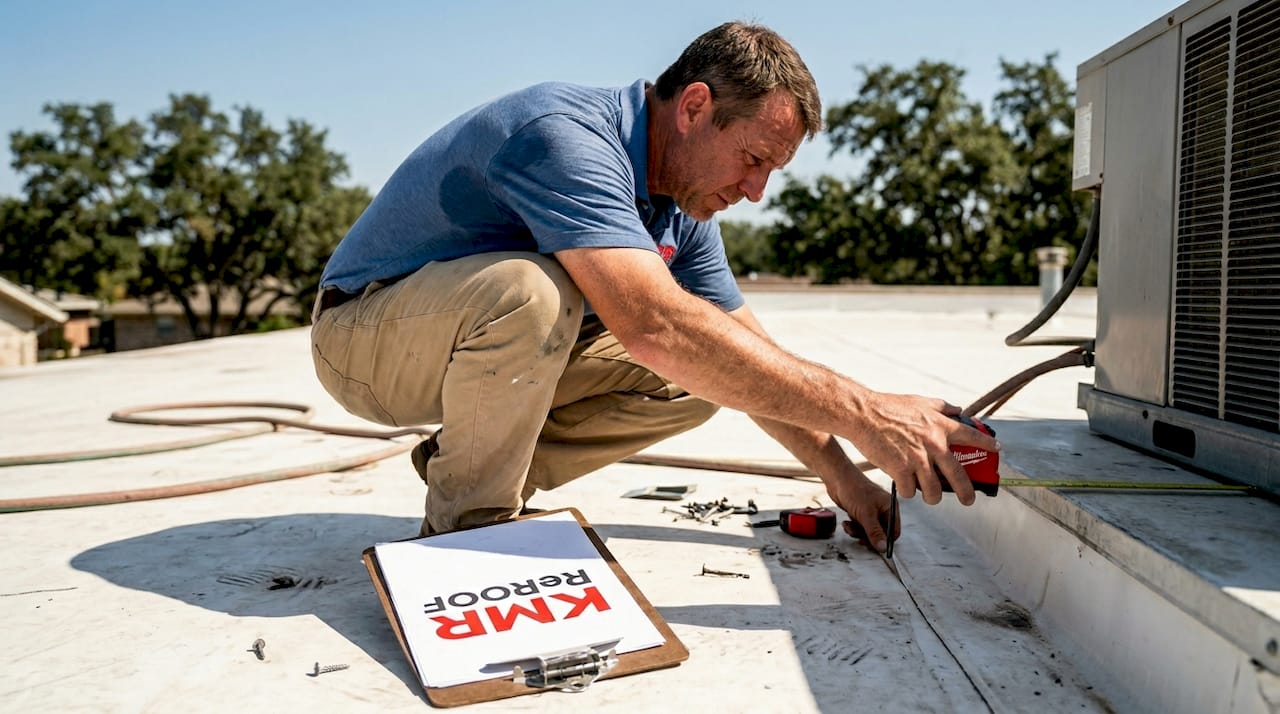
After a heavy Texas storm rolls through El Campo, the last thing you want is standing water on your flat roof slowly working its way into your ceiling. Flat roofs are practical and cost-effective, but they take a serious beating from South Texas weather. UV radiation, hail, high winds, and intense summer heat all wear down roofing materials faster than most homeowners expect. This guide walks you through everything you need to know about flat roof replacement in El Campo, from understanding why local weather demands specialized solutions to choosing the right materials, completing the installation correctly, and keeping your new roof performing for decades.
Table of Contents
- Why flat roofs in El Campo need special attention
- What you need before replacing a flat roof
- Step-by-step flat roof replacement in El Campo
- After your roof replacement: verification and maintenance
- What most roof replacement guides miss about Texas weather
- Get professional flat roof replacement in El Campo
- Frequently asked questions
Key Takeaways
| Point | Details |
|---|---|
| Texas-specific risks | El Campo’s storms and heat demand flat roofs with proper slope and resilient membranes. |
| Material selection | TPO membranes offer Texas owners the best mix of energy savings and climate durability. |
| Licensed pros matter | Hire licensed local contractors to ensure safety, code compliance, and insurance eligibility. |
| Maintenance is key | Ongoing inspection and upkeep are essential for long-lasting flat roof protection. |
| Step-by-step success | Proper planning, product choice, and professional installation secure your home investment. |
Why flat roofs in El Campo need special attention
El Campo sits in the heart of South Texas, where weather conditions are anything but gentle. Summers bring relentless UV exposure and temperatures that regularly push past 100°F, while spring and fall storm seasons deliver heavy rainfall, strong winds, and hail that can shred a weakened roofing membrane in minutes. Flat roofs face unique risks in this environment because they lack the natural drainage slope of pitched roofs, making them far more vulnerable to ponding water after storms.
UV radiation is one of the most underestimated threats. Over time, it breaks down roofing membranes, causes cracking and blistering, and reduces the material’s ability to seal out moisture. When you add extreme heat cycling, where the roof surface can swing from 140°F on a summer afternoon to 40°F on a winter night, the expansion and contraction stress on the membrane becomes significant. Seams and flashings are the first places to fail.
Wind uplift is another serious concern. Flat roofs have a large surface area exposed to wind, and if the membrane is not properly fastened or adhered, high winds can peel it back. This is especially true around roof edges and penetrations like HVAC units and vents.
The benefits of flat roofs in Texas are real, but only when the roof is designed and installed to handle these specific challenges. That means using UV-resistant materials, proper drainage design, and strong mechanical fastening systems.
UV-resistant, wind-uplift strong systems are essential for Texas weather, and RCAT recommends using licensed contractors who can also help homeowners qualify for insurance discounts on properly installed roofing systems.
Key threats El Campo flat roofs face include:
- UV degradation that cracks and dries out membranes within a few years on inferior materials
- Ponding water from heavy rainfall that adds structural load and accelerates membrane failure
- Hail impact that punctures or bruises roofing membranes, creating invisible leak points
- Wind uplift that lifts edges and seams, especially on older or improperly installed roofs
- Thermal cycling from extreme temperature swings that stress seams and flashings year-round
Making energy-efficient roofing choices from the start also reduces your cooling costs, which is a meaningful financial benefit given how hard your AC works in El Campo summers.
What you need before replacing a flat roof
Understanding the challenges is step one. Before any work begins, you need the right materials, tools, permits, and a clear picture of your existing roof’s condition. Skipping this preparation phase is one of the most common reasons flat roof replacements fail within a few years.
Slope and drainage requirements are non-negotiable. Flat roofs require 1/4 to 1/2 inch per foot of slope for proper drainage, which is critical in Texas where heavy rain events can drop several inches of water in just a few hours. If your current roof lacks adequate slope, tapered insulation panels can be installed to create the necessary pitch without rebuilding the entire deck structure.
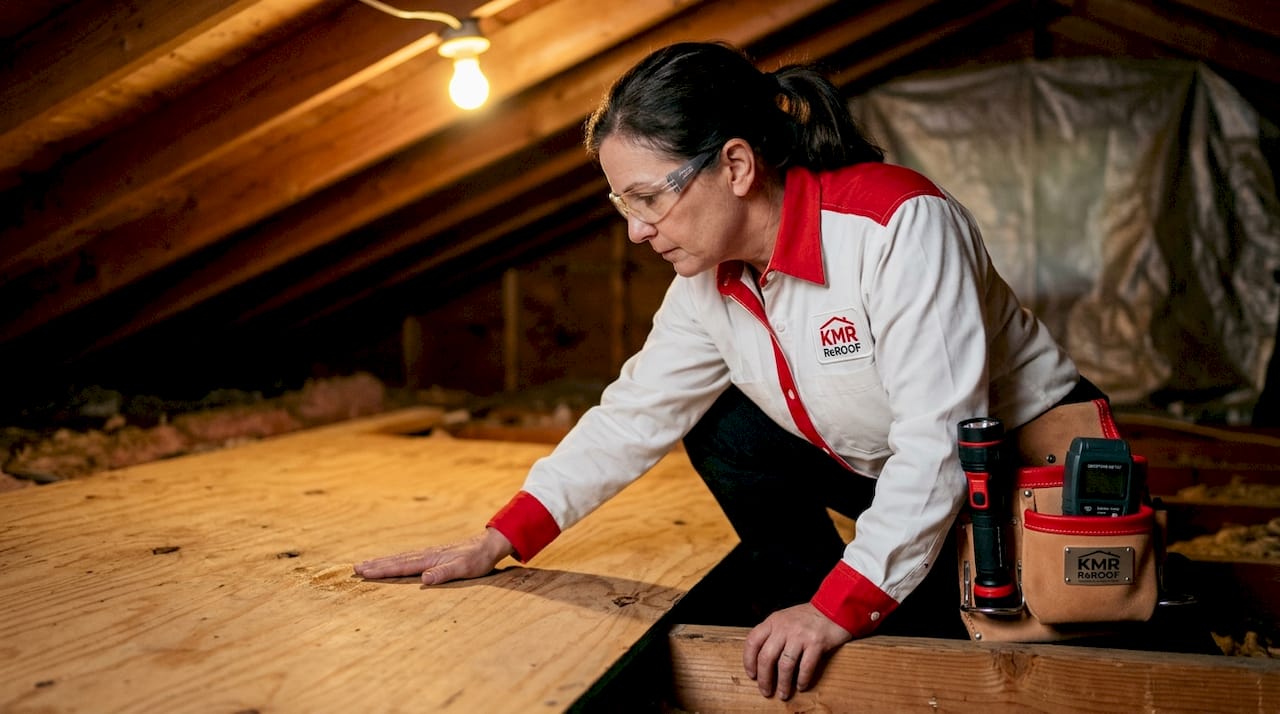
Deck assessment comes next. The roof deck, usually plywood or oriented strand board (OSB), must be solid and dry before any new membrane goes down. Soft spots, rot, or delamination need to be cut out and replaced. Installing a new membrane over a compromised deck is like putting a fresh coat of paint over rotted wood. It looks fine for a while, then fails completely.
Here is a quick overview of what you need to gather before starting:
| Item | Purpose | Notes |
|---|---|---|
| Roofing membrane (TPO or EPDM) | Primary waterproofing layer | Size based on roof square footage |
| Tapered insulation panels | Create drainage slope | Required if slope is insufficient |
| Roof deck fasteners | Secure membrane mechanically | Match to deck material type |
| Flashing materials | Seal edges, vents, and penetrations | Metal or membrane-compatible type |
| Roofing adhesive or heat welder | Bond membrane seams | Depends on membrane type |
| Building permit | Code compliance | Required in El Campo |
| Licensed roofing contractor | Installation and warranty | Verify RCAT or state license |
Permit requirements vary by municipality, but El Campo generally requires a permit for full roof replacement. Your contractor should pull this permit before work begins. If they suggest skipping it, that is a red flag.
Pro Tip: Before signing any contract, ask your contractor to show you their state license and proof of liability insurance. A licensed contractor not only ensures code-compliant work but can also help you pursue insurance discounts through your homeowner’s policy.
Reviewing your roof durability options before committing to a material is worth the time. The right membrane for your specific situation depends on your budget, roof use, and exposure to chemicals or foot traffic.
Step-by-step flat roof replacement in El Campo
Now that you’re equipped and prepared, here’s exactly how to carry out a modern, code-compliant flat roof replacement in El Campo’s climate.
1. Remove the old roofing material. Strip the existing membrane, insulation, and any deteriorated layers down to the roof deck. Dispose of old materials properly. This is also your opportunity to inspect every square foot of the deck for soft spots, water staining, or structural damage.
2. Repair and prepare the deck. Replace any damaged deck sections with matching plywood or OSB. Allow everything to dry completely before proceeding. Moisture trapped under a new membrane is a guaranteed future leak.
3. Install tapered insulation for slope. If your deck does not already have the required 1/4 inch per foot slope, install tapered polyisocyanurate (polyiso) insulation panels. These panels are cut to create a gentle pitch toward your drains or scuppers, ensuring water moves off the roof instead of pooling.
4. Install the underlayment or cover board. A cover board, typically high-density polyiso or a fiberglass mat, goes over the insulation to provide a smooth, firm surface for the membrane. This step protects the insulation and improves membrane adhesion.
5. Choose and install your membrane. This is the most critical decision in the process. Here is how the two most common options compare for El Campo conditions:
| Feature | TPO | EPDM |
|---|---|---|
| UV resistance | Excellent | Good |
| Energy efficiency | High (reflects heat) | Moderate (absorbs heat) |
| Lifespan in Texas heat | 20 to 25 years | 15 to 20 years |
| Cost | Moderate to high | Lower upfront |
| Best use case | South Texas heat and sun | Budget projects, chemical exposure |
| Seam method | Heat welded | Adhesive or tape |
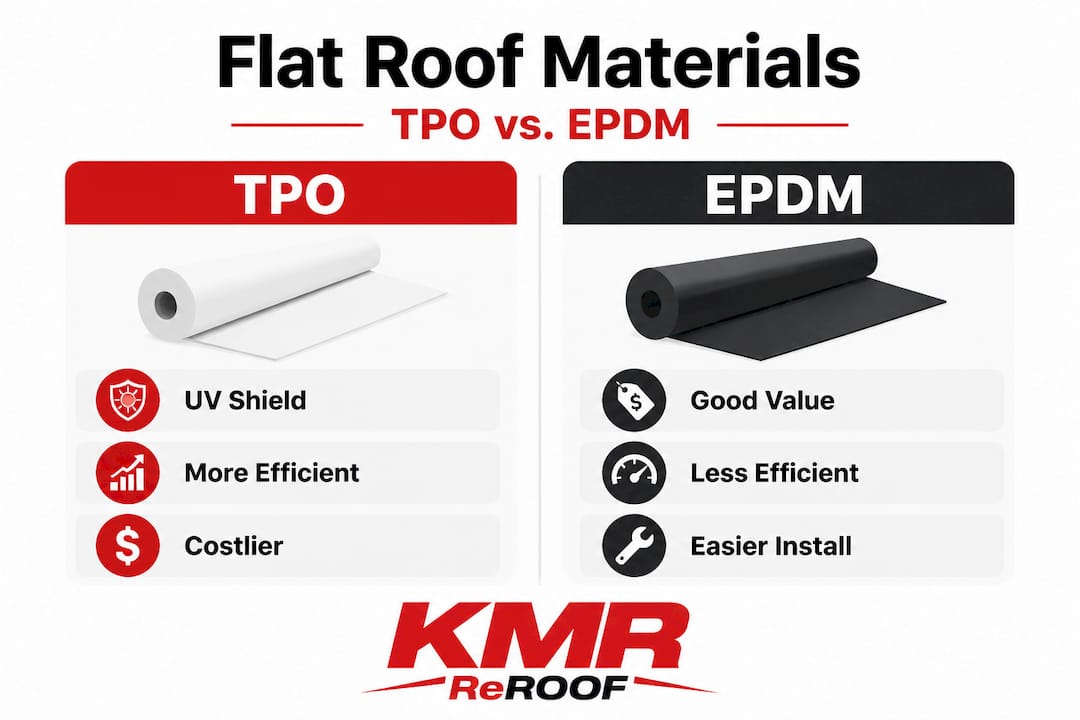
TPO over EPDM in South Texas is the smarter long-term choice because its energy savings offset the slightly higher upfront cost, while EPDM remains a solid option for tighter budgets or roofs with chemical exposure from nearby equipment.
6. Secure the membrane. TPO membranes are typically mechanically fastened at the edges and seams, then heat welded to create a continuous waterproof layer. EPDM uses adhesive bonding. Pay extra attention to seams, corners, and any penetrations.
7. Install flashing at all edges and penetrations. Flashing seals the transition between the membrane and walls, curbs, vents, HVAC units, and drains. This is where most leaks originate on improperly installed roofs. Use compatible flashing materials and follow manufacturer specifications exactly.
8. Test for leaks before finishing. Use a water test or electronic leak detection to verify every seam and penetration is sealed. Catching a problem now costs almost nothing. Catching it after the ceiling is stained costs a lot more.
Pro Tip: Pay close attention to roof inspection signs during your tear-off phase. Blistering, delamination, or soft spots in the old membrane tell you exactly where your old roof was failing and help you make smarter decisions about the new installation.
For homeowners who want the best performance in El Campo’s heat, TPO roof replacement by a certified contractor is consistently the top recommendation.
Choose materials and installation methods based on your specific climate, not just the lowest bid. In El Campo, that almost always means a heat-welded TPO membrane with proper slope and quality flashing.
After your roof replacement: verification and maintenance
With the roof in place, the final step is ensuring it protects your home for years to come. A new flat roof is only as good as its ongoing maintenance, and in Texas, that means staying proactive rather than reactive.
Immediate post-installation checks should happen before your contractor leaves the job site. Walk the entire roof and look for:
- Wrinkles or bubbles in the membrane that indicate poor adhesion
- Flashing that is not fully sealed at edges and penetrations
- Drains and scuppers that are clear and properly connected to the membrane
- Any visible gaps, exposed fasteners, or lifted seam edges
- Proper slope toward all drainage points with no low spots
Leak testing is essential. Ask your contractor to perform a flood test or electronic leak detection as part of the final inspection. Do not accept a completed job without this step. A licensed contractor will stand behind their work with a documented inspection.
Your maintenance schedule should include at minimum:
- A visual inspection every six months, especially after major storms
- Clearing all drains and scuppers of debris before storm season
- Checking flashings around HVAC units, vents, and walls annually
- Documenting any surface changes like cracks, blistering, or discoloration
Pro Tip: Set a calendar reminder for a post-storm roof check every spring and fall. Catching a small seam separation or a clogged drain early prevents the kind of water damage that turns a minor repair into a major expense.
Warranty registration is a step many homeowners forget. Most membrane manufacturers offer 20 to 30-year warranties, but only if the roof is installed by a certified contractor and the warranty is registered within a specific timeframe after installation. Keep all documentation, including the installation date, contractor license number, and material specifications.
If you ever notice signs of trouble between scheduled inspections, contact roof repair experts before a small issue becomes a structural problem. Use a roof inspection checklist to guide your own visual checks between professional visits.
What most roof replacement guides miss about Texas weather
Most flat roof guides are written for a national audience, which means they are written for nobody in particular. They cover the basics of membrane installation and drainage slope, but they completely miss the realities of replacing a flat roof in South Texas.
Here is what those guides never tell you. El Campo does not just have heat. It has sustained heat, where roof surface temperatures stay above 120°F for weeks at a time. That kind of prolonged thermal stress destroys adhesive bonds and accelerates membrane aging in ways that cooler climates simply do not experience. A product rated for 25 years in the Northeast might give you 15 years here if it is not specifically rated for high UV and thermal cycling.
The other thing generic guides miss is the rain pattern. El Campo can go weeks without rain and then receive several inches in a single afternoon. That kind of extreme swing means your drainage system has to be designed for peak flow, not average flow. A drain that handles normal rainfall will back up and create ponding during a heavy storm event, even on a properly sloped roof.
We have also seen homeowners get burned by choosing a contractor based on price alone. In Texas, roofing codes and insurance requirements are specific, and a contractor who does not know local standards can leave you with a roof that fails inspection or voids your homeowner’s insurance coverage. Working with a contractor who knows Texas flat roof benefits and local code requirements is not optional. It is the difference between a roof that lasts 25 years and one that needs major repairs in five.
The most durable flat roofs we have seen are not always the most expensive installations. They are the ones with proper slope, quality flashings, and a homeowner who actually follows through on maintenance. Good installation sets the foundation, but consistent care is what makes a flat roof last in this climate.
Get professional flat roof replacement in El Campo
Replacing a flat roof in El Campo is not a weekend project. It requires the right materials, proper slope design, code-compliant installation, and a contractor who understands South Texas weather conditions. Getting any one of those elements wrong can mean leaks, voided warranties, and costly repairs within just a few years.
Mister ReRoof specializes in flat roof replacement in El Campo, bringing local expertise and certified installation to every project. From assessing your existing deck to installing a heat-welded TPO flat roof built for Texas heat, our team handles the entire process with attention to detail and a commitment to lasting performance. We know the local codes, the climate demands, and the materials that hold up year after year in this region. Contact Mister ReRoof today to schedule your free site inspection and get a no-obligation estimate for your flat roof replacement.
Frequently asked questions
How long does a flat roof last in El Campo’s climate?
With proper installation and maintenance, TPO and EPDM flat roofs in El Campo typically last 20 to 30 years, though TPO tends to perform better in sustained South Texas heat.
Does my flat roof need to be replaced, or can it be repaired?
If you see extensive leaks, ponding, or blistering, replacement is safer than repairs for lasting protection. Widespread damage signs like multiple leak points or membrane delamination indicate the system has reached the end of its useful life.
What is the required slope for a flat roof in Texas?
Texas code requires a slope of at least 1/4 inch per foot for proper drainage on flat roofs, which is especially critical given El Campo’s heavy storm rainfall.
Can I get insurance discounts for roof replacement?
You may qualify for insurance discounts if a licensed contractor installs a wind-resistant, UV-proof flat roof that meets state standards and code requirements.
What’s the best material for a flat roof in El Campo?
TPO offers energy savings and UV resistance that make it the top choice for Texas heat, while EPDM suits tighter budgets or roofs with chemical exposure from nearby equipment.
Recommended
- Flat Roof Replacement El Campo, TX | Mister ReRoof
- Fix a Roof Leak in El Campo: Step-by-Step Guide
- Shingle Roof Replacement El Campo TX | Mister ReRoof
- Roof Replacement in El Campo, TX | Mister ReRoof
- Texas homeowner’s checklist: smart tips for choosing contractors | BidWolf Blog
- Why Inspect Roof Before Selling: Complete Guide