Most American property owners in Houston know that severe storms and scorching sun can put flat roofing to the test. With more than 70 percent of commercial roofs in North America using time-tested systems, the search for durability and value is more important than ever. Houston homeowners and managers want options that stand up to harsh weather while increasing property worth. This guide breaks down reliable flat roofing choices designed to keep your investment safe through every season.
Table of Contents
- 1. Built-Up Roofing: Classic Durability for Flat Roofs
- 2. Modified Bitumen: Flexible and Weather-Resistant
- 3. TPO Roofing: Energy Efficient and Cost-Effective
- 4. EPDM Roofing: Reliable and Easy to Maintain
- 5. PVC Roofing: Strong Protection From Tough Weather
- 6. Spray-On Roof Coatings: Seamless and Quick Application
- 7. Maintaining Flat Roofs for Maximum Longevity
Quick Summary
| Key Message | Explanation |
|---|---|
| 1. Choose Built-Up Roofing for Longevity | Built-up roofing offers excellent durability and resilience with its multi-layer design, ideal for Houston’s flat roofs and extreme weather conditions. |
| 2. Explore Modified Bitumen for Flexibility | Modified bitumen’s polymer enhancements provide superior performance, making it adaptable to temperature changes while offering a service life of 20-30 years. |
| 3. Consider TPO Roofing for Energy Efficiency | TPO roofing’s heat-reflective surface lowers cooling costs, making it a cost-effective choice for owners facing high summer temperatures. |
| 4. Use EPDM for Low Maintenance Needs | EPDM roofing’s outstanding flexibility and weather resistance reduce maintenance requirements, providing a dependable option for flat roofs. |
| 5. Adopt Spray-On Roof Coatings for Quick Upgrades | Spray-on roof coatings enhance existing roofs rapidly, extending their lifespan by up to 25 years while improving energy efficiency. |
1. Built-Up Roofing: Classic Durability for Flat Roofs
Built-up roofing (BUR) represents a time-tested solution for Houston properties seeking robust flat roof protection. This classic roofing system has been a staple in North American construction for over a century, delivering exceptional durability through its innovative multi-layer design.
The BUR system consists of alternating layers of asphalt and fiberglass ply felts, creating a seamless, water-resistant membrane that can withstand Houston’s challenging weather conditions. These multi-ply roofing systems offer exceptional thermal performance, providing significant energy efficiency benefits for property owners.
Unlike single-membrane roofing options, built-up roofing provides redundant protection through its multiple layers. Typically constructed with three or four plies, these roofs create a continuous barrier that resists water infiltration, UV damage, and wind uplift. The system meets stringent ASTM D312 specifications, ensuring high-quality performance and reliability.
Houston property owners appreciate BUR systems for their proven track record of longevity and resilience. The continuous adhesion between layers creates a monolithic structure with fewer potential points of failure, making it an ideal choice for flat roof applications in areas prone to intense sunlight and occasional severe storms.
Pro tip: Consider adding a reflective coating to your built-up roof to enhance its cool roofing properties and further reduce energy costs.
2. Modified Bitumen: Flexible and Weather-Resistant
Modified bitumen roofing offers Houston property owners a sophisticated and resilient solution for flat roof protection. This advanced roofing technology transforms traditional asphalt by incorporating polymer modifications that dramatically enhance its performance and durability.
Self-adhesive modified bituminous membranes combine proven performance with simplified installation, making them an attractive option for commercial and residential properties. By chemically altering asphalt with polymers like styrene-butadiene-styrene (SBS), manufacturers create a roofing material that can withstand extreme temperature variations and resist environmental stress.
The remarkable flexibility of modified bitumen allows it to expand and contract without compromising structural integrity. This characteristic is particularly valuable in Houston’s dynamic climate, where temperatures can fluctuate dramatically between scorching summers and occasional cold fronts. With a typical service life of 20 to 30 years, these roofing systems provide long-term protection and value.
Property owners can choose from multiple installation methods, including hot mopping, torch down, and cold process application. Each technique offers unique advantages, allowing for customization based on specific property requirements. Adding reflective coatings can further enhance the roof’s performance by reducing cooling costs and improving energy efficiency.
Pro tip: Ensure proper substrate preparation and professional installation to maximize the longevity and performance of your modified bitumen roofing system.
3. TPO Roofing: Energy Efficient and Cost-Effective
Thermoplastic Polyolefin (TPO) roofing represents a cutting-edge solution for Houston property owners seeking an intelligent balance between performance and affordability. This innovative roofing technology delivers remarkable energy efficiency and long-term value for residential and commercial properties.
TPO roofing membranes provide exceptional durability and cost-effectiveness across diverse climate conditions. Typically available in membrane thicknesses ranging from 45 to 80 mils, these single-ply roofing systems feature woven polyester reinforcement that ensures superior mechanical strength and weather resistance.
One of TPO roofing’s most compelling advantages is its heat reflective surface, which actively reduces solar heat absorption. This unique characteristic translates directly into lower cooling costs for Houston property owners, who face intense summer temperatures. The roofing’s advanced composition allows it to withstand significant temperature fluctuations while maintaining structural integrity.
From an economic perspective, TPO roofing represents an attractive investment. Residential installations generally cost between $5 to $6 per square foot, including materials and labor. When compared to alternative roofing membranes like EPDM and PVC, TPO offers an optimal combination of performance, longevity, and affordability.
Pro tip: Consider selecting lighter colored TPO membranes to maximize heat reflection and further improve your property’s energy efficiency.
4. EPDM Roofing: Reliable and Easy to Maintain
EPDM roofing offers Houston property owners a robust and dependable solution for flat roof protection that combines exceptional durability with straightforward maintenance. This synthetic rubber membrane has become a go-to choice for buildings seeking long-lasting weather resistance.
EPDM roofing provides outstanding flexibility and performance in diverse climate conditions, making it particularly well-suited for Houston’s challenging weather patterns. Composed of ethylene propylene diene monomer, this synthetic rubber membrane comes in black, gray, and white varieties, allowing property owners to select an option that best suits their aesthetic and thermal performance needs.
The installation versatility of EPDM roofing is a significant advantage for property managers. It can be implemented through three primary methods: mechanical attachment, full adherence, or ballasting. Larger sheet sizes minimize seam points, which dramatically reduces potential leak vulnerabilities. Most EPDM membranes boast an impressive service life of 20 to 30 years when properly maintained.
Weather resistance stands out as one of EPDM’s most compelling attributes. The material demonstrates remarkable resilience against heat, ozone exposure, and ultraviolet radiation. Its elastic nature allows it to expand and contract with temperature fluctuations without compromising structural integrity, an essential quality for Houston’s dynamic climate.
Pro tip: Schedule annual roof inspections to check seams, penetrations, and flashings, ensuring your EPDM roof maintains its optimal performance and extends its service life.
5. PVC Roofing: Strong Protection From Tough Weather
PVC roofing represents a sophisticated solution for Houston property owners seeking superior protection against extreme weather conditions. This advanced roofing technology provides an unparalleled combination of durability, energy efficiency, and long-term performance.
PVC membrane roofing offers remarkable resistance to environmental challenges through its innovative thermoplastic design. The white or light-colored membranes are engineered to reflect substantial amounts of solar radiation, which significantly reduces roof surface temperatures and lowers building cooling expenses.
The unique heat-weldable nature of PVC membranes creates continuous, watertight seams that effectively prevent leaks and moisture penetration. This characteristic makes PVC particularly well-suited for Houston’s unpredictable climate, where sudden storms and intense heat can challenge traditional roofing materials. Most PVC roofing systems boast an impressive service life exceeding 30 years when professionally installed and maintained.
PVC roofing’s versatility allows for multiple installation methods, including mechanical attachment, full adherence, and ballasting. Its lightweight composition combined with exceptional durability makes it an attractive option for both commercial and residential properties. Additionally, many PVC roofing products support environmental sustainability through pre and post-consumer recycling efforts.
Pro tip: Select light-colored PVC membranes to maximize solar reflection and optimize your property’s energy efficiency during Houston’s intense summer months.
6. Spray-On Roof Coatings: Seamless and Quick Application
Spray-on roof coatings offer Houston property owners an innovative solution for protecting and extending the life of their existing roofing systems. These advanced fluid-applied membranes provide a seamless protective layer that can dramatically improve a roof’s performance and durability.
Roof coatings deliver remarkable protection against multiple environmental challenges, creating an elastomeric barrier that can stretch and adapt to temperature changes. These specialized coatings are particularly valuable in Houston’s demanding climate, offering resistance to sun exposure, heavy rainfall, hail, and physical damage.
The application process for spray-on roof coatings is remarkably efficient, allowing property owners to enhance their roof’s performance without complete replacement. These coatings can lower roof surface temperatures significantly, which translates directly into reduced energy costs and improved building comfort. Most spray-on coatings have the potential to extend a roof’s serviceable life by up to 25 years, providing an excellent return on investment.
Elastomeric roof coatings work by creating a continuous, fluid-applied membrane that seals existing roof surfaces. They are particularly effective for low-slope commercial and residential buildings, offering a sustainable alternative to traditional roof replacement. The ability to reduce heat absorption while providing comprehensive protection makes these coatings an intelligent choice for energy-conscious property owners.
Pro tip: Consult a professional roofing contractor to determine the most appropriate coating for your specific roof type and existing surface material.
7. Maintaining Flat Roofs for Maximum Longevity
Maintaining a flat roof in Houston requires strategic care and consistent attention to prevent costly damage and extend the roof’s serviceable life. Proactive maintenance is the key to protecting your property investment and avoiding premature roof replacement.
Routine inspections are critical for identifying potential issues before they escalate into expensive repairs. Flat roofs face unique challenges in Houston’s dynamic climate, including intense sunlight, occasional severe storms, and high humidity that can accelerate material degradation.
Effective maintenance involves several key practices. Regularly clearing debris from roof surfaces and drainage systems prevents water accumulation and potential structural damage. Property owners should pay close attention to seams, flashings, and membrane conditions, addressing any signs of wear or damage immediately. Minimizing unnecessary foot traffic and ensuring proper insulation can significantly reduce wear and tear.
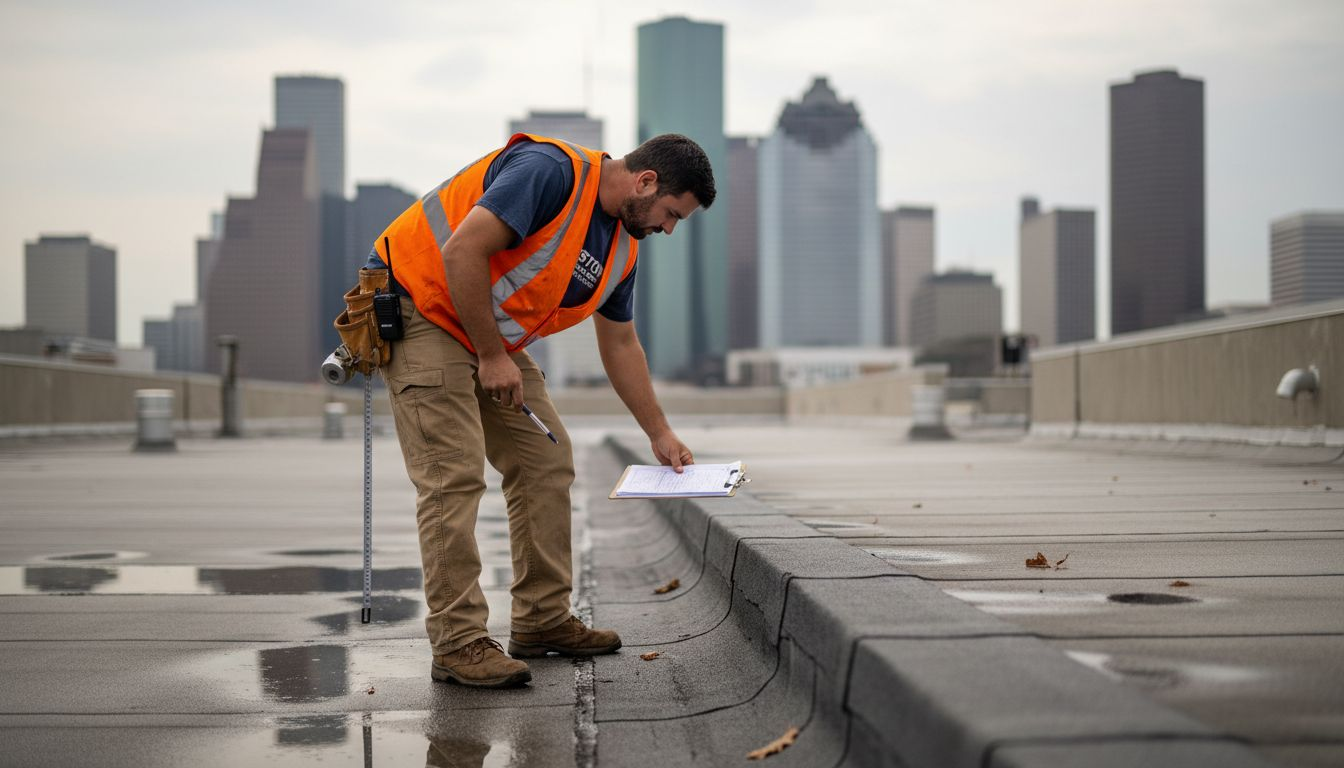
Seasonal maintenance is particularly important in Houston. Before hurricane season, conduct thorough inspections to ensure your roof can withstand potential extreme weather events. During summer, check for signs of heat damage or membrane deterioration. Proper drainage is crucial to prevent ponding water that can compromise roof integrity and lead to leaks.
Pro tip: Schedule professional roof inspections twice annually to catch and address potential issues before they become major problems, potentially saving thousands in repair costs.
Below is a comprehensive table summarizing the main types of flat roofing systems, their characteristics, and benefits as discussed in the article.
| Roofing Type | Description | Key Benefits |
|---|---|---|
| Built-Up Roofing (BUR) | Features alternating layers of asphalt and fiberglass with ASTM specified standards. | Provides durability, water resistance, and protection against various weather conditions. |
| Modified Bitumen | Incorporates polymers into asphalt for enhanced flexibility and weather resistance, and offers multiple installation methods. | Resistant to temperature fluctuations, suitable for diverse climates, with a lifespan of 20-30 years. |
| TPO Roofing | Uses a heat-reflective single-ply membrane available in various thicknesses. | Energy-efficient, cost-effective, and durable against Houston’s extreme heat and weather. |
| EPDM Roofing | A synthetic rubber membrane known for its flexibility and adaptability to climate changes. | Easy to maintain, weather-resistant, and offers a long lifespan with fewer seam vulnerabilities. |
| PVC Roofing | Provides strong protection and energy efficiency with its advanced thermoplastic properties. | Features heat-weldable seams, resistance to severe weather, and sustainability through recycling. |
| Spray-On Coatings | Applied as a liquid to create a seamless protective barrier over existing rooftops. | Efficient to apply, extends roof lifespan, lowers heat absorption, and adapts to weather conditions. |
| Maintenance Practices | Outlines strategies for flat roof care through consistent inspections and debris clearing. | Prevents damage, extends roof lifespan, and saves costs with frequent professional evaluations. |
Expert Flat Roofing Solutions Tailored for Houston Weather
Choosing the right flat roofing system is crucial for protecting your Houston property against intense sun, heavy storms, and temperature swings. This article highlights common challenges like water infiltration and energy efficiency that every property owner faces. At Mister ReRoof, we understand these pain points and specialize in durable, weather-resistant flat roofing options including built-up roofing, TPO, EPDM, and modified bitumen. Our expert team ensures your roof not only lasts but also reduces energy costs through reflective coatings and high-quality materials.
Don’t wait until damage affects your property or energy bills soar. Visit Mister ReRoof today and get a free estimate from Houston’s trusted roofing professional. Whether you need installation, maintenance, or expert advice on selecting the perfect roofing system, our commitment to customer satisfaction means you get reliable craftsmanship and peace of mind. Act now to secure a strong, long-lasting roof designed for Houston’s unique climate.
Frequently Asked Questions
What are the advantages of built-up roofing for flat roofs in Houston?
Built-up roofing (BUR) provides exceptional durability and redundancy with its multi-layer design, making it ideal for flat roofs in Houston. To maximize its benefits, consider adding a reflective coating for improved energy efficiency and reduced cooling costs.
How does modified bitumen roofing perform in extreme temperature conditions?
Modified bitumen roofing offers remarkable flexibility and durability, allowing it to expand and contract with temperature fluctuations without damage. For optimal longevity, ensure proper installation and substrate preparation before applying the roofing system.
What is the cost range for installing TPO roofing on Houston properties?
TPO roofing installations generally range from $5 to $6 per square foot, including materials and labor. Evaluate your property’s needs to determine if TPO’s energy-efficient and cost-effective options align with your budget.
How often should I inspect my flat roof for maintenance?
It’s advisable to conduct professional roof inspections at least twice a year to identify potential issues early. By regularly checking seams, flashings, and membranes, you can prevent minor problems from escalating into costly repairs.
What are the key benefits of using PVC roofing for flat roofs?
PVC roofing provides excellent resistance to extreme weather conditions and boasts a long service life of over 30 years when properly installed. Choose light-colored PVC membranes to maximize solar reflection and improve energy efficiency during hot months.
How do spray-on roof coatings extend the life of existing roofing systems?
Spray-on roof coatings create a seamless elastomeric barrier that protects existing roofs from weather-related damage. Consider applying a spray-on coating to your roof to potentially extend its service life by up to 25 years.
