Over 65 percent of American property owners admit uncertainty about when or how to replace their flat roof. Keeping your building protected depends on more than just quick repairs. Ignoring small problems can turn into expensive headaches as Houston’s unpredictable storms and harsh sun take a toll. This guide offers practical steps to help you confidently assess, prepare, and install your new flat roof while making choices that suit the unique challenges faced by American homeowners.
Table of Contents
- Step 1: Assess Existing Roof And Identify Damage
- Step 2: Choose Materials Suited For Houston Weather
- Step 3: Prepare Roof Surface And Ensure Safety
- Step 4: Install New Flat Roofing System
- Step 5: Inspect Work And Verify Quality
Quick Summary
| Key Takeaway | Explanation |
|---|---|
| 1. Inspect Roof Regularly | Conduct thorough inspections at least twice a year and after storms to catch damage early and prevent costly repairs. |
| 2. Choose Durable Materials | Select roofing materials like TPO or EPDM that withstand Houston’s extreme weather, ensuring longevity and efficiency. |
| 3. Ensure Safety Measures | Implement safety protocols and proper equipment usage when preparing the roof to prevent accidents and injuries. |
| 4. Focus on Proper Installation | Adhere to manufacturer guidelines during installation to guarantee effective roofing performance and water resistance. |
| 5. Complete Final Inspections | Conduct a thorough final review of all installed components to confirm quality and identify necessary maintenance. |
Step 1: Assess Existing Roof and Identify Damage
Assessing your flat roof’s condition is the critical first step in determining whether replacement is necessary. A thorough inspection helps you understand the extent of damage and potential repair needs before investing in a full roof replacement.
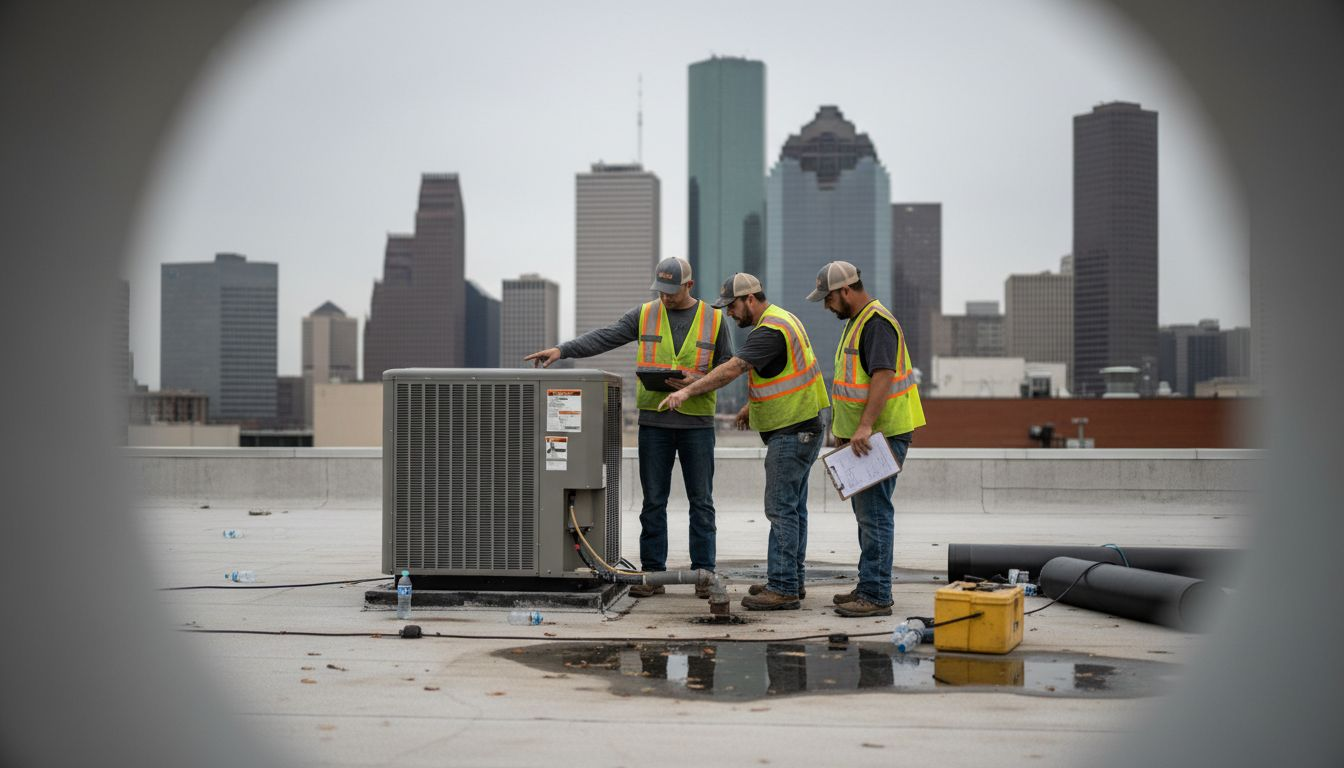
Begin by conducting a comprehensive external examination, looking for key indicators of roof deterioration. Systematic inspections as recommended by the General Services Administration suggest examining multiple aspects including roof surfaces, drainage systems, and structural integrity. Pay close attention to settlement cracks, displaced flashings, stained walls, and areas with standing water. Check around roof penetrations like vents and skylights for signs of material breakdown or moisture intrusion.
For a more detailed assessment, consider using non invasive techniques such as infrared thermography. Advanced moisture surveys can detect hidden problems not visible during standard visual inspections. Look for signs of membrane damage, rotted boards, blocked drains, and areas where water pools instead of draining properly. Document each issue with photographs and detailed notes to help determine whether spot repairs or full replacement makes the most sense.
Pro Tip: Schedule professional inspections at least twice annually and immediately after severe Houston storms to catch potential roof issues before they become expensive problems.
Step 2: Choose Materials Suited for Houston Weather
Selecting the right roofing materials for Houston’s challenging climate requires careful consideration of local weather conditions and specific performance requirements. Your choice will directly impact the durability, energy efficiency, and long term protection of your property.
Houston experiences extreme heat, intense UV exposure, frequent storms, and high humidity, which means your flat roof materials must be exceptionally resilient. Flat roof replacement options like TPO roofing provide excellent protection for these demanding environmental conditions. Consider materials with high reflectivity to reduce heat absorption, strong waterproofing capabilities, and resistance to thermal expansion and contraction. Thermoplastic polyolefin (TPO) and ethylene propylene diene monomer (EPDM) membranes are particularly effective for Houston properties, offering superior UV resistance and flexibility during temperature fluctuations.
When evaluating materials, prioritize options with proven performance in high temperature and hurricane prone regions. Look for products with manufacturer warranties that specifically address severe weather conditions, and consider additional protective coatings that can enhance your roof’s resilience. White or light colored membranes can significantly reduce cooling costs by reflecting solar radiation and maintaining lower surface temperatures.
Here is a comparison of common flat roofing materials for Houston climates:
| Material | UV Resistance | Waterproofing | Lifespan |
|---|---|---|---|
| TPO | Excellent | Superior | 20+ years |
| EPDM | Very good | High | 15-25 years |
| Modified Bitumen | Moderate | Good | 10-20 years |
| Built-Up Roof (BUR) | Fair | Excellent | 15-30 years |
Pro Tip: Always consult with a local roofing professional who understands Houston’s unique weather challenges to get personalized material recommendations tailored to your specific property and budget.
Step 3: Prepare Roof Surface and Ensure Safety
Preparing your flat roof surface is a critical step that requires meticulous attention to detail and strict safety protocols. Your goal is to create a clean, stable foundation that will support the new roofing materials and ensure a successful installation.
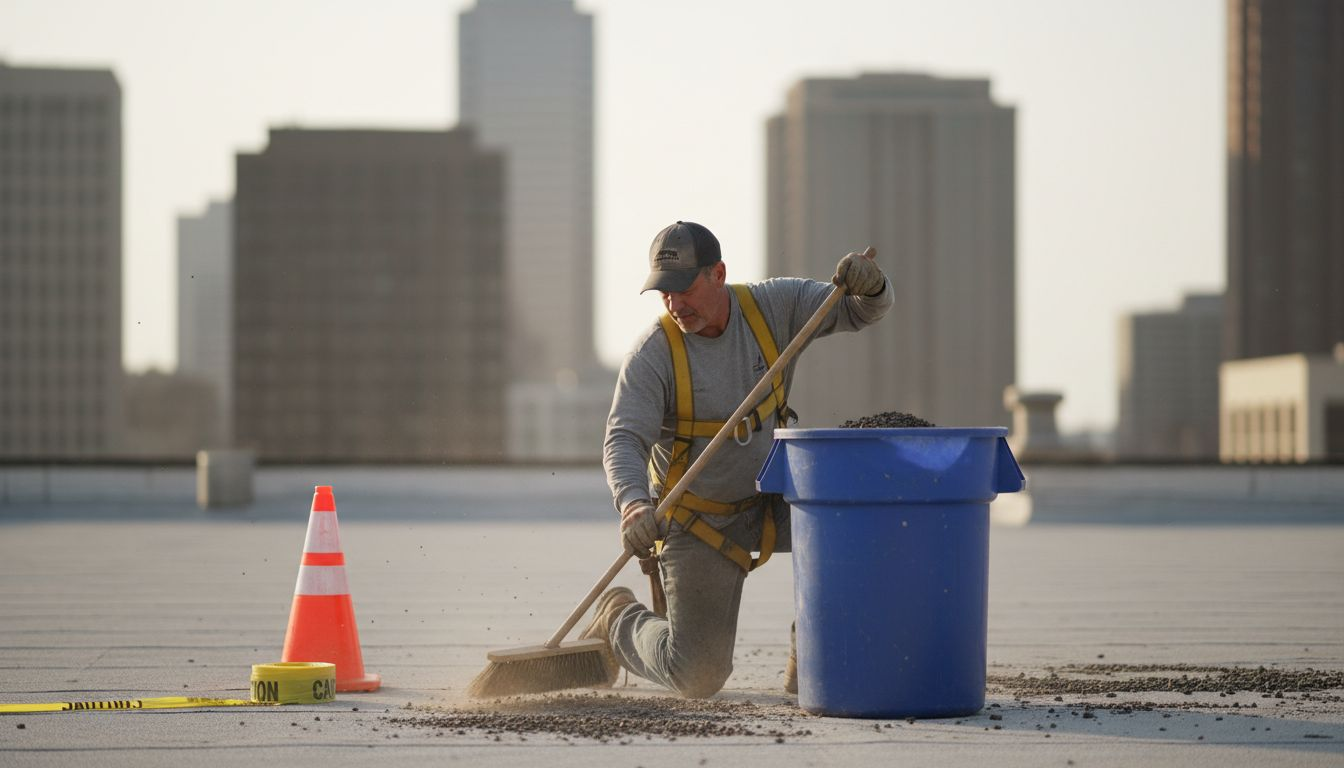
Comprehensive roof surface preparation involves thorough debris removal and structural assessment as recommended by federal guidelines. Begin by completely clearing the roof of any loose materials, vegetation, or accumulated debris. Inspect the existing surface for signs of structural weakness, water damage, or uneven areas that could compromise the new roofing system. Pay special attention to drainage points, ensuring they are clear and functional to prevent future water pooling.
Before starting any work, implement comprehensive safety measures. This includes using proper fall protection equipment, checking for electrical hazards, and ensuring stable access to the roof surface. Detailed inspections around roof penetrations are crucial for identifying potential safety risks and structural issues that might not be immediately visible. Use appropriate personal protective equipment, including non slip footwear, hard hats, and safety harnesses. Verify that all tools and materials are in good condition and that you have a clear understanding of the roof’s load bearing capacity.
Pro Tip: Create a detailed safety and preparation checklist before beginning work, and always have a partner or supervisor aware of your roofing project to ensure maximum safety and accountability.
Step 4: Install New Flat Roofing System
Installing a new flat roofing system requires precision, patience, and careful execution to ensure long lasting protection for your Houston property. This critical phase transforms your preparation work into a durable roofing solution that can withstand the region’s challenging weather conditions.
Flat roof replacement demands careful system selection and expert installation techniques to guarantee optimal performance. Begin by laying a robust base layer, typically using a high quality cover board or insulation material that provides a smooth, stable surface. Apply roofing adhesive or mechanically fasten the membrane according to manufacturer specifications, ensuring complete adhesion and eliminating potential air pockets. Pay special attention to seam welding and edge treatments, as these areas are most vulnerable to water infiltration and wind damage.
Carefully integrate all roof penetrations such as vents, skylights, and HVAC units by using specialized flashing techniques that create watertight seals. Apply multiple layers of waterproofing materials around these critical transition points, and use industry standard sealants to prevent potential moisture intrusion. Test the installation thoroughly by checking for uniform membrane attachment, smooth surface transitions, and proper drainage slopes that direct water away from the roof surface.
Pro Tip: Always perform a final moisture survey and infrared scan after installation to detect any hidden issues and validate the complete integrity of your new roofing system.
Step 5: Inspect Work and Verify Quality
Final inspection is a crucial phase that validates the success of your flat roof replacement and ensures your investment provides the protection and performance you expect. This comprehensive review will help you confirm that every aspect of the installation meets professional standards.
Detailed inspection protocols recommended by federal guidelines involve systematic evaluation of multiple roof components. Begin by carefully examining the entire roof surface for uniformity, checking that the membrane is smooth and free from bubbles, wrinkles, or uneven areas. Verify that all seams are properly welded, with consistent and complete adhesion. Pay special attention to critical transition zones around roof penetrations, ensuring that flashings are securely installed and sealed without any gaps or potential moisture entry points.
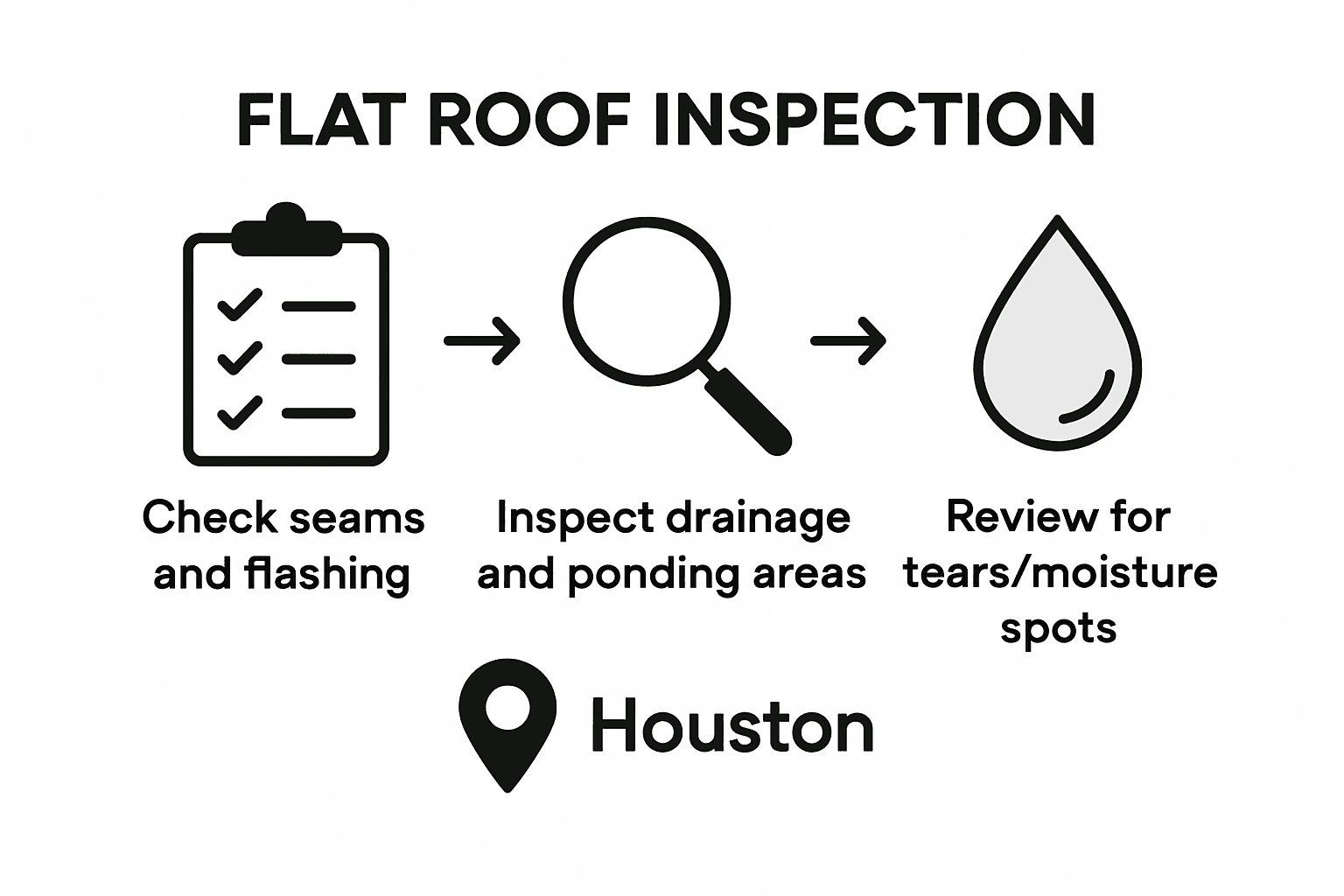
Conduct a comprehensive moisture survey using advanced techniques like infrared thermography to detect any hidden issues not visible during visual inspection. Post installation inspections help identify potential problems that could compromise the roof’s long term performance. Check drainage systems to confirm proper slope and water flow, test the structural integrity of penetration seals, and validate that all installation techniques align with manufacturer specifications. Document your findings thoroughly, taking photographs and noting any areas that might require additional attention or future monitoring.
Below is a summary of key inspection points during your final flat roof quality check:
| Area to Inspect | What to Look For | Importance |
|---|---|---|
| Membrane Surface | Smooth, bubble-free areas | Ensures integrity |
| Seams & Flashings | Secure, sealed transitions | Prevents leaks |
| Drainage Systems | Clear, proper water flow | Avoids ponding water |
| Penetrations | Tight, waterproof seals | Stops moisture entry |
Pro Tip: Request a final walkthrough with your roofing professional to review inspection results and discuss specific maintenance recommendations for your new flat roof system.
Protect Your Houston Property with Expert Flat Roof Replacement
Flat roof replacement in Houston demands expertise and durable solutions that stand up to extreme heat, UV exposure, and powerful storms. If you are facing issues like membrane damage, water pooling, or aging materials mentioned in our guide Flat Roof Replacement Guide for Houston Properties you need a local roofing expert who understands these unique challenges. Key concerns like material choice, meticulous surface preparation, and professional installation are critical to ensure your roof delivers long term protection and energy efficiency.
Trust Mister ReRoof for your flat roofing needs We specialize in high quality TPO and other flat roofing systems designed specifically to withstand Houston’s climate Our team follows comprehensive inspection and preparation protocols to catch hidden problems early and install roofs that last. Visit Mister ReRoof to explore how our experienced professionals can help with your flat roof replacement project.
Enhance your property’s safety and value now by scheduling a detailed roof assessment with us and securing a strong, storm-resistant roof.

Don’t wait for leaks or costly damage to disrupt your life Contact Mister ReRoof today at Mister ReRoof to get your free estimate and expert advice—step confidently toward a durable and energy-efficient flat roof tailored for Houston’s demands.
Frequently Asked Questions
How do I assess my flat roof for damage before replacement?
Begin by conducting a thorough external inspection of your flat roof, focusing on signs of deterioration like settlement cracks and standing water. Document any issues with photographs and detailed notes to determine whether repairs or a full replacement is necessary.
What materials are best for flat roof replacement in Houston?
Consider materials like TPO and EPDM membranes that offer high UV resistance and waterproofing capabilities, tailored to Houston’s extreme heat and humidity. Select materials with appropriate warranties that address severe weather to ensure your roof lasts long-term.
How should I prepare the roof surface before installing a new flat roofing system?
Clear the existing roof of all debris, ensuring a clean, stable foundation. Additionally, check for structural issues and implement necessary safety measures, such as using fall protection equipment, to guarantee a safe and effective installation process.
What steps are involved in the installation of a new flat roofing system?
The installation involves laying a robust base layer, applying the roofing membrane according to manufacturer specifications, and integrating flashings around roof penetrations. Follow a thorough process to ensure complete adhesion and proper drainage to prevent future problems.
Why is a final inspection important after roof replacement?
A final inspection validates the success of your flat roof replacement by checking for uniformity, proper sealing of seams, and functionality of drainage systems. Conduct this evaluation to ensure long-term performance and identify any areas that might need attention.
How often should I schedule professional inspections for my flat roof?
Schedule professional inspections at least twice a year and immediately after severe storms to catch potential issues early. Regular assessments will help maintain your roof’s integrity and prolong its lifespan by addressing concerns before they escalate.
