
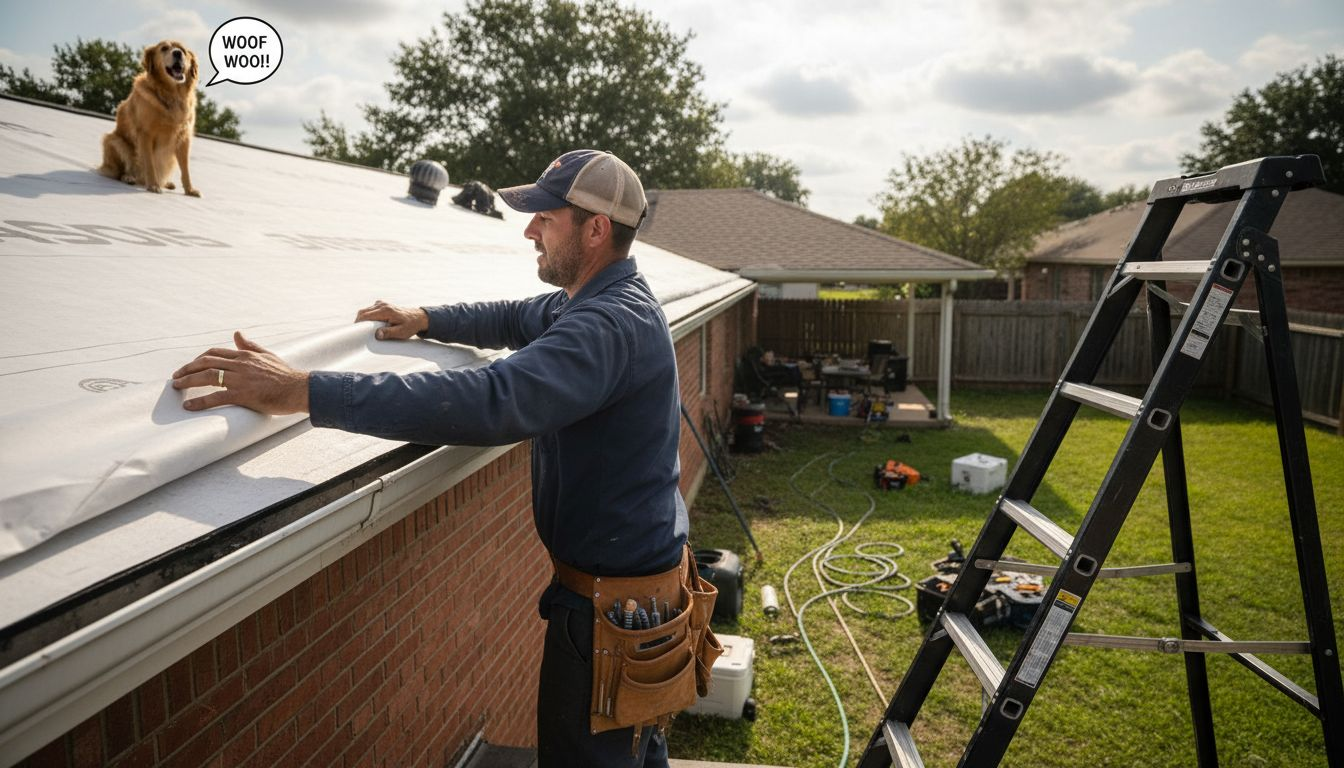
Heavy rain and powerful winds damage thousands of Houston roofs every year, leaving many American homeowners scrambling to find solutions that can withstand the local climate. Storms and high temperatures push roof materials to the limit, making durability and energy efficiency critical. With TPO roofing, homeowners discover a modern option designed for both heat deflection and tough storm resistance, offering practical benefits tailored to Houston’s challenging weather.
Table of Contents
- What Is TPO Roofing and How It Works
- Main Types and Installation Methods
- Durability and Benefits in Houston Climate
- Comparing TPO to Other Roofing Materials
- Cost, Longevity, and Common Mistakes
Key Takeaways
| Point | Details |
|---|---|
| Energy Efficiency | TPO roofing provides excellent heat reflection, potentially reducing cooling costs by up to 30%. |
| Durability | Designed to withstand Houston’s extreme heat and storms, TPO roofs can last 15 to 25 years with proper installation and maintenance. |
| Installation Methods | There are three main installation methods for TPO: mechanical fastening, full adhesion, and ballasted systems, each with unique benefits. |
| Comparison with Other Materials | TPO offers a balance of affordability and performance, outperforming asphalt shingles in energy efficiency and longevity while providing a lighter alternative to metal roofing. |
What Is TPO Roofing and How It Works
Thermoplastic Polyolefin (TPO) roofing represents a cutting-edge solution for Houston homeowners seeking energy-efficient and durable roof systems. Synthetic rubber polymer sheets form the foundation of this innovative roofing technology, designed to provide superior protection against Houston’s intense heat and unpredictable weather conditions.
TPO membranes are engineered with unique characteristics that set them apart from traditional roofing materials. These sheets are manufactured through an extrusion process that creates a multilayered membrane typically consisting of a top ply, a reinforcement layer (often fabric or glass fiber), and a bottom ply. The material is specifically stabilized against oxidative, ultraviolet, and heat degradation using advanced antioxidants and UV stabilizers. Heat weldable seams allow these membranes to create a seamless, waterproof barrier that protects your home.
The installation of TPO roofing involves several strategic methods, including mechanical fastening, full adhesion, or ballasted systems. Homeowners can choose from various colors, with white and light grey being particularly popular for their superior reflective properties. These lighter colors help reduce surface temperature, potentially lowering cooling costs and improving overall home energy efficiency. The material’s flexibility allows it to adapt to different roof structures, making it an excellent choice for flat and low-slope roofs common in Houston residential and commercial buildings.
Pro tip: When selecting a TPO roofing system, always verify the manufacturer’s specifications and ensure they meet local building codes for wind uplift and fire resistance standards.
Main Types and Installation Methods
TPO roofing systems offer Houston homeowners multiple installation approaches tailored to specific roof structures and environmental requirements. Installation methods vary based on roof configuration, with three primary approaches: mechanical fastening, full adhesion, and ballasted systems. Each method provides unique advantages depending on the specific architectural needs of a residential or commercial property.
The mechanical fastening method involves securely attaching the TPO membrane directly to the roof deck using specialized fasteners and plates. This approach works exceptionally well for roofs with solid structural decking and provides excellent wind resistance. Full adhesion represents another installation technique where low-rise adhesives chemically bond the membrane to the roof substrate, creating a seamless and highly uniform surface. Ballasted systems utilize weighted installations where heavy materials like stones or concrete pavers are placed on top of the membrane to hold it in place.
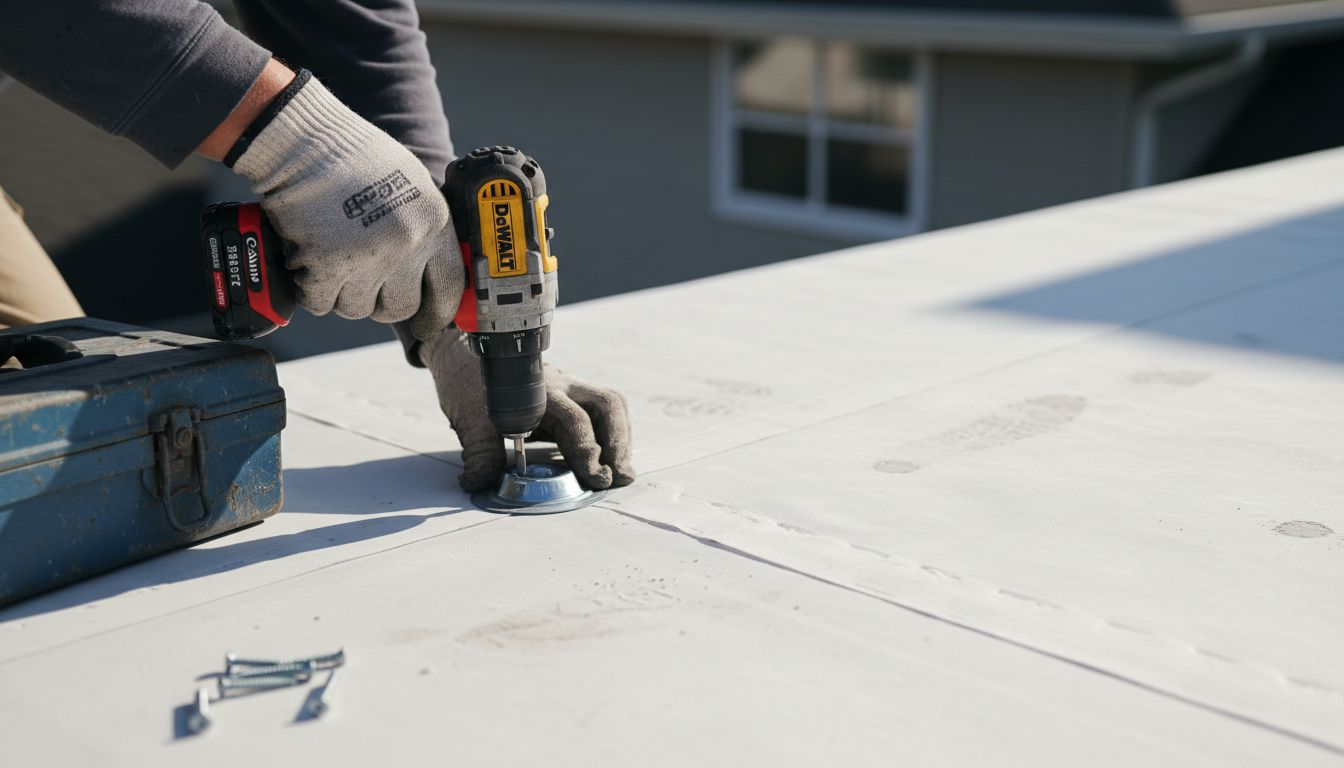
Before installation, several critical preparatory steps must be completed. Contractors typically begin by installing rigid insulation boards that provide a stable base and separate potentially incompatible materials. These boards not only support the membrane but also contribute to the overall thermal performance of the roofing system. Special attention must be paid to roof slope, termination details, and flashing requirements. Most TPO roofing systems are designed for low-slope roofs, typically with minimum slopes specified to ensure proper water drainage and prevent potential moisture accumulation.
Pro tip: Always consult a professional roofing contractor to determine the most appropriate TPO installation method for your specific Houston home’s roof structure and local weather conditions.
Here’s a concise overview of the main installation methods for TPO roofing and their strategic benefits:
| Method | How It Works | Key Benefit |
|---|---|---|
| Mechanical Fastening | Secured with fasteners and plates | High wind resistance |
| Full Adhesion | Bonded with chemical adhesives | Seamless, uniform surface |
| Ballasted System | Weighted with stones or pavers | Quick installation, added stability |
Durability and Benefits in Houston Climate
TPO roofing offers exceptional durability specifically tailored to Houston’s challenging climate, where intense heat and frequent storm conditions demand robust roofing solutions. Field studies of TPO membranes demonstrate remarkable longevity when properly formulated and maintained, with advanced UV stabilizers providing critical protection against extreme solar exposure.
The unique composition of TPO roofing makes it particularly well-suited for Houston’s demanding environmental conditions. These membranes are engineered to resist UV degradation, heat aging, and environmental stress, which are critical factors in a region experiencing temperatures that can soar well above 90 degrees Fahrenheit during summer months. Enhanced roofing membranes now incorporate sophisticated stabilization technologies that dramatically improve resistance to premature deterioration, ensuring homeowners can rely on consistent performance even during the most intense heat waves.
Beyond heat resistance, TPO roofing provides multiple benefits for Houston homeowners. The reflective surface helps reduce heat absorption, potentially lowering indoor cooling costs by up to 30%. Its seamless design minimizes water infiltration risks, which is crucial during Houston’s hurricane and heavy rain seasons. The material’s flexibility allows it to expand and contract with temperature fluctuations, reducing the likelihood of cracking or structural damage that can occur with less adaptable roofing materials.
Pro tip: Schedule annual professional inspections to identify and address potential wear points early, ensuring your TPO roof maintains optimal performance throughout Houston’s extreme weather conditions.
Comparing TPO to Other Roofing Materials
Homeowners exploring roofing options for Houston properties must carefully evaluate the unique characteristics of different materials to make an informed decision. TPO roofing stands out among alternative solutions, offering distinct advantages and some considerations when compared to traditional roofing systems like asphalt shingles, metal, and other synthetic membranes.
Comparative roofing membrane analysis reveals nuanced differences between TPO and its closest competitor, PVC roofing. While both are thermoplastic membranes with heat-welded seams, they exhibit significant performance variations. PVC has a longer proven track record, with documented performance exceeding 30 years, whereas TPO is a relatively newer technology that has undergone continuous improvements to address early durability challenges. Compared to traditional asphalt shingles, TPO offers superior heat reflection, longer lifespan, and better resistance to environmental stress typical in Houston’s demanding climate.
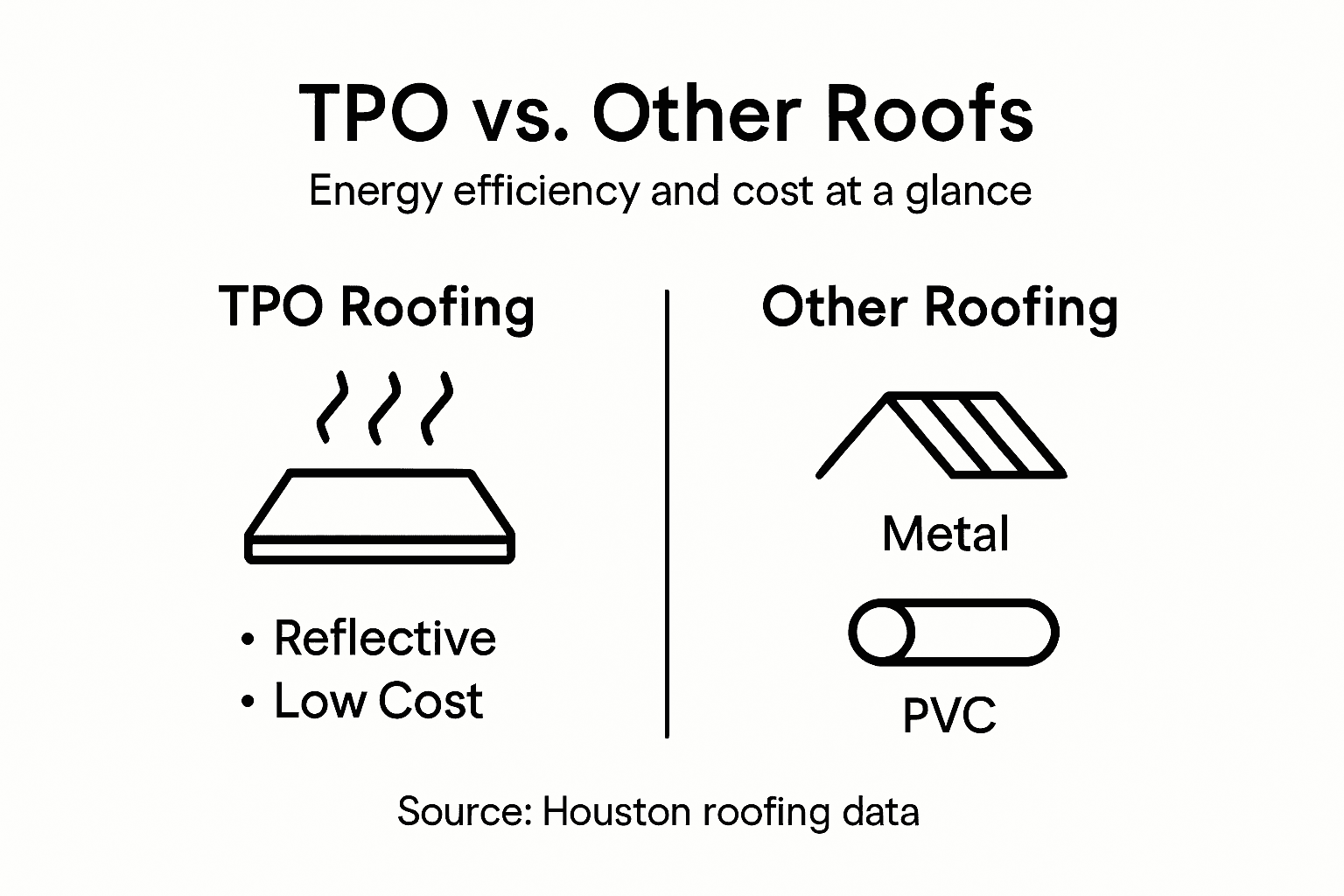
Each roofing material presents unique benefits and limitations. Metal roofing offers exceptional durability but comes with higher initial installation costs and potential noise issues during rainstorms. Asphalt shingles remain the most economical option but have shorter lifespans and less energy efficiency. TPO distinguishes itself by providing an optimal balance of affordability, energy performance, and long-term reliability. Its lightweight nature, reflective properties, and ability to withstand temperature fluctuations make it particularly attractive for Houston homeowners seeking a modern, efficient roofing solution.
Pro tip: Request detailed performance warranties and third-party testing documentation when comparing roofing materials to ensure you understand the long-term performance expectations for your specific roof configuration.
The following table compares key features of TPO, PVC, metal, and asphalt shingle roofing systems for Houston homes:
| Material | Lifespan | Energy Efficiency | Cost Range (per sq ft) |
|---|---|---|---|
| TPO | 15-25 years | Highly reflective | $5–$8 |
| PVC | 20-30+ years | Excellent | $7–$12 |
| Metal | 40+ years | Good | $10–$18 |
| Asphalt Shingles | 12-20 years | Moderate | $3–$5 |
Cost, Longevity, and Common Mistakes
TPO roofing represents a strategic investment for Houston homeowners, with upfront costs and long-term performance considerations that demand careful evaluation. The initial installation typically ranges between $5 to $8 per square foot, positioning it as a mid-range roofing solution that balances affordability with superior performance compared to traditional materials.
Longevity is a critical factor in assessing TPO roofing’s value proposition. Most high-quality TPO membranes offer a robust lifespan of 15 to 25 years when professionally installed and consistently maintained. However, several common mistakes can significantly compromise the roof’s performance and durability. Improper installation remains the most frequent issue, with errors like inadequate seam welding, insufficient substrate preparation, and poor edge termination potentially reducing the roof’s effective lifespan by up to 50%.
Homeowners should be aware of specific pitfalls that can undermine TPO roofing performance. Neglecting regular professional inspections, using incompatible repair materials, and failing to address minor damages promptly can accelerate material degradation. Cost-saving attempts like DIY repairs or hiring inexperienced contractors often result in more expensive long-term complications. Professional installation with manufacturer-approved techniques ensures proper membrane attachment, seam integrity, and overall system performance, ultimately protecting your investment and maximizing the roof’s potential lifespan.
Pro tip: Request detailed warranty documentation and choose certified installers who specialize in TPO roofing to ensure maximum performance and protection for your Houston home.
Upgrade to Energy-Efficient TPO Roofing with Houston’s Trusted Experts
If you are facing the challenge of protecting your Houston home from extreme heat and unpredictable storms, a durable and energy-efficient TPO roofing system is the smart solution. This article outlined how TPO’s reflective surface, heat-welded seams, and flexibility help reduce cooling costs and withstand harsh weather conditions. At Mister ReRoof, we understand these key pain points and specialize in professionally installing and maintaining high-quality TPO roofing tailored specifically for Houston’s climate.
Don’t settle for roofing that fails under pressure. Take action now to secure long-lasting protection and improved energy efficiency for your home or commercial property. Visit our roof replacement services page to request a free estimate with certified installers who ensure proper TPO installation and adherence to local standards. Learn why Houston homeowners trust us for durable roofing that stands up to heat waves and storms by exploring our proven expertise at Mister ReRoof. Start your journey toward a cooler, safer home today.
Frequently Asked Questions
What is TPO roofing?
TPO roofing, or Thermoplastic Polyolefin roofing, is a modern and energy-efficient roofing solution made from synthetic rubber polymer sheets, offering durability and protection against harsh weather conditions.
What are the installation methods for TPO roofing?
TPO roofing can be installed using three primary methods: mechanical fastening, full adhesion, and ballasted systems. Each method caters to different roof structures and environmental requirements.
How does TPO roofing benefit energy efficiency?
TPO roofing features a reflective surface that helps reduce heat absorption, potentially lowering indoor cooling costs by up to 30% while also providing a durable waterproof barrier.
How does TPO roofing compare to other roofing materials?
Compared to traditional materials like asphalt shingles and metal roofing, TPO offers a balanced combination of affordability, energy efficiency, and longevity, typically lasting between 15 to 25 years with proper maintenance.
